kottke.org posts about Andy Warhol
From The Philosophy of Andy Warhol (From A to B and Back Again):
Sometimes people let the same problem make them miserable for years when they could just say, “So what.” That’s one of my favorite things to say. “So what.” “My mother didn’t love me.” So what. “My husband won’t ball me.” So what. “I’m a success but I’m still alone.” So what. I don’t know how I made it through all the years before I learned how to do that trick. It took a long time for me to learn it, but once you do, you never forget.
Warhol was channeling the Stoic philosopher and Roman emperor Marcus Aurelius, who wrote about this in Meditations:
You have power over your mind — not outside events. Realize this, and you will find strength.
Not everyone has the privilege of saying “So what.” in every situation, but changing your perception about things you have little control over can be a powerful tool. I still struggle mightily to be mindful about my perceptions, but like Warhol, I wish I’d come to this realization sooner. Not having control over some outside events was a source of despair and anxiety for me. These happenings were facts, they had a “truth” that I perceived as immutable; everyone knows you can’t change facts! But human brains don’t work like that. Your perception of and emotional reaction to events *is* your reality. Sure, those things happened, that person is that way, the system will do its thing, but you don’t have to feel a certain way about any of it. (via nitch)
Of course you know he designed the album cover for The Velvet Underground & Nico…Warhol’s name (and not the band’s or the album’s) is right there underneath the electric yellow banana. But he also designed covers for the likes of Paul Anka, John Lennon, The Rolling Stones, Count Basie, Diana Ross, Kenny Burrell, and Aretha Franklin.
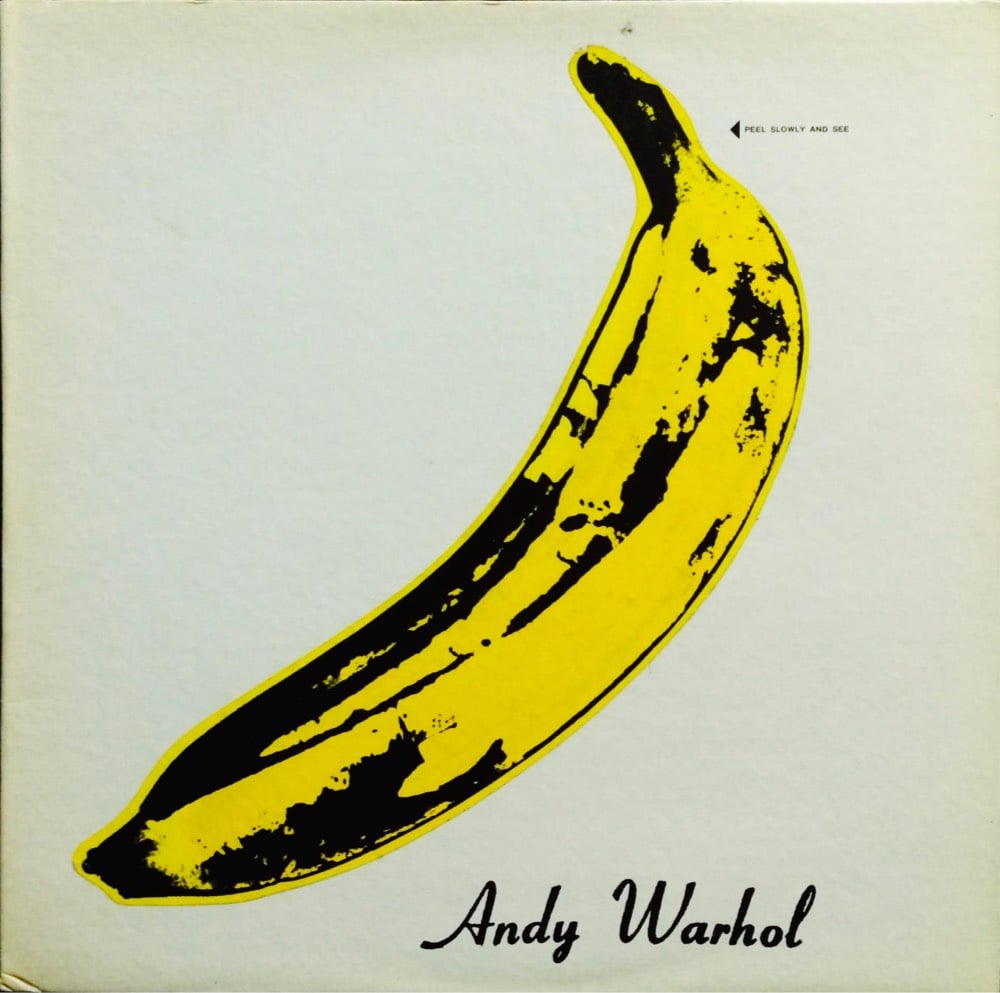
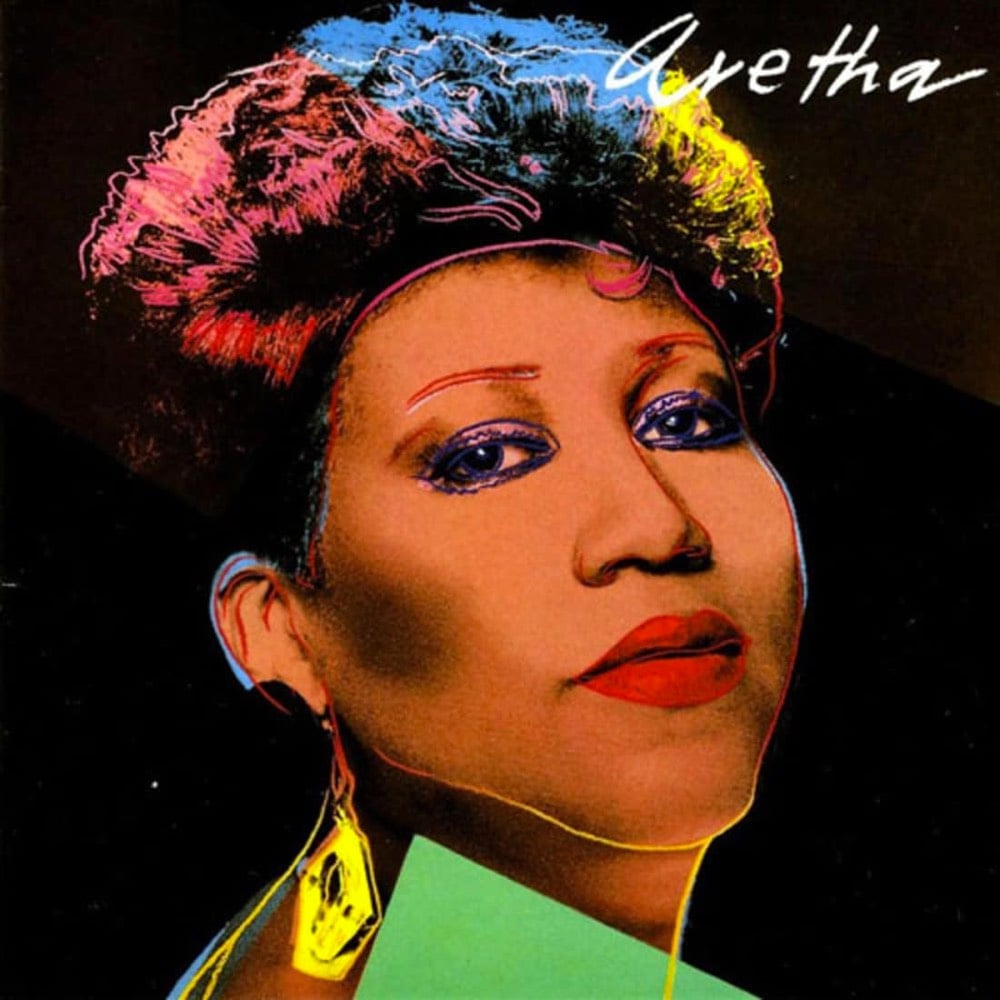
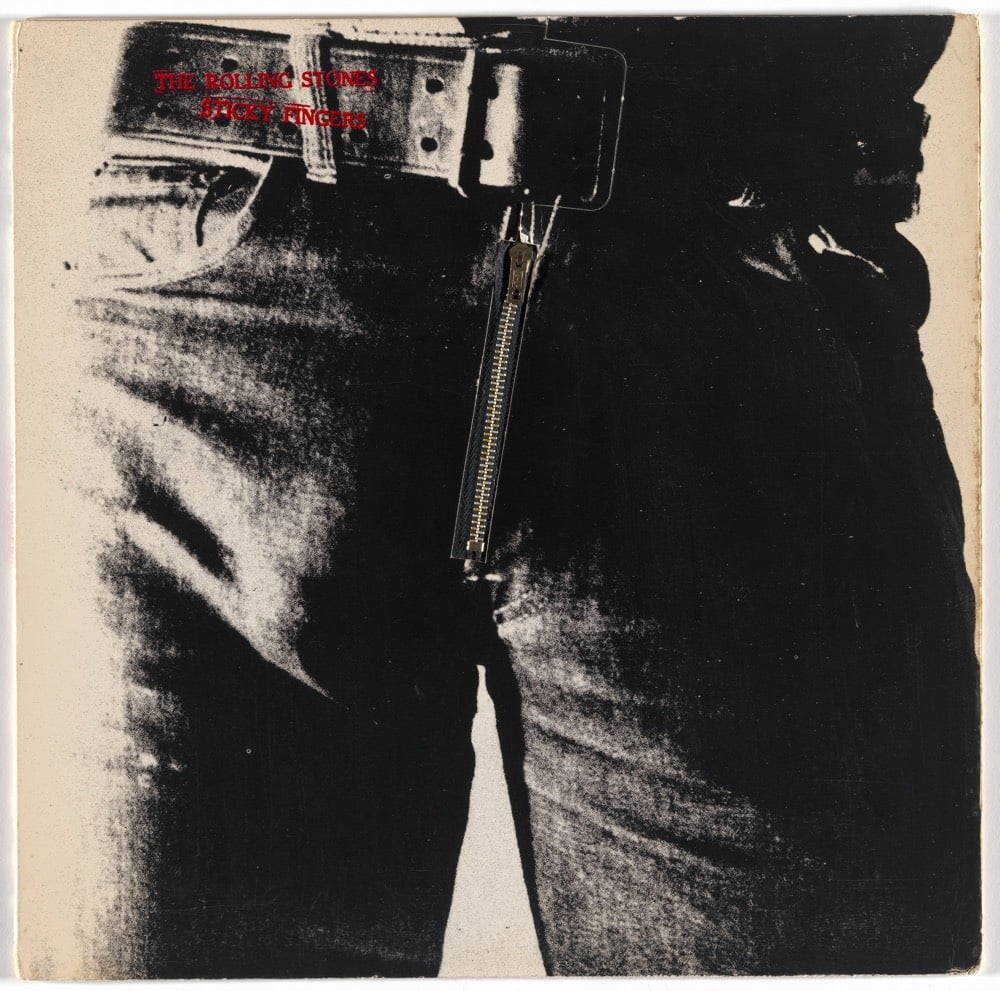
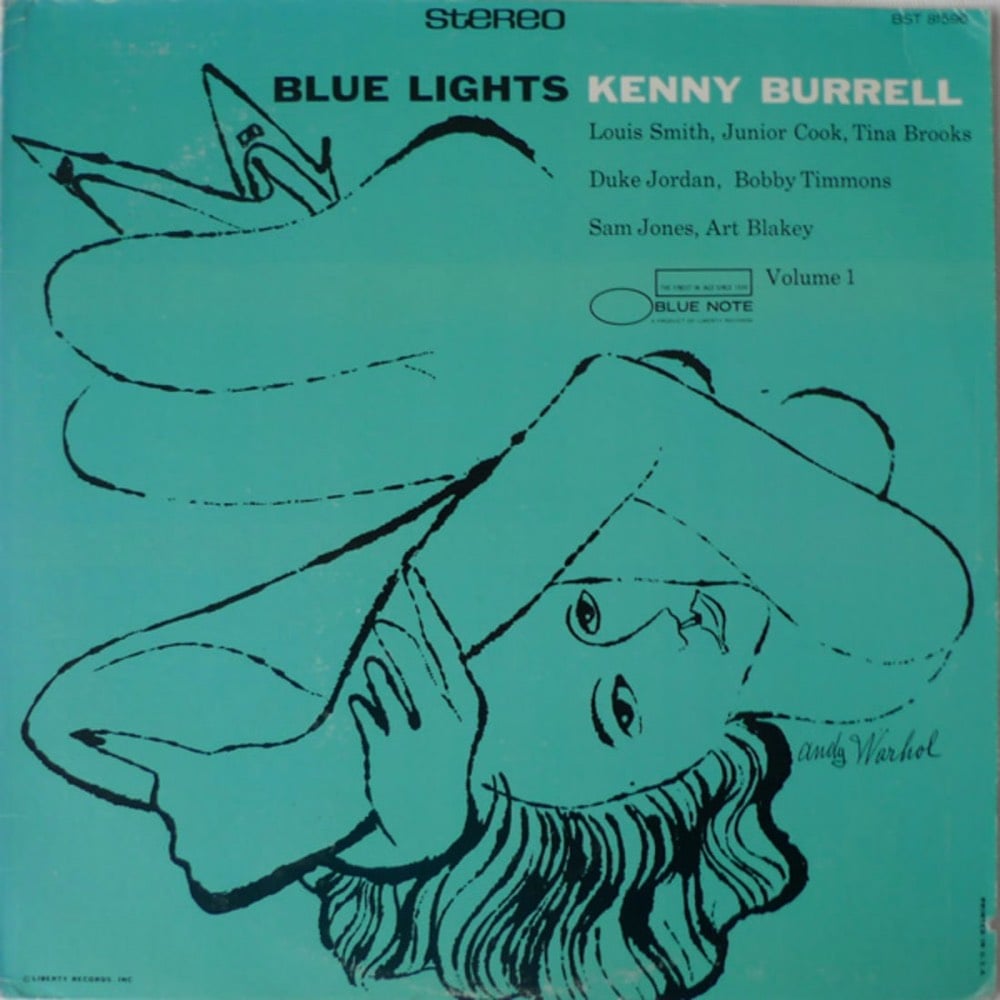
You can see more covers by Warhol here, here, and here. All of the covers he designed are collected in this book, Andy Warhol: The Complete Commissioned Record Covers.
From Sarah Urist Green of The Art Assignment (and former curator of contemporary art at the Indianapolis Museum of Art), The Case for Andy Warhol, in which Green discusses Warhol’s importance as an artist.
Like Jay Z but far earlier, he understood that to be an artist in a market economy meant not being “a businessman” but being “a business, man”. And he turned himself into a globally recognized brand.

Published in 1961 with an introduction by Alice B Toklas, The Artists’ and Writers’ Cookbook features recipes and wisdom from dozens of writers and artists, including Harper Lee, Man Ray, Marcel Duchamp, Pearl Buck, Upton Sinclair, John Keats, and Burl Ives. Lee shared her recipe for crackling cornbread:
First, catch your pig. Then ship it to the abattoir nearest you. Bake what they send back. Remove the solid fat and throw the rest away. Fry fat, drain off liquid grease, and combine the residue (called “cracklings”) with:
1 ½ cups water-ground white meal
1 teaspoon salt
1 teaspoon baking powder
1 egg
1 cup milk
Bake in very hot oven until brown (about 15 minutes).
Result: one pan crackling bread serving 6. Total cost: about \$250, depending upon size of pig. Some historians say this recipe alone fell the Confederacy.
And Marcel Duchamp offers up a preparation of steak tartare:
Let me begin by saying, ma chere, that Steak Tartare, alias Bitteck Tartare, also known as Steck Tartare, is in no way related to tartar sauce. The steak to which I refer originated with the Cossacks in Siberia, and it can be prepared on horseback, at swift gallop, if conditions make this a necessity.
Indications: Chop one half pound (per person) of the very best beef obtainable, and shape carefully with artistry into a bird’s nest. Place on porcelain plate of a solid color — ivory is the best setting — so that no pattern will disturb the distribution of ingredients. In hollow center of nest, permit two egg yolks to recline. Like a wreath surrounding the nest of chopped meat, arrange on border of plate in small, separate bouquets:
Chopped raw white onion
Bright green capers
Curled silvers of anchovy
Fresh parsley, chopped fine
Black olives minutely chopped in company with yellow celery leaves
Salt and pepper to taste
Each guest, with his plate before him, lifts his fork and blends the ingredients with the egg yolks and meat. In center of table: Russian pumpernickel bread, sweet butter, and bottles of vin rosé.
Not to be outdone, MoMA published their own artists’ cookbook in 1977, featuring contributions from Louise Bourgeois, Christo, Salvador Dali, Willem De Kooning, Roy Lichtenstein, and Andy Warhol. Here’s Warhol’s recipe:
Andy Warhol doesn’t eat anything out of a can anymore. For years, when he cooked for himself, it was Heinz or Campbell’s tomato soup and a ham sandwich. He also lived on candy, chocolate, and “anything with red dye #2 in it.” Now, though he still loves junk food, McDonald’s hamburgers and French fries are something “you just dream for.”
The emphasis is on health, staying thin and eating “simple American food, nothing complicated, no salt or butter.” In fact, he says, “I like to go to bad restaurants, because then I don’t have to eat. Airplane food is the best food — it’s simple, they throw it away so quickly and it’s so bad you don’t have to eat it.”
Campbell’s Milk of Tomato Soup
A 10 3/4-ounce can Campbell’s condensed tomato soup
2 cans milk
In a saucepan bring soup and two cans milk to boil; stir. Serve.
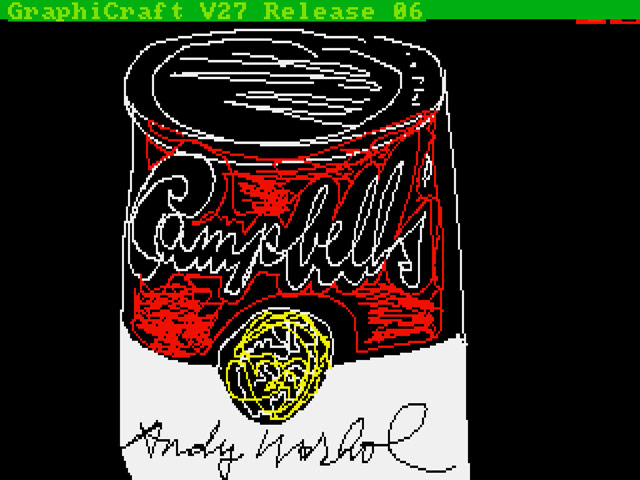
In the 1980s, when personal computers with graphics capabilities were first introduced, Andy Warhol was an enthusiastic early adopter. In 1985, Commodore commissioned the artist to produce some art on their Amiga computer, but the work was never widely shown and was assumed lost. Then artist and retro computer nerd Cory Arcangel learned of Warhol’s Amiga experiments from this video (and perhaps this article from a 1986 issue of Amigaworld) and set in motion the process of finding out if any of the computers or storage devices in The Andy Warhol Museum contained his Amiga art.
CMU Computer Club members determined that even reading the data from the diskettes entailed significant risk to the contents, and would require unusual tools and methodologies. By February 2013, in collaboration with collections manager Amber Morgan and other AWM personnel, the Club had completed a plan for handling the delicate disk media, and gathered at The Andy Warhol Museum to see if any data could be extracted. The Computer Club set up a cart of exotic gear, while a video crew from the Hillman Photography Initiative, under the direction of Kukielski, followed their progress.
It was not known in advance whether any of Warhol’s imagery existed on the floppy disks-nearly all of which were system and application diskettes onto which, the team later discovered, Warhol had saved his own data. Reviewing the disks’ directory listings, the team’s initial excitement on seeing promising filenames like “campbells.pic” and “marilyn1.pic” quickly turned to dismay, when it emerged that the files were stored in a completely unknown file format, unrecognized by any utility. Soon afterwards, however, the Club’s forensics experts had reverse-engineered the unfamiliar format, unveiling 28 never-before-seen digital images that were judged to be in Warhol’s style by the AWM’s experts. At least eleven of these images featured Warhol’s signature.
Incredible.
The Andy Warhol museum has recently set up a webcam pointed 24/7 at Andy Warhol’s grave in a Pennsylvania cemetary. His gravestone is currently adorned with flowers, mylar balloons, and cans of Campbell’s Soup. Peter Schjeldahl wrote about the project for the New Yorker.
I have angled for reasons to snoot the webcam stunt. I can’t think of any. Along with more or less everybody else, I find it Warholian to the, well, life: watching the present habitation of a man who liked to watch. Warhol pioneered motion pictures of motionless subjects; and we have him to thank, or not, for prophesying reality television. His strictly beholding bent became, as it remains, a default setting of artistic and popular culture absolutely everywhere.
The live video feed includes sound, so I imagine it won’t be too long before some enterprising performance artists show up and do something entertaining.
This is a five-minute video of Andy Warhol eating a Burger King hamburger accompanied by Heinz ketchup.
The scene is part of a film done by Jorgen Leth called 66 Scenes from America.
Leth had his assistant buy some burgers and directly advised him to buy some in halfway neutral packaging as Leth was afraid that Warhol might reject some brands (Warhol always had an obsession with some of his favorite brands).
So Andy Warhol finally did arrive at the studio, of course along with his bodyguards, and when he saw the selection of burgers the assistant had brought he asked “Where is the McDonald’s?” and Leth — slightly in panic — was immediately like “I thought you would maybe not like to identify…” and Warhol answered “no that is the most beautiful”. Leth offered to let his assistant quickly run to McDonald’s but Warhol refused like “No, never mind, I will take the Burger King.”
(via bon appetit)
There’s been a lot written about Steve Jobs in the past week, a lot of it worthy of reading, but one piece you probably didn’t see is David Galbraith’s piece on Jobs’ similarity to architect Norman Foster. The essay is a bit all over the place, which replicates the experience of talking to David in person, but it’s littered with insight and goodness (ditto).
The answer is what might be called the sand pile model and it operated at Apple and Fosters, the boss sits independently from the structural hierarchy, to some extent, and can descend at random on a specific element at will. The boss maintains control of the overall house style by cleaning up the edges at the same time as having a vision for the whole, like trying to maintain a sand pile by scooping up the bits that fall off as it erodes in the wind. This is the hidden secret of design firms or prolific artists, the ones where journalists or historians agonize whether a change in design means some new direction when it just means that there was a slip up in maintaining the sand pile.
And I love this paragraph, which integrates Foster, Jobs, the Soviet Union, Porsche, Andy Warhol, Lady Gaga, and even an unspoken Coca-Cola into an extended analogy:
Perfecting the model of selling design that is compatible with big business, Foster simultaneously grew one of the largest architecture practices in the world while still winning awards for design excellence. The secret was to design buildings like the limited edition, invite only Porsches that Foster drove and fellow Porsche drivers would commission them. Jobs went further, however, he managed to create products that were designed like Porsches and made them available to everyone, via High Tech that transcended stylistic elements. An Apple product really was high technology and its form followed function, it went beyond the Porsche analogy by being truly fit for purpose in a way that a Porsche couldn’t, being a car designed for a speed that you weren’t allowed to drive. Silicon Valley capitalism had arguably delivered what the Soviets had dreamed of and failed, modernism for the masses. An iPhone really is the best phone you can buy at any price. To paraphrase Andy Warhol: Lady Gaga uses an iPhone, and just think, you can have an iPhone too. An iPhone is an iPhone and no amount of money can get you a better phone. This was what American modernism was about.
This is one of my favorite quotes from anyone; it’s from Warhol’s 1975 book, The Philosophy of Andy Warhol.
What’s great about this country is that America started the tradition where the richest consumers buy essentially the same things as the poorest. You can be watching TV and see Coca-Cola, and you know that the President drinks Coke, Liz Taylor drinks Coke, and just think, you can drink Coke, too. A Coke is a Coke and no amount of money can get you a better Coke than the one the bum on the corner is drinking. All the Cokes are the same and all the Cokes are good. Liz Taylor knows it, the President knows it, the bum knows it, and you know it.
Of course Andy Warhol made a TV show for MTV called Andy Warhol’s Fifteen Minutes.
The whole thing is a perfect snapshot of everything to love and hate about the 1980s: the art bull market, Manhattan, fashion’s hardworking LGBT backbone, and the nature of celebrity in the dawn of the fractured and streaming media world we live in now.
The link above has pointers to downloads of footage from three shows. (via fimoculous)
1 Warhol equals 15 minutes of fame, So if you’ve been famous for three years, that’s just over 105 kilowarhols. I’m going to go out on a limb and say that there’s a critical point — varying from celebrity to celebrity — where that person has outstayed their welcome, and uh … becomes synonymous with a feminine hygiene product (and the bag it came in). In keeping with nuclear physics, I’m happy for this to remain as k=1 (where ‘k’ is for ‘Kanye’).
The full list is at Wired.
Stolen art in the Los Angeles area results in some unorthodox art posters. Here’s a missing Warhol print of Mick Jagger:
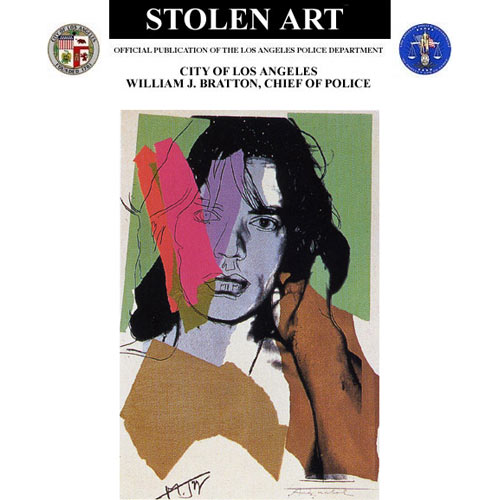
Looks like something Warhol himself might have come up with.
You are still reading Letters of Note, yes? A couple of recent letters include Bill Gates’ infamous An Open Letter to Hobbyists — “most of you steal your software” — and a letter from Mick Jagger to Andy Warhol about the design of an album cover in which Jagger gives the impression of being the perfect client…do whatever you want and let me know how much to pay you.
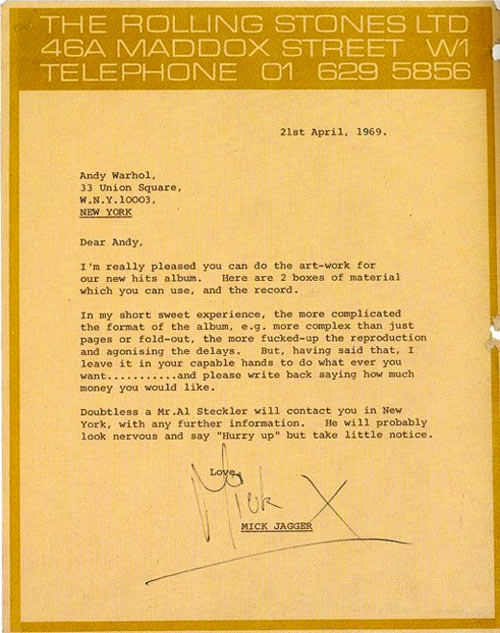
Update: Jagger’s letter to MC Escher didn’t work out quite as well.
By the way, please tell Mr. Jagger I am not Maurits to him, but
Very sincerely,
M. C. Escher.
(thx, @pjdoland)
So, this happened: video of Andy Warhol painting Debbie Harry on an Amiga computer.
Update: AmigaWorld did an interview with Warhol about his Amigas (he owned two at the time).
The thing I like most about doing this kind of art on the Amiga is that it looks like my work.
(thx, paul)
Older posts





Socials & More