Oh of course Google scientists have demonstrated a genuine “time crystal” for the first time ever. “The consequence is amazing: You evade the second law of thermodynamics.”

Advertise here with Carbon Ads
This site is made possible by member support. 💞
Big thanks to Arcustech for hosting the site and offering amazing tech support.
When you buy through links on kottke.org, I may earn an affiliate commission. Thanks for supporting the site!
kottke.org. home of fine hypertext products since 1998.
Beloved by 86.47% of the web.
Entries for July 2021
The HD Video Feedback Kinetic Sculpture
Here’s a description of what the machine featured in this video does: “The HD Video Feedback Kinetic Sculpture creates fractals and organic-looking images in real-time, without a computer: this is old-school video feedback.” But just watch the video for the full effect — this thing produces some amazing imagery.
This is part sculpture, part performance art, and may make the most complex video feedback ever created, using three cameras, two video switchers, a sheet of beam-splitter glass, and an HDMI input from a phone or live video feed.
Much like a musical instrument, the operator at the helm of this device plays it, but instead of making sounds, makes entire worlds, spirals within spirals, loops within loops, galaxies, classical fractal imagery and primordial organisms, leaves, trees, and insects. It really is the God machine.
Lora Webb Nichols’ Photographic Chronicle of the 20th Century American West
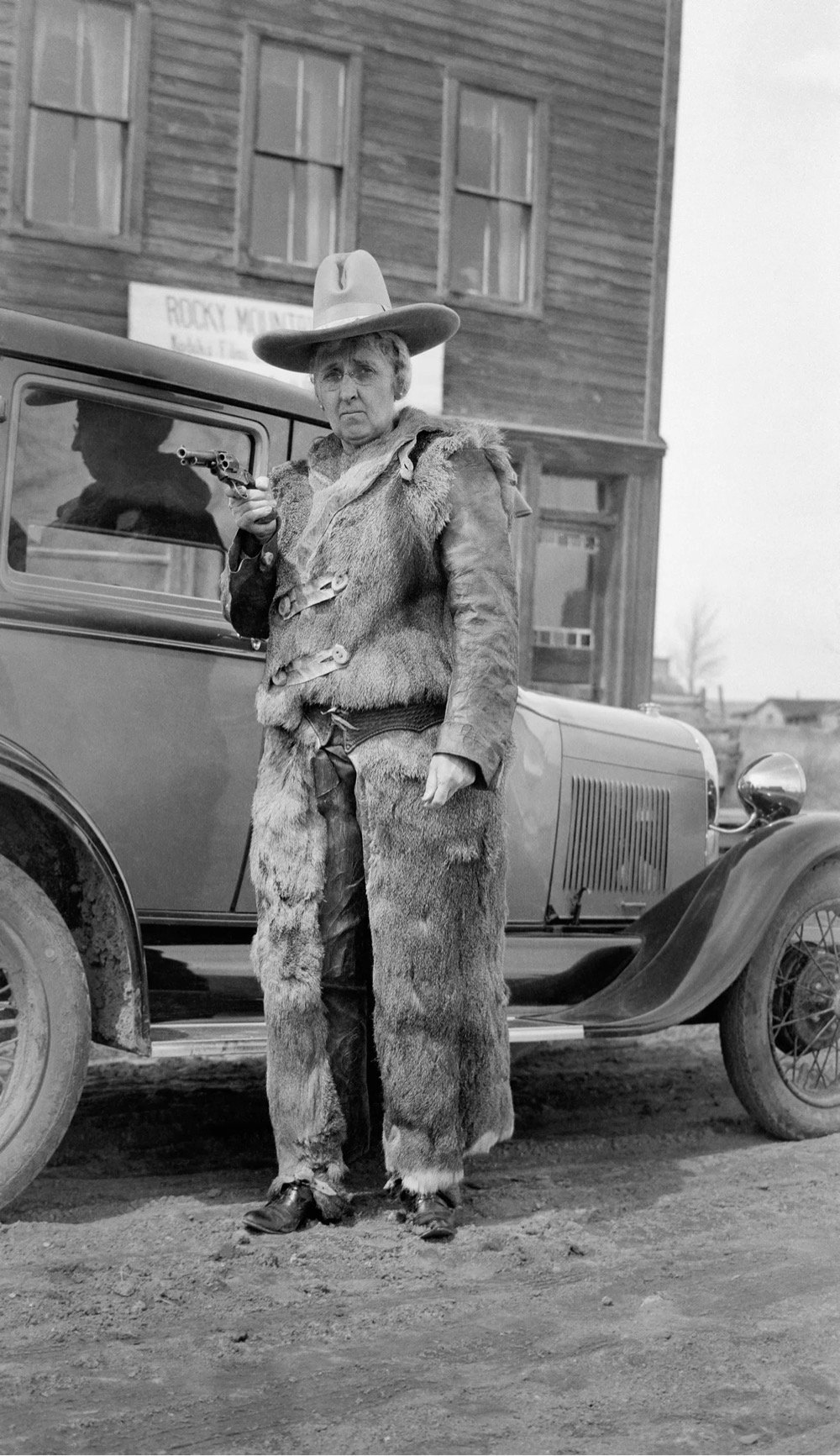
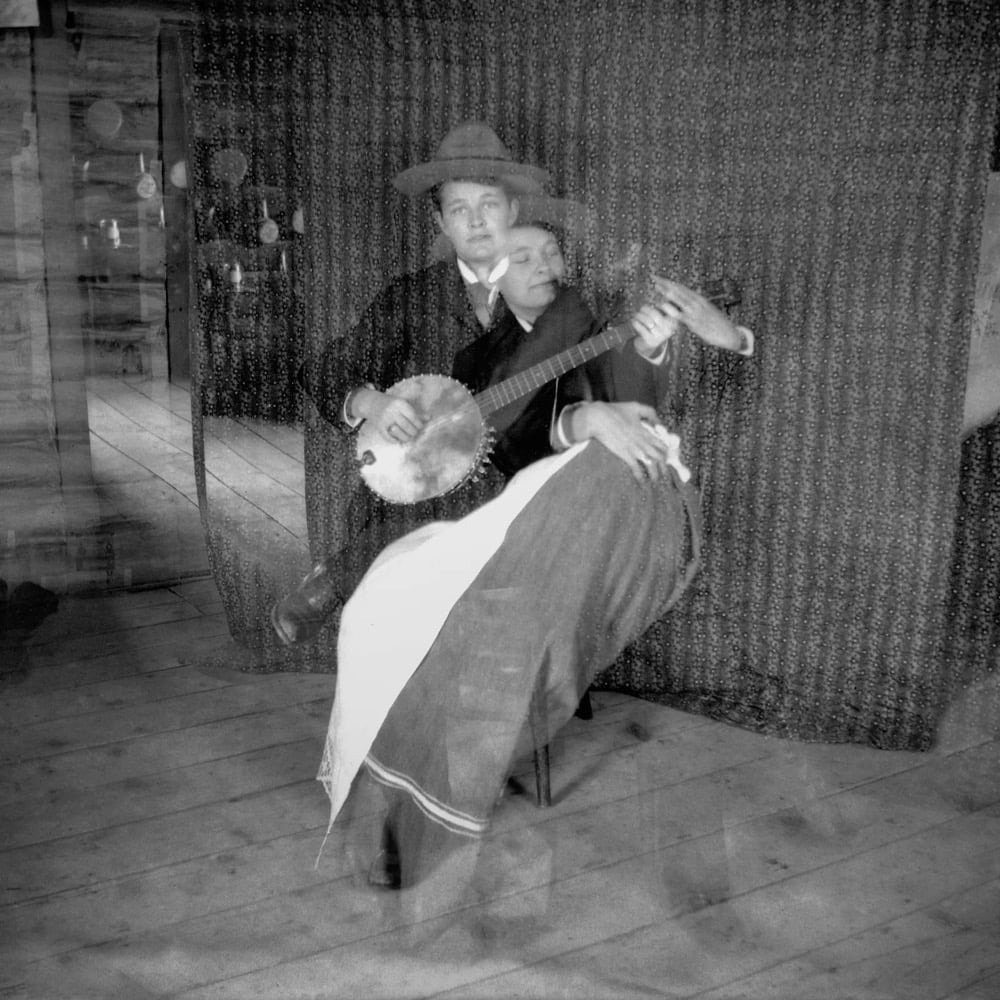
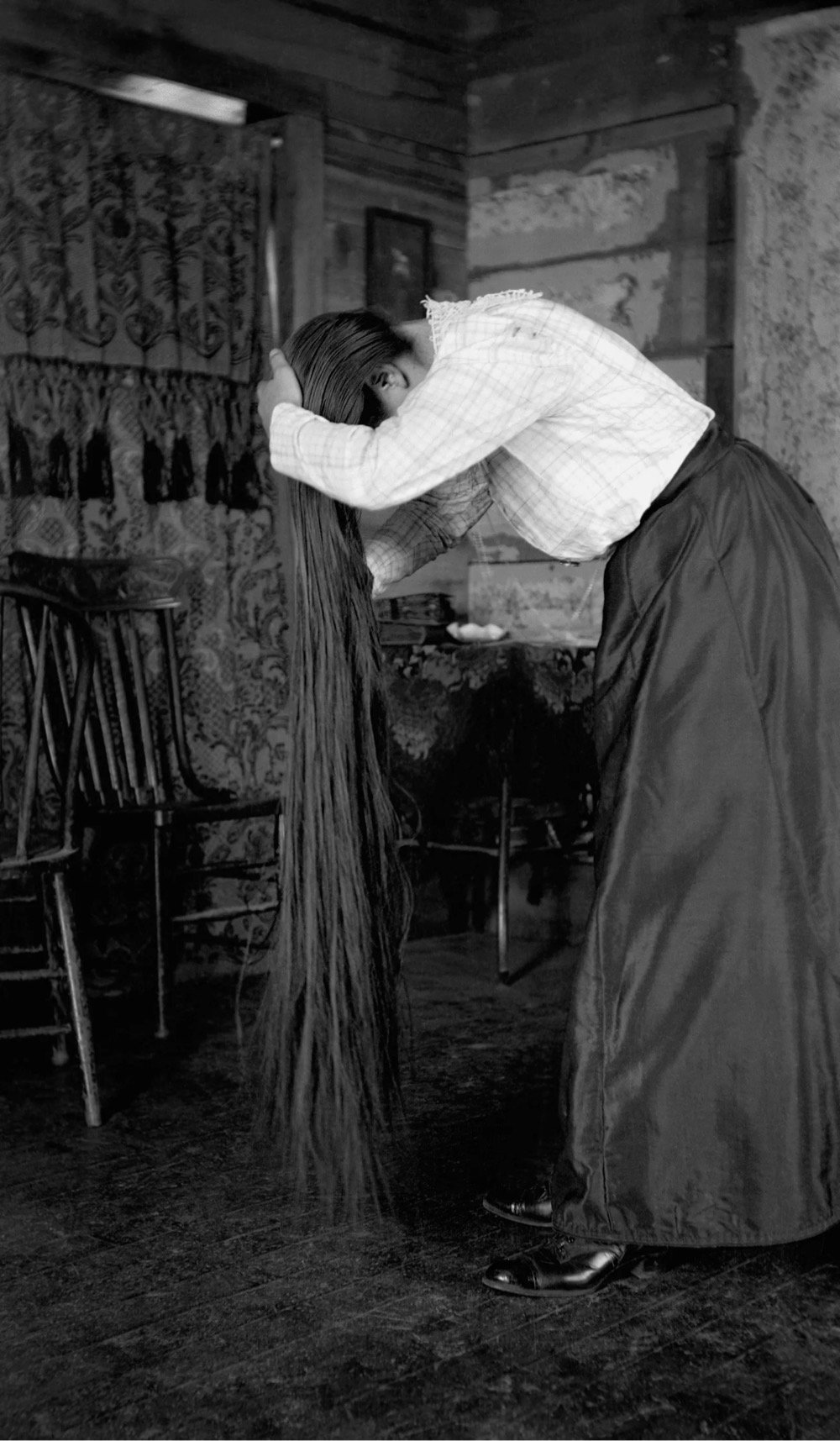
This is fantastic: for more than 60 years beginning in 1899, Lora Webb Nichols captured and collected about 24,000 photographs of life in a small copper-mining town in Wyoming.
On October 28, 1899, Lora Webb Nichols was at her family’s homestead, near Encampment, Wyoming, reading “Five Little Peppers Midway,” when her beau, Bert Oldman, came to the door to deliver a birthday present. The sixteen-year-old Nichols would marry the thirty-year-old Oldman the following year, and divorce him a decade later. The gift, however — a Kodak camera — would change the course of her life. Between 1899 and her death, in 1962, Nichols created and collected some twenty-four thousand negatives documenting life in her small Wyoming town, whose fortunes boomed and then busted along with the region’s copper mines. What Nichols left behind might be the largest photographic record of this era and region in existence: thousands of portraits, still-lifes, domestic interiors, and landscapes, all made with an unfussy, straightforward, often humorous eye toward the small textures and gestures of everyday life.
You can browse the collection of her photos at the American Heritage Center at the University of Wyoming.
The US poverty rate is expected to be *cut in half* this year due to pandemic relief efforts from the federal government. Presumably after those efforts end, poverty levels will go back to “normal”.
How Taiwan Held Off Covid-19 (Until It Didn’t)
This video from Vox takes a look at how Taiwan avoided a Covid-19 outbreak for more than a year (and kept total deaths to just 7 in 2020 in a country of 23.6 million) while residents were mostly able to go about their normal lives. The video features photojournalist Ed Ou, who underwent a mandatory 14-day quarantine when he traveled to Taiwan last year. Ou had this to say after spending time in Taiwan, doing normal things without lockdowns or restrictions:
This was an alternate universe of what America, and the rest of the world, had seen all year. The Taiwanese people had been able to just live their lives, as if nothing had happened. Like, to me, that’s freedom.
After more than a year of almost no cases, Taiwan experienced its first Covid-19 outbreak in May (after relaxing their quarantine rules and, presumably, the rise of the delta variant) but has since gotten it under control. Other countries that had been successful in controlling the virus until recently — like Vietnam, Thailand, and Mongolia — are also seeing outbreaks now. When the rest of the world is teeming with the virus, it becomes more likely over time that even the most organized and protected systems are going to be vulnerable.
Philosophical CAPTCHAs
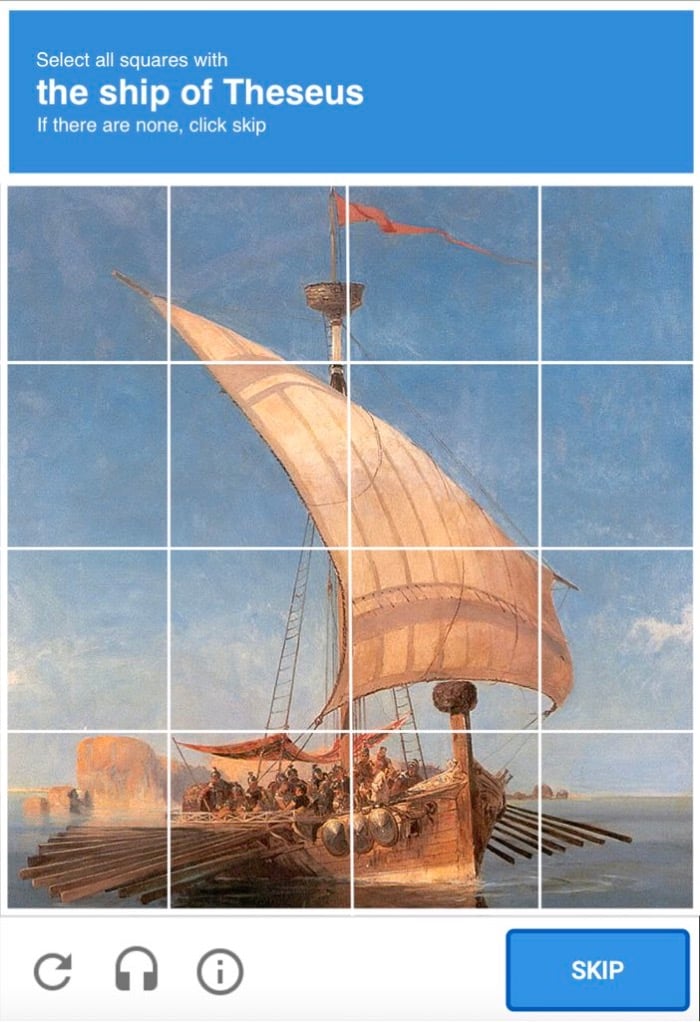

The ship of Theseus image is from Brooks Sterritt and Magritte’s pipe is from Noah Veltman.
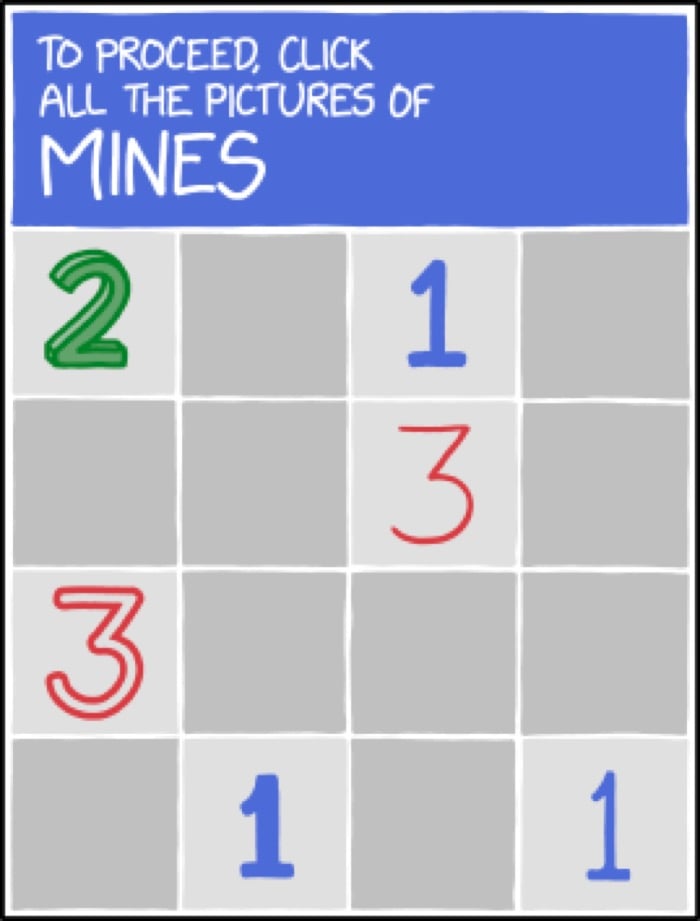
Update: See also Mine Captcha from XKCD:
What if the Unvaccinated Can’t Be Persuaded? ~15% of Americans just won’t do it unless forced and it’ll take many months (if not years) of education & outreach to reach another 15% who aren’t. *sigh*
Minimalist Creative Funny Photography
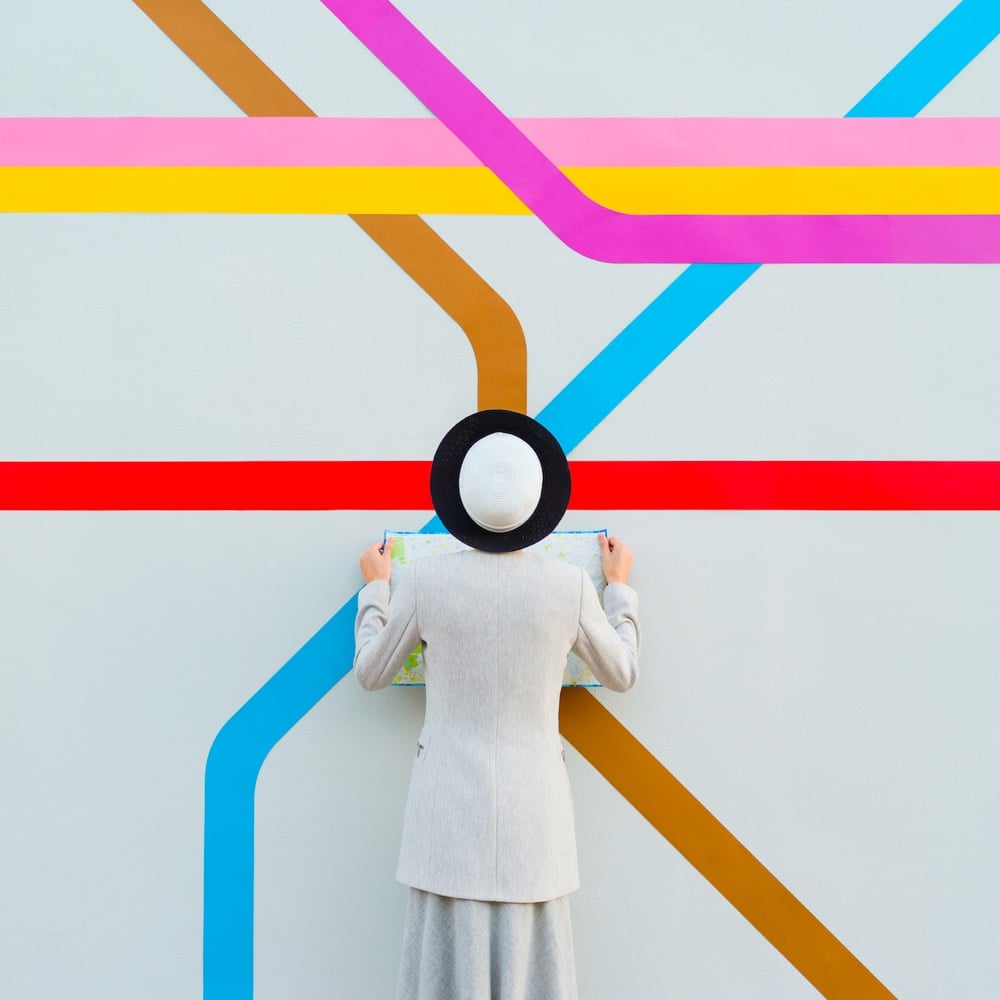

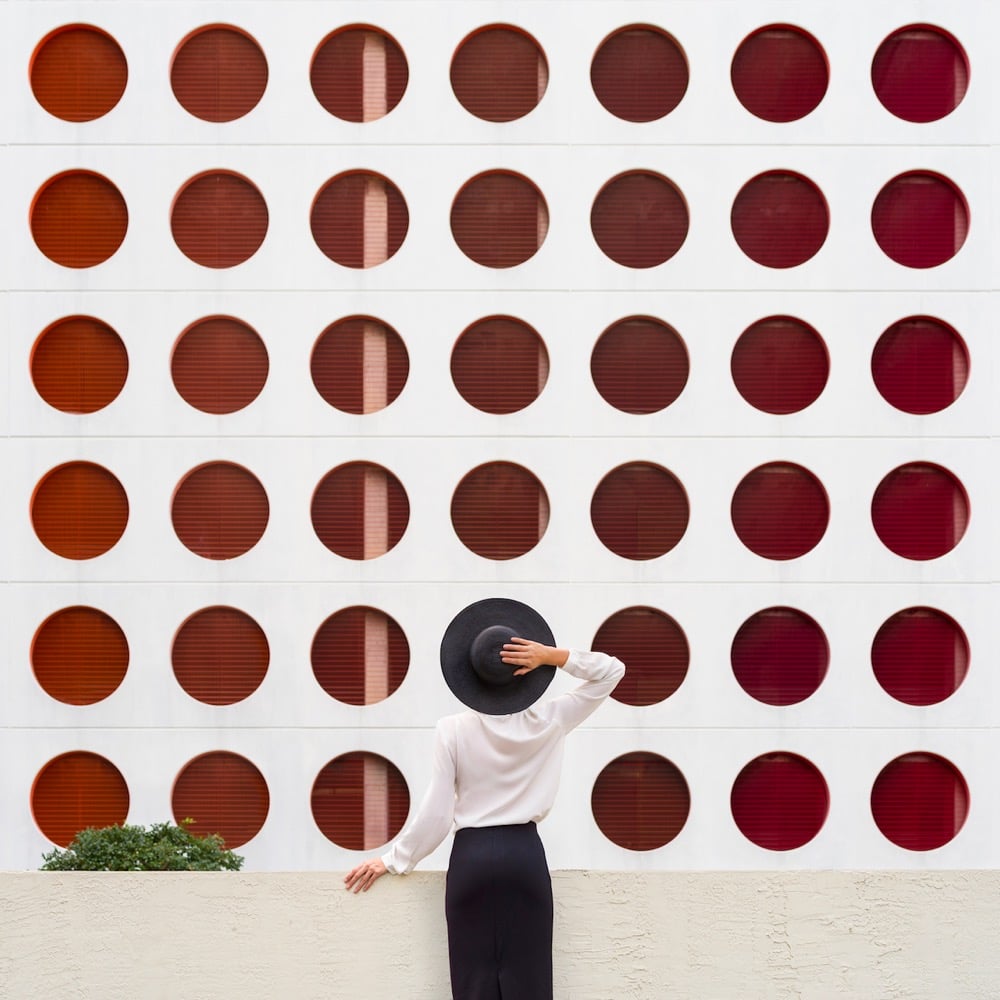
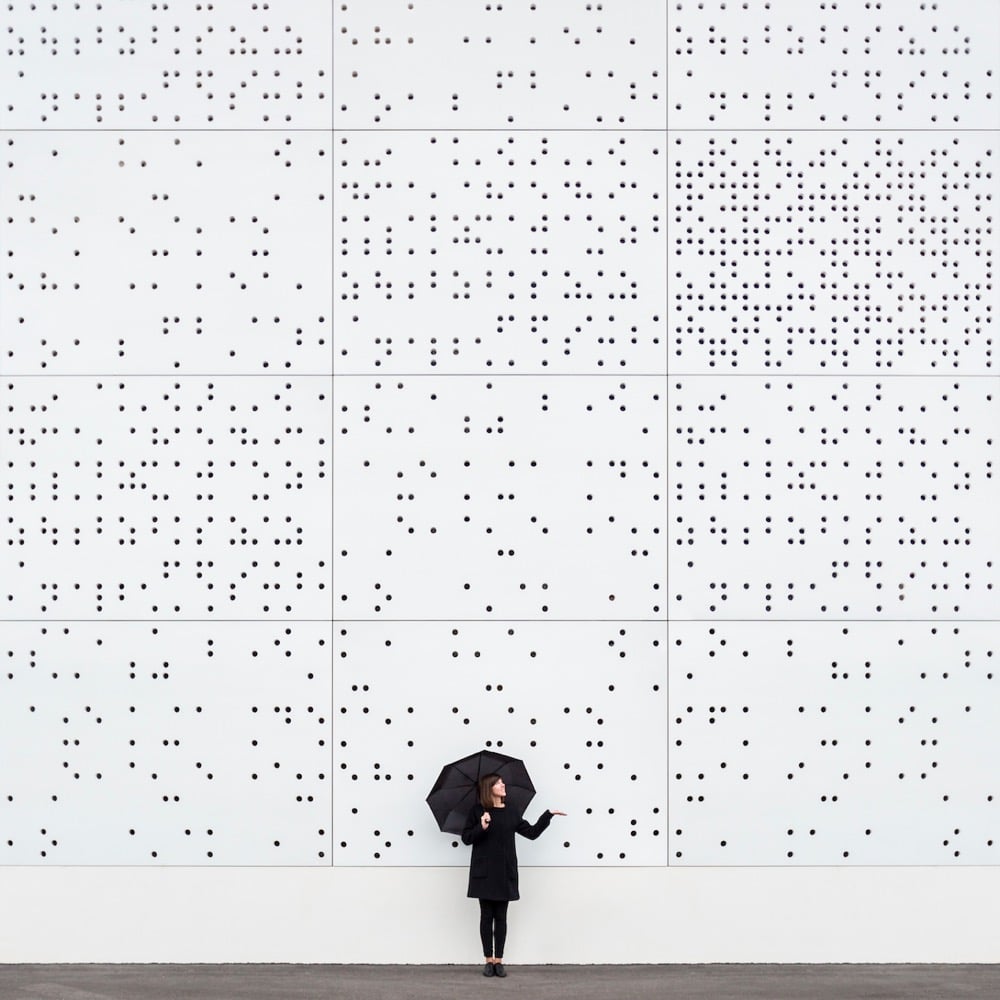

Spanish photographers Anna Devís and Daniel Rueda cleverly use landscapes and architectural elements to create minimalist and fun portraits of themselves. You can check out more of their work on Instagram. (via moss & fog)
From the first time, scientists have been able to observe x-rays coming from the back side of a black hole, which were bent around the hole and toward us. Einstein’s general theory of relativity remains undefeated.
How TikTok’s Algorithm Figures You Out
Using dozens of bot accounts, The Wall Street Journal did an investigation and determined that TikTok’s algorithm needs only one piece of information to determine what you want to watch: the amount of time you spend watching individual videos. Observing your watch time and rewatching is enough for them to fill your “For You” page with recommended videos that are right in your wheelhouse after just an hour or two. That this happens so quickly and completely — 90-95% of what users see on TikTok is algorithmically determined — leads to users going down narrow-interest rabbit holes that can be dangerous, e.g. if someone’s Covid interest turns into anti-vax QAnon crap or sadness turns into video after video about depression or harming yourself.
As someone who built an entire web app that collected people’s social media likes/faves, this focus on a single signal is fascinating. API limitations and rate limits on the number of requests would keep you from building a service with a TikTok-like algorithm for Twitter or Instagram that used likes as the only signal for whether to show someone a piece of content or not, but if you could, I bet it would be amazing.
Huh, Gawker is back? RIP that old rainbow logo.
The Twisties
Yesterday, world champion gymnast Simone Biles removed herself from the women’s team final at the Olympics after not doing one of the planned two-and-a-half twists on her vault and stumbling on the landing. Biles said after the final:
I just felt like it would be a little bit better to take a back seat, work on my mindfulness. I didn’t want to risk the team a medal for, kind of, my screw ups, because they’ve worked way too hard for that.
On Twitter, former gymnast and diver Catherine Burns explained that Biles was likely experiencing a case of “the dreaded twisties”.
When you’re flipping or twisting (or both!) it is very disorienting to the human brain. When training new flips and twists, you need external cues to learn how it feels to complete the trick correctly. (In diving, a coach yells “OUT” and you kick your body straight and pray).
Once you’ve practiced a trick enough, you develop the neural pathways that create kinesthesia which leads to muscle memory. Your brain remembers how your body feels doing the trick and you gain air awareness.
It’s like driving a car, she explains. At first everything you do is unnatural and requires deep concentration to learn but once you’ve got it down, you can do it instinctively, without thinking or even paying that much attention. Then sometimes, in stressful situations, you start thinking too much about how to do the familiar thing and you lose it completely:
Suddenly, in the middle of driving on the freeway, right as you need to complete a tricky merge, you have totally lost your muscle memory of how to drive a car. You have to focus on making you foot press the pedal at the right angle, turn the steering wheel just so, shift gears..
It’s terrifying. You’re moving way too fast, you’re totally lost, you’re trying to THINK but you know you don’t usually have to think to do these maneuvers, you just feel them and do them.
The twisties are like this, and often happen under pressure. You’re working so hard to get it right that you stop trusting your muscle memory. You’re getting lost in the air, second guessing your instincts, overthinking every movement.
And when you’re driving a car or performing a high-intensity sport like gymnastics, second guessing and overthinking can cause serious injury.
I used to write a lot about this kind of thing in this loosely connected series of posts on relaxed concentration. This phenomenon goes by many names — performance anxiety, stage fright, choking, the yips, cueitis (in snooker), and target panic (for archers) — and the world-class are not immune. Daniel Day-Lewis had stage fright so bad he quit the stage decades ago — an affliction he shared with Laurence Olivier, Barbra Streisand, and Mikhail Baryshnikov. If you’ve read anything at all about this stuff, Biles’ case of the twisties doesn’t seem so unusual or mysterious — it’s just one of those things that makes her, and the rest of us, human.
Update: I’d missed this yesterday: Biles herself told reporters about the twisties.
They saw it a little bit in practice… having a little bit of the twisties.
Which is something she’s struggled with before:
The twisties are an issue Biles has faced before, including in the lead up to the 2016 Olympic Games in Rio and prior to the 2019 season.
“2019, at the beginning of the year, I forgot how to twist and flip. It was great,” Biles told Olympics.com in January 2020.
Visualization of Conservative America’s Vaccine Refusal
Charles Gaba has been graphing the Covid-19 vaccination rates of the 50 states (and DC) against the percentage of people who voted for Donald Trump in 2020 and there is unsurprisingly a clear correlation between the two:
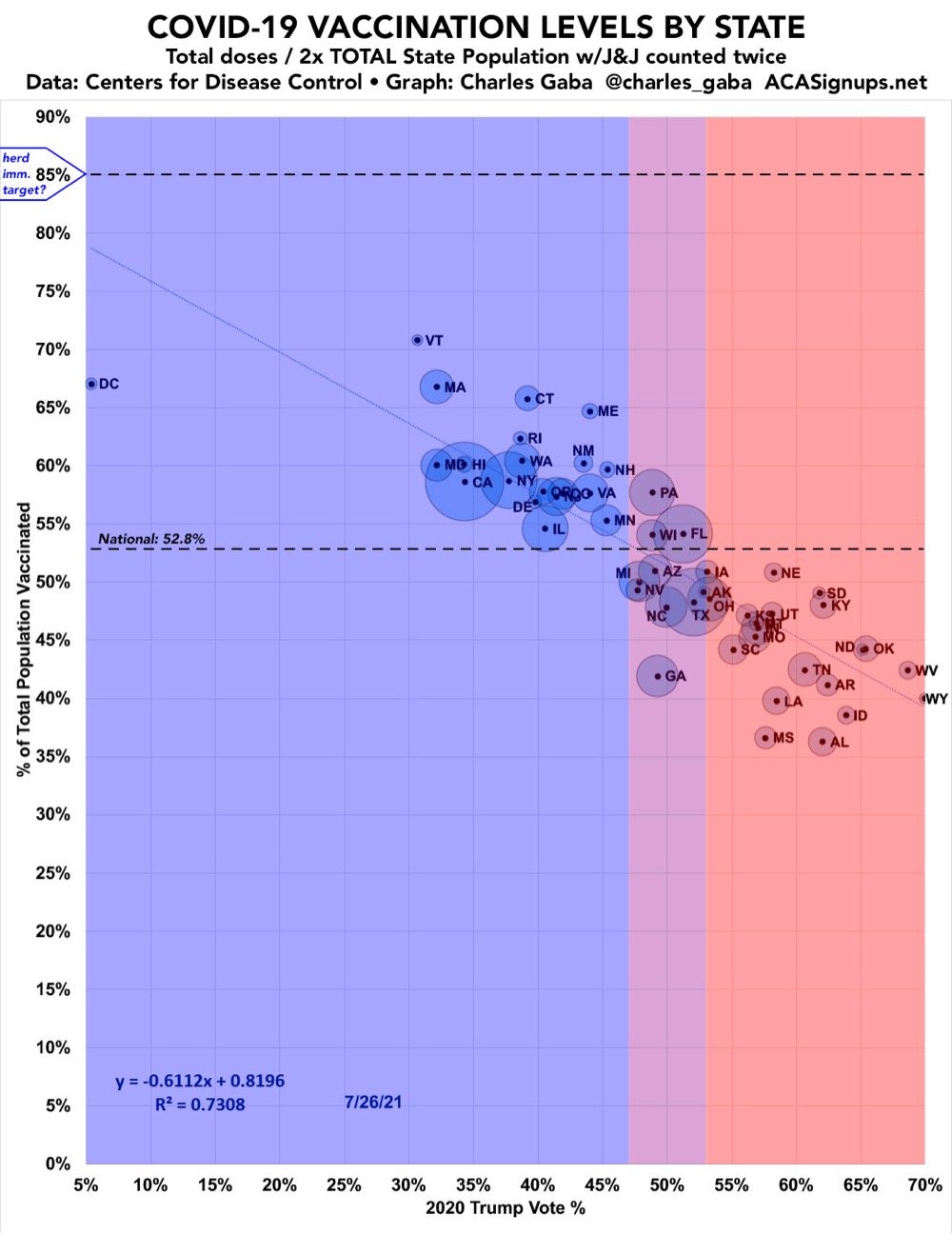
As one commenter noted, all of the solidly “blue” states are above the vaxxed national average and all the solidly “red” states are below it. The picture is a little more muddy when you look at the rates at the county level:
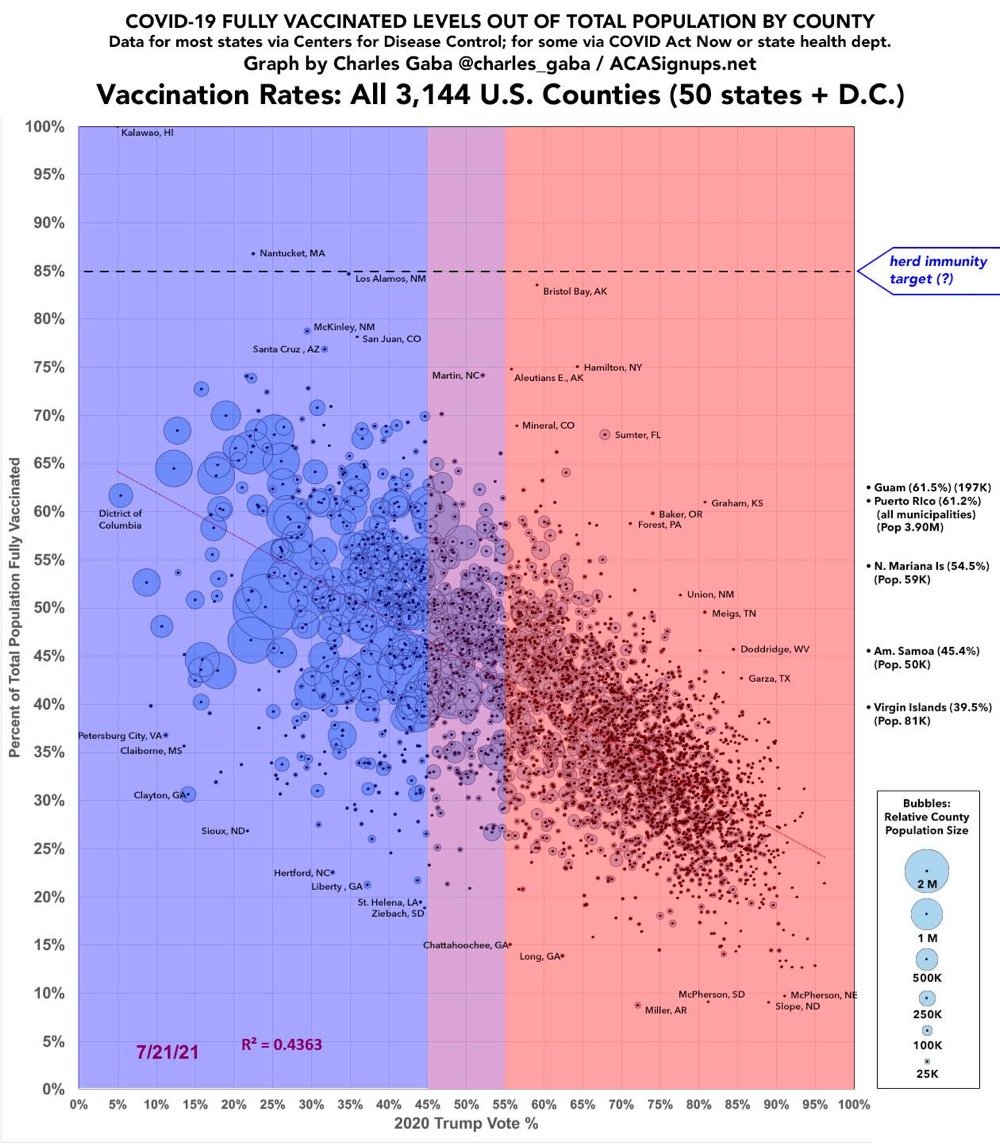
The “conservatives are unvaxxed” trend is still there, but a lack of access and education around the vaccines in counties with large Black and Latino populations also plays a large role in whether people are vaccinated or not.
“Two bartenders floated in and out of the conversation, dropping comments like ‘what’s Covid?’ to laughter. Just recently, a beloved cook at the restaurant had died from the virus, they said.” This is a horrifying portrait of contemporary America.
“If It Doesn’t Shine In Your Face, You Don’t See Anything”
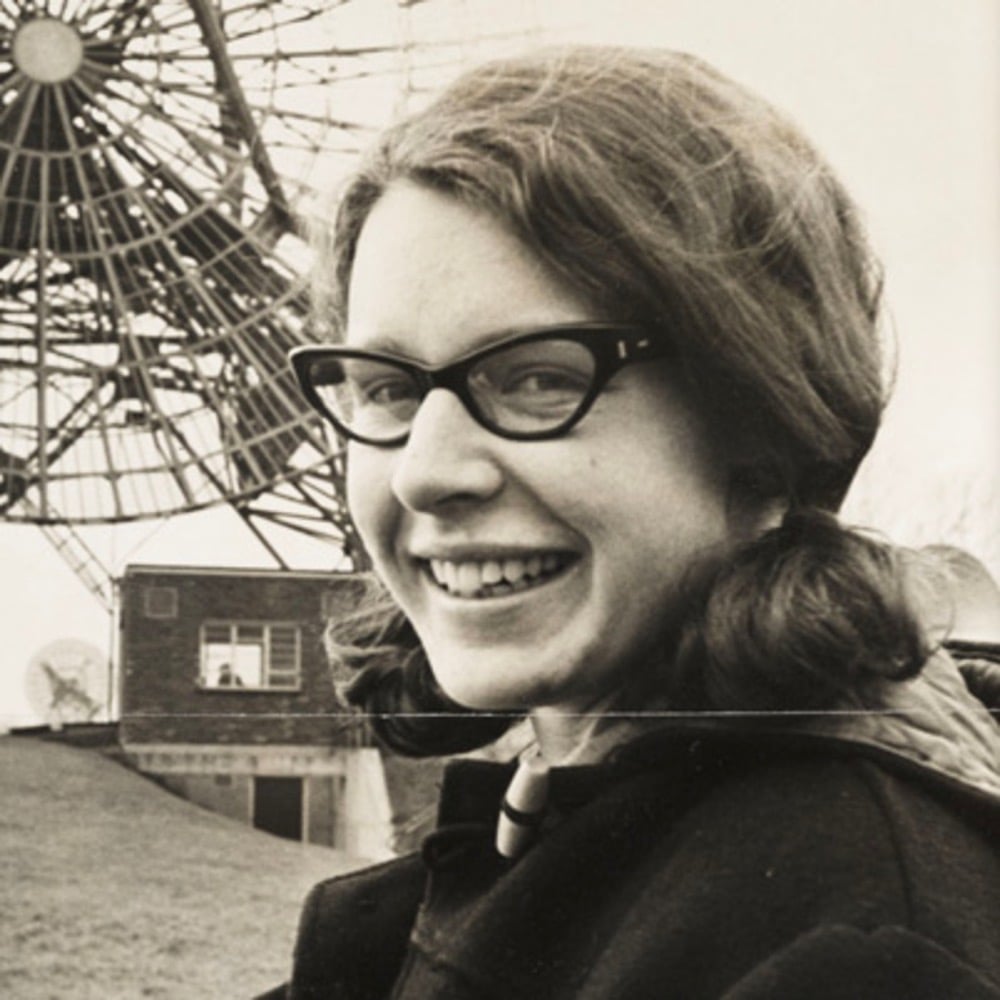
As I’ve written before, in the history of astronomy and astrophysics, women have made major discoveries and played a significant role in advancing our understanding of the universe but have often not gotten the recognition their male peers enjoy. In 1967, while she was working on her doctoral research with her advisor Antony Hewish, Jocelyn Bell Burnell (then Jocelyn Bell) discovered a new and unusual kind of object, the pulsar. In this short documentary, Bell Burnell shares her story — how she got interested in radio astronomy, the prejudice with which she was treated as the only woman in her university program, how she discovered the first pulsar and persisted (more than once) through Hewish’s assertions that the object was “interference”, and how she was passed over for the Nobel Prize for her discovery.
In 2018, Bell Burnell was awarded the Special Breakthrough Prize in Fundamental Physics “for fundamental contributions to the discovery of pulsars, and a lifetime of inspiring leadership in the scientific community”, joining past honorees like the LIGO team, Stephen Hawking, and the team that discovered the Higgs boson. She donated the entire $3 million prize to the Institute of Physics to help support “PhD physics students from under-represented groups” with their educations.
It’s not justice, but I will note that Bell Burnell’s Wikipedia page is longer and more substantial than Hewish’s, despite his Nobel.
The Problem of Corporate Solutions to Public Needs
For Vox, Emily Stewart writes about the shortcomings of the, er, system we’ve developed here in America of outsourcing public needs to private industry: Corporations aren’t going to save America.
Across various segments of American life, the private sector has begun to take on tasks big and small that one might think should be tackled by the public sector. Domino’s filled in potholes. Dawn’s dish soap saved ducks. American Express pitched in on historic preservation. Walmart started selling low-priced insulin. A slew of companies help workers pay for school. Much of America’s health care system is still handled through private insurers and your job. As people lose faith in government to act on sweeping issues such as climate change and guns, they’re increasingly looking to corporate America and asking whether there’s something they can do about it. If Congress won’t tackle gun violence, maybe Dick’s Sporting Goods can try.
It’s not a bad thing for brands and companies to try to make the world better. Starting a business often involves identifying a problem to solve, and it’s much better for companies to help than to do harm. Corporate social responsibility is fine. There are, however, limits.
“Of course we want businesses to be responsible,” said Suzanne Kahn, managing director of research and policy at the Roosevelt Institute. But she emphasized that this does not constitute a plan for how to organize society. “Private companies don’t, can’t, or won’t plan with the same values that we demand and expect the government to.”
(via the morning news)
Nissan Taps Video Game Company for New In-Car Warning Sounds
Car warning sounds urging drivers to buckle up or turn off the headlights can be quite unpleasant to listen to. So Nissan teamed up with sound designers at Bandai Namco, the gaming company known for Pac-Man and Tekken, to replace those warning noises with something more musical.
I had a car once that beeped really sharply and loudly whenever the temperature dropped to 37°F as a warning for potential slippery roads and it scared the shit out of me every time. As someone who is sensitive to sound, I applaud efforts like these to make non-emergency sounds less jarring. (via rob walker (again))
An entertaining thread arguing that most pickup trucks in the US are purchased as status symbols and aren’t practical. “Owning a truck the size of a WWII Sherman tank serves no practical purpose.”
Winners of the 2021 IPPA Photographer of the Year Contest
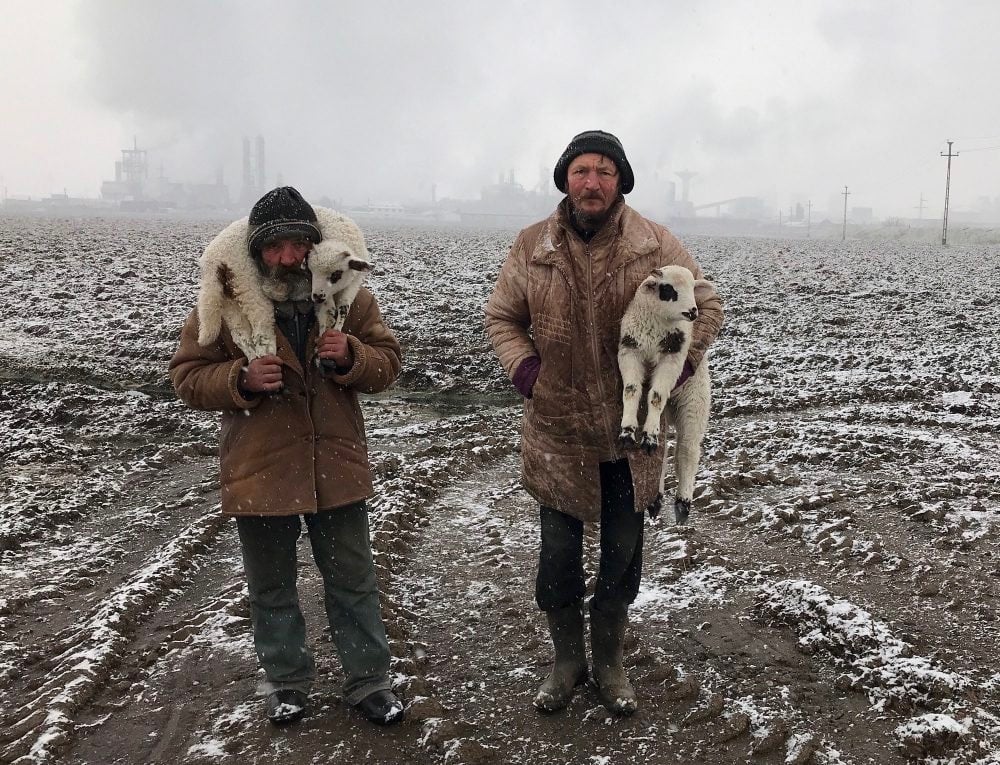
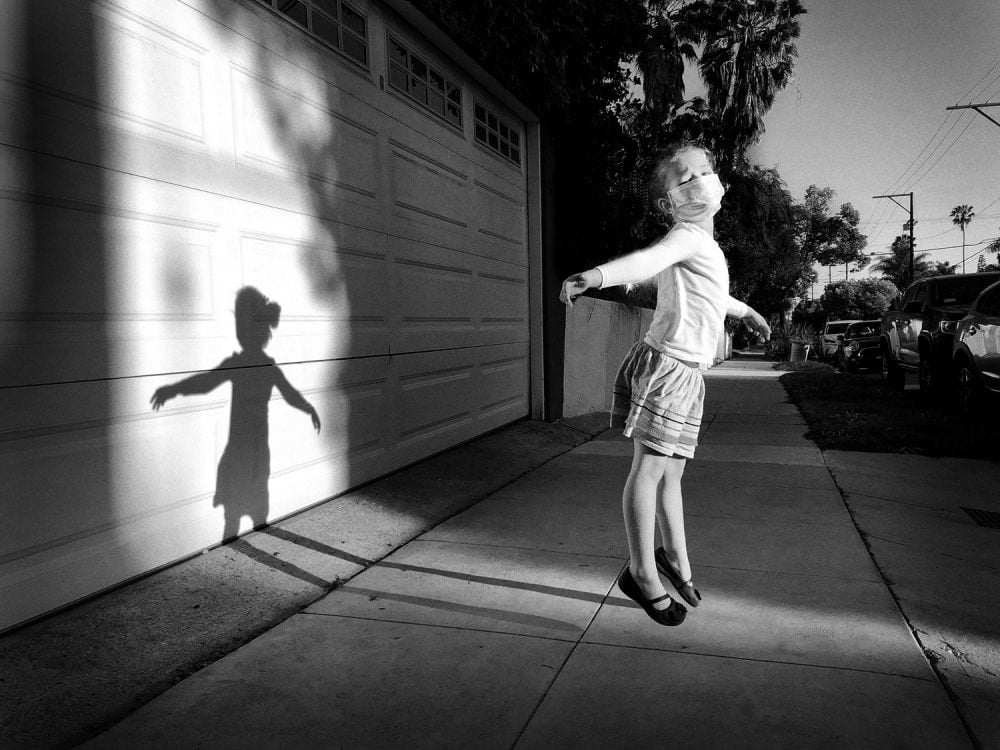

The IPPA Photographer of the Year Award is open to photographers who use an iPhone or iPad to take photos, and the winners of the 2021 competition demonstrate just how capable these devices are (and how much photography is not about your equipment). I’m struck by how many of the winners were not taken with the latest phones — the grand prize winner (above, top) was shot with an iPhone 7, which came out in 2016. Photos above by Istvan Kerekes, Jeff Rayner, and Enhua Ni.
A timeline of digital nomadism. The term “digital nomad” was first used in 1997, but the concept originated perhaps as far back as the 60s.
The trailer for Ghostbusters: Afterlife. Looks fun.
Stand Here for Dance Party
Since 2001, performance art group Improv Everywhere have been staging events in public, aiming to “surprise and delight random strangers through positive pranks”. Their latest endeavor takes place in NYC, perhaps the best place on Earth for exposing random strangers to positive pranks. A man in an orange vest places a “Stand Here for Dance Party” sign on the ground and then walks away. A brave soul steps onto the sign and, well, you might guess what happens next.
I found this via Rob Walker’s newsletter about his book, The Art of Noticing. I love what he wrote about it:
Now that you’ve seen it, you know that once someone did stand on the decal, a squad of Improv Everywhere operatives, with boom boxes and impressive dance moves, converted the public space into (as promised) an open-air dance party. Very fun.
But here’s what makes this work: Not just the planning and the expert performers and the slick choreography and the clever subversion of social-distance design. None of that matters unless somebody stands on the decal. What activates this entire operation is curiosity.
He continues, describing the woman who gets the party started:
This woman is my hero! I love everything about her, her body language, her openness, the thrilling sense she radiates that anything could happen and she’s up for it. And if you’ve watched the video, you know that she in fact unleashed an experience that she (and many strangers nearby) will never forget.
What’s not in the video, but we know is true, is some huge majority of people not even noticing, or actively ignoring, the invitation to an impromptu, on-the-spot dance party. As always, attention is the first step.
Curiosity. Attention. There are those words again, the universe trying to tell me something.
What a find! This short clip from 1974 is the earliest known footage of Prince playing live music. He was just 16, performing before the demolition of a YMCA building.
Grace Loh Prasad and her son Devin folded 465 origami cranes during the pandemic, one for each day. “As the number of cranes grew it also gave us some perspective on the magnitude and strangeness of our ongoing experience.”
What Comes at the End of a Life?
Jack Thomas has been a journalist for the Boston Globe since 1958 and recently learned he has months to live due to a cancer diagnosis. So he wrote an article about what his impending death means.
As the saying goes, fate has dealt me one from the bottom of the deck, and I am now condemned to confront the question that has plagued me for years: How does a person spend what he knows are his final months of life?
Atop the list of things I’ll miss are the smiles and hugs every morning from my beautiful wife, Geraldine, the greatest blessing of my life. I hate the notion of an eternity without hearing laughter from my three children. And what about my 40 rose bushes? Who will nurture them? I cannot imagine an afterlife without the red of my America roses or the aroma of my yellow Julia Childs.
We told each of the three children individually. John Patrick put his face in his hands, racked with sobs. After hanging up the telephone, Jennifer doubled over and wept until her dog, Rosie, approached to lick away the tears but not the melancholy. Faith explained over the telephone that, if I could see her, she was weeping and wondering how she could get along without her dad. Now, she is on the Internet every day, snorkeling for new research, new strategies, new medications. My wife cries every morning, then rolls up her sleeves and handles all doctor appointments and medication. Without her… I cannot imagine.
(via nextdraft)
Ignorance and the Curious Idiot
From an interview with the Ted Lasso creative team, here’s co-creator and star Jason Sudeikis on where the idea for the show came from:
The thing Bill and I talked about in the pitch was this antithesis of the cocktail of a human man who is both ignorant and arrogant, which lo and behold, a Batman-villain version of it became president of the United States right around the same time. What if you played an ignorant guy who was actually curious? When someone used a big word like “vernacular,” he didn’t act like he knew it, but just stops the meeting like, “Question, what does that mean?”
Austin Kleon riffed on the unusual relationship between ignorance and curiosity:
That last point might be the most important: care is a form of attention, and unlike talent or expertise, it can be willed into being at any time.
If you care more than everybody else, you pay better attention, and you see things that others don’t see. To ask the questions that need to be asked, you have to care more than others about what happens, but care less about what others might think of you in the moment.
Which makes me think about my favorite scene from Lady Bird, summarized here by A.O. Scott:
Sister Sarah Joan (Lois Smith), the principal, has read Lady Bird’s college application essay. “It’s clear how much you love Sacramento,” Sister Sarah remarks. This comes as a surprise, both to Lady Bird and the viewer, who is by now aware of Lady Bird’s frustration with her hometown.
“I guess I pay attention,” she says, not wanting to be contrary.
“Don’t you think they’re the same thing?” the wise sister asks.
The idea that attention is a form of love (and vice versa) is a beautiful insight.
These thoughts resonated with me today because I recently had a falling-out with someone I care about, in part because I paid insufficient attention to who they were as a person. I was ignorant and incurious in our relationship, a disastrous combination that caused deep pain. In the aftermath, I instinctively reached for the comfort of a rewatch of the first season of Ted Lasso, hoping for some laughs. But what I especially noticed this time around was how much effort Coach Lasso puts into deciphering who people are, who they really are, so he can help each individual be their best selves, which is perhaps the hallmark of a wonderful partnership. It was a good reminder for me of attention as a form of love but also of the work I need to do to actually practice that consistently in my life.
What Does Space Sound Like?
In this collaboration between musician and filmmaker John Boswell (aka melodysheep) and the sound podcast Twenty Thousand Hertz, we get to listen to some of the actual and theoretical sounds of space, from what the Sun would sound like if space weren’t a vacuum (we’d hear it as loud as a jackhammer on Earth) to the sound of the Universe just after the Big Bang to thunder in the thick atmosphere of Venus to dreamlike piano music on Mars.
Floating in the silent void of space are trillions of islands of sound, each with their own sonic flavor — some eerily familiar, some wildly different than Earth’s. And even space itself was once brimming with sound.
This short film takes you on a journey back in time and to the edge of our solar system and beyond, to discover what other worlds of sound are lurking beyond Earth’s atmosphere. You won’t believe your ears :)
This is really well done, which isn’t surprising considering Boswell did the excellent Timelapse of the Future video a few years back. The soundtrack to The Sounds of Space video is available on Bandcamp. (via aeon)
“His Name Was Emmett Till”
This piece by Wright Thompson on how the murder of Emmett Till has been remembered and forgotten is a difficult, compelling, and important read. The story centers around the still-little-known barn where Till was tortured and murdered by a group of several white men in 1955.
But the way Till’s name exists in the firmament of American history stands in opposition to the gaps in what we know about his killing. No one knows, for instance, how many people were involved. Most historians think at least seven were present. Only two were tried: half brothers J. W. Milam and Roy Bryant. Another half brother, Leslie Milam, was there that night too. He lived in an old white farmhouse a few dozen steps from the barn, next to where Jeff Andrews’s house now stands.
In 1955 an all-white, all-male jury, encouraged by the defense to do their duty as “Anglo-Saxons,” acquitted J. W. Milam and Roy Bryant. Because the defendants couldn’t be tried again, they got paid to make a confession to a national magazine — a heavily fictionalized account stage-managed by their lawyers — and Leslie Milam and his barn were written out of the story. Ask most people where Till died and they’ll say Money, Mississippi, the town where Till whistled at Bryant’s wife outside the family’s store. An Equal Justice Initiative monument in Montgomery says Money. Wikipedia does too. The Library of Congress website skips over the barn, which is just outside the town of Drew, about 45 minutes from the store.
I learned about the barn last year and have since made repeated visits, alone and with groups, once with members of Till’s family. Over and over, I drove from my home in the Mississippi hill country back into the gothic flatland where I was born. The barn’s existence conjures a complex set of reactions: It is a mourning bench for Black Americans, an unwelcome mirror for white Americans. It both repels and demands attention.
What It Feels Like to Lose Your Favorite Season. On top of everything else, the climate crisis is disrupting seasonal rhythms. (I can’t get outside for exercise today because the air quality is “unhealthy for all groups” here in VT.)
4 Reasons I’m Wearing a Mask Again. “The Delta variant is spreading fast, so I’m supplementing the protection offered by my vaccine.”
Sundown Towns Are Still A Problem For Black Drivers. “It’s when you veer off to the back roads that don’t connect to the highway, that’s when you find yourself in trouble.”
The Simplest Tool for Improving Cities Is Also Free. “We can creatively reorganize our collective hours and days in ways that help more people enjoy our cities and institutions.”
This guy has gone 20 years without spending any money. He even goes so far as burning bills when he gets them. (It seems like he still causes a substantial amount of money to be spent on his behalf though…)
The Last Duel, a historical film set in medieval France starring Adam Driver and directed by Ridley Scott? Sure, yeah.
Save Your Mask for the Next Disaster
In what will be an increasingly common occurrence in the years to come, smoke from fires in the western United States and Canada covered a large part of the US over the past few days. The smoke drifted thousands of miles to the eastern seaboard and turned the skies hazy, the Sun orange, and the air dangerous for some people to breathe. But there’s good news: your Covid mask works for air pollution too!
Dr. Commane said people should avoid going outdoors in high-pollution conditions, and especially avoid strenuous exercise. She also suggested that wearing filtered masks can provide protection for those who can’t avoid the outdoors.
“A lot of the masks people have been wearing for Covid are designed to capture PM2.5,” she said, referring to N95-style masks. “That’s the right size to be very useful for air quality.”
It’s always nice when your apocalyptic dystopias match up so nicely.
How to Draw Yourself as a Peanuts Character
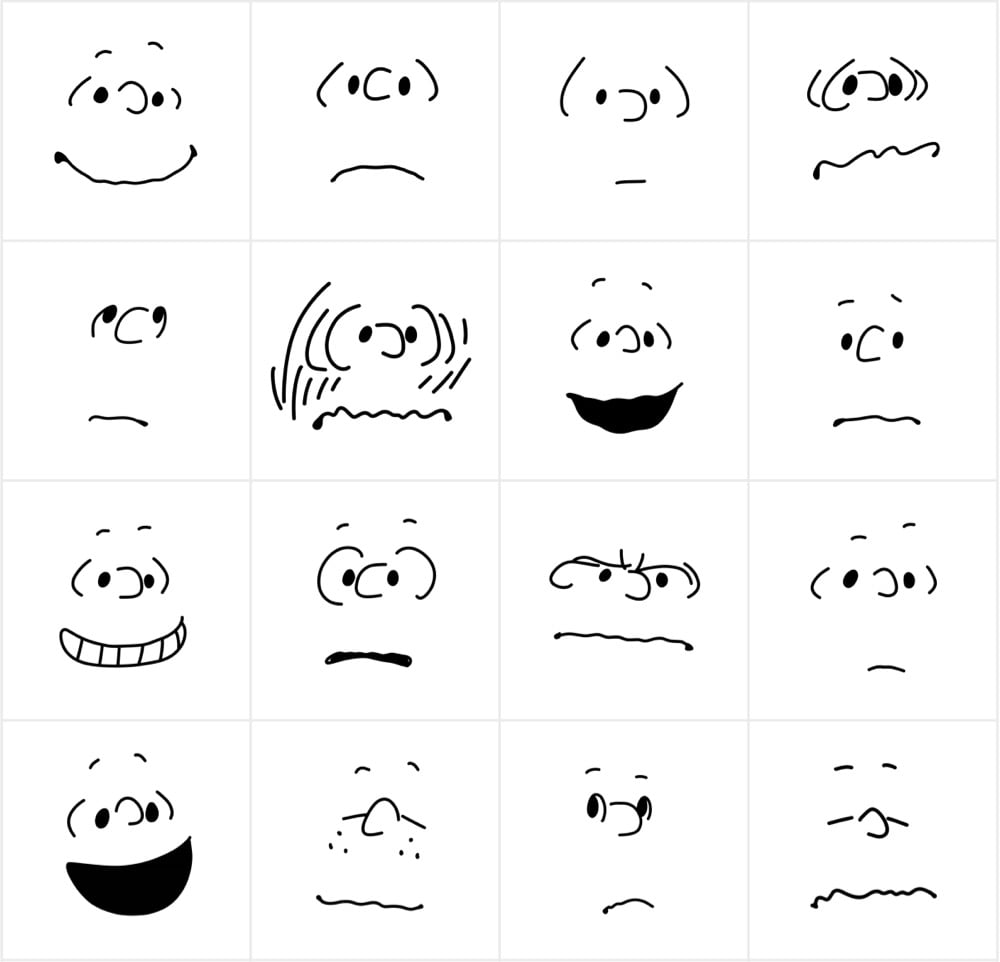
In this video, The Snoopy Show storyboard artist Krista Porter and Apple’s Anthony Jackson show us how to draw yourself as a Peanuts character. Once you get past all of the Apple synergy stuff (Pages! Pencil! Apple TV+!), this is actually pretty neat and you can obviously do it with any device/app or even pencil & paper. They’ve even included a PDF of drawing references to make it easier.
See also Watch Charles Schulz Draw Charlie Brown — it takes him about 35 seconds. (via print)
Socials & More