


An Awkward Kiss Changed How I Saw Joe Biden. “Why is the vice-president of the United States smelling my hair?”

Advertise here with Carbon Ads
This site is made possible by member support. 💞
Big thanks to Arcustech for hosting the site and offering amazing tech support.
When you buy through links on kottke.org, I may earn an affiliate commission. Thanks for supporting the site!
kottke.org. home of fine hypertext products since 1998.
Beloved by 86.47% of the web.
Entries for March 2019
Rebecca Traister: “Joe Biden Isn’t the Answer”. Seriously, this guy should not run for President. Enough already.
NYC will adopt congestion pricing in the next few years. All vehicles entering Manhattan below 60th Street will be charged a toll.
“Mr. Winston Churchill Presents His Compliments to Mr. Winston Churchill”
Before Sir Winston Churchill became a politician, he was a writer. In the late 1890s, Churchill published a pair of books about British war campaigns and continued writing throughout his life.
Around the same time, an American writer also named Winston Churchill was gaining popularity across the pond. His 1899 novel Richard Carvel sold 2 million copies and made him rich.
As the British Churchill recalled in an autobiography of his early life, around this time he reached out to his American counterpart to address the potential for their respective readers to confuse the two. In a letter dated June 7, 1899, it seems that Churchill had a bit of fun with it:
Mr. Winston Churchill presents his compliments to Mr. Winston Churchill, and begs to draw his attention to a matter which concerns them both. He has learnt from the Press notices that Mr. Winston Churchill proposes to bring out another novel, entitled Richard Carvel, which is certain to have a considerable sale both in England and America. Mr. Winston Churchill is also the author of a novel now being published in serial form in Macmillan’s Magazine, and for which he anticipates some sale both in England and America. He also proposes to publish on the 1st of October another military chronicle on the Soudan War. He has no doubt that Mr. Winston Churchill will recognise from this letter — if indeed by no other means — that there is grave danger of his works being mistaken for those of Mr. Winston Churchill. He feels sure that Mr. Winston Churchill desires this as little as he does himself. In future to avoid mistakes as far as possible, Mr. Winston Churchill has decided to sign all published articles, stories, or other work, ‘Winston Spencer Churchill’, and not ‘Winston Churchill’ as formerly. He trusts that this arrangement will commend itself to Mr. Winston Churchill, and he ventures to suggest, with a view to preventing further confusion which may arise out of this extraordinary coincidence, that both Mr. Winston Churchill and Mr. Winston Churchill should insert a short note in their respective publications explaining to the public which are the works of Mr. Winston Churchill and which those of Mr. Winston Churchill. The text of this note might form a subject for future discussion if Mr. Winston Churchill agrees with Mr. Winston Churchill’s proposition. He takes this occasion of complimenting Mr. Winston Churchill upon the style and success of his works, which are always brought to his notice whether in magazine or book form, and he trusts that Mr. Winston Churchill has derived equal pleasure from any work of his that may have attracted his attention.
The American Churchill answered back a couple of weeks later in similar fashion:
Mr. Winston Churchill is extremely grateful to Mr. Winston Churchill for bringing forward a subject which has given Mr. Winston Churchill much anxiety. Mr. Winston Churchill appreciates the courtesy of Mr. Winston Churchill in adopting the name of ‘Winston Spencer Churchill’ in his books, articles, etc. Mr. Winston Churchill makes haste to add that, had he possessed any other names, he would certainly have adopted one of them. The writings of Mr. Winston Spencer Churchill (henceforth so called) have been brought to Mr. Winston Churchill’s notice since the publication of his first story in the ‘Century’. It did not seem then to Mr. Winston Churchill that the works of Mr. Winston Spencer Churchill would conflict in any way with his own attempts at fiction.
The proposal of Mr. Winston Spencer Churchill to affix a note to the separate writings of Mr. Winston Spencer Churchill and Mr. Winston Churchill, the text of which is to be agreed on between them, — is quite acceptable to Mr. Winston Churchill. If Mr. Winston Spencer Churchill will do him the favour of drawing up this note, there is little doubt that Mr. Winston Churchill will acquiesce in its particulars.
Mr. Winston Churchill moreover, is about to ask the opinion of his friends and of his publishers as to the advisability of inserting the words ‘The American’, after his name on the title-page of his books. Should this seem wise to them, he will request his publishers to make the change in future editions.
Mr. Winston Churchill will take the liberty of sending Mr. Winston Churchill copies of the two novels he has written. He has a high admiration for the works of Mr. Winston Spencer Churchill and is looking forward with pleasure to reading Savrola.
I couldn’t find any evidence that either man ever placed a note into any of their books about the possible confusion, but their relationship was cordial. When Mr. Winston Spencer Churchill traveled to the US the next year, he was hosted by the American Mr. Winston Churchill — “He entertained me at a very gay banquet of young men, and we made each other complimentary speeches.” Nonetheless, the confusion continued: “all my mails were sent to his address and the bill for the dinner came in to me”.
Eventually, the fame of the British politician and writer eclipsed that of his American counterpart, whose books slipped from public memory when he stopped writing and withdrew from public life. Mr. Winston Spencer Churchill was awarded the Nobel Prize for Literature in 1953. (via @jackshafer)
A shorter version of this post first appeared in this morning’s Noticing newsletter. You can subscribe to Noticing right here.
Wild Stallions!
If you slip on your headphones and watch this on the biggest available screen, you may feel the unbelievable sense of freedom of running wild with a pack of horses. These white beauties are Camargue horses, “an ancient breed of horse indigenous to the Camargue area in southern France”. The white horses are semi-feral and famous for running in the ocean waves along the Mediterranean coast.
(via laura olin)
America Is Becoming Steadily Less Religious
According to new data from the General Social Survey, the number of Americans who answered “no religion” in response to the question “What is your religious tradition?” is now greater than those who identify as Catholics or evangelical Christians. Ryan Burge shared this graph of the trends from the past 50 years:
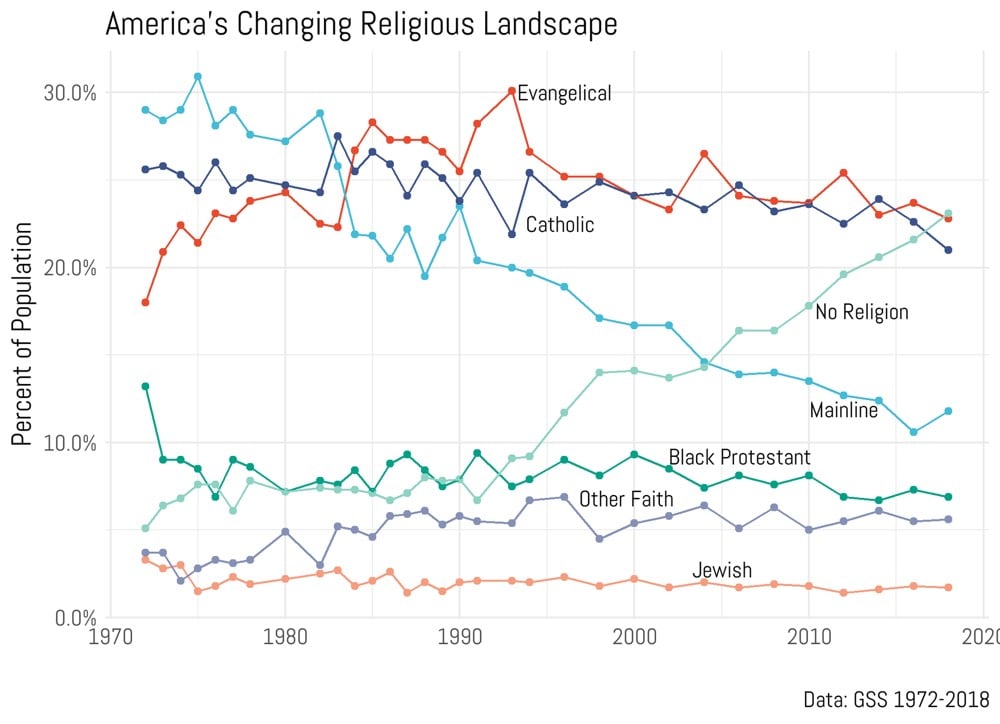
The “no religion” trend has been growing steadily since 1991. But as this piece notes, it’s tough to tell exactly why people are answering the question that way.
Even then, those who claim “no religion” are not inherently atheists or agnostics: A 2017 Pew Research survey found that only 22 percent of “nones” listed not believing in God as the most important reason for their lack of religious affiliation.
(via @heif)
What Is Our Least Useful Body Part?
Gizmodo’s Daniel Kolitz recently asked a panel of anatomists and evolutionary biologists about what the most useless part of the human body might be. Biology professor Dr. Nathan Lents reminds us that our bodies contain ample evidence of our design by evolution:
It’s hard to pick just one! The human wrist is a clunky hodgepodge of unnecessary bones. If we could design that joint from scratch, there is no way we would stick eight small, fixed, and mostly useless bones in there. We also have the stump of a tail that we could totally do without. It does nothing for us except occasionally gets injured or develops cancer.
I think my favorite useless body part is the pyramidalis muscle, which is located in our pelvic floor and attaches to the pelvis and some other connective tissue in our nether regions. What does it do? Well, when you flex this muscle, you can sort of squish the tissue in that area around pointlessly, but in monkeys and other mammals, it helps to manipulate the tail. So useless is this muscle that at least 20% of us don’t even have one and we don’t even miss it. I always enjoy telling people that, although humans and other apes don’t have tails, we still have the muscles to flex them!
Why Do Some Asian Accents Swap Ls and Rs in English?
Asian speakers switching their Rs and Ls is an old Hollywood trope that you may have seen in movies like A Christmas Story, Lethal Weapon 4, and even Lost in Translation. In this video, Joss Fong explains where that linguistic stereotype comes from and how it does and doesn’t apply to speakers of different Asian languages.
A foreign accent is when someone speaks a second language with the rules of their first language, and one of the most persistent and well-studied foreign-accent features is a lack of L/R contrast among native Japanese speakers learning English.
It’s so well-known that American soldiers in World War II reportedly used codewords like “lallapalooza” to distinguish Japanese spies from Chinese allies. But American movies and TV shows have applied this linguistic stereotype to Korean and Chinese characters too, like Kim Jong Il in Team America: World Police, or Chinese restaurant employees singing “fa ra ra ra ra” in A Christmas Story.
However, Japanese, Korean, and Chinese are completely different languages that each handle L-sound and R-sounds differently. In this episode of Vox Observatory, we take a look at each language and how it affects pronunciation for English-language learners.
See also A Phonetic Map of the Human Mouth.
The final round of the 2019 Tournament of Books is tomorrow. The matchup is Michael Ondaatje’s Warlight vs. My Sister, the Serial Killer by Oyinkan Braithwaite.
The Most Endangered Animal in Every US State
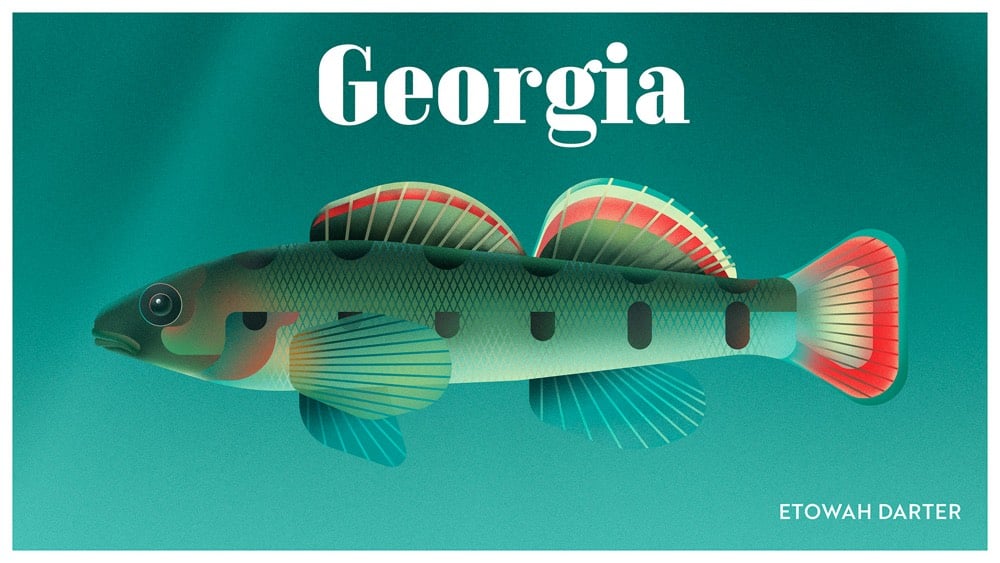
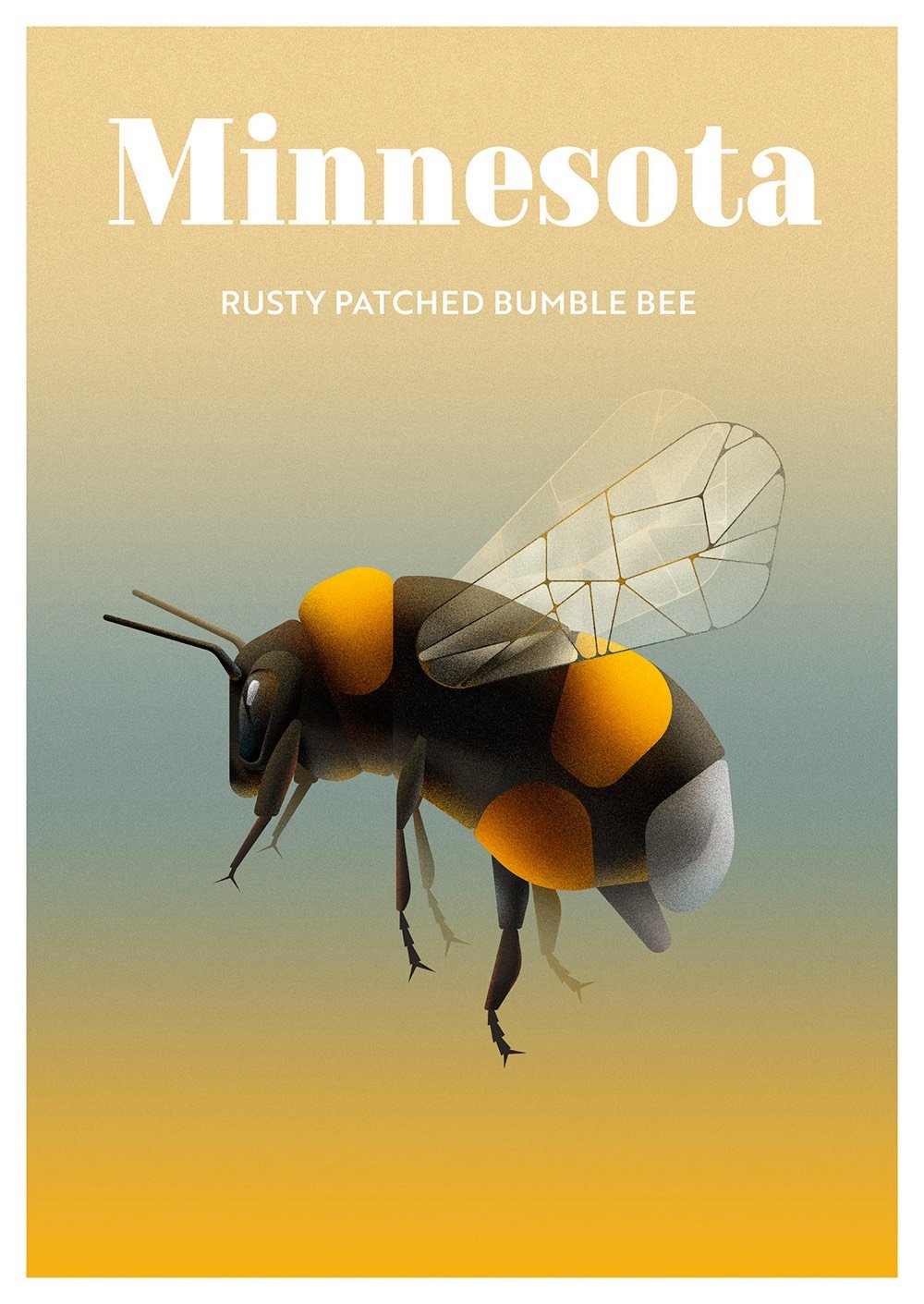
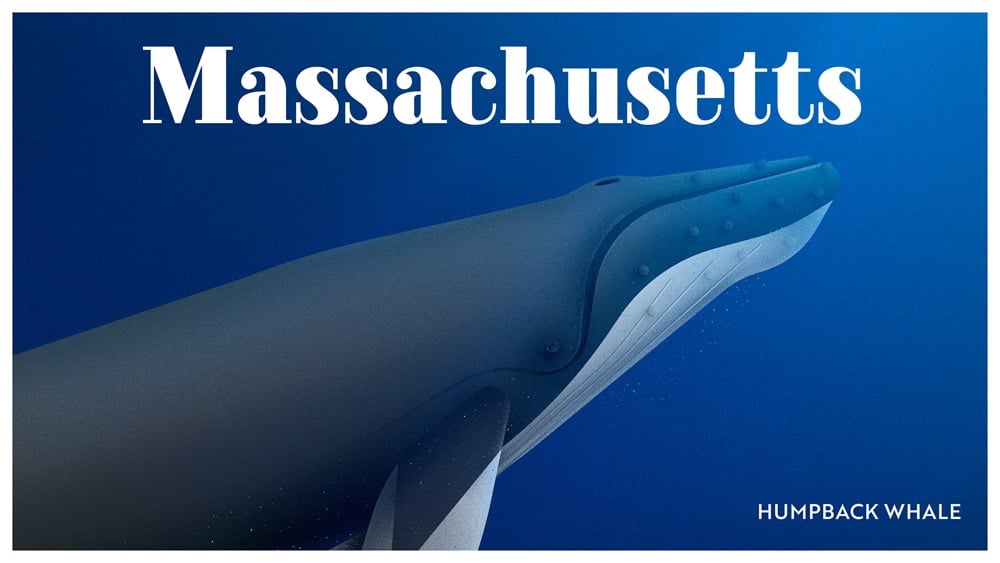
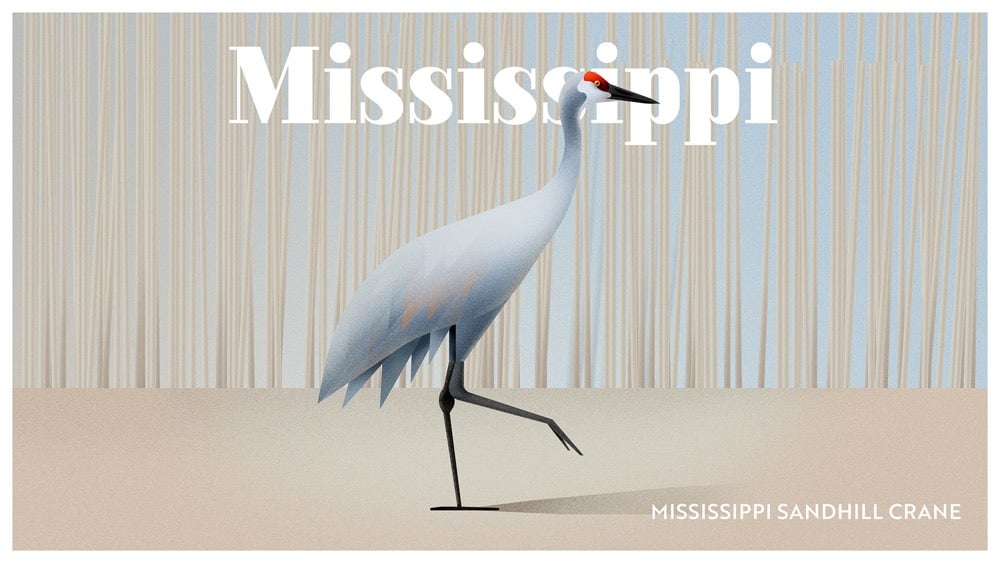

These visually striking posters showcase the most endangered animals from each of the 50 US states.
Here’s the story of the Uncompahgre fritillary butterfly from Colorado:
Colorado’s exotically-spelled native butterfly lives among snow willow patches high up in the San Juan Mountains. It has an ornate, retro look: rusty or light brown wings neatly segmented with inky black lines. Unfortunately, the Uncompahgre fritillary butterfly’s beauty has played a part in its downfall. Collectors, as well as trampling by people and livestock, have reduced their number to just 11 colonies.
We kill the things we love. (via moss and fog)
On “sober curiosity” and being more intentional about alcohol consumption and what it does to your body and life. “How different would our lives be if we stopped drinking on autopilot?”
Wall Disease - How Do Walls Affect How We Feel?
Jessica Wapner writes in the New Yorker about the research into how border walls affect the people living near them.
In the nineteen-sixties, Dietfried Müller-Hegemann wrote as though the physical presence of the Berlin Wall were itself the cause of wall disease. But most psychologists who study borders today see a more abstract relationship between those structures and mental health. Christine Leuenberger, a sociologist at Cornell University who has studied walls around the world, says that barriers are best thought of as part of a “wall system.” That system includes both physical markers, such as no-go areas and checkpoints, and ripple effects, such as job loss and the breakdown of social networks.
Leuenberger remembers meeting a Palestinian man in Bethlehem, near the West Bank barrier. He had been a nurse with a job in Jerusalem, but could no longer travel there for work. “I’m in prison in my own land,” she recalls him saying; he had resorted to selling soda by the roadside. Before the barrier, Israelis crossed the Green Line to buy produce in Palestinian towns, and Palestinians sewed fabric for Israeli textile companies. But an attempt to create a market at the border was stopped when the barrier went up. In this straightforward sense, walls can cut people off from sources of stability and happiness.
(thx, meg)
A Map of the Internet from May 1973
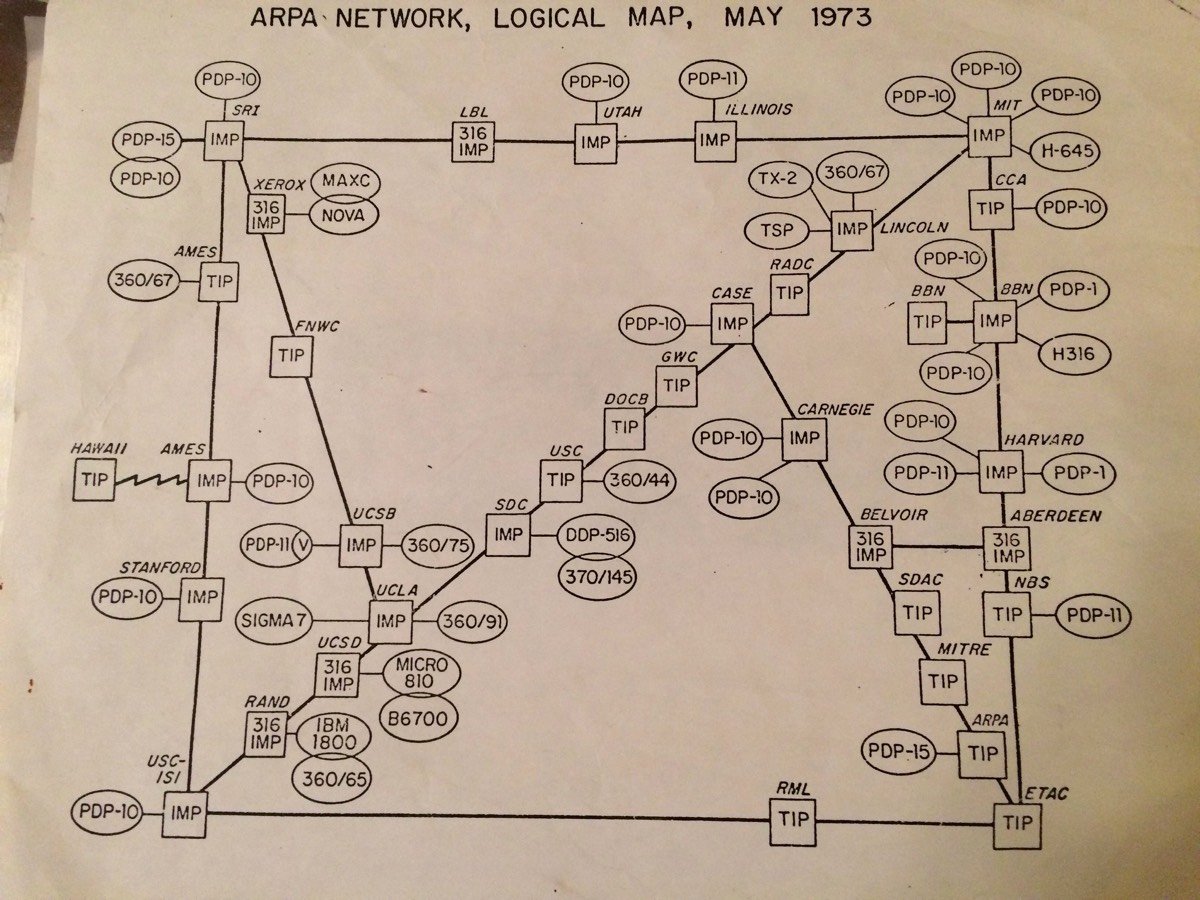
This is a map of ARPANET circa May 1973 via David Newbury, who found it among his father’s papers. The first part of ARPANET was built nearly 50 years ago and became the basis of the modern internet. The network was so small in the early days that those circles and squares on the 1973 map represent individual computers and routers, not universities or cities.
See also An Atlas of Cyberspaces.
The Impossibility of Translating Homer into English
Emily Wilson, who produced this banging translation of The Odyssey and is currently at work on The Iliad, recently tweeted a list of “reasons why it’s more or less impossible to translate Homer into English in a satisfactory way”. Here are a few of those reasons:
2. There aren’t enough onomatopoeic words for very loud chaotic noises.
3. “Many”, especially when repeated over and over, sounds childish; repeating “lots of” sounds worse. There are not enough words for large numbers of people or objects, and those we have (“multitude”, “plethora”, “myriad”) are often too pompous to use repeatedly.
6. Terms for social rank imply a particular wrong social order. “King” suggests monarchy. “Chief” has several connotations, none quite right. “General”, “Marshal”, “Officer” etc. suggest an established military hierarchy. “Mr” & “Sir” suggest business suits.
Last year, Wilson shared her process behind translating the first two lines of The Odyssey.
How much of Troy did he sack? ptoliethron is the lengthened form of polis, “city” (later, city-state). Sometimes =central part of city. But sacking just part of Troy isn’t really enough… Shd. the translator make it non-dumb if possible, or not worry about that?
There’s alliteration (polla/ plangthe … ptolietron epersen, notice the “p” sounds). What, if anything, should or can a translator do, when the sound of every word in her language is different from the words of the original? And, what to do about meter? Genre? Tone?
What’s the judgment, if any? Or narrative perspective? Do we feel OK about Odysseus being defined, instantly, as a city-sacker (ptoliporthos, one of his standard epithets)? Is the narrative voice invested in one side or another? It’s very hard to say. A judgment call.
And it goes on like that for more than a dozen tweets…for just two lines!
Remastering Star Trek: Deep Space Nine With Machine Learning. Promising results. Much of the series was shot on video, so remastering it in the usual way would be expensive.
Timelapse of the Future
One of my favorite Wikipedia articles is the timeline of the far future, which details the predictions science makes about the possible futures of the Earth, solar system, galaxy, and universe, from Antares exploding in a supernova visible from Earth in broad daylight in 10,000 years to the end of star formation in galaxies 1 trillion years from now…and beyond.
In his new video, Timelapse of the Future, John Boswell takes us on a trip through that timeline, a journey to the end of time.
We start in 2019 and travel exponentially through time, witnessing the future of Earth, the death of the sun, the end of all stars, proton decay, zombie galaxies, possible future civilizations, exploding black holes, the effects of dark energy, alternate universes, the final fate of the cosmos — to name a few.
A regular time lapse of that voyage would take forever, so Boswell cleverly doubles the pace every 5 seconds, so that just after 4 minutes into the video, a trillion years passes in just a second or two.1 You’d think that after the Earth is devoured by the Sun about 3 minutes in, things would get a bit boring and you could stop watching, but then you’d miss zombie white dwarfs roaming the universe in the degenerate era, the black hole mergers era 1000 trillion trillion trillion trillion years from now, the possible creation of baby “life boat” universes, and the point at which “nothing happens and it keeps not happening forever”.
This is similar to Charles and Ray Eames’ Powers of Ten increasing its speed and field of view every 10 seconds.↩
Microsoft will not participate in the tiresome internet tradition of April Fools’ Day. A good start but how about a pledge by the media to not cover AFD pranks?
The Collective Effervescence of Dancing
Why do we dance? It’s a silly question because the answer seems obvious — “because we want to, duh” — but this video from Aeon looks a bit closer at why humans like to collectively move to the beat. It has to do with our social nature and this great phrase, “collective effervescence”.
The answer, it seems, is in our need for social cohesion - that vital glue that keeps societies from breaking apart despite interpersonal differences. The French sociologist Émile Durkheim (1858-1917) theorised that ‘collective effervescence’ — moments in which people come together in some form of unifying, excitement-inducing activity — is at the root of what holds groups together. More recently, Bronwyn Tarr, an evolutionary biologist and psychologist at the University of Oxford who is also a dancer, has researched the evolutionary and neurological underpinnings of our innate tendency to bust a move. Drawing on the work of both Durkheim and Tarr, this Aeon Original video explores that unifying feeling of group ‘electricity’ that lifts us up when we’re enthralled by our favourite sports teams, participating in religious rituals, entranced by music - and, yes, dancing the night away.
You can read more about Durkheim and his work here and about Tarr’s work here.
One hypothesis is that it provides an opportunity for people to come together, making them move — dance — and in doing so we experience internal hormonal cascades which are made up of ‘feel good’ chemicals. These bursts of chemicals are part of our brain’s pain and pleasure and reward circuitry, and when they are triggered they provide an experience of elation and positive reward. When we get this kick in the presence of others, the result is that of collective joy — positive, shared experiences through which we establish and maintain important social connections with others. Now we feel like we belong to a unified, cohesive whole.
Being part of a cohesive social group would have been really important for our ancestors — collaborating with others to find shelter, hunt, rear young would have increased our chances of survival. Music and dance are by no means the only ways we can stimulate these positive social ‘highs’. But they’re really good ways of doing it because it’s an experience that we can share with lots of people at once. In order to understand why that would have given us such a great advantage we need to look at our species in the context of primates.
(via open culture)
This AI Converts Quick Sketches to Photorealistic Landscapes
NVIDIA has been doing lots of interesting things with deep learning algorithms lately (like AI-Generated Human Faces That Look Amazingly Real). Their most recent effort is the development and training of a program that takes rough sketches and converts them into realistic images.
A novice painter might set brush to canvas aiming to create a stunning sunset landscape — craggy, snow-covered peaks reflected in a glassy lake — only to end up with something that looks more like a multi-colored inkblot.
But a deep learning model developed by NVIDIA Research can do just the opposite: it turns rough doodles into photorealistic masterpieces with breathtaking ease. The tool leverages generative adversarial networks, or GANs, to convert segmentation maps into lifelike images.
Here’s a post I did 10 years ago that shows how far sketch-to-photo technology has come.
Watch Anthony Miracola make 31 NBA 3-pointers in a row in under a minute. Form’s not great but they all go right in.
The Designer’s Dictionary of Type
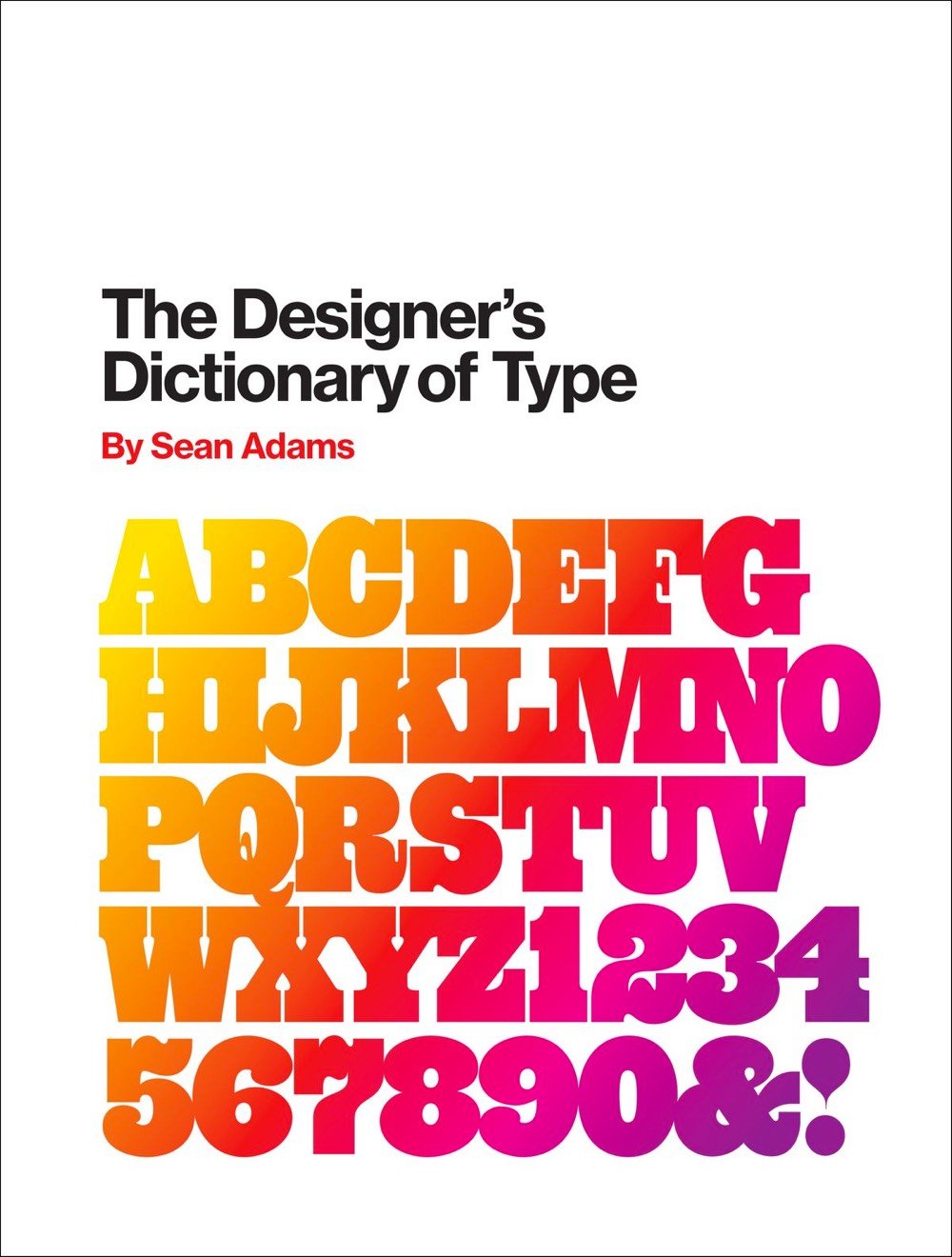
In his forthcoming book, The Designer’s Dictionary of Type, Sean Adams profiles 48 of the best-known typefaces in the world, from Helvetica and Garamond to Cooper Black and OCR-A. Fast Company has a short excerpt.
Cooper Black has a close association with the 1970s; however, Oswald Cooper actually created the typeface in 1921. Cooper designed the Black weight after releasing a larger Cooper Old Style family of fonts. The forms are based on old style serif typefaces but are “fat” and soft. This type of letterform gained popularity between 1910 and 1920. Other designers worked with similar forms, such as Frederic Goudy and his typefaces Goudy Heavy Face and Pabst Extra Bold. In the 1960s and 1970s, designers looking for alternatives to cold Swiss modernism and Helvetica looked back and revived Cooper Black. Its soft forms worked exceptionally well with phototypesetting, which allowed for extremely tight kerning. Both the counterculture movement and low-end DIY design adopted Cooper Black. By the end of the 1970s, the typeface was ubiquitous, but it again fell out of fashion as the New Wave movement gained momentum.
The Impossible Fractal Triangle

Nidhal Selmi combined the fractal Sierpinski triangle with the impossible Penrose triangle to create the M.C. Escher-like the Selmi triangle.
88 Important Truths I’ve Learned About Life. “Every problem you have is your responsibility, regardless of who caused it.”
Astonishingly Photorealistic Real-Time Rendered Scene By a Video Game Engine
This two-minute scene rendered in real-time by a video game engine is almost indistinguishable from real life. Petapixel explains what’s going on here:
To prepare for the project, Quixel spent a month in cold and wet locations in Iceland, scanning all kinds of objects found in the natural environment using. The team returned with over 1,000 scans that captured the details of the landscape.
Using the scans — a part of Quixel’s Megascans library — a team of three artists at Quixel created the 1:45 cinematic film in real-time using the power of the Unreal Engine 4 game engine.
Stepping Into the Uncanny, Unsettling World of Shen Yun. The near-ubiquitous dance troupe is affiliated with Falun Gong.
US Postal Service Unveils 50th Anniversary Apollo 11 Stamps
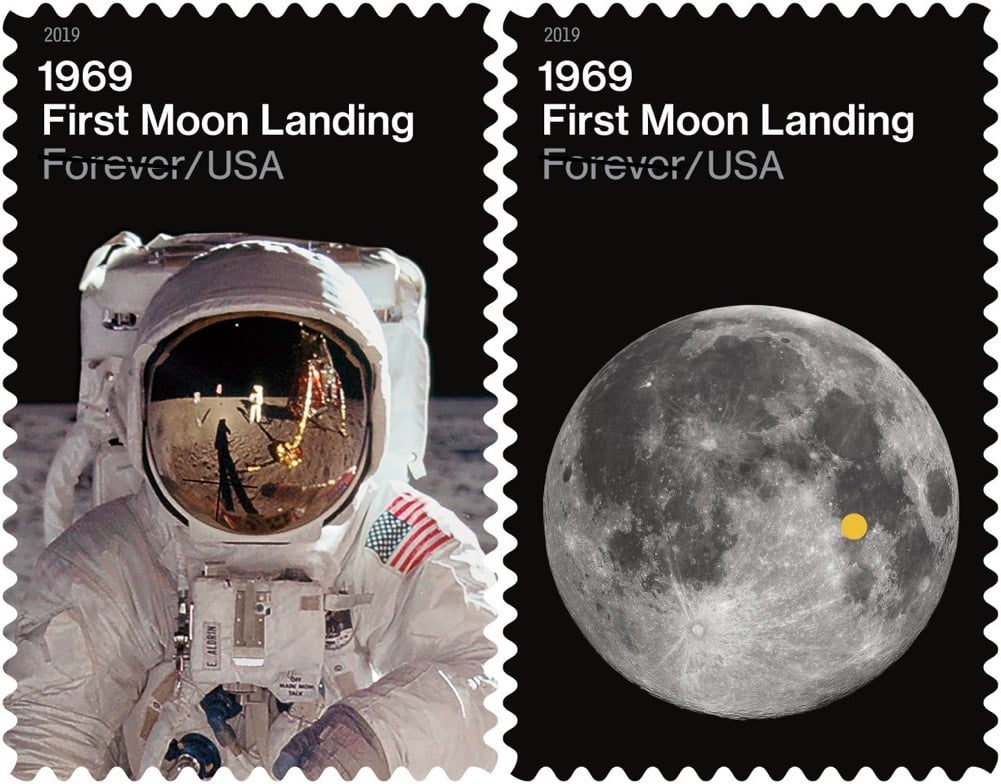
In commemoration of the 50th anniversary of the Apollo 11 Moon landing, the USPS is releasing a pair of stamps with lunar imagery.
One stamp features a photograph of Apollo 11 astronaut Buzz Aldrin in his spacesuit on the surface of the moon. The image was taken by astronaut Neil Armstrong. The other stamp, a photograph of the moon taken in 2010 by Gregory H. Revera of Huntsville, AL, shows the landing site of the lunar module in the Sea of Tranquility. The site is indicated on the stamp by a dot.
These pair nicely with the US Mint’s Apollo 11 commemorative coins.
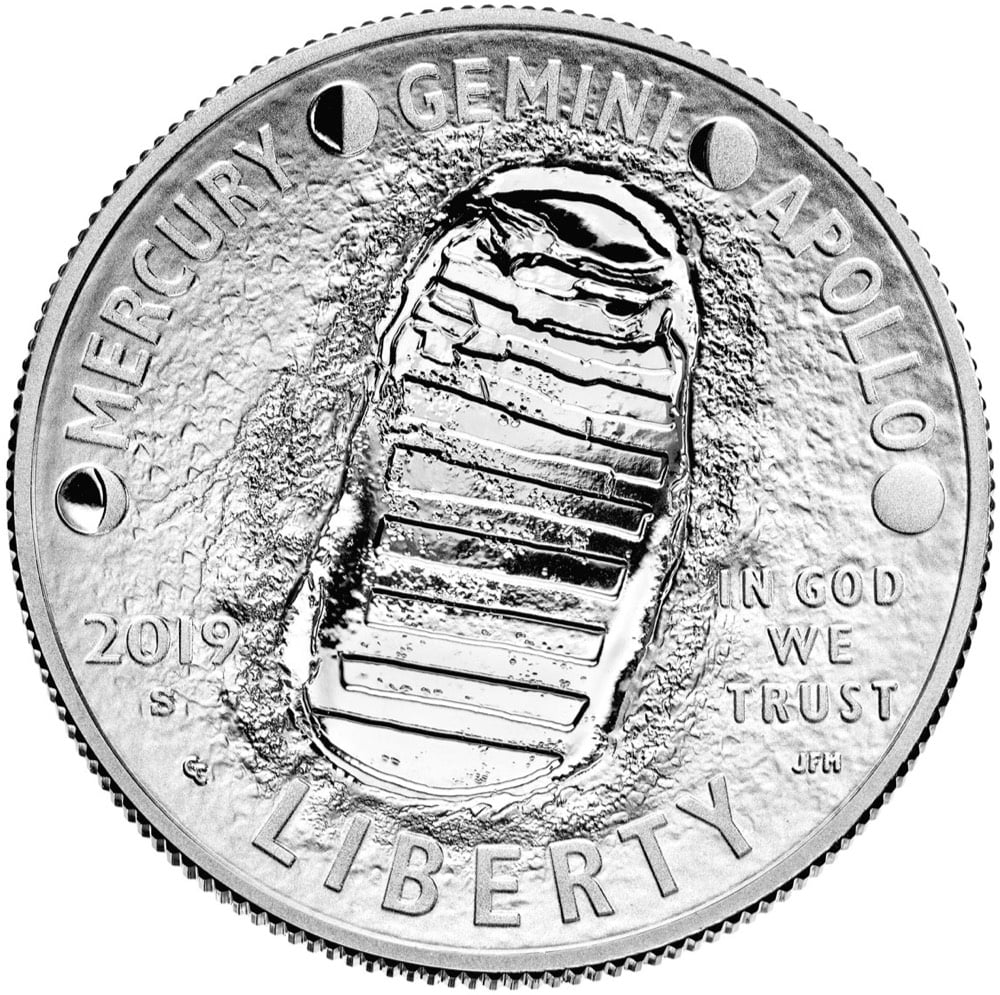
(via swissmiss)
Ikea Hacks for People with Disabilities
Ikea furniture is so ubiquitous that all sorts of hacks and modifications have been designed by fans to coax new uses out of familiar shelves and tables. Now Ikea itself has gotten into the hacks game by partnering with a pair of Israeli non-profits to develop modifications to their products to help make them more accessible and useful for people with disabilities.
The 3D model for each of the hacks is available for free download and can then be constructed with a 3D printer. Cane By Me is a ledge for a cane or walking stick that attaches to the Malm bed frame:
Glass Bumper is a wheelchair bumper that protects the glass doors on Billy bookshelves:
Couch Lift fits around the legs of the Karlstad sofa, raising it further off the ground for easier sitting & standing:
(via fast company)
How Animators Created the Spider-Verse
2018’s most visually inventive movie was Spider-Man: Into the Spider-Verse. In this video, Danny Dimian, Visual Effects Supervisor, and Josh Beveridge, Head of Character Animation, talk about how they and their team created the look of the movie.
Two of my favorite details of the movie were the halftone patterns and the offset printing artifacts used to “blur” the backgrounds and fast-moving elements in some scenes. Borrowing those elements from the comic books could have gone wrong, it could have been super cheesy, they could have overused them in a heavy-handed way. But they totally nailed it by finding ways to use these techniques in service to the story, not just aesthetically.
Oh and the machine learning stuff? Wow. I didn’t know that sort of thing was being used in film production yet. Is this a common thing?
Update: Simon Willison did a Twitter thread that points to dozens of people who worked on Spider-Verse explaining how different bits of the film got made. What an amazing resource…kudos to Sony Animation for allowing their artists to share their process in public like this.
‘The Very Hungry Caterpillar’ Turns 50 Years Old
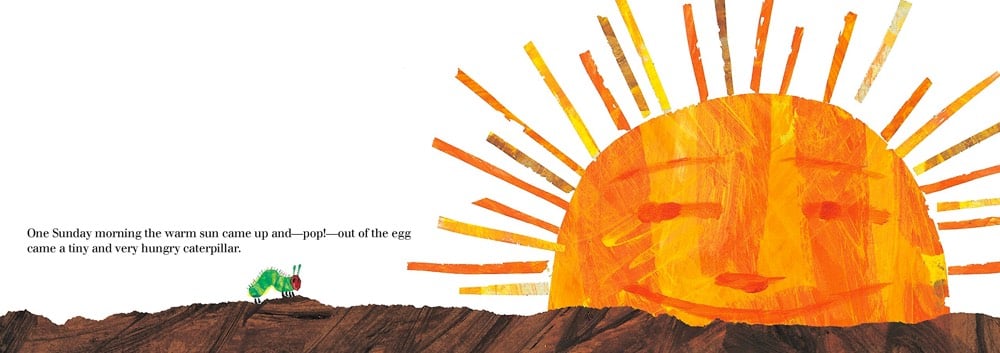
50 years ago last week, Eric Carle’s The Very Hungry Caterpillar was published for the first time. In a piece for The Atlantic, Ashley Fetters talked to a pair of kid lit experts about why the book remains so popular today.
Part of why both kids and parents love The Very Hungry Caterpillar is because it’s an educational book that doesn’t feel like a capital-E Educational book. Traditionally, children’s literature is a didactic genre: “It teaches something,” Martin says, “but the best children’s books teach without kids knowing that they’re learning something.” In The Very Hungry Caterpillar, she adds, “you learn the days of the week. You learn colors. You learn the fruits. You learn junk-food names. In the end, you learn a little bit about nutrition, too: If you eat a whole bunch of junk food, you’re not going to feel that great.” Yet, crucially, none of the valuable information being presented ever feels “in your face,” Martin says.
The Very Hungry Caterpillar was certainly one of my favorite books as a kid — along with Cloudy With a Chance of Meatballs, Richard Scarry’s Busy, Busy Town & Cars and Trucks and Things That Go, and the Frog & Toad books — and it was one of the first books we read to our kids. I remember very clearly loving the partial pages and the holes. Holes! In a book! Right in the middle of the page! It felt transgressive. Like, what else is possible in this world if you can do such a thing? (Also, “caterpillar” is such a satisfying word to say, both correctly and, er, less so… I still default to my childhood “callarpitter” sometimes).
The great-great granddaughter of etiquette authority Emily Post has written a book called Higher Etiquette on the dos and don’ts of enjoying cannabis. “How to tackle pot faux pas such as ‘canoed’ joints and ‘lawn-mowed’ bowls…”
Sample chapter about Uber from @monteiro’s Ruined By Design: Ayn Rand Is a Dick. “I got mine, fuck you.”
Calling All Fungi & Slime Mold Fans



On her Instagram account, Marin Mushrooms, nature photographer Alison Pollack captures the otherworldly beauty of fungi and slime molds in northern California forests. (via laura olin)
Socials & More