Entries for May 2018
One of the recurrent topics here at the ol’ dot org is paying our respects to people who are mind-bendingly good at what they do. Case in point: watch this woman turn a magic scarf into about 100 different pieces of clothing in about 90 seconds. Reader, I audibly gasped at ~0:25 when she turned a scarf into a dress in the blink of an eye.
This extraordinary garment has been compared to a Thneed, a fictional garment from Dr. Seuss’ The Lorax:
I’m being quite useful. This thing is a Thneed.
A Thneed’s a Fine-Something-That-All-People-Need!
It’s a shirt. It’s a sock. It’s a glove. It’s a hat.
But it has OTHER uses. Yes, far beyond that.
You can use it for carpets. For pillows! For sheets!
Or curtains! Or covers for bicycle seats!”
There are quite a few magic scarves available for purchase on Amazon if you want to try one out for yourself, but check those seller ratings…some of them look a little sketchy. (via @dunstan)

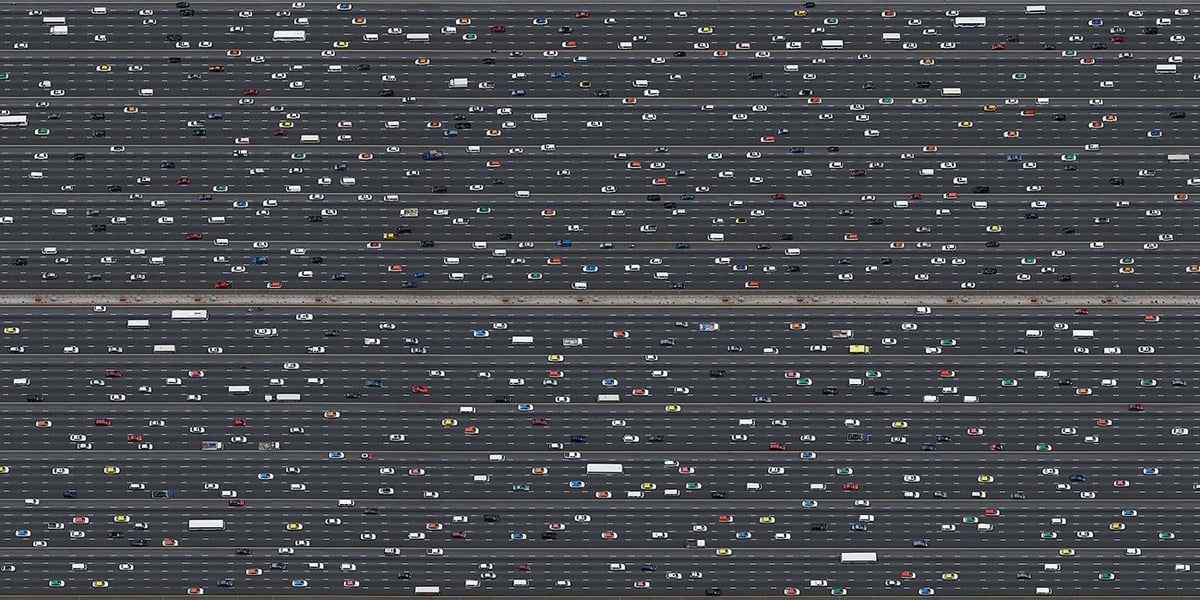

For his projects Exodus and Timeout, Marcus Lyon takes overhead photographs and edits them into fantastical scenes that nonetheless seem plausible. LAX isn’t that large, no waterpark in Houston has that many pools, and Dubai’s roads do not have 70+ lanes, but you kinda have to look at satellite imagery on Google Maps to verify the fabrications.
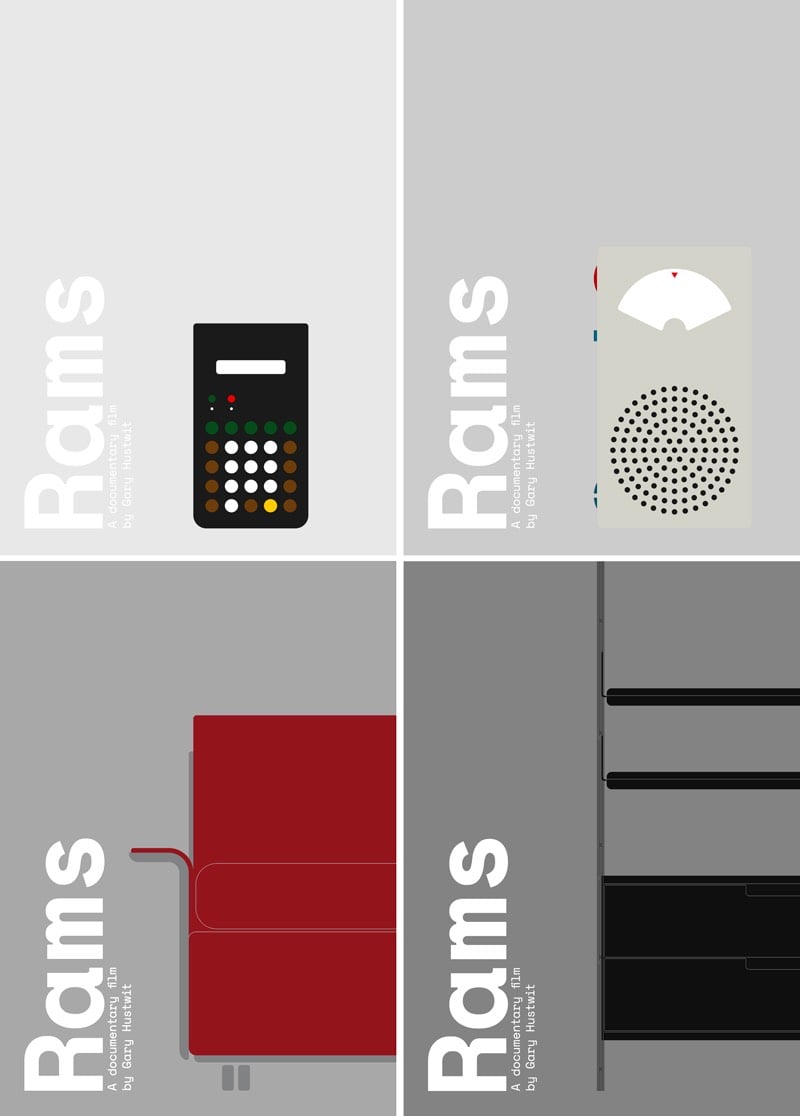
I really like these prints for Rams, Gary Hustwit’s upcoming documentary about the legendary Dieter Rams. Each print features an object designed by Rams or his design team: the T41 radio, the ET66 calculator, the 620 chair, and the 606 shelving system.
PS. You can still buy the calculator from Braun. Ok, it’s a reissue, but that means it won’t cost you 100s of dollars on eBay.
Artist Guido Zimmermann has updated the architectural styling of the cuckoo clock with models based on buildings by Brutalist & Bauhaus architects.


The classic cuckoo clock is a symbol for prosperity in the middle class and is considered a kind of luxury for the home. The updated version, a prefabricated panel construction (“plattenbau”), reveals today’s urban and social life in residential blocks.
(via colossal)
Alexithymia, a little-known condition where a person lacks emotions. “‘I feel something but I’m unable to distinguish in any real way what that feeling is.’ The only emotions he is familiar with are fear and anger.”
Today’s playlist is The 100 Best One-Hit Wonder Songs:
You can read the rationale behind all 100 picks on Consequence of Sound.
The standard definition (determined by who, Right Said Fred?) of a one-hit wonder is a band who has cracked the Top 40 of the Billboard Hot 100 only once. What, you had a late-career single make 41? Sorry, thanks for playing, but charting 41 isn’t the same as 40, right? Um, no … maybe? It gets no easier when you have to wade through dozens of other Billboard charts that count for everything except, apparently, determining a one-hit wonder. And what about all those charts in other countries — yeah, we ignored them. Great, this list is making us xenophobic now.
But that’s getting pretty damn technical, and we’re not numbers people here. Because, technically, Beck is a one-hit wonder. As are the Grateful Dead and even Radiohead if they hadn’t snuck in at 37 with “Nude” back in 2008. Very lucky, Mr. Yorke. Can you imagine if you scrolled through a list of the 100 Best One-Hit Wonder Songs and found Beck sitting at the top spot? You’d collectively crash our site’s server in a contest to see which commenter could say the cruelest thing about our music knowledge, mothers, and cats.
“Technically, Beck is a one-hit wonder.” Also, I feel that Sir Mix-a-Lot should have made the list.
Given the recent Netflix-driven Cambrian explosion in television shows, there is no Best Show On TV™ anymore. But over the past few years, even with so many other excellent shows to choose from, The Americans had a legitimate claim to that title. In his review of last night’s final show (spoilers ahoy!), Alan Sepinwall nails what made the show so compelling to me:
Priority-wise, The Americans has always been a show about marriage that used the spycraft to heighten the stakes, rather than an espionage drama that used the family material to make Philip and Elizabeth more relatable. Its chief interest was in the compromises necessary to make any long-term relationship work, about the disagreements every pair of spouses will have about career and parenting and everything else. The assassinations, honeypots, and Stan’s investigations provided narrative propulsion and suspense, and Soviet ideology was at the heart of every choice Elizabeth made, particularly when it came to Paige, but all of that was thematically secondary to husband/wife and parent/child issues.
As I noted in my recent media diet post, their final season has been very strong, and the series finale held true to the show’s focus on family in an unexpectedly quiet and powerful way.
Could the series have ended with some combination of Jenningses killed or behind bars for life? Certainly, and it wouldn’t have rang false if it had happened. But the fact that the finale’s tragedies are all small-scale and family-related — Elizabeth and Philip abandon one child and are abandoned by the other, Stan learns that his best friend has been betraying him for years, and that his wife may be betraying him in the same way — feels in keeping with all that we’ve seen before.
I loved the finale — Stan’s devastation in particular ruined me…I’m going to be thinking about that for a long while — and Sepinwall’s recap is typically great. He also interviewed the show’s creators about the episode, who maddeningly (but correctly, I grudgingly have to admit) won’t spill the beans on what happens to any of the characters after the events of the show. Other recaps: NY Times, Vulture, AV Club.
If you want to catch up, all six seasons of The Americans are available on Amazon (1-5 are Prime, 6 isn’t yet).
No one answers their phone anymore. For the past 6-8 years at least, there’s only one number I pick up for…everything else goes to voicemail.

This 1985 catalog for engineers contains hundreds and hundreds of tech logos from the 70s and 80s. They are glorious.
Marcin Wichary turned more than 1400 of these logos into a screensaver “for your random viewing pleasure”.
From the Atlantic, a quick visual history of human-created light sources over the past ~400,000 years, from wood fires to candles to the electric light.
3,000 BCE: The “rushlight” candle is invented in Ancient Egypt. It is made of a pithy stalk of rush soaked in animal fat.
1500 BCE: Babylonian/Assyrian lamps are created from olive or sesame oil. They had a linen wick and were fashioned from stone, terracotta, metal, or shells.
100 CE: The Romans create the tallow candle, which has a small wick with a thick, hand-formed layer of tallow.
One of the more interesting inventions along the way was the moonlight tower. In the early days of electric lights, mimicking the bright light of the Moon was one of the ways that towns chose to light their streets.

Humans, too, found the high-slung orbs to be as disorienting as they were ethereal. As tall as the towers were, they still left shadows in their wake — shadows tinged with sharp blue light, Freeberg notes, which left pedestrians “dazed and puzzled.” Foggy evenings, combined with the air pollution of a newly industrialized America, could thrust all of Detroit into effective darkness — meaning, Freeberg writes, that “Detroiters could only speculate about the lovely sight that their lights must be creating as they shone down on the blanket of mist and soot that smothered the city.” Even during occasions when the fog broke enough to allow some light to penetrate to the streets below, “many found themselves groping along sidewalks in an eerie gloom.”
In the end, the many costs of the artificial moonlight outweighed its beauty and poetry. The structures meant to inspire awe among outsiders ended up inspiring, ultimately, something more akin to pity. (“It appears to me,” one frank observer put it, “that you are taking a very expensive way of getting a minimum benefit from the electric lights.”)
BBC Culture recently polled authors, journalists, and other literary types from 35 different countries and asked them “to nominate up to five fictional stories they felt had shaped mindsets or influenced history”. From the responses, they compiled a list of 100 stories that shaped the world. Here’s the top 5:
5. Things Fall Apart (Chinua Achebe, 1958)
4. Nineteen Eighty-Four (George Orwell, 1949)
3. Frankenstein (Mary Shelley, 1818)
2. Uncle Tom’s Cabin (Harriet Beecher Stowe, 1852)
1. The Odyssey (Homer, 8th Century BC)
The Harry Potter series, The Epic of Gilgamesh, and Jane Eyre are also included in the top 20. Oddly, the Hebrew Bible, Christian Bible, Koran, and other religious texts are nowhere to be found on the list. A story like the four gospels of the New Testament has surely changed the world much more than all of the other titles on the list combined. (via fave5)
For this year’s 36 Days of Type project, Ben Huynh submitted this 3D animation of the alphabet from A to Z. You can see animations of the individual letters on Huynh’s Instagram. (via colossal)
In 1923, Inkwell Studios1 released a 20-minute animated explanation of Albert Einstein’s theory of relativity, perhaps one of the very first scientific explainer videos ever made. Films were still silent in those days and the public’s scientific understanding limited (the discovery of Pluto was 7 years in the future, and penicillin 5 years) so the film is almost excruciatingly slow by today’s standards, but if you squint hard enough, you can see the great-grandparent to YouTube channels like Kurzgesagt, Nerdwriter, TED Ed, minutephysics, and the 119,000+ videos on YouTube returned for a “einstein relativity explained” search. (via open culture)
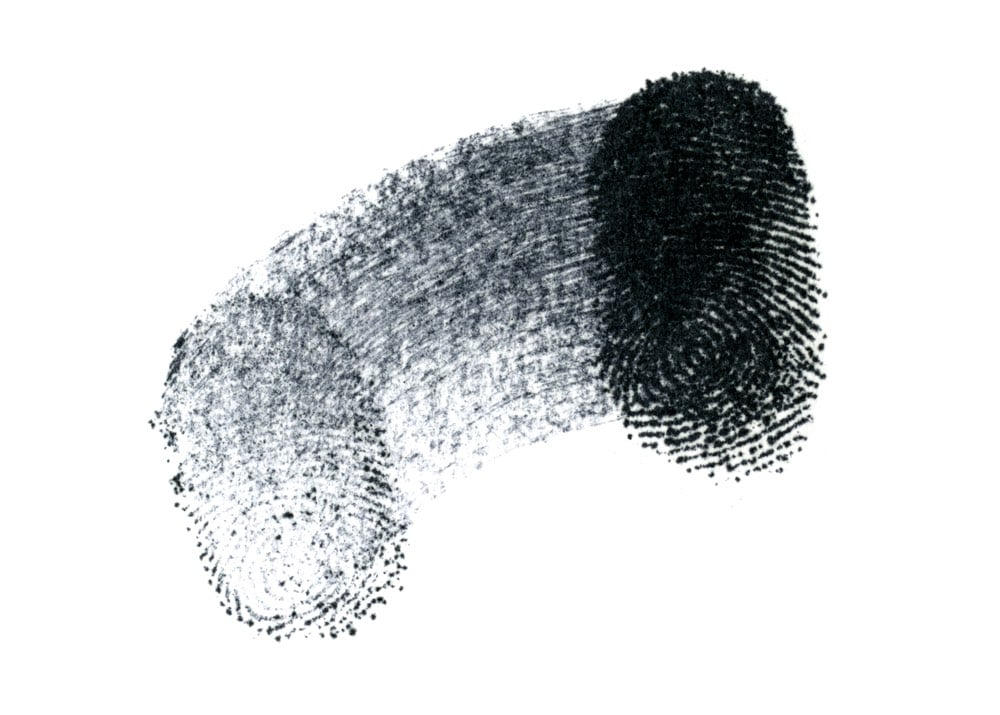
Chantel Tattoli’s piece for The Paris Review, The Surprising History (and Future) of Fingerprints, is interesting throughout, but these two things leapt from the screen (italics mine):
It is true that every print is unique to every finger, even for identical twins, who share the same genetic code. Fingerprints are formed by friction from touching the walls of our mother’s womb. Sometimes they are called “chanced impressions.” By Week 19, about four months before we are issued into the world, they are set.
WHAT?! Is this true? A cursory search shows this might indeed be the case, although it looks as though there’s not established scientific consensus around the process.
Also, Picasso was fingerprinted as a suspect in the theft of the Mona Lisa from the Louvre:
When French authorities interrogated Pablo Picasso, in 1911, at the Palais de Justice about the theft of the Mona Lisa from the Louvre that August, he was clad in his favorite red-and-white polka-dot shirt. Picasso cried. He begged forgiveness. He was in possession of two statuettes filched from the museum, but he hadn’t taken her.
“In possession of”? Turns out a pal of Picasso’s lifted the statuettes from the museum, which was notoriously easy to steal from, and sold them to the artist, who knew exactly what he was buying.
True to Pieret’s testimony, Picasso kept two stolen Iberian statues buried in a cupboard in his Paris apartment. Despite the artist’s later protestations of ignorance there could be no mistaking their origins. The bottom of each was stamped in bold: PROPERTY OF THE MUSÉE DU LOUVRE.
Fingerprint art by Evan Roth. (via @claytoncubitt)
Professor of philosophy Daniel DeNicola on the right of people to believe what they want to believe.
Unfortunately, many people today seem to take great licence with the right to believe, flouting their responsibility. The wilful ignorance and false knowledge that are commonly defended by the assertion ‘I have a right to my belief’ do not meet James’s requirements. Consider those who believe that the lunar landings or the Sandy Hook school shooting were unreal, government-created dramas; that Barack Obama is Muslim; that the Earth is flat; or that climate change is a hoax. In such cases, the right to believe is proclaimed as a negative right; that is, its intent is to foreclose dialogue, to deflect all challenges; to enjoin others from interfering with one’s belief-commitment. The mind is closed, not open for learning. They might be ‘true believers’, but they are not believers in the truth.
DeNicola is the author of the recent book Understanding Ignorance.
Artist Lydia Ricci collects scraps (of paper, cardboard, etc.) and sculpts them into everyday objects.
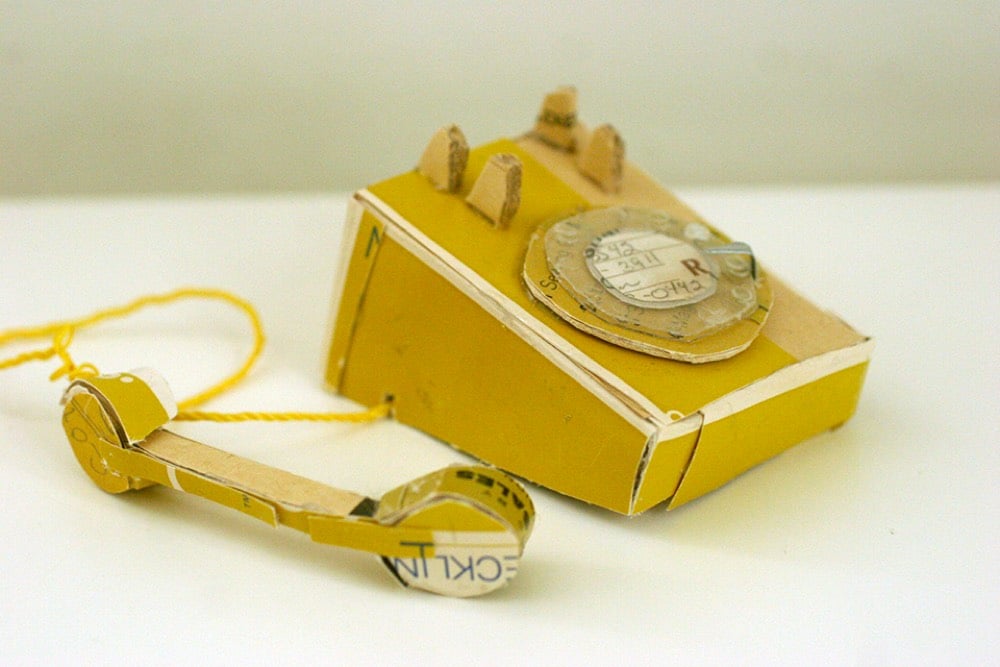
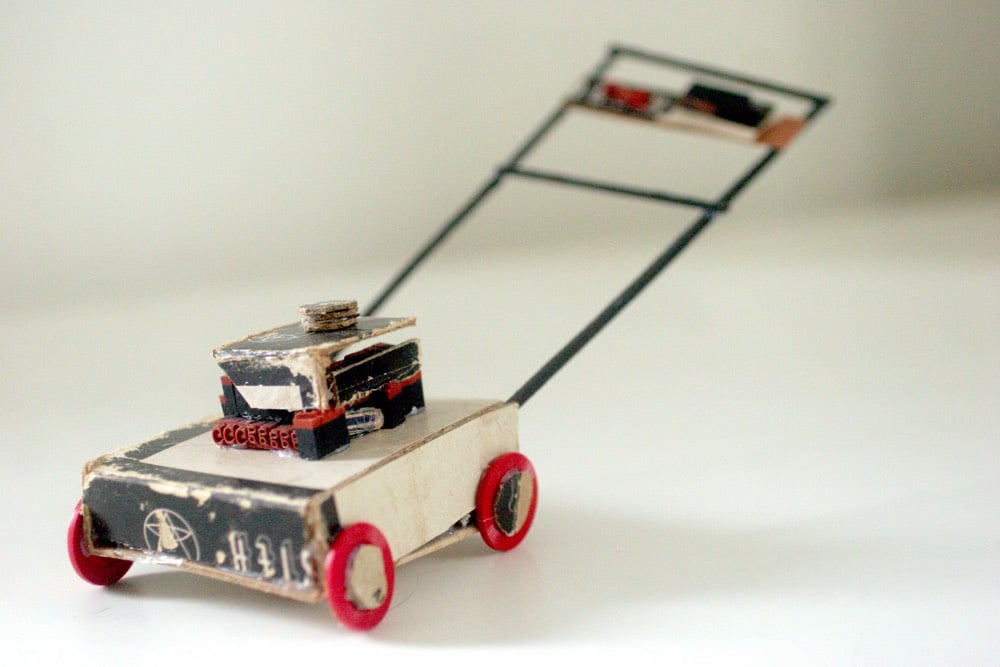
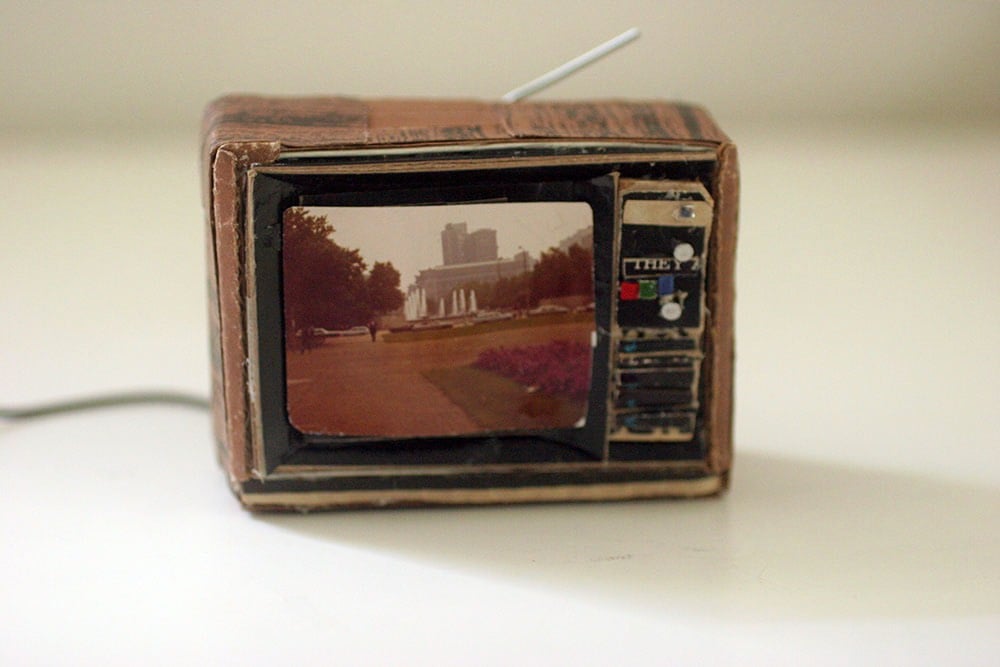
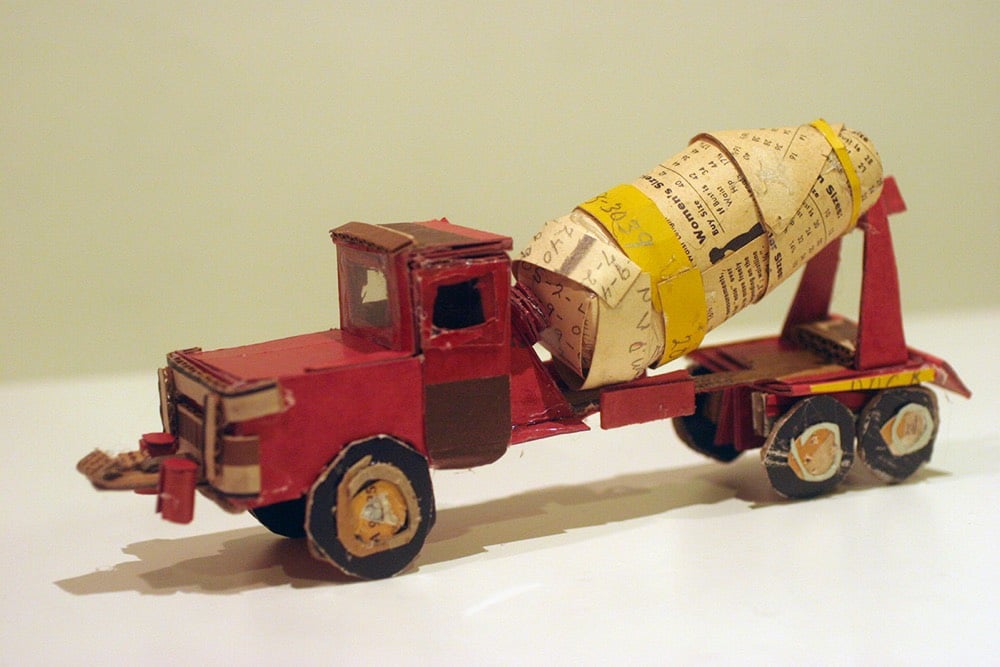
I love these…and there are a ton more to look at. Gah ok, just one more:
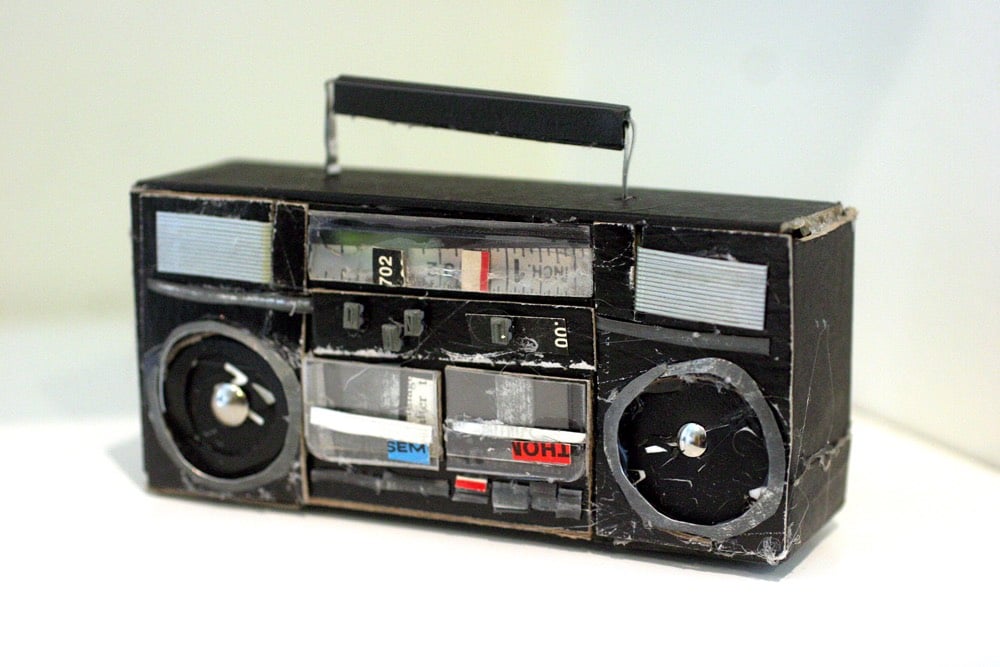
(via @yhaduong)
(A version of this story is an excerpt from this week’s Noticing newsletter. You can read more about Noticing here.)
In a rare interview, Italian author Elena Ferrante observes that between corruption, poverty, violence, fear, and the deterioration of democracy, “today it seems to me that the whole world is Naples and that Naples has the merit of having always presented itself without a mask.” The world of Ferrante’s novels is the world in which we’ve all been living; the rest of us are just catching up to what Neapolitans have known all along.
It seems you could make a similar case for The Onion in the time of Trump: the world was already absurd and buffoonish, and now it’s taken off its mask. It does make telling jokes a touch more tricky. Editor-in-chief Chad Nackers explains the site’s approach, admitting that the writers’ job would probably be easier if Hillary Clinton had been elected.
What strikes me is how much he attributes to the site’s changes over the years isn’t to the administration, but to the atmosphere, which has changed since the days of Bill Clinton (and not just because of who’s been elected since).
When I started, there weren’t really too many humor sites. There definitely weren’t any humor news sites. A lot of times, nobody else was going to get their comment out as fast as we were going to get it out, by virtue of us having a website. Now it almost seems like on Twitter there are people who are professional comedians who are online all day. A story breaks and they’re making jokes about it.
Andy Baio recently posted a link that shows you your Twitter timeline as it would have looked ten years ago if you followed all the same people that you do today. For me, at least, it’s amazing how different the tone is — even in the middle of an historic election, in the early stages of an enormous economic meltdown, there’s a lot less politics, a lot less sniping, and a lot more diaristic writing. It’s not necessarily better; it’s just very different. And all of those things were happening then — it’s just that Twitter wasn’t understood as the venue where every stance was to be articulated, every statement was to be critiqued, and every line was to be drawn. There were fewer people around, it was a lot more homogenous, and far fewer people were paying attention.
I wonder often how future historians will think about this time (you know, with the usual grisly caveat that people survive to do history in the future): how much of today’s ugliness, violence, and corruption they will think of as an aberration of one man, or one family, one political party, one social media network, one television network, etc.
Or will they see it as an interlocking, self-contradictory system, all of which had a history, and all of whose parts shaped and enabled what happened — hopefully, good and bad things. I mean, even the people who’ve argued that the coup has already happened can’t agree on whether it began with the election, with Congress, or some time long before.
Maybe the future historians will be better at disentangling these things than we are. Or maybe we’re just all hopelessly tangled.
Monica Heisey was recently stuck on an airplane without much to do. Luckily, she made an essay out of it. “Being Bored Is Fun and Good, Sorry” is (surprisingly?) crackling with energy and insight.
In 2018, it is easy and common to be tired, depressed, burnt out, dulled, vibrating with mundane panic, desperate for the sweet release of death, etc. But to be peacefully understimulated with no relief in sight is almost impossible. The average person’s life is full of little tasks to complete, group chats to respond “haha, yeah” to, emails to circle back on, and people you went to high school with to determinedly ignore on the bus. The entire world is one giant beeping alert to things we should do or can do or will do in the future, things we are doing at that moment but could be doing faster. It’s more or less impossible to be bored. Bored means there are not thousands of to-do’s to accomplish. Bored means it doesn’t matter that there’s not. Bored means you are free. In a time of endless, empty stimuli, it is a thrill to be understimulated.
That said, I feel like there’s something of a bait-and-switch here. There’s boredom, which for me is defined by the frustration at having nothing appealing to do, and then there’s a lack of busyness or stimulation, which offers the possibility of a zen-like moment that transcends that frustration. We might call them both boredom, but they’re really not the same thing. But this is splitting hairs. The point is, opportunities for boredom can also be opportunities to be something better than busy, if you approach them the right way.
Science writer Carl Zimmer has a new book on genetics and heredity called She Has Her Mother’s Laugh. The New York Times published an excerpt this week focusing on mosaicism — an unexpected but surprisingly common condition where different cells in the same organism display different DNA (sometimes strikingly, fatally different).
Dr. Walsh and his colleagues have discovered intricate mosaics in the brains of healthy people. In one study, they plucked neurons from the brain of a 17-year-old boy who had died in a car accident. They sequenced the DNA in each neuron and compared it to the DNA in cells from the boy’s liver, heart and lungs.
Every neuron, the researchers found, had hundreds of mutations not found in the other organs. But many of the mutations were shared only by some of the other neurons.
It occurred to Dr. Walsh that he could use the mutations to reconstruct the cell lineages — to learn how they had originated. The researchers used the patterns to draw a sort of genealogy, linking each neuron first to its close cousins and then its more distant relatives.
When they had finished, the scientists found that the cells belonged to five main lineages. The cells in each lineage all inherited the same distinctive mosaic signature.
Even stranger, the scientists found cells in the boy’s heart with the same signature of mutations found in some brain neurons. Other lineages included cells from other organs.
Based on these results, the researchers pieced together a biography of the boy’s brain.
I’ve always been drawn to the idea that each of us are many people, an assembly of mismatched parts, manifesting themselves in different times and contexts. It’s striking to see that reflected, albeit in a refracted way, in our array of possible genomes.
On the heels of Texas’s lieutenant governor blaming school shootings on “too many entrances and too many exits” in buildings, 99% Invisible producer Avery Trufelman linked to this episode on the architectural history of egress, or orderly escape from a building in the case of a fire or some other emergency.
In the 19th century, most fire escapes were simple ropes:
One engineer actually thought that, instead of dispatching the ropes from indoors, archers could shoot the ropes up to the higher floors.
Another patent proposed individual parachute hats, with accompanying rubber shoes to break the fall.
There were also fire escape slides, which were marketed to schools as both emergency devices and playground equipment.

Even the iconic metal fire escapes attached to tenement buildings are a pretty poor form of egress; they’re not accessible, and since people generally don’t use them to enter or exit a building in normal circumstances, they don’t know how to locate or use them in a fire. Which is how we get to stairs behind a fire door, with clear, lit-up exits, as the main means of egress for tall buildings today. And nonresidential buildings like schools, hospitals, and commercial buildings have the strictest ratings and the most effective means of escape — which is a big part of why so few people die in fires in these buildings.
Who would have thought a little regulation and a modern, scientific approach could save so many lives?
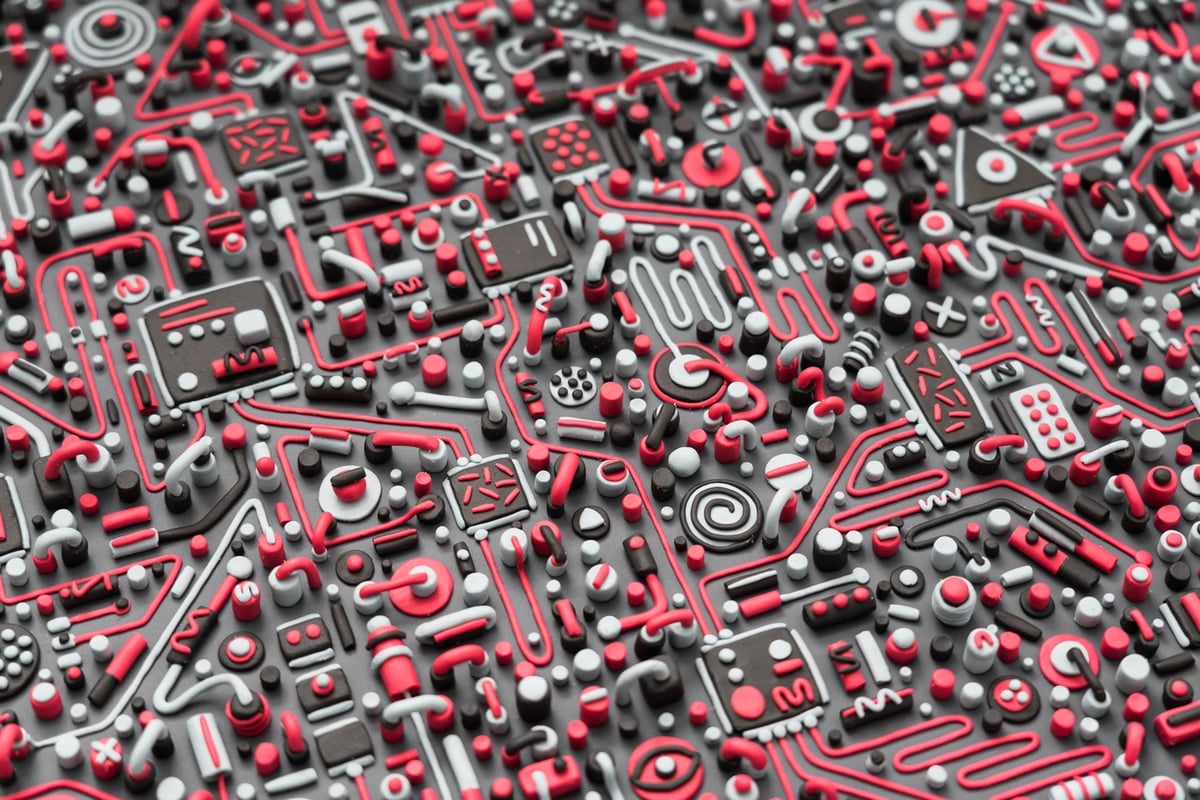
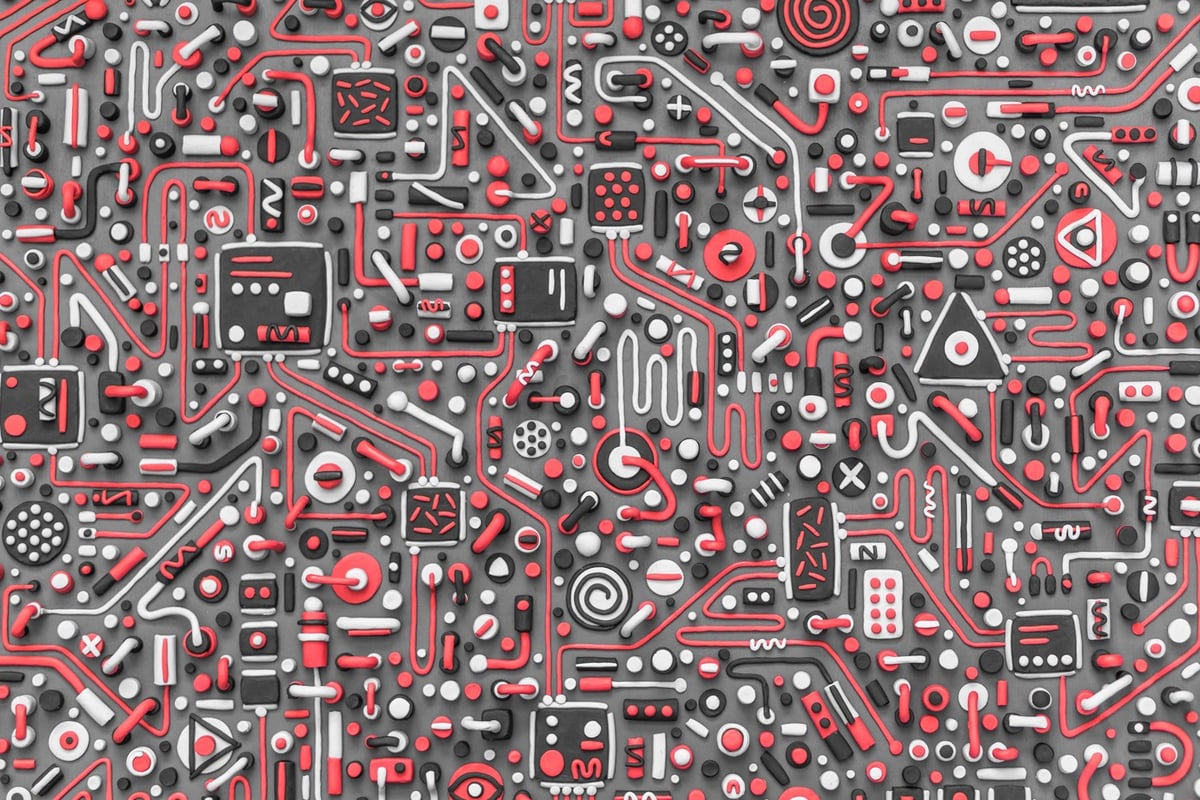
When commissioned to create some artwork for a London music duo, Tim Easley spent 80 hours making this model circuit board out of plasticine clay.
The idea behind the cover was how the modified men of the future may make artwork out of ancient circuit boards, not quite understanding what they were for because of their crude appearance. For this I created a design with representations of computer chips and wires.
He then photographed the results for an album cover and other printed matter. (via colossal)
GDPR day has arrived. Have you updated your personal terms of service? “You have friends’ email addresses and Wi-Fi logins. You’re still connected to the Dropbox account for the company you used to work for.”
“I firmly believe you can be a critic while being kind and open-hearted.” Half my Twitter feed is self-serving jokes masquerading as criticism, and I’m not a fan.
I’ve been keeping track of every media thing I “consume”, so here are quick reviews of some things I’ve read, seen, heard, and experienced in the past month or so. I went to Florida with my kids and we did the Harry Potter thing at Universal & visited the Space Coast. I stopped watching Mr. Robot s03 after two episodes. Still making my way through Star Trek: Voyager when I want something uncomplicated to watch in the evening. (Ignore the letter grades, they suck.)
The Americans. This season, the show’s last, has been fantastic. It’s idiotic to say The Americans is the best show on TV with like 50,000 shows on Netflix alone, but after five strong seasons and this finish, they’ve earned it. (A)
Good Night Stories for Rebel Girls: The Podcast. I wrote an appreciation of this a few weeks ago. (A-)
Am I There Yet? by Mari Andrew. I love Andrew’s Instagram feed but even so, her book surprised me with timeless and universal themes woven into her life story. (A-)
The Handmaid’s Tale. The first season of this show was great and season two picks up right where it left off. I binged the first six episodes of this across two nights and came away shellshocked. (A)
Wild Wild Country. Not sure why anyone followed the Bhagwan anywhere, but Sheela on the other hand… There were several interesting threads in this documentary that didn’t quite get pulled together in the final episode. (B+)
The Wizarding World of Harry Potter at Universal Studios Florida. The tickets for this were incredibly expensive and worth every damn penny. This was very nearly a religious experience. (A+)
Downsizing. I wanted more from this about the implications of the evolution of humans into nano sapiens. Still, better than many critics & audiences suggested. (B)
Brain It On. I saw my daughter playing this physics puzzler on her iPad and basically grabbed it away from her and played for 24 straight hours. (A-)
Westworld. Watching this every week feels like a chore. Even though the safeties are off, everything that happens in the parks feels consequence-free. I don’t care about the robots. Should I? (C+)
Fantastic Mr. Fox. Stop-motion animation might be Anderson’s natural medium because he can shoot everything *exactly* like he wants. (A-)
Isle of Dogs. Loved this. The style of it made me want to design something amazing. I could have watched the sushi-making scene for like 15 more minutes. (A)
On Margins - The Making of Rebel Girls. Craig Mod talks to co-creator Elena Favilli about how Good Night Stories for Rebel Girls came about and came to be so successful. (B+)
L’Express. A classic Montreal restaurant. Best steak frites I’ve had in a long while. (A-)
Babylon Berlin. Super stylish. The dance scene in the second episode is amazing. The best things about the show are the music and the world-building in the first few episodes. (B+)
Death of Stalin. I love that people still make films like this. Most of the audience I saw this with had no idea what to make of it or why a few people were laughing so hard at some parts. (B+)
Kennedy Space Center. The solar eclipse last summer awakened the space/astronomy nerd in me, so this visit was incredible. We saw a Space Shuttle, a Saturn V rocket, the VAB, and a whole mess of other great things. Thinking of going back for their Astronaut Training Experience. (A+)
Avengers: Infinity War. The ending of this left me stunned…it broke the fourth wall in a unique way. (B+)
A Quiet Place. This entire movie is a metaphor for trying to keep small children quiet on a long plane flight. (B)
Broad Band: The Untold Story of the Women Who Made the Internet by Claire Evans. This book demonstrates that telling the story of technology, programming, and the internet mainly through the many women who helped build it all is just as plausible and truthful as telling the traditionally women-free tale we’ve typically been exposed to. (B+)
Songs of the Years, 1925-2018. So glad this playlist is back in my life. (A-)
The Avengers. I’d forgotten where all the Infinity Stones came from, so I’ve gone back and watched this, Avengers: Age of Ultron, and the first Thor movie. Fascinating to see the changes in the filmmaking and pacing. If Infinity War had been made with the pace of Thor (directed by Kenneth Branagh!), it would have been 5 hours long. (B+)
Caliphate. Gripping and disturbing and very nearly a must-listen. But I keep showing up places shellshocked after listening to it in the car. (A)
AWB OneSky Reflector Telescope. When I looked through this for the first time at the Moon, my first thought was “WHOA”. My second was “I should have bought a more powerful telescope”. Luckily I can just buy more lenses for it… (A)
I’ve been doing this for more than a year now! Past installments of my media diet can be found here.
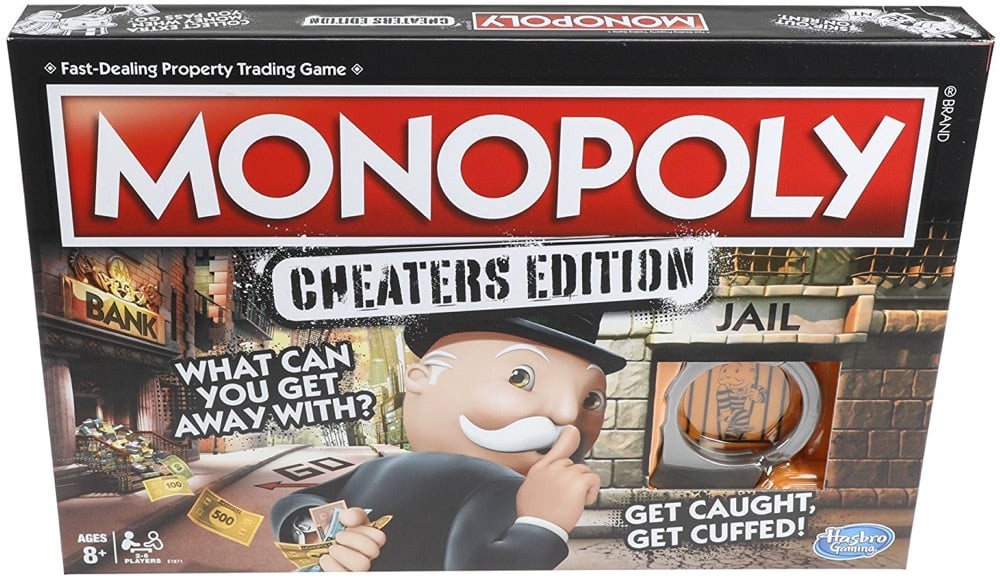
Hasbro has come out with an official “Cheaters Edition” of Monopoly (available at Amazon) where popular game cheats like stealing money from the bank, busting out of jail early, and taking a hotel from another player have been added to the gameplay. Fast Company has more on how the game came to be.
“We’ve had this data for years. 50% of all Monopoly players cheat,” says Randy Klimpert, Hasbro’s senior director of design and games development. This fact of life was always something of a running joke within the walls of Hasbro. It became the giggly fodder of proposed ad campaigns. Employees got a kick out of listening to the messages left on its holiday helpline, established in 2016, to help families settle disputes in their games and address accusations of creative cheating. “We were literally sitting around thinking, ‘what would really corrupt Monopoly?’ And someone said, ‘what if we cheated?’”
“Our senior marketer… you could see him mulling it,” Klimpert continues. “Monopoly… cheaters… Cheater Edition!” Hasbro instantly had the hook for a new game. But how do you make a game for cheaters that’s still sensical and fun?
Using simple graphic representations of annual temperatures (like this one posted by climate scientist Ed Hawkins), people are knitting and crocheting blankets that show just how warm the Earth has gotten over the past few decades. See Katie Stumpf’s blanket, for example.
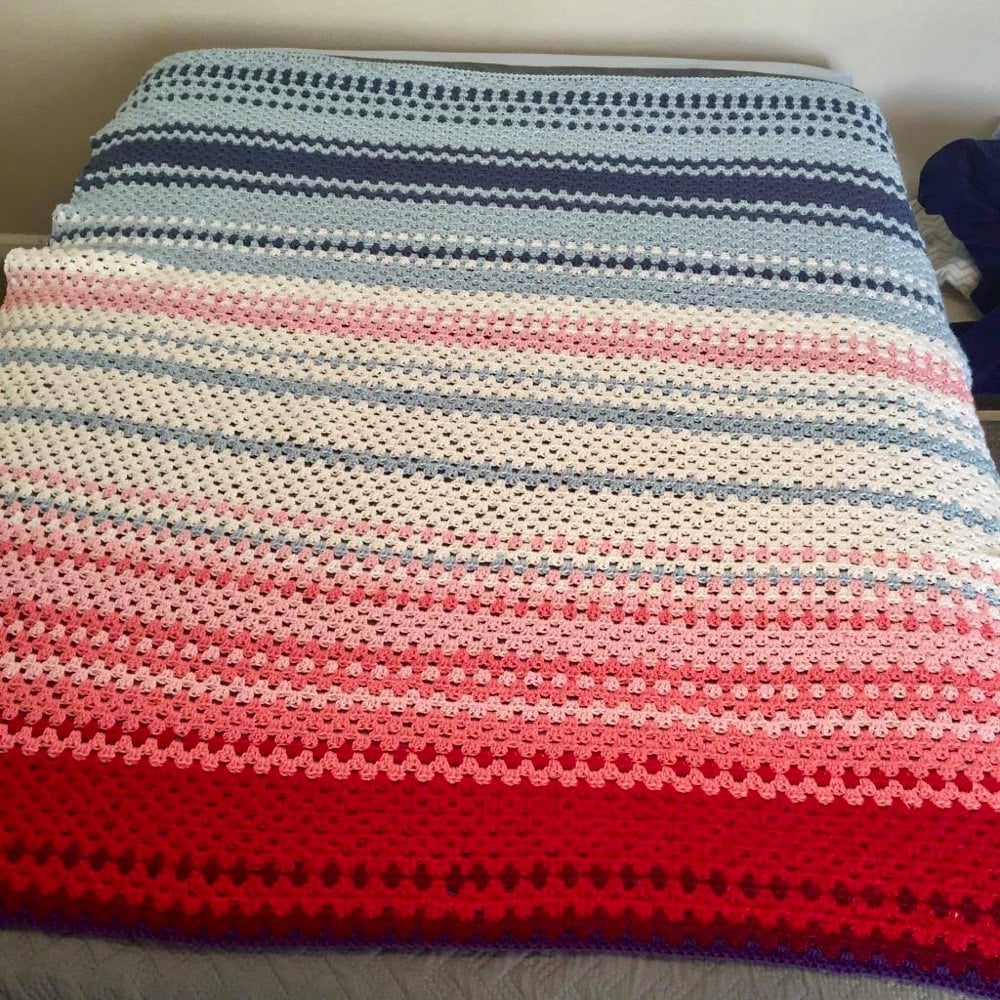
According to climate scientist (and crocheter) Ellie Highwood, these blankets are a subset of “temperature blankets” made to represent, for example, daily temperatures over the course of a year in a particular location. The blanket she crocheted used NOAA data of global mean temperature anomalies for a 101-year period ending 2016.
I then devised a colour scale using 15 different colours each representing a 0.1 °C data bin. So everything between 0 and 0.099 was in one colour for example. Making a code for these colours, the time series can be rewritten as in the table below. It is up to the creator to then choose the colours to match this scale, and indeed which years to include. I was making a baby sized blanket so chose the last 100 years, 1916-2016.
If you read her post, she provides instructions for making your own global warming blanket.
P.S. You might think that with the Earth’s atmosphere getting warmer on average, these blankets would ironically be less necessary that they would have been 50 years ago. But climate change is also responsible for more extreme winter weather events — think global weirding in addition to global warming. So keep those blankets handy!
Sopan Deb recently sat down with some of the cast of Arrested Development (Jeffrey Tambor, Tony Hale, Jason Bateman, Alia Shawkat, Jessica Walter, Will Arnett, and David Cross) for an interview about the show’s upcoming new season. Deb asked the group about the allegations against Tambor related to his work on Transparent, and Walter (who plays Lucille Bluth on the show) begins to cry as the men in the room, particularly Bateman, offer explanations for Tambor’s on-set verbal abuse of her.
BATEMAN: Again, not to belittle it or excuse it or anything, but in the entertainment industry it is incredibly common to have people who are, in quotes, “difficult.” And when you’re in a privileged position to hire people, or have an influence in who does get hired, you make phone calls. And you say, “Hey, so I’ve heard X about person Y, tell me about that.” And what you learn is context. And you learn about character and you learn about work habits, work ethics, and you start to understand. Because it’s a very amorphous process, this sort of [expletive] that we do, you know, making up fake life. It’s a weird thing, and it is a breeding ground for atypical behavior and certain people have certain processes.
SHAWKAT: But that doesn’t mean it’s acceptable. And the point is that things are changing, and people need to respect each other differently.
WALTER [THROUGH TEARS]: Let me just say one thing that I just realized in this conversation. I have to let go of being angry at him. He never crossed the line on our show, with any, you know, sexual whatever. Verbally, yes, he harassed me, but he did apologize. I have to let it go. [Turns to Tambor.] And I have to give you a chance to, you know, for us to be friends again.
TAMBOR: Absolutely.
WALTER: But it’s hard because honestly — Jason says this happens all the time. In like almost 60 years of working, I’ve never had anybody yell at me like that on a set. And it’s hard to deal with, but I’m over it now. I just let it go right here, for The New York Times.
Walter stated that Tambor apologized, but none of the men in the room said anything as simple as “that was inappropriate” or “that shouldn’t have happened to you”, even as they circle the wagons for Tambor. Although Bateman later apologized on Twitter for mansplaining, it seems like they haven’t really been listening to their colleagues and peers over the past several months about what it might be like being a women on the set of one of these shows.
Ama is a short film that was written, directed, and performed by freediver Julie Gautier.
Ama is a silent film. It tells a story everyone can interpret in their own way, based on their own experience. There is no imposition, only suggestions.
I wanted to share my biggest pain in this life with this film. For this is not too crude, I covered it with grace. To make it not too heavy, I plunged it into the water.
I dedicate this film to all the women of the world.
This is really beautiful. Watch it all the way through…the end is not to be missed. (via swissmiss)
As he does every year, voracious reader Bill Gates has recommended five books worth reading this summer. Gates’ recommendations often have a Wizard bent and the video he produced for the list probably had a greater budget than the amount I’ve spent on running kottke.org over the past 5 years:
The book I’m most curious about is Origin Story: A Big History of Everything by David Christian. I’ve long wanted to check out his Big History course (due to another Gates rec) and this seems like a good way to do that.
David created my favorite course of all time, Big History. It tells the story of the universe from the big bang to today’s complex societies, weaving together insights and evidence from various disciplines into a single narrative. If you haven’t taken Big History yet, Origin Story is a great introduction. If you have, it’s a great refresher. Either way, the book will leave you with a greater appreciation of humanity’s place in the universe.
Here are his four other recommendations:
Leonardo da Vinci by Walter Isaacson.
Lincoln in the Bardo by George Saunders.
Everything Happens for a Reason: And Other Lies I’ve Loved by Kate Bowler.
Factfulness: Ten Reasons We’re Wrong About the World - and Why Things Are Better Than You Think by Hans Rosling.
Back at the end of 2010, Ben Greenman created a playlist for the New Yorker’s holiday party that featured one song from each year of the magazine’s existence ordered chronologically.
At the party, the mix worked like a charm. Jazz and blues greeted the early arrivals, and as the party picked up, the mood became romantic (thanks to the big-band and vocal recordings of the late thirties and forties), energetic (thanks to early rock and roll like Fats Domino and Jackie Brenston in the early fifties), funky (James Brown in 1973, Stevie Wonder in 1974), and kitschy (the eighties), after which it erupted into a bright riot of contemporary pop and hip-hop (Rihanna! Kanye! M.I.A.! Lil Jon!).
After Greenman’s list was published, others created playlists from it on Rdio, YouTube, and Spotify. I listened to this playlist a lot on Rdio back then; it was the perfect way to time travel through the 20th and early 21st centuries in just a few hours.
I was reminded of the list yesterday after Laura Olin asked about favorite Spotify playlists and discovered that Tom Whitwell’s playlist was still around. He’d created it back in the early days of streaming music services, when Spotify was available only in Europe, so some of the songs had gone missing and others, like those by Michael Jackson & The Beatles, who didn’t allow their music on streaming services then. With Whitwell’s kind permission, I went in and tidied up the list, finding the proper song for every year but 1993 (“Return of the Crazy One,” by Digital Underground, which is available on YouTube…on the playlist it’s represented by “Doowutchyalike”).
Not content to have the list trapped in amber for eternity, I emailed Greenman to see if he had any thoughts on music from the intervening years. Although he’s no longer a staffer at the New Yorker, he generously sent me his selections for 2011-2018.1
2011: “Rolling in the Deep” by Adele
2012: “Call Me Maybe”by Carly Rae Jepsen
2013: “Get Lucky” by Daft Punk
2014: “Close Your Eyes (And Count to Fuck)” by Run the Jewels
2015: “WTF” by Missy Elliott
2016: “Hotline Bling” by Drake
2017: “Humble” by Kendrick Lamar
2018: “This is America” by Childish Gambino
You can listen to the full playlist embedded above or here on Spotify. Greenman shared some thoughts on updating the list:
The original list was occasioned by a party: the magazine’s 85th anniversary. Almost a decade has passed, and many things have changed. It feels like a less celebratory time, darker and less hopeful in some ways. But pop music persists. In extending the list from 2010 to the present, I tried to think about how those short bursts of sound still give us moments of joy, and how certain bursts attach themselves to certain moments in history.
I love this playlist and am so glad it’s back and updated. Big thanks to Ben and Tom for making this happen.
P.S. If you duplicate this playlist on Apple Music, Tidal, etc., send me a link. Or even better, if you’re inspired to create your own Songs of the Years playlist, send along those links too. I would love to hear alternate musical journeys through that era — e.g. playlists featuring only black artists or only women would be amazing.
Update: John Stokvis recreated the playlist on Apple Music. Apple had the correct Digital Underground song, but not De La Soul’s “Me, Myself & I”, so Stokvis subbed in “She Drives Me Crazy” from The Fine Young Cannibals. Here’s the Google Play playlist, courtesy of @neuroboy…looks like Google has every song.
A bit off-topic but still within rhyming distance, Aaron Coleman made a playlist of songs with years in the title from 1952-2031. He acknowledges that some of the songs are “terrible”.
Update: I reached out to Ben Greenman for 2019’s addition to this playlist and he picked Old Town Road by Lil Nas X, perhaps the single piece of culture that defined 2019 more than anything else. He had this to say about the choice:
To me, this wasn’t a song. This isn’t a commentary on its quality or some old-fogey dismissal of whatever countrified rap is being called this time around (Yee Haw?). It’s more that Old Town Road’s journey through the culture seems less like the arc of a song and more like a tour of all the ways that things come to our attention these days: the original instrumental sold online by YoungKio, the way that Lil Nas overlaid vocals, the climb through various platforms, the controversy over genre, the remix, the rebirth, the re-remix. If you were teaching a media studies class in 2019 and wanted to touch on all the arms of the starfish, Old Town Road would be your entry point.
I’ve added it to the Spotify playlist. Digital Underground’s The Return of the Crazy finally found its way onto Spotify, so I added that in the place of backup choice Doowutchyalike. Unfortunately, De La Soul’s Me, Myself and I went missing (the group and their label couldn’t come to an agreement about streaming rights), so I replaced it with She Drives Me Crazy by Fine Young Cannibals.
Older posts




Socials & More