Entries for November 2017
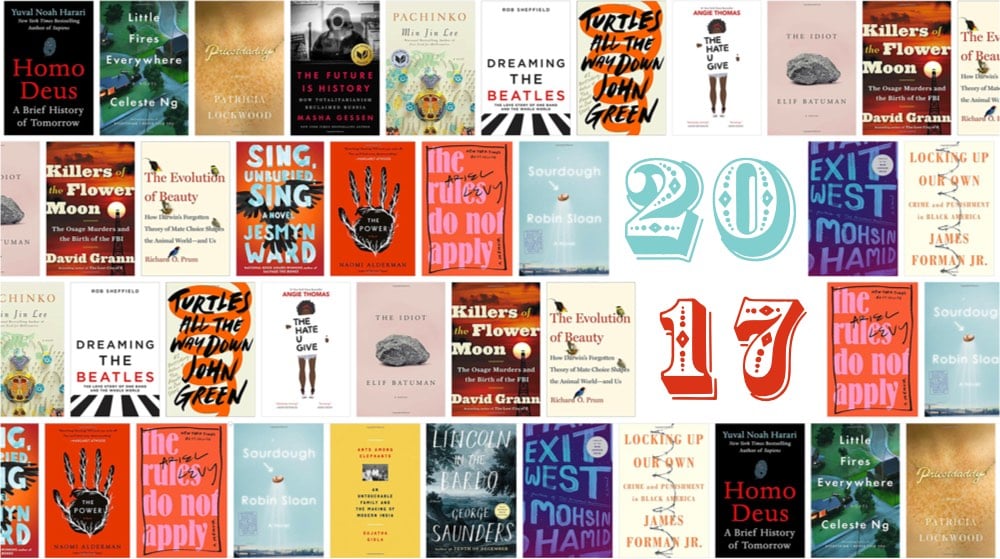
If you’re anything like me, there were so very many books published this year that looked amazing but you didn’t get around to reading. Well, thanks to all the best-of-the-year lists coming out, we’re getting a second crack at the ol’ onion. (Yeah, I don’t know what that means either.) Without further ado, etc. etc…
Tyler Cowen, who samples (but doesn’t finish) over 1800 books a year, shared his Must Reads of 2017, a list that is mostly nonfiction and dominated by male authors. He recommends Rob Sheffield’s Dreaming the Beatles (“this book teaches you to think of John and Paul as a management team, and was the most enjoyable read I had all year”), Ge Fei’s The Invisibility Cloak, and Ants Among Elephants: An Untouchable Family and the Making of Modern India by Sujatha Gidla.
The NY Times whittled down their long list of 100 Notable Books to just The 10 Best Books of 2017, including The Evolution of Beauty: How Darwin’s Forgotten Theory of Mate Choice Shapes the Animal World — and Us by Richard Prum and Pachinko by Min Jin Lee (which Roxane Gay declared her favorite book of 2017).
Lee’s stunning novel, her second, chronicles four generations of an ethnic Korean family, first in Japanese-occupied Korea in the early 20th century, then in Japan itself from the years before World War II to the late 1980s. Exploring central concerns of identity, homeland and belonging, the book announces its ambitions right from the opening sentence: “History has failed us, but no matter.”
From the longer list, I noticed The Idiot by Elif Batuman, George Saunders’ Lincoln in the Bardo, Masha Gessen’s The Future Is History: How Totalitarianism Reclaimed Russia (the National Book Award winner for nonfiction), and Priestdaddy, a memoir by Patricia Lockwood.
Amazon’s editors picked their top 100 books of the year and then narrowed that list down to 10. Their tippy top pick appeared on several other lists as well: Killers of the Flower Moon by David Grann, which I read and very much enjoyed. Also on their list was Little Fires Everywhere by Celeste Ng, Robin Sloan’s well-reviewed Sourdough, and Ariel Levy’s The Rules Do Not Apply, the rawness of which had me on the floor at one point.
From Bustle comes a list of 17 Books Every Woman Should Read From 2017. Their picks include The Power by Naomi Alderman and Jesmyn Ward’s Sing, Unburied, Sing, both of which I’ve seen on several other lists…the latter won the National Book Award for fiction.
More to come as the lists roll in.
Update: Bill Gates famously loves to read and has published a list of five “amazing books” he read this year. Not all of his choices were published in 2017, but The Best We Could Do, a graphic novel by Thi Bui about her family’s escape from Vietnam, and Energy and Civilization: A History by Vaclav Smil sound super good in completely different ways.
Tyler Cowen followed up his mostly nonfiction list for Bloomberg with one of just fiction. He highlights Invisible Planets: An Anthology of Contemporary Chinese SF in Translation. He also calls out Cixin Liu’s Three-Body Problem trilogy as his favorite sci-fi reading of the year. I read them earlier this year and while I enjoyed them at the time, my esteem has grown steadily throughout the year.
Publisher’s Weekly’s top 10 includes White Tears by Hari Kunzru and The Color of Law: A Forgotten History of How Our Government Segregated America by Richard Rothstein. For their kids picks, they recommend A Different Pond by Bao Phi and Thi Bui (her second book…see Gates’ picks above), Fault Lines in the Constitution by Cynthia and Sanford Levinson, and Philip Pullman’s La Belle Sauvage (the first in The Book of Dust trilogy).
Update: I’m never going to get around to all of the book lists, but here are a few more that caught my eye.
The book critics of the NY Times offer their top books of 2017. The picks include Richard Nixon: The Life by John Farrell (“the parallels between Nixon and our current president leap off the page like crickets”), John Green’s well-reviewed Turtles All the Way Down, and Robert Sapolsky’s Behave (“my vote for science book of the year”).
For their Year in Reading 2017, The Millions asked some of their favorite readers and writers for their book recommendations. They returned with the likes of My Favorite Thing is Monsters by Emil Ferris and Morgan Parker’s collection of poetry, There Are More Beautiful Things Than Beyonce.
The Goodreads Best Books of 2017 is a bit different than the other lists in that the books are chosen exclusively by readers, not critics or writers. The very well-reviewed The Hate U Give by Angie Thomas topped both the debut author and young adult fiction categories while the screenplay for Fantastic Beasts and Where to Find Them dominated the fantasy category.
At GQ, Kevin Nguyen highlighted Alissa Nutting’s Made for Love (that cover!). Nylon’s Kristin Iversen rec’d Too Much and Not the Mood by Durga Chew-Bose. Among Pitchfork’s favorite music books of the year is, yes, that book on the Beatles mentioned above but also Lizzy Goodman’s Meet Me in the Bathroom: Rebirth and Rock and Roll in New York City 2001-2011. Kim Stanley Robinson’s New York 2140 made the Guardian’s list of the best science fiction and fantasy of 2017.
Update: A quick addition of two more lists. Quartzy combined 21 best-of-2017 books lists to come up with the most popular picks by reviewers. For fiction, Sing, Unburied, Sing by Jesmyn Ward, Lincoln in the Bardo by George Saunders, and Exit West by Mohsin Hamid got the most mentions. For nonfiction, David Grann’s Killers of the Flower Moon and We Were Eight Years in Power by Ta-Nehisi Coates topped the list.
The Smithsonian magazine chose the ten best history books of the year, which includes One Long Night: A Global History of Concentration Camps by Andrea Pitzer.
Vox and 99% Invisible take a look at the movement to remove signs and traffic lights from traffic intersections in favor of building “shared spaces”, intersections in which cars, pedestrians, and cyclists are equally free to roam.
In traditional intersections, right-of-way has essentially been outsourced to unthinking objects like stop lights and signs. Shared spaces place the responsibility of determining right-of-way back with the individual motorists, pedestrians, and cyclists. Both approaches have their pros and cons. As the video notes, accessibility is an issue with shared spaces. But in traditional traffic schemes, cars are often given too much power to harm people, in the form of speed and the implied “I have the right-of-way so get out of my way” legal authority of the green light.
While watching traffic interact in the shared spaces in the video, you realize the assumption that makes them work: that as a general rule, people do not want to harm others. Cars, being so much more dangerous than pedestrians or cyclists, could bully their way these spaces but mostly they don’t because they don’t want to menace or injure others. However, as we’ve seen in the American political sphere recently, social norms can erode and force re-evaluation of assumptions. There will always be individual bad actors — asshole drivers or those who deliberately want to harm — but what happens to shared traffic spaces if the general assumption of people not wanting to harm others breaks down? And would traffic lights and signs fix that problem?
P.S. This is off topic (or is it?!), but I was in Amsterdam last week and it was interesting to observe the hierarchy of traffic there compared with other cities. In the absence of signs or traffic lights, who has the assumed right-of-way in these places?
In NYC (especially Manhattan), cars rule the streets, followed by pedestrians and cyclists…you only need to look at the city’s policy of not prosecuting murder-by-car to understand this. In California and esp. San Francisco (at least when I lived there years ago), if a pedestrian steps out into the street, cars will usually stop, even if they’re jaywalking. This also holds for many other places in the US, especially outside of large cities…cars are generally assumed to have the right-of-way but will also stop for pedestrians. But not in Boston…the sheer insanity of the drivers there gives cars a certain authoritative wide berth, not unlike that of a tottering Jenga tower. In Amsterdam though, cyclists seem to take priority in most situations…cars and pedestrians had to be on the lookout for them whether the cyclists had the light or not. Fascinating to observe.
The New Yorker interviewed a bunch of top Scrabble players about favorite moves they’ve played…their best, worst, and most humbling. I dislike playing Scrabble1 but love watching expert practitioners talk about about their areas of expertise.
In the latest installment of the newish video series Internetting with Amanda Hess, Hess discusses The White Internet’s Love Affair with Digital Blackface. From Teen Vogue, an explanation of digital blackface by Lauren Michelle Jackson:
Adore or despise them, GIFs are integral to the social experience of the Internet. Thanks to a range of buttons, apps, and keyboards, saying “it me” without words is easier than ever. But even a casual observer of GIFing would notice that, as with much of online culture, black people appear at the center of it all. Or images of black people, at least. The Real Housewives of Atlanta, Oprah, Whitney Houston, Mariah Carey, NBA players, Tiffany Pollard, Kid Fury, and many, many other known and anonymous black likenesses dominate day-to-day feeds, even outside online black communities. Similar to the idea that “Black Vine is simply Vine,” as Jeff Ihaza determined in The Awl, black reaction GIFs have become so widespread that they’ve practically become synonymous with just reaction GIFs.
If you’ve never heard of the term before, “digital blackface” is used to describe various types of minstrel performance that become available in cyberspace. Blackface minstrelsy is a theatrical tradition dating back to the early 19th century, in which performers “blacken” themselves up with costume and behaviors to act as black caricatures. The performances put society’s most racist sensibilities on display and in turn fed them back to audiences to intensify these feelings and disperse them across culture. Many of our most beloved entertainment genres owe at least part of themselves to the minstrel stage, including vaudeville, film, and cartoons. While often associated with Jim Crow-era racism, the tenets of minstrel performance remain alive today in television, movies, music and, in its most advanced iteration, on the Internet.
Dean Baquet, executive editor of the NY Times, recently interviewed Jay-Z about his latest album (which I like a lot), OJ Simpson, his marriage & infidelity, race, and Kanye.
Jay-Z also talked about his experience with therapy:
BAQUET This album [“4:44.”] sounds to me like a therapy session.
JAY-Z Yeah, yeah.
BAQUET Have you been in therapy?
JAY-Z Yeah, yeah.
BAQUET First off, how does Jay-Z find a therapist? Not in the Phone book, right?
JAY-Z No, through great friends of mine. You know. Friends of mine who’ve been through a lot and, you know, come out on the other side as, like, whole individuals.
BAQUET What was that like, being in therapy? What did you talk about that you had never acknowledged to yourself or talked about?
JAY-Z I grew so much from the experience. But I think the most important thing I got is that everything is connected. Every emotion is connected and it comes from somewhere. And just being aware of it. Being aware of it in everyday life puts you at such a … you’re at such an advantage. You know, you realize that if someone’s racist toward you, it ain’t about you. It’s about their upbringing and what happened to them, and how that led them to this point. You know, most bullies bully. It just happen. Oh, you got bullied as a kid so you trying to bully me. I understand.
And once I understand that, instead of reacting to that with anger, I can provide a softer landing and maybe, “Aw, man, is you O.K.?” I was just saying there was a lot of fights in our neighborhood that started with “What you looking at? Why you looking at me? You looking at me?” And then you realize: “Oh, you think I see you. You’re in this space where you’re hurting, and you think I see you, so you don’t want me to look at you. And you don’t want me to see you.”
I don’t know when this ran, but I liked this brief article published in Private Eye magazine called Zuckerberg Announces Revolutionary New Foundation to Eliminate Disease.
The genius founder of Facebook, Mark Zuckerberg, has announced an inspiring new foundation to which he and his wife will donate huge amounts of their fortune in a bid to defeat all disease over the next century.
“It’s called the government,” said Mr. Zuckerberg. “For such a long time I’ve been pondering how I can make a real difference with the enormous fortune I’ve amassed by concocting clever tax structures that minimise any tax liability from my firm.
“Imagine my shock when it turned out that this ‘government’ is devoted to ending disease. Not only that, it also has side projects dedicated to running schools, hospitals, a road system, parks, a national infrastructure, and lots of other worthy projects which make this planet a decent place to live.
I’m proud to announce that I’ll be giving lots of money to the ‘government’, as I’ve decided to call it, and I fully expect to get a lot of really fantastic publicity out of it.”
This reminded me of a pair of similar essays: I am an American conservative shitheel and I am an American liberal shitheel. (via @paulpod)
Recently at Glamour’s Women of the Year Summit, Rachel Miller asked Joe Biden a question about Anita Hill. Miller didn’t think much of Biden’s answer.
So I got the mic and I stood up and said to Joe Biden, “My name’s Rachel Miller and my question is for the former vice president. In the context of changing the culture and women being brave enough to come forward [which he’d also said], I’m wondering if there’s anything that you would do differently with regards to Anita Hill if given the opportunity.”
And he said, “No.”
No.
And then he said, “Let’s get something straight here.”
Which — sure, is a thing an old white man can say to a black woman asking him a question at a women’s event about the shameful treatment of a black woman on a national stage. He is certainly allowed to say that, if he wants to.
………..
Biden then went on to say a lot more words, but what he was really saying was, “I’m a good guy, I’m a good guy, I’m a good guy.”
There’s speculation that Biden might run for President in 2020. But Miller is right: in word and deed, Joe Biden does not respect women, especially if you’ve heard even a little of what the whisper network is saying. Enough. No more Presidents who do not respect women!
Update: In an interview with Teen Vogue editor Elaine Welteroth, Joe Biden says he owes Anita Hill an apology.
“I believed Anita Hill. I voted against Clarence Thomas. And I insisted the next election - I campaigned for two women Senators on the condition that if they won they would come on the Judiciary Committee, so there would never be again all men making a judgement on this,” Biden said. “And my one regret is that I wasn’t able to tone down the attacks on her by some of my Republican friends. I mean, they really went after her. As much as I tried to intervene, I did not have the power to gavel them out of order. I tried to be like a judge and only allow a question that would be relevant to ask.”
Update: Nicola Twilley publicly shares a personal experience about Biden:
Joe Biden (and this is based on personal experience) is also a groper. The nicest guys etc etc…
Polar adventurer Ben Saunders is currently about three weeks into a planned 1000-mile solo journey across Antarctica, blogging about it all the while. In his latest post, he describes the noise that snow makes when it settles under certain conditions, which he calls “whumphing”.
The only redeeming factor of all this fresh snow is what I’ll refer to as ‘whumphing’. I’ve no idea if there’s an actual term for the phenomenon, but I had the best whumph of my life when I first stepped out of the tent today. I assume it’s something to do with the weight of the snow settling, but the sensation is of the area of snow you’re standing on suddenly dropping by an inch or two, accompanied by a sound like a muffled thunderclap. If you’re lucky — as I was this morning — this sets off a chain reaction whumph, with a shockwave rolling out towards the horizon in every direction. It’s petrifying the first time you experience a whumph (in Greenland for me) but once you realise they’re harmless, it’s extraordinarily satisfying, like being a snowfield chiropractor, clicking tons of snow back into the right place.
Curious to see if whumphing was documented elsewhere, I did a little poking around. In a 1920 mountaineering book called Mountain Craft, Geoffrey Young talks about sudden settling due to sub-surface snow that’s less dense than the snow above. On a slope that can lead to an avalanche but on a flat Antarctic surface, you just get the muffled thunderclap.
I was also delighted to find that the legendary Roald Amundsen, who led the first expedition to reach the South Pole in 1911, noted the very same effect in his book detailing the journey: The South Pole. In a false start to the expedition in September 1911, facing poor visibility and a temperature of -69 °F, he and his men decide to stop and build igloos for warmth. After settling in, they heard a noise.
That night we heard a strange noise round us. I looked under my bag to see whether we had far to drop, but there was no sign of a disturbance anywhere. In the other hut they had heard nothing. We afterwards discovered that the sound was only due to snow “settling.” By this expression I mean the movement that takes place when a large extent of the snow surface breaks and sinks (settles down). This movement gives one the idea that the ground is sinking under one, and it is not a pleasant feeling. It is followed by a dull roar, which often makes the dogs jump into the air — and their drivers too for that matter. Once we heard this booming on the plateau so loud that it seemed like the thunder of cannon. We soon grew accustomed to it.
Amundsen seemed rather less charmed than Saunders with whumphing, but it’s wonderful to witness the experience of it shared between these two explorers across more than 100 years.

A Reddit user made this map of potential EU leaving names (in the style of Brexit) and some of them are pretty funny:
Oui Out
Polskedaddle
Czech Out
Quitaly
Swedone
Abortugal
Byeprus
Donemark
AI scientist Clayton Blythe fed a video of someone walking around Times Square into an AI program that’s been trained to detect objects (aka “a state of the art object detection framework called NASNet from Google Research”) and made a video showing what the algorithm sees in realtime — cars, traffic lights, people, bicycles, trucks, etc. — along with its confidence in what it sees. Love the cheeky soundtrack…a remix of Daft Punk’s Something About Us.
See also a neural network tries to identify objects in Star Trek:TNG intro. (via prosthetic knowledge)
Update: Well, it looks like the video is offline for whatever reason. You can see some animated screengrabs at prosthetic knowledge.
Quick reviews of some things I’ve read, seen, heard, and experienced in the past three weeks or so. I was in Amsterdam recently to speak at a conference. I had some free time and as it was my first time there, I took in some obvious sights. No books this time…Scale is currently on hold (and perhaps abandoned permanently) while I read Robert Wright’s Why Buddhism is True and listen to Walter Isaacson’s Leonardo da Vinci on audiobook.
Thor: Ragnarok. Henceforth, all superhero movies should be as fun as this. (B+)
Mindhunter. This one had a slow burn to it and got better as the season went on. Also, now that I know what to look for, the David Fincher camera thing was impossible to ignore. (B+)
Requiem for a Dream. The last 30 minutes of this movie is relentless. (A)
The Book of Life. I tried to steer the kids away from this one to no avail. (C)
On Margins with Kevin Kelly. The bits about how much of the world used to be pre-industrial until fairly recently and how most people only took 20-30 photos per year in the 70s were especially interesting. (B+)
The Unexplainable Disappearance of Mars Patel (season two). Not quite as good as the first season, but my kids are still riveted. (B+)
Doctor Who. I’ve been slowly introducing the kids to Doctor Who, which I watched as a kid with my dad. So far, we’ve seen Jon Pertwee’s final episode and a handful of early Tom Baker episodes…probably the show’s sweet spot. I didn’t want to throw them into the deep end with William Hartnell right off the bat. (B+)
The Dark Knight Rises. A parable for our times: a white, female Bernie supporter (Selina Kyle) votes for Trump because she believes the system needs a reset but comes to appreciate what a terrible fucking idea that was. (A-)
Athenaeum Nieuwscentrum. Kevin Kelly recommended this impressive little magazine shop to me…they must have carried over 1000 different titles. (B+)
Whisky Café L & B. They stock more than 2300 whiskies (!!)…but the space is so small that I don’t know where they keep it all. (B+)
Van Gogh Museum. Maybe the best small museum I’ve ever been to? Utterly fascinating to see how his entire life and career unfolded. (A)
Rijksmuseum. I missed a lot of this one, but what I did see was great. Gaping at the impossibly exquisite lighting in Vermeer’s The Milkmaid for 15 minutes was itself worth the price of admission. (A-)
Amsterdam’s Red Light District. Really conflicting feelings on this. On the one hand, there were hordes of drunken men walking the streets literally shopping for women’s bodies…anyone unclear on what the male gaze means only need spend a few minutes in De Wallen on a weekend night to fully grasp the concept. On the other hand, it can be empowering, economically and otherwise, for women to engage in sex work. Is the RLD sex-positive? I… (-)
Schiphol. Much faster wifi than at my house. Really lovely airport…it would get an “A” if it weren’t actually an airport. (B)
Amsterdam (generally). Visit if you’re a process and infrastructure nerd. Van Gogh Museum and a boat ride in the canals are musts. Didn’t have enough time to sample as much food as I wanted, but I will definitely be back. (A-)
Michael Clayton. I liked this a little less than I remember, even though its star has been on the rise lately. (B+)
Joan Didion: The Center Will Not Hold. I knew next to nothing about Didion before watching this — aside from her hiring Harrison Ford when he was a carpenter. It’s probably better if you’re already a fan? (B)
Heavyweight: Jesse. One man in a car hits another man on a bike and both are changed forever. And for the better? (B+)
Arrival. Maybe my fourth time watching this? A friend commented on the economy of the storytelling…not a second is wasted. (A)
iPhone X. Most of my early impressions still hold. Still don’t like the notch, it is ridiculous. (A-)
Transparent (season four). The recent allegations against Tambour took the shine off of this season for me, but this is still one of the best TV shows in recent years. (A-)
Coco. I didn’t love this as much as everyone else did, and I don’t know why. (B+)
The 21-minute Frozen “short” that played before Coco. Total unimaginative and cynical garbage. This is what happens when marketing has too much pull. (F)
Stranger Things 2 soundtrack. The music is the best part of the show IMO. (A)
Past installments of my media diets can be found here.
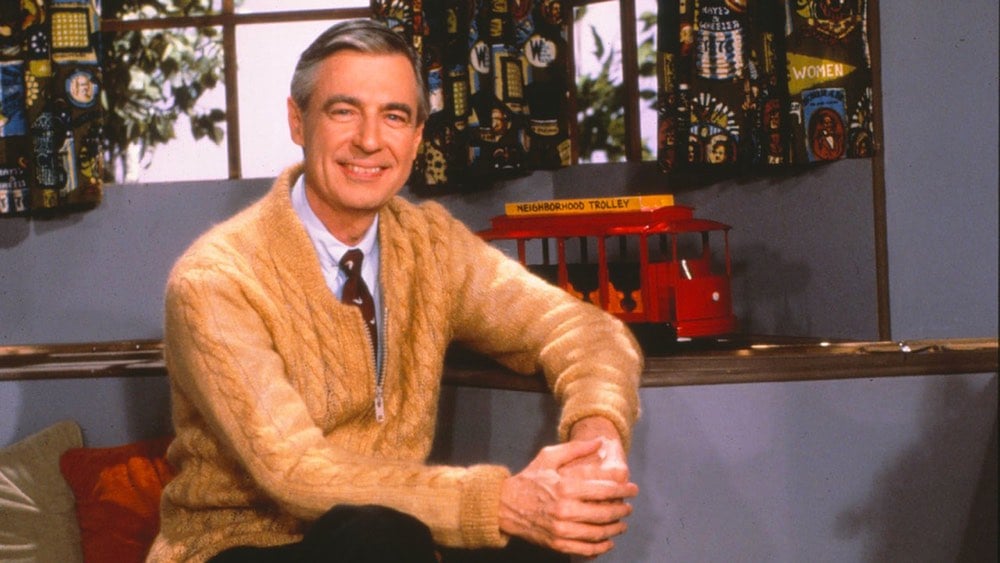
I’m hyperventilating over here…Morgan Neville is making a documentary film about Fred Rogers called Won’t You Be My Neighbor?
Fred Rogers led a singular life. He was a puppeteer. A minister. A musician. An educator. A father, a husband, and a neighbor. Fred Rogers spent 50 years on children’s television beseeching us to love and to allow ourselves to be loved. With television as his pulpit, he helped transform the very concept of childhood. He used puppets and play to explore the most complicated issues of the day — race, disability, equality and tragedy. He spoke directly to children and they responded by forging a lifelong bond with him-by the millions. And yet today his impact is unclear. WON’T YOU BE MY NEIGHBOR? explores the question of whether or not we have lived up to Fred’s ideal. Are we all good neighbors?
Won’t You Be My Neighbor? will be out in theaters in June 2018.
The top 10 supercars from the 1980s. I knew even before I started watching that the Countach was #1.
A team of scientists in Italy fed some spiders a solution of graphene and carbon nanotubes, which the spiders duly incorporated into their webs. The result is webbing that’s five times stronger than regular webbing, on par with the strength of bulletproof Kevlar. And why stop with spiders:
If you think that creating super-spiders might be going to far, this research is only the beginning. Pugno and her team are preparing to see what other animals and plants might be enhanced if they are fed graphene. Might it get incorporated into animals’ skin, exoskeletons, or bones?
“This process of the natural integration of reinforcements in biological structural materials could also be applied to other animals and plants, leading to a new class of ‘bionicomposites’ for innovative applications,” Pugno added.
The future is gonna be weird, y’all!
Netflix has released two trailers ahead of the release of season four: one for an episode called Arkangel and the other for one called Crocodile. Arkangel, directed by Jodie Foster, seems particularly Black Mirror-ish…helicopter parenting x100 in a society where people live for hundreds of years.
Update: Here’s the trailer for a third episode, Black Museum.
Update: Trailers for two more episodes:
Eventually they might tell us when the full episodes will be available on Netflix?
Update: Finally…a premiere date (Dec 29th) and a full trailer. (thx, david)
Is This the End of the NFL? When you’ve lost Bob Costas…
I loved this short profile of RXBAR founder Peter Rahal. He and his partner recently sold the company to Kellogg’s for $600 million. Some highlights:
- Each partner invested $5000 in the business…and they took no other outside investment. Yep, 0 to $600 million in about five years with no VC.
- Early on, when asking about getting investors, Rahal’s dad told him “You need to shut up and sell 1,000 bars.” Is that the best and most succinct business advice ever?
- They designed the packaging for their first bar in PowerPoint…and Rahal put his cell phone number on it. Whatever it takes.
(via @jasonfried)



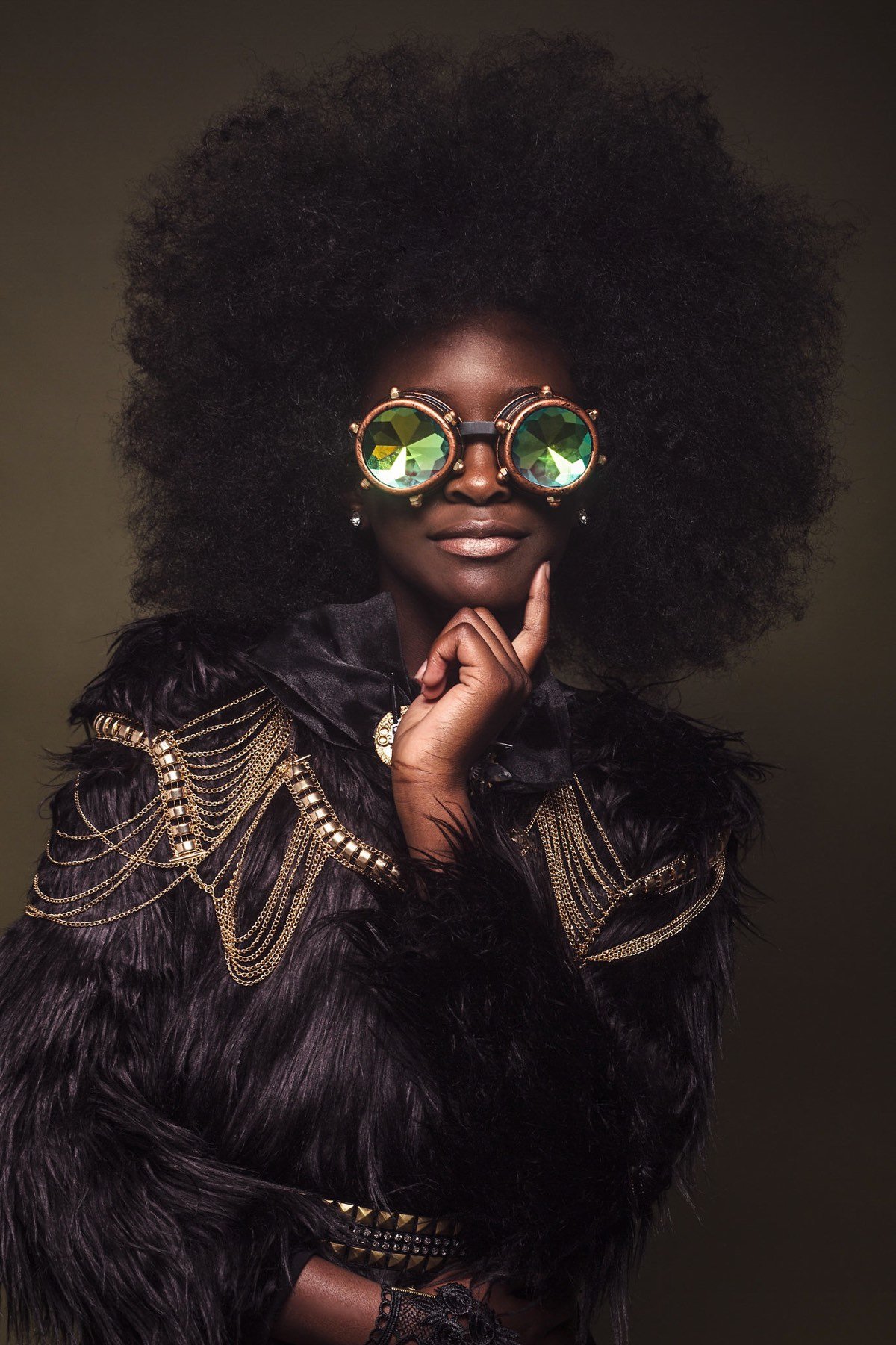

Husband and wife photographers Regis & Kahran Bethencourt have been working on a project called AfroArt “to showcase the beauty and versatility of afro hair”. It features African American kids and young adults photographed in different settings (futuristic, Baroque, etc.) with natural hairstyles.
We feel that it is so important for kids of color to be able to see positive images that look like them in the media. Unfortunately the lack of diversity often plays into the stereotypes that they are not “good enough” and often forces kids to have low self-esteem. We try to combat these stereotypes in our photography by showing diverse imagery of kids who love the skin they’re in, their own natural curls and their culture. Stories like this are important to show so that we can shatter the current standards of beauty.
It was really tough to pick just three four five of these portraits…go check out the lot. Oh, and prints are available in their online store.
The Creative Shopkeeper. Paged through this one at the bookstore the other day…a good look at some recent creative innovations in retail.
Using a single page from Art Spiegelman’s Maus (considered by many as one of the finest graphic novels ever written), Evan Puschak considers how Spiegelman used the page (and not the individual panel) as the atomic unit of the narrative of his father surviving the Holocaust. Designing the page is the thing. In making this point, he quotes the cartoonist Seth (Gregory Gallant):
The ‘words & pictures’ that make up the comics language are often described as prose and illustration combined. A bad metaphor: poetry and graphic design seems more apt. Poetry for the rhythm and condensing; graphic design because cartooning is more about moving shapes around — designing — then it is about drawing.
Writing for Grist, Eric Holthaus reports on some research about a pair of fast-melting glaciers in Antarctica that could add 11 feet to the global sea level.
The glaciers of Pine Island Bay are two of the largest and fastest-melting in Antarctica. (A Rolling Stone feature earlier this year dubbed Thwaites “The Doomsday Glacier.”) Together, they act as a plug holding back enough ice to pour 11 feet of sea-level rise into the world’s oceans — an amount that would submerge every coastal city on the planet. For that reason, finding out how fast these glaciers will collapse is one of the most important scientific questions in the world today.
To figure that out, scientists have been looking back to the end of the last ice age, about 11,000 years ago, when global temperatures stood at roughly their current levels. The bad news? There’s growing evidence that the Pine Island Bay glaciers collapsed rapidly back then, flooding the world’s coastlines - partially the result of something called “marine ice-cliff instability.”
The ocean floor gets deeper toward the center of this part of Antarctica, so each new iceberg that breaks away exposes taller and taller cliffs. Ice gets so heavy that these taller cliffs can’t support their own weight. Once they start to crumble, the destruction would be unstoppable.
“Ice is only so strong, so it will collapse if these cliffs reach a certain height,” explains Kristin Poinar, a glaciologist at NASA’s Goddard Space Flight Center. “We need to know how fast it’s going to happen.”
Eleven feet of sea level rise would be, uh, hugely problematic for the world’s coastal areas:
Three feet of sea-level rise would be bad, leading to more frequent flooding of U.S. cities such as New Orleans, Houston, New York, and Miami. Pacific Island nations, like the Marshall Islands, would lose most of their territory. Unfortunately, it now seems like three feet is possible only under the rosiest of scenarios.
At six feet, though, around 12 million people in the United States would be displaced, and the world’s most vulnerable megacities, like Shanghai, Mumbai, and Ho Chi Minh City, could be wiped off the map.
At 11 feet, land currently inhabited by hundreds of millions of people worldwide would wind up underwater. South Florida would be largely uninhabitable; floods on the scale of Hurricane Sandy would strike twice a month in New York and New Jersey, as the tug of the moon alone would be enough to send tidewaters into homes and buildings.
Alarming, but read the whole article. Scientists are still trying to figure out how probable this scenario is…early days still.
Update: The site Climate Feedback, a network of scientists that evaluates media coverage of climate change, recently rated Holthaus’ piece as “high” on the credibility scale and described it as both “accurate” and “alarmist”.
Scientists who reviewed the article found that while it accurately described recent research on these processes, it should have provided more accurate context on the timescale of these sea level rise scenarios and the scientific uncertainty about how likely these scenarios are to come to pass.
Psst, I added some Cyber Monday deals to the bottom of the post.
Good morning! I hope you had a good Thanksgiving…or at least annoyed your family with this NY Times piece, Most Everything You Learned About Thanksgiving Is Wrong.
Today however, is “Black Friday”, which…wait, why do they call it that? Ben Zimmer explains that the term originated in Philadelphia’s law enforcement circles:
Today is the day after Thanksgiving, when holiday shopping kicks off and sales-hunters are in full frenzy. The day has come to be known in the United States as “Black Friday,” and there are a number of myths about the origin of the name. Retailers would like you to believe that it’s the day when stores turn a profit on the year, thus “going into the black.” But don’t you believe it: the true origins come from traffic-weary police officers in Philadelphia in the early 1960s.
Retailers love invented holidays, and the name with the negative connotation was later twisted into a shopping event. But with carefully targeted online shopping, you can now skip the rush and get some great deals on things you might need or gifts for family & friends. Poking around a little this morning, I found the following:
- The 6-qt pro version of the KitchenAid stand mixer for $280 (51% off).
- Everyone loves the Instant Pot. The larger 8-qt and the smaller 3-qt are both on sale for $82 (37% off) and $49 (30% off) respectively. The 6-qt model, the one I have in my own kitchen, was also on sale for $68 but is totally sold out already.
- Kindles are on sale. The regular one starts at just $50 (38% off) while the Paperwhite (my fave) is $90 (25% off).
- Build your own computer with The Kano Computer Kit for $100 (17% off).
- The 23andMe DNA test kit for $99 (50% off).
- I know, I know, Moore’s Law and all, but it still boggles my mind that you can buy a 4TB portable external hard drive for only $96 (26% off).
- For easy sous vide cooking, the Anova Precision Cooker is only $109 (40% off).
Update: That sound you hear is Cyber Monday kicking in. Here are a few more deals to be had today:
- This 11.6-inch Acer Chromebook is on sale for $99 (44% off). $99!
- The 6-qt Instant Pot is going for $75 (38% off)…I bet this sells out pretty quickly.
- A bunch of LEGO sets are on sale today, which is a pretty rare event.
- My pals at 20x200 are offering discount codes on orders of $75 or more today only…20-30% off.
- This quadcopter drone is only $30 (46% off).
- I’ve heard good things about these Amazon-branded t-shirts, on sale for $8.40 (30% off). I just ordered a couple to see how they compare to American Apparel b/c who knows how long that’ll be a thing…
Claire Dederer’s recent essay for The Paris Review, What Do We Do with the Art of Monstrous Men?, starts off with a discussion of the ethical and moral issues around appreciating the art of men who are monsters (e.g. Woody Allen, Roman Polanski, or Picasso):
They did or said something awful, and made something great. The awful thing disrupts the great work; we can’t watch or listen to or read the great work without remembering the awful thing. Flooded with knowledge of the maker’s monstrousness, we turn away, overcome by disgust. Or … we don’t. We continue watching, separating or trying to separate the artist from the art. Either way: disruption. They are monster geniuses, and I don’t know what to do about them.
Interesting enough, right? I don’t want to spoil it too much, but the essay takes a sharp turn about halfway through, leading to a fascinating examination of the necessary selfishness of artists.
There are many qualities one must possess to be a working writer or artist. Talent, brains, tenacity. Wealthy parents are good. You should definitely try to have those. But first among equals, when it comes to necessary ingredients, is selfishness. A book is made out of small selfishnesses. The selfishness of shutting the door against your family. The selfishness of ignoring the pram in the hall. The selfishness of forgetting the real world to create a new one.
Really worth reading the whole thing…I’ve been thinking about it constantly since I read it the other day.
For his project called Years, Bartholomäus Traubeck specially modified a record player to make piano music from the patterns of ringed growth on the cross-sections of trees.
A tree’s year rings are analysed for their strength, thickness and rate of growth. This data serves as basis for a generative process that outputs piano music. It is mapped to a scale which is again defined by the overall appearance of the wood (ranging from dark to light and from strong texture to light texture). The foundation for the music is certainly found in the defined ruleset of programming and hardware setup, but the data acquired from every tree interprets this ruleset very differently.
A digital album of recording from seven different trees (spruce, ash, oak, maple, alder, walnut, and beech) is available on Bandcamp.
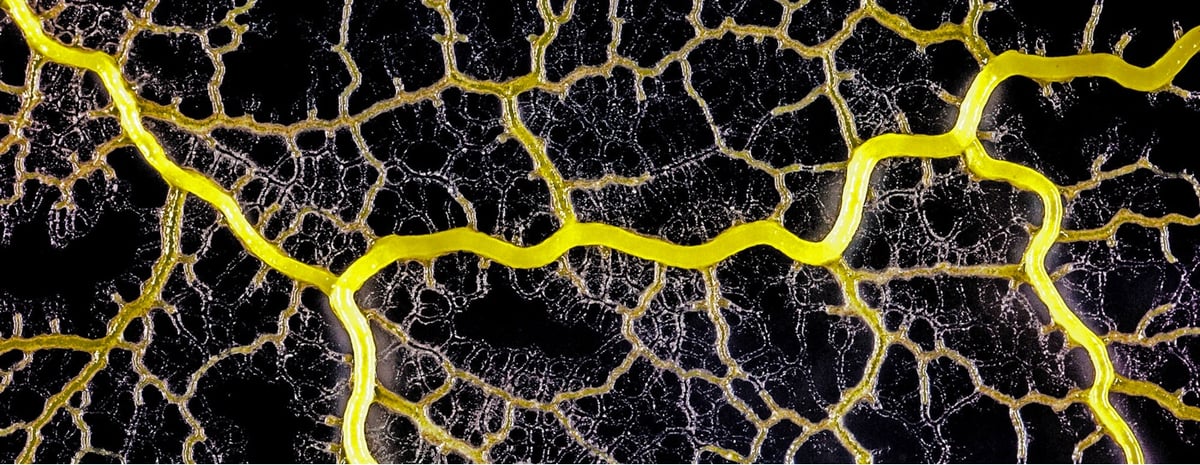

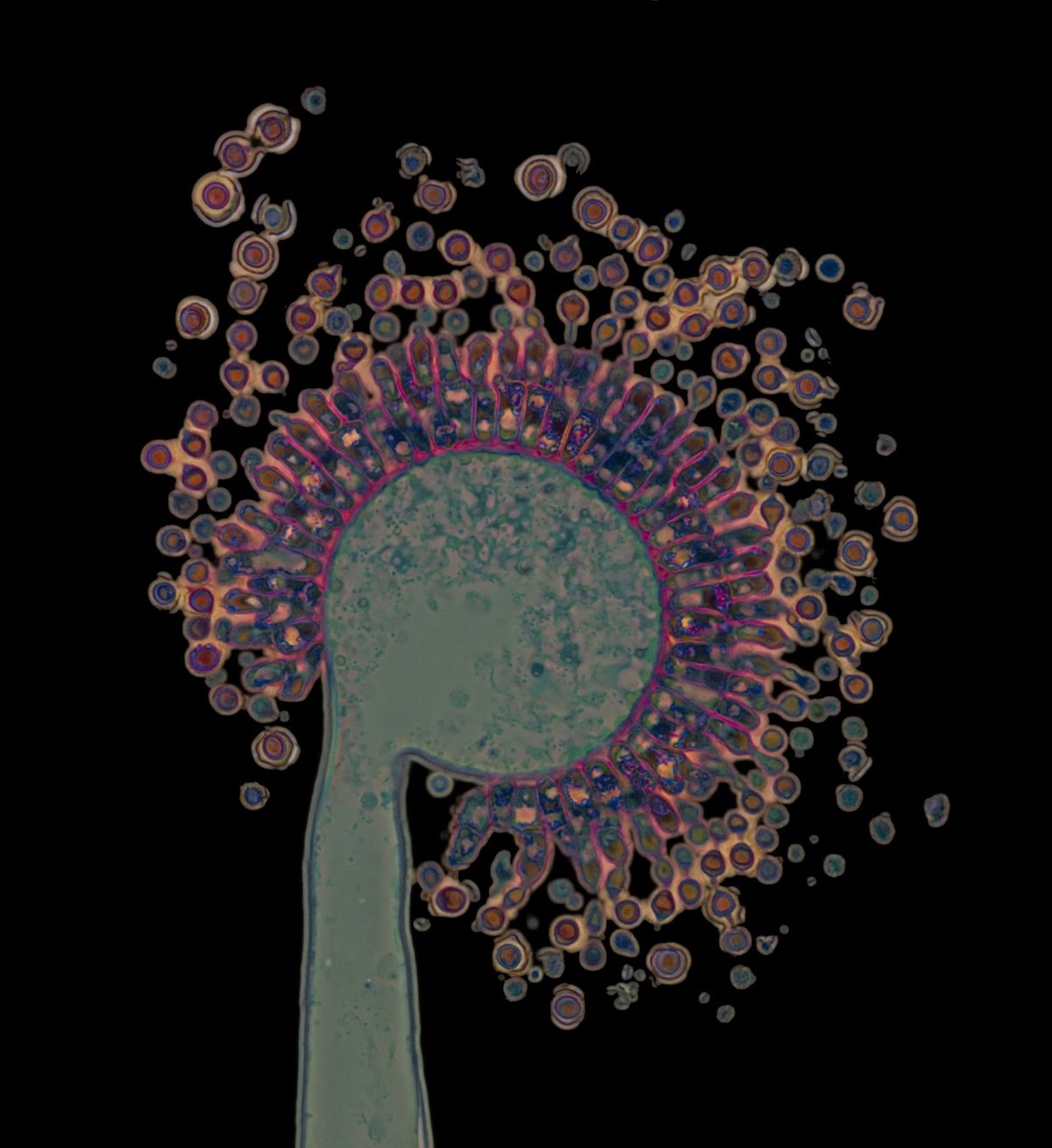

In their new book, Life at the Edge of Sight, Scott Chimileski and Roberto Kolter “lead readers through breakthroughs and unresolved questions scientists hope microbes will answer soon”. But the book is also a showcase for Chimileski’s photography of these tiny organisms.
I’m not surprised, but it’s still always a little unnerving to see just how closely some of these photos resemble satellite photos of natural features, ancient cities, and modern-day subway maps. And look, this slime mold made a little human brain-shaped network:

After all, branching networks like these are often the most efficient way of moving material, information, people, and nutrients from one place to another.
At the Museum is a new video series by MoMA in NYC that offers a behind-the-scenes look at what it takes to run a world-class modern art museum. The first episode, embedded above, follows the staff as they prepare for new exhibitions, both in the museum and across the Atlantic.
As the Museum of Modern Art prepares to ship 200 masterworks by artists like Picasso, C’ezanne, Rothko and de Kooning for a special exhibition at the Louis Vuitton Foundation in Paris, other MoMA staff begin to install a new line-up of exhibitions in New York.
New videos are posted each week. (via the kid should see this)
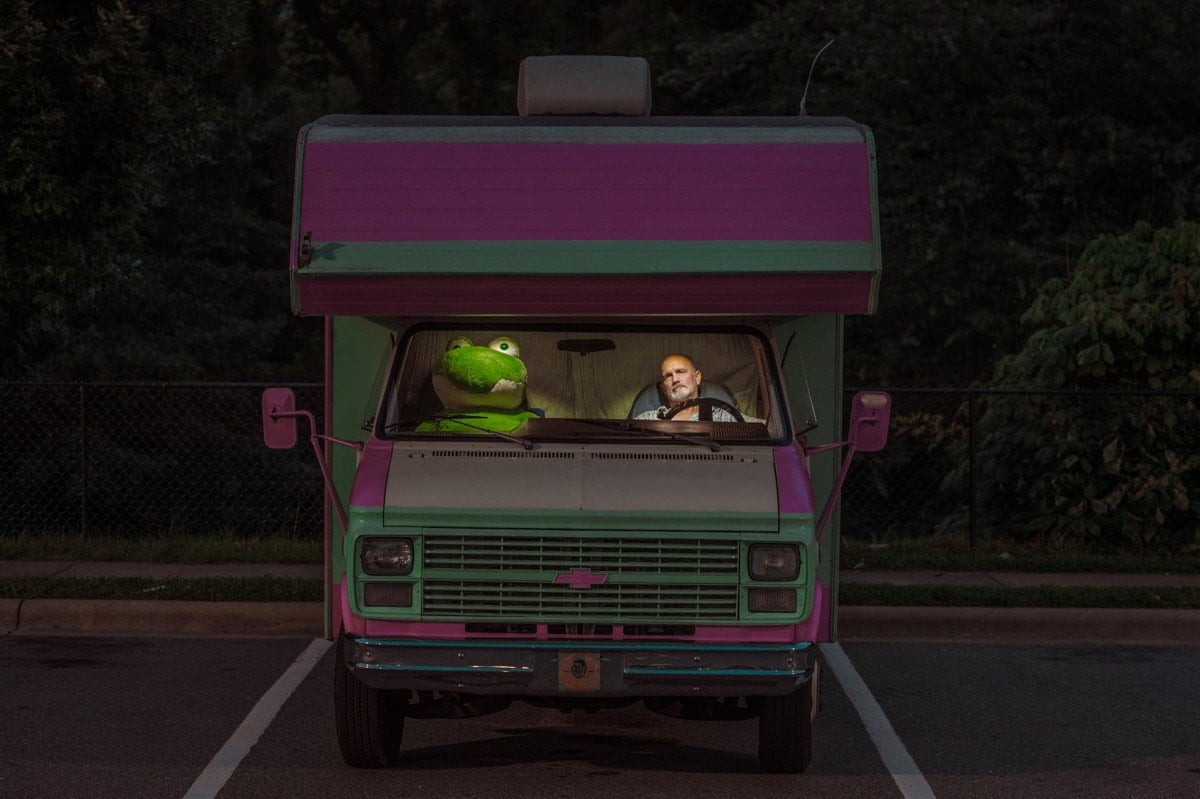
Walmart is an example of a commercial third place…a place people go to socialize that isn’t home or the workplace. But like Starbucks and McDonald’s, Walmart also functions as a replacement home for some people. Across America, Walmart parking lots fill up with the vans, RVs, and cars of nomads, vacationers, and the homeless. The NY Times sent a pair of photographers out to capture some of these parking lots at night.
There are standards of etiquette — do not, for instance, sit in the parking lot in lawn chairs — and also online rosters of no-go Walmarts. There is an expectation that you should buy something, but there is no parking fee. There is a measure of solitary privacy, even in a place that is deliberately accessible. Still that doesn’t prevent some people from leaving skid marks in the parking lot.
El Monte RV provides a short guide to Walmart camping and Allstays has a list of Walmarts that allow overnight parking.
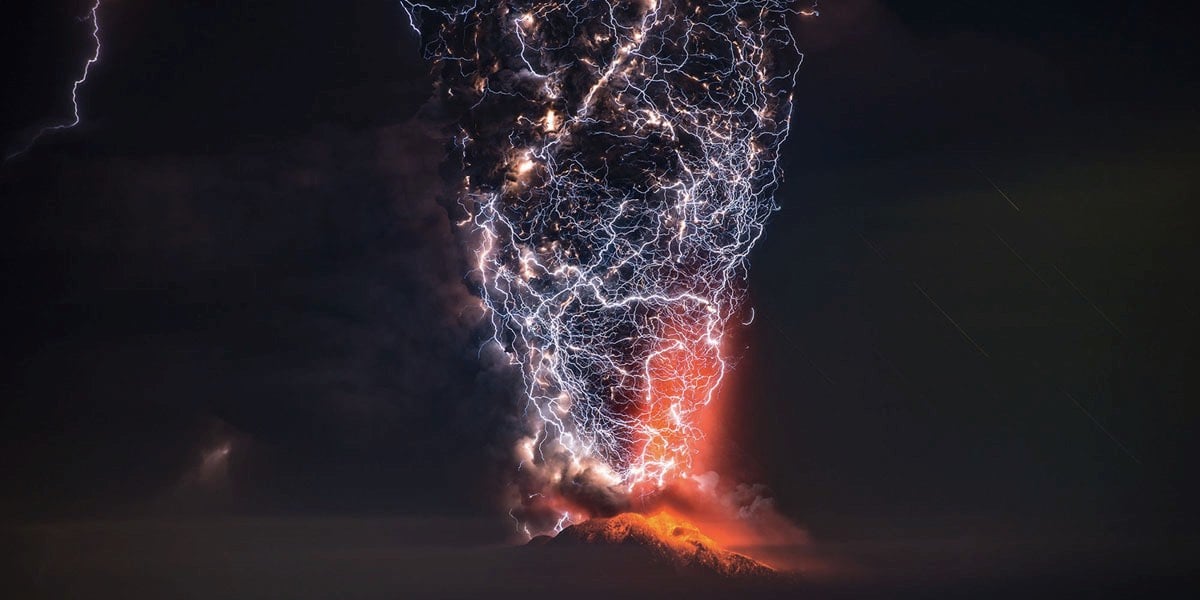

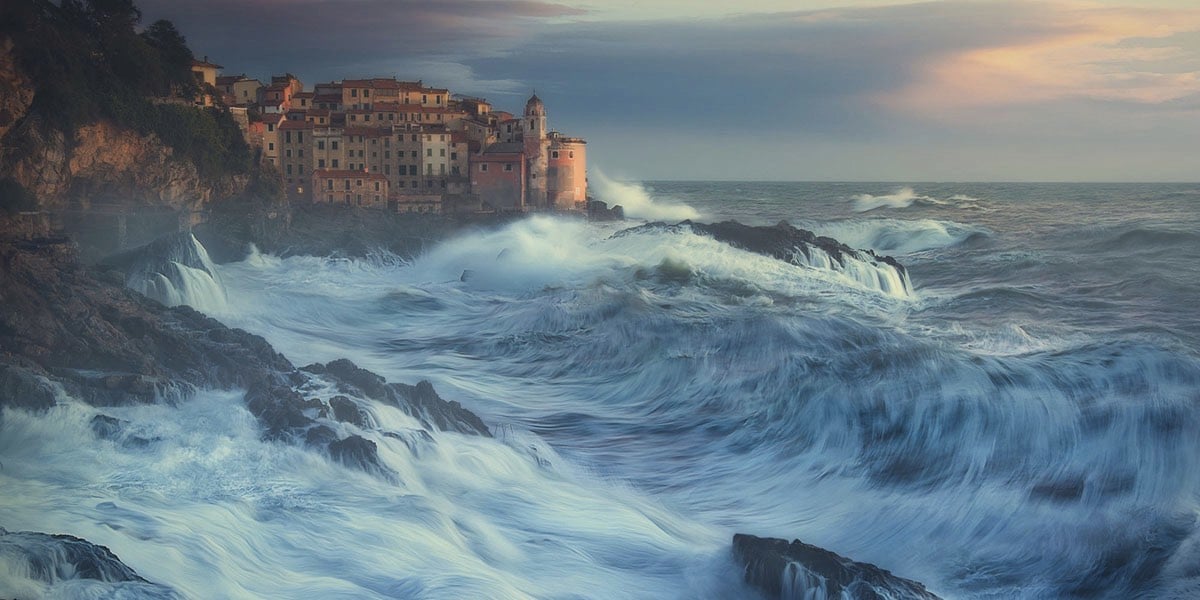
The winners of the 2017 Epson International Pano Awards have been announced. In Focus has a round-up of some of the best ones. It was tough to choose just three to feature here, so make sure and check out all the winners. Photos by Francisco Negroni, Paolo Lazzarotti, and Ray Jennings.
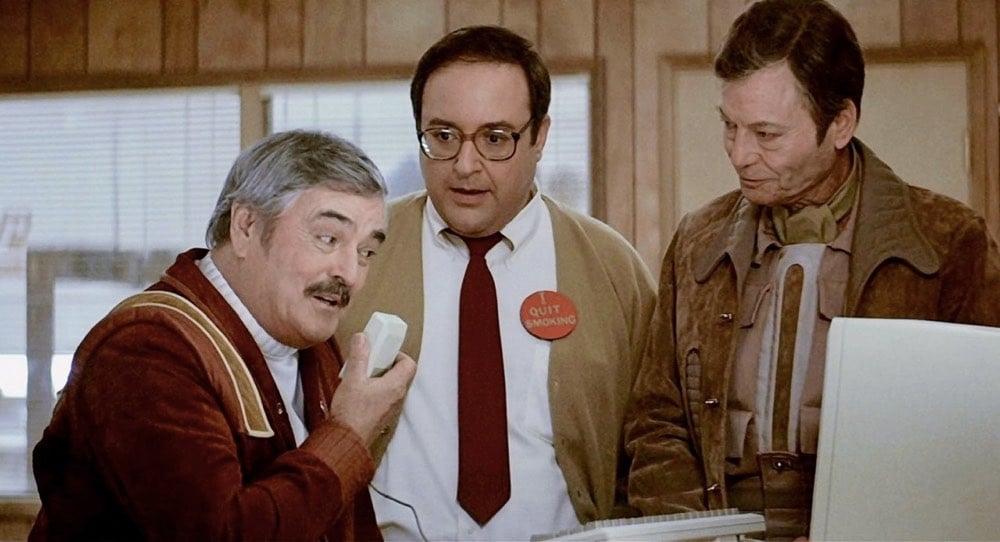
Dan Hon, who you may remember trained a neural network to make up British placenames, has now done the same thing with Star Trek. He fed all the episode titles for a bunch of Treks (TOS, DS9, TNG, etc.) into a very primitive version of Commander Data’s brain and out came some brand new episode titles, including:
Darmok Distant (TNG)
The Killing of the Battle of Khan (TOS)
The Omega Mind (Enterprise)
The Empath of Fire (TNG)
Distance of the Prophets (DS9)
The Children Command (TNG)
Sing of Ferengi (Voyager)
Spock, Q, and mirrors are also heavily featured in episode titles.
Older posts





Socials & More