



Advertise here with Carbon Ads
This site is made possible by member support. 💞
Big thanks to Arcustech for hosting the site and offering amazing tech support.
When you buy through links on kottke.org, I may earn an affiliate commission. Thanks for supporting the site!
kottke.org. home of fine hypertext products since 1998.
Beloved by 86.47% of the web.
Entries for April 2015
Netflix orders Green Eggs and Ham
Netflix is making a 13-episode animated adaptation of Dr. Seuss’ Green Eggs and Ham. The show will premiere in 2018 and the official press release shows that Netflix is fully committed to the premise:
Issued from Netflix headquarters.
Delivered straight to all reporters.We’d love to share some happy news
based on the rhymes of Dr. Seuss.
Green Eggs and Ham will become a show
and you’re among the first to know.In this richly animated production,
a 13-episode introduction,
standoffish inventor (Guy, by name)
and Sam-I-Am of worldwide fame,
embark on a cross-country trip
that tests the limits of their friendship.
As they learn to try new things,
they find out what adventure brings.
Of course they also get to eat
that famous green and tasty treat!Cindy Holland, VP of Original Content for Netflix
threw her quote into the mix:
“We think this will be a hit
Green Eggs and Ham is a perfect fit
for our growing slate of amazing stories
available exclusively in all Netflix territories.
You can stream it on a phone.
You can stream it on your own.
You can stream it on TV.
You can stream it globally.”
For reference, here’s an animated version of Green Eggs and Ham done in the 70s:
The Apollo lunar rover user’s manual

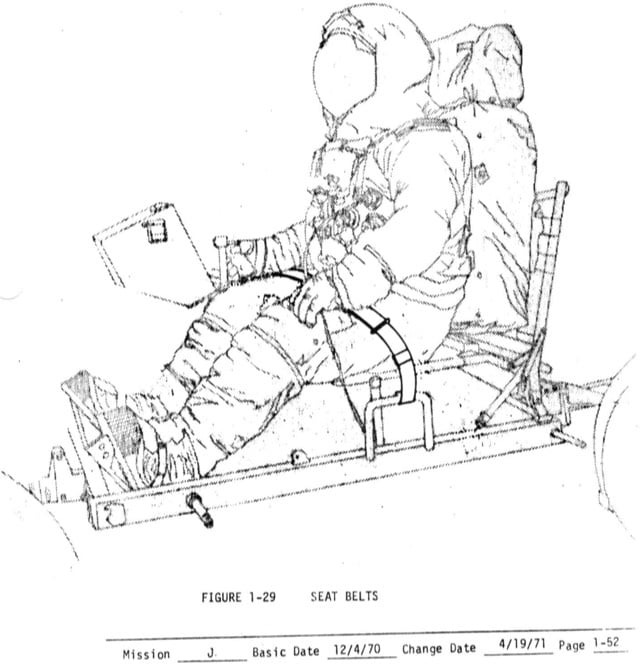
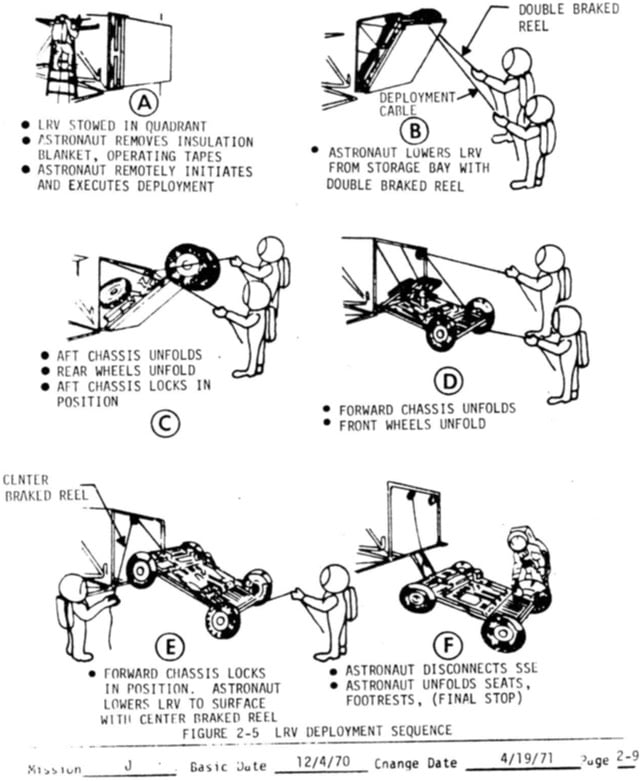
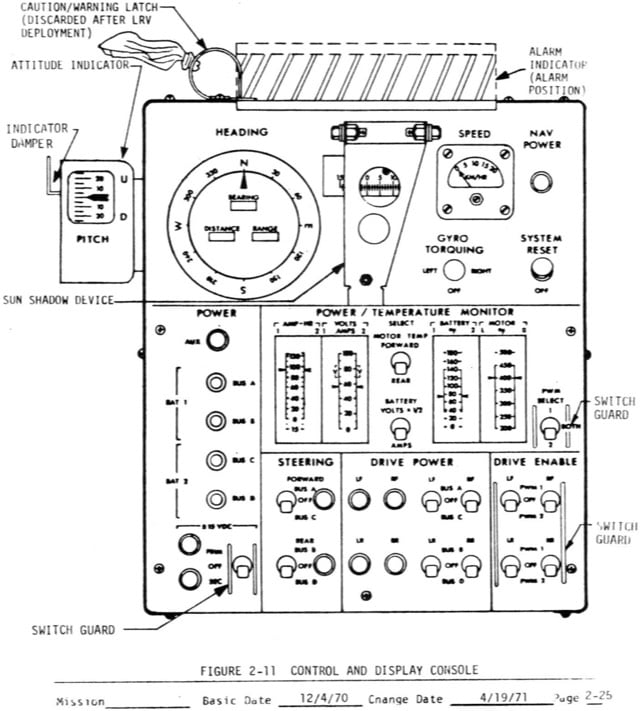
From NASA, the operations manual for the lunar rover. Rovers were used on the final three Apollo missions: 15, 16, and 17. (thx, daniel)
Old Katmandu
From Kevin Kelly, a collection of photos he took of Katmandu, Nepal in 1976.

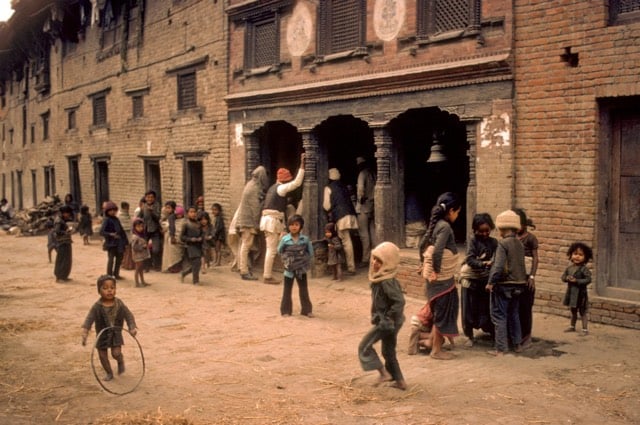

Nepal was recently affected by a 7.8 earthquake, which resulted in the deaths of more than 6000 people and much property damage.
Katmandu was an intensely ornate city that is easily damaged. The carvings, details, public spaces were glorious. My heart goes out to its citizens who suffer with their city. As you can see from these images I took in 1976, the medieval town has been delicate for decades. Loosely stacked bricks are everywhere. One can also see what splendid art has been lost. Not all has been destroyed, and I am sure the Nepalis will rebuild as they have in the past. Still, the earthquake shook more than just buildings.
If you look carefully you may notice something unusual about these photos. They show no cars, pedicabs, or even bicycles. At the time I took these images, Katmandu was an entirely pedestrian city. Everyone walked everywhere. Part of why I loved it. That has not been true for decades, so this is something else that was lost long ago. Also missing back then was signage. There are few signs for stores, or the typical wordage you would see in any urban landscape today. Katmandu today is much more modern, much more livable, or at least it was.
All movie trailers are the same
The other day, I made a reference to a trailer for a TV series being “a little too trailery for my taste”. What I meant was that it too much like every other trailer (in that genre) and didn’t show enough of the character of the particular show being advertised. Action movie trailers are perhaps the worse offenders in this regard, as this meta-trailer shows:
BWAAAAAAAAM!!!
Build up to silence, then BAM!
Like I was saying, too trailery. (via devour)
Great interview by Om Malik of Brunello Cucinelli. Lots of gems about working and attention.
The trolley problem
The trolley problem is an ethical and psychological thought experiment. In its most basic formulation, you’re the driver of a runaway trolley about to hit and certainly kill five people on the track ahead, but you have the option of switching to a second track at the last minute, killing only a single person. What do you do?
The problem becomes stickier as you consider variations of the problem:
As before, a trolley is hurtling down a track towards five people. You are on a bridge under which it will pass, and you can stop it by putting something very heavy in front of it. As it happens, there is a very fat man next to you — your only way to stop the trolley is to push him over the bridge and onto the track, killing him to save five. Should you proceed?
As driverless cars and other autonomous machines are increasingly on our minds, so too is the trolley problem. How will we program our driverless cars to react in situations where there is no choice to avoid harming someone? Would we want the car to run over a small child instead of a group of five adults? How about choosing between a woman pushing a stroller and three elderly men? Do you want your car to kill you (by hitting a tree at 65mph) instead of hitting and killing someone else? No? How many people would it take before you’d want your car to sacrifice you instead? Two? Six? Twenty? Is there a place in the car’s system preferences panel to set the number of people? Where do we draw those lines and who gets to decide? Google? Tesla? Uber?1 Congress? Captain Kirk?
If that all seems like a bit too much to ponder, Kyle York shared some lesser-known trolley problem variations at McSweeney’s to lighten the mood.
There’s an out of control trolley speeding towards a worker. You have the ability to pull a lever and change the trolley’s path so it hits a different worker. The first worker has an intended suicide note in his back pocket but it’s in the handwriting of the second worker. The second worker wears a T-shirt that says PLEASE HIT ME WITH A TROLLEY, but the shirt is borrowed from the first worker.
Reeeeally makes you think, huh?
If Uber gets to decide, the trolley problem’s ethical concerns vanish. The car would simply hit whomever will spend less on Uber rides and deliveries in the future, weighted slightly for passenger rating. Of course, customers with a current subscription to Uber Safeguard would be given preference at different coverage levels of 1, 5, and 20+ ATPs (Alternately Targeted Persons).↩
Letterman prepares to sign off
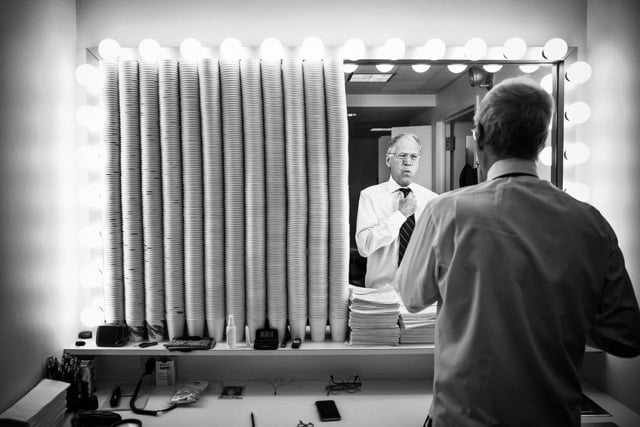
I was never a particular fan of David Letterman’s show1 but always have appreciated what he did and how he did it. Dave Itzkoff of the NY Times did an interview with Letterman about his impending retirement.
It seems like there’s an increasing emphasis, at least with your network competitors, to create comedy bits that will go viral on the Internet. Did you make a conscious choice to stay out of that arms race?
No, it just came and went without me. It sneaked up on me and went right by. People on the staff said, “You know what would be great is if you would join Twitter.” And I recognized the value of it. It’s just, I didn’t know what to say. You go back to your parents’ house, and they still have the rotary phone. It’s a little like that.
The photo slide show accompanying the piece is worth a look as well, particularly the photo of the stack of paper coffee cups in Letterman’s dressing room (one cup for each show, they cover half his mirror) and the final one of Letterman bounding out onto stage. I hope that when I’m 68, I’m still charging ahead like Dave.
To be honest, I’ve never been a particular fan of any late night television, save for SNL in the late 80s and early 90s. I watched the last few years of Johnny Carson on The Tonight Show and then the first couple years of Leno, mostly because that’s what my parents watched. Letterman I caught every once in awhile after Carson and rarely after his move to CBS. I’ve only seen Conan’s show a handful of times…same with The Daily Show and Colbert. Have never watched a single episode of Fallon or Kimmel or Conan’s new show. Oh, I’ve seen clips on the web and such, but never whole shows.
My late night TV as a kid was Doctor Who and British comedies — Are You Being Served?, ‘Allo ‘Allo, Fawlty Towers, Good Neighbors, Keeping Up Appearances, The Fall And Rise Of Reginald Perrin, etc. — on the local PBS station. That and Nintendo.↩
Jonathan Strange and Mr. Norrell, the TV series
Ever since I read Susanna Clarke’s Jonathan Strange & Mr. Norrell just after it came out, I’ve wondered when someone was going to do a movie or miniseries adaptation. Well, BBC has stepped up with a seven-part series that debuts on BBC One in May and on BBC America “this summer”. Here’s a trailer:
Set at the beginning of the 19th-century, England no longer believes in practical magic. The reclusive Mr Norrell of Hurtfew Abbey stuns the city of York when he causes the statues of York Cathedral to speak and move. With a little persuasion and help from his man of business Childermass, he goes to London to help the government in the war against Napoleon. It is there Norrell summons a fairy to bring Lady Pole back from the dead, opening a whole can of worms…
That trailer was a little too trailery for my taste (if you know what I mean), but I’m excited nonetheless. (via ★interesting)
Update: BBC America has put the first episode of the show up on YouTube:
The rest of the episodes are available in a slightly less official capacity as well — here’s episode 2 for instance.
Freddie Gray and unrest in Baltimore
After a night of riots in Baltimore, schools are closed, games have been postponed, at least a thousand National Guard soldiers are roaming the streets, and America is left once again to ponder issues of race, inequality, law enforcement, and civic unrest.
InFocus: Images of unrest in Baltimore.
WaPo’s Michael A. Fletcher on the murder, drugs, and poverty that plague Freddie Gray’s Baltimore:
Most of these problems are confined to the pockmarked neighborhoods of narrow rowhomes and public housing projects on the city’s east and west sides. They exist in the lives of the other Baltimore of renovated waterfront homes, tree-lined streets, sparkling waterfront views, rollicking bars and ethnic restaurants mainly through news reports. The two worlds bump up against one another only on occasion.
Vox: In Freddie Gray’s Baltimore neighborhood, half of the residents don’t have jobs.
Last night my mom wondered aloud why we still don’t seem to know many of the details when it comes to Gray’s death. Well mom, the answer is LEOBoR, or the law enforcement officers bill of rights. From The Marshall Project: Blue Shield.
The backwards bike will break your brain
Do you think you could ride a bicycle that steers backwards…aka it turns left when you turn right and vice versa? It sounds easy but years of normal bike riding experience makes it almost impossible. Destin Sandlin of Smarter Everyday taught himself how to ride the backwards-steering bike; it took months. Then he tried riding a normal bicycle again…
Loved this video…great stuff. (via ★interesting)
Jamie Oliver: how to chop an onion
Chef and TV personality Jamie Oliver shows three different techniques for chopping onions, including the dead simple “crystals” method.
A Tour of Antarctica by Drone
This 8-minute video of a drone’s eye tour of the coast of Antarctica is just flat-out gorgeous.
40 years of the American home

In 1973, the year I was born, the median new single-family house in the US measured 1525 sq feet. It had two floors, three bedrooms, and two bathrooms. In 2013, the median new single-family house in the US is 56% larger (2385 sq ft) and contains an extra half-bath. You can watch the evolution of the American home at CNN.
Black Mass trailer
Black Mass stars Johnny Depp as Whitey Bulger, real-life Boston mobster and FBI informant. The trailer is damn good and I’m hoping the rest of the movie lives up to it.
The surprisingly complex design of the Ziploc bag. Big props to the Ziploc folks, generic resealable bags suck
The Hubble Space Telescope turns 25
The Hubble Space Telescope was deployed into space on April 25, 1990 and began snapping images of the sky shortly thereafter. Phil Plait, the NY Times, NPR, and How We Get To Next have chosen some of their favorite Hubble images, and Taschen published a coffee table book of Hubble images called Expanding Universe.





I still find it incredible that we have a telescope orbiting the Earth. Happy birthday, Hubble. Here’s to many more.
The full-sized Lego car
Raul Oaida built a full-sized car out of half-a-million Lego pieces that actually drives. The 256-cylinder engine is powered by compressed air. Top speed is 20 mph.
This is a stunning and insanely clever achievement. My favorite part, aside from that 256-cylinder engine, is the windshield built out of two dozen tiny Lego windshields. (via devour)
Dooce is retiring
After many years of blogging professionally at Dooce, Heather Armstrong is stepping down to focus on speaking and brand consultation. She’s planning to write for fun again.
But what makes this livelihood glaringly different are not only the constant creative strains of churning out new and entertaining content — content we cannot delegate to anyone else because our audiences read our stories for our particular voice and perspective — but also the security systems we’ve had to set up as an increasingly more diverse group of people throw rocks at our houses with the intention of causing damage: passersby, rubbernecks, stalkers, even journalists. We have separate security systems for those who take every word and decision we share and deliberately misinterpret it, disfigure it to the point of it being wholly unrecognizable, and then broadcast to us and to their own audiences that they have diagnosed us with a personality disorder.
“Living online” for us looks completely different now than it did when we all set out to build this community, and the emotional and physical toll of it is rapidly becoming a health hazard.
There’s a lot in what Heather wrote that resonates with me. (See also Amateur Gourmet, Dylan Byers, and Marco Arment.) Two or three years ago, I thought I would do my site professionally for the rest of my life, or at least a good long while. The way things are going, in another year or two, I’m not sure that’s even going to be an option. The short window of time in which individuals could support themselves by blogging is closing rapidly. There’s a lot more I could say about that, but for now, I’ll offer my best wishes to Heather in her new endeavors. Dooce is dead, long live Dooce.
The Glass Is Already Broken
“You see this goblet?” asks Achaan Chaa, the Thai meditation master. “For me this glass is already broken. I enjoy it; I drink out of it. It holds my water admirably, sometimes even reflecting the sun in beautiful patterns. If I should tap it, it has a lovely ring to it. But when I put this glass on the shelf and the wind knocks it over or my elbow brushes it off the table and it falls to the ground and shatters, I say, ‘Of course.’ When I understand that the glass is already broken, every moment with it is precious.”
From Thoughts Without a Thinker: Psychotherapy from a Buddhist Perspective by Mark Epstein.
This baby’s butt is a cash machine
I don’t know what this is, who made it, or why, but it is the perfect Friday thing. (via @triciawang)
Update: Alright, the readers have spoken and they hate the baby ATM. So I unembedded the video clip. If you want to have a laugh or be appalled, you can click through.
An animated history of 20th century hairstyles
From The Atlantic, a history of hairstyles from 1900 to the present.
Hairstyles featured include the Gibson Girl, bob, conk, pompadour, beehive, Jheri curl, and hi-top fade.
1491, the TV series

Charles Mann’s 1491 is one of my all-time favorite books. I mean, if this description doesn’t stir you:
Contrary to what so many Americans learn in school, the pre-Columbian Indians were not sparsely settled in a pristine wilderness; rather, there were huge numbers of Indians who actively molded and influenced the land around them. The astonishing Aztec capital of Tenochtitlan had running water and immaculately clean streets, and was larger than any contemporary European city. Mexican cultures created corn in a specialized breeding process that it has been called man’s first feat of genetic engineering. Indeed, Indians were not living lightly on the land but were landscaping and manipulating their world in ways that we are only now beginning to understand. Challenging and surprising, this a transformative new look at a rich and fascinating world we only thought we knew.
On Twitter yesterday, Mann shared that a documentary series was being made based on the book. The eight-part series is being commissioned by Canada’s APTN (Aboriginal Peoples Television Network) and Barbara Hager, who is of Cree/Metis heritage, will write, direct, and produce.
This is fantastic news. I hope this gets US distribution at some point, even if it’s online-only.
How the sausage gets made
As the old saying goes, it is sometimes unpleasant to watch the sausage being made. But not as unpleasant as watching the olive loaf being made.
(via digg)
The Rites of Spring
WQXR took 46 performances of a selection of Igor Stravinsky’s The Rite of Spring and spliced them together into one piece, highlighting the how varied the performance of the notes on the page can be.
Yes! Ham Goes Up An Escalator
Finding Zero
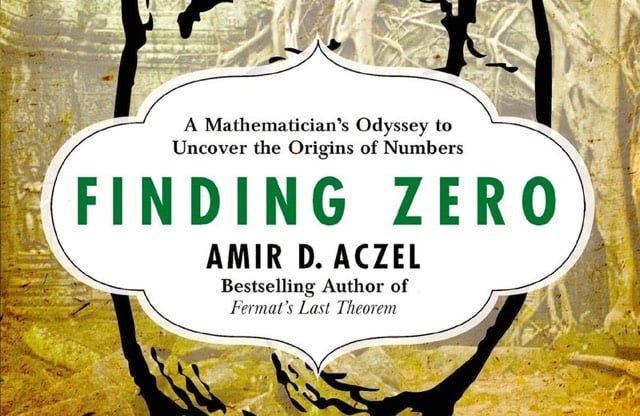
The latest book from Amir Aczel, who has written previously about the compass, the Large Hadron Collider, and Fermat’s Last Theorem, is Finding Zero: A Mathematician’s Odyssey to Uncover the Origins of Numbers…in particular, the number zero.
Finding Zero is an adventure filled saga of Amir Aczel’s lifelong obsession: to find the original sources of our numerals. Aczel has doggedly crisscrossed the ancient world, scouring dusty, moldy texts, cross examining so-called scholars who offered wildly differing sets of facts, and ultimately penetrating deep into a Cambodian jungle to find a definitive proof.
The NY Times has a review of the book, written by another Amir, Amir Alexander, who wrote a recent book on infinitesimals, aka very nearly zero. (via @pomeranian99)
The women of Don Draper

Hannah Choi is making illustrations of all the women Don Draper has slept with on Mad Men in chronological order.
4K dreamtime
Technically, what you’re looking at here is a video shot in 4K resolution (basically 2x regular HD) and at 1000 frames/sec by a Phantom Flex 4K camera which retails for $100,000+. Skateboarders ollie. Dirt bikes spray dirt. Gymnasts contort. Make this as fullscreen as possible and just sit back and enjoy.
My favorite bits were of the gymnasts. In super slow motion, you can see how aerial flips are all about getting your head down as quickly as possible, then snapping your legs around as your head stays almost completely motionless — like a chicken’s! Mesmerizing.
Treasure Trove of Over 1700 Mechanical Animations
Whenever I watch videos of how things are made, I marvel at the cleverness of the manufacturing machines. Retired engineer Duc Thang Nguyen has created over 1700 3D animations showing how all sorts of different mechanisms work…gears, linkages, drives, clutches, and couplings. Here are a few examples to whet your appetite.
(via make)
An oral history of Mad Men. “I sat down and wrote all seven seasons of Mad Men in about four hours.”
Desire map of the world
This map was compiled using the autocomplete results for “how much does a * cost” for every country in the world.

Some notable desires: Mexican tummy tucks, Brazilian prostitutes, Albanian nose jobs, Russian MiGs, Lebanese PS3s, and Japanese watermelons.
See also the desire map of the US.
Socials & More