Will Wright’s long zoom game, Spore, has been delayed until 2009. No one knows why, but I hope the answer involves porting it to the Wii. (via waxy)
Update: EA’s fiscal year starts in March, so it’s not delayed until 2009…just until after March 2008. (thx, zach)
Update: The unofficial word from someone on the development team is that Spore the system is almost ready but Spore the game isn’t all that much fun yet. A recent round of user testing didn’t go so well. Hence, the delay.
It’s been awhile since I’ve done one of these. Here are some updates on some of the topics, links, ideas, posts, people, etc. that have appeared on kottke.org recently:
Two counterexamples to the assertion that cities != organisms or ecosystems: cancer and coral reefs. (thx, neville and david)
In pointing to the story about Ken Thompson’s C compiler back door, I forgot to note that the backdoor was theoretical, not real. But it could have easily been implemented, which was Thompson’s whole point. A transcript of his original talk is available on the ACM web site. (thx, eric)
ChangeThis has a “manifesto” by Nassim Taleb about his black swan idea. But reader Jean-Paul says that Taleb’s idea is not that new or unique. In particular, he mentions Alain Badiou’s Being and Event, Jacques Derrida, and Gilles Deleuze. (thx, paul & jean-paul)
When I linked The Onion’s ‘Most E-Mailed’ List Tearing New York Times’ Newsroom Apart, I said “I’d rather read a real article on the effect the most popular lists have on the decisions made by the editorial staff at the Times, the New Yorker, and other such publications”. American Journalism Review published one such story last summer, as did the Chicago Tribune’s Hypertext blog and the LA Times (abstract only). (thx, gene & adam)
Related to Kate Spicer’s attempt to slim down to a size zero in 6 weeks: Female Body Shape in the 20th Century. (thx, energy fiend)
Got the following query from a reader:
are those twitter updates on your blog updated automatically when you update your twitter? if so, how did you do it?
A couple of weeks ago, I added my Twitter updates and recent music (via last.fm) into the front page flow (they’re not in the RSS feed, for now). Check out the front page and scroll down a bit if you want to check them out. The Twitter post is updated three times a week (MWF) and includes my previous four Twitter posts. I use cron to grab the RSS file from Twitter, some PHP to get the recent posts, and some more PHP to stick it into the flow. The last.fm post works much the same way, although it’s only updated once a week and needs a splash of something to liven it up a bit.
The guy who played Spaulding in Caddyshack is a real estate broker in the Boston area. (thx, ivan)
Two reading recommendations regarding the Jonestown documentary: a story by Tim Cahill in A Wolverine Is Eating My Leg and Seductive Poison by former People’s Temple member Deborah Layton. (thx, garret and andrea)
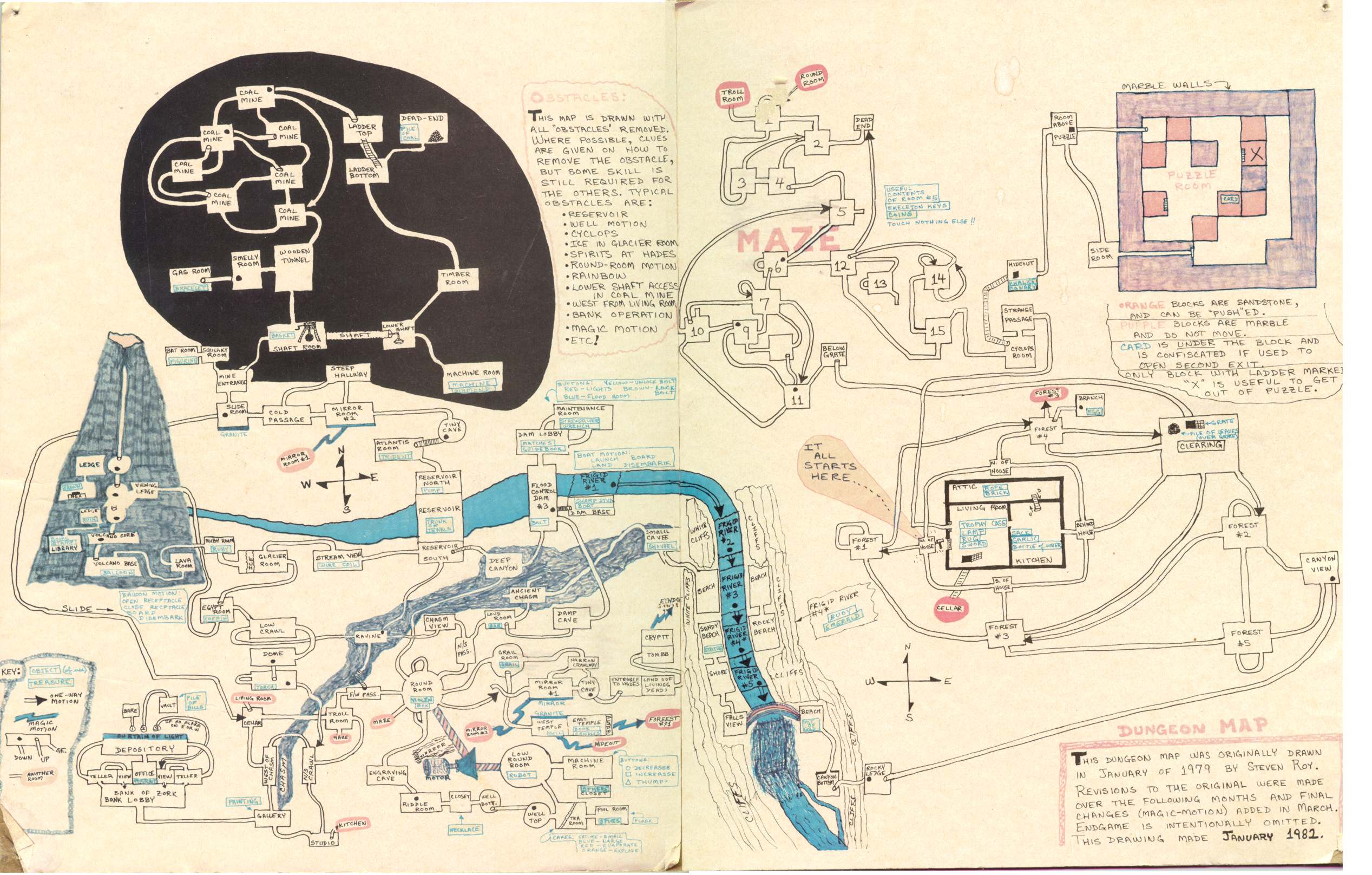
In case someone in the back didn’t hear it, this map is not from Dungeons and Dragons but from Zork/Dungeon. (via a surprising amount of people in a short period of time)
When reading about how low NYC’s greenhouse gas emissions are relative to the rest of the US, keep in mind the area surrounding NYC (kottke.org link). “Think of Manhattan as a place which outsources its pollution, simply because land there is so valuable.” (thx, bob)
NPR did a report on the Nickelback potential self-plagiarism. (thx, roman)
After posting about the web site for Miranda July’s new book, several people reminded me that Jeff Bridges’ site has a similar lo-fi, hand-drawn, narrative-driven feel.
In the wake of linking to the IMDB page for Back to the Future trivia, several people reminded me of the Back to the Future timeline, which I linked to back in December. A true Wikipedia gem.
I’m ashamed to say I’m still hooked on DesktopTD. The problem is that the creator of the game keeps updating the damn thing, adding new challenges just as you’ve finally convinced yourself that you’ve wrung all of the stimulation out of the game. As Robin notes, it’s a brilliant strategy, the continual incremental sequel. Version 1.21 introduced a 10K gold fun mode…you get 10,000 gold pieces at the beginning to build a maze. Try building one where you can send all 50 levels at the same time and not lose any lives. Fun, indeed.
Regarding the low wattage color palette, reader Jonathan notes that you should use that palette in conjunction with a print stylesheet that optimizes the colors for printing so that you’re not wasting a lot of ink on those dark background colors. He also sent along an OS X trick I’d never seen before: to invert the colors on your monitor, press ctrl-option-cmd-8. (thx, jonathan)
Dorothea Lange’s iconic Migrant Mother photograph was modified for publication…a thumb was removed from the lower right hand corner of the photo. Joerg Colberg wonders if that case could inform our opinions about more recent cases of photo alteration.
In reviewing all of this, the following seem related in an interesting way: Nickelback’s self-plagiarism, continual incremental sequels, digital photo alteration, Tarantino and Rodriquez’s Grindhouse, and the recent appropriation of SimpleBits’ logo by LogoMaid.
Mere days after I’d kicked the habit, enabling kottke.org reader Jay sends word that the heroin-like DesktopTD has updated with new modes, new bad guys, and new weapons. It’s Friday….get strung out on the new DesktopTD like it’s your first time.
I don’t spend enough time playing Wii Sports to claim mastery in any of the events. I’m hovering around 2000 in tennis, I’ve bowled a 248 (twice), shot an 8-under in 9 holes of golf, and got my only gold medal in “Hitting the Green” with a distance of 84 feet. The big question, particularly in the Wii Tennis clubhouse, is: how high can a person’s score go in a particular sport? Anything over 2000 displays off the chart:
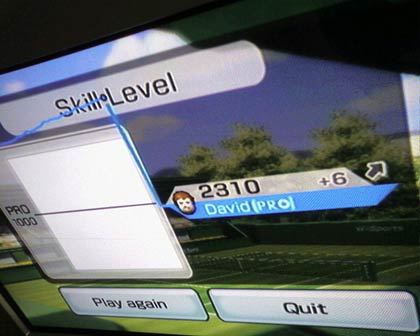
After poking around for a few minutes, I discovered the Wii High Scores pool on Flickr, in which were the 2310 in tennis above, several 300 games in bowling, an 8-under in golf, and 153.1 feet in “Hitting the Green”. Wii boxers in this thread claim a top score of 3124, after which it seems nearly impossible to score even a single point. Here’s a screenshot of a 3120-level boxer:

Does anyone have any Wii Sports high scores to share? Anyone over 2300 in tennis? Photo evidence is preferred.
Notes from Will Wright’s keynote at SXSW 2007. “Movies have these wonderful things called actors, which are like emotional avatars, and you kinda feel what they’re feeling, it’s very effective. Films have a rich emotional palette because they have actors. Games often appeal to the reptilian brain - fear, action - but they have a different emotional palette. There are things you feel in games - like pride, accomplishment, guilt even! - that you’ll never feel in a movie.”
A group of people who are interested in preserving video games as culturally and historically important artifacts has chosen their list of the top 10 most important video games of all time: Spacewar!, Star Raiders, Zork, Tetris, SimCity, Super Mario Bros. 3, Civilization I/II, Doom, Warcraft series and Sensible World of Soccer. Sensible World of Soccer?
The Nintendo Wii, and the bowling game in particular, is a big hit at an Illinois retirement community (average age: 77). “‘I’ve never been into video games,’ said 72-year-old Flora Dierbach last week as her husband took a twirl with the Nintendo Wii’s bowling game. ‘But this is addictive.’”






Socials & More