kottke.org posts about politics

In a big feature, New York Magazine chronologically recaps Barack Obama’s presidency with help from dozens of participants, including the President himself.
More than “hope,” Obama’s candidacy promised “one America.” It is the deep irony of his presidency, and for Obama himself probably the tragedy, that the past eight years saw the country fiercely divided against itself. The president still managed to get a ridiculous amount done, advancing an unusually progressive agenda. But however Americans end up remembering the Obama years decades from now, one thing we can say for sure is that it did not feel, at the time, like an unmitigated liberal triumph. It felt like a cold civil war.
Or a never-breaking political fever. There was the tea-party rage and Occupy Wall Street. Every other week, it seemed, a new shooting. Each movement was met by a countermovement, and yet, somehow, both the left and the right were invigorated, watched over by a president marked so deeply by temperamental centrism even his supporters called him Spock. Whether you noticed or not, our culture was shaken to its core. There was a whole new civil-rights era, both for those whose skin color and for those whose love was long met by prejudice. The first iPhone was released during the 2008 campaign. We got our news from Facebook, debated consent, and took down Bill Cosby. Elon Musk built a spaceship to Mars.
The dude got a lot done, despite a Congress that fought him tooth and nail for all eight years. Writing that just reminded me: Obama’s March nomination of Merrick Garland to the Supreme Court is still pending in the Senate. They’re holding it for a possible Trump-nominated judge.
Jeet Heer writing for The New Republic: Clinton Proved Trump Is a Man You Can Bait in a Debate.
In her acceptance speech at the Democratic convention, Hillary Clinton called out Donald Trump memorably, saying, “A man you can bait with a tweet is not a man we can trust with nuclear weapons.” The insight that Trump is easy to provoke formed the core of Clinton’s successful strategy in the first debate on Monday, as she repeatedly incited the Republican nominee to both adopt an off-putting aggressive tone and to make a series of damaging self-admissions.
This reminded me of poker player Annie Duke’s explanation of how she used the gender stereotypes of her male opponents against them.
I figured it was part of the game that if somebody was at the table who was so emotionally invested in the fact that I was a woman, that they could treat me that way, that probably, that person wasn’t going to make good decisions at the table against me. So I really tried to sort of separate that out and think about it from a strategic place of, how can I come up with the best strategy to take their money because I guess, in the end, isn’t that the best revenge?
Trump sounds like he’s a combination of the angry and disrespecting chauvinists:
VEDANTAM: She says she divided the men who had stereotypes about her into three categories.
DUKE: One was the flirting chauvinists, and that person was really viewing me in a way that was sexual.
VEDANTAM: With the guys who were like that, Annie could make nice.
DUKE: I never did go out on a date with any of them, but you know, it was kind of flirtatious at the table. And I could use that to my advantage.
VEDANTAM: And then there was the disrespecting chauvinist. Annie says these players thought women weren’t creative.
DUKE: There are strategies that you can use against them. Mainly, you can bluff those people a lot.
VEDANTAM: And then there’s a third kind of guy, perhaps the most reckless.
DUKE: The angry chauvinist.
VEDANTAM: This is a guy who would do anything to avoid being beaten by a woman. Annie says you can’t bluff an angry chauvinist. You just have to wait.
DUKE: What I say is, until they would impale themselves on your chips.
Although I suspect his chauvinism is only part of his poor debate showing…his insecurity is off the charts as well.
Doris Kearns Goodwin worked in the White House for LBJ and has written extensively about US Presidents: Team of Rivals (Lincoln), The Bully Pulpit (Teddy Roosevent & Taft), and No Ordinary Time (FDR & Eleanor Roosevelt). For the November issue of Vanity Fair, she visited with Barack Obama in the White House to reflect on his progress and legacy as he approaches the end of his two terms in office. The resulting conversation is excellent.
Early in my presidency, I went to Cairo to make a speech to the Muslim world. And in the afternoon, after the speech, we took helicopters out to the pyramids. And they had emptied the pyramids for us, and we could just wander around for a couple hours [at] the pyramids and the Sphinx. And the pyramids are one of those things that live up to the hype. They’re elemental in ways that are hard to describe. And you’re going to these tombs and looking at the hieroglyphics and imagining the civilization that built these iconic images.
And I still remember it — because I hadn’t been president that long at that point — thinking to myself, There were a lot of people during the period when these pyramids were built who thought they were really important. And there was the equivalent of cable news and television and newspapers and Twitter and people anguishing over their relative popularity or position at any given time. And now it’s all just covered in dust and sand. And all that people know [today] are the pyramids.
Sometimes I carry with me that perspective, which tells me that my particular worries on any given day — how I’m doing in the polls or what somebody is saying about me … for good or for ill — isn’t particularly relevant. What is relevant is: What am I building that lasts?
I particularly enjoyed the part early on about ambition, adversity, and empathy. Oh, this short anecdote from Goodwin about LBJ is great:
L.B.J. had his amphibious car when he was president. He tricked me and took me in his car one day, and the Secret Service collaborated with him. L.B.J., behind the wheel, warned me, “Be careful, we’re going toward a lake. The brakes aren’t working.” Well, we go into the lake: the car became a boat. Then he got so mad at me because I didn’t get scared. I’d figured, He’s not going to die. And he said, “Don’t you Harvard people have enough sense to be scared?”
Has anyone in one of these interviews really pressed Obama on his drone policy? I think it’s the one big stain on his record and would love to hear his personal defense of it in length.
When you see how well it works for Donald Trump, do you ever think to yourself, “Oh, maybe I should be more racist”?
I loved this. If Galifianakis can’t get her to break, what hope does Trump have in the debates? Maybe this is part of her debate prep?

In the 1930s, almost a decade before the nation’s young men would be shipped overseas to combat the foul stench of Hitler wafting across Europe, official and unofficial rallies for the Nazi party were held in Madison Square Garden.
Shortly after Adolf Hitler’s appointment as Chancellor of Germany in January 1933, the Nazis consolidated control over the country. Looking to cultivate power beyond the borders of Germany, Deputy Führer Rudolf Hess charged German-American immigrant Heinz Spanknobel with forming a strong Nazi organization in the United States.
Combining two small extant groups, Spanknobel formed Friends of New Germany in July 1933. Counting both German nationals and Americans of German descent among its membership, the Friends loudly advocated for the Nazi cause, storming the offices of New York’s largest German-language paper, countering Jewish boycotts of German businesses and holding swastika-strewn rallies in black-and-white uniforms.
A later group, which only disbanded at the end of 1941, were prominently pro-American and featured iconography of George Washington as “the first Fascist”. (I would have gone for “the Founding Fascist”…catchier.)
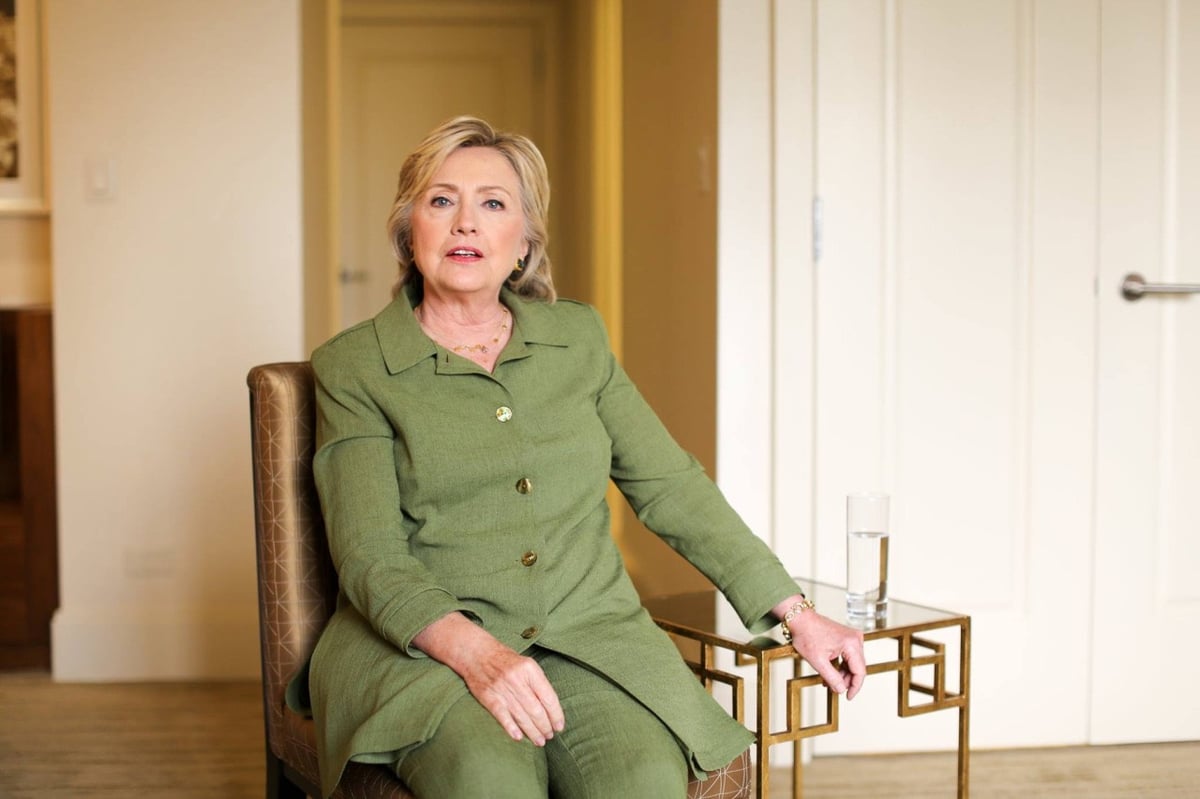
Humans of New York recently caught up with Hillary Clinton and she talked about how her public persona came to be.
I know that I can be perceived as aloof or cold or unemotional. But I had to learn as a young woman to control my emotions. And that’s a hard path to walk. Because you need to protect yourself, you need to keep steady, but at the same time you don’t want to seem ‘walled off.’ And sometimes I think I come across more in the ‘walled off’ arena. And if I create that perception, then I take responsibility. I don’t view myself as cold or unemotional. And neither do my friends. And neither does my family. But if that sometimes is the perception I create, then I can’t blame people for thinking that.
Clinton is just a different type of politician than her husband or Obama, for good reason.
Women are seen through a different lens. It’s not bad. It’s just a fact. It’s really quite funny. I’ll go to these events and there will be men speaking before me, and they’ll be pounding the message, and screaming about how we need to win the election. And people will love it. And I want to do the same thing. Because I care about this stuff. But I’ve learned that I can’t be quite so passionate in my presentation. I love to wave my arms, but apparently that’s a little bit scary to people. And I can’t yell too much. It comes across as ‘too loud’ or ‘too shrill’ or ‘too this’ or ‘too that.’ Which is funny, because I’m always convinced that the people in the front row are loving it.
When she says “it’s not bad,” that’s a perfect illustration of not being able to say exactly what you want how you want. A woman gets excited and she seems deranged or unhinged but a man gets excited and he’s seen as passionate? That seems bad to me.
P.S. Clinton is reading Elena Ferrante’s Neapolitan novels!
“You know what I have started reading and it’s just hypnotic is the Neapolitan novels by Elena Ferrante,” she tells Linsky, commenting on Ferrante’s intoxicating novels about female relationships in Naples, Italy that have an intense cult following. “I had to stop myself so I read the first one. I could not stop reading it or thinking about it.”
They’re the best fiction I’ve read in ages…so sad I’ve finished them all.
This video for Nobody Speak by DJ Shadow feat. Run The Jewels is one of the best music videos I’ve seen in a long time.
Says DJ Shadow: “We wanted to make a positive, life-affirming video that captures politicians at their election-year best. We got this instead.”
Says Run The Jewels’ Killer Mike: “It’s such a dope video. It’s what I really wish Trump and Hillary would just do and get it over with…And even in that fight I think Hillary would win — and that’s not an endorsement.”
The album is one of my faves so far…you get listen to it here or here.
You could argue that the world has never been better: war is increasingly rare, medical science has cured a number of the deadliest diseases, global poverty is down, life expectancy is up, and crime in America is down. But it sure doesn’t seem that way, especially with Brexit, climate change, Trump, Syria, and terrorist incidents around the world. Oliver Burkeman explores some of the reasons why we think the sky is continually falling and what we can do to be happy anyway. I have been thinking about this aspect of it recently:
And there is another, subtler reason you might find yourself convinced that things are getting worse and worse, which is that our expectations outpace reality. That is, things do improve — but we raise our expectations for how much better they ought to be at a faster rate, creating the illusion that progress has gone into reverse.
See also George Saunders’ manifesto from People Reluctant To Kill for an Abstraction.
The Clinton campaign is currently wrestling with how to prepare for the first debate with Trump coming up at the end of September. Part of that challenge is picking a proper sparring partner for the mock debates.
It’s one of the most uncomfortable and important jobs in Democratic politics: trying to embarrass the woman who could be the next president.
The person picked to be Hillary Clinton’s sparring partner in her upcoming debate prep sessions is expected to confront her about the death of Vincent Foster, label her a rapist’s enabler, and invoke the personally painful memories of Monica Lewinsky and Gennifer Flowers.
I’ve been thinking about this since the Republican convention and there’s an obvious choice here: Stephen Colbert. Clinton needs to prepare to deftly counter energetically delivered nonsense, personal insults, and things no politician would ever say. Does that sound like the host of a certain Comedy Central show? Colbert’s smart, quick, knows the issues, and, with his talent, could tweak his Colbert Report persona toward the Trumpesque. He wouldn’t have a problem tearing Clinton down in person; he did the same thing to George W. Bush at the 2006 White House Correspondents Dinner. I bet he’d jump at the chance to do it too. Let’s make this happen, America!
Update: They’re getting closer…
At least a few old Clinton hands have suggested enlisting professional entertainers, like Jon Stewart or Alec Baldwin.
Colbert! He could do it with his eyes shut!

The population of NYC is equal to the combined populations of Vermont, Alaska, New Mexico, North Dakota, South Dakota, Wyoming, Montana, and West Virginia. Here’s what that looks like on a map.
Put another way: 16 US Senators represent as many people in those states as a fraction of one of New York States’ Senators represent the population of NYC. A Senator from Wyoming represents 290,000 people while one from New York represents 9.8 million people…and in California, there are 19 million people per Senator. That gives a Wyoming resident 65 times the voting power of a California resident.
Billy West, who does the voice of Futurama’s Zapp Brannigan, is taking quotes from Donald Trump and speaking them in Brannigan’s voice. This is silly and dumb, but I can’t help loving these.
Update: The addition of Kif’s reactions really takes these to the next level.
Kif sighs for all of America. And this one, I mean…if they wrote this dialogue for the show it would be rejected because not even Zapp is that outlandishly dim and egotistical.
In the biggest water miracle since Christ walked on the Sea of Galilee,1 Israel has turned certain drought into a surplus of water. Conservation helped — low-flow shower heads, recycling waste water for crop irrigation — but much of the gain came from vastly improved desalinization techniques, which they hope can spread across the region and the world.
We are standing above the new Sorek desalination plant, the largest reverse-osmosis desal facility in the world, and we are staring at Israel’s salvation. Just a few years ago, in the depths of its worst drought in at least 900 years, Israel was running out of water. Now it has a surplus. That remarkable turnaround was accomplished through national campaigns to conserve and reuse Israel’s meager water resources, but the biggest impact came from a new wave of desalination plants.
Perhaps the world won’t end in water wars after all.
Update: Of course, technological advances can affect politics in many ways. Instead of sharing the tech, Israel can use their water advantage to put political pressure on their neighbors, as when Israel cut water supplies to the West Bank earlier this year during Ramadan.
Even without politics, desalinization is problematic…there’s the small matter of where to put all that salt:
Brine disposal is a big problem in much of the Middle East. The gulf, along with the Red and Mediterranean seas, are turning saltier because of desalination by-products — and the region is the epicenter of desalination worldwide, with the United Arab Emirates, Saudi Arabia, Kuwait, Qatar, Bahrain and Oman making up 45 percent of global desalination capacity. This brine is typically twice as salty as seawater, and advanced desalination plants still produce approximately two cubic meters of waste brine for every one cubic meter of clean water.
(thx, jennifer & nathan)
Now that Donald Trump’s officially the Republican candidate, here’s a summary of how a party once led by Abraham Lincoln came to select Mr. Orange as their #1. The Republican Party hasn’t been “the party of Lincoln” for many decades now, but I’m sure Abe is spinning particularly rapidly in his grave over his party’s latest turn. (As I’m sure Andrew Jackson and Jefferson Davis have been doing as well over the past eight years.)
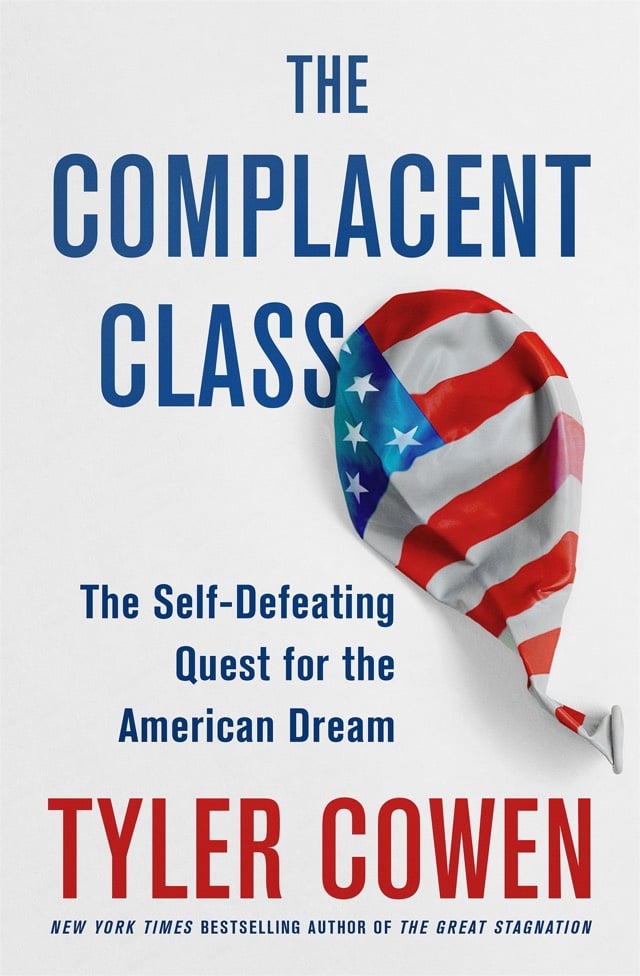
The Complacent Class is a forthcoming book by Tyler Cowen.
Since Alexis de Tocqueville, restlessness has been accepted as a signature American trait. Our willingness to move, take risks, and adapt to change have produced a dynamic economy and a tradition of innovation from Ben Franklin to Steve Jobs.
The problem, according to legendary blogger, economist and bestselling author Tyler Cowen, is that Americans today have broken from this tradition — we’re working harder than ever to avoid change. We’re moving residences less, marrying people more like ourselves and choosing our music and our mates based on algorithms that wall us off from anything that might be too new or too different. Match.com matches us in love. Spotify and Pandora match us in music. Facebook matches us to just about everything else.
Of course, this “matching culture” brings tremendous positives: music we like, partners who make us happy, neighbors who want the same things. We’re more comfortable. But, according to Cowen, there are significant collateral downsides attending this comfort, among them heightened inequality and segregation and decreased incentives to innovate and create.
Cowen is also releasing another book called Stubborn Attachments: A Vision for a Society of Free, Prosperous, and Responsible Individuals.
In that work, I outline a true and objectively valid case for a free and prosperous society, and consider the importance of economic growth for political philosophy, how and why the political spectrum should be reconfigured, how we should think about existential risk, what is right and wrong in Parfit and Nozick and Singer and effective altruism, how to get around the Arrow Impossibility Theorem, to what extent individual rights can be absolute, how much to discount the future, when redistribution is justified, whether we must be agnostic about the distant future, and most of all why we need to “think big.”
It is only available by emailing him that you’ve pre-ordered The Complacent Class. Oh, and a reminder about how I (try to) read books.
From the transcript of the video:
Disturbingly, many of Trump’s early measures didn’t require mass repression. His speeches exploited people’s fear and ire to drive their support behind him and the Republican party. Meanwhile, businessmen and intellectuals, wanting to be on the right side of public opinion, endorsed Trump. They assured themselves and each other that his more extreme rhetoric was only for show.
Oh sorry, looks like autocorrect misspelled “Hitler” a couple times there. (Boy, Godwin’s law makes it difficult to talk about the historical comparisons, although Mike Godwin himself sanctioned the comparison if “you’re thoughtful about it and show some real awareness of history”. Not sure I’m meeting the standard here, but at least we’ve learned something about Hitler?)
Newer posts
Older posts





Socials & More