kottke.org posts about movies
In this trailer for Terminator Salvation — more like salivation, which is what I’m doing waiting for this movie to come out, amiright? — we’re led to believe that perhaps Christian Bale turns out to be a Replicant or a Mecha. (via fimoculous)
After that great piece about how The Godfather got made was published, Vanity Fair got a call from the daughter of a reputed mobster who wanted to tell the magazine about the time the cast of The Godfather came over to her house for supper and some cultural exchange.
The doorbell rang at seven p.m. at the family house in Fort Lee, New Jersey, right across the Hudson River from Manhattan. “I opened the front door and there was Marlon Brando, James Caan, Morgana King [who played Don Corleone’s wife], Gianni Russo [who played Don Corleone’s son-in-law, Carlo], Al Ruddy [the film’s producer], and my uncle Al [Lettieri],” recalls Gio. “We all went downstairs into the family room, where the table was set and where we had the pool table and the bar.”
Watch the entirety of Nina Paley’s Sita Sings the Blues online.
Sita is a goddess separated from her beloved Lord and husband Rama. Nina is an animator whose husband moves to India, then dumps her by e-mail. Three hilarious shadow puppets narrate both ancient tragedy and modern comedy in this beautifully animated interpretation of the Indian epic Ramayana. Set to the 1920’s jazz vocals of Annette Hanshaw, Sita Sings the Blues earns its tagline as “The Greatest Break-Up Story Ever Told.”
The film was made by Nina Paley on her home computer and garnered a rave review from Roger Ebert.
I put on the DVD and start watching. I am enchanted. I am swept away. I am smiling from one end of the film to the other. It is astonishingly original. It brings together four entirely separate elements and combines them into a great whimsical chord. You might think my attention would flag while watching An animated version of the epic Indian tale of Ramayana set to the 1920’s jazz vocals of Annette Hanshaw. Quite the opposite. It quickens.
As a small independent filmmaker, Paley ran into licensing issues for the music used in the film that has prevented the release of the film….until now. (via waxy)
Of the world’s 7,000 languages, 40 percent are on their way to extinction, with the last fluent speaker of a language dying once every two weeks.
Every two weeks? Wow. That’s from an article in Seed magazine about a PBS show airing tonight called The Linguists.
The Linguists is a hilarious and poignant chronicle of two scientists — David Harrison and Gregory Anderson — racing to document languages on the verge of extinction. In Siberia, India, and Bolivia, the linguists confront head-on the very forces silencing languages: racism, humiliation, and violent economic unrest. David and Greg’s journey takes them deep into the heart of the cultures, knowledge, and communities at risk when a language dies.
During the closing credits of the Academy Awards, a clip was shown previewing some movies that will open in 2009. None of them look like they’ll win any Oscars so I presume this was paid advertising and not editorial on the part of the program. Fun though! (via /film)
A fascinating article from the March 2009 issue of Vanity Fair describes how The Godfather got made, even though the producers, the real-life Mafia, Frank Sinatra, and Paramount executives all fought against it.
The studio executives wanted Laurence Olivier, Ernest Borgnine, Richard Conte, Anthony Quinn, Carlo Ponti, or Danny Thomas to play Don Corleone. Anyone but Brando, who, at 47, was perceived as poison. His recent pictures had been flops, and he was overweight, depressed, and notorious for causing overruns and making outrageous demands. WILL NOT FINANCE BRANDO IN TITLE ROLE, the suits in New York cabled the filmmakers. DO NOT RESPOND. CASE CLOSED.
But Coppola fought hard for him, and finally the executives agreed to consider Brando on three conditions: he would have to work for no money up front (Coppola later got him $50,000); put up a bond for any overruns caused by him; and-most shocking of all-submit to a screen test. Wisely, Coppola didn’t call it that when he contacted Brando. Saying that he just wanted to shoot a little footage, he arrived at the actor’s home one morning with some props and a camera.
Brando emerged from his bedroom in a kimono, with his long blond hair in a ponytail. As Coppola watched through the camera lens, Brando began a startling transformation, which he had worked out earlier in front of a mirror. In Coppola’s words, “You see him roll up his hair in a bun and blacken it with shoe polish, talking all the time about what he’s doing. You see him rolling up Kleenex and stuffing it into his mouth. He’d decided that the Godfather had been shot in the throat at one time, so he starts to speak funny. Then he takes a jacket and rolls back the collar the way these Mafia guys do.” Brando explained, “It’s the face of a bulldog: mean-looking but warm underneath.”
Coppola took the test to Bluhdorn. “When he saw it was Brando, he backed away and said, ‘No! No!’” But then he watched Brando become another person and said, “That’s amazing.” Coppola recalls, “Once he was sold on the idea, all of the other executives went along.”
In a NY Times op-ed piece, Emily Oberman and Bonnie Siegler argue that the Oscars should have a category for the design of title sequences. Hear, hear. Their pick for this year’s hypothetical award:
1. “WALL-E,” Susan Bradley and Jim Capobianco/Pixar. These poignant end titles, which show humans and robots flourishing on a revived Earth, offer a quick history of art, from cave paintings to van Gogh. They then proceed to retell the entire movie, this time in the pixelated style of old video games.
(via subtraction)
So how’d Nate Silver do with his predictions on Oscar night? He got four out of six, missing Penelope Cruz for best supporting and Sean Penn for best actor. I, however, am one for one with my Nate Silver predictions.
Update: Silver’s postmortem.
I’m happy to see that the AV Club has included Stanley Kubrick’s Eyes Wide Shut in their New Cult Canon, which includes such films as Donnie Darko, Babe: Pig in the City, Primer, and Reservoir Dogs. EWS is under-appreciated in my book and Scott Tobias nails exactly why I find the movie compelling.
Critics pilloried the anti-erotic ridiculousness of the orgy, with its funereal organ music and self-sacrificing hookers and mass-like rituals involving cloaked high priests and great plumes of incense. But the orgy is more about power than sex; in that respect, it’s the opposite of some free-love hippie bacchanal, where the fucking is more democratic. Here, the rituals are about affirming the elite, and Bill doesn’t belong to this exclusionary country club, whose members are intent on subjugating their inferiors. For Bill, it’s the peak of a humiliating journey, and Kubrick accomplishes the remarkable feat of making Cruise, the brashly confident movie star, look small and scared behind that mask.
Overall, 1999 is still my favorite movie year. I saw more than 50 movies in the theater that year, including EWS, Rushmore, Princess Mononoke, Election, Run Lola Run, Being John Malkovich, Iron Giant, The Matrix, Magnolia, American Beauty, Toy Story 2, and Three Kings. Quite a year.
Roger Ebert offers a loving remembrance of his friend and colleague Gene Siskel on the 10th anniversary of his death.
We both thought of ourselves as full-service, one-stop film critics. We didn’t see why the other one was quite necessary. We had been linked in a Faustian television format that brought us success at the price of autonomy. No sooner had I expressed a verdict on a movie, my verdict, than here came Siskel with the arrogance to say I was wrong, or, for that matter, the condescension to agree with me. It really felt like that. It was not an act. When we disagreed, there was incredulity; when we agreed, there was a kind of relief. In the television biz, they talk about “chemistry.” Not a thought was given to our chemistry. We just had it, because from the day the Chicago Tribune made Gene its film critic, we were professional enemies. We never had a single meaningful conversation before we started to work on our TV program. Alone together in an elevator, we would study the numbers changing above the door.
Nate Silver, who used polling statistics to predict a clear Obama win in the Presidential election in November, turns his analytical tools loose on the Oscars.
For example, is someone more likely to win Best Actress if her film has also been nominated for Best Picture? (Yes!) But the greatest predictor (80 percent of what you need to know) is other awards earned that year, particularly from peers (the Directors Guild Awards, for instance, reliably foretells Best Picture). Genre matters a lot (the Academy has an aversion to comedy); MPAA and release date don’t at all. A film’s average user rating on IMDb (the Internet Movie Database) is sometimes a predictor of success; box grosses rarely are.
Silver’s “Gamble-Tron 2000 Lock of the Oscars” is that Danny Boyle wins Best Director for Slumdog Millionaire with a whopping 99.7% certainty. I suspect that the Oscars will prove more difficult to predict than the election and that Silver will be wrong in at least two categories. I will report back on Oscar night. (via fimoculous)
Matthew Baldwin lists sixteen of his favorite mindfuck films, including La Jetée, Dark City, and Memento.
As I stood in line to buy my tickets, I noticed a small hand-lettered sign in the box-office window that read, “People arriving five or more minutes late to Memento will not be allowed entrance.” This was at a small art-house cinema — not one to place arbitrary restrictions on its patrons — and it struck me as odd that the limitation applied solely to this one film, so I asked the cashier about it when I reached the front of the line.
“You can’t understand anything about the film if you miss the first five minutes,” she told me with a roll of her eyes. “We’ve had late-comers charge out here after the end and demand that we explain the whole thing to them.”
Baldwin gives Primer some much-deserved love, which is always appreciated around here.
Tarantino’s latest film is about Nazi-killing American soldiers and stars Brad Pitt. I can’t decide if this movie is going to completely suck or be really great. Vampire movies notwithstanding, Quentin always gets the benefit of the doubt from me so great it is.
The entire collection of Kim’s Video in the East Village, all 55,000+ hard-to-find films, is now headed to a formerly abandoned town in Italy that is now run entirely by artists.
In a notice pasted on a wall inside the front door [of his video store], he wrote, “We hope to find a sponsor who can make this collection available to those who have loved Kim’s over the past two decades.” He promised to donate all the films without charge to anyone who would meet three conditions: Keep the collection intact, continue to update it and make it accessible to Kim’s members and others.
(thx, cliff)
A visualization of the top 10 Hollywood stars from 1936 to 1945.
For three years, from ‘36 to ‘38, Shirley Temple was the country’s top box-office star, and then Mickey Rooney had the title from ‘39 to ‘41. (And then it was Abbott & Costello.) Imagine. Temple and Rooney knew how to entertain, for sure, but the last thing you could call moviegoers back then, to judge by their six-year reign, was urbane or sophisticated.
Esquire profiles Paul Thomas Anderson, focusing on the director’s early years and how he came to make Cigarettes and Coffee, Hard Eight, and eventually Boogie Nights, which was based on a film he made as a high schooler called The Dirk Diggler Story.
Although Anderson is one of the most autobiographical filmmakers of his generation, drawing heavily on his childhood in the San Fernando Valley, most stories about him offer some variation on “very little is known about his early years” or “little is known about Paul’s childhood.” He has stopped talking to most of his friends from those years, and none of them can say whether he just moved on naturally or broke with his past for some secret reason.
“When he did Magnolia,” Stevens says, “I sent word through someone who worked with him to tell Paul it would be great if he could come back for a visit. I’d love to see him. And the answer came: ‘Paul doesn’t go back.’”
You can watch The Dirk Diggler Story on Google Video.
This New Yorker article about how movies are marketed is a real bummer. Interesting, yes, but still a bummer.
One of the oldest jokes in the business is that when a studio head takes over he’s given three envelopes, the first of which contains the advice “Fire the head of marketing.” Nowadays, though, former marketers, such as Oren Aviv, at Disney, and Marc Shmuger, at Universal, often run the studios. “Studios now are pimples on the ass of giant conglomerates,” one studio’s president of production says. “So at green-light meetings it’s a bunch of marketing and sales guys giving you educated guesses about what a property might gross. No one is saying, ‘This director was born to make this movie.’”
I’ve seen similar articles in the past and the thing that always strikes me about the people who make movies is a) how much they love movies and b) how little they care about actually making good movies that people will love. So cynical.
kottke.org contributer Cliff Kuang asks: what can we learn from the classic Bill Murray flick Groundhog Day? A: Lessons physic, lessons Buddhist, and lessons economic.
The first time Phil Conners lives out Groundhog Day, he knows nothing about how events will unfold, and acts accordingly — self centered, short sighted and rash. But by the time Conners lives out his last Groundhog Day, he has perfect knowledge of how everyone around him will behave. He acts accordingly — maximizing his happiness and the happiness of those around him. The metaphor gets pretty loose, but in this interpretation, Phil’s last day is analogous to classical economics, where people act with perfect knowledge and rationality.
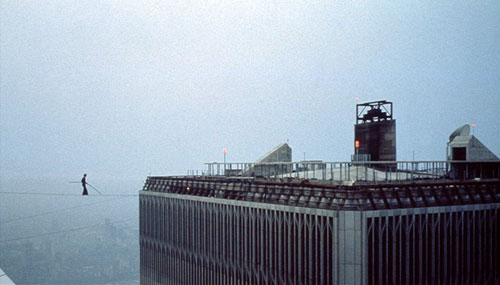
Wow.
My favorite ads during the Super Bowl broadcast are the movie trailers. Here are the trailers they showed this year:
Transformers 2 (Electric Bugaloo.)
Race to Witch Mountain (The Rock + alien kids.)
Up (New Pixar flick.)
Star Trek (JJ Abrams.)
Land of the Lost (No more Will Ferrell, please.)
Year One (No more Jack Black either. Michael Cera, your clock is ticking.)
Angels and Demons (Hanks/Howard follow-up to DaVinci Code’s prequel book.)
Monsters vs Aliens (Kids like aliens. Kids like monsters. Why not give ‘em both at once?)
Fast and Furious (It’s the first film, minus two thes.)
GI Joe
With the exception of the two animated films and Year One, all of the above are either sequels or remakes. And Hulu, in a stroke of highly irritating genius, has inserted advertising before each of the trailers linked above. Advertising *in* advertising…the 20th century has officially ended. Welcome to the future.
Update: I’ve switched out the Hulu links for ones at Apple; they’re higher quality and can be seen outside of the US. I wish the Apple trailers would have been live last night; it would have made for a lot less whining in my inbox. I just go where the links take me, folks. Oh, and I added the GI Joe trailer. (thx, david)
A short lesson in film editing in the form of a scene from the film Modern Romance, featuring Albert Brooks and Bruno Kirby. The director of the film that comes in about halfway through is real-life producer/director James L. Brooks. (thx, dave)
A review of 2008’s best cinematographic moments: part one, part two.
This year the challenge was of a different sort. The field was curiously thin. It wasn’t that the talent wasn’t on display. God knows, a number of the greats were lining up behind the camera this year. But the images weren’t as instantly iconic or as viscerally gripping as they were in 2007, which might have left me a bit disappointed on one hand. Then again, it just made searching for my favorites all the more involved and interesting, and I’m happy to offer my findings to you in this space, even if it meant doubling up.
This was one of my favorite “best of” lists from 2007 and I’m glad to see it return this year.
Update: Hmm, all the permalinks on that site appear to be broken. Maybe check back later?
For those that enjoyed the trailer for Carts of Darkness I posted a couple of months ago, an exciting follow-up: The National Flim Board of Canada has posted the entire film online for anyone to watch.
Murray Siple’s feature-length documentary follows a group of homeless men who have combined bottle picking with the extreme sport of racing shopping carts down the steep hills of North Vancouver. This subculture depicts street life as much more than the stereotypes portrayed in mainstream media. The film takes a deep look into the lives of the men who race carts, the adversity they face and the appeal of cart racing despite the risk.
BTW, this is but one film of hundreds of shorts, animated films, and documentaries that the NFB recently put online for viewing.
A longish interview with Steven Soderbergh about his Che movie and filmmaking in general. The first question is about how all his movies are related.
The good news is that I don’t have to know if there’s a link. Wells had a great quote once where some critic asked him a similar question. He said, “I’m the bird, and you’re the ornithologist.” I don’t really sit down and think on a macro level how or if these things are connected. They obviously are in the sense that I wanted to make them. And so there must be something in them that I’m drawn to.
Soderbergh also talks about following your interest when choosing projects and not worrying so much about the money.
Yeah. And I’m a big believer that if there’s something you really want to do, don’t walk away because of the deal. I see it happen a lot. I see people walk away from things because they didn’t get the deal they wanted.
Andy Baio has published his annual report on how many Oscar nominated films are available online in pirated versions. A: Almost all of them.
Out of 26 nominated films, an incredible 23 films are already available in DVD quality on nomination day, ripped either from the screeners or the retail DVDs. This is the highest percentage since I started tracking.
Web/movie mashups. My favorites:
Harry Potterybarn.com
Il Huffington Postino
Slumdog Millionaire Dollar Homepage
Behind Enemy Bloglines
Schindler’s Craigslist
Charlotte’s WebCrawler
Freecreditreport.com Willy
And while not strictly adhering to the form, I also chuckled at “Bone Thugs & eHarmony”. The best I could come up with for kottke.org is Girls Gone Wild: Kottke West, which is not so good.
Update: Duh, I totally forgot about Koyaaniskottke. Also: kottke.orgazmo, The Kottke Horror Picture Show, and Kottke Balboa. (thx, andy & charley)
I pulled out a couple of interesting-sounding documentaries from this preview of this year’s Sundance Film Festival. The first is Art & Copy, a documentary about advertising that seems well-timed on the heels of Mad Men.
Come to think of it, it’s amazing that nobody’s made a major documentary about the advertising business before. Are some phenomena just so powerful and ubiquitous we stop thinking about them? Now acclaimed doc-maker Doug Pray goes inside the ever-revolutionary world of post-’60s advertising, profiling such legendary figures as [Dan] Wieden (“Just do it”), Hal Riney (“It’s morning in America”) and Cliff Freeman (“Where’s the beef?”) and inquiring where the boundaries lie between art, salesmanship and brainwashing.
Somewhat related to that is The September Issue, which follows the creation of Vogue magazine’s September issue. You know, the one packed with hundreds of pages of advertising.
You-are-there documentarian R.J. Cutler (“The War Room,” etc.) takes us inside the creation of Vogue’s annual and enormous September issue, which possesses quasi-biblical status in the fashion world. Granted full access to editorial meetings, photo shoots and Fashion Week events by Vogue editor Anna Wintour, Cutler spent nine months at Vogue, documenting a monumental process that more closely resembles a political campaign or a sports team’s season than the publication of a single magazine.
And while not a documentary, there’s excitement and trepidation surrounding John Krasinski’s Brief Interviews with Hideous Men, a adaptation of a book by the same name by David Foster Wallace.
Newer posts
Older posts





Socials & More