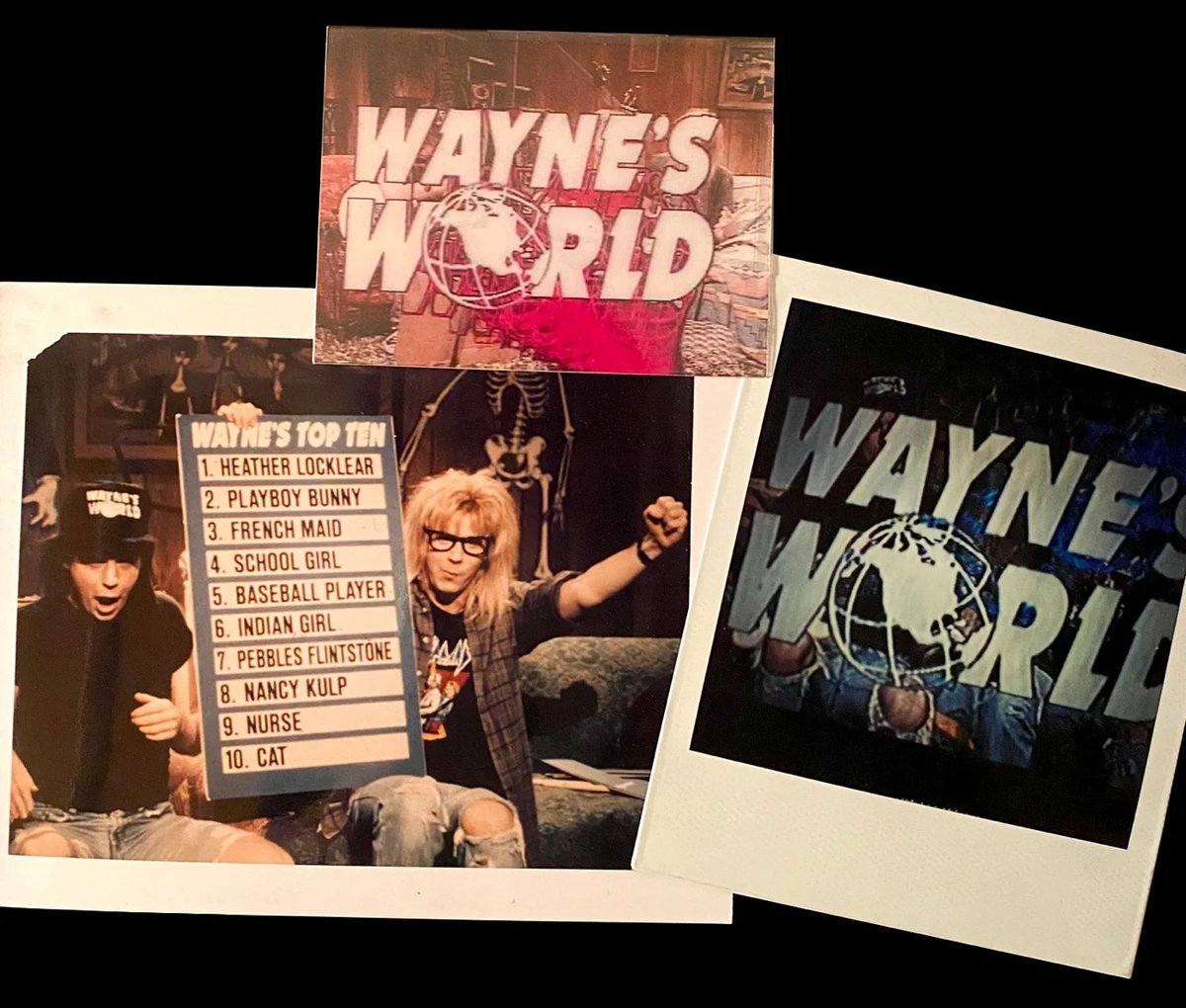
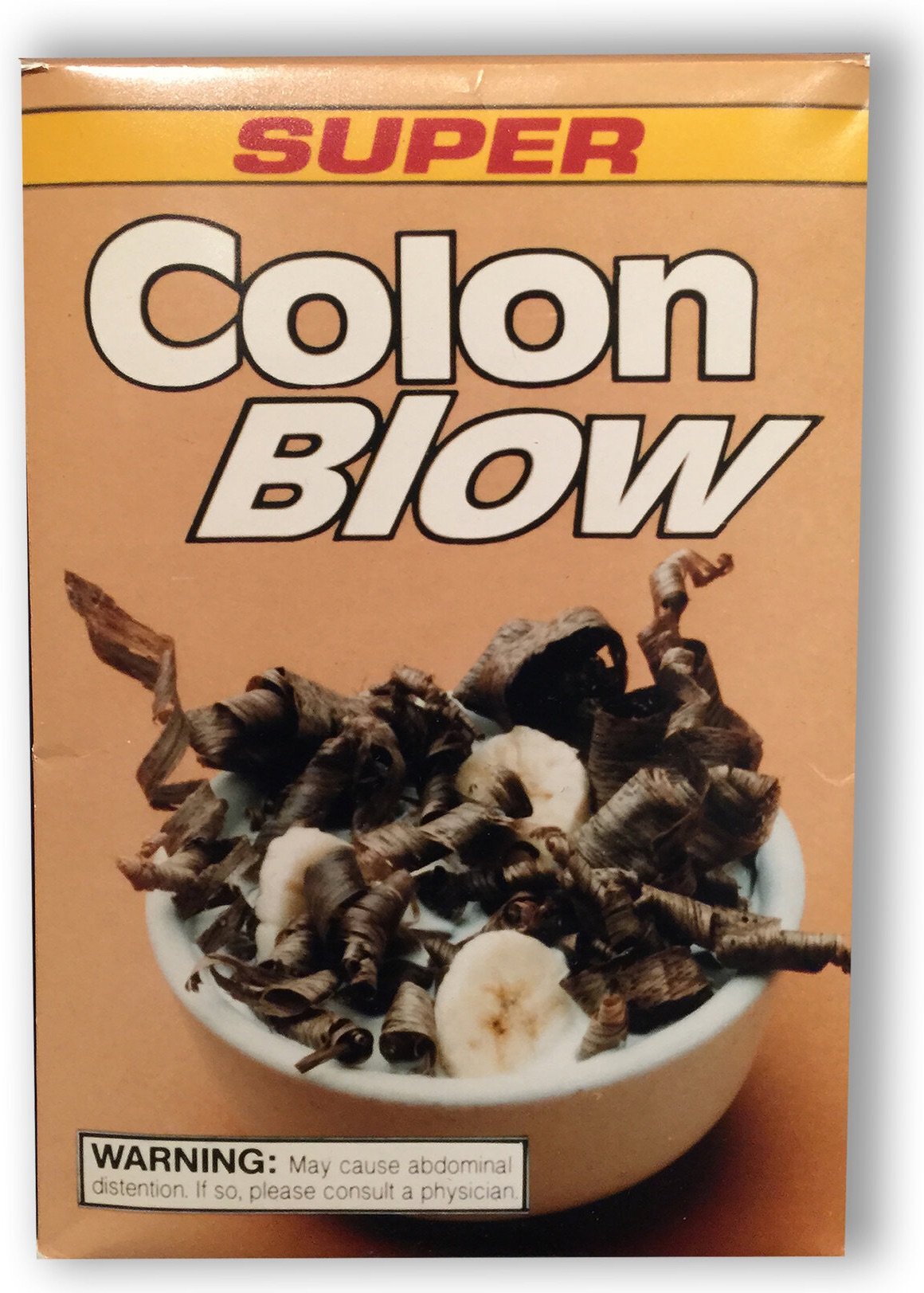
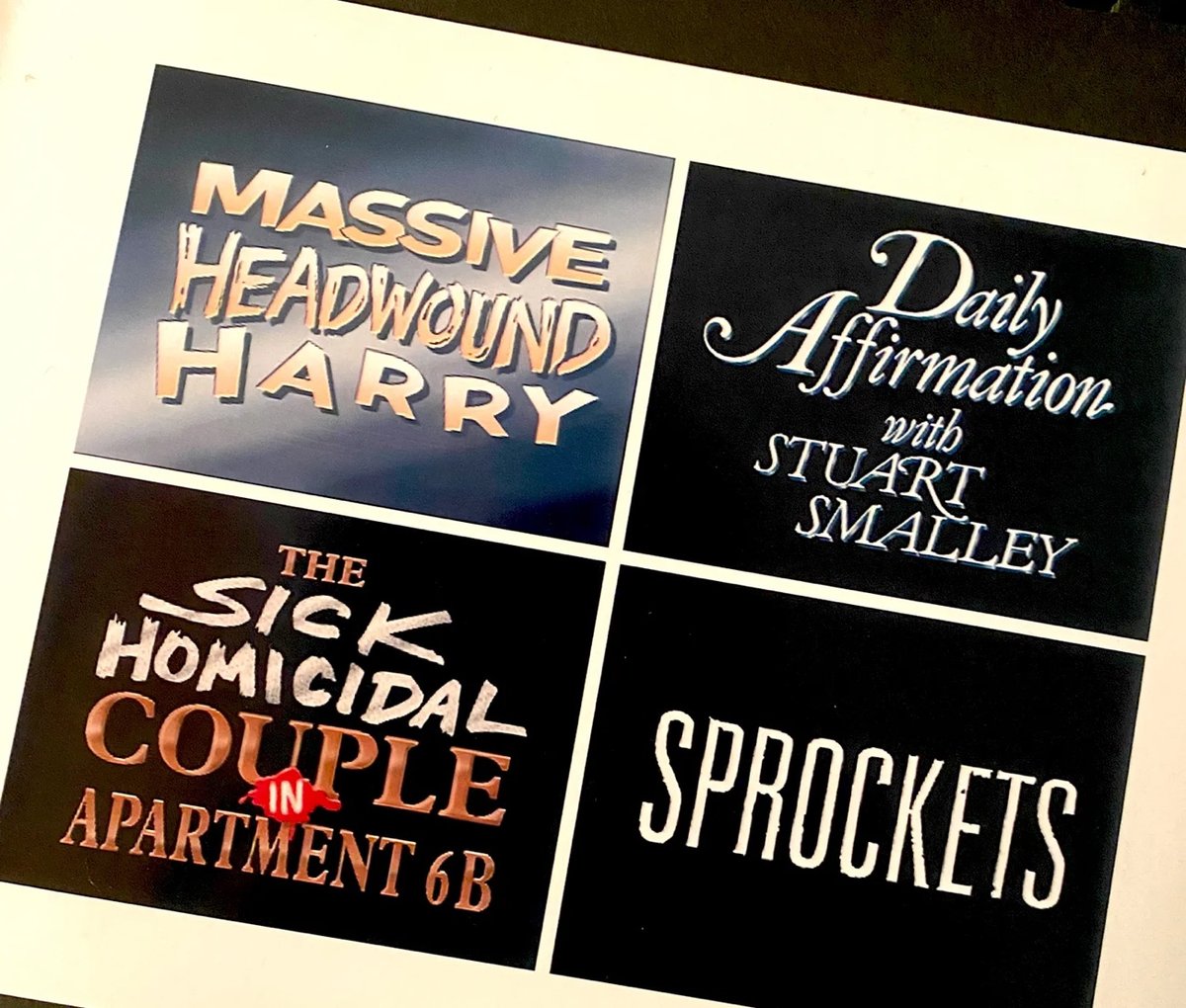
I did have a close working relationship with Mike Myers, who basically wrote his own sketches and would come down to our art department to talk to me about the graphics. He wanted to approve everything himself. He was very specific in what he wanted, and I truly enjoyed working with him.
I clicked with him on where he was coming from creatively. I loved establishing the Euro-style SPROCKETS graphics for him, and creating all his Simon drawings for that series of his sketches, which was really fun. As someone with a similar passion for UK ’60s pop culture, I also loved drawing and creating the title sequence for his “1960s Movie” sketch, which I have a hunch was the seed of the idea for his Austin Powers movies!
I got a lot out of this interview with The Message author Ta-Nehisi Coates by Jon Stewart for The Daily Show.
Best-selling author Ta-Nehisi Coates sits down with Jon Stewart to talk about his latest book, “The Message,” and reconciling past and present vestiges of oppression. They discuss his visits to Senegal, South Carolina, and The West Bank, how past atrocities like slavery and the holocaust can create a zero-sum game of control, the need for safety and statehood despite morally problematic systems, his exposure to Palestinian stories that have been hidden in American media, understanding the physical traumas of the Black community, and the purpose in writing to shape the world around us.
The musician Nick Cave was on The Late Show with Stephen Colbert earlier this week (full interview) and he read a letter from his Red Hand Files, an AMA project where fans write in with questions and he answers them. The question was:
Following the last few years I’m feeling empty and more cynical than ever. I’m losing faith in other people, and I’m scared to pass these feelings to my little son. Do you still believe in Us (human beings)?
In a lovely letter in response (which he reads in the video above), Cave writes that “much of my early life was spent holding the world and the people in it in contempt” and that “it took a devastation to understand the idea of mortal value, and it took a devastation to find hope”. That devastation was the death of his 15-year-old son in 2015, which he talks more about in this interview and in this book. Cave’s response concludes:
Unlike cynicism, hopefulness is hard-earned, makes demands upon us, and can often feel like the most indefensible and lonely place on Earth. Hopefulness is not a neutral position either. It is adversarial. It is the warrior emotion that can lay waste to cynicism. Each redemptive or loving act, as small as you like, Valerio, such as reading to your little boy, or showing him a thing you love, or singing him a song, or putting on his shoes, keeps the devil down in the hole. It says the world and its inhabitants have value and are worth defending. It says the world is worth believing in. In time, we come to find that it is so.
I promise, your day will be better if you take a few minutes to watch or read this letter. And the entire interview is worth watching as well — there is no better interviewer on the topic of loss and grief than Stephen Colbert.
The second issue of Road Snacks is out featuring an interview with Nashville-based singer/songwriter Jack Van Cleaf. I like his song Rattlesnake, maybe you will, too. Road Snacks is semi-regular interview series between an ice cream shop and a touring musician talking exclusively about food on tour. I have made it my mission to find out which snacky treats touring musicians live for.
Jack Van Cleaf: That’s the thing, when I get to the gas station, they only have the small bags. The price per pound ratio doesn’t appeal to me as much, but when I get those big bags from Costco, I don’t know, something about the endlessness of it. It really, really drives me.
Gracie’s: You get lost in the bottom of bag.
Jack Van Cleaf: I do, I do. Probably at the gas station I’m gonna go with a Reese’s Cup or a Take Five.
Gracie’s: Tell me anything else about food while touring?
Jack Van Cleaf: The gas station question has me thinking about Twist of Lime Hot Cheetos. Are you familiar with those?
Anyway, here’s Patel on the limitations of AI and where humans shine:
But these models in their most reductive essence are just statistical representations of the past. They are not great at new ideas.
And I think that the power of human beings sort of having new ideas all the time, that’s the thing that the platforms won’t be able to find. That’s why the platforms feel old. Social platforms like enter a decay state where everyone’s making the same thing all the time. It’s because we’ve optimized for the distribution, and people get bored and that boredom actually drives much more of the culture than anyone will give that credit to, especially an A.I. developer who can only look backwards.
Later he talks more specifically about why curation will grow more important in a world inundated with aggressively mid AI content:
And the idea is, in my mind at least, that those people who curate the internet, who have a point of view, who have a beginning and middle, and an end to the story they’re trying to tell all the time about the culture we’re in or the politics we’re in or whatever. They will actually become the centers of attention and you cannot replace that with A.I. You cannot replace that curatorial function or that guiding function that we’ve always looked to other individuals to do.
And those are real relationships. I think those people can stand in for institutions and brands. I think the New York Times, you’re Ezra Klein, a New York Times journalist means something. It appends some value to your name, but the institution has to protect that value. I think that stuff is still really powerful, and I think as the flood of A.I. comes to our distribution networks, the value of having a powerful individual who curates things for people, combined with a powerful institution who protects their integrity actually will go up. I don’t think that’s going to go down.
Yeah, exactly. Individuals and groups of like-minded people making things for other people — that stuff is only going to grow more valuable as time goes on. The breadth and volume offered by contemporary AI cannot provide this necessary function right now (and IMO, for the foreseeable future).
And finally, I wanted to share this exchange:
EZRA KLEIN: You said something on your show that I thought was one of the wisest, single things I’ve heard on the whole last decade and a half of media, which is that places were building traffic thinking they were building an audience. And the traffic, at least in that era, was easy, but an audience is really hard. Talk a bit about that.
NILAY PATEL: Yeah first of all, I need to give credit to Casey Newton for that line. That is something — at The Verge, we used to say that to ourselves all the time just to keep ourselves from the temptations of getting cheap traffic. I think most media companies built relationships with the platforms, not with the people that were consuming their content.
I never focused on traffic all that much, mainly because for a small site like kottke.org, there wasn’t a whole lot I could do, vis-à-vis Google or Facebook, to move the needle that much. But as I’ve written many times, switching to a reader-supported model in 2016 with the membership program has just worked so well for the site because it allows me to focus on making something for those readers — that’s you! — and not for platforms or algorithms or advertisers. I don’t have to “pivot to video”; instead I can do stuff like comments and [new thing coming “soon”] that directly benefit and engage readers, which has been really rewarding.
Perhaps the platform era caused us to lose track of what a Web site was for. The good ones are places you might turn to several times per day or per week for a select batch of content that pointedly is not everything. Going there regularly is a signal of intention and loyalty: instead of passively waiting for social feeds to serve you what to read, you can seek out reading materials-or videos or audio-from sources you trust. If Twitter was once a sprawling Home Depot of content, going to specific sites is more like shopping from a series of specialized boutiques.
I’m going to get slightly petty here for a sec and say that these “back to the blog / back to the web” pieces almost always ignore the sites that never gave up the faith in favor of “media” folks inspired by the former. It’s nice to see the piece end with a mention of Arts & Letters Daily, still bloggily chugging along since 1998. /salty
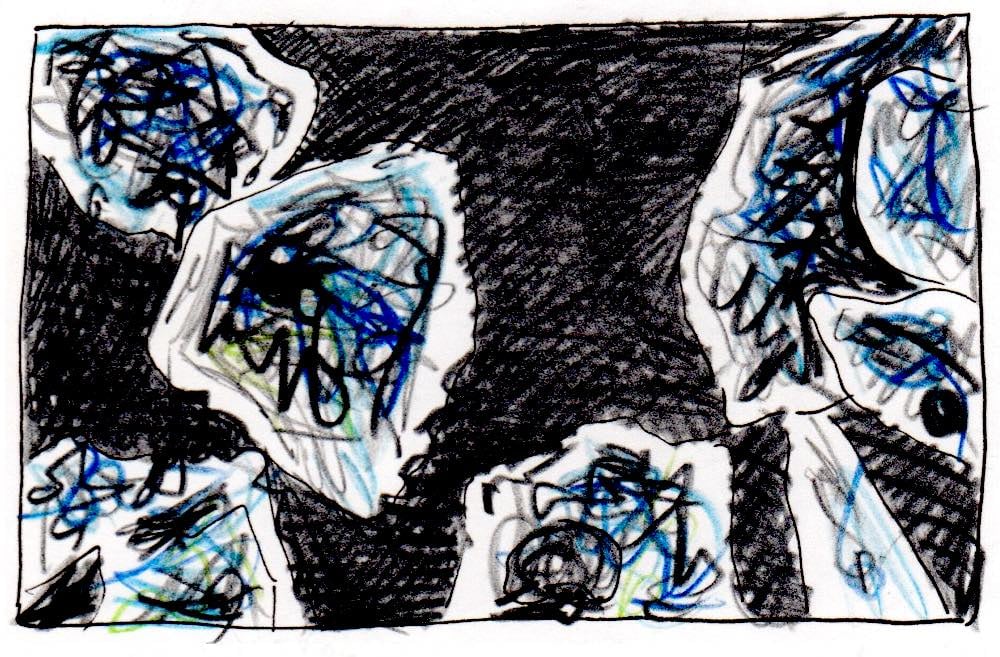
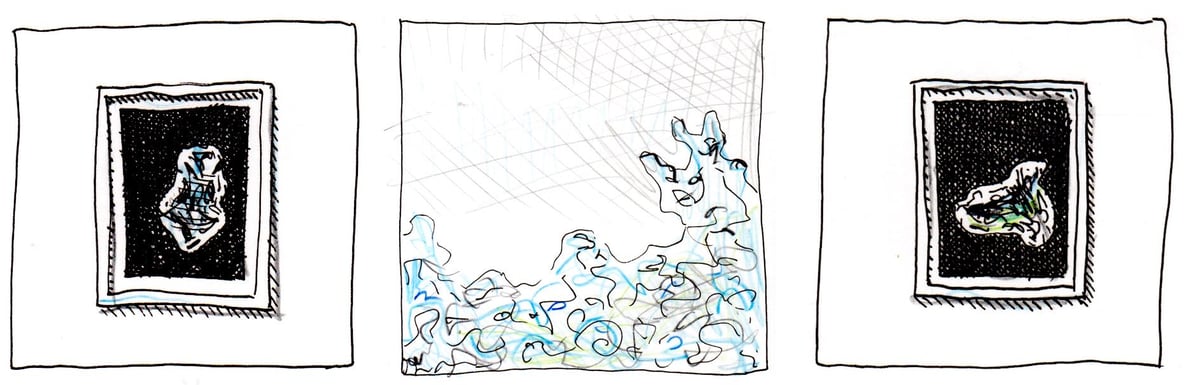
Edith here. For the latest installment of my newish illustrated column, I interviewed my friend and neighbor, the artist and climate activist Zaria Forman. Zaria makes pastel drawings of ice, among other things, and her solo show “Fellsfjara, Iceland” is currently on exhibition at Winston Wächter gallery in New York until May 4. (I’ve rendered a miniature version of some of it right below these words, but definitely click here for the actual images.) Zaria is also on Instagram.
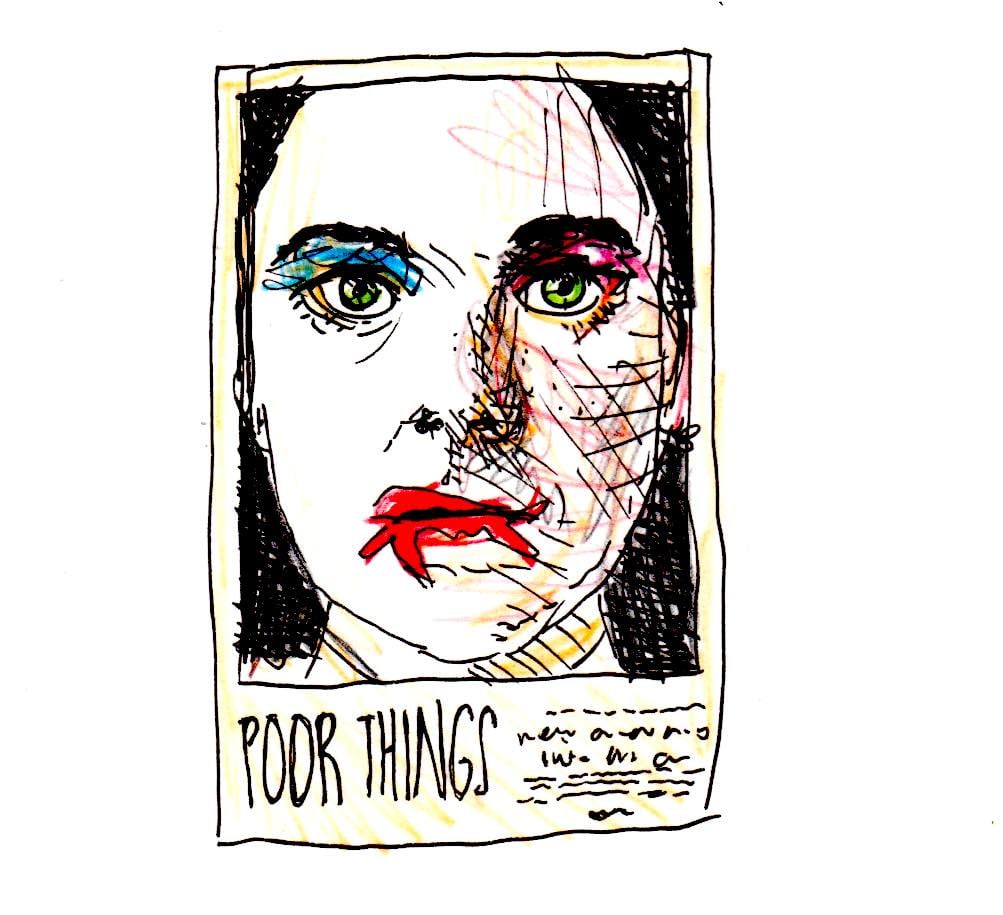
Zaria, have you read, watched, listened to, or otherwise experienced anything good recently? Poor Things. It was so visually stimulating and imaginative — more than anything I’ve seen in a while.
Possibly more interesting: the ice storm a few weekends ago! I’d never seen an ice storm before moving to upstate New York, and although the storms are destructive, they’re so beautiful. It was the most spectacular one I’ve ever experienced.
Seen anything bad? Mr. and Mrs. Smith, the new version. I thought it was poorly cast and just plain dumb. OR: All the mud, now that the ice has melted ;)
What’s something you’ve read or seen that changed your life?
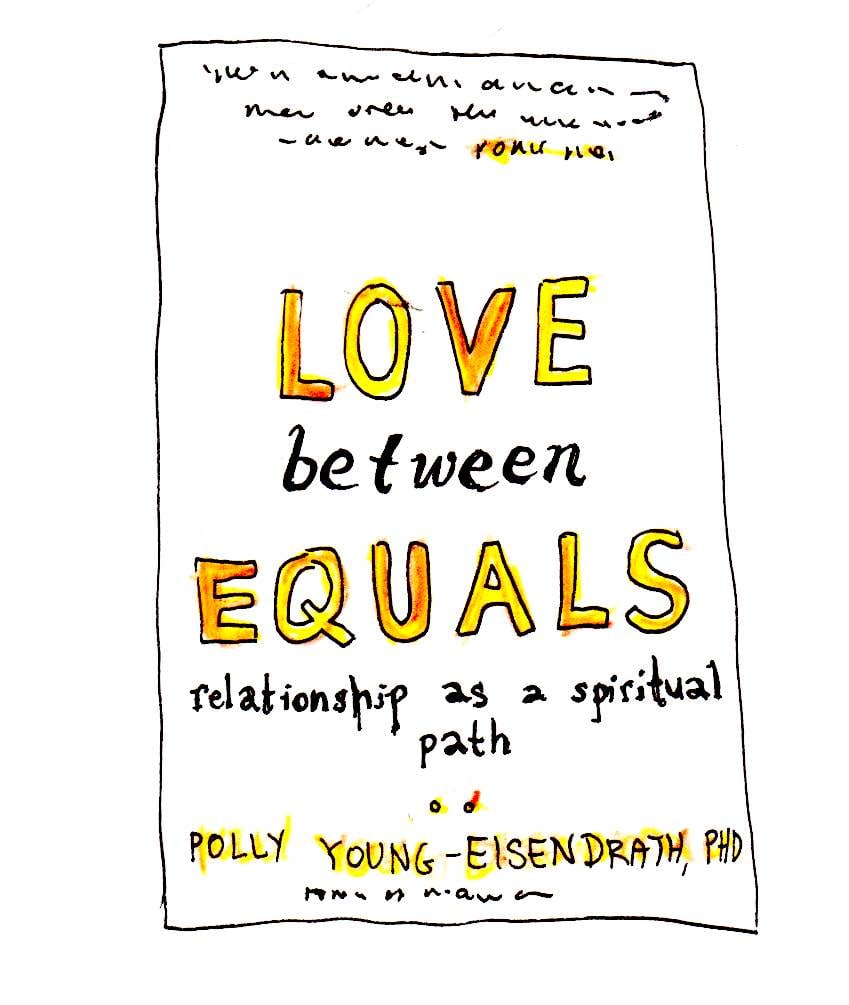
Seeing glaciers and icebergs for the first time absolutely changed my life. But if we’re sticking to books, etc., one that changed my way of thinking was Love Between Equals: Relationship as a Spiritual Path, by Polly Young-Eisendrath.
She’s a psychologist and couples therapist, and the book just kind of reframed the idea of relationships in my mind — of how you relate to someone you’re in a long-term relationship with, and how you can grow with them. And how, like, love is.
She talks about radical acceptance, fully accepting someone for who they are, learning how to do the same for yourself, and then figuring out how all of that can work together.
Does anything make you laugh online?
Memes on Instagram!
What’s a recent one?
I just forwarded you the last one I sent to [my husband] this morning.
Are there any cultural moments you currently think about unusually often? Like are you haunted by a moment from a TV show, or anything like that?
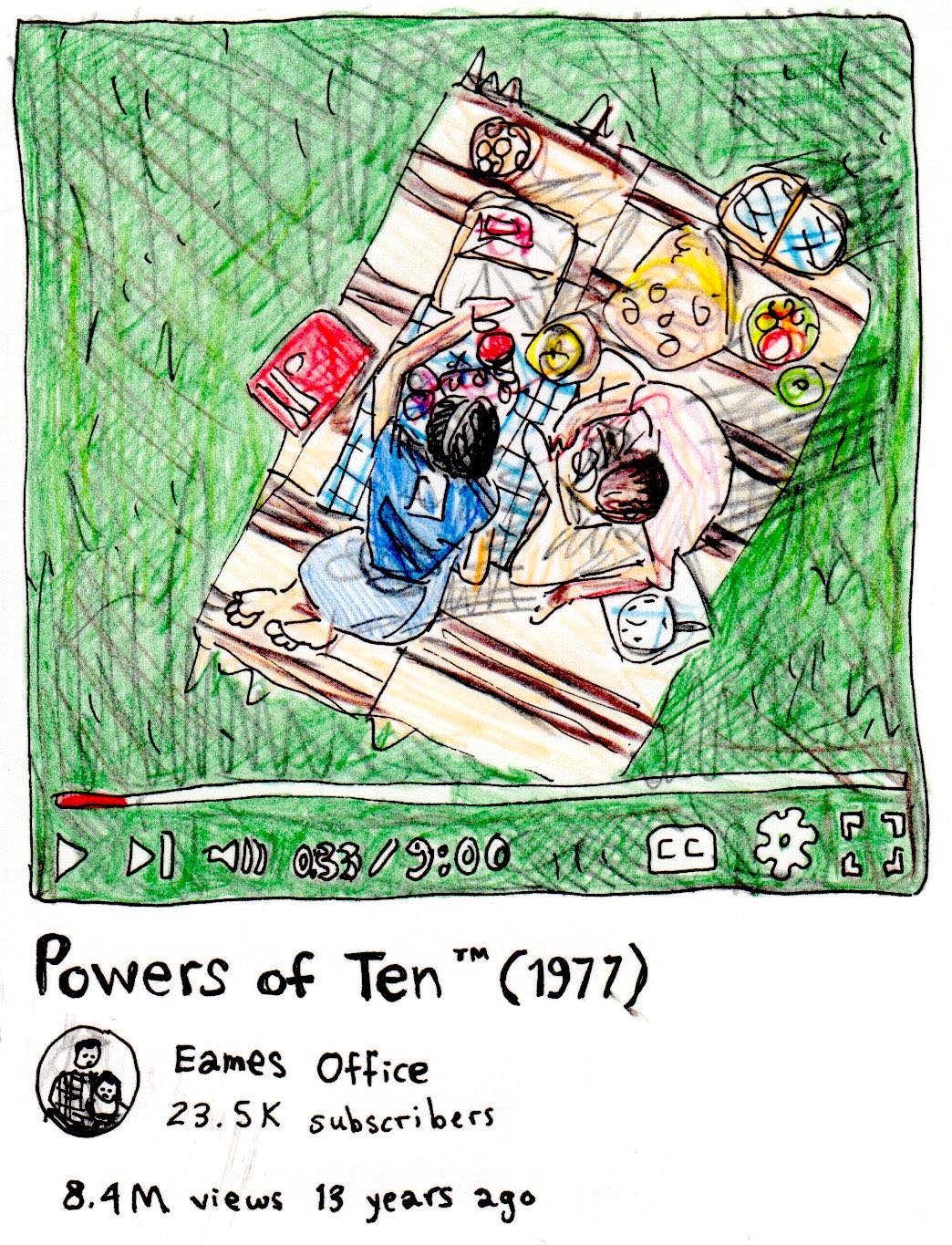
More “inspired” than “haunted,” but the artists Ray and Charles Eames made a 10-minute documentary in 1977 called “Powers of 10” that made a big impact on me. The Tang Teaching Museum in Saratoga Springs exhibited the film in a show during my years at Skidmore College, and it’s probably the one film I think about more than any other.
What’s it about?
It starts with a couple on a blanket having a picnic by a lake in Chicago. And then from one of their hands, the camera zooms back 10 meters. And then it continues zooming back by powers of ten. And so you see these squares get smaller and smaller, and it keeps going into the atmosphere, and the solar system, and it’s just mind-boggling how it keeps going.
And then it then zooms back down to the picnic and goes into their skin and all the way down to, like, a molecule inside the body. And it’s crazy to see the similarities between the two.
It’s on YouTube, if you want to watch — I highly recommend!
What were you really into when you were 12?
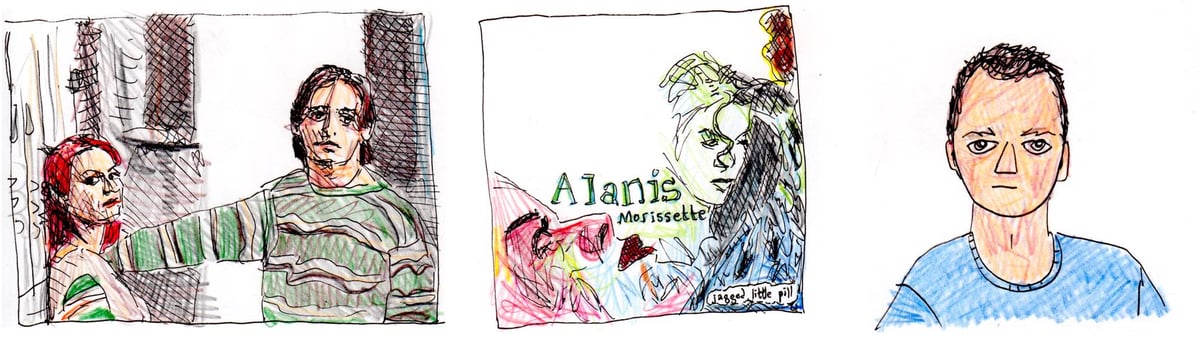
My So-Called Life, singing along to Alanis Morissette, and a boy named Ben.
Is there a book/movie/whatever you’d like to experience again for the first time?
Burning Man. There’s just no way to really know what it’s like until you’re there, in the middle of it. And when you know what to expect, it’s not as thrilling. But as a climate activist, it doesn’t feel right to continue attending over and over.
What’s a funny or weird way people have described your art?
As “finger painting.” It was a term used first (I think) in the Daily Mail, and then almost every writer used it to describe my work for several years. I wince at a line I say in my TedTalk: “I cringe when people call me a finger painter,” or something like that — my tone just sounds so snobby, I hate it — but I was attempting to detach my work from the term, and it did finally work. It pops up every now and then, but rarely.
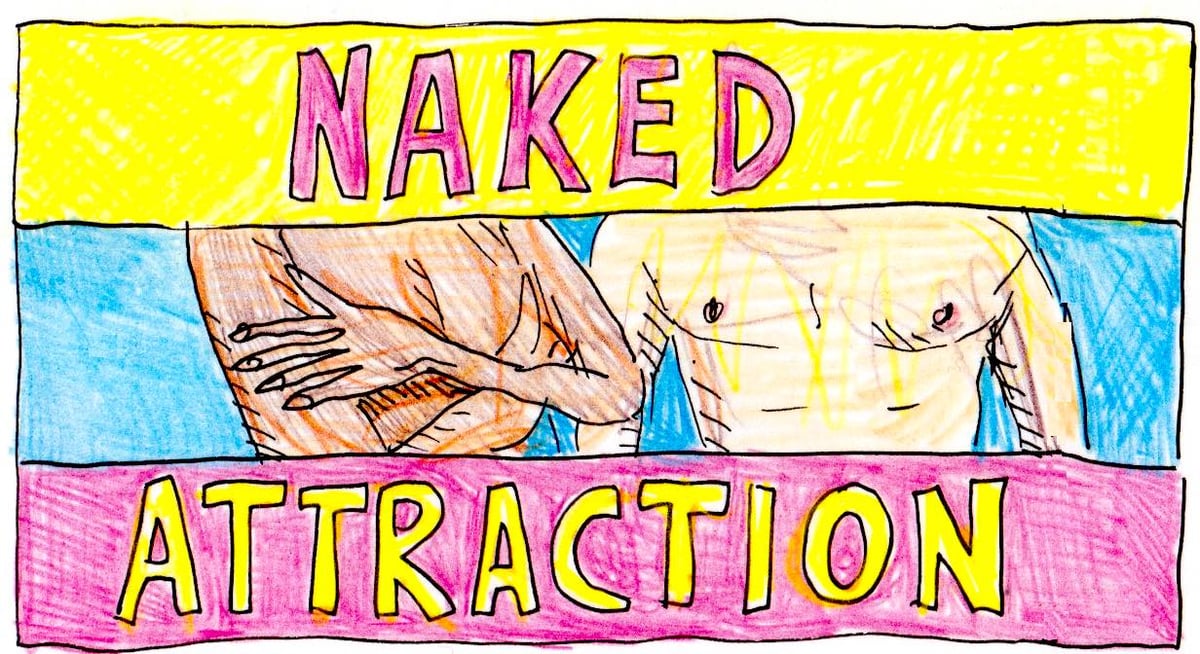
Please tell me something silly that you love. Naked Attraction, the dating show where people are naked.
Thanks, Zaria!
Zaria’s work can be found here. And past installments of Drawing Media can be found here.
This is great: a 25-minute interview with legendary animator Chuck Jones as he sits and draws some of his iconic characters (Bugs Bunny, Porky Pig, Daffy Duck). He told this anecdote about how Steven Spielberg and George Lucas were both influenced by a particular space-themed cartoon of his:
Porky was just a kind of a little third-string Boy Scout and was not very interesting to me. And then when I put him in a picture called Duck Dodgers in the 24th and a Half Century. Spielberg used that picture in Close Encounters the Third Kind - when his kids were watching television in the picture, they were watching Duck Dodgers in the 24th and a Half Century. And Lucas told me that he saw that picture when he was 12 years old and when when he opened Star Wars in San Francisco he told them they couldn’t have Star Wars in San Francisco unless they ran Duck Dodgers in the 24th and a Half Century.
Edith here. For the next installment of my newish illustrated column here on Kottke dot org, I talked to my friend Nick Catucci. Nick edits the excellent newsletter Embedded, which partially inspired me to start this column. (Specifically, Embedded has an interview series called My Internet that I’ve always loved.) Nick is also site director at GQ. And about 13 years ago the two of us worked at Vulture together.
Hey Nick! Have you read (watched, listened to, or otherwise experienced) anything good recently? I think I speak for my demographic when I say that the new Waxahatchee album, Tigers Blood, is a dream. My friends at Pitchfork published a great profile of Katie by Andy Cush where she’s really insightful about how, being sober, she’s drawing from a different well than heroes of hers like Townes Van Zandt and Jason Molina. (One of the neat things about the album is that the harmonies with MJ Lenderman, her new collaborator, sort of dramatize this tension.)
There’s one other thing that gives me serenity the way that Waxahatchee does right now, and that is this couple on TikTok who are renovating a hoarder house in Washington state. I have never watched HGTV and the concept of house-flipping nauseates me, but I’ve grown so attached to the process of these two people (who do flip houses, but plan to move into this one) racing to make this once-grand place livable before their six-month loan runs out that I’m dreading the day that they’re able to refinance.
Anything bad?
Basically everything that goes super viral on Twitter now, like The Willy Wonka Experience and “flush ponytail.” The recycled jokes, race for interviews with random people involved, “imagine explaining this to someone who isn’t chronically online”—the whole cycle seems more childish and desperate than ever. It’s as if everyone is doing their own Millennial meme marketing of themselves.
What’s something you’ve read or seen that changed your life?
My wife published a memoir, Down City, in 2017, and reading the transcript for the first time completely opened up my perspective—on this woman that I cherish, this sometimes corrupt place where we both grew up, and love within families.
Bonus answer: Two editors I was talking to about a staff writer job early in my career asked me what music changed my life, and the answer that popped into my head was Ice-T’s metal band, Body Count, which I would play at eardrum-damaging volume on big headphones when my mother would drive me to middle school. One of my older brothers owned an early cassette version of their first album, when it still included “Cop Killer.” The editors found that response really funny.
Do you subscribe to anything you don’t read? (Or otherwise consume?)
I’m sure that there are nice little communities in the Discords that some newsletters host for subscribers, but I can’t imagine ever logging on to any of them. Separately, I resent that my costly subscription to The New York Times is justified in part by games that I don’t play.
Read anything you don’t subscribe to?
Technically I have access to everything I read in Apple News and the publishers see some revenue for that, but clicking on “The truth about weed and your brain” and “She’s a sociopath. Here’s what she wishes people knew” is not the same as subscribing to National Geographic or The Wall Street Journal.
What’s something you’ve lied about reading or watching? Or felt tempted to lie about?
I don’t lie. I just allow my friends to think that I must have read their books or listened to their podcasts (which of course I sometimes do, so they can never be sure).
Does anything make you laugh online?
All the time. The For You page was a tremendous innovation for people like me who are powerless not to engage with stupid content. TikTok serves me lots of veryfunnyvideos, and I agreed, as I usually do, with my worldly and straight-shooting columnist Chris Black when he wrote in July 2023 that the introduction of Twitter’s For You feed “polarized my timeline but has consistently exposed me to some of the most hilarious stuff I have seen on the app in years.”
Are there any cultural moments you currently think about unusually often? Like are you haunted by a moment from a TV show, or anything like that?
I may be taking “haunted” too literally, but I do think about the Richard Ford protagonist Frank Bascombe, who, in my view, makes a valiant effort to truly live after the death of his young son. I wonder if his life is tragic, or a triumph. (Please don’t email me if you wrote a graduate thesis about this and know the answer.)
What were you really into when you were 12?
I turned 12 in 1991, and at that time, my older brother owned an 18-plus dance club in Providence, RI. He booked DJs like Kid Capri and live shows with painfully early-‘90s rap acts like Das EFX and Fu-Schnickens, and I would sometimes serve sodas at the bar. I witnessed 800 kids pogoing to “The Choice Is Yours (Revisited)” when Black Sheep came through around the height of that song’s popularity, and remember that on the night that Del the Funky Homosapien rolled in, the buzz was that his cousin Ice Cube was on the bus and might jump on stage with him (he was not on the bus). I got to meet most of these guys, and they were impossibly cool, floating through the club’s back rooms on clouds of blunt smoke, but also pretty nice to this nerdy kid asking for their autographs.
Obviously this all left a massive imprint on my soft adolescent brain. To this day, one of my greatest style inspirations remains Grand Puba. The press photo he signed for me shows him, as I remember, immaculately turned out in a baggy striped polo shirt (Ralph Lauren or Tommy Hilfiger, presumably), dark Girbaud denim shorts, and those Timberland boat shoes with the lug soles.
Is there a book/movie/whatever you wish you could experience again for the first time?
Inception in the theater. I saw Fugazi play in Providence as a high schooler and would like to do that again, if possible.
Please tell me something silly that you love.
Speaking in my dog’s voice (breathless young female resistance Democrat) to threaten myself in the meanest, most violent terms possible when I do something mildly annoying around my wife.
Has anyone ever described you in a way you felt was really accurate?
When I’m with my almost-five-year-old daughter and her friends at the playground or waiting for the bus, she’s sometimes tells them, “That’s my dad—he’s so funny.” And in those moments, I know that I am funny, to her.
COWEN: What is your most unusual successful work habit?
ROBINSON: I think it’s becoming used to the fact that it takes me a long time to get to the place where I can work on something — that all this frustration [laughs] and depression that precedes my writing anything is part of the process of writing.
As someone who’s interested in finding God, I liked letting this religion-themed conversation wash over me. I also liked the idea that creative projects just have to take as long as they take and be as hard as they are. Robinson’s new book is about Genesis — she calls the Bible “the most complex document on the planet” — but in the interview they touch on several non-religious topics, too (like the above). Meanwhile I’m enjoying reading the negative reviews of her book on Amazon, which is probably bad (of me).
Because I don’t hardly blog anymore, I turned the email newsletter for my ice cream shop into kind of a blog where sure I talk about ice cream a good amount, but I also tell stories about when I was a tour manager for a band, document how terribly hostile Intuit is towards their business customer base, and share internet ephemera my customers might not have seen. It’s been feeling a little stale lately, because after three years I think I finally told all my tour stories so I wanted to do something new.
The new thing is Road Snacks, a semi-regular feature where an ice cream shop interviews a touring musician asking questions about the food situation on tour. I think it’s changed a lot and probably not too much since I was doing it. The first interview ran today featuring Cary Ann Hearst from the Charleston band Shovels & Rope, who is great. Click through to read the whole thing. If you’d like to sign up for the newsletter, you can do that here, and we’ll see if it’s interesting even if you don’t live in Boston.
How has eating on tour changed for you since you first started touring?
Eating definitely changes! We used to just eat pizza everyday after the show, but that will kill you eventually so we changed! Everyone watching their water and their fiber intake. It’s wild - we pop vitamins now. But in Indy the other night a man made us pizza in his shop after the show. Sam’s Square Pies?! The best pizza I have ever had. Detroit Style. We literally wrapped and froze individual pieces so that we wouldn’t waste a slice of the 30lbs of pie - thanks Jeff!
It’s 12:30am and you’re at the gas station before a five hour drive to the next city. What snacky treat(s) are you grabbing and why?
My trash snacks from the gas station are an Arizona Green Tea in a can, pork rinds, a bag of lemon heads and pack of bubble gum. We get a gallon of water and fill our canteens. I need a mix of sweet and savory - and since we only get the opportunity to indulge those trashy snack instincts every once in a while I indulge and then remember not to do that once my blood sugar crashes.
Jason doesn’t know it yet, but I’m probably gonna ask if I can run the interviews here, too.
Hi, Edith here. This is the first in an interview series in which I talk to people about their media diets and habits. Jason seemed like a good person to start with as we figure out the format, although honestly his actual Media Diet series is more thorough. Look for the next installment in a few weeks!
So, have you seen or read anything good recently?
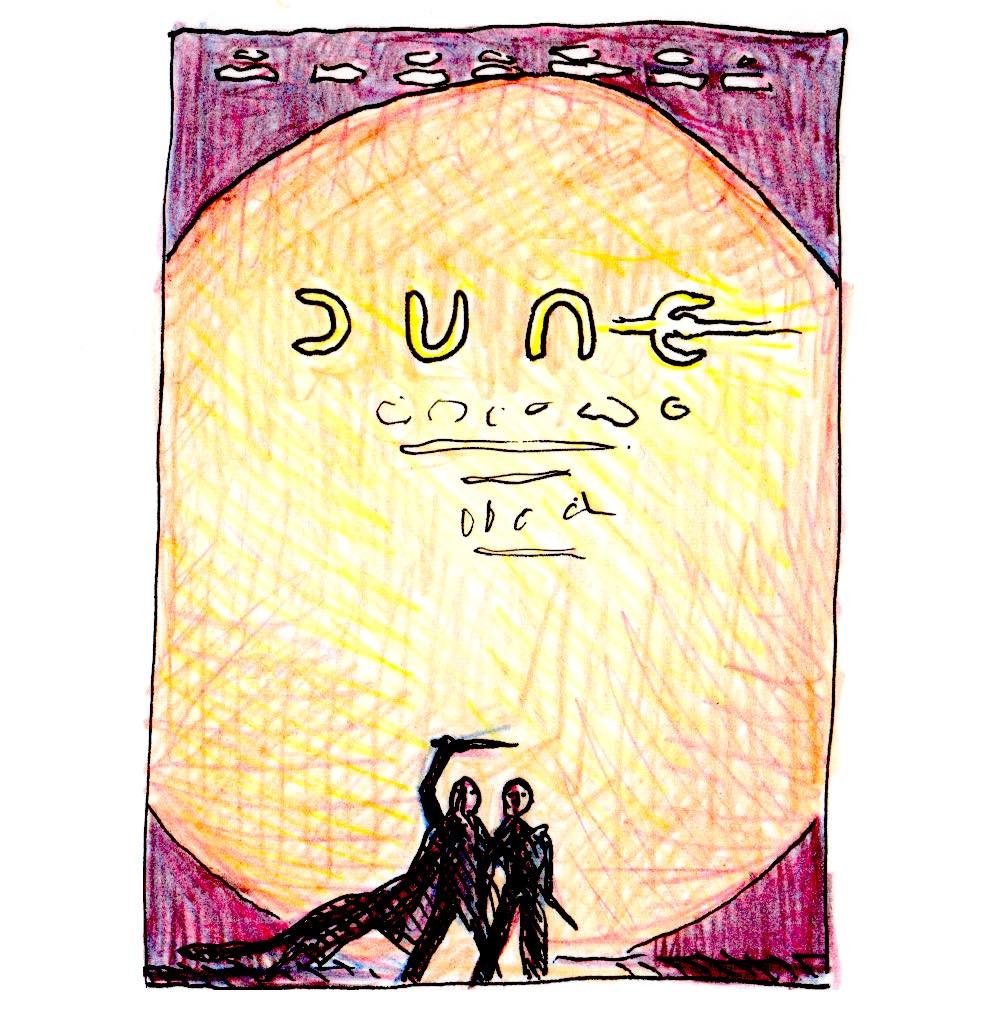
I saw Dune Two on opening weekend. And I went by myself, which I like to do. There are no IMAX screens in Vermont, but there’s a theater about 45 minutes from me with a screen called the T-Rex. It’s not quite IMAX, but it’s not bad either.
How was it?
Great. Better than the first one.
And it was definitely a movie that you want to see on the big screen. Like you could feel the bass, and at one particular moment it felt like the whole theater was vibrating.
I’m sure you’ve read Dune. Have you read it many times?
I have not read Dune, ever.
Really?!
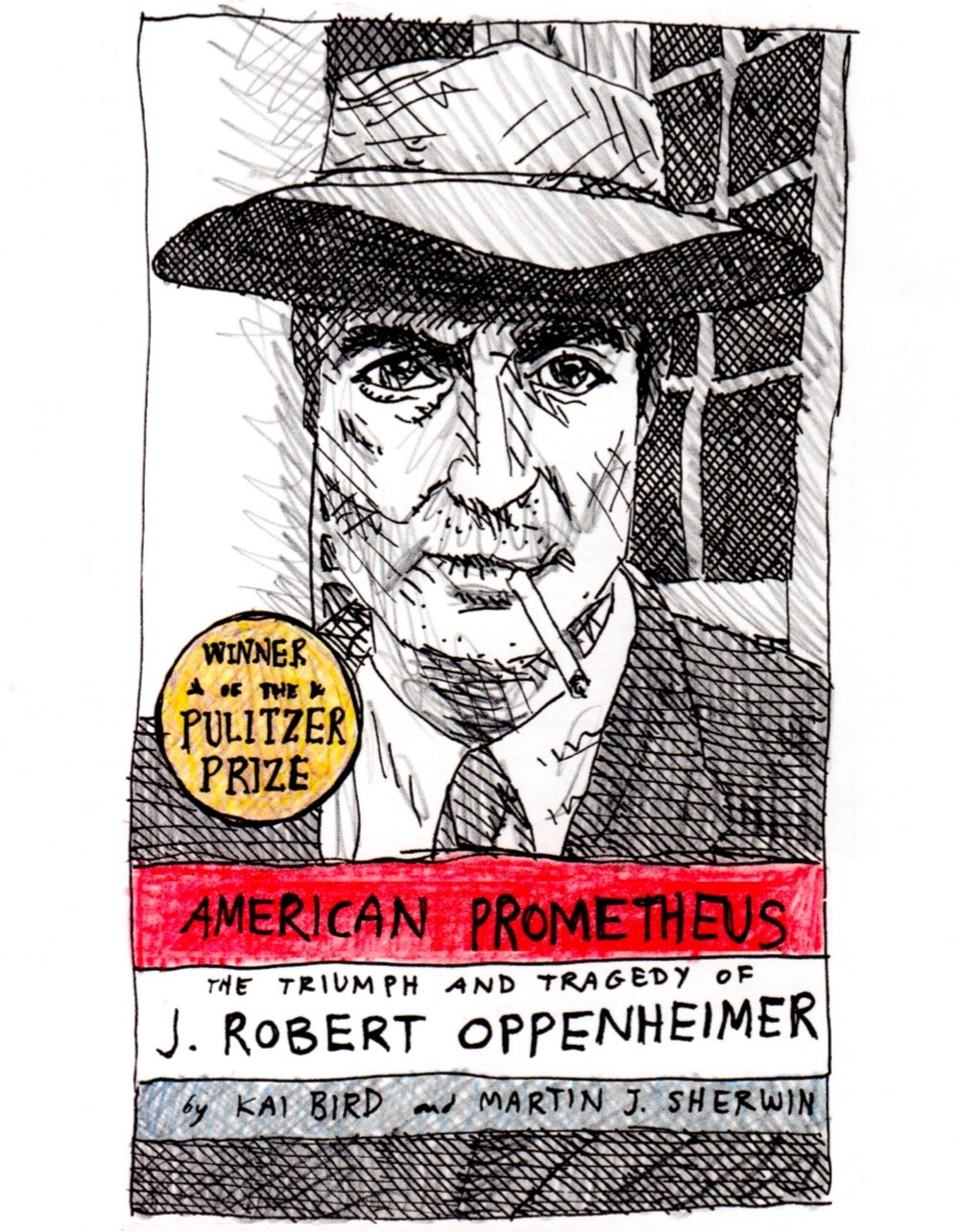
I’m not sure the movie necessarily makes me want to read Dune, either, which is surprising, because usually when I see a movie based on a book, I’ll be like, “Oh I need to read that.” Like when I saw Oppenheimer, later I read the book it’s based on, which is this 600-page biography of Robert Oppenheimer. And it was good, but I think the movie was better.
You mentioned the other day that you haven’t been enjoying, or even reading, many books recently. Is that true?
Pretty much? For the last couple months, I’ve been working a lot, and that means spending a lot of time on a device – my computer, my phone. And generally I don’t want to read after I’ve been working a lot. TV is much more something I turn to. Also video games. Like I play Fortnite, which is something I started doing with my kids, but now I play more than they do, which is weird.
And so you’re playing against other strangers on the Internet?
Exactly.
Are you good?
I don’t think so. But I’ve gotten a lot better.
And I know you play some of the NY Times games too.
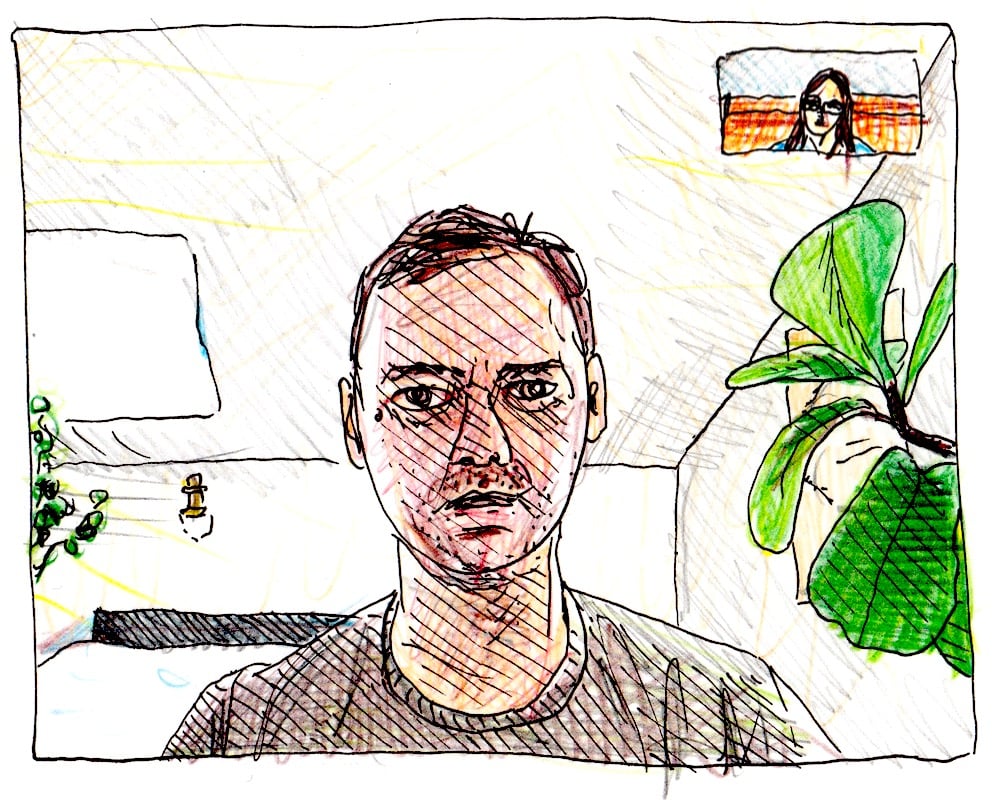
I do the crossword almost exclusively with a friend over FaceTime. She shares her screen, and we solve them together.
I wasn’t a crossword puzzle person beforehand – and I kind of hate Scrabble because at a certain level it’s all about strategy and memorization, which is boring to me. I felt similarly about crossword puzzles, but then she and I started doing them, and I was like, “Oh this is actually pretty fun,” and now we do maybe two or three a week.
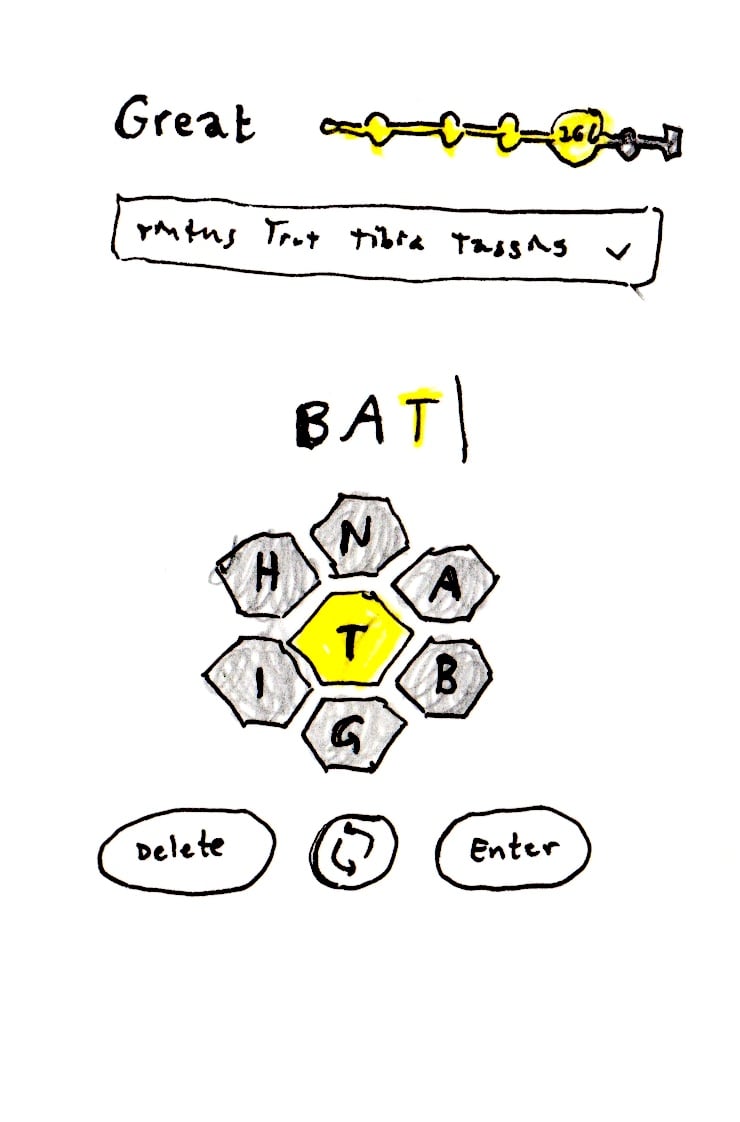
And I don’t do Wordle, but I do play the Spelling Bee and Connections. And I’ll do the little mini crosswords on my phone. But a lot of that is just procrastinating about getting out of bed in the morning.
So they’re mostly morning experiences for you?
Yes. I will go back to Spelling Bee, though, if I didn’t do well in the morning.
What’s doing well?
I don’t get Genius every day, but I would like to. But sometimes I just don’t have the patience for the particular puzzle, and I’m like, I’m sorry, I don’t want to grind.
And I’m not judging others, but for me, if I’m spending too long on the Spelling Bee, it means I probably need to get up and move my body, or, you know, engage my brain in a different way.
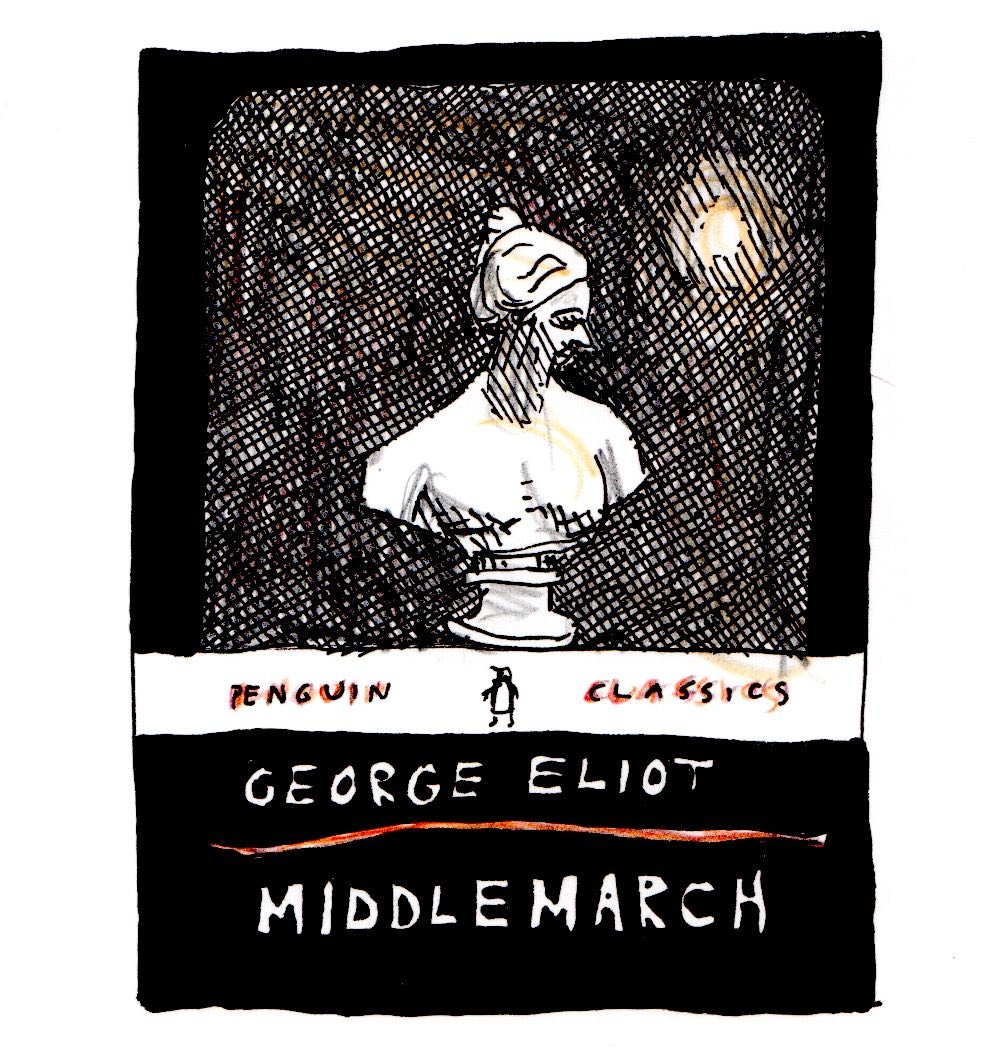
You mentioned that you read Middlemarch last year. How did you squeeze that in? Because that’s a commitment. Middlemarch was wonderful. I loved it. When you take seven months off work, you can have time to relax, and my reading went crazy. I couldn’t get enough books, because I wasn’t reading anything online. I stopped cold turkey, basically. People would send me links, like, “Here’s an interesting New Yorker article,” and I’m like, nope. Not even news. Not gonna read it. I’m gonna read about Dorothea and Casaubon.
What were other highlights, book-wise, from that time?
Middlemarch was definitely the highlight. I don’t know if I’ll ever have another sabbatical like that. It was probably a once-in-a-lifetime thing.
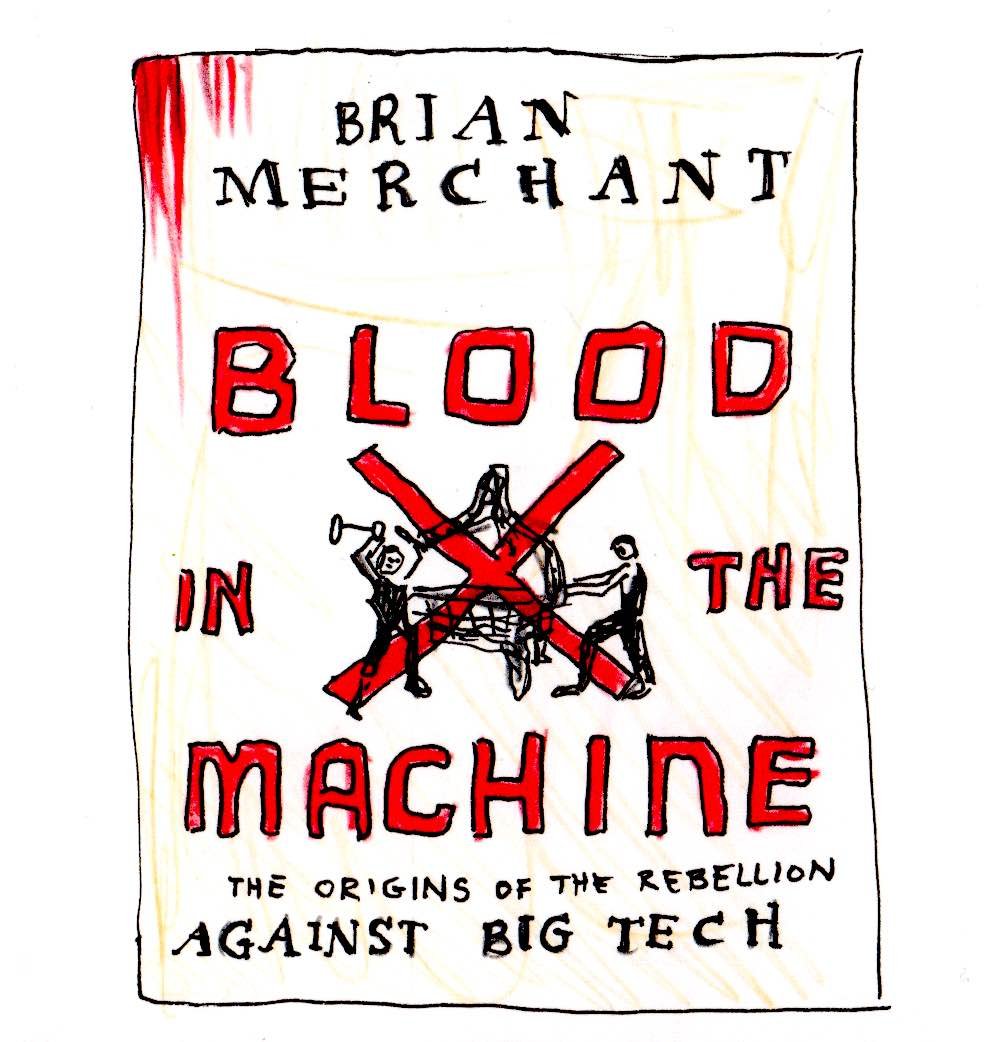
Right now I’m listening to a good audiobook, though: Blood in the Machine, by Brian Merchant. It’s about the Luddites.
It was painted as an anti-technology movement in the early 19th century, but the book recontextualizes it as a labor movement. Rich factory owners were introducing new technologies, and people were getting laid off. Workers were angry and would go into the factories to smash machines, but they would only smash the ones that were, like, driving people out of work. The machines that actually helped the laborers do their jobs, those were kept.
And he relates it to what’s going on these days with AI and the current anti-tech movement. I’m enjoying it.
How did you hear about it?
I’d seen it on some “best of” lists at the end of 2023, and then Casey Johnston recommended it on Blue Sky. She was like “this book is great,” and so I was like, Okay, that’s good enough for me.
Do you listen to things most of the time while you’re driving?
Maybe half the time. I also use driving time to think. Like if there’s some work thing I need to think over, I’ll put on music without words, and just, you know, spin the wheels.
But when I don’t feel like doing that, I’ll listen to an audiobook or podcast.
What kinds of music do you listen to?
The music thing is embarrassing because I don’t listen to a lot of, like, new music. André 3000’s flute album is maybe the newest thing I’ve listened to recently.
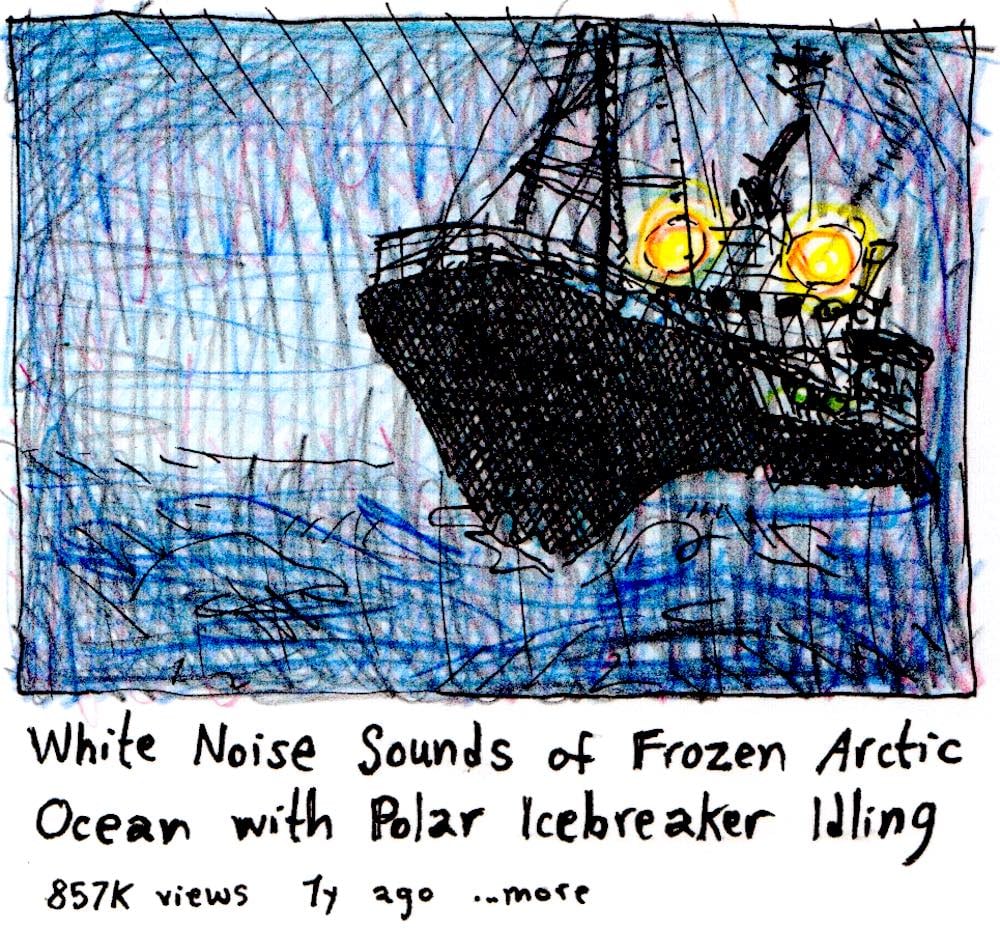
I can’t write when the music has lyrics, so when I’m working I play a lot of classical and soundtracks. Also videos on YouTube. One of my favorites is just basically an ice breaker idling in the Arctic during a storm.
I also listen to a lot of electronic music, at varying levels of, uh, what would be considered good? And when I’m programming or designing, I listen to a lot of upbeat house, club, and techno.
Anything you’ve seen recently that just wasn’t for you?
Rebel Moon on Netflix was bad. Not even “not for me.” Just objectively terrible.
And something you loved? The Zone of Interest. I saw it a few weeks ago and have thinking about it ever since, especially the sound design.
I listened to the latest episode of the Ezra Klein Show while driving last night then spent the second half of the drive thinking about it. So I guess I’d better tell you to go and listen to it. Klein interviews Rhaina Cohen, who is the author of the forthcoming book The Other Significant Others: Reimagining Life with Friendship at the Center (out Feb 13). They talked about loneliness, the changing definition of friendship (and family) throughout history, polyamory, co-parenting, and lots more.
How do we imagine many other possibilities for parenting, for aging, for intimacy, for friendship, for romance than what we have right now? Because the idea that what we have right now is a working norm and everything else should be understood as some deviation is wrong. It is factually untrue.
It is not a norm. It is a wild experiment in the history of human existence. We have never done this before for any period of time. It’s not how we raised children. It is not how we have met each other. It is not how we have lived together.
And it’s not working for a lot of people. So this is an experiment, and we should be trying more. And what Cohen’s book is about is these experiments, is looking at things people are already doing, and, in a sense, making clear that there are more relationships happening right now in the world around you, more forms of relationship, than you could possibly imagine.
This is a treat: almost 25 minutes of legendary director Martin Scorsese talking about how he made his most iconic movies, from Mean Streets and Raging Bull to Gangs of New York and The Irishman. You have to laugh at the number of times he says, “Well, I didn’t want to make this film, but…” From an accompanying profile/interview with Scorsese (which is quite good as well):
It is a peculiar fact about Martin Scorsese that he does not enjoy actually making movies. “I don’t mean to be funny,” he said, “but, the thing is, you get up real early.” And Scorsese has never been a morning person. For most of his life, he recalled, “I’d stay up late watching movies on TV or reading late, or doing homework late, or trying to write scripts late. I lived at night and the streets were dark, and I never saw the light. It took me many years to understand where the sun set and where the sun rose. I didn’t know. I’m not kidding. I learned it in LA. When you’re going on Sunset Boulevard and you hit the Pacific Coast Highway and it’s seven o’clock and the sun is setting — it’s right there.”
He likes to borrow a complaint from Kubrick. “They said, ‘What’s the hardest thing about directing?’ He said, ‘Getting out of the car.’ Because once you get out of the car, the questions start.” Now, when Scorsese gets out of the car in the morning, he looks at his AD and says, “What can’t I have today?”
For the role of a teacher/coach in her new film Bottoms (about a pair of queer girls who start a fight club in their high school in order to get laid), director Emma Seligman made the unorthodox decision to cast former NFL player Marshawn Lynch. It turned out to be an inspired choice — according to an interview with Seligman, he was a natural.
He was one of the best improvisers I’ve ever worked with. I’m not overstating that. He improvised most of his stuff in the movie that ended up in the final cut! We couldn’t ever write something that would be as funny as what he gave us. He’d spew out the most brilliant jokes ever. I kept on encouraging him to do more improv. He’d be like, “Ugh, that stuff’s easy! I wanna get your words right!” I told him that it was so much better than anything we could have written and he was like, “I don’t care about this. I want to honor your work.” I’m so glad I got to talk about him this much.
Here’s a short clip of Lynch doing his thing as Mr. G, “an air-headed high school teacher”:
Lynch also used the film as an opportunity to make some amends for how he reacted when his sister came out as queer:
This was a good opportunity for me because when I was in high school, my sister had came out as being a lesbian or gay — I did not handle it right. You feel me, as a 16-year-old boy, I didn’t handle it the way that I feel like I probably should have. So I told [Seligman] it was giving me an opportunity to correct my wrongs, to rewrite one of my mistakes.
From that interview with Seligman again:
In our first conversation, he told me that his sister is queer and when they were in high school, he didn’t necessarily handle it super well. He felt like this movie coming into his hands was the universe giving him a chance to right his wrongs. That’s what he said. He walked her down the aisle. He felt like they were all good, you know? But his sister thought it’d be really cool if he did this.
If you have never seen this old interview with Lynch about the value of persistence, buckle up because you’re in for a treat:
Illustrator Kevan Atteberry created the Clippy character that was introduced in Microsoft Office 97. There was a ton of backlash when the character was introduced, but as time has passed, many people have begun to think fondly of him.
He’s a guy that just wants to help, and he’s a little bit too helpful sometimes. And there’s something fun and vulnerable about that.
Note: If you are a member and tried to log in, it didn't work, and now you're stuck in a neverending login loop of death, try disabling any ad blockers or extensions. Or try logging out and then back in. Still having trouble? Email me!



Socials & More