


Seamless Roulette
Hungry for lunch and don’t quite know what you’d like to eat? Try Seamless Roulette…it uses Seamless to deliver a random order of food to you from a nearby restaurant. (via @moleitau)

This site is made possible by member support. 💞
Big thanks to Arcustech for hosting the site and offering amazing tech support.
When you buy through links on kottke.org, I may earn an affiliate commission. Thanks for supporting the site!
kottke.org. home of fine hypertext products since 1998.
Beloved by 86.47% of the web.
Hungry for lunch and don’t quite know what you’d like to eat? Try Seamless Roulette…it uses Seamless to deliver a random order of food to you from a nearby restaurant. (via @moleitau)

30% of Americans don’t drink any alcohol during a typical week. On the other end of the scale, ten percent of Americans consume more than 10 drinks every single day. More from Wonkblog.
I double-checked these figures with Cook, just to make sure I wasn’t reading them wrong. “I agree that it’s hard to imagine consuming 10 drinks a day,” he told me. But, “there are a remarkable number of people who drink a couple of six packs a day, or a pint of whiskey.”
As Cook notes in his book, the top 10 percent of drinkers account for well over half of the alcohol consumed in any given year. On the other hand, people in the bottom three deciles don’t drink at all, and even the median consumption among those who do drink is just three beverages per week.
This is shocking to me. I wonder what the distribution is within the top 10%…there must be people in the top 1% who drink, what, 30 drinks per day? Is that even possible day after day without very serious consequences? (via mr)
Update: Over at Forbes, Trevor Butterworth casts doubt on the conclusions in the Wonkblog article.
The source for this figure is “Paying the Tab,” by Phillip J. Cook, which was published in 2007. If we look at the section where he arrives at this calculation, and go to the footnote, we find that he used data from 2001-2002 from NESARC, the National Institute on Alcohol Abuse and Alcoholism, which had a representative sample of 43,093 adults over the age of 18. But following this footnote, we find that Cook corrected these data for under-reporting by multiplying the number of drinks each respondent claimed they had drunk by 1.97 in order to comport with the previous year’s sales data for alcohol in the US. Why? It turns out that alcohol sales in the US in 2000 were double what NESARC’s respondents — a nationally representative sample, remember — claimed to have drunk.
Additionally, the statement I made above — “ten percent of Americans consume more than 10 drinks every single day” — is not true, even if the data is correct. Instead, it is accurate to say that top 10% consumes an average of 10 drinks daily…some individuals may drink 4/day and some 18/day. Looks like it’s time for a reread of How to Lie with Statistics and A Mathematician Reads the Newspaper. (via @harryh & @gfilpus)

The rooster on the Sriracha bottle has made its way to iPhone cases, t-shirts, and water bottles. But no one (not even the founder of the company) knows the name of the street artist who created the now famous logo.
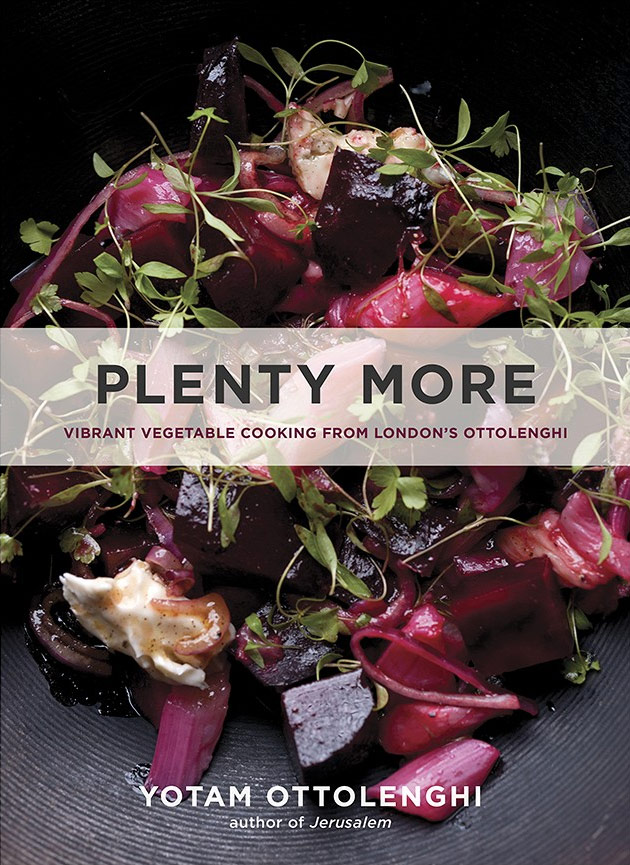
If you’re at all interested in cooking at home, you’ve likely got one of Yotam Ottolenghi’s cookbooks on your shelf: Jerusalem, Plenty, and Ottolenghi. I don’t cook much myself, but from everything I’ve heard from friends, this guy is a wizard with vegetables. Now Ottolenghi is out with a new cookbook: Plenty More.
Yotam Ottolenghi is one of the world’s most beloved culinary talents. In this follow-up to his bestselling Plenty, he continues to explore the diverse realm of vegetarian food with a wholly original approach. Organized by cooking method, more than 150 dazzling recipes emphasize spices, seasonality, and bold flavors. From inspired salads to hearty main dishes and luscious desserts, Plenty More is a must-have for vegetarians and omnivores alike. This visually stunning collection will change the way you cook and eat vegetables.
Mad food scientist Dave Arnold, lately of high-tech NYC bar Booker & Dax, is coming out with a book called Liquid Intelligence: The Art and Science of the Perfect Cocktail.
Years of rigorous experimentation and study — botched attempts and inspired solutions — have yielded the recipes and techniques found in these pages. Featuring more than 120 recipes and nearly 450 color photographs, Liquid Intelligence begins with the simple — how ice forms and how to make crystal-clear cubes in your own freezer — and then progresses into advanced techniques like clarifying cloudy lime juice with enzymes, nitro-muddling fresh basil to prevent browning, and infusing vodka with coffee, orange, or peppercorns.
Practical tips for preparing drinks by the pitcher, making homemade sodas, and building a specialized bar in your own home are exactly what drink enthusiasts need to know. For devotees seeking the cutting edge, chapters on liquid nitrogen, chitosan/gellan washing, and the applications of a centrifuge expand the boundaries of traditional cocktail craft.
I don’t know how many cocktail books the world can handle but even with The Bar Book, Death & Co., The PDT Cocktail Book, and Bitters, my personal library still has space on the shelf for more. (via @kathrynyu)
When Anthony Bourdain’s hour-long food and travel show first launched on CNN, it marked the network’s step away from 24 hours news and towards more entertainment programming. But maybe Bourdain is just the reporter we need these days when most of what we see of other cultures is satellite images or shots of rubble. “I’m not a foreign policy wonk, but I see aspects of these countries that regular journalists don’t.” From FastCo: Anthony Bourdain has become the future of cable news, and he couldn’t care less.
I think this guy is the T-1000 robot from Terminator 2, but for chopping onions instead of assassinating future resistance fighters. Evidence:
1. In the brief view we get of his face at about 20 seconds in, he is not even really looking at the onion. Total robot move.
2. Um, he’s like superhumanly fast at chopping that onion.
3. The T-1000 can easily morph into other people, like this fast watermelon cutter or this pancake flipper or this lemon chopper. Different people, same shapeshifting food prep robot from the future! (via @kdern)
Anthony Bourdain travels a lot; here’s how he approaches flying, packing, getting good local recommendations, etc.
The other great way to figure out where to eat in a new city is to provoke nerd fury online. Go to a number of foodie websites with discussion boards. Let’s say you’re going to Kuala Lumpur — just post on the Malaysia board that you recently returned and had the best rendang in the universe, and give the name of a place, and all these annoying foodies will bombard you with angry replies about how the place is bullshit, and give you a better place to go.
Gastropod is a new podcast about about food “through the lens of science and history” from radio journalist Cynthia Graber and Edible Geography’s Nicola Twilley. Episode 1, embedded below, is about the history of cutlery.
Chances are, you’ve spent more time thinking about the specs on your smartphone than about the gadgets that you use to put food in your mouth.
But the shape and material properties of forks, spoons, and knives turn out to matter-a lot. Changes in the design of cutlery have not only affected how and what we eat, but also what our food tastes like. There’s even evidence that the adoption of the table knife transformed the shape of European faces.
From Mallory Ortberg, a hilarious send-up of the comments you see all too frequently on recipe sites.
“I didn’t have any eggs, so I replaced them with a banana-chia-flaxseed pulse. It turned out terrible; this recipe is terrible.”
“I don’t have any of these ingredients at home. Could you rewrite this based on the food I do have in my house? I’m not going to tell you what food I have. You have to guess.”
“I don’t eat white flour, so I tried making it with raw almonds that I’d activated by chewing them with my mouth open to receive direct sunlight, and it turned out terrible. This recipe is terrible.”
“Could you please give the metric weight measurements, and sometime in the next twenty minutes; I’m making this for a dinner party and my guests are already here.”
These are barely exaggerated. I once saw a comment on a pesto recipe where the person substituted bay leaves for the basil and used other ingredients in the place of pine nuts and olive oil, then complained how bad it tasted and how terrible the recipe was. Oh, the literal humanity. (via nick)
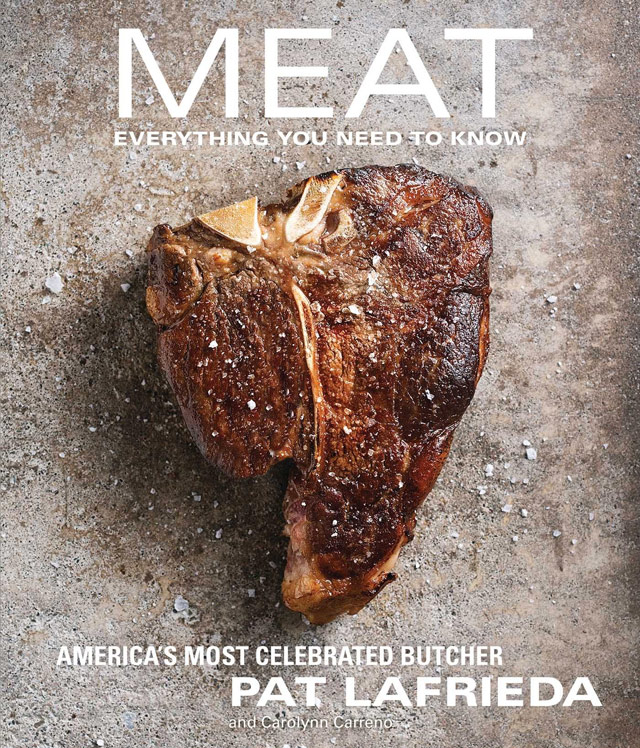
Whoa hey, super-butcher Pat LaFrieda has a cookbook out, Meat: Everything You Need to Know.
No one understands meat’s seductive hold on our palates better than America’s premier butcher, Pat LaFrieda. In Meat: Everything You Need to Know, he passionately explains the best and most flavorful cuts to purchase (some of them surprisingly inexpensive or unknown) and shares delicious recipes and meticulous techniques, all with the knowledge that comes from a fourth generation butcher. If you have ever wondered what makes the meat in America’s finest restaurants so delectable, LaFrieda — the butcher to the country’s greatest chefs — has the answers, and the philosophy behind it.
Paired up with Tartine Bread, all we need now is some emulsifying genius to hit us with Mayonnaise cookbook and we’ll be all set in sandwich-land.
David Gelb, the director of Jiro Dreams of Sushi, is going to be doing a six-part documentary series for Netflix about “culinary artists”.
Chefs featured in the docu-series are: Ben Shewry (of Attica Restaurant in Melbourne, Australia), Magnus Nilsson (Fäviken in Järpen Sweden), Francis Mallmann (El Restaurante Patagonia Sur in Buenos Aires, Argentina), Niki Nakayama (N/Naka Restaurant in Los Angeles), Dan Barber (Blue Hill in New York City and Blue Hill at Stone Barns in Pocantico Hills, N.Y.) and Massimo Bottura (Osteria Francescana in Modena, Italy).
Sounds a lot like a Jiro Dreams series. Looking forward to it. (via @MattH)
Update: The trailer for this series, Chef’s Table, is now out:
That looks fantastic. Available on Netflix on April 26th.
Here are some things you can do with instant ramen aside from eating it as directed on the package, including making a grilled cheese sandwich, gnocchi (a la David Chang), and pizza.
(via devour)
Originally from the sixth issue of the excellent Lucky Peach magazine, mad food scientist Harold McGee of the joys of aging canned food and its “extremely cooked flavor”.
This punishing heat treatment helps create the distinctive flavors of canned goods. So does the hermetically sealed container, which means that after any preliminary cooking outside the can-tuna is steamed to remove moisture, for example, and the best French sardines are lightly fried-oxygen can play only a limited role in flavor development, and that whatever happens in the can stays in the can-no aromas can escape. Hence the common presence of a sulfurous quality, which may be eggy or meaty or oniony or cabbagy or skunky, from compounds like hydrogen sulfide, various methyl sulfides, and methanethiol. Some of these notes can gradually fade during storage as the volatiles slowly react with other components of the food.
The overall flavor is nothing like freshly cooked foods. Food technologists often refer to it as “retort off-flavor.” But it’s only off in comparison to the results of ordinary cooking. It’s really just another kind of cooked flavor, an extremely cooked flavor, and it can be very good. Canned tuna, sardines, chicken spread, and Spam all have their own appeal.
(via @sippey)
Tighter FDA restrictions are keeping some classic French cheeses (Roquefort, Morbier, Tomme de Savoie) out of the US and even some American cheese makers are halting production of their cheeses because they’re afraid their products won’t meet the new standards.
In early August, these cheeses and many more landed on an FDA Import Alert because the agency found bacterial counts that exceeded its tolerance level. Cheeses on Import Alert can’t be sold in the U.S. until the producer documents corrective action and five samples test clean, a process that can take months.
Of course, French creameries haven’t changed their recipes for any of these classic cheeses. But their wheels are flunking now because the FDA has drastically cut allowances for a typically harmless bacterium by a factor of 10.
Even Parmigiano-Reggiano might be threatened by the new restrictions. Ridiculous.

Socials & More