kottke.org posts about crime
Errol Morris follows up on his recent series about Dutch forger Han van Meegeren by addressing some of the comments he received. Here’s Morris on the interaction of historical research and modern content management techniques.
The first version of the Time article that I saw was the “electronic” version from the Web. It is particularly strange, if only because the text (from 1947) is surrounded by modern information, including contemporary advertisements for Liberty Mutual, teeth whitening preparations, wrinkle-cream, and most e-mailed articles. Emmy Göring and Henriette von Schirach complaints are directly adjacent to “Will Twitter Change the Way We Live.”
I also enjoyed the discussion of “Hitler-soup” at the end.
Over on his NY Times blog, Errol Morris finishes up his excellent seven-part series on Vermeer forger Han van Meegeren. Here are the links to all seven parts: one, two, three, four, five, six, and seven.
Errol Morris posted the first part of a seven-part series of posts about Han van Meegeren, art forger extraordinaire.
To be sure, the Van Meegeren story raises many, many questions. Among them: what makes a work of art great? Is it the signature of (or attribution to) an acknowledged master? Is it just a name? Or is it a name implying a provenance? With a photograph we may be interested in the photographer but also in what the photograph is of. With a painting this is often turned around, we may be interested in what the painting is of, but we are primarily interested in the question: who made it? Who held a brush to canvas and painted it? Whether it is the work of an acclaimed master like Vermeer or a duplicitous forger like Van Meegeren — we want to know more.
Morris ends the post with a cliffhanger that, if I didn’t know any better, was written specifically for me: “The Uncanny Valley.”
Update: Part two has been posted.
Adam St. Patrick witnesses a public beheading in Saudi Arabia.
In Riyadh, beheadings take place in a downtown public square equipped with a drain the size of a pizza box in its centre. Expatriates call it Chop Chop Square.
Ask Metafilter tackles the important questions of the day….like the crimes committed by Ferris Bueller and his friends on his day off.
At the restaurant, on the phone with the Maitre D’ he says, “This is Sgt. Peterson, Chicago Police.” Violation of 720 ILCS 5/32-5.1: False Personation of a Peace Officer. A person who knowingly and falsely represents himself or herself to be a peace officer commits a Class 4 felony.
A family in Porterville, California recently discovered that their new home has an unmapped addition. An underground lair.
They noticed what they suspected was a small sink hole at the corner of a concrete patio slab. As they checked on the hole, Edwards was pulling some weeds nearby.
“His foot just sunk,” Barton said, “and that’s when we thought we saw a dead body.”
Turns out it wasn’t a dead body, but some foam insulation. Beneath it, a large space. Everybody thinks it’s a subterranean grow room. They’re afraid their four-year-old son Ethan will want to play down there.
Also recently unearthed, tunnels belonging to crusaders were found under Malta. Unlike the marijuana-propagating sanctum, these structures are believed to have been designed to facilitate Crusades-era sanitation and to bolster the water supply for the Knights of Malta. Ethan, play here instead.
Atul Gawande branches out from his usual excellent writing on medicine and turns his attention to solitary confinement in America’s prison system. Gawande likens extended solitary time to torture.
This is the dark side of American exceptionalism. With little concern or demurral, we have consigned tens of thousands of our own citizens to conditions that horrified our highest court a century ago. Our willingness to discard these standards for American prisoners made it easy to discard the Geneva Conventions prohibiting similar treatment of foreign prisoners of war, to the detriment of America’s moral stature in the world. In much the same way that a previous generation of Americans countenanced legalized segregation, ours has countenanced legalized torture. And there is no clearer manifestation of this than our routine use of solitary confinement-on our own people, in our own communities, in a supermax prison, for example, that is a thirty-minute drive from my door.
This likely will not change until Americans start to believe that rehabilitation and not punishment is the primary goal of prisons. So, probably never.
Twin brothers are suspected of stealing millions in jewelry and watches from KaDeWe in Berlin. DNA from the crime scene matches the brothers’ DNA. But their DNA is too similar to match either brother individually so the police have to let them go.
German law stipulates that each criminal must be individually proven guilty. The problem in the case of the O. brothers is that their twin DNA is so similar that neither can be exclusively linked to the evidence using current methods of DNA analysis. So even though both have criminal records and may have committed the heist together, Hassan and Abbas O. have been set free.
How long before this shows up on CSI?
So of course the diamond heist piece I linked to a few days ago is going to be made into a movie. Directed (maybe) by JJ Abrams, no less. The same author, Joshua Davis, also wrote High Tech Cowboys of the Deep Seas: The Race to Save the Cougar Ace, which has also been optioned for film.
Wired has a great account of what some have called “the heist of the century”, the robbery of an Antwerp diamond vault thought to be impenetrable. The story was pieced together by reporter Joshua Davis from police reports and from talking to the thief who coordinated the whole thing. True or not, this is a fascinating read.
The Genius led them out the rear of the building into a private garden that abutted the back of the Diamond Center. It was one of the few places in the district that wasn’t under video surveillance. Using a ladder he had previously hidden there, the Genius climbed up to a small terrace on the second floor. A heat-sensing infrared detector monitored the terrace, but he approached it slowly from behind a large, homemade polyester shield. The low thermal conductivity of the polyester blocked his body heat from reaching the sensor. He placed the shield directly in front of the detector, preventing it from sensing anything.
With the benefit of hindsight and after watching too many heist movies, the vault security is hilariously inadequate. Both the magnetic security system on the door and the main alarm system were both easily defeated by essentially short circuiting them with bits of metal, just as MacGyver might fool a window alarm with an aluminum chewing gum wrapper. (via waxy)
The NY Times has a nice interactive map showing the results from a city-wide poll that asked New Yorkers to evaluate how they feel about crime, education, the 311 service, and dozens of other things. Correlation is not causation but you can almost see the broken windows theory in effect here…high crime areas generally seem to correlate with neighborhoods that have graffiti, subpar trash pickup, and are unclean.
David Simon, formerly of The Wire and The Baltimore Sun, noticed an underreported Baltimore shooting involving a police officer and decided to investigate it himself. What he found is not good news for the citizenry.
Well, sorry, but I didn’t trip over any blogger trying to find out McKissick’s identity and performance history. Nor were any citizen journalists at the City Council hearing in January when police officials inflated the nature and severity of the threats against officers. And there wasn’t anyone working sources in the police department to counterbalance all of the spin or omission.
I didn’t trip over a herd of hungry Sun reporters either, but that’s the point. In an American city, a police officer with the authority to take human life can now do so in the shadows, while his higher-ups can claim that this is necessary not to avoid public accountability, but to mitigate against a nonexistent wave of threats. And the last remaining daily newspaper in town no longer has the manpower, the expertise or the institutional memory to challenge any of it.
In other Simon news, apparently he’s doing a pilot for HBO for a show called Treme, “post-Katrina-themed drama that chronicles the rebuilding of the city through the eyes of local musicians”. The cast will include Clarke Peters and Wendell Pierce, who played Lester and Bunk on The Wire.
And speaking of The Wire, the latest issue of Film Quarterly has several articles devoted to the show. Only one article is online so you best send Lamar out to the newsstand for a paper copy. (thx, david & walter)
After that great piece about how The Godfather got made was published, Vanity Fair got a call from the daughter of a reputed mobster who wanted to tell the magazine about the time the cast of The Godfather came over to her house for supper and some cultural exchange.
The doorbell rang at seven p.m. at the family house in Fort Lee, New Jersey, right across the Hudson River from Manhattan. “I opened the front door and there was Marlon Brando, James Caan, Morgana King [who played Don Corleone’s wife], Gianni Russo [who played Don Corleone’s son-in-law, Carlo], Al Ruddy [the film’s producer], and my uncle Al [Lettieri],” recalls Gio. “We all went downstairs into the family room, where the table was set and where we had the pool table and the bar.”
Which is safer, the Wild West or present-day New York City? A look at the murder statistics shows that you were less likely to be killed in the notorious cowboy towns of the 1870s and 80s than in NYC today.
In Abilene, Ellsworth, Wichita, Dodge City, and Caldwell, for the years from 1870 to 1885, there were only 45 total homicides. This equates to a rate of approximately 1 murder per 100,000 residents per year.
By contrast, the 2007 murder rate in NYC was 6 per 100,000 residents and Baltimore’s was 45 per 100,000 residents. (via david galbraith)
An interesting profile of Kevahn Thorpe, who started shoplifting high fashion items when he was 16 years old and couldn’t manage to stop.
Kevahn, meanwhile, was arrested over and over — always at department stores, he emphasizes, “never in no label stores,” like Prada, where the staff is perhaps more sensitive to the possibility that a young black kid drifting among the merchandise might be an up-and-coming entertainer or a rich private-schooler and not necessarily a thief. And by then, he was dressing for the occasion. As helpful salesclerks retrieved sneakers from the stockroom, he whisked the ones he wanted under a couch and played a kind of shell game with display models and shoeboxes. When he was caught, he pleaded down the petit-larceny charges to disorderly conduct, until a judge finally got fed up and sent him to Rikers Island for the first time, on a ten-day sentence.
Perhaps it’s easy to laugh Kevahn off as just being obsessed with fashion, but he’s also gotten caught stealing iPods and using stolen credit cards.
Photographer Jesse Chan-Norris caught the aftermath of an attempted murder in Manhattan this morning. From his Flickr page:
At 5:40am I was jolted out of sleep by a noise. BANG. BANG. BANG. BANG. BANG. I raced outside, I looked down, I saw the black car with its door open. I saw another car next to it. I saw the body in the middle of the street. I stood. I gawked.
Keith Mularski spent three years in the darkest corners of the internet and eventually worked his way up to the level of administrator on a online credit card fraud site.
Mularski wasn’t sure how things would play out, but in September 2006 he saw his chance. He started talking with Iceman about joining CardersMarket as a moderator, but soon realized that he the had a better shot with another administrator at DarkMarket, Renu Subramaniam, aka JiLsi. “I basically told him, ‘Hey, I can secure your servers for you,’” Mularski said. JiLsi made him a moderator, but held off granting him administrative access.
Then one Saturday night a month later, DarkMarket started getting hammered with another DDoS attack. “I was talking with JiLsi and I said, ‘Hey I can secure the site? The servers are all set.’”
JiLsi’s reply: “Let’s move it.”
Mularski was now a made man.
When The Notorious B.I.G. was shot dead in Los Angeles, a composite sketch of the shooter done shortly after the killing depicts a clean-cut black man in a suit and bow tie. Was Biggie’s killer the partial basis for Brother Mouzone, the bow-tied hitman from The Wire?
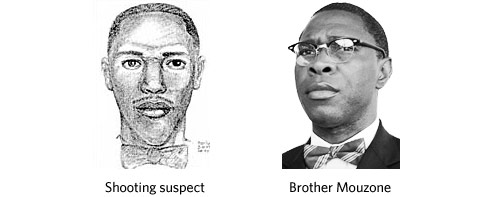
At least until I hear from Mr. Mouzone’s lawyer, I say: case closed! (thx, alex)
Lawyers representing Roman Polanski have asked a California judge to dismiss the statutory rape case against him because of evidence presented in Roman Polanski: Wanted and Desired, a documentary about the case, that the judge in the original case engaged in unethical and unlawful behavior.
Tuesday’s filing said Judge Rittenband, who is now dead, intentionally violated a plea agreement with Mr. Polanski after having engaged in what it called “repeated unethical and unlawful ex parte communications” with a deputy district attorney who was not involved in the prosecution, but was independently advising the judge.
The Economist reports that experimental tests of the controversial “broken windows theory” of social behavior indicate that the theory is correct.
The most dramatic result, though, was the one that showed a doubling in the number of people who were prepared to steal in a condition of disorder. In this case an envelope with a EUR5 ($6) note inside (and the note clearly visible through the address window) was left sticking out of a post box. In a condition of order, 13% of those passing took the envelope (instead of leaving it or pushing it into the box). But if the post box was covered in graffiti, 27% did. Even if the post box had no graffiti on it, but the area around it was littered with paper, orange peel, cigarette butts and empty cans, 25% still took the envelope.
Here’s the 1982 Atlantic article in which the theory was first discussed in a popular forum. (Great article, BTW.)
At the community level, disorder and crime are usually inextricably linked, in a kind of developmental sequence. Social psychologists and police officers tend to agree that if a window in a building is broken and is left unrepaired, all the rest of the windows will soon be broken. This is as true in nice neighborhoods as in rundown ones. Window-breaking does not necessarily occur on a large scale because some areas are inhabited by determined window-breakers whereas others are populated by window-lovers; rather, one unrepaired broken window is a signal that no one cares, and so breaking more windows costs nothing.
Reading these articles, I wondered: how does the broken windows theory apply to online spaces? Perhaps like so:
Much of the tone of discourse online is governed by the level of moderation and to what extent people are encouraged to “own” their words. When forums, message boards, and blog comment threads with more than a handful of participants are unmoderated, bad behavior follows. The appearance of one troll encourages others. Undeleted hateful or ad hominem comments are an indication that that sort of thing is allowable behavior and encourages more of the same. Those commenters who are normally respectable participants are emboldened by the uptick in bad behavior and misbehave themselves. More likely, they’re discouraged from helping with the community moderation process of keeping their peers in line with social pressure. Or they stop visiting the site altogether.
Unchecked comment spam signals that the owner/moderator of the forum or blog isn’t paying attention, stimulating further improper conduct. Anonymity provides commenters with immunity from being associated with their speech and actions, making the whole situation worse…how does the community punish or police someone they don’t know? Very quickly, the situation is out of control and your message board is the online equivalent of South Central Los Angeles in the 1980s, inhabited by roving gangs armed with hate speech, fueled by the need for attention, making things difficult for those who wish to carry on useful conversations.
But what about a site’s physical appearance? Does the aesthetic appearance of a blog affect what’s written by the site’s commenters? My sense is that the establishment of social norms through moderation, both by site owners and by the community itself, has much more of an impact on the behavior of commenters than the visual design of a site but aesthetics does factor in somewhat. Perhaps the poor application of a default MT or Wordpress template signals a lack of care or attention on the part of the blog’s owner, leading readers to think they can get away with something. Poorly designed advertising or too many ads littered about a site could result in readers feeling disrespected and less likely to participate civilly or respond to moderation. Messageboard software is routinely ugly; does that contribute to the often uncivil tone found on web forums?
An interview with the North London Turk, who was one of the biggest heroin dealers in Europe.
Me, my former brother-in-law Yilmaz Kaya, and an Istanbul babas [godfather] named the Vulcan founded the Turkish Connection — that’s a network that smuggles heroin from Afghanistan across Turkey into Europe. Up until the early 90s, Turks had been bringing it in piecemeal. An immigrant would bring in ten keys, sell it, buy a shop in Green Lane and pack it in. We were the first to start bringing it in 100-kilo loads. Stack ‘em high, sell ‘em cheap…
(via gulfstream)
A man dressed as a road maintenance worker robbed an armored car in Washington State. As part of his getaway plan, he hired some people via Seattle craigslist to also dress up as road maintenance workers and mill around where the armored car was located.
“I came across the ad that was for a prevailing wage job for $28.50 an hour,” one of the unwitting decoys, named Mike, said to the NBC station. As it turns out, they were simply placed there to confuse cops who were looking for a guy wearing a virtually identical outfit.
The thief then escaped down a river on an inner tube. (thx, greg)
As a companion to an offline article about illegal logging, the New Yorker has a video that traces illegally cut wood in Russia to distribution and manufacturing centers in China and eventually a finished toilet seat is shipped to Wal-Mart in the US.
I could read about con men and tricksters all day.
“I could sell shit at an anti-scat party,” he says, “you have to figure out someone’s wants and needs and convince them what you have will fill their emotional void.” A con man is essentially a salesman — a remarkably good one — who excels at making people feel special and understood. A con man validates the victim’s desire to believe he has an edge on other people.
It requires avid study of psychology and body language. It’s an amazing paradox—a con man has incredible emotional insight, but without the burden of compassion. He must take an intense interest in other people, complete strangers, and work to understand them, yet remain detached and uninvested. That the plan is to cheat these people and ultimately confirm many of their fears cannot be of concern.
The particular fellow profiled in that piece has also written a book called How to Cheat at Everything.
James Powderly, New Yorker and founder of the Graffiti Research Lab, was one of several Americans detained in China earlier this month for attempting to display protest messages related to Tibet during the Olympics. After 6 days in custody, he was released and sent back to the US. He’s given a few interviews about his experience, all really interesting. From The Brooklyn Paper:
After more than a day of continuous questioning, cops drove the artists and activists - who assumed they were headed to the airport for deportation- to a Beijing jail, where they were stripped, photographed, screened, separated from each other, and placed in cells with other prisoners. Powderly joined 11 other prisoners in a cell with only eight beds, no potable water, and bright lights that illuminated the tiny room 24-hours a day to keep the detainees from sleeping.
And from Gothamist:
Would you say the interrogations were torture? Well, I think probably, a lot of people might disagree, even some of my other detainees might feel like what they received wasn’t torture. And relative to what someone might receive on a daily basis at a place like Gitmo it certainly is not particularly harsh. It’s kind of like being a little bit pregnant, we were a little bit tortured. We were strapped into chairs in uncomfortable positions, we were put into cages with blood on the floor and told we would never live, we were sleep deprived the entire time. There was an interrogation every night and they kept us up all day. They never turned the lights off in the cells. We were fed food that was inedible, we were not given potable water. Any time you threaten and take the numbers of family members and take down home addresses, there’s an element of mental torture there. There’s physical torture in the form of us having to sit in uncomfortable positions all day long and spending the night strapped to a metal chair inside of a cage. We all have cuts and bruises from that, and some of my peers were beaten up a little bit.
There’s also a brief video interview and an article at artnet.
Powderly also stated that before he left, $2000 was extracted from his bank account by the Chinese as a fee for his plane ticket to the US. I know James a bit from Eyebeam, and for whatever stupid reason, when I first read about his detention, it never occurred to me that the detained Americans would be interrogated…I thought the Chinese would just hold them until the Olympics were over and send them home. To be interrogated to the point of mistreatment…well, glad you’re home, James.
Someone make this map, please:
It occurred to me that you could make a map — a whole book of maps — detailing all possible routes of bank robbery within the underground foundations of a city. What basements to tunnel through, what walls can be hammered down: you make a labyrinth of well-placed incisions and the city is yours. Perforated from below by robbers, it rips to pieces. The city is a maze of unrealized break-ins.
Frédéric Bourdin is a Frenchman in his early thirties who has spent much of his life impersonating kidnapped or runaway teens.
At police headquarters, he admitted that he was Frédéric Bourdin, and that in the past decade and a half he had invented scores of identities, in more than fifteen countries and five languages. His aliases included Benjamin Kent, Jimmy Morins, Alex Dole, Sladjan Raskovic, Arnaud Orions, Giovanni Petrullo, and Michelangelo Martini. News reports claimed that he had even impersonated a tiger tamer and a priest, but, in truth, he had nearly always played a similar character: an abused or abandoned child. He was unusually adept at transforming his appearance-his facial hair, his weight, his walk, his mannerisms. “I can become whatever I want,” he liked to say. In 2004, when he pretended to be a fourteen-year-old French boy in the town of Grenoble, a doctor who examined him at the request of authorities concluded that he was, indeed, a teen-ager. A police captain in Pau noted, “When he talked in Spanish, he became a Spaniard. When he talked in English, he was an Englishman.” Chadourne said of him, “Of course, he lied, but what an actor!”
That’s an interesting story by itself but just the tip of the iceberg. At some point, Bourdin’s story gets intertwined with that of Nicholas Barclay, a teen who went missing in Texas in 1994. After that, the story proceeds like the craziest episode of Law and Order you’ve ever seen.
Update: This looks to be Bourdin’s YouTube account where he’s posted several videos of himself speaking into the camera. Check out his Michael Jackson moves about 2:25 into this video. (thx, hurty)
Now showing on HBO:
On March 11, 1977, Roman Polanski was arrested in Los Angeles and charged with the following counts: furnishing a controlled substance to a minor, committing a lewd or lascivious act on a child, unlawful sexual intercourse, rape by use of drugs, perversion and sodomy. Less than a year later, on February 1, 1978, Polanski drove to LAX, bought a one-way ticket to Europe, and never came back. Roman Polanski: Wanted and Desired explores the implausible events that took place between these dates, along with details, before and after, that forever altered the life and career of Polanski, one of the world’s most acclaimed directors.
This snippet of an interview with the filmmaker should give you a taste of what to expect from the film:
I felt it was my job to explain how people think they know the story, but they don’t. That doesn’t excuse Polanski in any way, but it shows what he went through. I think the best viewer for this film is someone who can’t stand Roman Polanski and is disgusted by what happened. But if they allow themselves to watch the film, they usually come away from it feeling differently. If not about the crime, then at least about the aftermath. It’s quite surprising.
The Smoking Gun has the grand jury testimony of then 13-year-old Samantha Gailey, taken two weeks after she had sex with Polanski. If you don’t catch the movie on HBO, it’ll be out in limited release in theaters on July 11.
Update: There’s a post on the HBO bulletin board for the movie that looks like it was written by Samantha Geimer (formerly Gailey):
I hope you all watched and enjoyed the movie. I think Marina did an excellent job in uncovering the facts. Since my mother did not participate, let me clarify a few things for you all.
She did not travel in the same social circles with Roman. She met him once, that meeting had nothing to do with my getting the modeling job. She did not send me off to be raped, or have some blackmail plot in mind. Calling the police pretty much rules blackmail out from the get go. Roman was not known as a pedophile in March of 1977, he was a influential and respected director. Even his relationship with Natasha Kinski did not occur until after my meeting with him, as far as I know.
The sex was not consentual and I have never said it was.
And last, I was not supposed to be alone with him, a friend was to come along with with us, but he talked me into going alone with him as the last minute, my mother was unaware of that until I called her later to check in. Even so, she would never have dreamed he would do what he did to me, just because we were alone. This was a long time ago, when child molestation did not immediately leap to the front of everyone’s mind as is does today. I do find it strange that some of his friends say he couldn’t have done it, while others say of course he would.
My mother has carried alot of guilt about this for many years, so I would appreciate it if people would stop blaming her. There is alot of blame to go around.
In commercials for Domino’s Pizza, the chain’s employees wage a never ending battle against the Noid, a gremlin who delays deliveries and carries a gun that can turn a pizza ice cold. Many viewers are amused by the Noid, Domino’s says, but one of them took the advertising campaign personally. Last week Kenneth Noid, 22, walked into a Domino’s Pizza shop in Chamblee, Ga., with a .357 Magnum revolver and took two employees hostage. When police arrived, he demanded $100,000 in cash, a getaway car and a copy of The Widow’s Son, a 1985 novel about secret societies in an 18th century Parisian prison.
All Noid got was the pizza he ordered. After a five-hour siege, the two employees slipped away and Noid gave himself up. According to police, Noid has “psychological problems” and believes that he has an “ongoing dispute with Tom Monaghan,” the head of the Detroit-based Domino’s chain.
Time Magazine, you’re making that shit up. (via lonelysandwich)
Newer posts
Older posts






Socials & More