kottke.org posts about cars

Hot Wheels released a die-cast version of The Homer, the “everyman” car designed by Homer Simpson in season two episode of The Simpsons. Designed for his half-brother’s car company, the car was so bad and expensive that it drove (ha!) the company out of business. And now it can be yours!
As we saw in the crash test comparison of the 2009 Chevy Malibu and 1959 Chevy Bel Air, today’s cars are built with safety features like airbags and crumple zones to protect passengers from impacts. But as this crash test of a Ford Focus hatchback travelling at 120 mph shows, there’s not much you can do for passengers at that speed.
This Smart Car does pretty well at 70 mph though. (via @daveg)
This Russian truck is mostly tires, which gives it a short turning radius, cuteness,1 and the ability to swim. Yep, you can drive it right into a lake. Jalopnik has more details, including the truck’s surprisingly pint-sized engine:
It weighs just 2,866 pounds dry, so while it might only have a 44.3 horsepower 1.5 liter Kubota V1505 four-cylinder diesel linked to a five-speed manual, it will still do 28 mph on land, or 3.7 mph in water, depending on the wind. It will also crawl at up to 9.3 mph in first gear.
(via digg)
Watch these inspiring film pioneers in this behind the scenes look at the first movie shot entirely with a Prius backup camera. (via @kevin2kelly)
In 2009, The Insurance Institute for Highway Safety conducted a crash test between a 1959 Chevrolet Bel Air and a 2009 Chevy Malibu. The video plainly shows how much progress has been made in passenger safety in those 50 years. Even though the Malibu is much lighter, its crumple zone absorbs much of the impact while the Bel Air lets the newer car’s front end slam right into the driver.1
Even though I’ve seen crash test footage before, I was shocked at how quickly the airbag deployed in the newer car…it’s fully inflated before the rest of the car and its occupants even realize that inertia is about to do some bad things.
When people drive cars, collisions often happen so quickly that they are entirely accidental. When self-driving cars eliminate driver error in these cases, decisions on how to crash can become pre-meditated. The car can think quickly, “Shall I crash to the right? To the left? Straight ahead?” and do a cost/benefit analysis for each option before acting. This is the trolley problem.
How will we program our driverless cars to react in situations where there is no choice to avoid harming someone? Would we want the car to run over a small child instead of a group of five adults? How about choosing between a woman pushing a stroller and three elderly men? Do you want your car to kill you (by hitting a tree at 65mph) instead of hitting and killing someone else? No? How many people would it take before you’d want your car to sacrifice you instead? Two? Six? Twenty?
The video above introduces a wrinkle I had never considered before: what if the consumer could choose the sort of safety they want? If you had to choose between buying a car that would save as many lives as possible and a car that would save you above all other concerns, which would you select? You can imagine that answer would be different for different people and that car companies would build & market cars to appeal to each of them. Perhaps Apple would make a car that places the security of the owner above all else, Google would be a car that would prioritize saving the most lives, and Uber would build a car that keeps the largest Uber spenders alive.1
Ethical concerns like the trolley problem will seem quaint when the full power of manufacturing, marketing, and advertising is applied to self-driving cars. Imagine trying to choose one of the 20 different types of ketchup at the supermarket except that if you choose the wrong one, you and your family die and, surprise, it’s not actually your choice, it’s the potential Trump voter down the street who buys into Car Company X’s advertising urging him to “protect himself” because he feels marginalized in a society that increasingly values diversity over “traditional American values”. I mean, we already see this with huge, unsafe gas-guzzlers driving on the same roads as small, safer, energy-efficient cars, but the addition of software will turbo-charge this process. But overall cars will be much safer so it’ll all be ok?
Volvo took a real dump truck, hooked it up to a remote control, handed it to a 4-year-old girl, and she proceeds to DEMOLISH a closed course with it. Man, I really needed this video today. Wonderful. (via @joeljohnson)
Casper Christensen cut together footage from dozens of movie car chases into one big coherent chase. Well, as coherent as you can get when you’re dealing with car chases.
There’s some fun and clever editing in here…I particularly enjoyed the stitching together of Indiana Jones and Axel Foley. And I loved the brief clip of C’était un rendez-vous, which if you haven’t seen it, is a quick and thrilling watch.
Chris Umson is the Director of Self-Driving Cars at Google[x] and in March, he gave a talk at TED about the company’s self-driving cars. The second half of the presentation is fascinating; Umson shows more than a dozen different traffic scenarios and how the car sees and reacts to each one.
It will be interesting to see how roads, cars, and our behavior will change when self-driving cars hit the streets. Right now, street markings, signage, and automobiles are designed for how human drivers see the world. Computers see the road quite differently, and if Google’s take on the self-driving car becomes popular, it would be wise to adopt different standards to help them navigate more smoothly. Maintaining painted lines might be more important, along with eliminating superfluous signage close to the roadway. Maybe human-driven cars would be required to display a special marking alerting self-driving cars to potential hazards.1 Positioning of headlights and taillights might become more standard.
Human drivers, cyclists, and pedestrians will necessarily adapt to self-driving cars as well. Some will take advantage of the cars’ politeness. But mostly I suspect that learning to interact with self-driving cars will require a different approach, just as people talk to computers differently than they do to other humans — think of how you formulate a successful search query, speak to Siri, or, more to the point, manipulate a Wii remote so the sensor dingus on top of your TV can interpret what you’re doing.
Observations from a Mountain View resident about driving with self-driving cars.
Google cars drive like your grandma — they’re never the first off the line at a stop light, they don’t accelerate quickly, they don’t speed, and they never take any chances with lane changes (cut people off, etc.).
And we know how easy it is to take advantage of old people:
It’s safe to cut off a Google car. I ride a motorcycle to work and in California motorcycles are allowed to split lanes (i.e., drive in the gap between lanes of cars at a stoplight, slow traffic, etc.). Obviously I do this at every opportunity because it cuts my commute time in 1/3.
Once, I got a little caught out as the traffic transitioned from slow moving back to normal speed. I was in a lane between a Google car and some random truck and, partially out of experiment and partially out of impatience, I gunned it and cut off the Google car sort of harder than maybe I needed too… The car handled it perfectly (maybe too perfectly). It slowed down and let me in. However, it left a fairly significant gap between me and it. If I had been behind it, I probably would have found this gap excessive and the lengthy slowdown annoying. Honestly, I don’t think it will take long for other drivers to realize that self-driving cars are “easy targets” in traffic.
But the overall opinion is that self-driving cars are excellent at driving.
I think that, inevitably, non-self driving cars will eventually be banned from the roads to let SD cars operate at their full potential (which personally I’m not thrilled about as I’m a car-nut and I love to drive).
Driving may not have Second Amendment protection, but I predict a hell of a fight against banning non-self-driving cars from the roads, akin to how some people feel about guns. “You can pry the steering wheel from my cold dead hands”, that sort of thing. As future drivers feel threatened and membership dwindles and radicalizes, perhaps AAA will become more like the present-day NRA. (via mr)
Update: Several people pointed out that those in the pro-driving camp may not have much of a choice whether to keep driving or not. As more self-driving cars are put into use, insurance rates for human drivers will rise because the pool of insured will shrink and self-driving cars will prove to be safer by an order of magnitude or more. And then driving will return to being a hobby for the wealthy, like car racing is now.
Update: Paul Barnsley is an economist specializing in risk, and he wrote in about the implications of self-driving cars on insurance rates:
I don’t buy the theory that self-driving cars will do much to current insurance premiums. The pool of drivers will shrink, sure, but the average quality of its members will stay pretty constant, maybe even improve (if better-than-average drivers want to stay behind the wheel) and they’ll be driving in a lower risk environment (because of all the other self-driving cars).
So less risk will be shared over a smaller, but still plenty large, group. Since you can run a viable insurance market over a much smaller group of people than “all car owners in the US” I’d expect the lowered risk effected to dominate and premiums to drop relative to their current levels, though they will be high in comparison to self-driving, which may be your correspondents’ argument.
Interesting. Thanks, Paul!
Jan Chipchase writes about Twelve Concepts in Autonomous Mobility, aka behavioral and design considerations of self-driving vehicles. You may not have thought of some of these.
Nanny mode: vehicles that are assigned to pick up young children from school, but end up trailing them at a discreet distance because the kids prefer to walk home alone.
Car surprise: when you come across your car somewhere where you didn’t expect it to be and witness your vehicle engaging in unexpected activities e.g. pickup up flowers at the mall: the equivalent of catching your parent or kid smoking or shoplifting.
And why is Google, an advertising company, interested in self-driving cars? Perhaps this:
Trailer trashing: where dodgy looking vehicles are assigned to trail an otherwise apparent owner either as a joke or to send a message e.g. a hearse sent by a debt collection agency to scare-up payment. You’ll also see this happen with more aggressive companies who send a vehicle around to their competitors to send a message, recruit their staff or to gather intelligence. Task Rabbit or San Da ha + autonomous mobility + intent. The most obvious market for this will be straight-up advertising.
In 2015, you can follow brands on Facebook, Twitter, and Instagram. In 2023, the brands follow you! Around town!
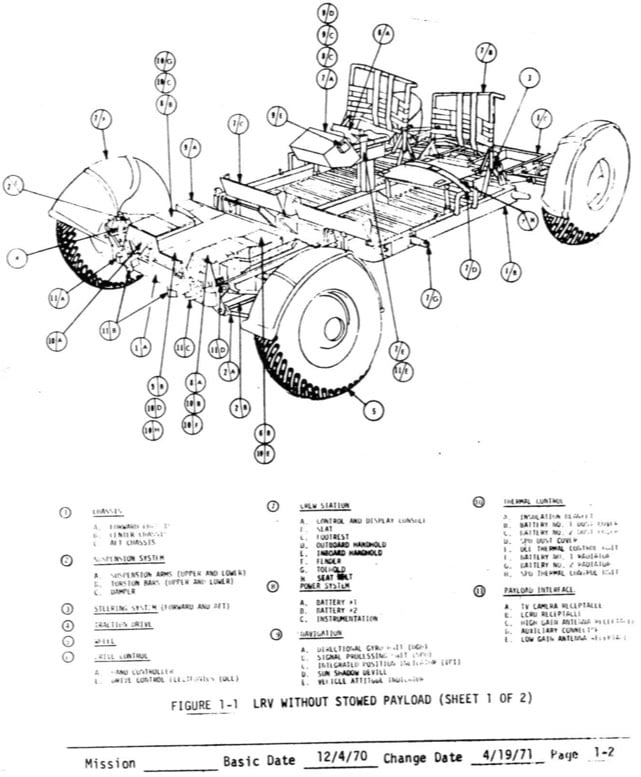
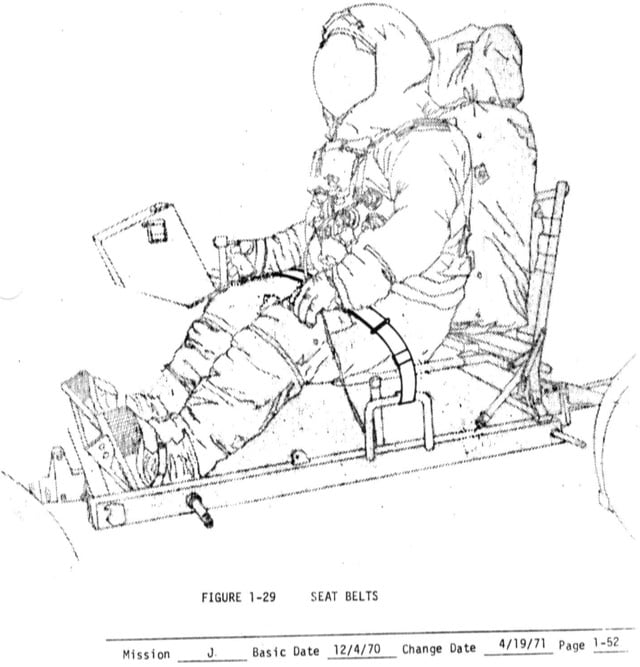
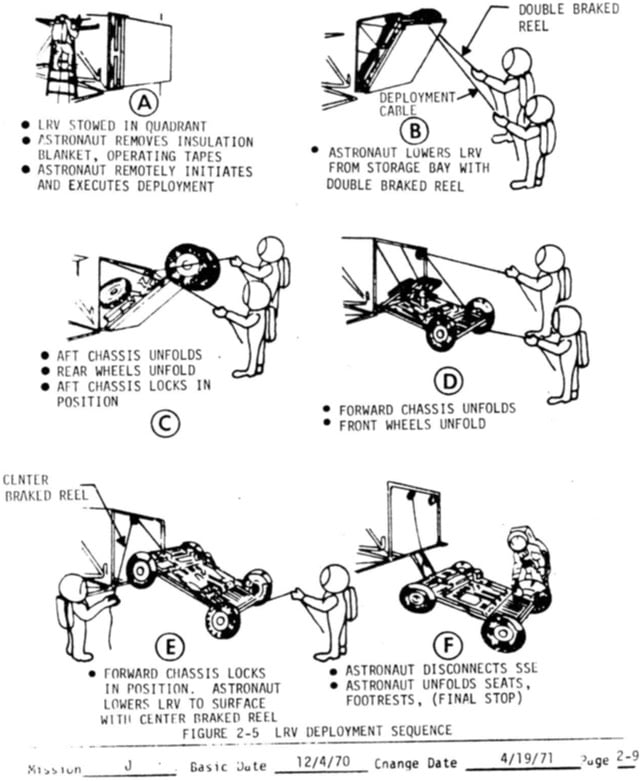
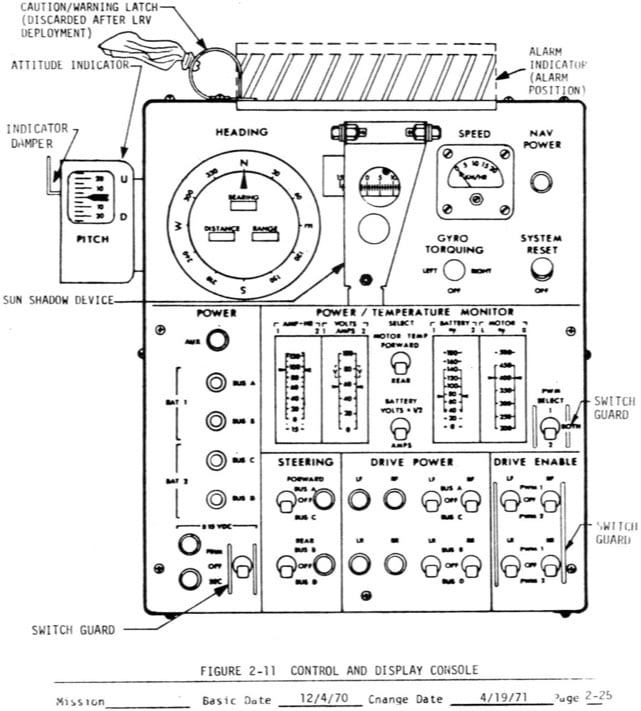
From NASA, the operations manual for the lunar rover. Rovers were used on the final three Apollo missions: 15, 16, and 17. (thx, daniel)
Raul Oaida built a full-sized car out of half-a-million Lego pieces that actually drives. The 256-cylinder engine is powered by compressed air. Top speed is 20 mph.
This is a stunning and insanely clever achievement. My favorite part, aside from that 256-cylinder engine, is the windshield built out of two dozen tiny Lego windshields. (via devour)
This is a donk.
It can be yours for $65,000.
Writing for the New Yorker in 1936, E.B. White pens a farewell to the Model T, a gadget that defined the first quarter of the 20th century.
During my association with Model T’s, self-starters were not a prevalent accessory. They were expensive and under suspicion. Your car came equipped with a serviceable crank, and the first thing you learned was how to Get Results. It was a special trick, and until you learned it (usually from another Ford owner, but sometimes by a period of appalling experimentation) you might as well have been winding up an awning. The trick was to leave the ignition switch off, proceed to the animal’s head, pull the choke (which was a little wire protruding through the radiator), and give the crank two or three nonchalant upward lifts. Then, whistling as though thinking about something else, you would saunter back to the driver’s cabin, turn the ignition on, return to the crank, and this time, catching it on the down stroke, give it a quick spin with plenty of That. If this procedure was followed, the engine almost always responded — first with a few scattered explosions, then with a tumultuous gunfire, which you checked by racing around to the driver’s seat and retarding the throttle. Often, if the emergency brake hadn’t been pulled all the way back, the car advanced on you the instant the first explosion occurred and you would hold it back by leaning your weight against it. I can still feel my old Ford nuzzling me at the curb, as though looking for an apple in my pocket.
Aside from the obvious advantage of price, White details three compelling factors of the Model T, all of which still move car owners to purchase today: quickness, height, and customizability. The Model T was gloriously quick off the line, reaching its top speed of 45 mph, according to White, more quickly than other cars of the age. The driver sat high up in the car, on top of the gas tank, which must have given you the same mighty feeling as driving a huge-ass SUV or pickup truck. And as delivered, the Model T was just functional, leaving ample opportunity for people to add their own touches. For instance, the car didn’t come with a gas pedal (the throttle was hand-operated), speedometer, rear view mirror, or windshield wipers. (via @ftrain, who notes what a great tech blogger White was)
Newer posts
Older posts





Socials & More