kottke.org posts about birds
In late May, Christian Cooper was birdwatching in Central Park when he was accosted and abused for the color of his skin by a white woman after he asked her to leash her dog. Cooper, who is both an avid birdwatcher (he’s on the board of directors for the NYC Audubon Society) and a pioneering comics writer (he was Marvel’s first openly gay writer and editor), has combined his experiences and interests into a new graphic novel for DC Comics called It’s a Bird.

From the NY Times:
The slim, 10-page story is impressionistic, without a real plot. It is the first in a series called “Represent!” that features works of writers “traditionally underrepresented in the mainstream comic book medium,” including people of color or those who are LGBTQ, Marie Javins, an executive editor at DC, said in a statement. It will be available online for free starting Wednesday, at several digital book and comic book retailers.
The main character of “It’s a Bird” is a teenage birder named Jules, who is Black. When Jules tries to peer through his binoculars at birds, he instead sees the faces of Black people who have been killed by the police.
It’s a Bird is available for free from DC Comics. You can read an interview with Cooper and the rest of the creative team (artist Alitha E. Martinez, inker Mark Morales, colorist Emilio Lopez, and letterer Rob Clark Jr.) on the company’s blog. (via open culture)


From more than 6000 submissions, the National Audubon Society has selected the winners of The 2020 Audubon Photography Awards, featuring some of the best bird photography of the year. The top photo, of a cormorant diving for dinner, is by Joanna Lentini and the second photo, of a thirsty hummingbird, was taken by Bibek Ghosh.
Update: They’ve released the top 100 images form the competition; so much good stuff in there.
Back in November, Patrick Tanguay and I posted about Xavi Bou’s Ornitographies project, photographs of the paths traced by birds in the sky. Now Bou has released a video extension of the project, which shows the paths of starlings wheeling & swerving through the sky in huge groups called murmurations. Soothing soundtrack by Kristina Dutton. (via dunstan orchard)
Ornithologists have collected a number of eyewitness accounts from Australia of three types of birds that deliberately set fires to flush out prey from grassy areas.
Black kites (Milvus migrans), whistling kites (Haliastur sphenurus) and brown falcons (Falco berigora) all regularly congregate near the edges of bushfires, taking advantage of an exodus of small lizards, mammals, birds and insects — but it appears that some may have learnt not only to use fire to their advantage, but also to control it.
“At or around an active fire front, birds — usually black kites, but sometimes brown falcons — will pick up a firebrand or a stick not much bigger than your finger and carry it away to an unburnt area of grass and drop it in there to start a new fire,” says Bob Gosford, an ornithologist with the Central Land Council in Alice Springs, in the Northern Territory, who led the documentation of witness accounts. “It’s not always successful, but sometimes it results in ignition.”
(via @christopherjobs)
For his Ornitographies project, Xavi Bou takes photographs of birds and stitches them together into single images so that you can see their flight paths through the sky.
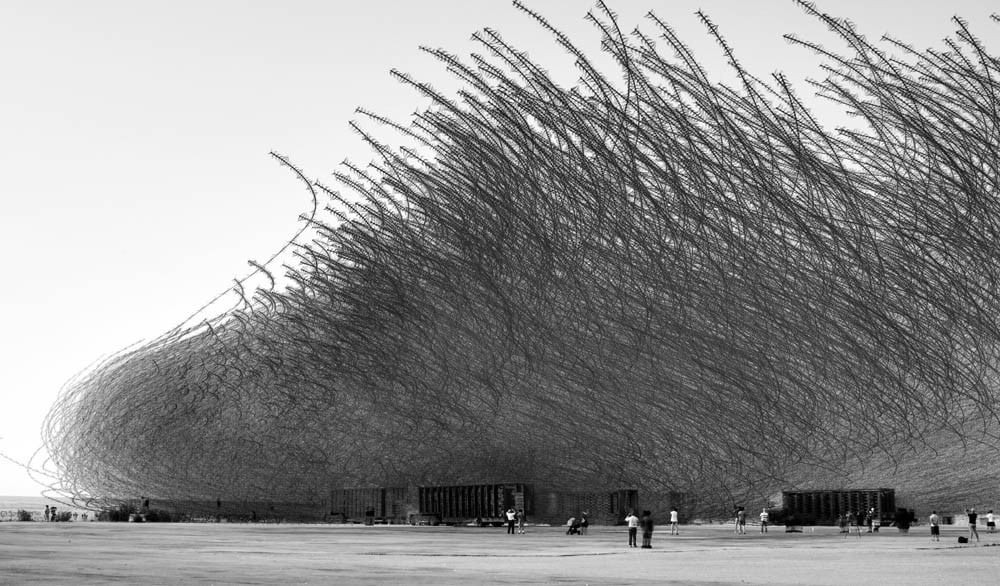
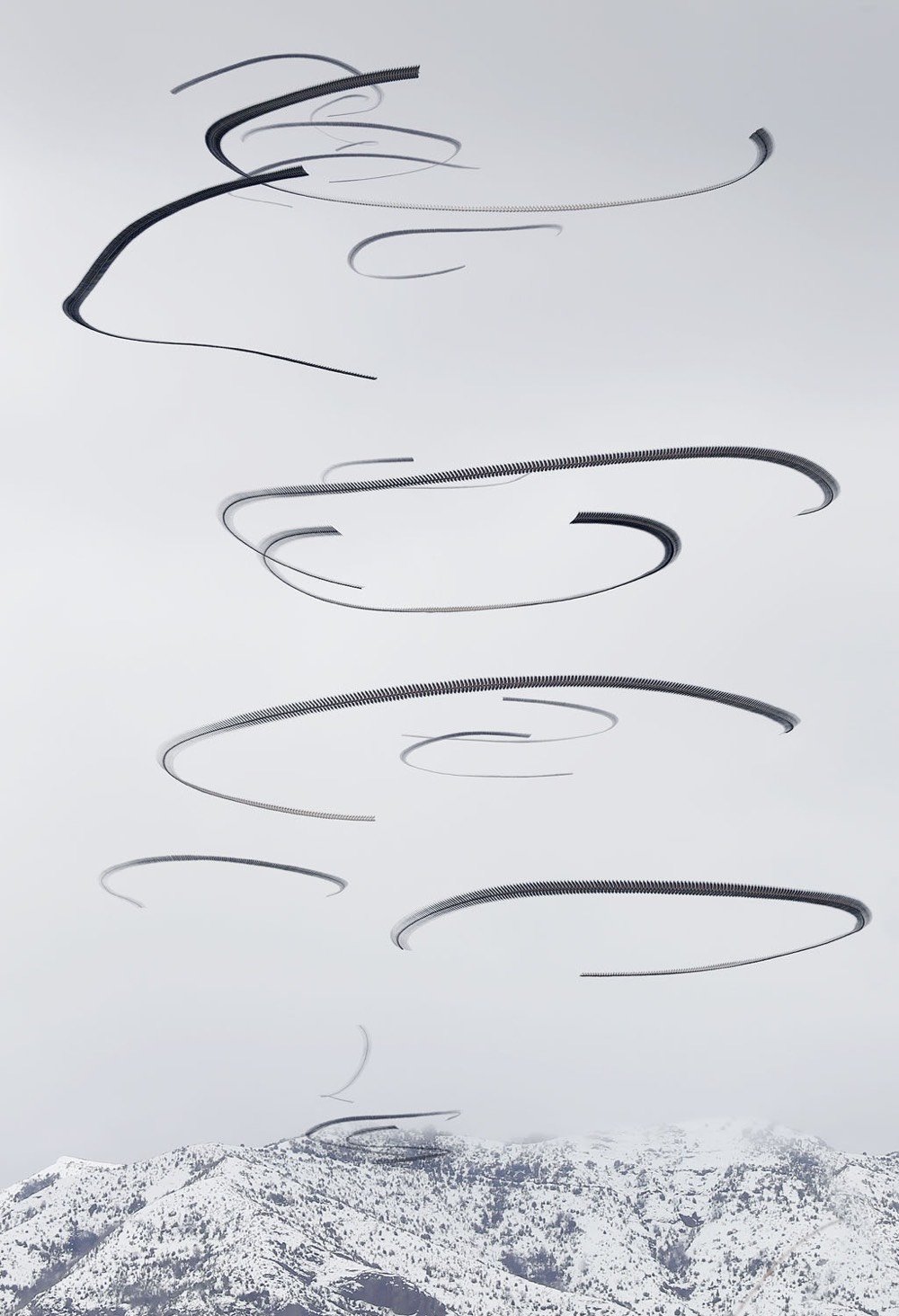
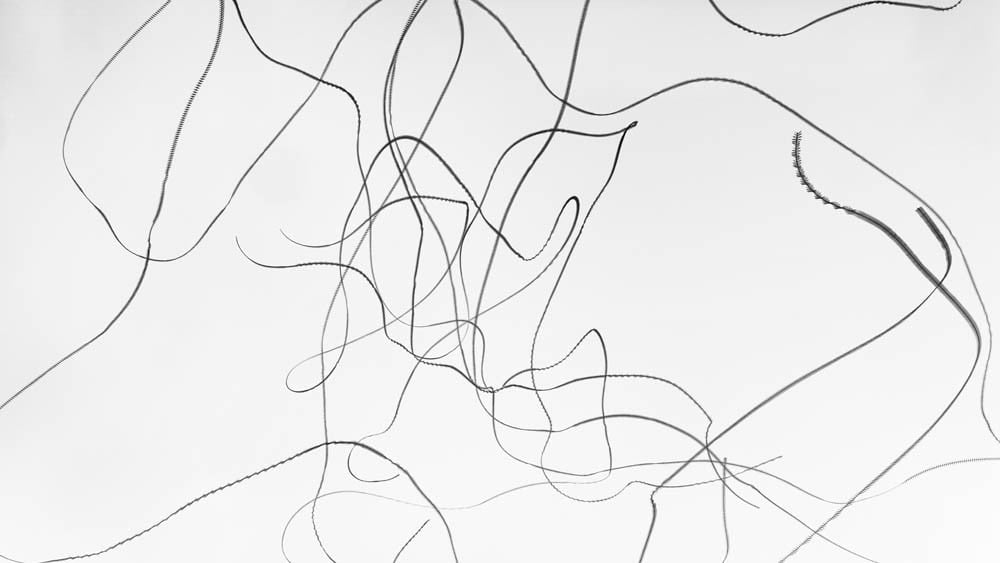
My guest editor Patrick briefly shared one of Bou’s images on his exit post a couple of weeks ago, but I thought they were worth another look.


One of the (several dozen) posts I started writing ages ago but never finished was a collection of the hundreds of bird illustrations pictured in John James Audubon’s seminal Birds of America. The images have been floating around on the web forever, in various sizes and collections, and I wanted to group (or at least link to) all of them in one place. But now I don’t have to because the Audubon Society has put them up on their website.
John James Audubon’s Birds of America is a portal into the natural world. Printed between 1827 and 1838, it contains 435 life-size watercolors of North American birds (Havell edition), all reproduced from hand-engraved plates, and is considered to be the archetype of wildlife illustration.
Thumbnails of all 435 illustrations are presented on a single page (sortable alphabetically or chronologically by their creation date) and then each illustration is given its own page with Audubon’s notes on the bird pictured, a link to the bird in Audubon’s Bird Guide (where you can see photos and hear bird calls, etc.), and a link to download a high resolution image (if you sign up for their mailing list). The barred owl image is 111-megapixels. What a resource!
You can also see online copies of Birds of America at the University of Pittsburgh and Meisei University.
And if you’ve never had a chance to see some of these illustrations in real life, you should keep your eyes peeled for the opportunity. They really are something. (via open culture, which has been particularly great lately)
In this slow motion video clip from a BBC program called Secrets of Bones, you can see how a pigeon takes off so quickly. Pigeons can accelerate from 0 to 60 mph in about 2 seconds, straight up from the ground. A look at its skeleton reveals short, thick bones, an absolute necessity for an animal generating that much power in such a short time. (via the kid should see this, back from its summer hiatus)


The National Audubon Society has announced the winners of the 2019 Audubon Photography Awards competition. Photo credits from top to bottom: Kathrin Swoboda, Kevin Ebi, Shari McCollough. Here’s Swoboda describing how she got her amazing shot of a red-winged blackbird blowing smoke rings:
I visit this park near my home to photograph blackbirds on cold mornings, often aiming to capture the “smoke rings” that form from their breath as they sing out. On this occasion, I arrived early on a frigid day and heard the cry of the blackbirds all around the boardwalk. This particular bird was very vociferous, singing long and hard. I looked to set it against the dark background of the forest, shooting to the east as the sun rose over the trees, backlighting the vapor.
Ebi shared some of his other photos of the eagle stealing a rabbit from a fox in this blog post.
You can see the Audubon’s longlist of 100 images here. Birds are awesome! (via in focus)
Many species of migratory birds, like the Canada goose in North America, fly in a v-formation. Scientists have long suspected that there was some energy-saving advantage to flying in formation and a 2014 study provides evidence to that effect.
By comparing the birds’ flight data to computer simulations, Portugal found that the ibises are apparently drafting — catching an uprush of air from the wingtip of the bird ahead. “Furthermore, when they’re in that position, they time wing beats perfectly,” he says. “So they don’t just sit there passively hoping to get some of the good air from the bird in front.”
They actually flap along the perfect sweet spot. Portugal thinks there’s a very good reason why the ibises do this. Previous studies have shown that flying is hard work.
“When we get exercising, our heart rate gets up to around 180 beats per minute on a good day,” Portugal says. “When birds are flying, it goes up to 400 beats per minute.”
You can read the paper published by the researchers in Nature. (via the kid should see this)
For his photo series The Pillar (which is also a book), Stephen Gill set up a camera next to a post near his home in Sweden and set the shutter to fire when a motion sensor was triggered. “I decided to try to pull the birds from the sky,” he said.
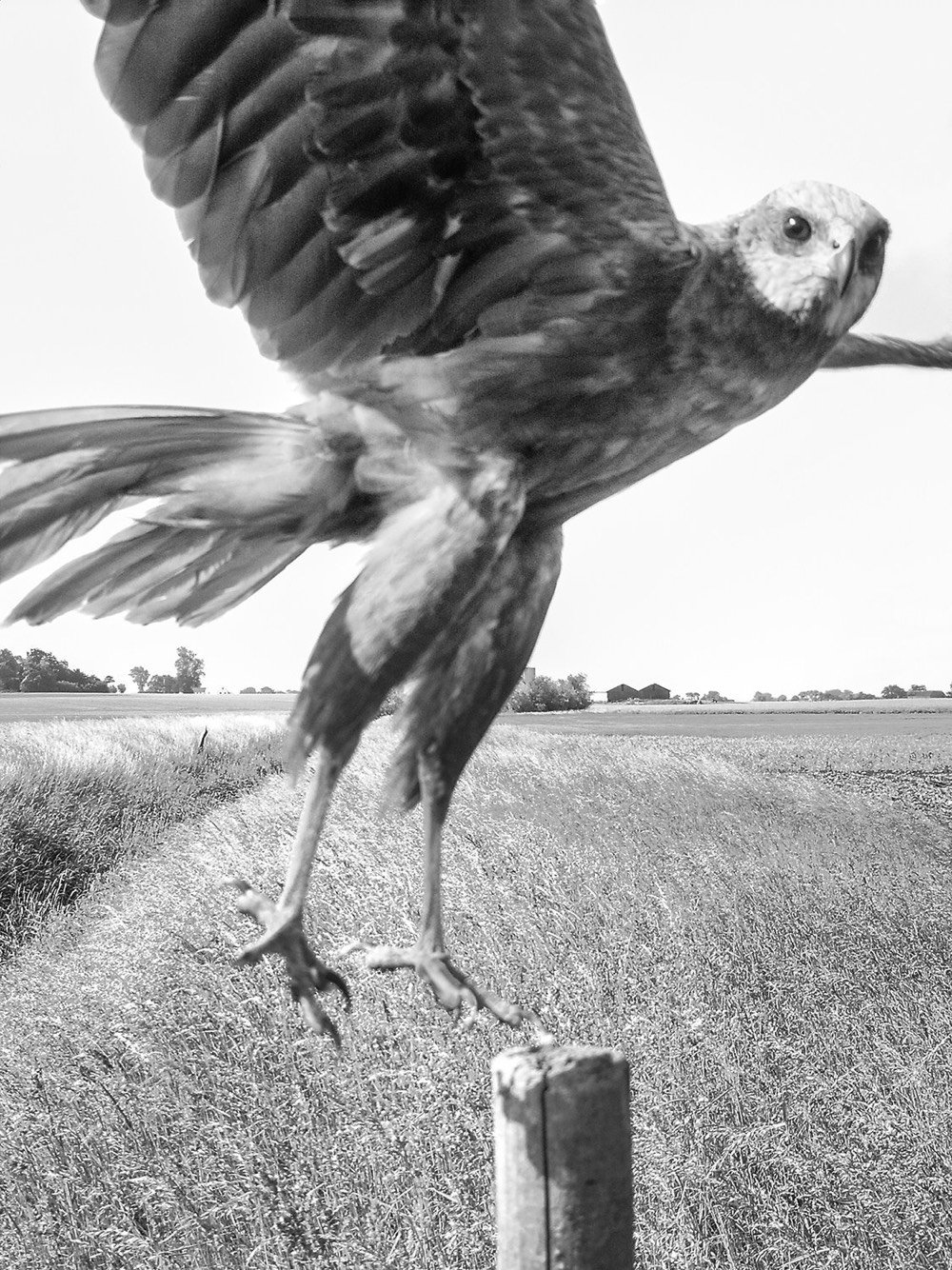
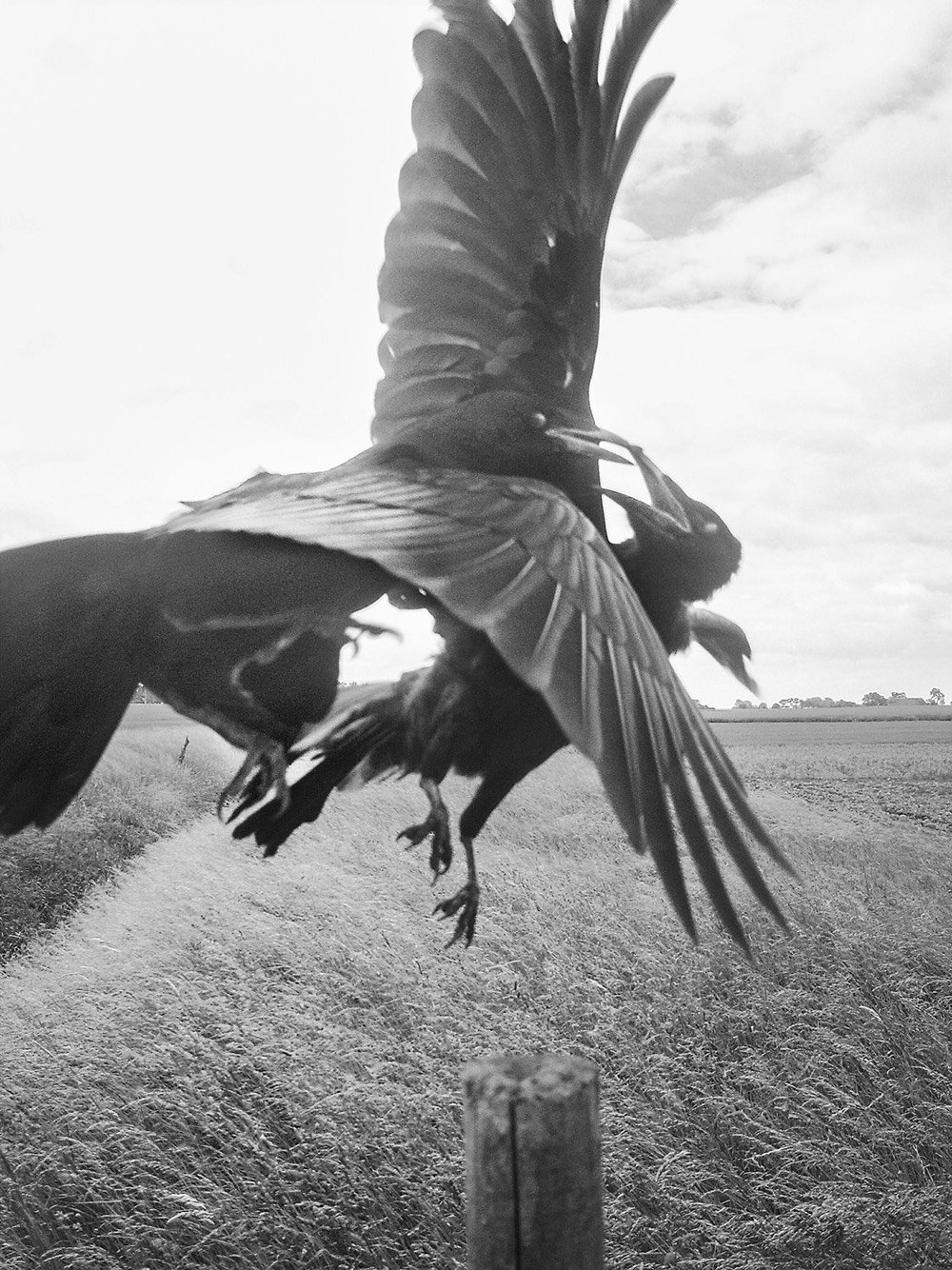
A selection of Gill’s photographs were published by the New Yorker, accompanied by a wonderful short essay by Karl Ove Knausgaard.
A pillar knocked into the ground next to a stream in a flat, open landscape, trees and houses visible in the distance, beneath a vast sky. That is the backdrop to all the photographs in Stephen Gill’s book “The Pillar.” We see the same landscape in spring and summer, in autumn and winter, we see it in sunshine and rain, in snow and wind. Yet there is not the slightest bit of monotony about these pictures, for in almost every one there is a bird, and each of these birds opens up a unique moment in time. We see something that has never happened before and will never happen again. The first time I looked at the photographs, I was shaken. I’d never seen birds in this way before, as if on their own terms, as independent creatures with independent lives.
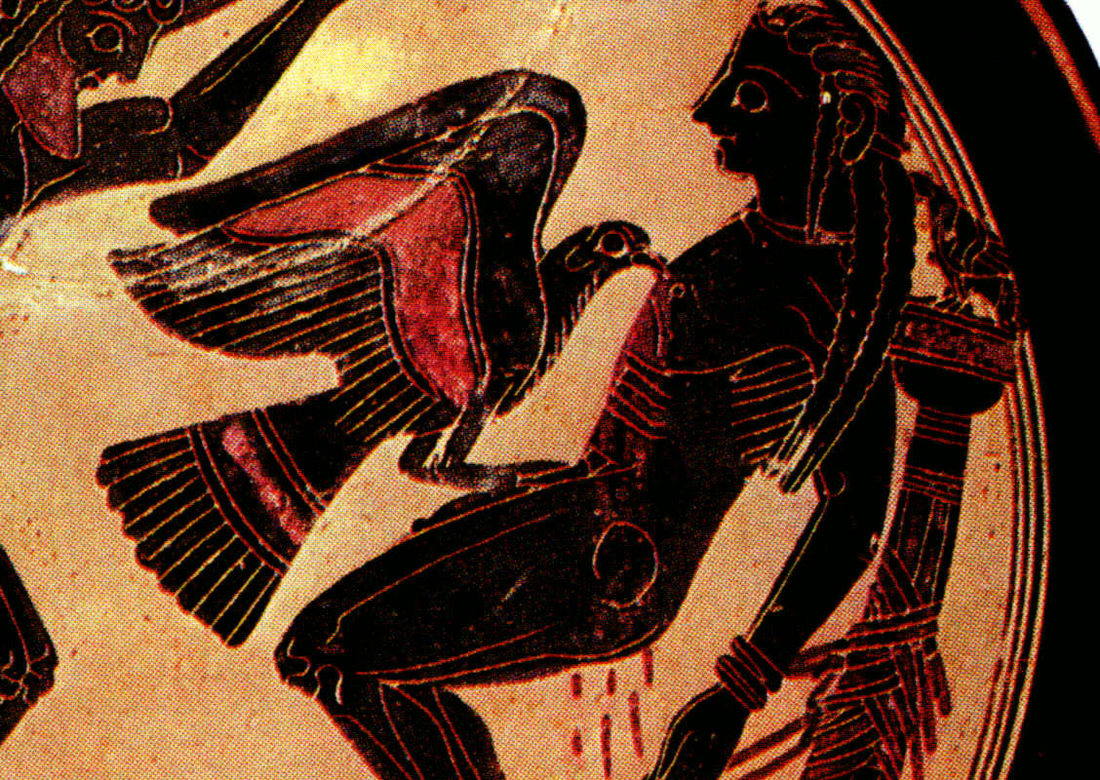
Birds play an outsized role in most cultures’ collective imaginations, which makes sense; they’re our near neighbors, yet retain a kind of strangeness that’s best embodied in their most singular characteristic, flight. If anything, birds played a larger role in the ancient and classical world, since they were seen as even closer to the human universe. As Reyes Bertolin Cebrian writes in her review of Jeremy Mynott’s Birds In The Ancient World:
Birds lived much closer to humans in the ancient world than they do today. There were more birds and more kinds of birds in evidence and they shared the space in the cities and in the fields.
So birds dotted both the mythologies and the daily lives of ancient peoples. Even “the world would have sounded rather different from ours since there was a greater abundance of wildlife and at the same time there were less mechanical noises to compete against,” making birdsong both more familiar and giving it greater importance. Birds were important for hunting and agriculture, but also for magic and ritual, with augury (observing the flight of birds) as the most important.
According to Cebrian, Mynott’s book is written more for bird lovers and the general public than a specialized classicist audience; all classical quotations are given in translation and very little special apparatus is needed.
(Via The Browser)
This short piece in the London Review of Books about pigeons is fascinating. I learned many new things about pigeons and now hold them in higher esteem than I did previously.
Pigeons are more intelligent than we give them credit for, one of the few animals — along with great apes, dolphins and elephants — able to pass the mirror self-recognition test. If you mark a pigeon’s wing and let it look in a mirror it will try to remove the mark, realising that what it sees is a reflected image of its own body. Pigeons can recognise video footage of themselves shown with a five-second delay (three-year-old children find it difficult to comprehend a two-second delay). They are able to recognise individuals from photographs, and a neuroscientist at Keio University in Japan has trained them to distinguish between the paintings of Matisse and Picasso. ‘Modesty,’ Marianne Moore wrote, ‘cannot dull the lustre of the pigeon.’
Pigeons move through a human world. They stay close to the land, often flying at street level, below the height of the rooftops. Recent studies have suggested that they navigate using human structures as well as natural ones: they follow roads and canals, and have been observed going round roundabouts before taking the appropriate exit. They can fly extremely fast — up to 110 miles per hour — and with a following wind can cover 700 miles in a single uninterrupted flight (pigeons don’t like to fly at night but can be trained to do so). There are faster birds — peregrine falcons, the pigeon’s main predator, can reach 200 miles per hour on the stoop — but none can fly horizontally, under its own power, as quickly as a pigeon.
This bit, about the role of pigeons in developing the telecommunications networks of today, is terrific:
During the 19th and early 20th centuries they became important auxiliaries to the technological networks that were springing up across the world. Reuter’s News Agency was established in 1850 with a flock of 45 pigeons, which were used to cover a gap in the telegraph network between Brussels and Aachen, giving Paul Reuter a monopoly over all telegraph traffic between Belgium and Germany. The five sons of Mayer Amschel Rothschild used pigeons to stay in touch as they travelled around Europe consolidating their father’s banking dynasty. During the Siege of Paris in 1870, pigeons were taken out of the city by balloon and returned carrying thousands of letters stored on microfilm and sewn into their tail feathers.

The bulk of the piece is a review of Gordon Corera’s book, Operation Columba - The Secret Pigeon Service: The Untold Story of World War II Resistance in Europe, which is about a British campaign that used carrier pigeons to gather intelligence from German occupied territories during WWII.
Between 1941 and 1944, British intelligence dropped sixteen thousand homing pigeons in an arc across Nazi-occupied Europe, from Bordeaux, France to Copenhagen, Denmark, as part of a spy operation code-named Columba. Returning to MI14, the secret government branch in charge of the “Special Pigeon Service,” the birds carried messages that offered a glimpse of life under the Germans in rural France, Holland, and Belgium. Written on tiny pieces of rice paper tucked into canisters and tied to the birds’ legs, these messages were sometimes comic, often tragic, and occasionally invaluable-reporting details of German troop movements and fortifications, new Nazi weapons, radar systems, and even the deployment of the feared V-1 and V-2 rockets used to terrorize London.

For Audubon, avid birder Nicholas Lund writes about the experience of going birdwatching in the mega-popular Red Dead Redemption 2 game, set in the American West, circa 1899. The attention to detail and the number of species represented is impressive.
I spent most of my time finding birds, and was impressed with the breadth and relative accuracy of the species represented. Birds change with habitat: Roseate Spoonbills and Great Egrets feed in the bayous of Saint Denis. Laughing Gulls and Red-footed Boobies roost along the coast, while eagles and condors soar over mountain peaks. Each of these are crafted with accurate field marks and habits. There are dozens of species I couldn’t even find, including Carolina Parakeets, Ferruginous Hawks, and Pileated Woodpeckers. Like real life birding, you’re never guaranteed to see anything.
The sound design, too, is impressive. The landscape is alive with birdsong, including many species not actually in the game, like Northern Flicker and Ruby-crowned Kinglet. I was riding through a wooded area one time as dusk turned to night, and whip-poor-wills began singing out all around me.
But the game’s realistic portrayal of wildlife and its exploitation by humans causes Lund to reflect on how much destruction we’ve caused.
The demand for egret plumes for fancy hats was driving several species toward extinction. (Snowy Egret plumes can be sold in-game for $2.50 apiece.) Habitat loss and overhunting contributed to the extinction of the Carolina Parakeet soon after the game’s timeframe, in the early 20th century. (Carolina Parakeet flight feathers can be used to make far-flying arrows in the game.) The type of wanton destruction encouraged in Red Dead Redemption 2 is what led the National Audubon Society to lobby for, and Congress to pass, the real Migratory Bird Treaty Act in 1918, and other environmental legislation in the following decades.
Lund’s birding trip reminded me of other non-conventional uses of realistic video games by players: Jim Munroe being a tourist in Grand Theft Auto III and war photographer Ashley Gilbertson sending back photographs from the ultra-violent The Last of Us Remastered.
For more than 20 years, Christian Moullec has been flying with migratory birds in his ultralight aircraft. He raises birds of vulnerable species on his farm and then when it’s time for them to migrate, he shows them how, guiding them along safe migration paths. To support his conservation efforts, Moullec takes paying passengers up with him to fly among the birds. What a magical experience!
My passengers come from all over the world and are all kinds of people, especially Europeans. The flight inspires in me a huge respect for nature and I can communicate this respect to my passengers. There are also people with disabilities and those who want to experience a great time in the sky with the birds before leaving this world. It is an overwhelming spiritual experience. The most beautiful thing is to fly in the heavens with the angels that are the birds.
When watching the video, it’s difficult to look away from the birds, moving with a powerful grace through the air, but don’t miss the absolute joy and astonishment on the faces of Moullec’s passengers. This is going right on my bucket list.
See also The Kid Should See This on Moullec’s efforts, the 2011 documentary Earthflight that features Moullec, and Winged Migration, a 2001 nature film that features lots of stunning flying-with-birds footage. (via @tcarmody)
I’m not saying that your day will be 100% better if you watch this short video of 30 normally super-aggro hummingbirds splashing around together in a birdbath, but I’m not not saying that either. At any rate, this video is quite charming. (via colossal)
Newer posts
Older posts

Socials & More