kottke.org posts about best of
Ignacio Montalvo compiled a list of the most beautiful scenes pulled from dozens of movies from the first part of this century and edited them into a succinct video less than 3 minutes long. He included scenes from movies like Spirited Away, Kill Bill, Sunshine, Mad Max: Fury Road, Moulin Rogue, Children of Men, Wall-E, Melancholia, and Interstellar.


The legendary Magnum Photos agency has announced the winners of their second annual Magnum Photography Awards. You can peruse the full selection of the winners, finalists, and juror’s picks on Lens Culture. The photos above are by (respectively) Nick Hannes, MD Tanveer Rohan, and Antonio Gibotta.
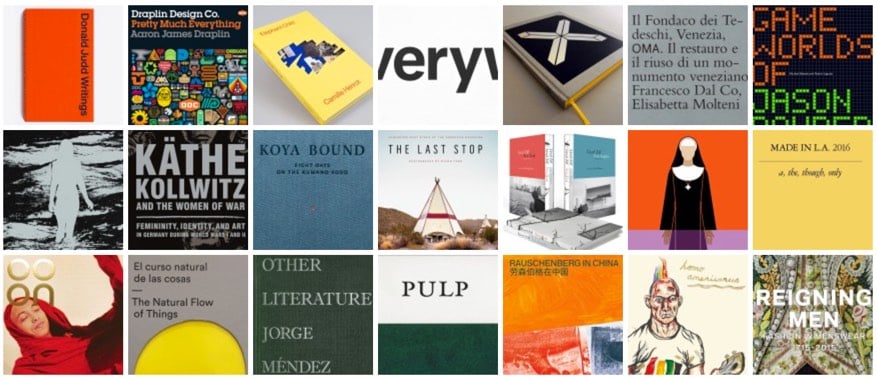
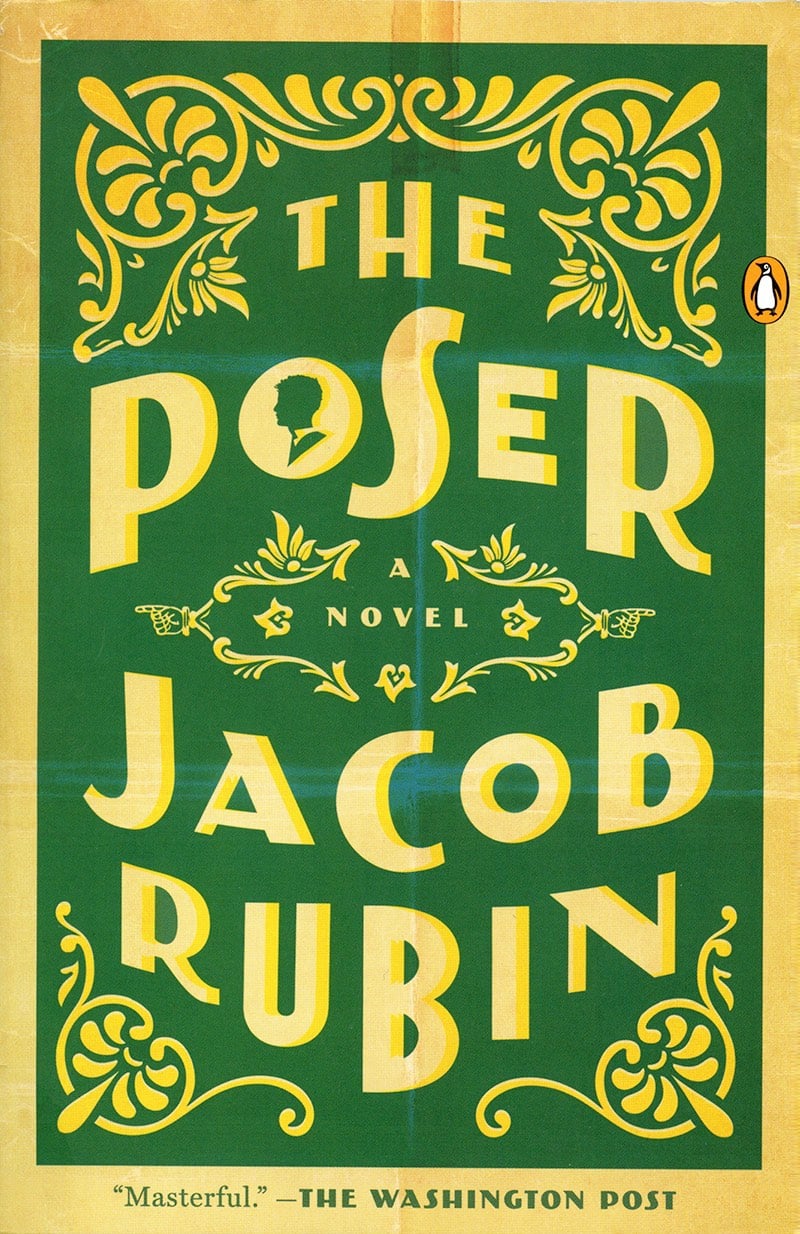
Design Observer and the AIGA have announced their selections for the 50 best designed books and 50 best designed book covers for 2016. You can browse the entire selection in the AIGA archive. Lovely to see Aaron James Draplin’s Pretty Much Everything, Koya Bound, and the Hamilton book on the list. Oh and I love this cover for The Poser.
From the always entertaining and informative Cinefix, a list of the best crimes depicted in movies. The list is broken down by the typical elements of a cinematic crime: the motive, the team, the plan, the getaway, the cover-up, and so on. The video features Dog Day Afternoon, Ocean’s Eleven, Chinatown, Se7en, and Reservoir Dogs. Would loved to have seen a tiny mention of Bottle Rocket in there, but nope!


Thrillist has a great feature on 100 of the best props in movie history and how the directors, production designers, and artists found, chose, designed, bought, borrowed, or stole them to be a part of their films. About the plastic bag from American Beauty:
“It was a very low-budget movie. A tiny budget, and I had a tiny portion of the tiny budget. When I talked to Sam [Mendes, director] about the shopping bag, he was very specific about it not having markings on it. No store name, no ‘thank you, have a nice day’ — he wanted a plain, white plastic bag.
“Back in 1998, it was the early days for internet shopping. Now I do most of my prop shopping online, but back then it was yellow pages and finding things. I made calls to various manufacturers but the only way I could get one unmarked plastic bag was to buy 5,000 unmarked plastic bags. Even though it didn’t seem like a lot at the time, it was still in the range of $500. Which with my $17,000 budget or about that, I couldn’t afford it.
“The bag was always going to be filmed separately. Sam was going to take the video camera [that Wes Bentley used] and go out with the special effects guys with lawn blowers. It wasn’t slotted in the schedule. So I started my prep and I said, I’ll figure the bag out later. I’ll figure the bag out later. I’ll figure the bag out later. Towards the end of my prep, my assistant and I were in downtown LA and we’re buying all sorts of stuff from all sorts of stores for all the characters. We came back to my house, and we’re unloading my car, and we’re piling all these bags on to the table, and right in the middle of the pile, is this white plastic bag with no markings. And I’m like, THAT’S THE BAG. We didn’t know where it came from — we’d been to 55 different places. The receipts just say ‘item number whatever.’ I have no idea where that bag came from, but it came to me. It came from the prop gods who knew I’d never find one otherwise.”
The cup of water in Jurassic Park:
“I was at work and Steven [Spielberg] calls into the office. He goes, ‘I’m in the car, I’m playing Earth, Wind & Fire, and my mirror is shaking. That’s what we need to do. I want to shake the mirror and I want to do something with the water.’ The mirror shaking was really very easy — put a little vibrating motor in it that shook it. The water was a another story. It was very difficult thing to do. You couldn’t do it. I had everyone working on it. Finally, messing around with a guitar one night, I set a glass and started playing notes on a guitar and got to a right frequency, a right note, and it did exactly what I wanted it to do.”
Oh, and the red stapler from Office Space!
“I wanted the stapler to stand out in the cubicle and the color scheme in the cubicles was sort of gray and blue-green, so I had them make it red. It was just a regular off-the-shelf Swingline stapler. They didn’t make them in red back then, so I had them paint it red and then put the Swingline logo on the side.
“Since Swingline didn’t make one back then, people were calling them trying to order red staplers. Then people started making red Swinglines and selling them on Ebay and making lots of money, so Swingline finally decided to start making red staplers.
“I have the burnt one from the last scene. Stephen Root has one that was in his cubicle. There were three total that we made. I don’t know where the third one is.”
Ahhh, I could read these all day. Wait, the horse head in that scene in The Godfather was real?!
“John Marley, the guy who played the movie producer, was a pain in the ass because he was a complainer every time he was on screen. Now, we go to shoot the famous scene. We’re shooting out on Long Island on a winter day, which is cold, dark, and rainy outside. We’re down at an elegant old stone mansion, and John is wearing his silk coat and his pajamas, standing by the bed. Now, four grips walk in carrying this huge metal case. He has no idea what the hell’s inside. I’m not exaggerating — it was probably about 6 to 8-ft square with the latches on each corner. He stands by the bed, and they lower this thing on the floor. They take off the four latches, and he almost faints. He sees this fucking horse’s head with the tongue hanging out. Oh, Jesus Christ!
“The next thing we know, the head is on the bed, on the yellow sheets. So you know, the horse’s head was frozen with dry ice, so it was fucking cold. Francis figures, ‘This is my shot to get him.’ They put all the phony blood. John refuses to stretch his legs out. He’s got his legs pulled in so it doesn’t hit the horse’s head. Francis kept telling him to straighten out. His scream was blood-curdling. What you hear in the movie was not done later on. We were laughing at a certain point. We were fucking howling. He was freaking out. When that scene was over, he ran off the set, throwing the bloody shit on the floor. He was gone for the rest of the day.”
Ok, that’s enough, go read the whole thing already.
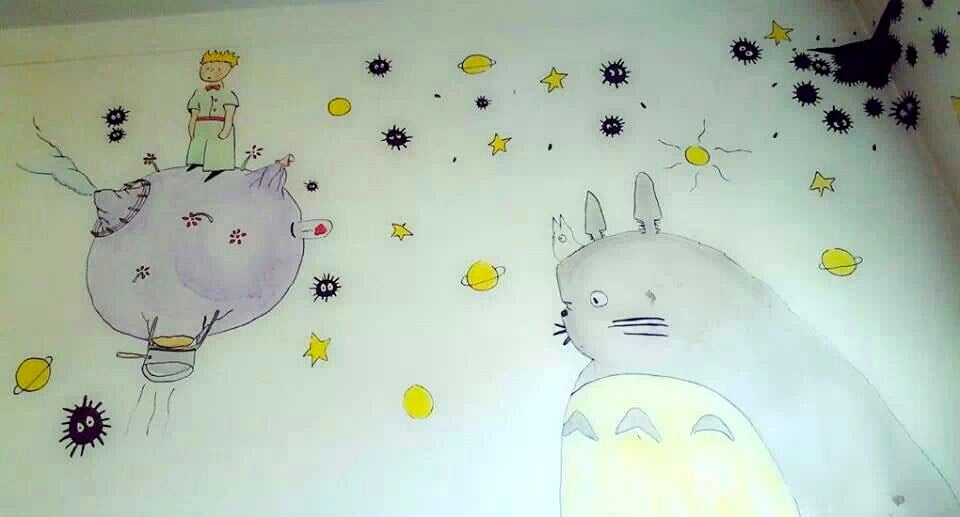
Back in 2010, legendary Japanese animator Hayao Miyazaki picked his 50 favorite books for children and young adults. Here are the top five:
1. The Borrowers by Mary Norton
2. The Little Prince by Antoine de Saint-Exupéry
3. Children of Noisy Village by Astrid Lindgren
4. When Marnie Was There by Joan G. Robinson
5. Swallows and Amazons by Arthur Ransome
It’s easy to see the influence of the books from the list on the movies he made. Indeed, two of the top five books were actually made into Studio Ghibli films (The Borrowers and When Marnie Was There).
P.S. The Totoro / Little Prince illustration is from Pinterest, but I couldn’t find the original source. Anyone?
Cinefix has begun the monumental task of compiling a list of the best shots in film. They’ve got a list of more than 1000 potential clips to evaluate and rank, but in part one of their series, they focus on the best shots by size — “breaking down some of the best close ups, mediums, wide shots and extremes in film history”.
Their picks include Psycho for the extreme close up, The Godfather Part II for the wide shot, and Lawrence of Arabia for the extreme wide shot.
Update: Here are the other three videos in Cinefix’s series:
Cinefix lists the best movie dialogue of all time. This is an unorthodox list…not sure many would rate Aaron Sorkin’s movie about Steve Jobs so highly. I enjoyed the shout out to Primer for its realistic-seeming dialogue of the cofounders of a small startup dealing with terrific success.


Photographers from more than 60 countries submitted almost 230,000 entries for the World Photography Organization’s 2017 Sony World Photography Awards and they recently announced the top 10 (as well as the commended top 50) photographers in several different categories. Some fantastic work in here.
From top to bottom, a school of fish by Christian Vizl, the Shaolin Wushu school of martial arts by Luo Pin Xi, and a landscape by Tom Jacobi. (via in focus)


The Wellcome Image Awards 2017 recognize the best images related to healthcare and biomedical science taken during the past year.
The Wellcome Image Awards are Wellcome’s most eye-catching celebration of science, medicine and life. Now in their 20th year, the Awards recognise the creators of informative, striking and technically excellent images that communicate significant aspects of healthcare and biomedical science. Those featured are selected from all of the new images acquired by Wellcome Images during the preceding year. The judges are experts from medical science and science communication.
From top to bottom, there’s Mark R. Smith’s photo of a baby Hawaiian bobtail squid, neural stem cells growing on a synthetic gel photographed by Collin Edington and Iris Lee, and Scott Echols’ image of a pigeon’s blood vessel network. (via digg)
From the MIT Technology Review, the 10 Breakthrough Technologies of 2017:
Reversing Paralysis
Self-Driving Trucks
Paying with Your Face
Practical Quantum Computers
The 360-Degree Selfie
Hot Solar Cells
Gene Therapy 2.0
The Cell Atlas
Botnets of Things
Reinforcement Learning
The piece on Hot Solar Cells caught my eye:
Solar panels cover a growing number of rooftops, but even decades after they were first developed, the slabs of silicon remain bulky, expensive, and inefficient. Fundamental limitations prevent these conventional photovoltaics from absorbing more than a fraction of the energy in sunlight.
But a team of MIT scientists has built a different sort of solar energy device that uses inventive engineering and advances in materials science to capture far more of the sun’s energy. The trick is to first turn sunlight into heat and then convert it back into light, but now focused within the spectrum that solar cells can use. While various researchers have been working for years on so-called solar thermophotovoltaics, the MIT device is the first one to absorb more energy than its photovoltaic cell alone, demonstrating that the approach could dramatically increase efficiency.
Back in 2000, Amazon ran a poll asking their customers what they thought were the best books, music, and movies of the past 1000 years. The results, archived by the Internet Archive, are a time capsule not only of recently popular works (Braveheart, Millennium by the Backstreet Boys, Harry Potter and the Sorcerer’s Stone by J.K. Rowling) but also of who was on the internet at that time. It’s interesting that Harry Potter made the list; the first book had only been out in the US for less than a year and a half and the 2nd and 3rd books had been out for less than 6 months.
The winners in each category were The Lord of the Rings by J.R.R. Tolkien, Sgt. Pepper’s Lonely Hearts Club Band by The Beatles, and Star Wars. The author of the millennium was J.R.R. Tolkien (runner-up: Ayn Rand), The Beatles and Pink Floyd were the top musical artists, and the directors were Steven Spielberg and George Lucas. Here are the full top 10 lists:
Books
1. The Lord of the Rings - J.R.R. Tolkien
2. Gone With the Wind - Margaret Mitchell
3. To Kill a Mockingbird - Harper Lee
4. The Catcher in the Rye - J.D. Salinger
5. Harry Potter and the Sorcerer’s Stone - J.K. Rowling
6. The Stand - Stephen King
7. Ulysses - James Joyce
8. Atlas Shrugged - Ayn Rand
9. The Grapes of Wrath - John Steinbeck
10. 1984 - George Orwell
Music albums
1. Sgt. Pepper’s Lonely Hearts Club Band - The Beatles
2. The Beatles (The White Album) - The Beatles
3. Millennium - Backstreet Boys
4. Dark Side Of The Moon - Pink Floyd
5. Abbey Road - The Beatles
6. Thriller - Michael Jackson
7. The Joshua Tree - U2
8. The Wall - Pink Floyd
9. Kind Of Blue - Miles Davis
10. Nevermind - Nirvana
Movies
1. Star Wars
2. Titanic
3. Citizen Kane
4. Gone With the Wind
5. The Godfather
6. Schindler’s List
7. The Matrix
8. Saving Private Ryan
9. Casablanca
10. Braveheart
Since 2001, the Oscars have awarded The Academy Award for Best Animated Feature. The video above shows a scene from each of the winning movies: Shrek, Spirited Away, Finding Nemo, The Incredibles, Wallace & Gromit: The Curse of the Were-Rabbit, Happy Feet, Ratatouille, Wall-E, Up, Toy Story 3, Rango, Brave, Frozen, Big Hero 6, and Inside Out….as well as 2016’s five nominees: Kubo and the Two Strings, Moana, My Life as a Zucchini, The Red Turtle, and Zootopia. Pixar has dominated the category with 8 wins (and 10 nominations) out of 15 years, but the strong field this year meant the studio’s critically acclaimed blockbuster Finding Dory wasn’t even nominated, joining Cars 2, Monsters University, and The Good Dinosaur as the only Pixar films made during that period not to be nominated.
The Super Bowl is old news at this point and I have a love/hate thing with Bill Simmons going on, but I loved his ranking of the top 10 coin flips in history, which in typical Simmons fashion, crosses a bunch of different boundaries, from technology:
10. The Wright Brothers. In 1903, Wilbur and Orville flipped a coin to see who would attempt the first airborne flight. Wilbur won … and couldn’t keep the plane in the air. They repaired the plane and three days later Orville nailed the second flight, leading Skip Bayless to tweet, “I know this is Orville’s day but I can’t get over that choke job by Wilbur!”
…to sports:
3. Secretariat. Remember when Penny Chenery and Ogden Phipps flipped a coin for the first pick of two foals that Bold Ruler had sired? And Phipps won and picked a foal born from Bold Ruler and Hasty Matelda? And Chenery settled for Secretariat, the eventual Triple Crown winner that became the most famous race horse who ever lived? And then Diane Lane played Chenery in Disney’s Secretariat movie that was 25 minutes too long? Poor Ogden Phipps.
…to the #1 pick from the musical world (which you might guess but will have to click through for).


In Focus is featuring some of the winning shots from the 2017 Underwater Photographer of the Year awards. The top one is Dancing Octopus taken by Gabriel Barathieu and the bottom one is by Qing Lin, who took the photo near Lembeh, Indonesia, which is home to some of the strangest marine life in the world.
If you look at Lin’s photo of the clownfish for more than a second or two — pay attention…this is the nightmarish side to living on the reef that Pixar kept from you in Finding Nemo — you will notice not just three pairs of eyes but six pairs of eyes. In the mouth of each clownfish is a parasitic isopod looking right at the camera. The isopod enters the fish through the gills, attaches itself to the fish’s tongue, feeds on the blood in the tongue until it falls off, and then attaches itself to the tongue stump. And the fish uses the isopod as a replacement tongue! Cool! And gross!
Newer posts
Older posts



Socials & More