kottke.org posts about best of
Compiled from a bunch of different sources, here’s an attempt at an exhaustive list of movies that Stanley Kubrick liked. Among them:
Citizen Kane
The Godfather
Metropolis
One Flew Over the Cuckoo’s Nest
Harold and Maude
Close Encounters of the Third Kind
By far the weirdest entry on the list is White Men Can’t Jump. Then again, Terrence Malick loves Zoolander and David Foster Wallace once listed a Tom Clancy novel as a favorite. (via @DavidGrann)
Lena Dunham shares her fifteen favorite Criterion films, saying she’s embarrassed that “so many of these films are in English, but I just love speaking English”.
The Tampa Bay Times and The Center for Investigative Reporting spent a year investigating bad charities and this is what they found.
The worst charity in America operates from a metal warehouse behind a gas station in Holiday.
Every year, Kids Wish Network raises millions of dollars in donations in the name of dying children and their families.
Every year, it spends less than 3 cents on the dollar helping kids.
Most of the rest gets diverted to enrich the charity’s operators and the for-profit companies Kids Wish hires to drum up donations.
In the past decade alone, Kids Wish has channeled nearly $110 million donated for sick children to its corporate solicitors. An additional $4.8 million has gone to pay the charity’s founder and his own consulting firms.
No charity in the nation has siphoned more money away from the needy over a longer period of time.
But Kids Wish is not an isolated case, a yearlong investigation by the Tampa Bay Times and The Center for Investigative Reporting has found.
Using state and federal records, the Times and CIR identified nearly 6,000 charities that have chosen to pay for-profit companies to raise their donations.
Then reporters took an unprecedented look back to zero in on the 50 worst — based on the money they diverted to boiler room operators and other solicitors over a decade.
These nonprofits adopt popular causes or mimic well-known charity names that fool donors. Then they rake in cash, year after year.
The nation’s 50 worst charities have paid their solicitors nearly $1 billion over the past 10 years that could have gone to charitable works.
Despicable. And a reminder that before you give, you should check on a site like Charity Navigator or GiveWell for organizations where a sizable portion of your contribution is going to the actual cause. For instance, the aforementioned Kids Wish charity currently has a “donor advisory” notice on their Charity Navigator page. (via @ptak)
The Writers Guild of America recently selected their list of the 101 best written TV series of all time. Here are the top 20:
1 The Sopranos
2 Seinfeld
3 The Twilight Zone
4 All in the Family
5 M*A*S*H
6 The Mary Tyler Moore Show
7 Mad Men
8 Cheers
9 The Wire
10 The West Wing
11 The Simpsons
12 I Love Lucy
13 Breaking Bad
14 The Dick Van Dyke Show
15 Hill Street Blues
16 Arrested Development
17 The Daily Show with Jon Stewart
18 Six Feet Under
19 Taxi
20 The Larry Sanders Show
The full list is here in PDF form. Lost above Deadwood? And Homicide? And several other more? Maybe they ignored everything after the first couple seasons?
Stephen Coles of Typographica says that 2012 was “a strong year” for new typefaces. He asked dozens of designers and font makers to nominate their favorite 2012 typefaces and here’s what they had to say.
The independent foundry has also cemented its place as the new foundation of the industry. Most of this year’s selections are from very small shops, several of which are entirely new to the market. It’s also significant that, in addition to offering their fonts through retailers like FontShop, MyFonts, and the newly revived Fonts.com, most of these indie foundries now sell directly to customers through their own sites. In some cases they have eschewed outside distribution altogether. The “majors” have not simply laid down, however. Monotype, Linotype, Font Bureau, FontFont, and H&FJ are all represented in this year’s list, each with releases that are remarkably characteristic of their respective brands.
(via df)
Matt Kahn is reading every bestselling novel from each of the past 100 years.
For this blog I plan, among other things, to read and review every novel to reach the number one spot on Publishers Weekly annual bestsellers list, starting in 1913. Beyond just a book review, I’m going to provide some information on the authors and the time at which these books were written in an attempt to figure out just what made these particular books popular at that particular time.
A few things. The Silmarillion?! Was the top selling book in 1977? John Grisham appears on the list 11 different times; the guy is a machine. And it’s interesting to see when popularity and critical acclaim part ways, when the Roths, le Carrés, and E.L. Doctorows give way to the Clancys, Grishams, and Dan Browns.
Photos from the shortlist of winners of the 2013 Sony World Photography Awards. Some stunning shots in there.
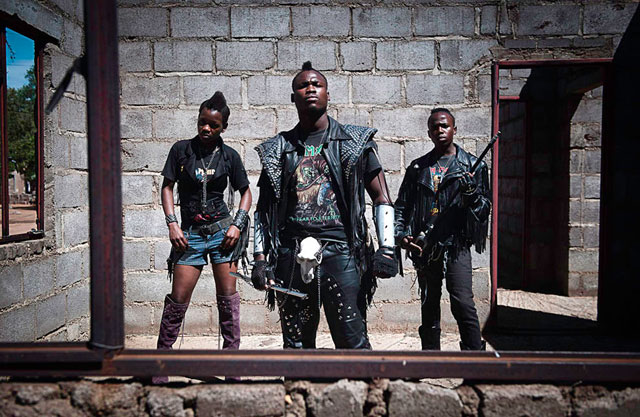
Edith, Hellrider, and Dadmonster pose for a photograph. In Botswana, heavy metal music has landed. Metal groups are now performing in nightclubs, concerts, festivals. The ranks of their fans have expanded dramatically. These fans wear black leather pants and jackets, studded belts, boots and cowboy hats. On their t-shirts stand out skulls, obscenities, historical covers of hard-rock groups popular in the seventies and eighties, such as Iron Maiden, Metallica, and AC/DC. They have created their own style, inspired by classic metal symbolism, but also borrowing heavily from the iconography of western films and the traditional rural world of Botswana. Their nicknames, Gunsmoke, Rockfather, Carrott Warmachine, Hellrider, Hardcore, Dignified Queen, may appear subversive and disturbing as their clothing, but they are peaceful and gentle. “We like to get dressed,, drink meet friends and feel free , this music is so powerful . We are lucky to live in a country tolerant and open” argues one of the leaders. A precious rarity for Africa.
Botswanian heavy metal fans and other great selections from the 2013 Sony World Photography Awards
Conor Friedersdorf’s annual round-up of the best non-fiction journalism is one of the best best-ofs out there…and the 2012 edition is no exception.
There are, of course, worthy pieces of writing and reporting that escaped my attention in 2012, but I can assure you that all of the 102 stories listed below deserve wider attention-as do the authors of these stories. The featured bylines are linked to the authors’ Byliner writer pages, which makes it easy to discover and read more of their excellent work. The stories are listed alphabetically by writer.
Gird your loins, Instapaper…so much good stuff to save here.
Martyn Cornell took issue with First We Feast’s list of the 20 most influential beers of all time and came up with his own list.
I mean, Bear Republic Hop Rod Rye is more influential in the history of beer than Bass Pale Ale or Barclay Perkins porter? Don’t make me weep. Allagash White trumps Hoegaarden and Schneider Weisse? (You may not like Hoegaarden or Schneider Weisse, but I hope you won’t try to deny their influence.) Gueuze, Saison and Kolsch are such important styles they deserve a representative each in a “most influential beers of all time” list, while IPA and porter are left out? I don’t think so. And the same goes for Schneider Aventinus: where are the hordes of Weissebockalikes? Sam Adams Utopias has influenced who, exactly? “Generic lager”? I see where you’re coming from, in that much of what has happened over the past 40 years in the beer world is a reaction against generic lager, but still … And I love London Pride, but it’s not even the third most influential beer that Fuller’s brews.
I like arguments about beer way more than drinking beer.
The NY Times asked a bunch of designers for their favorite book cover designs of 2012. Lots of nice work here.
This is one of my favorite annual lists: Regret the Error’s best (and worst) media errors and corrections. Here, for example, is the correction of the year from the Economist:
Correction: An earlier version of this article claimed that journalists at Bloomberg Businessweek could be disciplined for sipping a spritzer at work. This is not true. Sorry. We must have been drunk on the job.
And this one, from The Atlantic:
This post originally referred to Jennifer Grey as “Ferris Bueller’s sister.” As commenters have pointed out, her role alongside Swayze in Dirty Dancing is clearly the more relevant. We regret putting Baby in a corner.
And from Slate:
In an April 30 “TV Club,” Julia Turner misstated when Sally Draper ate the fish in Mad Men. It was before she saw the blow job.
The Atlantic has a similar list that casts a wider net outside of news media.
Rolling Stone asked a panel of experts (Busta Rhymes, Questlove, Rick Rubin, etc.) to vote on the best hip-songs ever produced. Here’s the list of their top 50 picks. Dre and Snoop’s Nuthin’ But a “G” Thang comes in at #6.
Climbing to Number Two on the singles chart in early 1993, “Nuthin’ But a ‘G’ Thang” made Dr. Dre the undisputed flag bearer of West Coast rap, while also ushering that genre into the pop mainstream. The song’s secret weapon was a relatively unknown pup named Snoop Doggy Dogg, whose verses are packed with effortless quotables. The song also introduced Dre’s masterful “G-Funk” style of production, which updated George Clinton’s legacy with slow, rubbery funk and layered synth hooks. “We made records during the crack era, where everything was hyped up, sped up and zoned out,” Chuck D explained. “Dre came with ’ “G” Thang’ and slowed the whole genre down. He took hip-hop from the crack era to the weed era.”
Listen to the entire list on Spotify. (via @gavinpurcell)
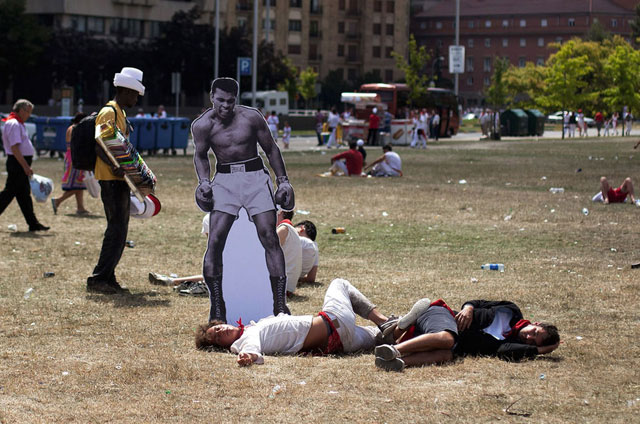
My favorite end-of-the-year lists are always the photos. Here are a few that have made their way online so far; I’ll be updating this list throughout the month so send me your lists.
2012: The Year in Photos from In Focus: Alan Taylor is still my favorite picker of photos. Here’s part two.
Best Photos of the Year 2012 from Reuters: Almost a hundred photos, heavy on hard news.
The 45 Most Powerful Images of 2012 from Buzzfeed: A wide-ranging selection of photos designed to tug at the heartstrings. See also The Best Animal Photos of 2012.
Pictures of the Year 2012 from AFP (Agence France-Presse): Not an official list but a nice selection of AFP photos nonetheless.
2012: The year in pictures from CNN: A good selection from the cable network.
Year in Photos 2012 from the Wall Street Journal: A massive selection of photos organized by month, region, category, and rating.
The best photographs of 2012 from The Guardian: Photographs and interviews with the photographers who took them.
Photos Of The Year 2012 from the Associated Press: Photos are great but the way they’re displayed isn’t.
2012 Year in Pictures from The Big Picture: About 150 images chosen from a number of different sources. Here’s part two and part three.
And so it begins, the end of the year lists. Love ‘em or hate ‘em, you’ve got to, um, … I’ve got nothing here. You either love them or hate them. Anyway, the NY Times’ list of the 100 notable books of the year is predictably solid and Timesish.
BRING UP THE BODIES. By Hilary Mantel. (Macrae/Holt, $28.) Mantel’s sequel to “Wolf Hall” traces the fall of Anne Boleyn, and makes the familiar story fascinating and suspenseful again.
BUILDING STORIES. By Chris Ware. (Pantheon, $50.) A big, sturdy box containing hard-bound volumes, pamphlets and a tabloid houses Ware’s demanding, melancholy and magnificent graphic novel about the inhabitants of a Chicago building.
I absolutely demolished Bring Up the Bodies over Thanksgiving break and loved it. I haven’t had a chance to sit down with Building Stories yet, but that massive and gorgeous collection is a steal at $28 from Amazon. And as far as lists go, another early favorite is Tyler Cowen’s list of his favorite non-fiction books of the year. Cowen is a demanding reader and I always find something worth reading there. (via @DavidGrann)
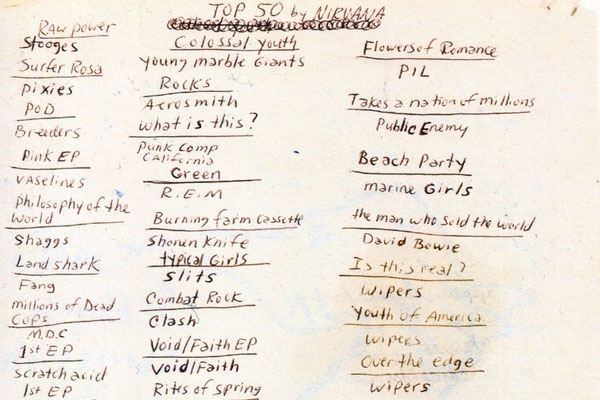
From Kurt Cobain’s journals, a handwritten list of the late Nirvana frontman’s 50 favorite albums, including those from Sonic Youth (duh), Pixies (double duh), and Mazzy Star.
Motor Trend chose the Tesla Model S as its 2013 Car of the Year, the first time their top prize has gone to an electric car.
The 2013 Motor Trend Car of the Year is one of the quickest American four-doors ever built. It drives like a sports car, eager and agile and instantly responsive. But it’s also as smoothly effortless as a Rolls-Royce, can carry almost as much stuff as a Chevy Equinox, and is more efficient than a Toyota Prius. Oh, and it’ll sashay up to the valet at a luxury hotel like a supermodel working a Paris catwalk. By any measure, the Tesla Model S is a truly remarkable automobile, perhaps the most accomplished all-new luxury car since the original Lexus LS 400. That’s why it’s our 2013 Car of the Year.
The magazine went on to say that “the Tesla Model S is simply a damned good car you happen to plug in to refuel”. This is how environmentally friendly products win, by being better than the less green products they replace.
I cannot believe these are some of the passwords people actually use:
1. password
2, 123456
3. 12345678
4. abc123
5. qwerty
6. monkey
7. letmein
8. dragon
9. 111111
10. baseball
11. iloveyou
12. trustno1
I feel more secure than ever with my “password2” password.
From a site called Celebrity Net Worth (I know, blech), a list of the 25 richest people of all time, adjusted for inflation. Gates, Buffett, and Rockefeller all make the list but the big cheese is Malian emperor Mansa Musa I, with a net worth of $400 billion in today’s dollars.
Mansa Musa I of Mali is the richest human being in history with a personal net worth of $400 billion! Mansa Musa lived from 1280 - 1337 and ruled the Malian Empire which covered modern day Ghana, Timbuktu and Mali in West Africa. Mansa Musa’s shocking wealth came from his country’s vast production of more than half the world’s supply of salt and gold.
(via @DavidGrann)
This is a really interesting and eclectic list of 25 TV shows that have had an impact on society beyond the water cooler. There are a few obvious choices, but most of these I hadn’t heard of.
In 2003, 24-year-old machinist Juan Catalan faced the death penalty for allegedly shooting a key witness in a murder case. Catalan told police that he couldn’t have committed the crime — he was at a Los Angeles Dodgers game at the time. He had the ticket stubs and everything!
When police didn’t buy his alibi, Catalan contacted the Dodgers, who pointed him to an unlikely hero: misanthropic comedian Larry David. On the day in question, David had been filming an episode of Curb Your Enthusiasm in Dodger Stadium. It was a long shot, but maybe Catalan could be seen in the background. When his attorney watched the outtakes, it took just 20 minutes to find shots of Catalan and his daughter chowing down on ballpark dogs while watching from the stands.
Thanks to the footage, Catalan walked free after five months behind bars. And Larry David found one more thing to be self-deprecating about. “I tell people that I’ve done one decent thing in my life, albeit inadvertently,” joked David.
(via @fimoculous)
The AV Club has compiled a list of the 50 best films of the 1990s, which decade, when you look at this list, is starting to feel like a bit of a film golden age compared to now. Here’s part one, part two, and part three.
Few talk about the ’90s as a filmmaking renaissance on par with the late ’60s and early ’70s, but for many of the film critics at The A.V. Club, it was the decade when we were coming of age as cinephiles and writers, and we remember it with considerable affection. Those ’70s warhorses like Martin Scorsese and Robert Altman posted some of the strongest work of their careers, and an exciting new generation of filmmakers — Quentin Tarantino, Joel and Ethan Coen, Wong Kar-Wai, Olivier Assayas, David Fincher, and Wes Anderson among them — were staking out territory of their own.
I’ve seen 35 of the 50 films and some of my favorites are Election, Eyes Wide Shut, Fargo, Groundhog Day, Boogie Nights, Being John Malkovich, Rushmore, Reservoir Dogs, Dazed and Confused, and Pulp Fiction. Some films I’m surprised didn’t make the list: Iron Giant, Three Kings, Babe: Pig in the City, and The Insider.
Adweek has a list of some of the best commercials Wes Anderson has made. It’s tough to beat his two-minute spot for American Express.
“Can I get my snack?”
“You’re eating it.”
For Sight & Sound magazine, Roger Ebert came up with his picks for ten best films ever.
“Citizen Kane” speaks for itself. “2001: A Space Odyssey” is likewise a stand-along monument, a great visionary leap, unsurpassed in its vision of man and the universe. It was a statement that came at a time which now looks something like the peak of humanity’s technological optimism. Many would choose “Taxi Driver” as Scorsese’s greatest film, but I believe “Raging Bull” is his best and most personal, a film he says in some ways saved his life. It is the greatest cinematic expression of the torture of jealousy — his “Othello.”
(via df)
Conor Friedersdorf has published his annual list of the best nonfiction writing from the past year.
Each year, I keep a running list of the most exceptional nonfiction that I encounter while publishing my twice-weekly newsletter The Best of Journalism. Along with my curating work for Byliner, this hoovering of great stories affords me the opportunity to read as many impressive narratives as any single person possibly can. The annual result is my Best of Journalism List, now in its fourth year. I could not, of course, read every worthy piece published during the year. But everything that follows deserves wider attention.
A book written by Jerry Beck in 1994 called The 50 Greatest Cartoons: As Selected by 1,000 Animation Professionals does indeed contain a list of the 50 greatest cartoons as chosen by industry professionals. The list is filthy with Warner Bros cartoons, particularly by the recently aforementioned Chuck Jones (four of the top five are by Jones). I don’t know how many are available on YouTube, but I tracked down a couple to show my 4-year-old son, Ollie: Duck Amuck and Rabbit of Seville.
By the time we were finished with Rabbit of Seville, Ollie had literally peed his pants from laughing so hard. I think I’m gonna get the Looney Tunes collection on Blu-ray so we can watch more but I’m a bit afraid of what the hijinks of Wile E. Coyote and The Road Runner might do to my boy’s pants.
Taken by some of the world’s most iconic photographers, a selection of the best photographs ever published in Life magazine from 1936 to 1972. Here’s a photo of Mickey Mantle from 1965:
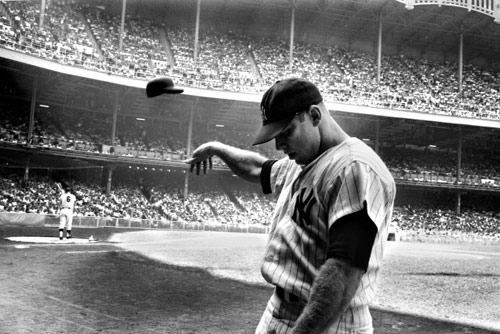
The caption reads:
In one of the most eloquent photographs ever made of a great athlete in decline, Yankee star Mickey Mantle flings his batting helmet away in disgust after another terrible at-bat near the end of his storied, injury-plagued career.
Mantle was only 33 when that photo was taken but he’d already had 13 extremely productive seasons under his belt and his last four seasons from ‘65 to ‘68 were not nearly as good.
Newer posts
Older posts







Socials & More