

The motorbike girl gangs of Morocco
Hassan Hajjaj’s photos of female motorbike enthusiasts from Morocco are fun.
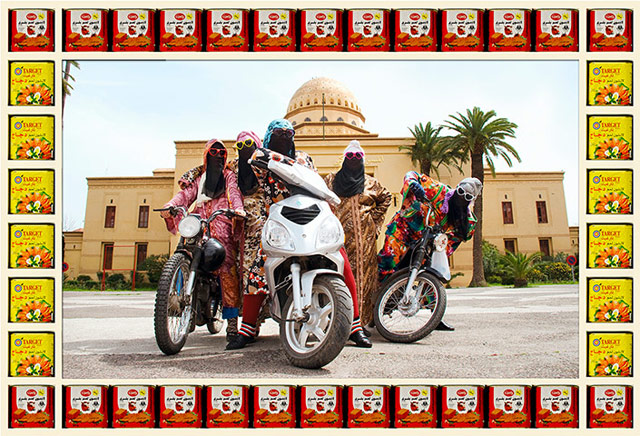
On display at the Taymour Grahne Gallery in NYC through March 7.

This site is made possible by member support. 💞
Big thanks to Arcustech for hosting the site and offering amazing tech support.
When you buy through links on kottke.org, I may earn an affiliate commission. Thanks for supporting the site!
kottke.org. home of fine hypertext products since 1998.
Beloved by 86.47% of the web.
Hassan Hajjaj’s photos of female motorbike enthusiasts from Morocco are fun.
On display at the Taymour Grahne Gallery in NYC through March 7.
Artist Dennis Hlynsky films birds in flight and then uses After Effects to make their flight paths visible, like the contrails of high-flying jets.
That’s only one of several videos…there are more at The Colossal and on Vimeo. Nice example of time merge media. (via colossal)
Rino Stefano Tagliafierro took more than 100 paintings (from the likes of Reubens, Caravaggio, Rembrandt, and Vermeer) and set them in motion to music to form a slow motion oil painted dreamland.
Lots of boobs, butts, penises, and even the occasional hint of sexual gesture in this one — the motion sometimes fills in the blanks on all of those frolicking nymph-type paintings, making them seem to modern eyes even more sexist and outdated than the static paintings. There are some definite porny moments, is what I’m saying. So yeah, probably NSFW.
And for those looking to supplement their GIF collections, this page contains links to an animated GIF for each painting represented in the video. (via digg)
Pencil portraits of young men and women incarcerated on Rikers Island by Ricardo Cortés.

Cortés wrote an essay about the portraits and his experience at Rikers.
The grossest irony is that increasing levels of imprisonment may exacerbate the very problems it is intended to solve. Imagine a drug-dealer, a check forger, a prostitute or a burglar who comes to Rikers. They’re often leaving family behind, possibly as the primary breadwinner, breaking up a critical support network and causing measurable damage to spouses, siblings, parents and especially children. They’re losing a job during their incarceration, thus falling further behind in bills, rent, and ultimately housing. They’re being released after their stay with little treatment or prospects for a new job; their completed sentence may stain their record such that it’s even harder to find employment. And they’re back on the street with the same personal struggles of addiction, domestic abuse, health issues and difficulty in finding sustainable housing and legal employment. It’s not hard to guess what happens next.
(via @jessicalustig)
Cartoonist Mike Holmes occasionally draws himself and his cat in the style of other cartoonists. He calls them Mikenesses. Here’s Holmes in the styles of Chris Ware, Aardman, and Berke Breathed:
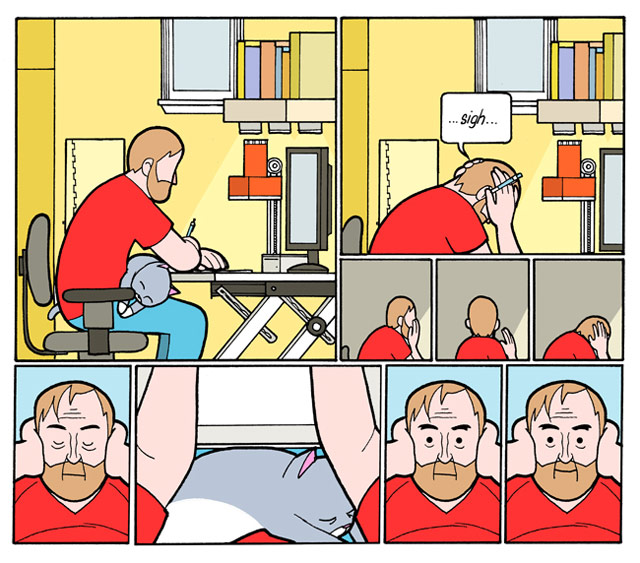


(via @H_FJ)
There’s art on the Moon, a small sculpture called Fallen Astronaut. Artist Paul van Hoeydonck made it. Commander David Scott of Apollo 15 placed it on the Moon in 1971. Instead of a triumph, the whole thing fell into scandal and was forgotten.
In reality, van Hoeydonck’s lunar sculpture, called Fallen Astronaut, inspired not celebration but scandal. Within three years, Waddell’s gallery had gone bankrupt. Scott was hounded by a congressional investigation and left NASA on shaky terms. Van Hoeydonck, accused of profiteering from the public space program, retreated to a modest career in his native Belgium. Now both in their 80s, Scott and van Hoeydonck still see themselves unfairly maligned in blogs and Wikipedia pages-to the extent that Fallen Astronaut is remembered at all.
And yet, the spirit of Fallen Astronaut is more relevant today than ever. Google is promoting a $30 million prize for private adventurers to send robots to the moon in the next few years; companies such as SpaceX and Virgin Galactic are creating a new for-profit infrastructure of human spaceflight; and David Scott is grooming Brown University undergrads to become the next generation of cosmic adventurers.
Governments come and go, public sentiment waxes and wanes, but the dream of reaching to the stars lives on. Fallen Astronaut does, too, hanging eternally 238,000 miles above our heads. Here, for the first time, we tell the full, tangled tale behind one of the smallest yet most extraordinary achievements of the Space Age.
Milos Rajkovic, aka Sholim, creates Terry Gilliam-esque cutout animations of people’s heads.
The animated GIF versions are available on Tumblr.
This Lego Mona Lisa is amazing:
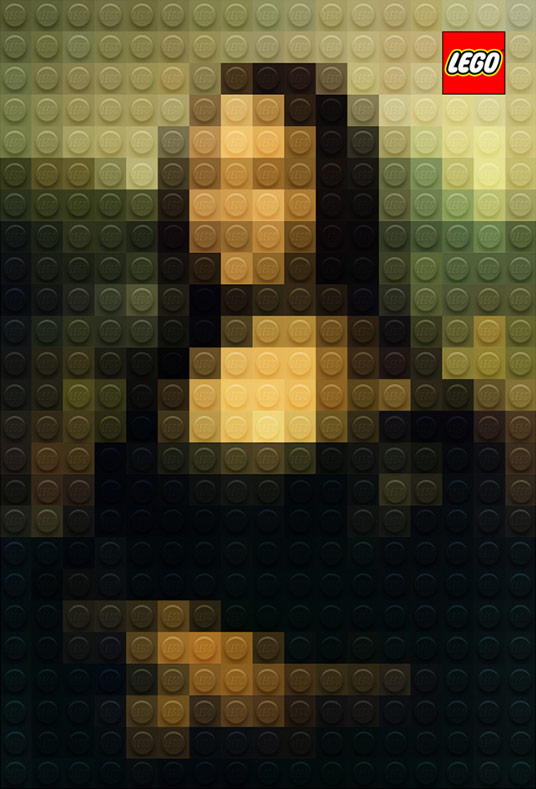
Crazy recognizable even with only ~400 pixels. The Girl With the Pearl Earring is pretty good too. Of course, nothing beats Lego Stephen Hawking. (via mlkshk)

Using an iPad app called Procreate, artist Kyle Lambert made this painting of Morgan Freeman. It took him 200 hours. The video of him doing it is mesmerizing:
(via gizmodo)
I have previously reported on Rutherford Chang and his large collection of first-pressings of The Beatles’ White Album.
Q: Are you a vinyl collector?
A: Yes, I collect White Albums.
Q: Do you collect anything other than that?
A: I own some vinyl and occasionally buy other albums, but nothing in multiples like the White Album.
Chang has taken 100 of those records, recorded the audio, and overlaid the resulting 100 tracks into one glorious track. Here’s Side 1 x 100 (Side 2 is available on vinyl only):
The albums, as it turns out, have also aged with some variety. Some played cleanly, others had scratches, noise from embedded dirt, or vinyl wear. And though the recordings are identical, variations in the pressings, and natural fluctuations in the speed of Mr. Chang’s analogue turntable, meant that the 100 recordings slowly moved out of sync, in the manner of an early Steve Reich piece: the opening of “Back in the U.S.S.R.” is entirely unified, but at the start of “Dear Prudence,” you hear the first line echoing several times, and by “While My Guitar Gently Weeps” the track is a nearly unrecognizeable roar.
Per Betteridge’s law of headlines, the answer to this is “no”, but it’s still an interesting yarn.
Among the many enduring mysteries of this period is the fate of the world’s most famous painting. It seems that Leonardo da Vinci’s Mona Lisa was among the paintings found in the Altaussee salt mine in the Austrian alps, which was converted by the Nazis into their secret stolen-art warehouse.
The painting only “seems” to have been found there because contradictory information has come down through history, and the Mona Lisa is not mentioned in any wartime document, Nazi or allied, as having been in the mine. Whether it may have been at Altaussee was a question only raised when scholars examined the postwar Special Operations Executive report on the activities of Austrian double agents working for the allies to secure the mine. This report states that the team “saved such priceless objects as the Louvre’s Mona Lisa”. A second document, from an Austrian museum near Altaussee dated 12 December 1945, states that “the Mona Lisa from Paris” was among “80 wagons of art and cultural objects from across Europe” taken into the mine.
The Mona Lisa was actually stolen in 1911, in one of the cleverest art heists ever pulled.
Mark Wagner constructs intricate works of collage out of pieces of US $1 bills.
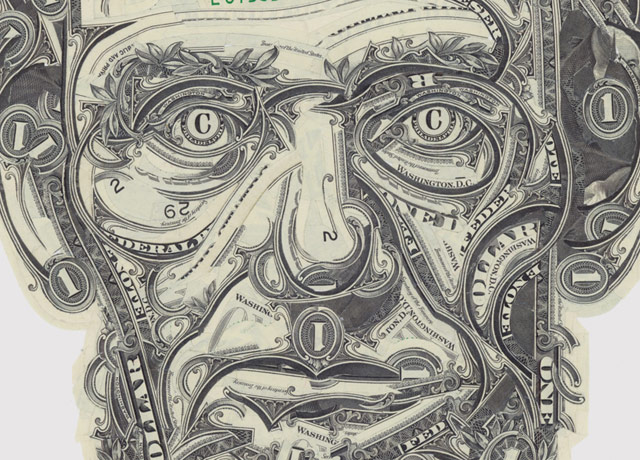

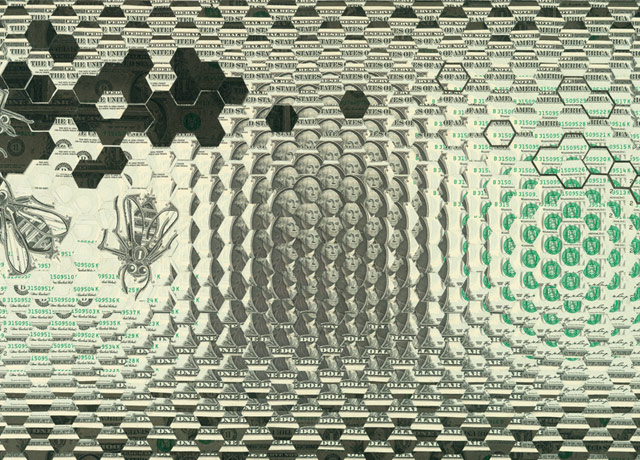
I love that last one. No Photoshop…he cuts and assembles the pieces by hand:
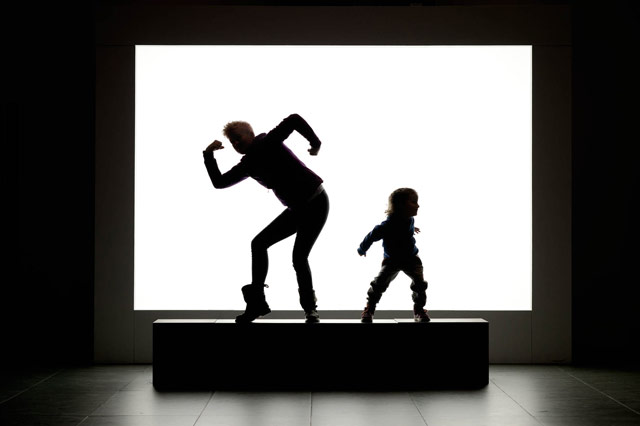
An exhibition from Philip Worthington at MoMA last year turned people’s shadows into monsters. Joe Holmes turned his lens away from the shadows and instead captured the silhouettes of museums goers in their attempts to make shadows.

Roland Deschane took a few paintings by cheeseball artist Thomas Kinkade and incorporated Star Wars characters into them.

(via @Coudal)


Socials & More