kottke.org posts about Wes Anderson
Wes Anderson steps into the mobile Criterion Closet to select some films that he enjoys.
One unsurprising thing about this video: Anderson says he has his own Criterion closet at home with all of the Criterion films. That’s maybe a $40-50K investment? (He probably gets them free from Criterion tho.) I wonder how many films he watches a day? Two? Three? If Soderbergh’s yearly watch/read lists are any indication, it’s probably in that ballpark.
One surprising thing about this video: I was expecting Anderson to go for Kurosawa, Tati, Truffaut, Welles, and some other of his big influences but instead selected family friendly fare suitable for a trip. The man has a wide array of influences. Here’s the full list:
The 39 Steps (Alfred Hitchcock, 1935)
The Red Shoes (Michael Powell and Emeric Pressburger, 1948)
Heaven Can Wait (Ernst Lubitsch, 1943)
Design for Living (Ernst Lubitsch, 1933)
The Lady Eve (Preston Sturges, 1941)
Stagecoach (John Ford, 1939)
Flow (Gints Zilbalodis, 2024)
Tootsie (Sydney Pollack, 1982)
Charulata (Satyajit Ray, 1964)
I love seeing Flow on there. What a great little film.
See also Wes Anderson Talks Up Some of His Favorite Movies in a Parisian Video Store and this delightful video from 20 years ago or so featuring Anderson and Jason Schwartzman picking out music & movies in a Borders:
I’m gonna call it: Every Frame a Painting, my all-time favorite YouTube channel, is back. Tony Zhou and Taylor Ramos stopped producing their fantastic video essays back in 2017 and while they have popped up here and there since then, they’ve mostly stuck to their retirement.
But for the past few months, the duo have been releasing video essays produced in partnership with Criterion: Night of the Living Dead: Limitations into Virtues, The Blade (1995): The Edges of Wuxia, and just yesterday, The Visual Comedy of Isle of Dogs (embedded above).
For the past three decades, Wes Anderson has left a distinctive fingerprint in American comedy, with his penchant for artificial worlds, deadpan performances, literary devices, and snappy narration. But there’s something else. These movies are funny to look at. Over the years, Anderson has experimented more and more with visual comedy. And none of this is more apparent than in Isle of Dogs.
It looks like they’re doing about one video a month. I hope they keep it up…I love their videos.
(Ok, maybe don’t read this bit until you’ve watched the Isle of Dogs video, but did you detect that Zhou’s narration seems to be synced to the mouth movements of the characters in the clips he’s talking over? Such a great little detail of visual comedy…I clapped my hands in glee like a toddler when I noticed.)
For his 2004 film The Life Aquatic with Steve Zissou, Wes Anderson enlisted Brazilian musical artist Seu Jorge to perform several of David Bowie’s songs in Portuguese. Jorge released an album of the songs about a year or so later.
A few weeks ago, to mark the 10th anniversary of Bowie’s death, Jorge released a hour-long set of him performing those songs:
Just an acoustic guitar, a microphone, and the beautiful coastline of São Paulo.


I don’t think anything could be more up my alley, in my wheelhouse, in my lane, my cup of tea, my speed than this upcoming retrospective of Wes Anderson’s work at London’s Design Museum.
The Design Museum has been granted unprecedented access to Wes Anderson’s personal archives, which the filmmaker has built up over three decades. This is the first time most of these objects will be displayed in Britain.
This landmark exhibition will chart the evolution of Wes Anderson’s films from early experiments in the 1990s to recent productions as well as collaborations with key long-standing creative partners. Explore the design stories behind award-winning and iconic films such as ‘The Grand Budapest Hotel’, ‘The Wonderful Story of Henry Sugar’, ‘Fantastic Mr. Fox’ and ‘Isle of Dogs’.
The exhibition starts on Nov 21, 2025 and runs through Jul 26, 2026.
Clocking in at almost an hour, this “definitive interview” with Wes Anderson by Vanity Fair about all 12 of his films is perhaps only for Wes stans or cinephiles, but then again, listening to thoughtful, creative people talking earnestly about their work is almost always worth the time.
Hi, I’m Wes Anderson. I have made, apparently, 12 films and I’m now going to walk us through every one of them in some way.
(via open culture)

The Criterion Collection is releasing a new boxset of Wes Anderson films, The Wes Anderson Archive: Ten Films, Twenty-Five Years.
Wes Anderson’s first ten features represent twenty-five years of irrepressible creativity, an ongoing ode to outsiders and quixotic dreamers, and a world unto themselves, graced with a mischievous wit and a current of existential melancholy that flows through every captivating frame. This momentous twenty-disc collector’s set includes new 4K masters of the films, over twenty-five hours of special features, and ten illustrated books, presented in a deluxe clothbound edition.
The boxset’s trailer is predictably Andersonian:
More details:
New 4K digital masters of Bottle Rocket, Rushmore, The Royal Tenenbaums, The Life Aquatic with Steve Zissou, The Darjeeling Limited, Fantastic Mr. Fox, Moonrise Kingdom, The Grand Budapest Hotel, Isle of Dogs, and The French Dispatch of the Liberty, Kansas Evening Sun, supervised and approved by director Wes Anderson, with 5.1 surround DTS-HD Master Audio soundtracks
This boxset will set you back a cool $400 ($350 on Amazon), but look at all that stuff!
Ok so I’ve watched the trailer for the new Wes Anderson movie, The Phoenician Scheme, a couple of times and I still don’t know what it’s actually about? But from the looks of things, it is more of the same for people who like that sort of thing, which is lucky for me.
Also, Michael Cera might be the most Wes Anderson-coded actor that’s never before been in a Wes Anderson movie.

London’s Design Museum is hosting a big retrospective of Wes Anderson’s work beginning in late 2025.
This exhibition will be the first time museum visitors have the opportunity to delve into the art of his complete filmography, examining his inspirations, homages, and the meticulous craftsmanship that define his work.
Through a curated collection of original props, costumes, and behind-the-scenes insights, including from his personal collection, this exhibition offers an unprecedented look into the world of Wes Anderson, celebrating his enduring influence on contemporary cinema.
Might have to make my way to London for this. (via daniel benneworth–gray)
Rupert Friend, Jason Schwartzman, and Wes Anderson star in an Anderson-directed commercial for Montblanc pens. You know the drill: it’s twee, it’s charming, it’s art-directed to within an inch of its life. Me personally? I love it.
When you think of directors that have influenced Wes Anderson, you typically think of Truffaut, Godard, Scorcese, and Ashby. But as you’ll see in this video of Anderson pulling out some recommended films from this Paris video store, his taste in movies is broad. There’s Drunken Angel (Kurosawa), A Streetcar Named Desire (Kazan), Vagabond (Varda), Birth (Glazer), Bridge of Spies (Spielberg), and Witness (Weir).
Of Spielberg, Anderson says:
If you make movies, if you direct movies, this is somebody who can help you. You looked at his movies for solutions. He usually found a way to do it right. He’s one of my favorites.
(via open culture)
Precise. Symmetric. Stylized. Controlled (often bright) color palette. Slow-motion. Lateral tracking. These are all hallmarks of Wes Anderson’s films. But as this short video from Luís Azevedo shows, there are plenty of imperfect moments in his movies as well. Anderson is a canny filmmaker and it’s the contrast between the controlled worlds he constructs and these more frenetic, off-kilter, imperfect moments that gives them their weight and impact.
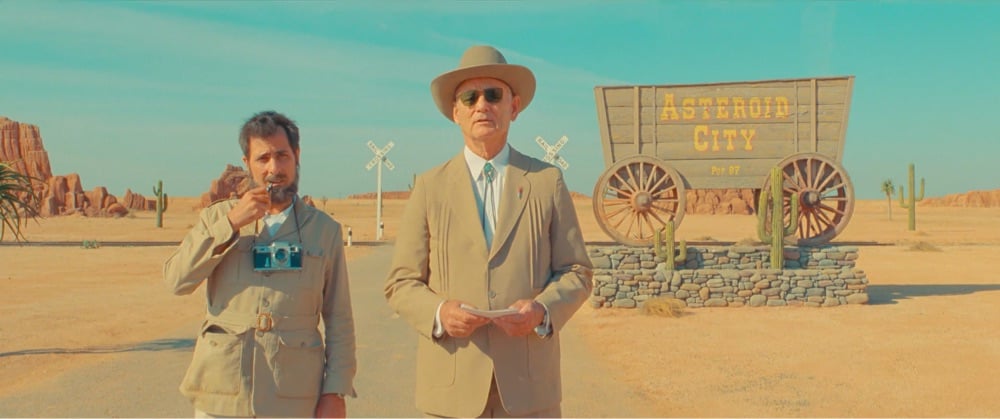
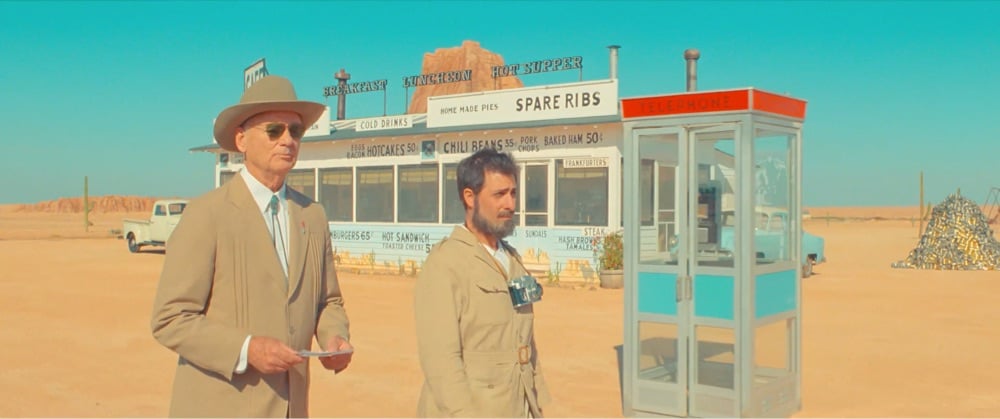
So, ever since I’d heard that Bill Murray had to drop out of filming Asteroid City, I’ve wondered which role he’d meant to play. After seeing the movie, I thought it was either the grandfather (played by Tom Hanks) or the hotel manager (Steve Carell) and it was Carell’s role:
Murray was originally cast as a motel manager in the desert town where the movie is set, in 1955. “Normally, I don’t think it’s such a nice idea to tell everyone the person who didn’t end up in the movie,” Anderson said recently. “But Bill got covid in Ireland, and it was four days before he was supposed to work.” Murray was in Ireland for a family trip (“And usually golf has something to do with it,” Anderson said), en route to Spain, where “Asteroid City” was shooting. With Murray in quarantine, Anderson scrambled to recast the part. “The movie was a jigsaw puzzle of actors’ schedules, so we couldn’t wait,” he recalled. “We were extremely lucky that Steve Carell said yes — and was perfect in the part.”
Murray showed up to the set anyway after he recovered and he and Anderson filmed tongue-so-firmly-in-cheek-I-don’t-even-have-the-right-metaphor-for-it promo for the film that perfectly complements the film’s meta structure.
Then, the day after the movie wrapped, Anderson and Murray concocted an idea: in a metatheatrical curlicue, Murray would play a character who was cut from the film. Anderson corralled Schwartzman, who plays a war photographer (and the actor playing the war photographer), and they shot a short scene in the style of a retro promotional trailer for a Hollywood film, in which a director or a studio executive would give a stilted pitch for an exciting new picture. Think of the Paramount head Robert Evans boosting “Love Story” and “The Godfather,” or Cecil B. DeMille hyping his 1934 production of “Cleopatra.” Anderson recalled, “We made this very peculiar thing that is just a spontaneous creation before the set was going to be struck down. It was the last thing we did. And then we put all our things in the golf cart and drove off into the sunset.”
[I know, this is a lot of Asteroid City stuff — maybe you don’t care about this quite so much? He gets like this about stuff he likes. It’s ok, he’ll grow tired of it in a few days and the site will go back to being about *checks notes* everything else in this whole wide world. -ed]
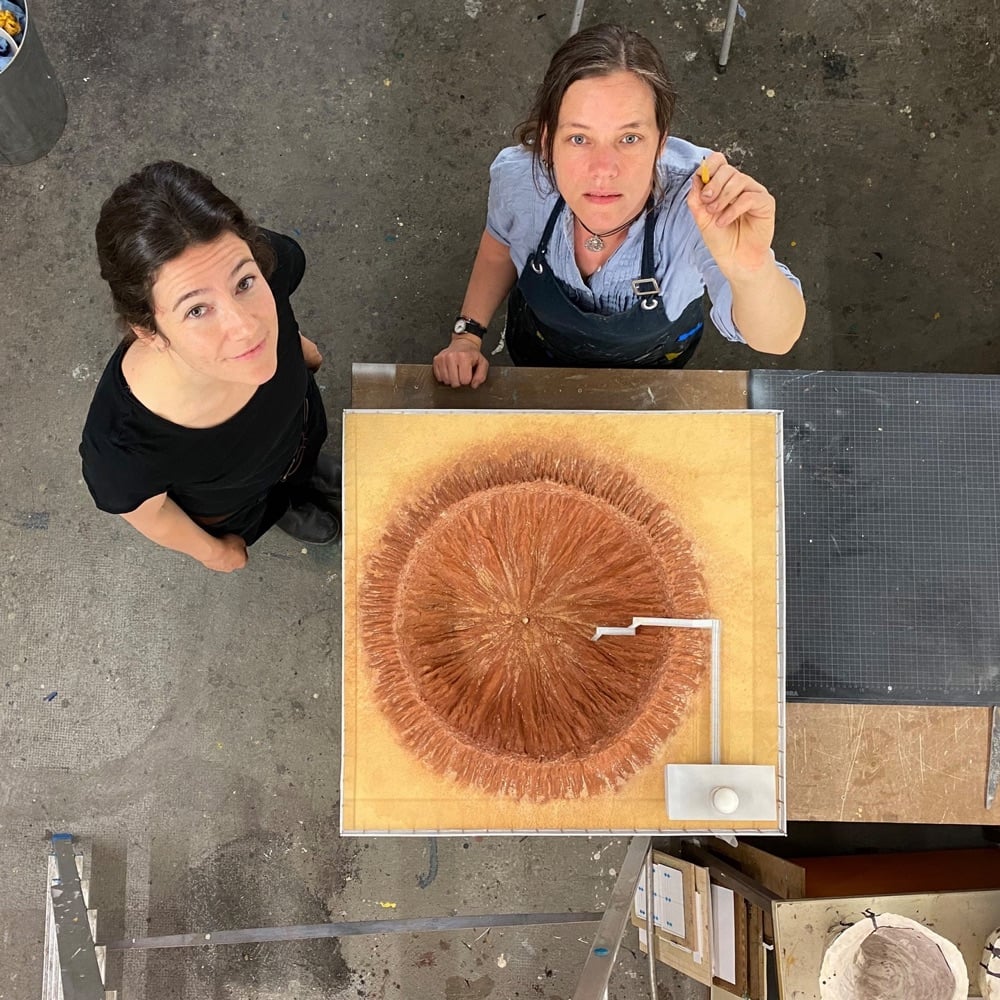
The other day I posted about how contemporary filmmakers, Wes Anderson in particular, use miniatures in their films. The model/prop maker featured, Simon Weisse, has worked with Anderson on several films, including his latest, Asteroid City. Weisse has been posting behind-the-scenes shots of his studio’s work on Asteroid City to his under-followed Instagram account and I thought a separate post highlighting some of those props and miniatures would be fun.

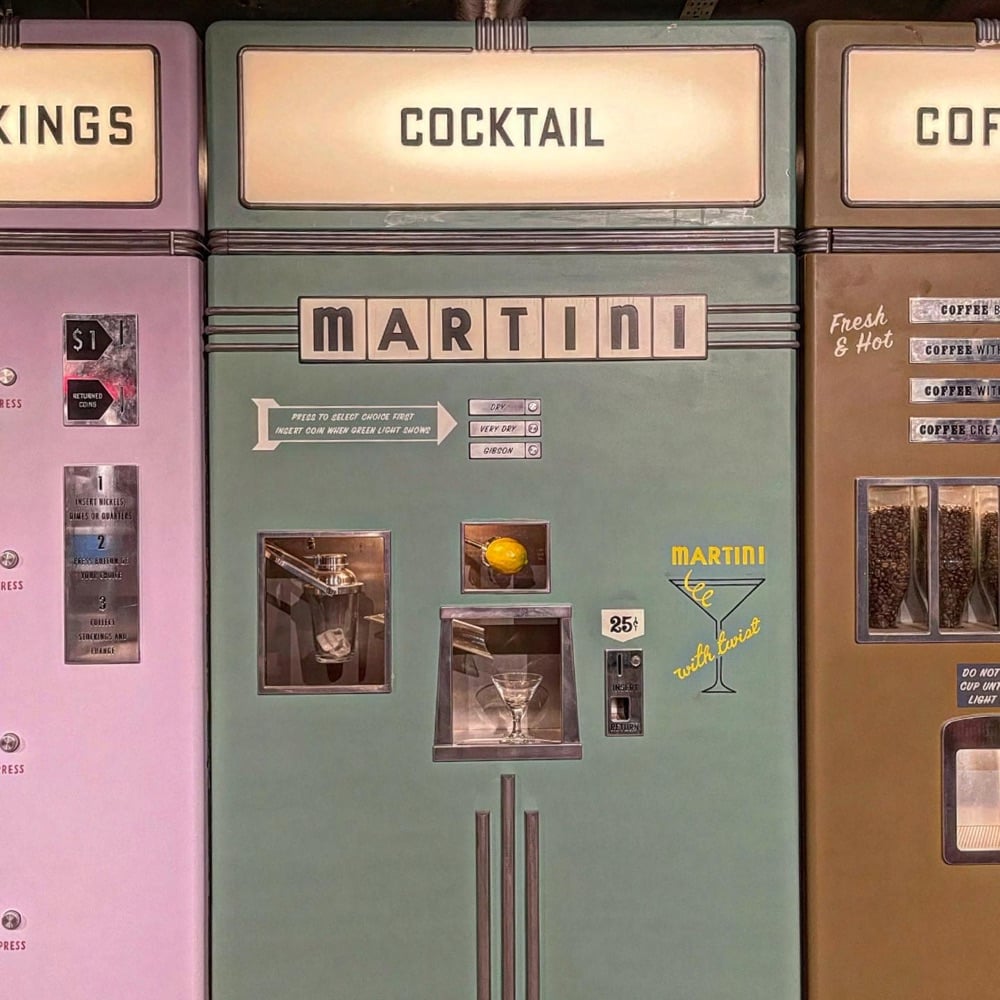
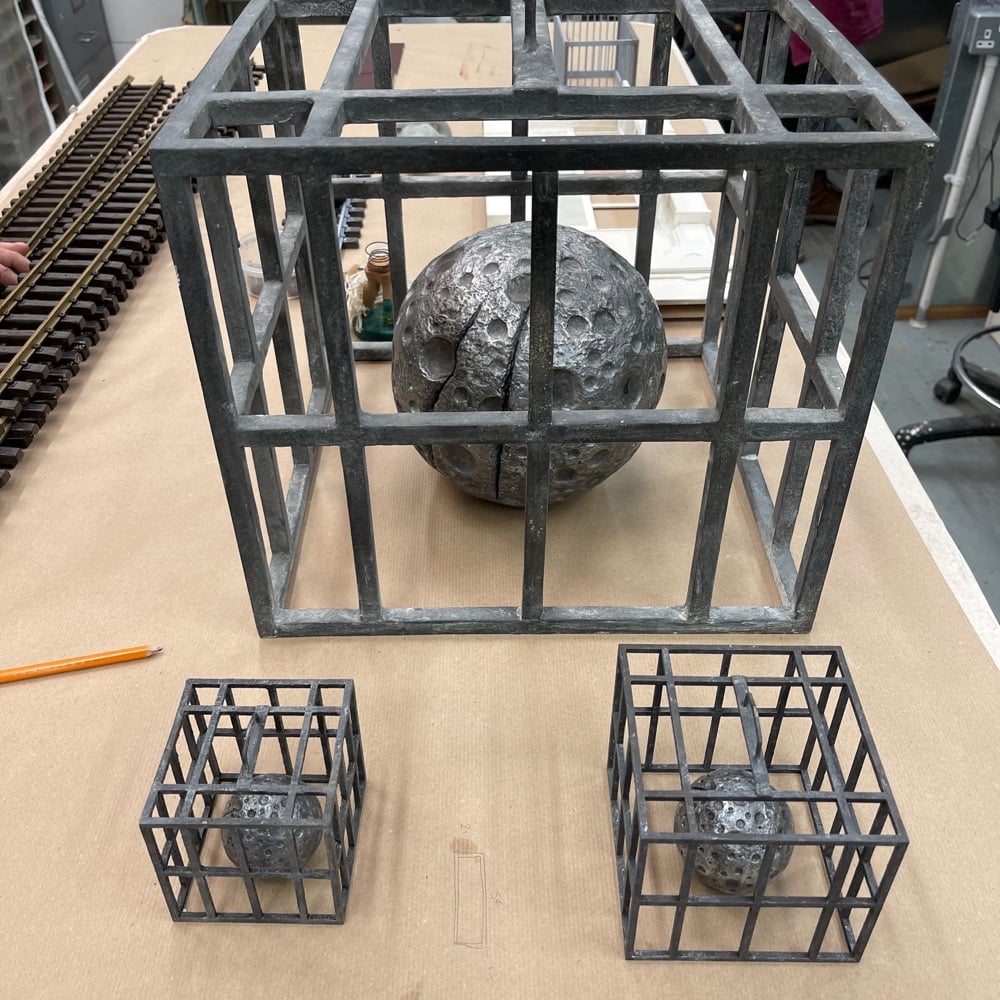

This video shows a bunch more of the miniatures used in the movie:
I also ran across a few behind-the-scenes videos of the production if you’re in the mood to deep-dive (as I appear to be):
If you’re lucky enough to be in London in the next week and a half, you can go and see some of these props and sets and even eat at the diner at 180 Studios. Very. Jealous.
Vox talks to prop & model maker Simon Weisse, who made miniatures for Wes Anderson’s Asteroid City, about the perhaps surprising popularity of miniatures in contemporary filmmaking, when the technique works and when it doesn’t (e.g. when unscalable elements like rain or fire/explosions are involved), and why certain directors use it instead of CGI.
Miniatures in movies are way more common than you may realize, and one of the most stylish filmmakers keeping them alive is Wes Anderson. In this video we spoke to Simon Weisse, prop maker and model marker for some of Wes Anderson’s recent projects, like The Grand Budapest Hotel, The French Dispatch, and Asteroid City.
Older movies, like 1977’s Star Wars: Episode IV — A New Hope, had no choice but to use miniatures to make their worlds feel real. But even in the modern day of CGI, filmmakers are still using minis — just look at projects like The Mandalorian, Blade Runner 2049, Harry Potter, and The Dark Knight series. In those movies, miniatures are used for expansive sets that establish the world of a film, otherworldly vehicles like spaceships, and more.
It’s perfect for Anderson’s storybook aesthetic, of course…it looks great in Asteroid City (which I really enjoyed overall).
I know, I know. Too much Wes Anderson. Too much AI. But there is something in my brain, a chemical imbalance perhaps, and I can’t help but find this reimagining of the Lord of the Rings in Anderson’s signature style funny and charming. Sorry but not sorry.
See also The Galactic Menagerie, Wes Anderson’s Star Wars.
Older posts




Socials & More