



Air Bonsai, a magnetically floating bonsai tree kit

A group from Tokyo is selling floating bonsai tree kits on Kickstarter. The starter kit is $200, which includes an electric base and magnetically floating pot…plant not included. (via colossal)

This site is made possible by member support. 💞
Big thanks to Arcustech for hosting the site and offering amazing tech support.
When you buy through links on kottke.org, I may earn an affiliate commission. Thanks for supporting the site!
kottke.org. home of fine hypertext products since 1998.
Beloved by 86.47% of the web.
A group from Tokyo is selling floating bonsai tree kits on Kickstarter. The starter kit is $200, which includes an electric base and magnetically floating pot…plant not included. (via colossal)
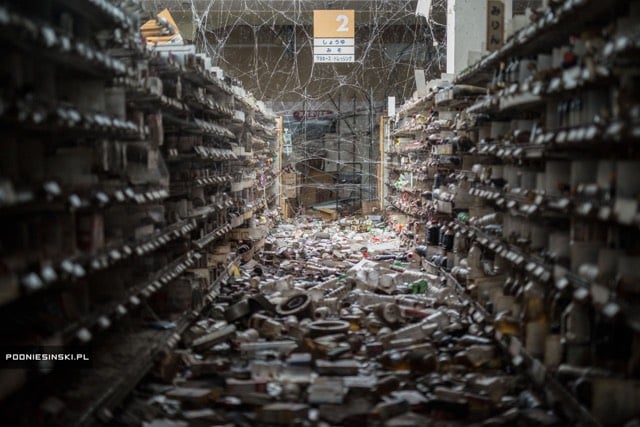
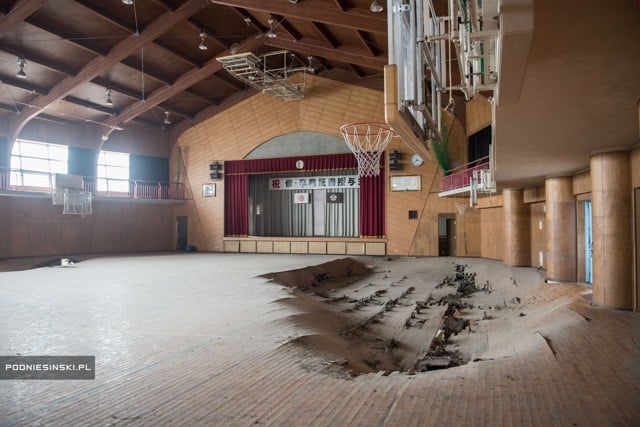
Photographer Arkadiusz Podniesiński recently took a trip to Japan to the area affected by the Fukushima Daiichi nuclear disaster. He toured towns closed due to high radiation levels, talked to former residents, and observed clean-up efforts in some of the less affected areas.
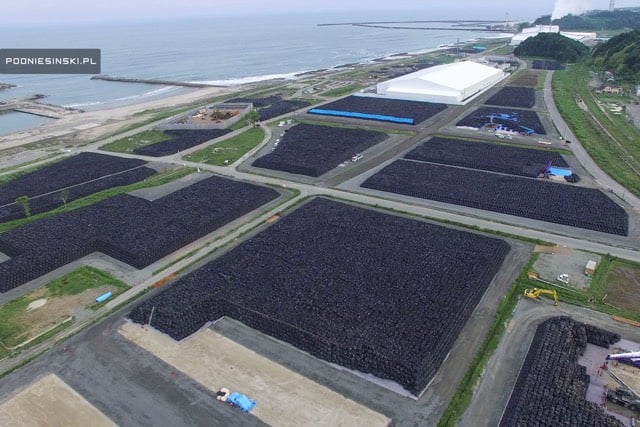
When entering the zone, the first thing that one notices is the huge scale of decontamination work. Twenty thousand workers are painstakingly cleaning every piece of soil. They are removing the top, most contaminated layer of soil and putting it into sacks, to be taken to one of several thousand dump sites. The sacks are everywhere. They are becoming a permanent part of the Fukushima landscape.
The contamination work does not stop at removal of contaminated soil. Towns and villages are being cleaned as well, methodically, street by street and house by house. The walls and roofs of all the buildings are sprayed and scrubbed. The scale of the undertaking and the speed of work have to be admired. One can see that the workers are keen for the cleaning of the houses to be completed and the residents to return as soon as possible.
(thx, james)
Details has a long, strange profile of Shimiken, the “king of Japanese porn.”
On a sunny Saturday morning in eastern Tokyo, a silver Audi pulls into a parking lot and sparks pandemonium. Out of the driver’s seat bounces a small, stocky man with bulging biceps, spiky orange hair, and a broad smile spread across his effulgent, spray-tanned face. He bounds onto the pavement wearing a hoodie and a T-shirt that reads SEX INSTRUCTOR. To his left, the mostly male crowd leans forward, en masse. “Shimiken!” several shout, and a clatter of smartphone shutter sounds follows like a round of applause.
“Let’s go,” Shimiken whispers to a handler attempting to clear a path through the throng. He raises one arm over his head to air-high-five his riveted fans. It’s the morning of the Japan Adult Expo, and the crowd has been waiting for tickets. Inside, they’ll get to meet the stars of their wildest fantasies. Outside, they’ve already caught a glimpse of something rarer: the man who has actually lived them all.
Apparently, Shimiken, who is 35, is “beset by XXX exhaustion” because, he says, “the number of male porn stars in Japan is less than that of Bengal tigers.”
Red Bull is sponsoring a six-part series on the history of Japanese video game music. The first installment covers the music of Space Invaders through the Game Boy. Highlight: composer Junko Ozawa showing off her hand-drawn waveform library she used in composing scores for Namco. Bonus: Space Invader-only arcades in Japan were called “Invader houses” while arcades in New Zealand were known as “spacies parlours”.
Update: Beep is a feature-length documentary film that will attempt to cover the history of video game sounds from Victorian mechanical arcades on up to the present day games. They are currently raising funds on Kickstarter.
The New Yorker and First We Feast each has an account of a talk given by NYU professor George Solt, who presented some of his research on the history of ramen.
World War II all but destroyed ramen’s first wave of popularity. Thanks to food shortages and famine, the government placed tight regulations on food supplies, and earning a profit via restaurants or pushcarts was strictly prohibited until 1949. Some wheat flour made it onto the black market, though, and many of the country’s unemployed turned to hawking ramen. Which means, Solt points out, that selling future all-nighter fuel could and did land people in jail.
Holt is the author of The Untold History of Ramen: How Political Crisis in Japan Spawned a Global Food Craze.
Kintsukuroi is the Japanese art of repairing broken pottery using resin mixed with precious metals like gold. The result is often something more beautiful than the original:

There are dozens of examples of kintsukuroi on Pinterest. And as with many Japanese concepts for which there are no corresponding English words, kintsukuroi has many philosophical and metaphorical implications. (via ★interesting)
Update: Here’s a short video that shows the technique and other related techniques:
(via the kid should see this)
Update: When I originally posted this, I forgot to transfer the photo of a bowl repaired through kintsukuroi to my server, resulting in the browser displaying a broken image icon. Rather than just fix it by uploading the photo, I used digital kintsukuroi to fill in the crack in the icon. Not sure the technique works as well as it does with pottery, but it seemed fitting. Here’s the photo I meant to post:

American favorites (blue jeans, whiskey, burgers) have been embraced by the Japanese, who have been turning out improved versions of the originals.
In Japan, the ability to perfectly imitate-and even improve upon-the cocktails, cuisine and couture of foreign cultures isn’t limited to American products; there are spectacular French chefs and masterful Neapolitan pizzaioli who are actually Japanese. There’s something about the perspective of the Japanese that allows them to home in on the essential elements of foreign cultures and then perfectly recreate them at home. “What we see in Japan, in a wide range of pursuits, is a focus on mastery,” says Sarah Kovner, who teaches Japanese history at the University of Florida. “It’s true in traditional arts, it’s true of young people who dress up in Harajuku, it’s true of restaurateurs all over Japan.”
It’s easy to dismiss Japanese re-creations of foreign cultures as faddish and derivative-just other versions of the way that, for example, the new American hipster ideal of Brooklyn is clumsily copied everywhere from Paris to Bangkok. But the best examples of Japanese Americana don’t just replicate our culture. They strike out, on their own, into levels of appreciation and refinement rarely found in America. They give us an opportunity to consider our culture as refracted through a foreign and clarifying prism.
Another example, not mentioned in the piece, is coffee. From the WSJ a couple of years ago:
“My boss won’t let me make espressos,” says the barista. “I need a year more, maybe two, before he’s ready to let customers drink my shots undiluted by milk. And I’ll need another whole year of practice after that if I want to be able to froth milk for cappuccinos.”
Only after 18 years as a barista in New York did his boss, the cafe’s owner, feel qualified to return home to show off his coffee-making skills. Now, at Bear Pond’s main branch, he stops making espressos at an early hour each day, claiming that the spike on the power grid after that time precludes drawing the voltage required for optimal pressure.
A master chef from a Hokkaido sushi restaurant shows how to make dashimaki tamago, a Japanese rolled omelette.
Watching people who are good at what they do never gets old. (via swiss miss)
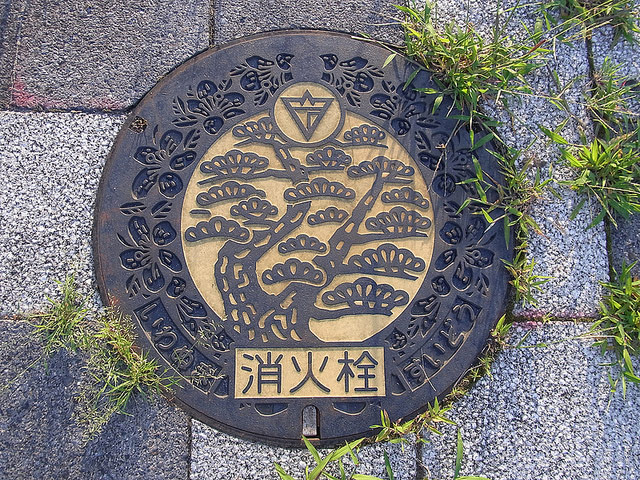
This group on Flickr shows just how fantastically designed Japanese manhole covers are. Here are some of my favorites:
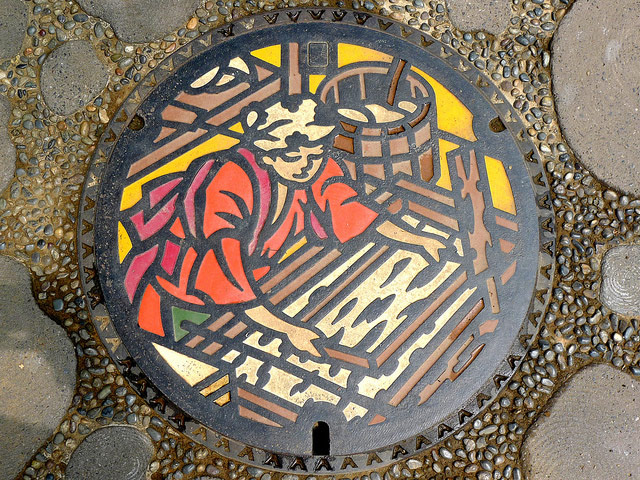
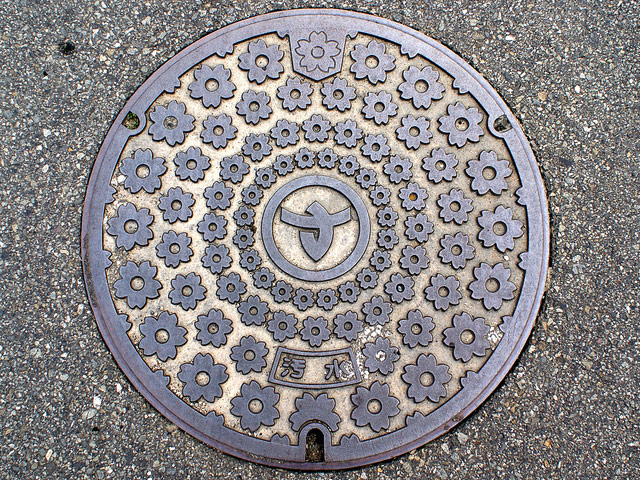
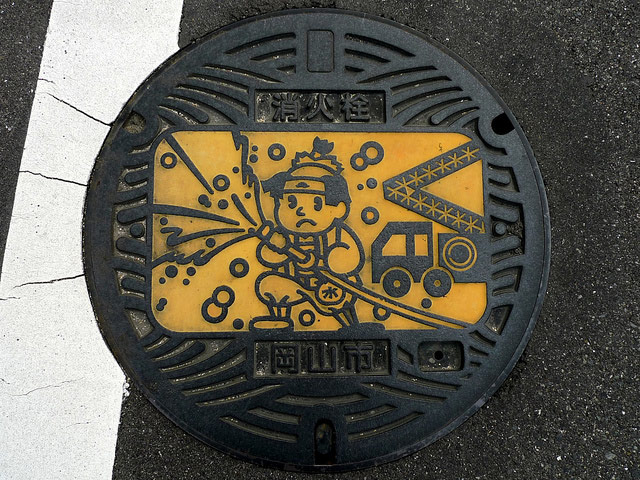
A popular option for moving companies to offer in Japan is, not only to transport your belongings, but to pack them and unpack them for you.
I’d move to Japan just so I’d never have to pack up my own apartment again… except I’d have to pack up my apartment to get there. (via @ohheygreat)
What a day! First we were delighted by a madcap U-turn video that is probably fake, we learned there’s such a thing as windless kite flying, and now we’re learning that competitive wood planing is a thing. In Japan, the best wood planers gather each year to see who can shave the thinnest shaving off of a piece of wood. My literal jaw literally dropped when I saw how thin the shavings are:
9 microns! A micron is one-millionth of a meter or one-thousandth of a millimeter. For reference, the diameter of a red blood cell is 8-9 microns, a cloud water droplet is about 10 microns across, and an average human hair is about 100 microns across. How do you get such a thin shaving? A really sharp blade. Like maybe a knife sharped with .025 Micron Polycrystalline Diamond Spray? (via @Colossal)
Max Fisher on firearm ownership in Japan.
But what about the country at the other end of the spectrum? What is the role of guns in Japan, the developed world’s least firearm-filled nation and perhaps its strictest controller? In 2008, the U.S. had over 12 thousand firearm-related homicides. All of Japan experienced only 11, fewer than were killed at the Aurora shooting alone. And that was a big year: 2006 saw an astounding two, and when that number jumped to 22 in 2007, it became a national scandal. By comparison, also in 2008, 587 Americans were killed just by guns that had discharged accidentally.
Almost no one in Japan owns a gun. Most kinds are illegal, with onerous restrictions on buying and maintaining the few that are allowed. Even the country’s infamous, mafia-like Yakuza tend to forgo guns; the few exceptions tend to become big national news stories.
Bluefin tuna are being caught faster than they can reproduce, which is terrible news for bluefin tuna and people who like to eat them (but seriously for the tuna). These fish are awesome, and I didn’t know farming tuna was possible, but it is, with a few caveats. Bluefin in captivity don’t procreate unless they’re shot with a hormone-tipped spear gun (really). Also, the fish the bluefin are fed still have to come from somewhere, so calling farm raised fish sustainable is something of a misnomer. More sustainable though. I loved this video from Perennial Plate looking at a Japanese tuna farmer. The farmer seems so happy (but does not consider himself a conservationist).
You also ought to spend some time looking at the Perennial Plate back catalog of videos. Lots of gems in there. (via The Atlantic)
Sukiyabashi Jiro is a 3-star Michelin restaurant in Tokyo that many say serves the best sushi in the world. The chef/owner, 86-year-old Jiro Ono, was the subject of last year’s excellent Jiro Dreams of Sushi documentary film.
Adam Goldberg of A Life Worth Eating ate at Sukiyabashi Jiro yesterday. The meal was 21 courses, about US$380 per person (according the web site, excluding drinks), and lasted only 19 minutes. That’s more than a course a minute and, Goldberg estimates, around $20 per person per minute. And apparently totally worth it.

Goldberg has photos of each course up on Flickr and his site has a write-up of his 2009 meal.
Three slices of tuna came next, akami, chu-toro, and oo-toro increasing from lean, to medium fatty, to extremely fatty cuts. The akami (lean toro) was the most tender slice of tuna I’ve ever tasted that did not contain noticeable marbelization. The tuna was marinated in soy sauce for several minutes before service, perhaps contributing to this unique texture. The medium fatty tuna had an interesting mix of crunch and fat, while the fatty tuna just completely melted in my mouth. My friend with whom I shared this meal began to tear (I kid you not).
Lest you think Goldberg’s meal was an anomaly, this is a typical meal at Sukiyabashi Jiro. Dave Arnold wrote about his experience earlier this year:
The sushi courses came out at a rate of one per minute. 19 courses in 19 minutes. No ordering, no real talking — just making sushi and eating sushi. After the sushi is done you are motioned to leave the sushi bar and sit at a booth where you are served your melon. We took that melon at a leisurely 10 minute pace, leaving us with a bill of over $300 per person for just under 30 minutes time. Nastassia and Mark thought the pace was absurd and unpleasant. They felt obliged to keep up with Jiro’s pace. I didn’t feel obliged, but kept up anyway. I didn’t mind the speed. I could have easily eaten even faster, but I’m an inhuman eating machine — or so I’m told. At the end of the meal, Jiro went outside the restaurant and stood guard at the entrance, waiting to bid us formal adieu. This made Nastassia even more nervous about rushing to get out. Not me. At over 10 dollars a minute I have no problem letting an 86 year old man stand and wait for me to finish my melon if he wants to.
(via ★kathryn)
For his Yakuza project, photographer Anton Kusters spent two years documenting some members of the Japanese mafia.
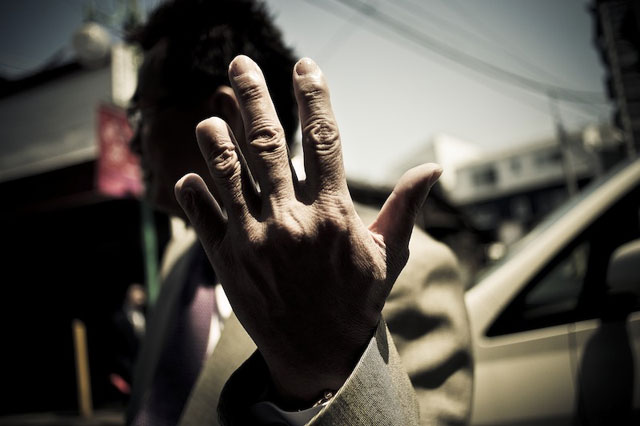
A limited edition of a book containing the photos is available. Steward Mag recently did an interview with Kusters:
The values were almost comparable to general Japanese workplace values, actually. Most yakuza gangs actually have neighborhood offices, and the plaques they have on the door state core values like “respect your superiors,” “keep the office clean,” and so on.
One thing I noticed early on with gang life was how subtle everything was. Everything was unspoken, and will was expressed through group pressure. A pressure was constantly there. There was this innate understanding of form — if someone did something wrong, no one would say anything; he would simply be expected to apologize. And the fact everyone would be so silent about it made the pressure really intense.
(thx, david)
Socials & More