kottke.org posts about Barack Obama
Immediately after Tim Walz was announced as Kamala Harris’s VP pick, the memes started. Most zeroed in on Walz’s potent Midwestern dad energy; he’s the kind of guy who would help a neighbor fix a car, pick you up from the airport, or bring you some soup when you’re sick. For his supporters, Walz is bringing the same kind of energy and hope to the presidential race as Obama did in 2008 and Bernie Sanders did in 2016.
And so of course someone made Tim Walz Fixed Your Bicycle; it’s a collection of things Walz would do for you because he’s just that kinda guy.

Each time you refresh the page, you get a new saying; some of the other ones:
Tim Walz remembers where you parked your car.
Tim Walz has room for a little slice of pie.
Tim Walz is glad to give you a hand with your stroller down those stairs.
Tim Walz will teach you how to parallel park.
The name of the site is a reference to Barack Obama Is Your New Bicycle, a single-serving site1 built by Mat Honan in the run-up to the 2008 election that played on Obama’s likability and down-to-Earthness.

Honan even turned the site into a book. A few months later, folks on Twitter started sharing all the wonderful things that would happen when Obama won the Democratic nomination and I collected a bunch of those tweets into this site.

Thus concludes this short episode of Know Your Meme. ✌️

It’s always fun to see what the former President is planning on reading over the summer. Here’s his full list:
I’ve read The Wager (so good!) and have been wanting to dig into Matthew Desmond’s book but most of the rest of these are new to me.
Right now, I’m reading Hugh Howey’s Wool (after inhaling the first season of Silo) and American Prometheus (after seeing Oppenheimer last night) — I’m sensing a pattern here…
I read both of the excerpts from A Promised Land, Barack Obama’s memoir of his time in the White House: I’m Not Yet Ready to Abandon the Possibility of America from The Atlantic and A President Looks Back on His Toughest Fight in the New Yorker. I have also been listening to the audiobook version, read by Obama himself, over the last few days and if you’re at all interested in this book, I would suggest going with the audiobook. Here’s an excerpt of Obama reading the preface (and several more of other parts of the book):
Not that there’s anything wrong with the written version, but the audiobook conveys more context and information. Much of the time, Obama writes like he talks, so listening to him read his own writing is like sitting across the dinner table from him as he tells you about how he became President. You can hear which parts of the book he really cares about and which parts are in there just to bridge gaps. He does impressions — of Desmond Tutu and his Kenyan relatives — and inflects words in other languages in the manner of Alex Trebek. He jokes around and gets serious. You can hear how frustrated he was, and continues to be, with Republican obstructionism. I’m only a few chapters in so far, but it will be interesting to hear his voice when he talks about the aspects of his Presidency that people believe didn’t live up to his lofty goals and visions. You really get the sense when listening to him that, unlike many politicians, he actually cares about helping people — or if you’re cynical, that he’s best-in-class at faking it; either way it’s fascinating to hear and make up your own mind.
You can listen to Obama read A Promised Land at Amazon or Libro.fm.
Barack Obama’s A Promised Land comes out today and The Root’s Michael Harriot has a brief interview with Obama. The rest of the interview is meatier, but I like Harriott’s last question:
Q: You are a former president and you are unquestionably the predominant role model for a generation of Black people, both of which come with a certain amount of public scrutiny. But for one day, you get to be an anonymous, everyday American who can go anywhere you want and do anything. Describe that day.
A: You know, honestly, I’d just take a walk. Go to the grocery store. Go out to dinner with Michelle. Maybe get some ice cream. Around my second or third year in office, I’d have this recurring dream, maybe once every six months, where I’m walking down the street and head into a coffee shop or a bar or something and nobody recognizes me. It was great!
You can read the rest of his answer, including his thoughts on “the tyranny of selfie”. I watched the Pete Souza documentary The Way I See It the other day1 and the wildest scenes were the ones showing a young Obama on the Senate campaign trail just walking around with no one noticing or bothering him. He must miss those days for sure. But I bet it’s also fun to be able to get literally anyone you want on the phone in 30 seconds.
P.S. I haven’t read it myself yet, but I’ve heard from many folks that Jeffrey Goldberg’s lengthy conversation with Obama is worth checking out.
P.P.S. In their excellent 5-part series on Princess Diana, You’re Wrong About’s Michael Hobbes shared his theory that “fame is abuse” and I’ve been thinking about that in relation to every celebrity story I’ve read since.
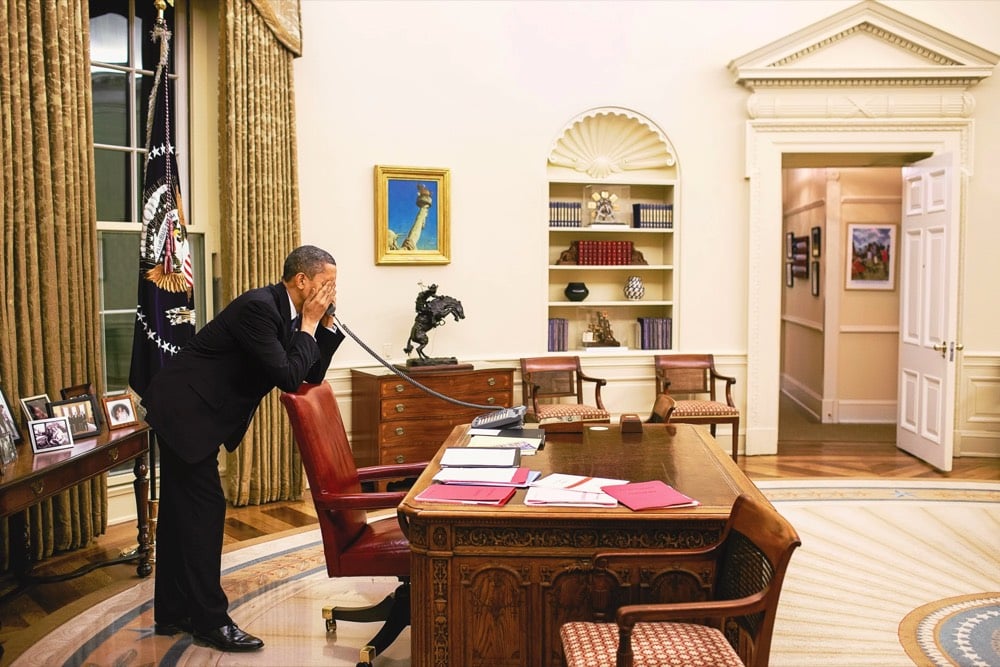
Barack Obama’s forthcoming memoir, A Promised Land, is coming out next month. The New Yorker is running an excerpt of the book, an account of his administration’s struggle to get the Affordable Care Act through Congress.
As time went on, though, it became hard to ignore some of the more troubling impulses driving the movement. As had been true at Palin rallies, reporters at Tea Party events caught attendees comparing me to animals or Hitler. Signs turned up showing me dressed like an African witch doctor with a bone through my nose. Conspiracy theories abounded: that my health-care bill would set up “death panels” to evaluate whether people deserved treatment, clearing the way for “government-encouraged euthanasia,” or that it would benefit illegal immigrants, in the service of my larger goal of flooding the country with welfare-dependent, reliably Democratic voters. The Tea Party also resurrected an old rumor from the campaign: that I was not only Muslim but had actually been born in Kenya, and was therefore constitutionally barred from serving as President. By September, the question of how much nativism and racism explained the Tea Party’s rise had become a major topic of debate on the cable shows-especially after the former President and lifelong Southerner Jimmy Carter offered up the opinion that the extreme vitriol directed toward me was at least in part spawned by racist views.
At the White House, we made a point of not commenting on any of this — and not just because Axe had reams of data telling us that white voters, including many who supported me, reacted poorly to lectures about race. As a matter of principle, I didn’t believe a President should ever publicly whine about criticism from voters — it’s what you signed up for in taking the job — and I was quick to remind both reporters and friends that my white predecessors had all endured their share of vicious personal attacks and obstructionism.
More practically, I saw no way to sort out people’s motives, especially given that racial attitudes were woven into every aspect of our nation’s history. Did that Tea Party member support “states’ rights” because he genuinely thought it was the best way to promote liberty, or because he continued to resent how federal intervention had led to desegregation and rising Black political power in the South? Did that conservative activist oppose any expansion of the social-welfare state because she believed it sapped individual initiative or because she was convinced that it would benefit only brown people who had just crossed the border? Whatever my instincts might tell me, whatever truths the history books might suggest, I knew I wasn’t going to win over any voters by labelling my opponents racist.
The harbingers of Trumpism throughout this piece are difficult to ignore.

A Promised Land is a forthcoming memoir from Barack Obama that he says is “an honest accounting of my presidency, the forces we grapple with as a nation, and how we can heal our divisions and make democracy work for everybody”. Here’s the official description of the book:
In the stirring, highly anticipated first volume of his presidential memoirs, Barack Obama tells the story of his improbable odyssey from young man searching for his identity to leader of the free world, describing in strikingly personal detail both his political education and the landmark moments of the first term of his historic presidency — a time of dramatic transformation and turmoil.
Obama takes readers on a compelling journey from his earliest political aspirations to the pivotal Iowa caucus victory that demonstrated the power of grassroots activism to the watershed night of November 4, 2008, when he was elected 44th president of the United States, becoming the first African American to hold the nation’s highest office.
Reflecting on the presidency, he offers a unique and thoughtful exploration of both the awesome reach and the limits of presidential power, as well as singular insights into the dynamics of U.S. partisan politics and international diplomacy.
A Promised Land will be released November 17 but you can preorder it on Bookshop or for the Kindle.
Update: The Atlantic is running the adapted and updated preface to Obama’s book.
First and foremost, I hoped to give an honest rendering of my time in office — not just a historical record of key events that happened on my watch and important figures with whom I interacted but also an account of some of the political, economic, and cultural crosscurrents that helped determine the challenges my administration faced and the choices my team and I made in response. Where possible, I wanted to offer readers a sense of what it’s like to be the president of the United States; I wanted to pull the curtain back a bit and remind people that, for all its power and pomp, the presidency is still just a job and our federal government is a human enterprise like any other, and the men and women who work in the White House experience the same daily mix of satisfaction, disappointment, office friction, screwups, and small triumphs as the rest of their fellow citizens. Finally, I wanted to tell a more personal story that might inspire young people considering a life of public service: how my career in politics really started with a search for a place to fit in, a way to explain the different strands of my mixed-up heritage, and how it was only by hitching my wagon to something larger than myself that I was ultimately able to locate a community and purpose for my life.
You can even listen to Obama read the excerpt in an embedded audio player.
At John Lewis’s funeral yesterday, Barack Obama delivered a eulogy for his friend and mentor, praising him for his achievements in the struggle for civil rights. He also took the opportunity to suggest what politicians might do to honor Lewis and to continue his struggle, beyond just words. From the text of his speech:
If politicians want to honor John, and I’m so grateful for the legacy of work of all the Congressional leaders who are here, but there’s a better way than a statement calling him a hero. You want to honor John? Let’s honor him by revitalizing the law that he was willing to die for. And by the way, naming it the John Lewis Voting Rights Act, that is a fine tribute. But John wouldn’t want us to stop there, trying to get back to where we already were. Once we pass the John Lewis Voting Rights Act, we should keep marching to make it even better.
By making sure every American is automatically registered to vote, including former inmates who’ve earned their second chance.
By adding polling places, and expanding early voting, and making Election Day a national holiday, so if you are someone who is working in a factory, or you are a single mom who has got to go to her job and doesn’t get time off, you can still cast your ballot.
By guaranteeing that every American citizen has equal representation in our government, including the American citizens who live in Washington, D.C. and in Puerto Rico. They are Americans.
By ending some of the partisan gerrymandering — so that all voters have the power to choose their politicians, not the other way around.
And if all this takes eliminating the filibuster — another Jim Crow relic — in order to secure the God-given rights of every American, then that’s what we should do.
Nick Baumann on the militarization of the American police:
“You create this world where you’re not just militarizing the police — you equip the police like soldiers, you train the police like soldiers. Why are you surprised when they act like soldiers?” Rizer, a former police officer and soldier, said. “The mission of the police is to protect and serve. But the premise of the soldier is to engage the enemy in close combat and destroy them. When you blur those lines together with statements like that … It’s an absolute breakdown of civil society.”
American police officers generally believe that carrying military equipment and wearing military gear makes them feel like they can do more, and that it makes them scarier, Rizer’s research has found. Officers even acknowledge that acting and dressing like soldiers could change how the public feels about them. But “they don’t care,” he said.
In 2015, after the militarized police response to the protests in Ferguson, Mo., President Obama restricted the sales of military equipment by the Pentagon to police departments.
Mr. Obama ordered a review of the Pentagon program in late 2014 after the police responded to protests with armored vehicles, snipers and riot gear. The images of police officers with military gear squaring off against protesters around the country angered community activists who said law enforcement agencies were reacting disproportionately.
In addition to the prohibitions on certain military surplus gear, he added restrictions on transferring some weapons and devices, including explosives, battering rams, riot helmets and shields.
The Pentagon said 126 tracked armored vehicles, 138 grenade launchers and 1,623 bayonets had been returned since Mr. Obama prohibited their transfer.
In 2017, Donald Trump fully restored the practice of transferring military goods to police, grenade launchers and all.
Update: Would just like to note that the 1033 Program was signed into law by Bill Clinton, has historically enjoyed bipartisan support, and was greatly expanded under Obama.
A recent study show that, under the Pentagon’s 1033 program, enacted in 1997, the value of military weapons, gear and equipment transferred to local cops did not exceed $34 million annually until 2010, the second year of the Obama administration, when it nearly tripled to more than $91 million. By 2014, the year that Michael Brown was shot down — and when the full Congress, including 32 members of the Congressional Black Caucus, rejected a bill that would have shut down the 1033 program — Obama was sending three quarters of a billion dollars, more than $787 million a year, in battlefield weaponry to local police departments. In other words, President Obama oversaw a 24-fold (2,400%) increase in the militarization of local police between 2008 and 2014. Even with the scale-back announced in 2015, Obama still managed to transfer a $459 million arsenal to the cops — 14 times as much weapons of terror and death than President Bush gifted to the local police at his high point year of 2008.
(thx, chuck)
As he does every year, President Obama has shared his favorite books of the year for 2019. His picks include Sally Rooney’s Normal People, Jenny Odell’s How to Do Nothing, Jia Tolentino’s Trick Mirror, and The Topeka School by Ben Lerner. I wonder what he reads that he doesn’t like.
He also did a list of his favorite movies (Parasite, Booksmart, Little Women) and “TV shows that I considered as powerful as movies” (Fleabag!).
As he does every so often, President Obama shared a list of the books that he’s reading this summer in this Facebook post. I am not ashamed to admit that Obama’s recs have pushed me to read quite a few books, including Pachinko and the Three-Body Problem trilogy, and not once have I been disappointed. This time around, he recommends anything and everything by Toni Morrison and a few other things.
Exhalation by Ted Chiang is a collection of short stories that will make you think, grapple with big questions, and feel more human. The best kind of science fiction.
Wolf Hall, Hilary Mantel’s epic fictionalized look at Thomas Cromwell’s rise to power, came out in 2009, but I was a little busy back then, so I missed it. Still great today.
Lab Girl by Hope Jahren is a beautifully written memoir about the life of a woman in science, a brilliant friendship, and the profundity of trees. Terrific.
I still recommend Wolf Hall (and her follow-up, Bring Up the Bodies) to almost everyone who asks me what they should read next and am looking forward to tackling Chiang’s collection soon.
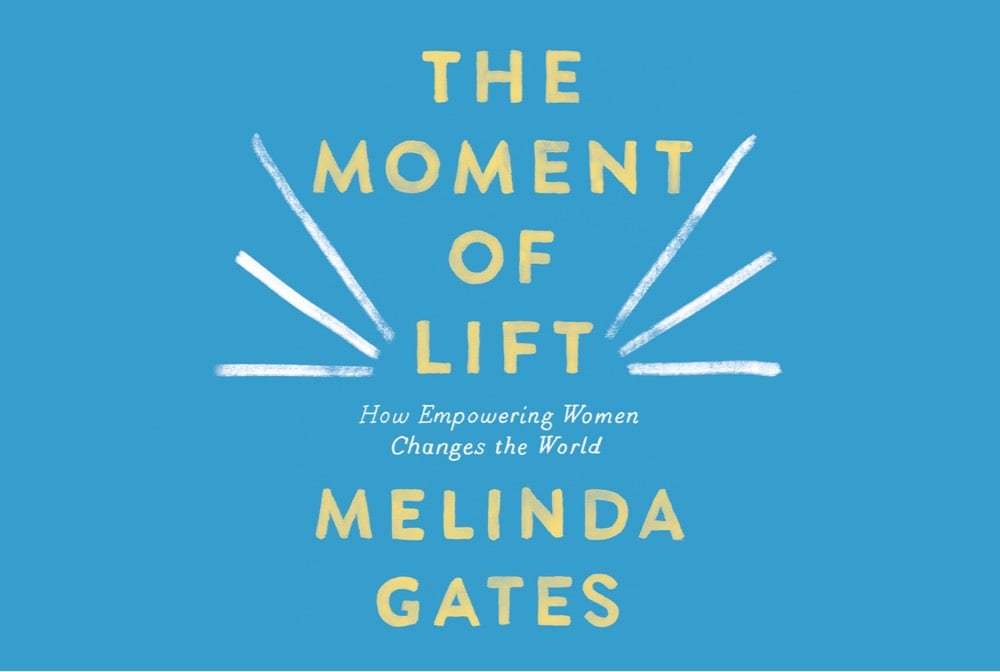
In a recent Facebook post, President Obama 1 shared a few books that he’s been reading recently. At the tippy top is Melinda Gates’ The Moment of Lift: How Empowering Women Changes the World.
When you lift up women, you lift up everybody — families, communities, entire countries. That’s not just the right approach; it’s backed up by research and countless real-world examples. In her book, Melinda tells the stories of the inspiring people she’s met through her work all over the world, digs into the data, and powerfully illustrates issues that need our attention — from child marriage to gender inequity in the workplace. I’ve called Melinda an impatient optimist and that’s what she delivers here — the urgency to tackle these problems and the unwavering belief that solving them is indeed possible.
From a short excerpt of the book:
In my travels, I’ve learned about hundreds of millions of women who want to decide for themselves whether and when to have children, but they can’t. They have no access to contraceptives. And there are many other rights and privileges that women and girls are denied: The right to decide whether and when and whom to marry. The right to go to school. Earn an income. Work outside the home. Walk outside the home. Spend their own money. Shape their budget. Start a business. Get a loan. Own property. Divorce a husband. See a doctor. Run for office. Ride a bike. Drive a car. Go to college. Study computers. Find investors. All these rights are denied to women in some parts of the world. Sometimes these rights are denied under law, but even when they’re allowed by law, they’re still often denied by cultural bias against women.
Two of the top ten solutions on Paul Hawken’s list for slowing the effects of climate change are “educating girls” and “family planning”, which taken together would have a greater impact on reversing climate change than any other thing on the list.
Obama also recommends Pachinko by Min Jin Lee, a book I’ve been curious about ever since it was published. Friends have recommended it and the cover always catches my eye in the bookstore even though I’m never specifically looking for it. I don’t even know why I’ve been resisting it…just ordered it!
As he does every year, President Obama shared his favorite reads of the year on Facebook, books that he found “thought-provoking, inspiring, or just plain loved”. Among them are:
Becoming by Michelle Obama.
Americanah by Chimamanda Ngozi Adichie.
Why Liberalism Failed by Patrick Deneen.
Warlight by Michael Ondaatje.
How Democracies Die by Steven Levitsky and Daniel Ziblatt.
This year, Obama also shared his favorite movies and songs. The movie list contains some pretty interesting entries: Annihilation, The Death of Stalin, Shoplifters, Won’t You Be My Neighbor. I wonder if he sees these in the theater or via Netflix/Apple/Amazon or he just gets a ton of screeners from the studios?
And Mr. President, let me know if you ever want to contribute a guest media diet post…I will try to squeeze you into my editorial calendar.
Earlier this year, before a trip to Africa, President Obama shared a recommended reading list for this summer heavy on African authors.
Americanah by Chimamanda Ngozi Adichie
From one of the world’s great contemporary writers comes the story of two Nigerians making their way in the U.S. and the UK, raising universal questions of race and belonging, the overseas experience for the African diaspora, and the search for identity and a home.
With the end of summer approaching (**heavy sobbing**), Obama posted a list of books he’s personally been reading over the past few months.
Tara Westover’s Educated is a remarkable memoir of a young woman raised in a survivalist family in Idaho who strives for education while still showing great understanding and love for the world she leaves behind.
Set after WWII, Warlight by Michael Ondaatje is a meditation on the lingering effects of war on family.
With the recent passing of V.S. Naipaul, I reread A House for Mr Biswas, the Nobel Prize winner’s first great novel about growing up in Trinidad and the challenge of post-colonial identity.
An American Marriage by Tayari Jones is a moving portrayal of the effects of a wrongful conviction on a young African-American couple.
Factfulness by Hans Rosling, an outstanding international public health expert, is a hopeful book about the potential for human progress when we work off facts rather than our inherent biases.
President Obama is heading to Africa this week for the first time since he left office. In preparation, he shared a recommended summer reading list that’s heavy on African authors. Here’s the full list:
Things Fall Apart by Chinua Achebe
A true classic of world literature, this novel paints a picture of traditional society wrestling with the arrival of foreign influence, from Christian missionaries to British colonialism. A masterpiece that has inspired generations of writers in Nigeria, across Africa, and around the world.
A Grain of Wheat by Ngugi wa Thiong’o
A chronicle of the events leading up to Kenya’s independence, and a compelling story of how the transformative events of history weigh on individual lives and relationships.
Long Walk to Freedom by Nelson Mandela
Mandela’s life was one of the epic stories of the 20th century. This definitive memoir traces the arc of his life from a small village, to his years as a revolutionary, to his long imprisonment, and ultimately his ascension to unifying President, leader, and global icon. Essential reading for anyone who wants to understand history — and then go out and change it.
Americanah by Chimamanda Ngozi Adichie
From one of the world’s great contemporary writers comes the story of two Nigerians making their way in the U.S. and the UK, raising universal questions of race and belonging, the overseas experience for the African diaspora, and the search for identity and a home.
The Return by Hisham Matar
A beautifully-written memoir that skillfully balances a graceful guide through Libya’s recent history with the author’s dogged quest to find his father who disappeared in Gaddafi’s prisons.
The World As It Is by Ben Rhodes
It’s true, Ben does not have African blood running through his veins. But few others so closely see the world through my eyes like he can. Ben’s one of the few who’ve been with me since that first presidential campaign. His memoir is one of the smartest reflections I’ve seen as to how we approached foreign policy, and one of the most compelling stories I’ve seen about what it’s actually like to serve the American people for eight years in the White House.
One of the books on my summer reading list is The Book of Forgiving: The Fourfold Path for Healing Ourselves and Our World by Desmond Tutu & Mpho Tutu, recommended to me by a reader a few months ago.
Each of us has a deep need to forgive and to be forgiven. After much reflection on the process of forgiveness, Tutu has seen that there are four important steps to healing: Admitting the wrong and acknowledging the harm; Telling one’s story and witnessing the anguish; Asking for forgiveness and granting forgiveness; and renewing or releasing the relationship. Forgiveness is hard work. Sometimes it even feels like an impossible task. But it is only through walking this fourfold path that Tutu says we can free ourselves of the endless and unyielding cycle of pain and retribution.

Pete Souza spent 8 years photographing President Obama as the official White House photographer. Souza compiled some of the best of those photos (including the ones with kids) into a book, Obama: An Intimate Portrait. Since Trump took office in January 2017, Souza has used his Instagram account to post photos of Obama in response to Trump’s actions — for instance, when Trump initiated the travel ban against Muslim nations, Souza posted a photo of Obama meeting with a refugee girl.
Souza has collected all of that shade into another book of Presidential photos: Shade: A Tale of Two Presidents.
Shade is a portrait in Presidential contrasts, telling the tale of the Obama and Trump administrations through a series of visual juxtapositions. Here, more than one hundred of Souza’s unforgettable images of President Obama deliver new power and meaning when framed by the tweets, news headlines, and quotes that defined the first 500 days of the Trump White House.
The book comes out in October, but you can preorder it now from Amazon.
Older posts




Socials & More