




America vs Europe: Two Ways to Build a City
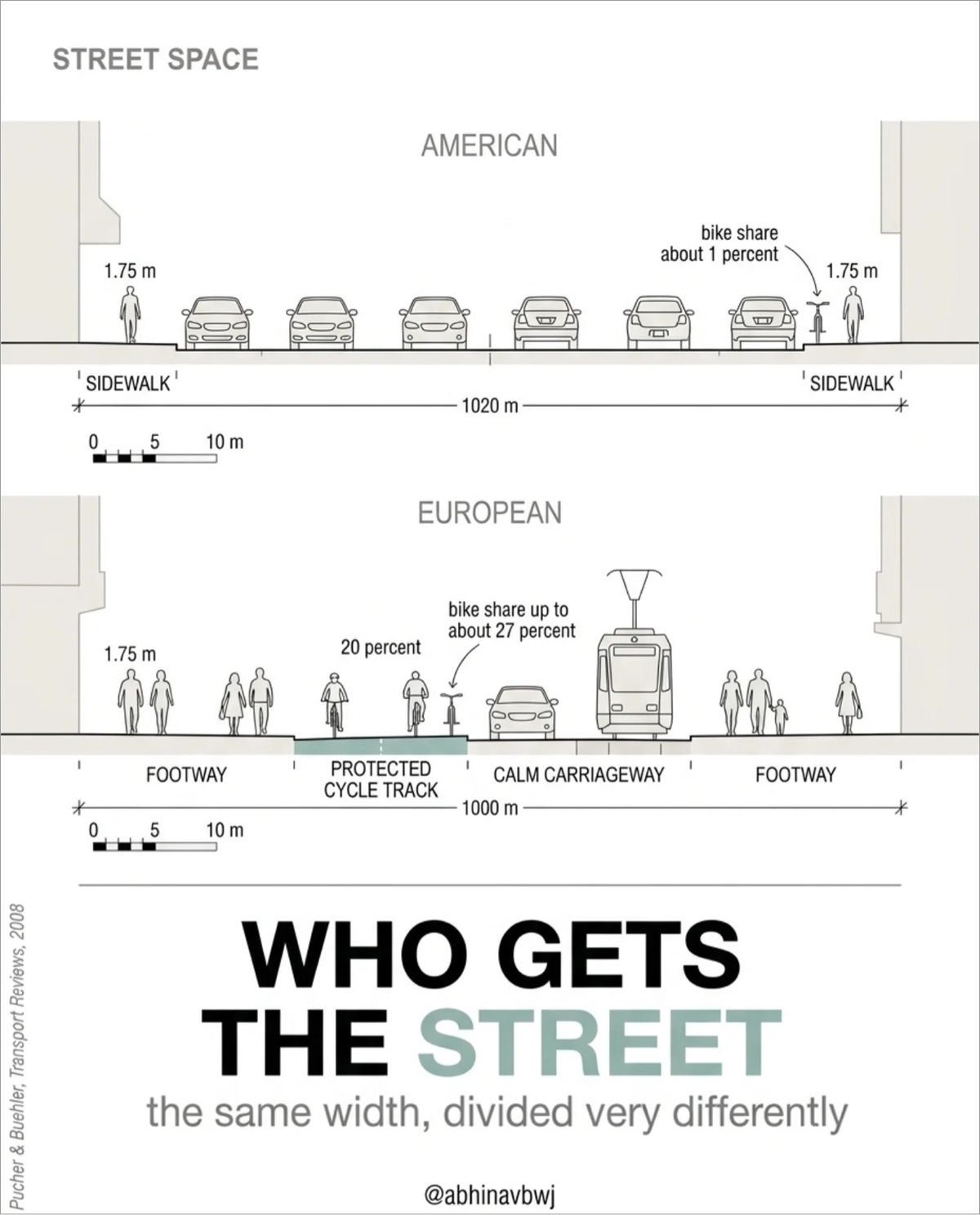
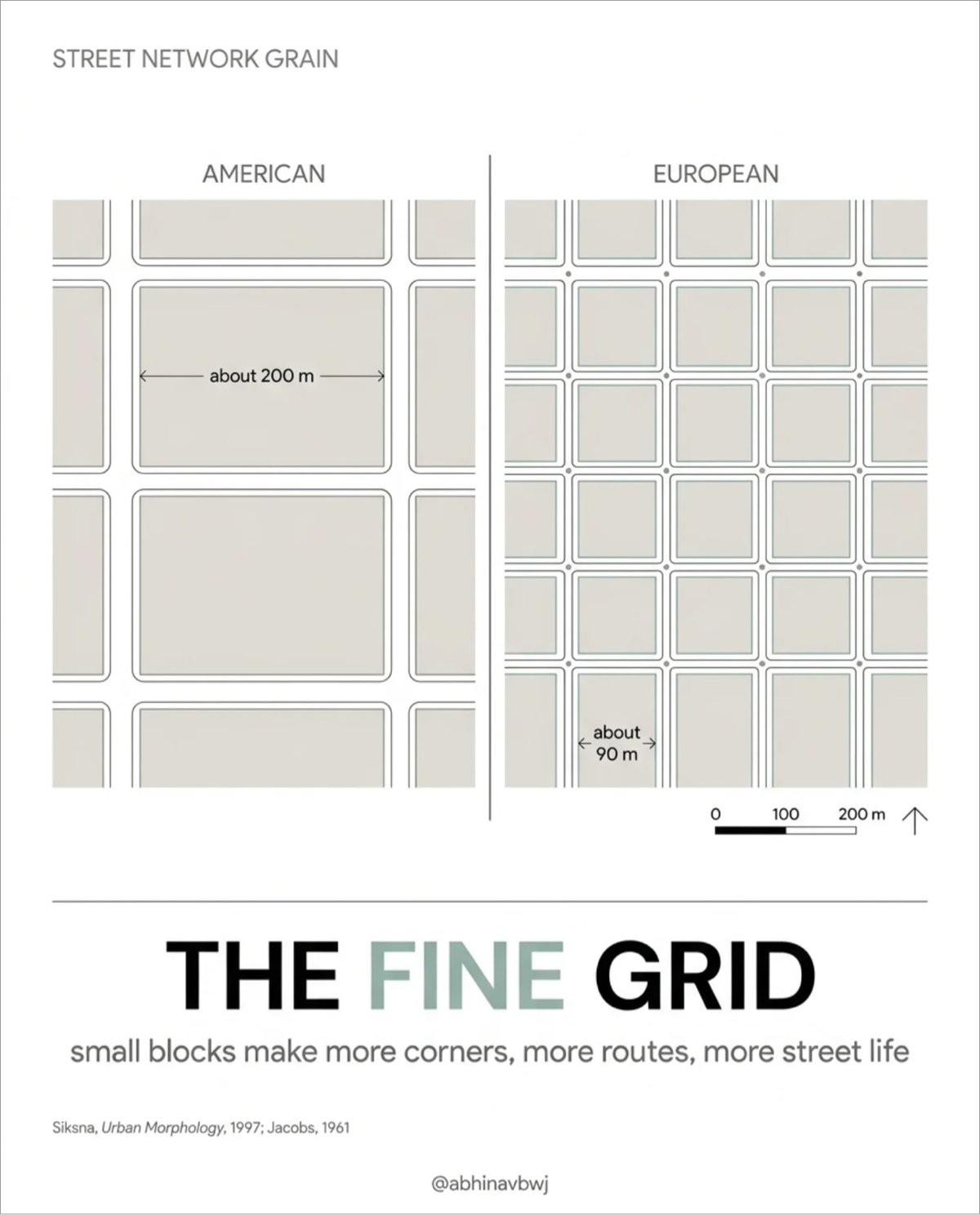
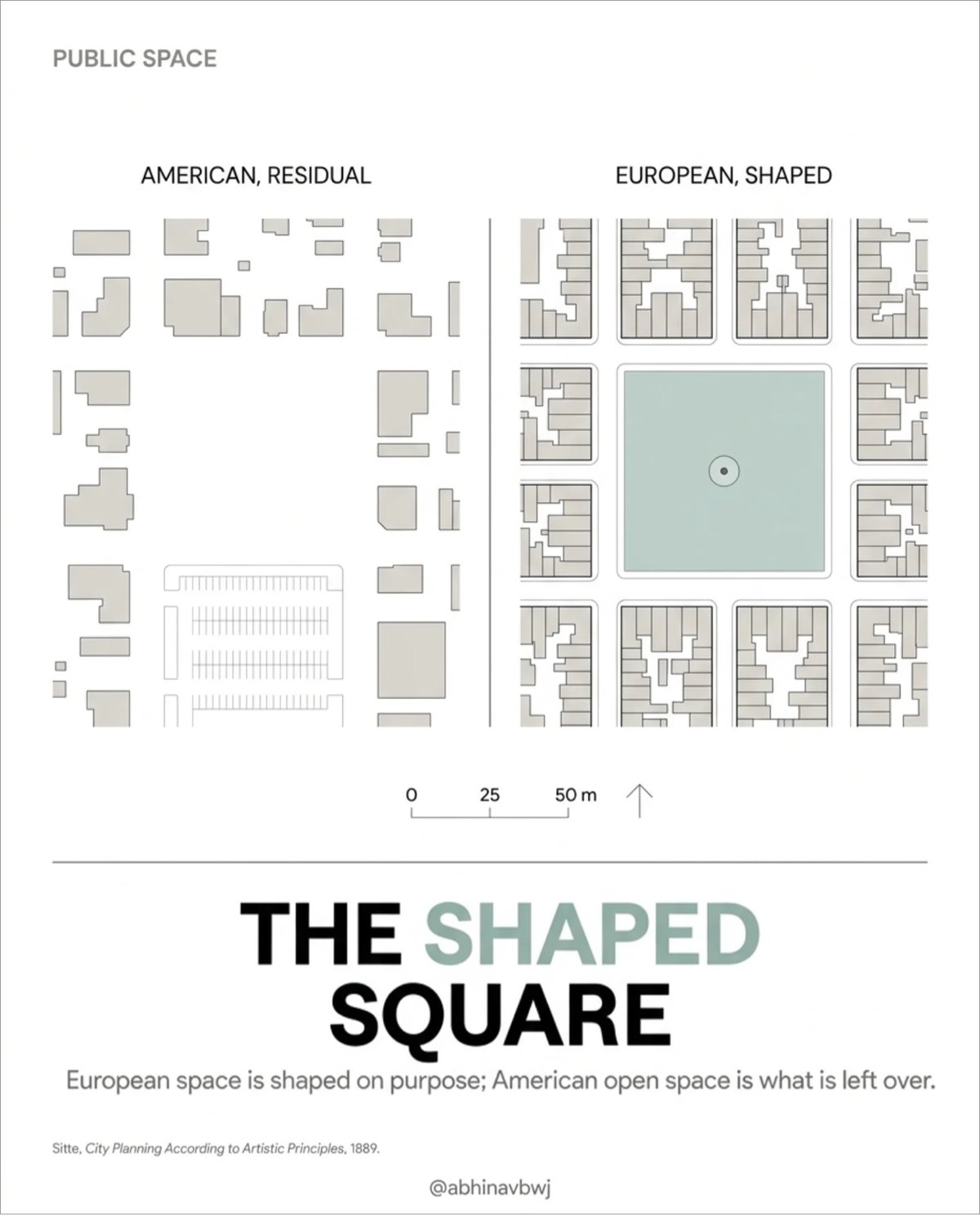
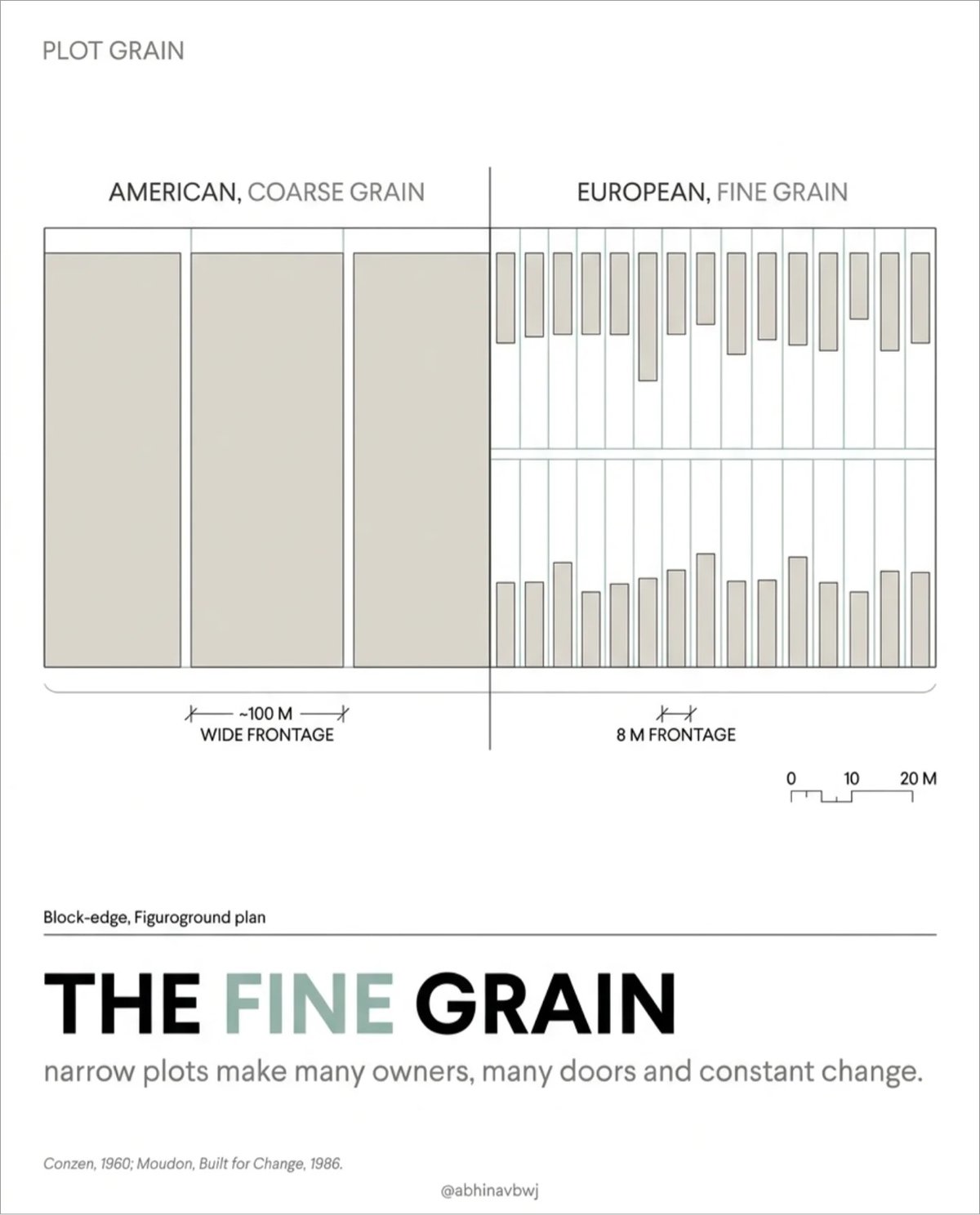
Architect and urban & computational designer Abhinav Bhardwaj made this great set of slides comparing urban design in the US and Europe, peppered with pithy observations like:
- European space is shaped on purpose: American open space is what’s left over.
- Small blocks make more corners, more routes, more street life.
- A fine grid offers hundreds of routes; the tree offers one way out.
(thx, meg)
Comments 6
thread
latest
popular
I have visited Spain, and I adore the layout of the cities there. They have walkable neighborhoods, public squares, fountains, bicycle accommodations, and competent public transit. Automobiles and parking spaces are mostly banished to the periphery. A lot of the architecture is thoughtful, sightly, and long-lasting.
Lest I paint too rosy a picture, there are downsides. Some areas are stricken with neglect, and graffiti is very common. I gather that the rent is high, and space is limited. Still, the European approach feels more compatible with healthy humanity.
While these diagrams are always good to see rearticulated, I can't help but feel that this is the urban planning equivalent of the how to draw an owl meme.
I am sure there are downsides to this, but having just returned from trips to large cities in Ireland and Italy, I can say that one of our enduring topics of conversation has been the transportation infrastructure and urban design. These are not in my professional wheelhouse, but as a runner and a commuter, I experienced alot of the upsides when running and commuting in these countries. We walked the vast majority of the time, took public transport when we could and when we had to, we drove. Even the driving experience was better than what I am used to. Having a way to visually communicate how it is different, even if not comprehensive, is helpful.
Can we talk about how the scale and measurements in the first graphic are waaaaay off? 1000m?
It feels like the European designs focus on building community and sharing in outdoor common spaces. We could use more of this in North America.
Have you seen this article on Japanese zoning?
Per Craig Mod's recent Ridgeline newsletter, America is "a car-first country if there ever was one."
From the above blog:
If you feel like this comment goes against the grain of the community guidelines or is otherwise inappropriate, please let me know and I will take a look at it.
In order to comment or fave, you need to be a kottke.org member. Check out your membership options.
Note: If you are a member and tried to log in, it didn't work, and now you're stuck in a neverending login loop of death, try disabling any ad blockers or extensions. Or try logging out and then back in. Still having trouble? Email me!