




Advertise here with Carbon Ads
This site is made possible by member support. 💞
Big thanks to Arcustech for hosting the site and offering amazing tech support.
When you buy through links on kottke.org, I may earn an affiliate commission. Thanks for supporting the site!
kottke.org. home of fine hypertext products since 1998.
Beloved by 86.47% of the web.
Entries for October 2021
Unstuck In Time, a Documentary Film About Kurt Vonnegut
Kurt Vonnegut: Unstuck in Time is a feature length documentary on the life and works of the titular author. It’s…been in the works for awhile:
In 1982, a young filmmaker wrote a letter to his literary idol, proposing a documentary on the author’s life and work. Kurt Vonnegut soon met with Robert Weide and authorized the production. Weide thought it would take a few months to raise the needed financing, and figured a film could be completed within the year. That was 33 years ago.
The trailer is embedded above and the film will be released in theaters and on-demand on November 19th. (via austin kleon)
Combining 5000+ Super Mario Bros Speedrun Attempts Into One Video
YouTube user FlibidyDibidy took 193 hours of footage of his Super Mario Bros speedrun attempts (that’s 5162 separate attempts) and merged them all into one five-minute video.
This was not easy to do. For instance; when you have 41 million frames — even if something takes only one second — you’re looking at well over a year of computer time alone. Most frames were processed in much less than a second, but some had to be done by hand to train the system and oh man I could go on forever on how it was made.
Here’s a making-of video where you get to see the custom software he built to make the merged speedruns. The best comment on YouTube:
There’s a real “Hundreds of Sea Turtle hatchlings trying to survive their walk to the ocean” vibe to this video
I love these sorts of videos…I did a whole post on “time merge media” back in 2008. (via waxy)
Analyzing the Health Risks in James Bond Movies

A group of epidemiologists have analyzed all 25 James Bond movies to assess the risks Bond encounters on his travels around the globe.
The result is a highly entertaining, tongue-in-cheek short paper in the journal Travel Medicine and Infectious Disease. The paper details 007’s exposure risk to infectious agents during his global travels, covering everything from foodborne pathogens to ticks and mites, hangovers and dehydration from all those martinis, parasites, and unsafe sex.
Some of the findings include that 007 should wash his hands more often, frequently risks dehydration and heatstroke due to improper hydration, often engages in unsafe sex with partners whose sexual histories are unknown to him, and endangers his sexual partners (“27.1% of them died shortly after sex”). My favorite finding is the speculation that Bond contracted Toxoplasmosis1 from a cat in From Russia With Love and that’s why he engages in risky behavior all the time:
The biggest stretch in Graumans et al.’s analysis is that of feline-borne Toxoplasmosis, a parasite carried by cats. Those who contract the parasite tend to exhibit reckless behavior, such as mice losing their fear of cats. Bond engages in all manner of reckless behavior, and the authors suggest he may have contracted the parasite from Ernst Stavro Blofeld’s fluffy white Persian cat (featured in both From Russia With Love and Spectre). The possibility is admittedly far-fetched, but isn’t that the essence of a good Bond film?
I will take any opportunity to remind you of one of my favorite things I’ve ever posted: a short talk by Kevin Slavin about how the Toxoplasma gondii may be responsible for viral videos.↩
Just sent out the first @kottke newsletter in awhile. Read it here!
Fun thread of “you look like Tony Hawk” celebrity encounters. The Dave Matthews fans moving furniture with Dave Matthews & “Kimberly Deal like the Breeders” stories are the best.
From the Civil War to Jet Planes in a Single Lifetime
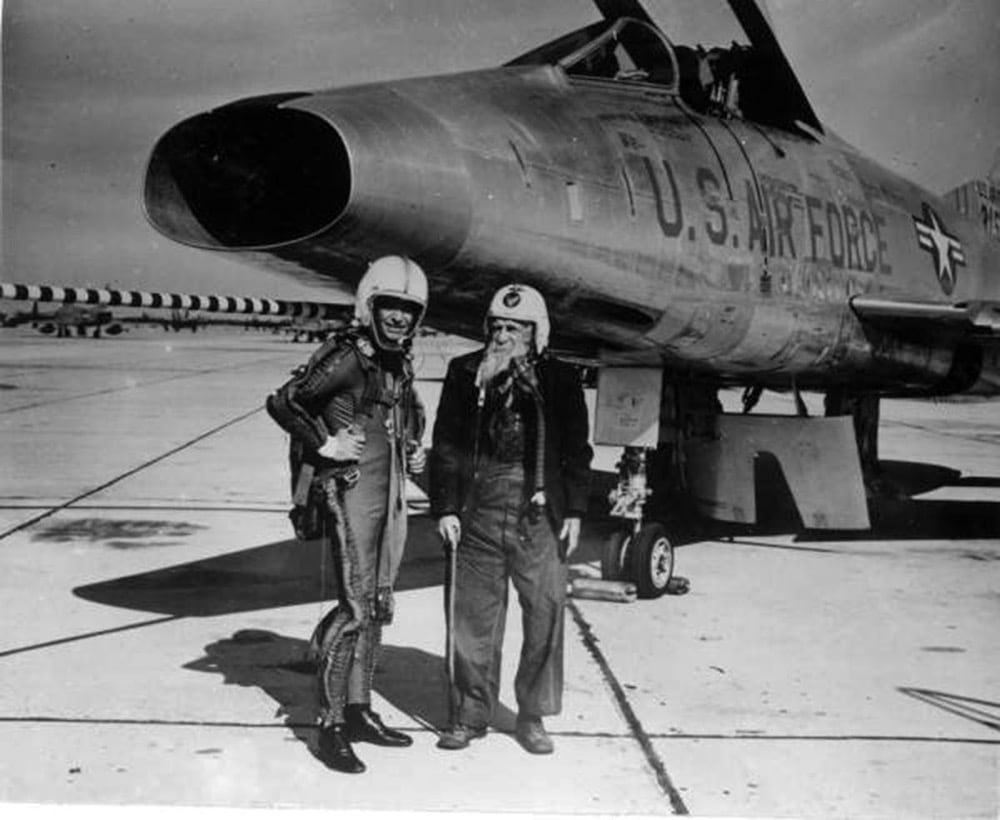
A quick hit of the Great Span for you: the bearded fellow standing in front of that F-100 fighter jet in 1955 is William Lundy, who was alive during the Civil War.1 The F-100 was used extensively in the Vietnam War. This photo is a reminder both that the Civil War was not all that long ago and of the incredible technological progress of that time period — we went from horses, steam engines, and cannons to cars, computers, and jet planes in fewer than 100 years.
See also The Last Documented Widow of a Civil War Veteran Has Died (in Jan 2021!), Meet America’s Oldest Living Veteran, and a TV Appearance of Lincoln Assassination Witness. (via @kane)
Lundy claimed to have been born in 1848 and fought in the Civil War, which would have made him 109 years old when he died. But it’s more likely that he was born in 1859. Either way, as a presumed Confederate soldier, he collected a pension for 16 years until his death. (Lundy out there really putting the “con” in “confederate”.)↩
Facebook changes its name to Meta. Yep. Meta. So dumb. No one is going to call it that. As for bringing the metaverse to life…good lord.
“Who Do You Want To Be?”
The University of Tasmania recently awarded an honorary doctorate degree to Hannah Gadsby, who then gave an address to the graduating class. Her remarks, in part:
I’m autistic and as such, anxiety is only ever going to be my constant companion. But honestly I don’t know how it’s possible not to be anxious in this world in this moment, unless you’re dead inside and we don’t want that. When my spouse lady Jenney sees me struggling in a whirly gig of anxiety, she has taken to asking me this question: “Don’t panic. Who do you want to be?”
And that is the wisdom I want to share with you today: a question and it’s not even mine. You’re welcome. But I think only a question has the capacity to be flexible enough to be wisdom. Statements are oblivious to the nuance of you and platitudes are nothing but idea corpses you have to reanimate as best you can, but a question always leaves room for you. So please make sure you bring yourself along for this, right?
Don’t panic. Who do you want to be? That is the question.
You can watch Gadsby’s entire address in the video above. I am thankful to Laura Olin for bringing this to my, and now your, attention.
Cosmic Relaxation
Eight hours of ambient chillout music over images pulled from NASA’s photographic archive of nebulas, galaxies, planets, and other celestial objects? Sure, I’m in.
See also Hours and Hours of Relaxing & Meditative Videos.
Maria Popova’s Brain Pickings blog just turned 15 and now has a new name: The Marginalian. “A challenge arises when we make something over a long period of time.”
Camouflaged Portraits
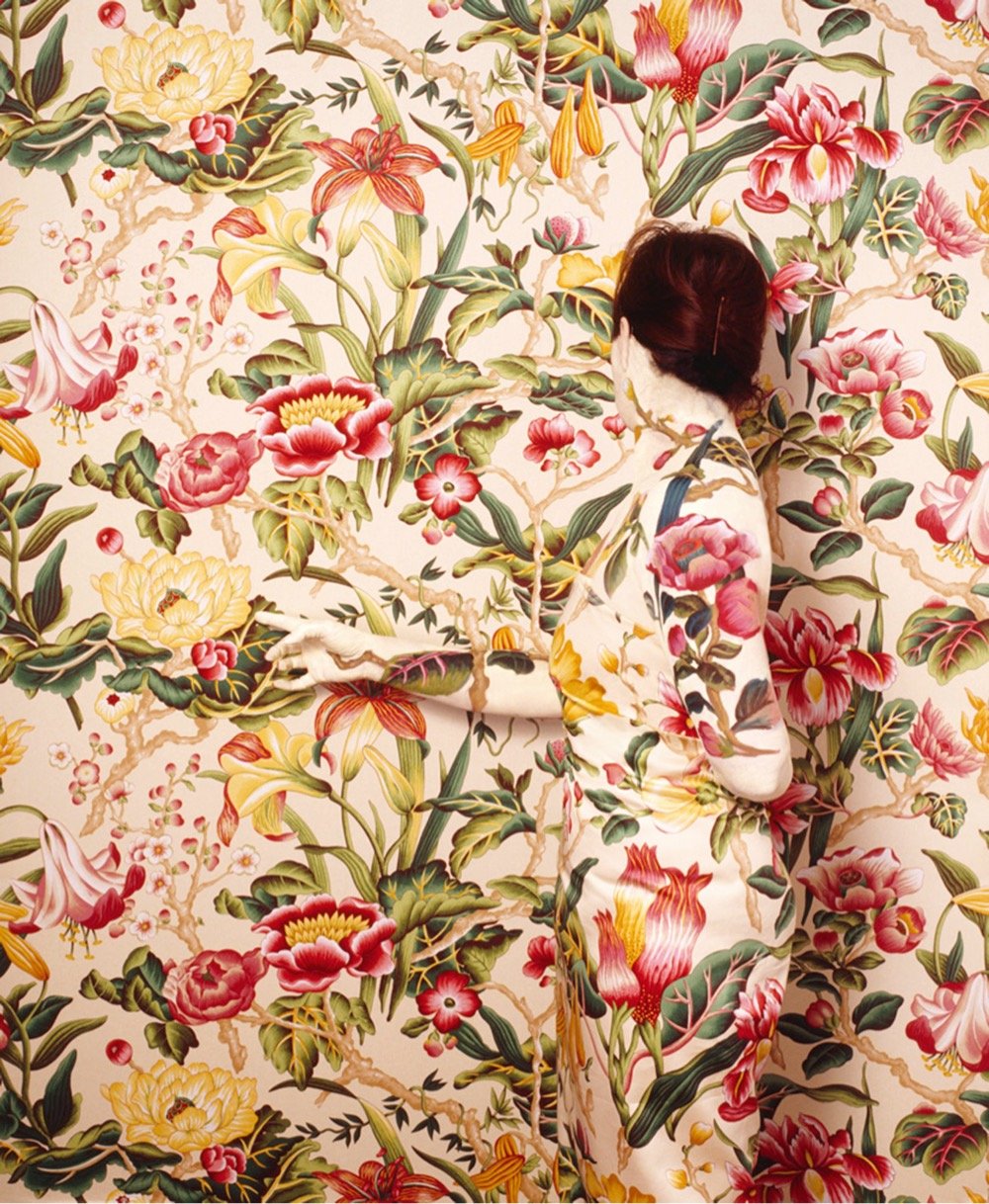
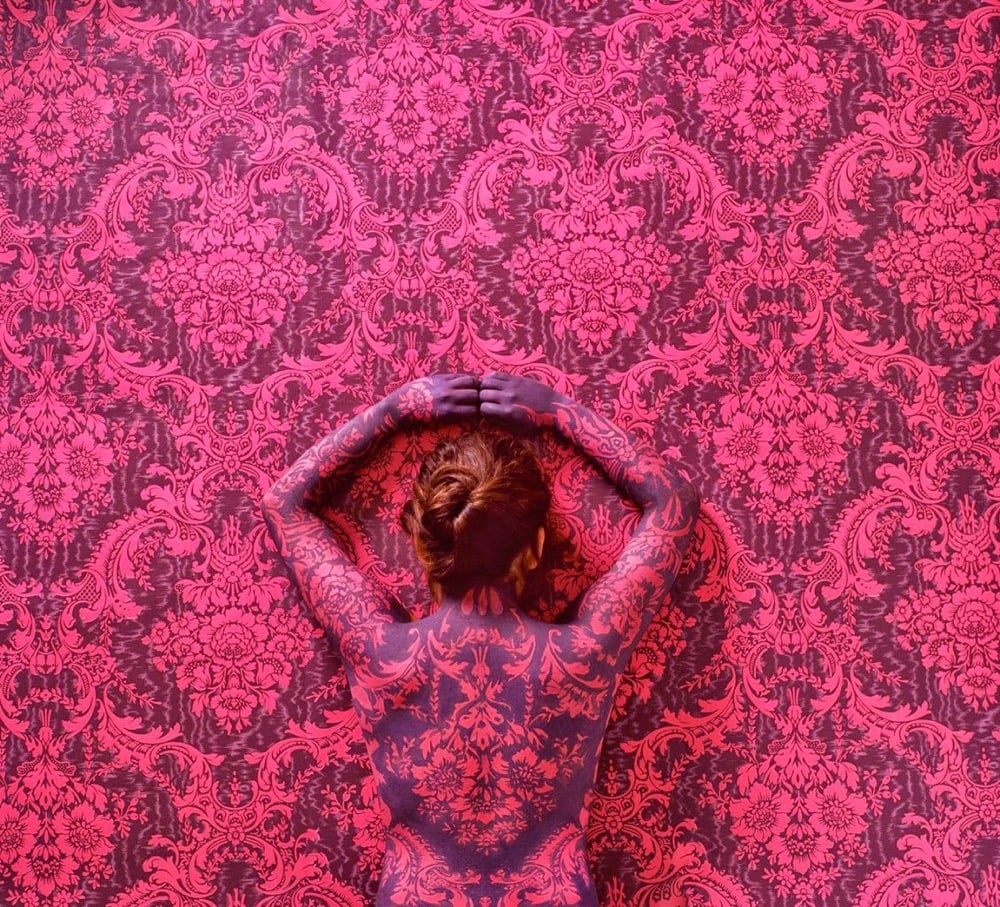
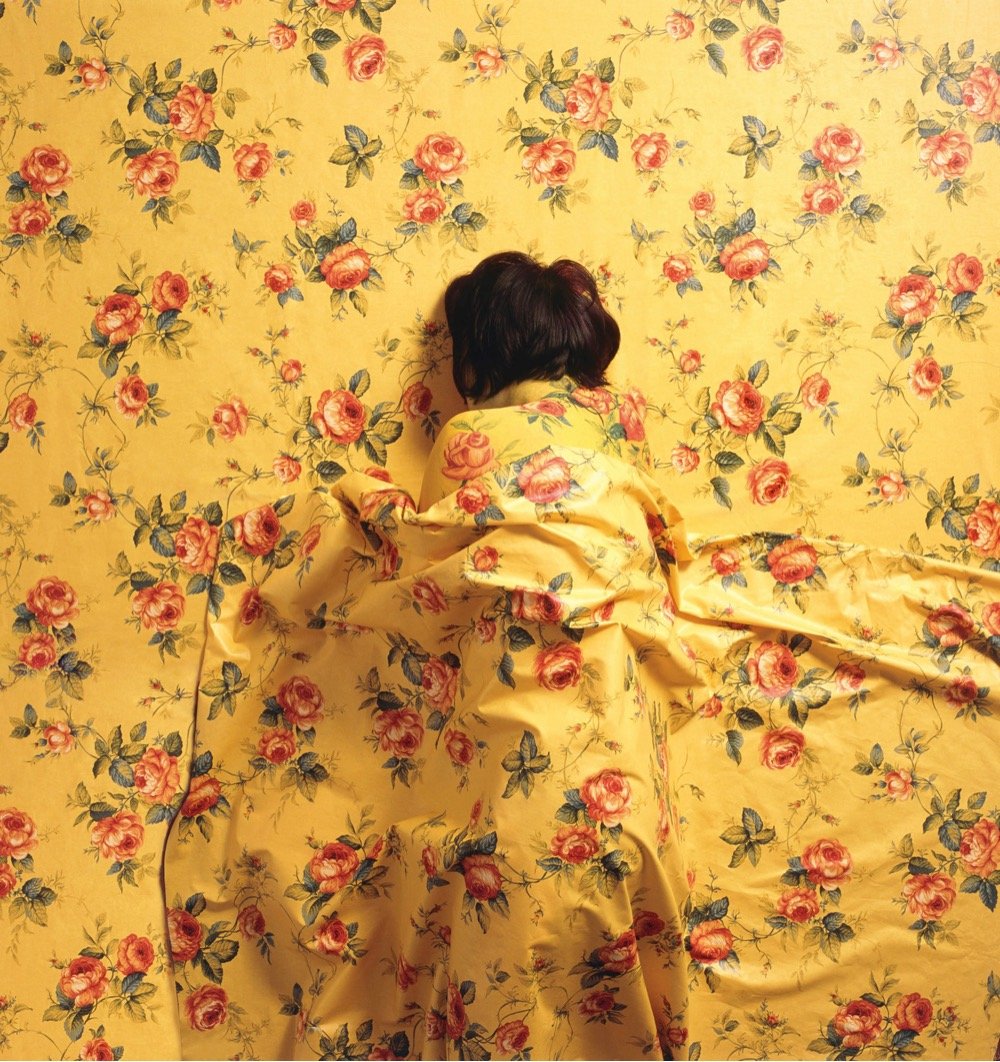
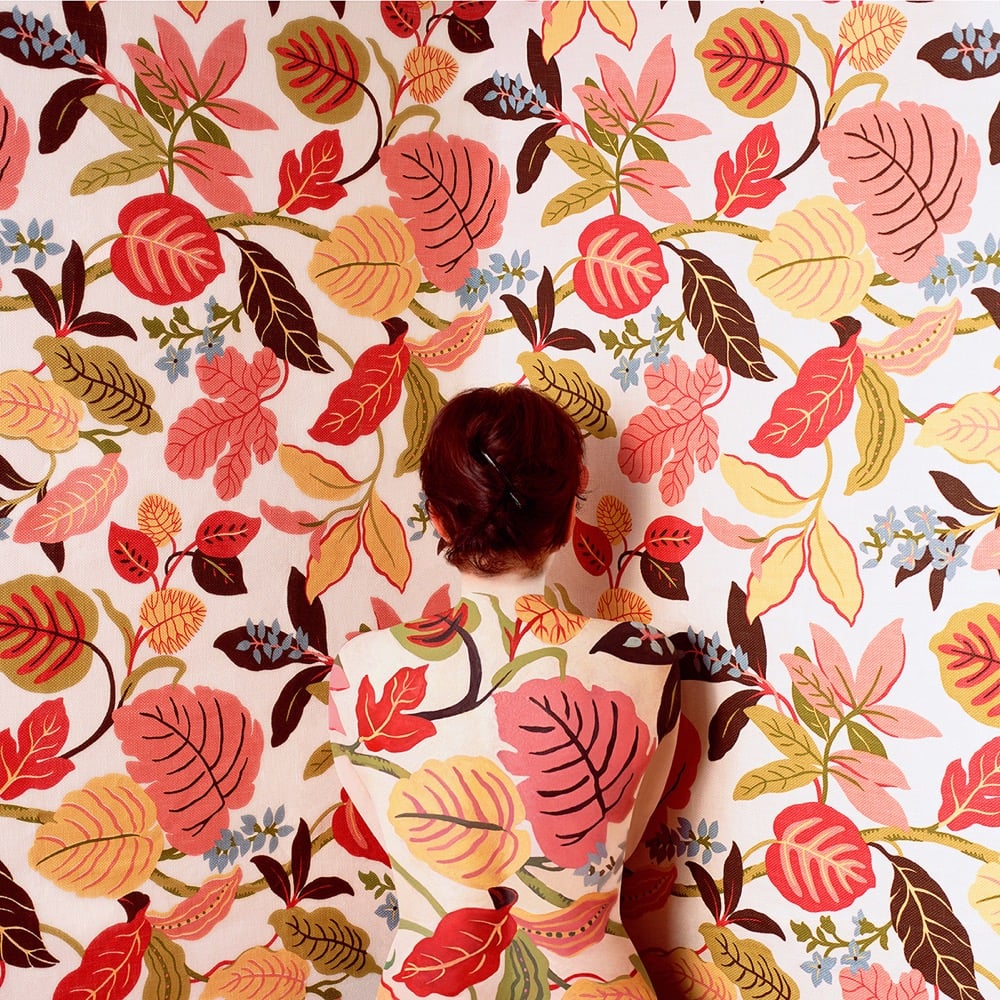
Cecilia Paredes takes photos of herself blending into elaborate backgrounds. You can see more of her work at Colossal, Lens Culture, Schneider Gallery, and Artsy.
Mindbending Lego Sculpture
Ok you’re going to have to trust me and just watch this — telling you anything else would spoil it. I’ve seen it a couple of times and I am still not 100% convinced how he does it or if it’s actually CGI or something. Solid objects should not behave like this? (thx, john)
David Grann has adapted his excellent Killers of the Flower Moon for middle grade readers. You can preorder now – it ships in mid-Nov.
Lightyear
Pixar is doing an origin story prequel of Toy Story called Lightyear. The teaser trailer is above. Chris Evans is taking over from Tim Allen as the voice of Buzz. Release date is sometime next summer. Like the folks at Polygon, I too am confused about the time bending that seems to be going on here:
does the existence of a #RealBuzzLightyear zipping through space in the far future imply that the world of Toy Story is also set in the far future
And:
That doesn’t mean he’s a real guy. Toy Story is not set in a world where aliens are just real and that’s fine with everyone. That isn’t a thing in those films. That’s just not the case. We would know if it were.
Is the movie going to explain any of this? Or is everyone just overthinking an (absurdly beautiful and expensive) kids cartoon movie (that likely has themes and humor that will resonate with adults)? Or or am I just yearning for some fun, dumb, low-stakes online arguments to replace the dangerous, dumb, and high-stakes online, uh, discourse? that we’re subjected to 24/7/365/2021/?????? (I think the answer to all of these is “yes”.)
A new variant of SARS-CoV-2 has evolved: Delta Plus. It’s slightly more transmissible than Delta, “a marginal difference that experts say is more of a headache than a devastating gamechanger in the scope of the pandemic”.
Hmmm, new Kindle Paperwhite. Bigger screen, USB-C charging, faster, adjustable light. There’s also a “Signature” version that can charge wirelessly.
Fun Algorithmic, Puzzle, and Mathematical Typefaces
The father-son duo of Martin and Erik Demaine make typefaces that are algorithmic, mathematical, or puzzle-like in nature. For instance, here’s their Tetris font, where each letter is made up of the seven possible Tetris pieces:

Or their newest one, Everything, where each letter can be folded into any other letter:
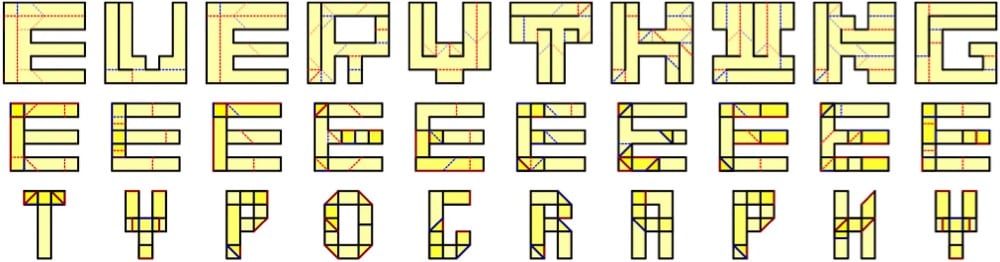
Everything to everything. This typeface illustrates how to fold any letter into any other letter, or more precisely, how to fold a piece of paper in the shape of any letter into the shape of any other letter. This lets you write one message inside another in a couple of ways. On the one hand, you could present the 6x6 crease patterns whose silhouettes look like one message (first text), and folding them reveals another message (second text). On the other hand, you could present the folded forms (as physical objects) whose silhouettes look like one message (second text), and unfolding them reveals another message (first text).
From a recent-ish profile of the Demaines and their typefaces in the NY Times:
In a 2015 paper, “Fun With Fonts: Algorithmic Typography,” the Demaines explained their motivations: “Scientists use fonts every day to express their research through the written word. But what if the font itself communicated (the spirit of) the research? What if the way text is written, and not just the text itself, engages the reader in the science?”
Inspired by theorems or open problems, the fonts — and the messages they compose — can usually be read only after solving the related puzzle or series of puzzles.
You can check out the rest of their typefaces on their website — they include fonts with infinitely tiling letters, Sudoku puzzle fonts, and a font whose letters are made up of shapes that can be packed into a 6x6 square. So fun!
Dave Grohl Plays Drums Along with the Original Recording of Smells Like Teen Spirit
At an event for the release of his recent memoir, The Storyteller, Dave Grohl got behind his drum kit and played along with the original recording of Smells Like Teen Spirit. You might notice that Grohl grimaces a bit right at the beginning — this is maybe the first time (or one of a handful of times) he’s played this song with Kurt Cobain’s vocals since Cobain died. From the video’s description:
It probably wasn’t easy for DG to get to this point where he was willing to share. At the show (and in his book and many interviews) he actually talked about the long path it took to get to not only TALK about Kurt, but to even want to listen to ANY music after his death. Still, a lot of time has passed, which always helps. And in the meantime, Dave has become quite a talented, thoughtful storyteller. I am sure, as difficult as it will always be to him, it probably also now a cathartic experience for him. At least I hope it is.
(via open culture)
Wow, Photoshop in a web browser. It’s a beta and only works in Chrome, but still.
Learn How Roller Skates Are Made
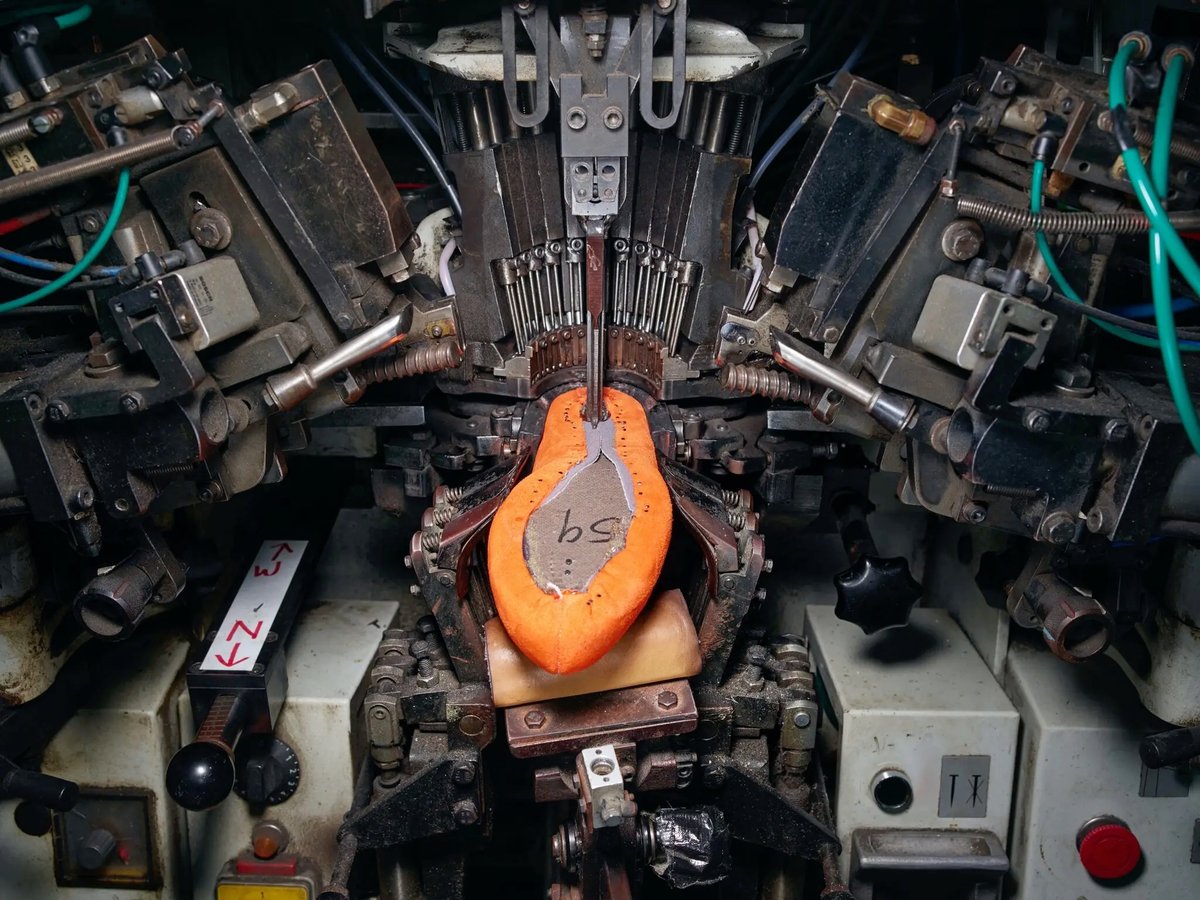
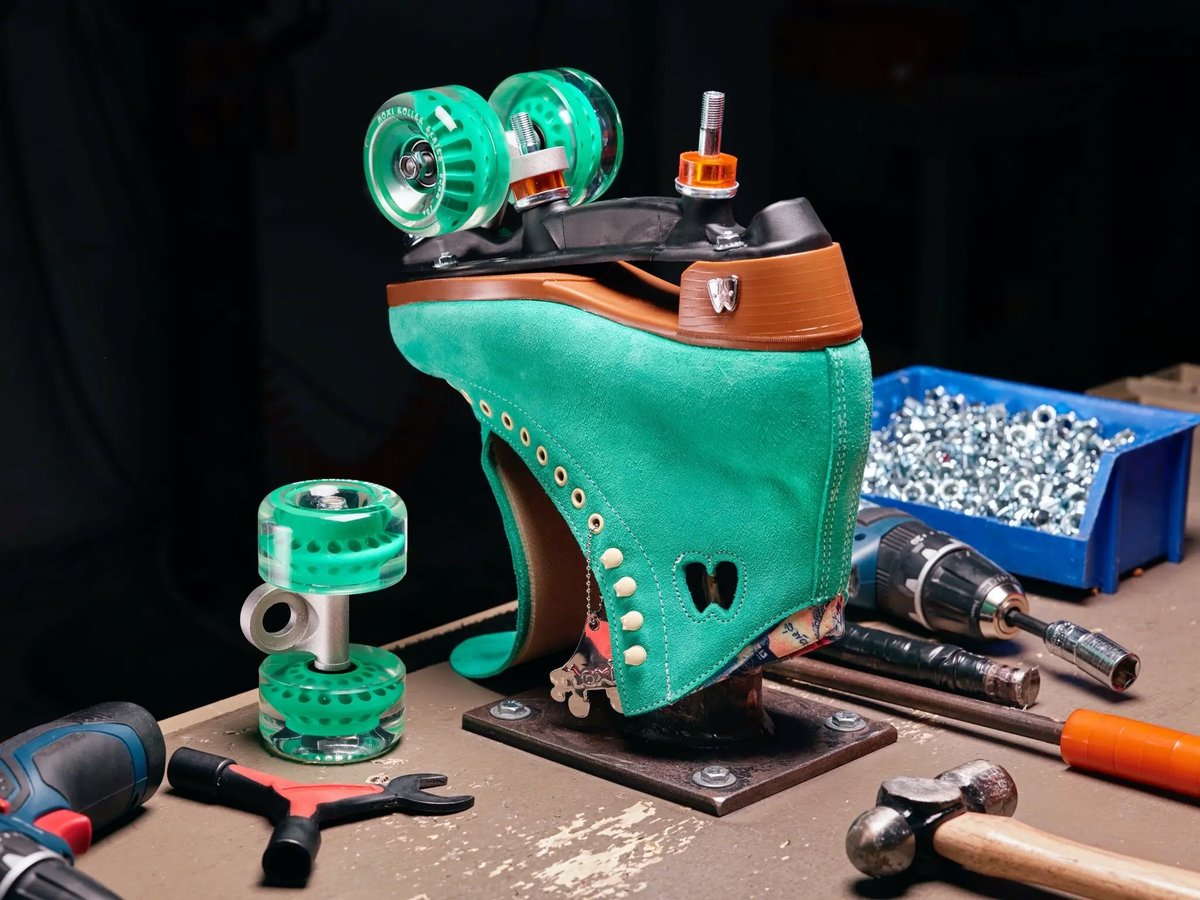
A few weeks ago, the New York Times for Kids section (aka the best section of the newspaper) showed us How to Build Roller Skates.
Among the most sought-after skates are Moxi’s Lolly Skates, rainbow-colored old-school four-wheelers made in Red Wing, Minn. Riedell, the 100-person company that makes the skates, is on track to make almost 80,000 pairs of roller skates this year, about four times as many as before the pandemic.
I poked around YouTube and found a couple of videos about how the skates are made as well:
You can buy your very own pair of Riedell skates direct from the company or from Amazon.
See also Say “No” to Crack and Say “Yes” to Roller Skating!, Dancing on Roller Skates with James Brown’s Style, and The Sweetheart Roller Skating Rink. (via the prepared)
FDA advisory panel recommends emergency authorization for the Pfizer-BioNTech Covid vaccine for kids aged 5-11. So many parents I know are waiting for authorization…
MSCHF bought an original Andy Warhol drawing for $20,000, created 999 copies, and sold all of them for $250 each. One lucky buyer will get the original but “any record of which piece within the set is the original has been destroyed”.
Icebergs Are Swimming Sculptures
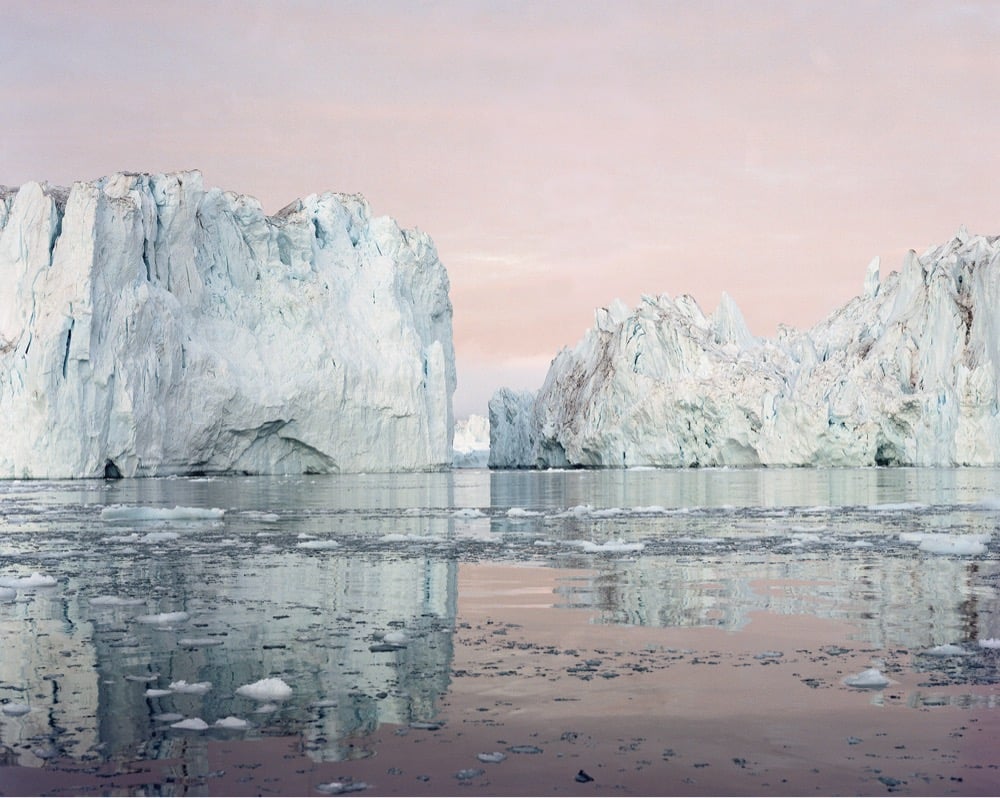


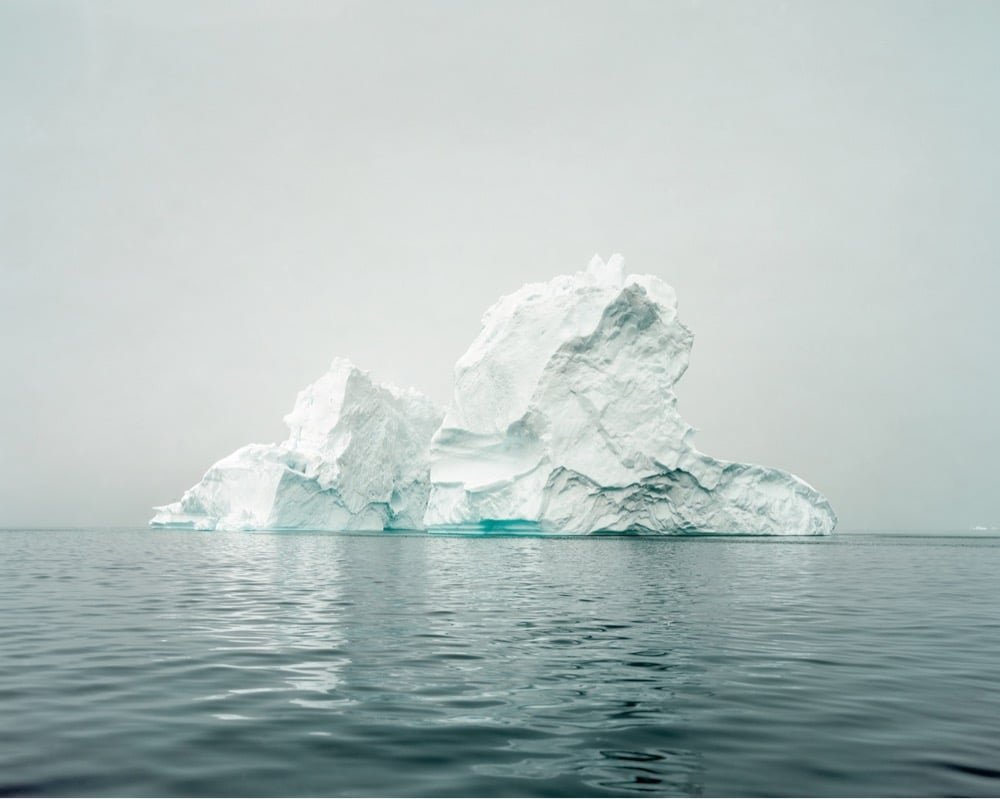
Since 2003, photographer Olaf Otto Becker has been documenting the decline of the glaciers and ice sheet in Greenland.
Greenland’s ice sheet is melting. Regularly, like the ticking of a clock, huge, new icebergs from the edges of the glacier plunge into the ocean each day with a thunderous boom and a roar. Our planet breathes. The accelerated melting of the ice is nothing more than one of our Earth’s compensatory reactions. Everything is constantly in motion. Even landscapes are changing with breathtaking speed, if time is not measured on a human scale. For me, icebergs are swimming sculptures, witnesses to a global change that, drifting southward on the ocean, slowly dissolve into their mirror image.
I’ve included some of my favorite shots from his projects above — beautiful but signifiers of the deep trouble humanity is in. (via colossal)
I’ve been enjoying dipping into Gastro Obscura, a globetrotting food guide from the folks at @atlasobscura. “Take a whirlwind tour of more than 500 unexpected dishes, unique ingredients, and fascinating culinary traditions from around the world.”
A Prototype of the Original iPod
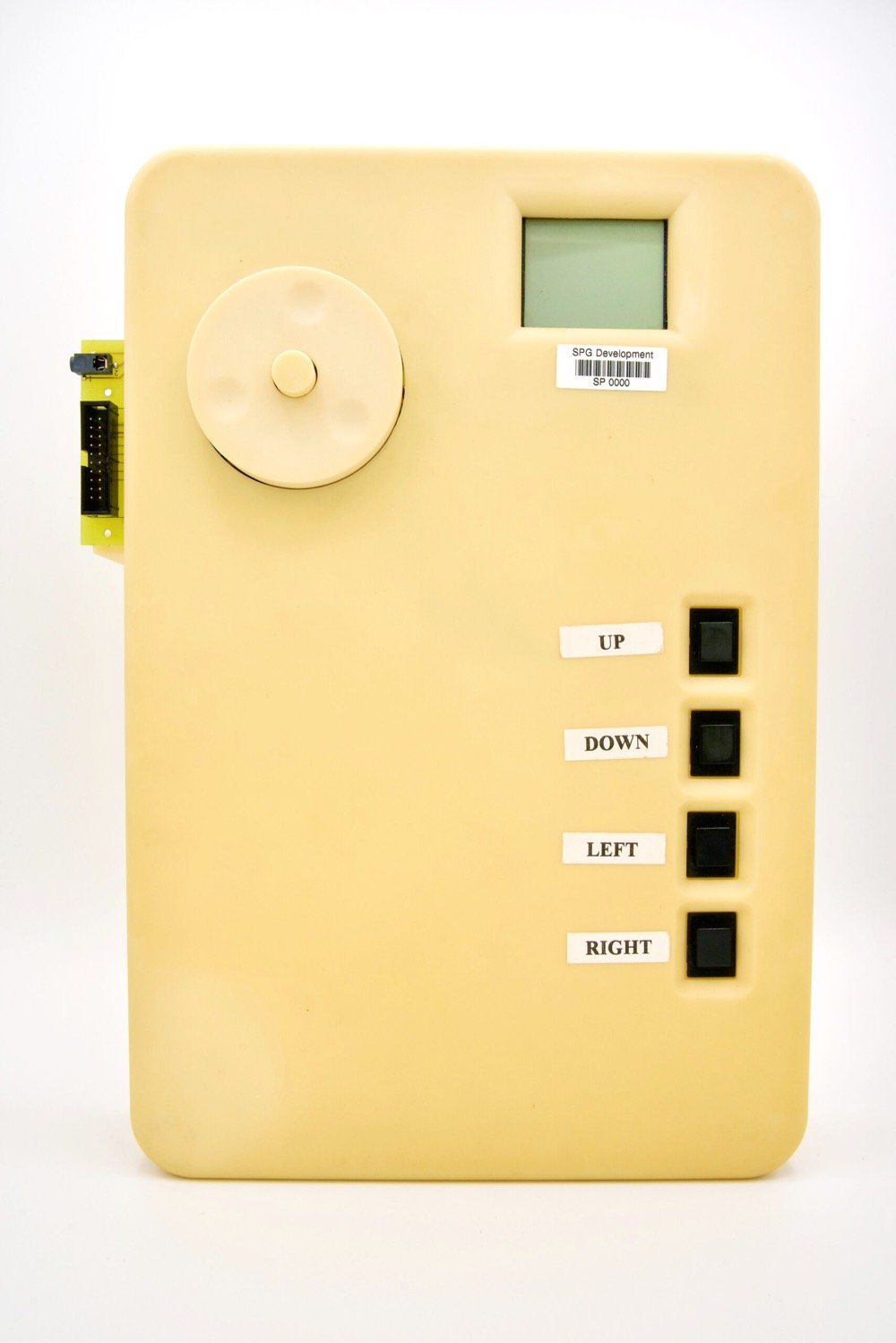
To mark the 20th anniversary of the iPod, Cabel Sasser shared some photos of one of the coolest artifacts in the Panic Archives: a prototype of the original iPod.
As you can see, it’s… quite large! We’ve always assumed that this mighty shell was designed to fit the large breadboards or circuit boards that were used during the earliest days of iPod development, until everything was eventually sized down to actual iPod-size. (It also has the Jobsian side-benefit of keeping the engineers in the dark about what the final device will look like.) I can’t get enough of those chunky, clunky, clicky black buttons wired up for navigation.
You can see how big it actually is when compared to the size of the actual iPod:
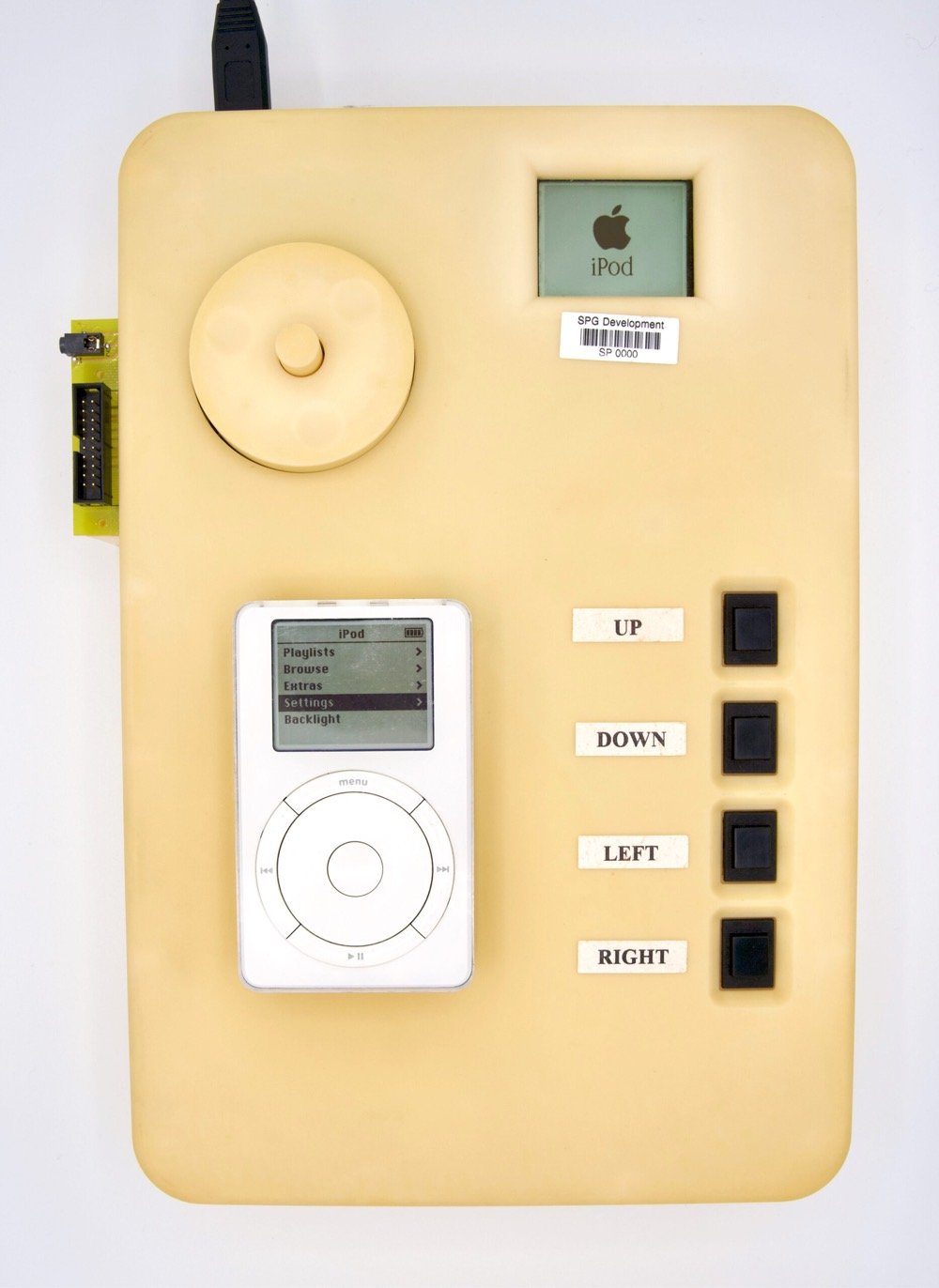
Update: Tony Fadell headed up development of the iPod at Apple and had this to say about the prototype above:
This is a P68/Dulcimer iPod prototype we (very quickly) made before the true form factor design was ready. Didn’t want it look like an iPod for confidentiality — the buttons placement, the size — it was mostly air inside — and the wheel worked (poorly)
Historical Reconstruction of the 1915 Ford Model T Assembly Line
Using photos and films made in the 1910s and 1920s, Myles Zhang made this animated reconstruction of Ford’s Model T assembly line as it would have appeared circa 1915, from start (chassis assembly) to finish (driving it off the floor).
Ford was not the first, but his car and moving assembly line were certainly the most successful and memorable. After creating his version of the automobile in 1896, Ford moved workshops first to Mack Avenue and later to Piquette Avenue in Detroit. These first two factories were small-scale structures for limited car production. Only in 1913 at Ford’s third factory at Highland Park did mass-production begin on a truly large scale. As shown in this film, here Ford applied assembly line methods throughout the factory to all aspects of car production.
There’s also a virtual reality model of the factory you can fly around in.
Winners of the 2021 Close-Up Photographer of the Year Competition


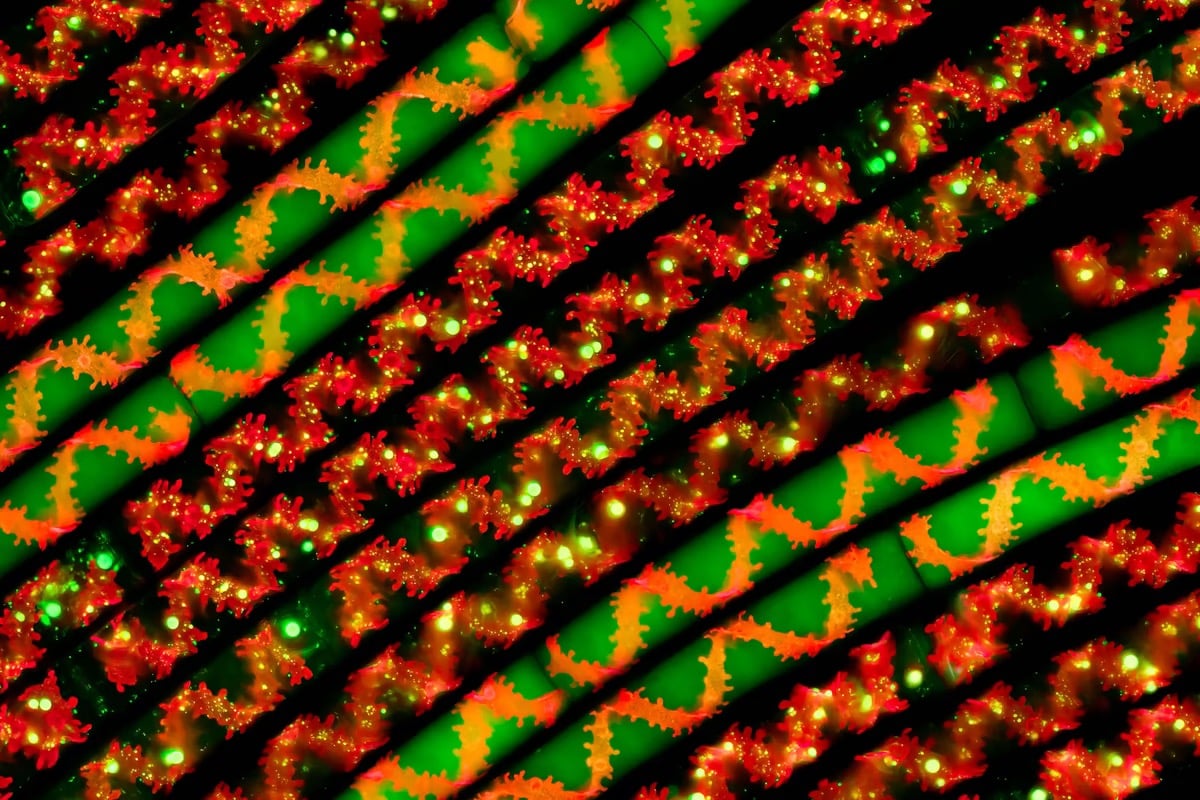
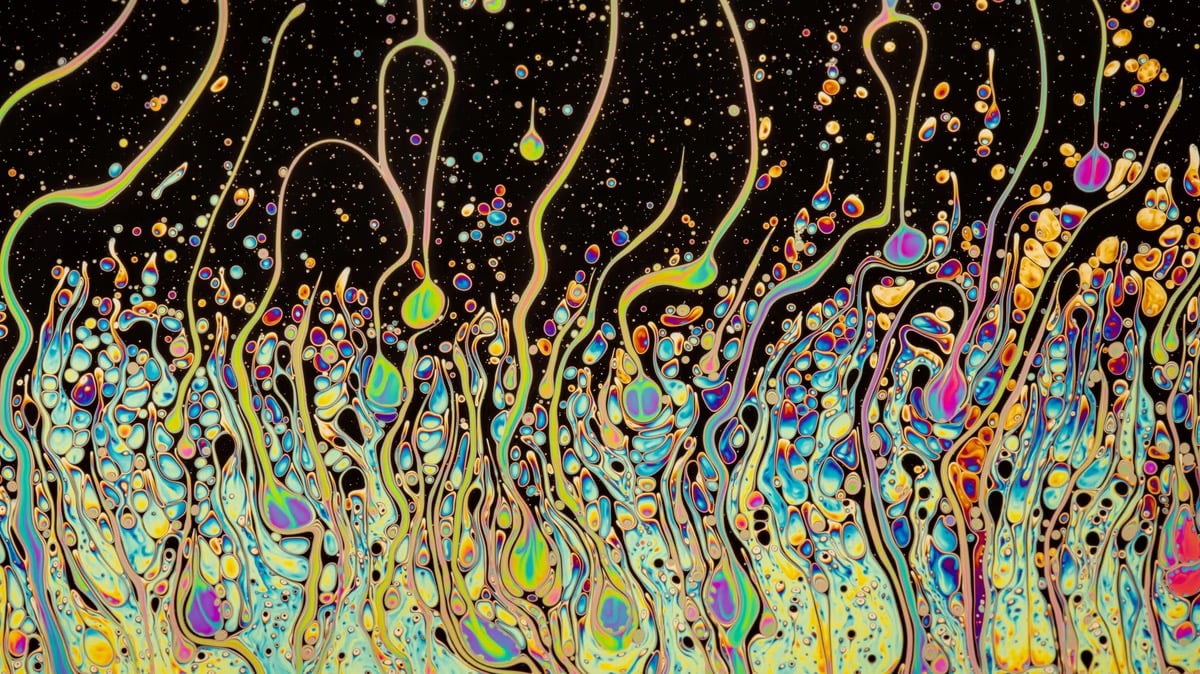
Contestants from 55 countries entered over 9000 photos in the Close-Up Photographer of the Year competition for 2021 and now the winners have been announced. I’ve included a few of my favorites above (from top to bottom): Pål Hermansen, Johan De Ridder, Håkan Kvarnstrom, and Bruno Militelli. (via in focus)
It’s the 50th anniversary of the debut of The Electric Company on PBS. Here’s a look back on the show’s genesis and impact. I *loved* The Electric Company when I was a kid.
A Celebration of Opening Title Sequences
From Patrick Willems, a history and celebration/defense of movie opening title sequences. They have fallen out of favor over the past decade or two, but Willems argues they serve a needed purpose. For instance, opening title sequences can set the tone or theme of the film before it even gets started — that’s what Saul Bass set out to do:
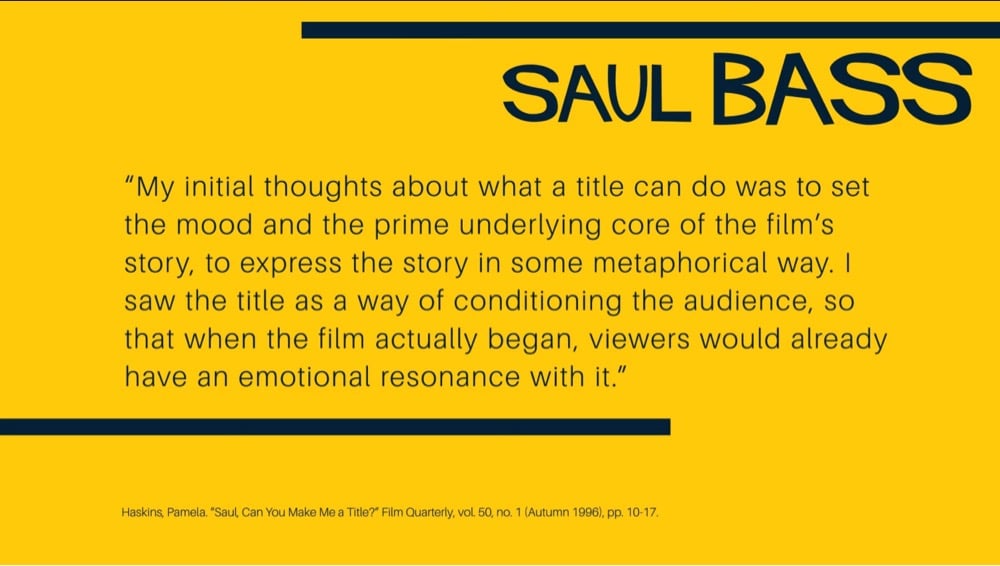
Bass called this “creating a climate for the story”. Here’s one of Willems’ favorite opening sequences by Bass, from 1966’s Grand Prix, which I’d somehow never seen before and is fantastic:
Me? I love opening title sequences. (Except when they are bad and too long.) But I also love when the movie starts right away. And when the movie starts right away and then you get a title card like 8 minutes into it. I’m a fan of anything when it’s done well. *shrugs*
P.S. You can check out hundreds of great examples of opening title sequences at Art of the Title.
Let’s get rid of loud & wasteful leaf blowers. “Hydrocarbon emissions from a half-hour of yard work with the two-stroke leaf blower are about the same as a 3,900-mile drive from Texas to Alaska in a [Ford F-150] Raptor.”
Documenting Death
After Kathy Brandt was diagnosed with late-stage ovarian cancer, she and her wife Kim Acquaviva, both of whom worked in end-of-life care, started documenting the end of her life on social media. The result was a frank portrait of death, which offered non-medical folks a view of something they rarely get to witness.
Many of the posts deal matter-of-factly with Brandt’s experience of inhabiting a dying body. Did she still crave sex? (“It’s like, for me, at least, there’s nothing there,” she tells Acquaviva, on camera.) Did she remember that she had a diaper on, and that it was time to relieve herself? What were her symptoms today, and how were they different from yesterday’s? The couple’s radical openness extended to a post, the day before Brandt’s death, in which Acquaviva says, “I’m sharing this for nonmedical people who’ve never heard the beginnings of a death rattle. The death rattle is Kathy Brandt’s. … The video is dark and jumpy, but the sound is decent.” The next day, Acquaviva posted a picture of her wife’s face, taken shortly after her death.
Note: this video can be difficult at times (because you’re watching someone dying), but as Acquaviva says, “In a culture were we don’t share almost anything around illness and death, the only way to counter that is for some people to share a little bit more than is probably appropriate.”
The original 1851 reviews of Moby-Dick. “This is an ill-compounded mixture of romance and matter-of-fact. The idea of a connected and collected story has obviously visited and abandoned its writer again and again in the course of composition.”
Here’s how to spot the methods of moral panic journalism. “Thousands upon thousands of words dedicated to the same arguments, the same low-stakes anecdotes, the same tortured historical analogies.”
Wind Turbine Wall

Designer Joe Doucet’s Wind Turbine Wall is both a kinetic sculpture and a way to harness wind power to create electricity.
Wind energy has played a key role in helping national grids around the world reduce dependence on fossil fuels to generate energy, but wind turbines for the home have encountered very slow uptake due, in part, to their intrusive physicality.
Designed to be as aesthetically pleasing as it is functional, this “kinetic wall” is made up of an array of rotary blades that spin individually, driving a mini generator that creates electricity. The electricity is utilized in the home or business, can be stored in a wall-mounted battery, or can even be fed back into the national grid to provide revenue for the owner.
Here’s the wall in action:
From a writeup of the project in Fast Company:
Doucet has built a prototype for a single spinning rod and run simulations based on that. The average annual electricity consumption for an American home uses a little over 10,000 kilowatt-hours per year. One of these walls would be enough. But where Doucet sees true potential is in larger-scale commercial buildings and even cities. “Instead of the typical retaining walls along roads and freeways, you’d have an array of these,” says Doucet, who says he’s in conversation with several manufacturers to help him bring the product to market. “With the added wind boost from trucks, our highways could take care of all our energy needs.”
(thx, michael)
Orbital Planes, a Photographic Ode to the Space Shuttle

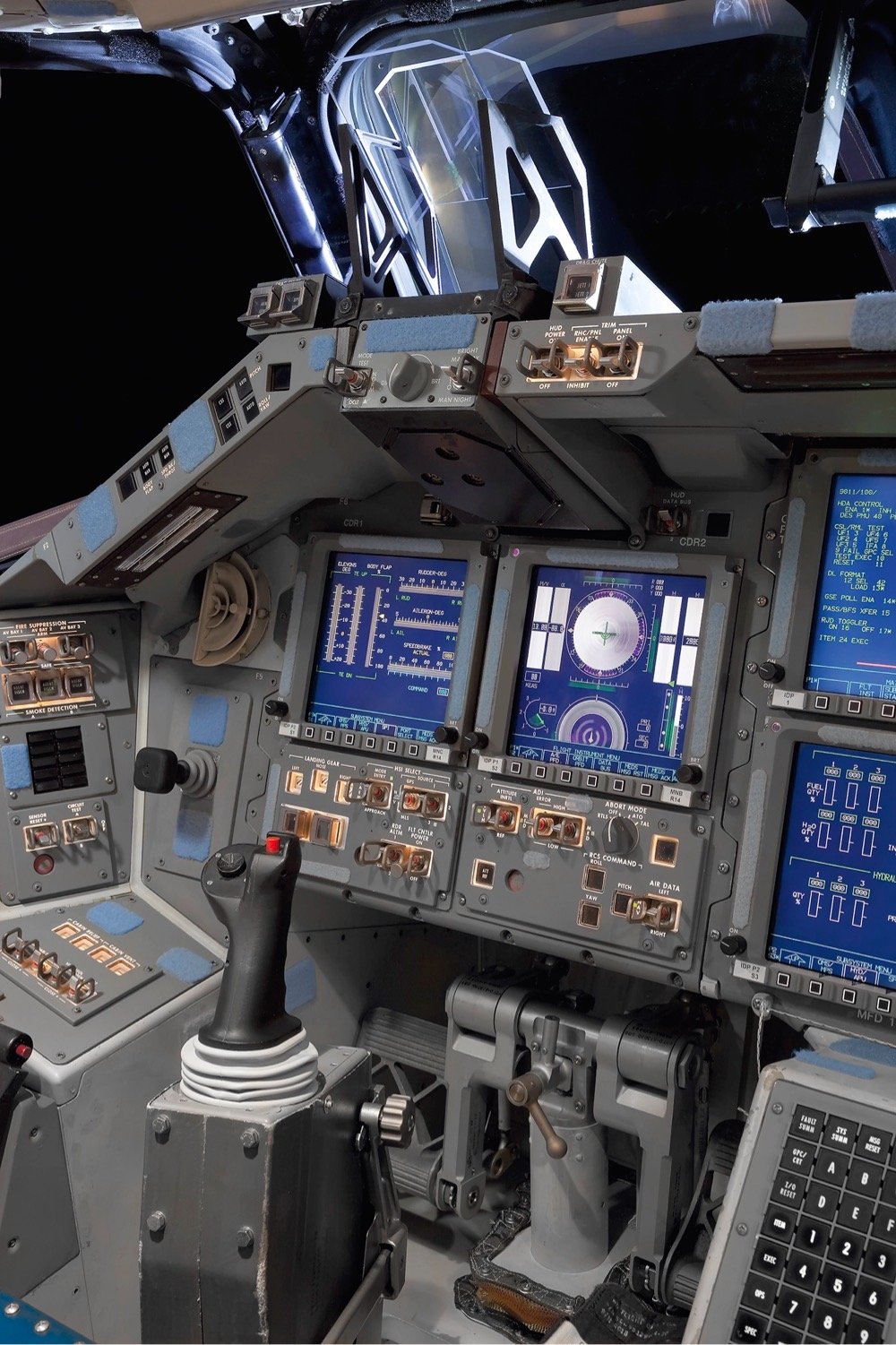
Roland Miller has been documenting space exploration for more than 30 years and his latest book, which he’s funding via Kickstarter, is a photo documentation of the final years of NASA’s Space Shuttle program.
I started documenting the Space Shuttle program when I was teaching photography at a college near the Kennedy Space Center. In 2008, I began a concentrated effort to document the final years of the program. Orbital Planes is the result of that photography work. My hope is that Orbital Planes will give the reader their own personal view of the Space Shuttle and the technology and facilities that helped it fly.
You might remember Miller from his collaboration with Italian astronaut Paolo Nespoli photographing the ISS. (via colossal)
Flingbot: A Robotic Artist That Flings Paint
Artist & engineer JBV has built a robot artist called Flingbot that works by throwing paint at a canvas according to a number of randomized parameters, e.g. fling strength, scoop shape, paint color, and throwing angles:
The next parameters are the starting and ending fling angles. Randomly chosen by the code, the trajectory and point it hits the canvas is variable creating another factor of uniqueness. This is all controlled by a servo under the base of the catapult, which also happens to be the motor that allows Flingbot to position itself under the paint reservoirs.
This means that every painting Flingbot creates is effectively unique.
All in all, accounting for all the different parameters, there are almost 3 trillion paintings that Flingbot can make. The number is likely even higher than this because there are even more variables to consider that are out of Flingbots control. These include the consistency of the paint, the angle of the canvas, the temperature in the room…the list goes on. It’s safe to say that each one of Flingbot’s painting is truly one of a kind.
(via the morning news)
Socials & More