Entries for August 2019

The late 1930s were a time of explosive creativity in the comics industry, with the creation of Superman, Batman, and Marvel Comics’ own unlikely fan favorite, Namor, the Sub-Mariner. I enjoyed reading this short précis on Namor in honor of his 80th anniversary.
Namor is less an early superhero than the last of the pulp icons, an antihero who threatened humanity with death and destruction. Unlike Superman, he’s not a secret alien raised by the best of humanity to save us all; he’s a hybrid mutant raised by a nonhuman race here on Earth that regards humanity as overgrown, ill-tempered children. And unlike Zack Snyder antiheroes who have to be twisted from their origin stories to bring them up to date, Watchmen-style, nothing about Namor needs to be changed to make him genuinely menacing, alien, and scary, while retaining his sexy charm. Namor’s just got it going on.
Namor’s film rights have been circuitously tied up for years, so we’ve never seen him on the silver screen. The first hit that always comes up when you search for him is Keanu Reeves, and Keanu at any age wouldn’t make a bad Namor. There’s talk of introducing him into the MCU via the Black Panther franchise, and that’s a great idea as well, since the main thing Black Panther and the Sub-Mariner share is that they’re not really super-heroes; they’re kings.
(Superman is precisely interesting to the extent that he is neither a king nor a god, but a man; these two things are not mutually exclusive. Hollywood’s inability to grasp this is part of why superhero movies have so much trouble, despite being the most dumb-simple megagenre of all time.)
I desperately want to know what this magical afternoon of cricket was all about (it sounds amazing!), but I cannot make any sense out of this article. “Strokemaker Jonny Bairstow nick a daft dab” ??!?
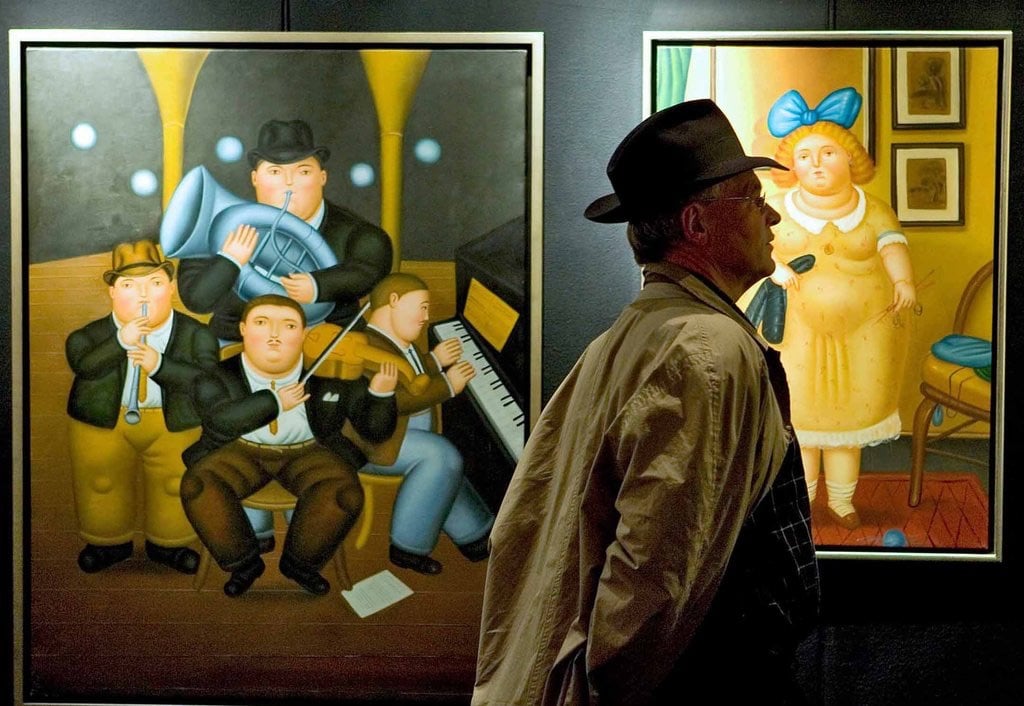
The Atavist’s “Masterpiece Theater,” by Anna Altman, traces the works of an art forger, Geert Jan Jansen (aka, among others, Jan Van den Bergen). Among other notorious works, Jansen forged a Picasso drawing which was thought to have been destroyed in a robbery, then directed a writer to it so the painting could be rediscovered.
Altman spends a fair amount of time chipping away at Jansen’s motives, and those of art forgers in general:
It takes a certain psychology to exploit art’s loopholes: a tendency toward self-aggrandizement, a loose relationship with the truth, and a sense of superiority, particularly vis-à-vis art royalty. Many forgers take a perverse pleasure in thumbing their noses at gatekeeping elites. And forgers can be something of a Rorschach test for the public. The art world, with its exclusivity, money, and pretension, elicits strong, sometimes negative reactions. The idea of someone skilled enough with a paintbrush or pen to fool the rich and powerful can be tantalizing. “To art critics, the forger is a mediocre artist seeking revenge; to the media, a conman interested only in money; to the apologist, he is the equal of the masters he forged; to the public he is often a folk hero,” Wynne writes.
There’s an element of Catch Me If You Can here:
Inside the château, Schoeller found hundreds of artworks that he and the French police suspected were fraudulent. They were attributed to masters like Picasso, Matisse, and Joan Miró. They were arranged in neat stacks, apparently ready for sale. Fake Chagall paintings hung above the stove, drying. Several rooms were designated for a particular artist whose style was being faked. Authorities also found half-finished works, sketches for new ones, contracts with auction houses in Belgium, Switzerland, and New York, and false authentication certificates. Moreover, Van den Bergen had all the tools required to produce fake certificates of authenticity, including a bag full of stamps and 30 vintage typewriters used to approximate typefaces from various time periods. In a dustbin were strips of paper cut from forged certificates to eliminate watermarks, which might have given away the documentation’s true age.
But the tools of the craft, the seams in the story, might always be more interesting than penetrating whatever depths are in the characters at work:
Strategy, or deciding what kind of art to fake, is also key. Potentially blockbuster works—oil paintings by Michelangelo, say, that might be worth tens of millions of dollars—are likely to be put through the authentication wringer. Less prized items are not. Prints, works on paper, and gouaches (opaque watercolors) usually sell for less than $10,000 and pass through small auction houses and dealers. It’s much easier to elude detection when the stakes, relatively speaking, are low.
That may have been one reason Van den Bergen forged the types of works he did—smaller-scale compositions on paper rather than oil paintings. But he may have had other, more personal motives. Among the paintings recovered from the château were large-format abstract canvases, filled with geometric shapes in shades of lime green and orange. They were originals of the artist, and Schoeller wasn’t impressed. “He’s a perfect craftsman but not an artist,” the investigator told the Stuttgarter Nachrichten. “He has no style of his own.” Perhaps that’s why he’d become a forger in the first place—an abundance of artistic ambition without the vision to realize it.
The oldest carbon-dated evidence of humans in North American have been found in Idaho: 16,500 years old. They challenge “a long-held theory that North America’s first humans arrived by crossing a land bridge connected to Asia”.
Video essayist Jacob T. Swinney makes makes these great little supercuts of the stylistic habits of filmmakers. His two latest ones are of Barry Jenkins’ close-ups and Christopher Nolan’s wide shots.
Barry Jenkins may be the modern master of the close-up shot. Jenkins’s close-ups are reminiscent of those crafted by the late, great Jonathan Demme — shallow focus with the character looking directly into the camera’s lens. Take it from close-up aficionado, Paul Thomas Anderson. Anderson once told Jenkins, “I’m very jealous of your close-ups. There’s a long line of people who have really tried to do Jonathan Demme close-ups and I try all the time, but I have to say, you got it right better than anybody.” In Jenkins’s last two features, MOONLIGHT and IF BEALE STREET COULD TALK, the close-ups seem to transcend the narrative of the films. Time seems to stand still as we gaze into the eyes of the characters. They are intimate and profound, and they are simply pure cinema.
For a man whose films cover everything from masked vigilantes, to dream heists, to interdimensional travel, Christopher Nolan is a rather personal and intimate filmmaker. This is expressed in the way that he tends to position his camera. Nolan prefers to keep his camera close to his characters, often hugging their bodies in warm medium shots or close ups. So when Nolan chooses to back off and take a step back from his characters, we are going to feel it. Nolan’s wide shots are obviously beautiful, but what they convey extends far beyond a stunning visual. They convey magnitude and significance, isolation and disorientation.
Swinney has also done supercuts of David Fincher’s wide shots, the sound design of Jurassic Park, the use of shallow focus by Denis Villeneuve, P.T. Anderson’s reflective silence, and Darren Aronofsky’s extreme closeups. May I suggest some women filmmakers for the next round of videos though? Lynne Ramsay and Ava DuVernay for starters…
From Kaiser Kuo, a long piece attempting to answer the question: “Why do so many people feel that the Chinese can’t possibly be OK with their government or society?”
First, I’ll look at the gap in political culture between China and the liberal Western democracies, especially the United States. I’ll argue that there is little appreciation among most WEIRD individuals — that is, Western, Educated people from Industrialized, Rich, and Developed nations — for just how highly contingent political norms they take for granted really are from an historical perspective. I’ll sketch the outlines of the major historical currents that had to converge for these ideas to emerge in the late 18th century. Then, I’ll compare this very exceptional experience with that of China, which only embraced and began to harness those engines of Western wealth and power — science, industrialization, state structures capable of total mobilization of manpower and capital — much later. And late to the game, China suffered for over a century the predations of imperial powers, most notably Japan. Hopefully, I’ll show why it was that liberalism never really took hold, why it was that Chinese intellectuals turned instead to authoritarian politics to address the urgent matters of the day, and why authoritarian habits of mind have lingered on.
Next, I’ll argue that a lot of unexamined hubris lies not only behind the belief that all people living under authoritarian political systems should be willing to make monumental sacrifices to create liberal democratic states but also behind the belief that it can work at all, given the decidedly poor record of projects for liberal democratic transformation in recent years, whether American-led or otherwise. It’s important to see what the world of recent years looks like through Beijing’s windows, and to understand the extent to which Beijing’s interpretation of that view is shared by a wide swath of China’s citizenry.
Finally, I’ll look at the role of media in shaping perspectives of China in the Western liberal democracies and in other states. A very small number of individuals — reporters for major mainstream media outlets posted to China, plus their editors — wield a tremendous amount of influence over how China is perceived by ordinary Anglophone media consumers. It’s important to know something about the optical properties of the lens through which most of us view China.
I found this via Kevin Kelly, who says: “Based on my extensive time in China I think this long article is 100% correct.”
Yesterday I linked to a thread discussing old school bloggers who are still active. One of the best of the old guard is very much still at it: Alan Taylor. Taylor has been curating photographic essays the The Atlantic for more than 8 years — and for several years before that at The Boston Globe and on his own blog. His latest features the work of Margaret Bourke-White, one of my all-time favorite photographers.
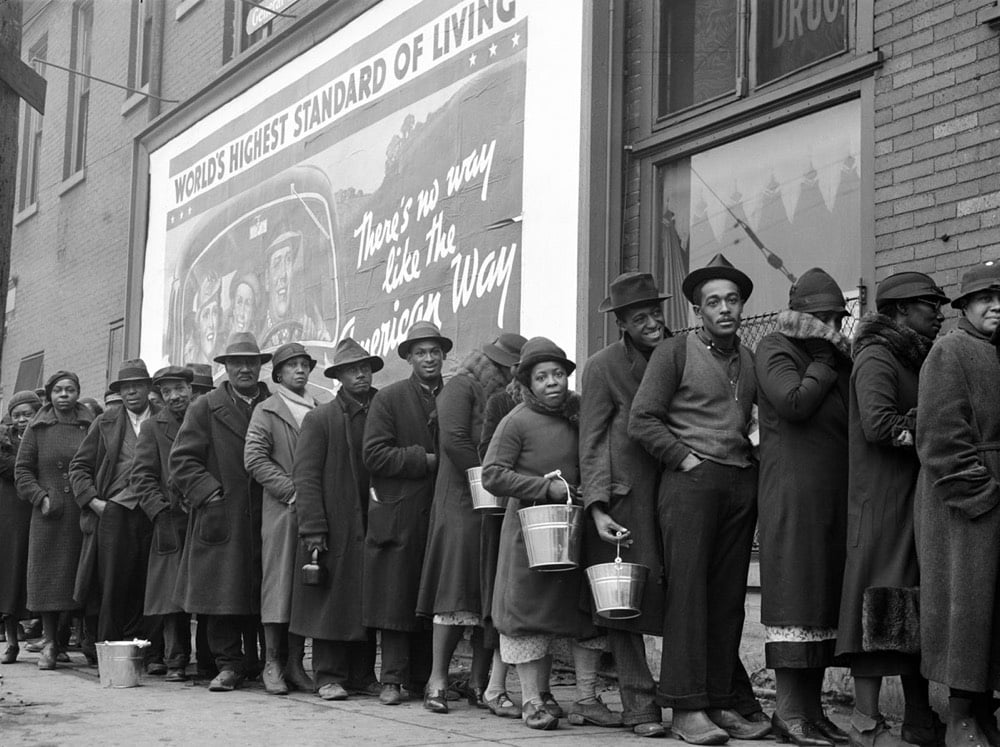
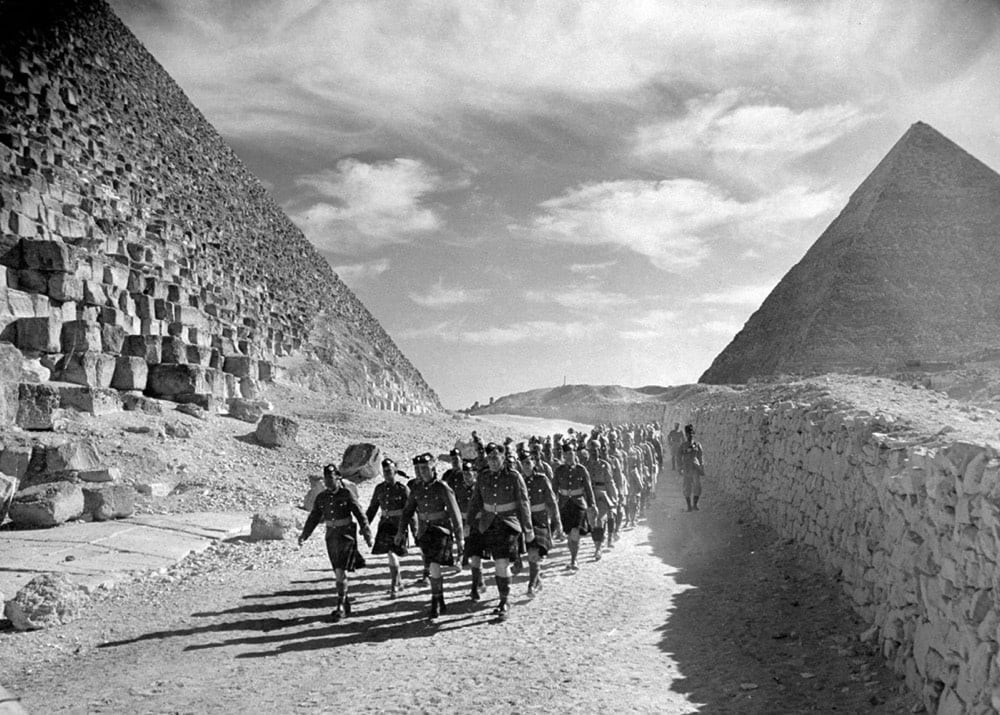
That first shot is an alternate view of this iconic photo.
By 1929, she began working for magazine publishers, joining both Fortune and, later, LIFE. She spent years traveling the world, covering major events from World War II to the partition of India and Pakistan, the Korean War, and much more. Bourke-White held numerous “firsts” in her professional life — she was the first foreign photographer allowed to take pictures of Soviet industry, she was the first female staff photographer for LIFE magazine and made its first cover photo, and she was the first woman allowed to work in combat zones in World War II.
Here’s Bourke-White in a fleece-lined flight suit during World War II, ready to work. Badass.

A recent poll of almost 2000 likely 2020 voters suggests that the anti-abortion movement is not really about protecting life but more about controlling the lives and bodies of women. Jill Filipovic writes about the results in The Guardian:
Do men make better political leaders than women? More than half of anti-abortion voters agreed. Do you want there to be equal numbers of men and women in positions of power in America? Fewer than half of abortion opponents said yes - compared with 80% of pro-choicers, who said they want women to share in power equally.
Anti-abortion voters don’t like the #MeToo movement. They don’t think the lack of women in positions of power impacts women’s equality. They don’t think access to birth control impacts women’s equality. They don’t think the way women are treated in society is an important issue in the 2020 election.
In other words, they don’t believe sexism is a problem, and they’re hostile to women’s rights. Pro-lifers are sexists in denial — yes, the women too.
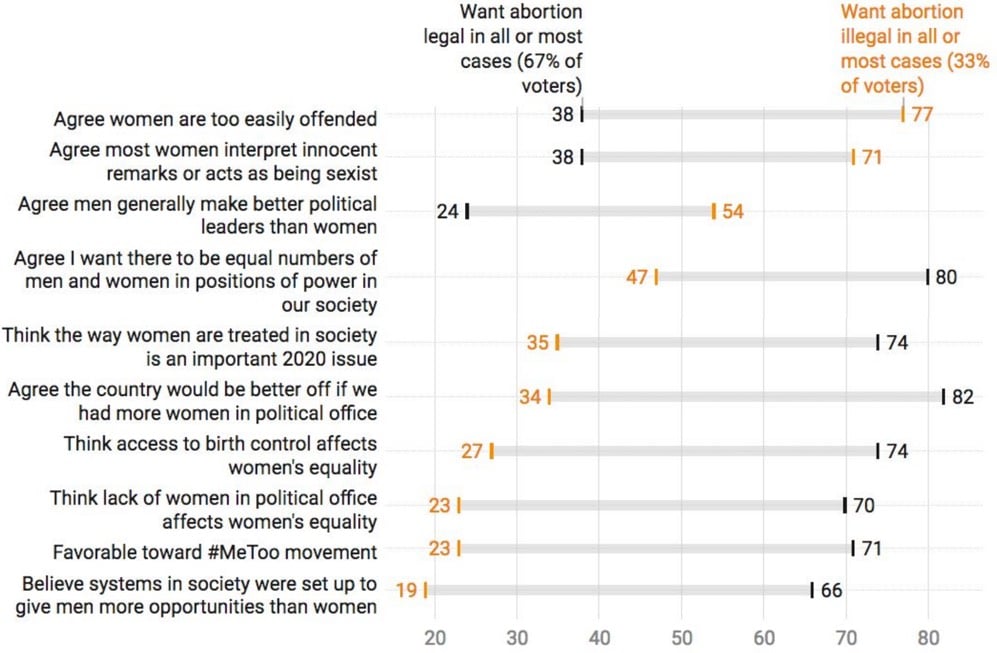
The full results of the poll are an interesting read. Here are the main findings from the “snapshot” section:
1. Many voters are angry and worried about the state of women’s rights and gender equality in the country.
2. Women across nearly every demographic segment are more likely to think President Trump has made things worse, rather than better, for women.
3. Women voters connect a number of issues to gender equality, including violence against women, equal pay, paid family leave, and access to abortion.
4. The recent abortion bans aggravated and elevated feelings about the state of women’s rights.
5. Anti-abortion voters are among the most likely — if not the most likely — segment to hold inegalitarian views.
6. Democratic voters are more unified and mobilized around abortion than Republican voters are.
7. The way women are treated in society is a top voting issue for Democratic women voters, but not Republican women voters.
8. Democratic women are most likely to feel that the 2020 elections are “more important than usual.” Republican women are least likely to feel the upcoming elections are atypical.
And check out the Trump tag cloud on page 10. Oof.
Since reading Gregory Shill’s writing about how heavily subsidized cars are in the United States, I’ve been on the lookout for different frameworks for thinking about America’s relationship to cars. I recently ran across a pair of interesting things about cars & housing. First, a refresher on what Shill had to say about how our nation’s laws have made cars all but mandatory:
Let’s begin at the state and local level. A key player in the story of automobile supremacy is single-family-only zoning, a shadow segregation regime that is now justifiably on the defensive for outlawing duplexes and apartments in huge swaths of the country. Through these and other land-use restrictions — laws that separate residential and commercial areas or require needlessly large yards — zoning rules scatter Americans across distances and highway-like roads that are impractical or dangerous to traverse on foot. The resulting densities are also too low to sustain high-frequency public transit.
Aaron Bady shared a few meaty pages from Nathanael Lauster’s The Death and Life of the Single-Family House: Lessons from Vancouver on Building a Livable City about houses being urban parasites and their symbiotic relationship with cars. Here’s an excerpt (italics mine):
Returning to the metaphor provided by the pine beetle and blue stain fungus, one parasite often works with another. In similar form, houses cultivate cars. Integrated through planning, they displace vastly more habitat than either could manage alone. Because houses consume space and tend to surround themselves with other houses, which also consume space, people often cannot walk to where they need to go. Because all that space results in a relatively low population density, it is also not very efficient to run public transit lines to areas with many houses. Low-density areas tend to end up with very few riders for what are often very expensive systems to maintain. In short, public transit loves density. The relationship between urban density and public transit use is exceptionally strong, with some suggestion of a cutoff — perhaps around twelve persons per acre (or about three thousand per square kilometer) — below which ridership drops off and expense per user makes transit impractical. By contrast, cars love the sprawl associated with houses and houses love cars back.
Houses cultivate cars. Cars love the sprawl associated with houses and houses love cars back. Lauster continues with the nature metaphor:
Altogether, house habitat displaces alternatives. The establishment of a Great House Reserve has protected house habitat even as it continues to expand in size. Agricultural and wild lands suffer in an immediate sense, as do the more urban habitats prevented from expanding beyond a constrained Urban Core. The house allies itself with the car at the same time as both contribute to global warming, potentially risking the displacement of everyone and everything. The house habitat excludes the poor. But even for those who can afford to live there, the Great House Reserve is a troublesome place to live. By its nature it leads to disengagement, contributes to inequality, and encourages a sedentary, unhealthy lifestyle.
And so on:
Houses are not just unaffordable for most people; they’re ultimately unaffordable for cities too. The fiscal situation of cities varies from place to place, but overall, houses tend to create a drain on municipal coffers. They are often taxed at lower rates than other properties, reflecting zoning restrictions on what could be built on single-family lots and how they can be used. But houses are more expensive to service on a per-unit basis, both in terms of the basic utilities infrastructure and, as previously noted, in terms of transit and transportation infrastructure. This could mean that my modestly wealthy neighbors and I, living in low-rises and town houses, end up supporting the very wealthy house owner nearby by paying more property tax relative to the amount of urban land and services we receive. The disparity becomes more notable as one crosses municipal boundaries into nearby house-dominated suburbs, where residents frequently enjoy the services (e.g., roads, commerce, employment opportunities) provided by the city without paying into the municipal tax base at all.
Josh Vredevoogd’s No Parking Here is about the poor parking policy in LA and leads with the statement: “Let’s build houses for people, not cars.”
For commercial buildings, it’s common to see a parking space required for every 100-200 sq ft. Meaning that parking is built at an almost 2:1 ratio to actual retail space, marginalizing the place that actually creates value and prioritizing temporary car storage. This inefficiency is carried into rent, groceries, meals, and overall raises the floor for cost of living.
Per City of LA code, a set of storefronts like above are illegal to build, instead they are required to be surrounded with empty pavement at the cost of walkability and comfort.
This forces people into driving. Parking requirements increase the density of cars but reduce the density of people. It also puts pressure on businesses by taking up useful real estate and replacing it with car storage.
Certainly a lot of food for thought here. See also Cars! What’s the Matter with Cars Today? and on a lighter note, What On Earth!, Kal Pindal’s Oscar-nominated short film about Martians visiting Earth and their observations about the dominant form of life here, the automobile.
An endling is the last known member of a species and once it dies, the species becomes extinct. George was a tree snail that died in early 2019, the last member of the now-extinct Achatinella apexfulva species. He was 14.
Few people would mourn a snail, but Sischo and his team had spent years caring for George. He was a daily constant, a familiar friend. He was also the last known snail of his kind, the final Achatinella apexfulva. It is said that everyone dies alone, but that was doubly true for George-alone at the end both in his cage and in the world.
When the last of a species disappears, it usually does so unnoticed, somewhere in the wild. Only later, when repeated searches come up empty, will researchers reluctantly acknowledge that the species must be extinct. But in rare cases like George’s, when people are caring for an animal’s last known representative, extinction-an often abstract concept-becomes painfully concrete. It happens on their watch, in real time. It leaves behind a body. When Sischo rang in the new year, Achatinella apexfulva existed. A day later, it did not. “It is happening right in front of our eyes,” he said.
There’s a part early on in the video where Sischo is showing the snails in his team’s care and he casually points to a small chamber and says “here is the entire world’s population of this snail species” — I found that incredibly sad and had to stop the video for awhile to regroup. (Oh and the cardboard boxes labeled “snail morgue”.)
George was unique and we’re trying to avoid another George. But we have 100 species that will be gone within the next 5 to 10 years without intervention.
SpaceX took its Starhopper rocket out for a little test run in Texas the other day, taking off and then landing about 300 feet away after reaching a height of about 500 feet. Spacehopper is a prototype of the company’s Starship spacecraft & rocket, which they plan to fly to and land on the Moon and Mars.
I’ve written about the wonder of SpaceX’s reusable rockets before, but the Starhopper test in particular seems like some deeply sci-fi shit, like what society imagined future space travel would look like. The ship looks and moves like something straight out of a late 60s Dr. Who serial.
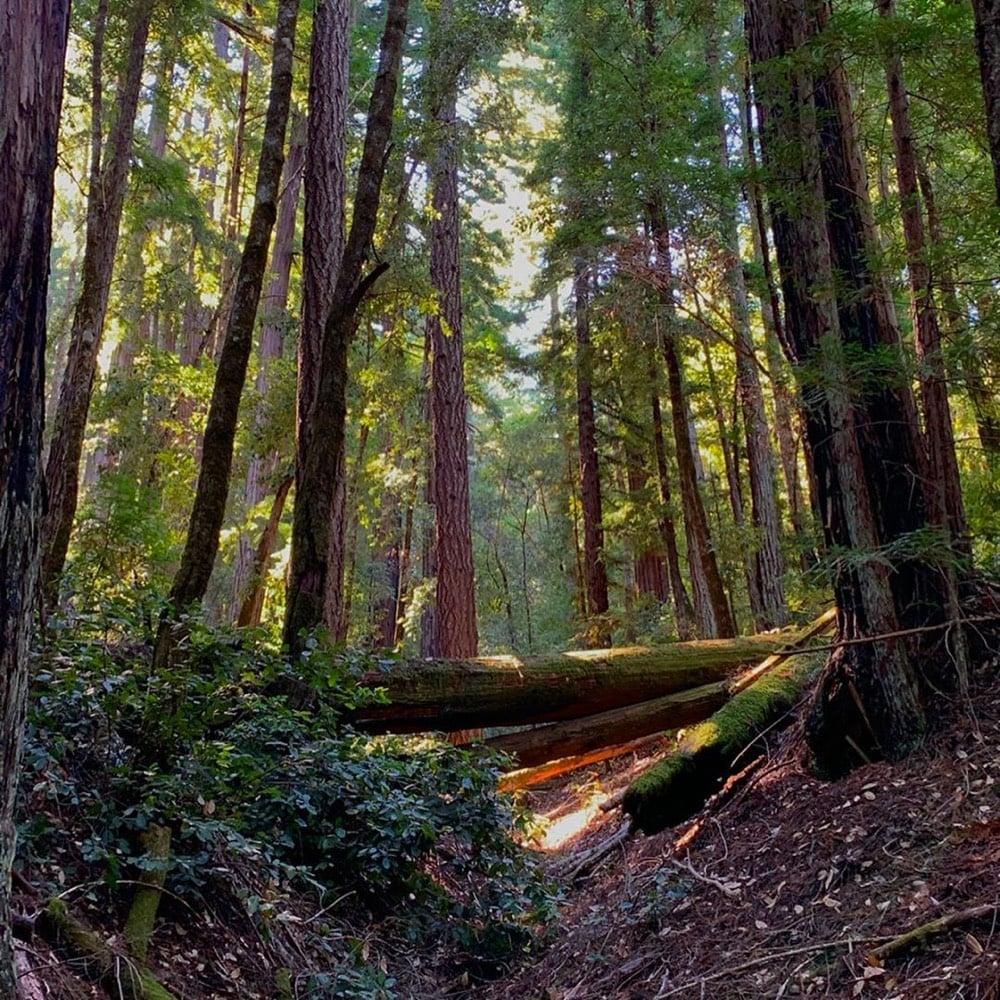
In late July after visiting my kids at camp, I flew into LA, rented a car, and spent two weeks driving up the coast from there to Portland, OR. Along the way, I visited old friends and made some new ones, got to see how some of my favorite movie magic is performed, ate very well, spent some time in an old neighborhood, drove 1700 miles, communed with the tallest trees on Earth, and watched the ocean churn and swell and crash and froth for a very very long time. Here are some reflections and observations from the trip, from my vantage point a month later.
To start off the trip I spent a little less than three days in LA, essentially my first trip to the second largest city in the US (aside from 24 hours spent there in 2005). It was…fine? The food was good, beach was good, museums were good, but I guess I didn’t feel a whole lot of natural affinity for the place. Then again, three days isn’t a lot of time and I will go back to explore more for sure. I somehow didn’t even get tacos, an oversight I rectified once I got to Santa Barbara. But I was able to see a few friends, which trumped any possible attractions or sights I could have seen instead.
Aside from visiting friends, like 75% of the reason I wanted to go to LA was to see Chris Burden’s Metropolis II at LACMA. I timed my visit for the weekend so it’d actually be running, and it did not disappoint. Could have watched it for hours:
Electric scooters (I used the ones from Lime and Lyft) made getting around LA a breeze. Cities need to figure out how to work these into their transportation infrastructure without clogging their sidewalks, keeping riders & pedestrians safe, theft/breakage, and not undermining other more accessible forms of public transportation.
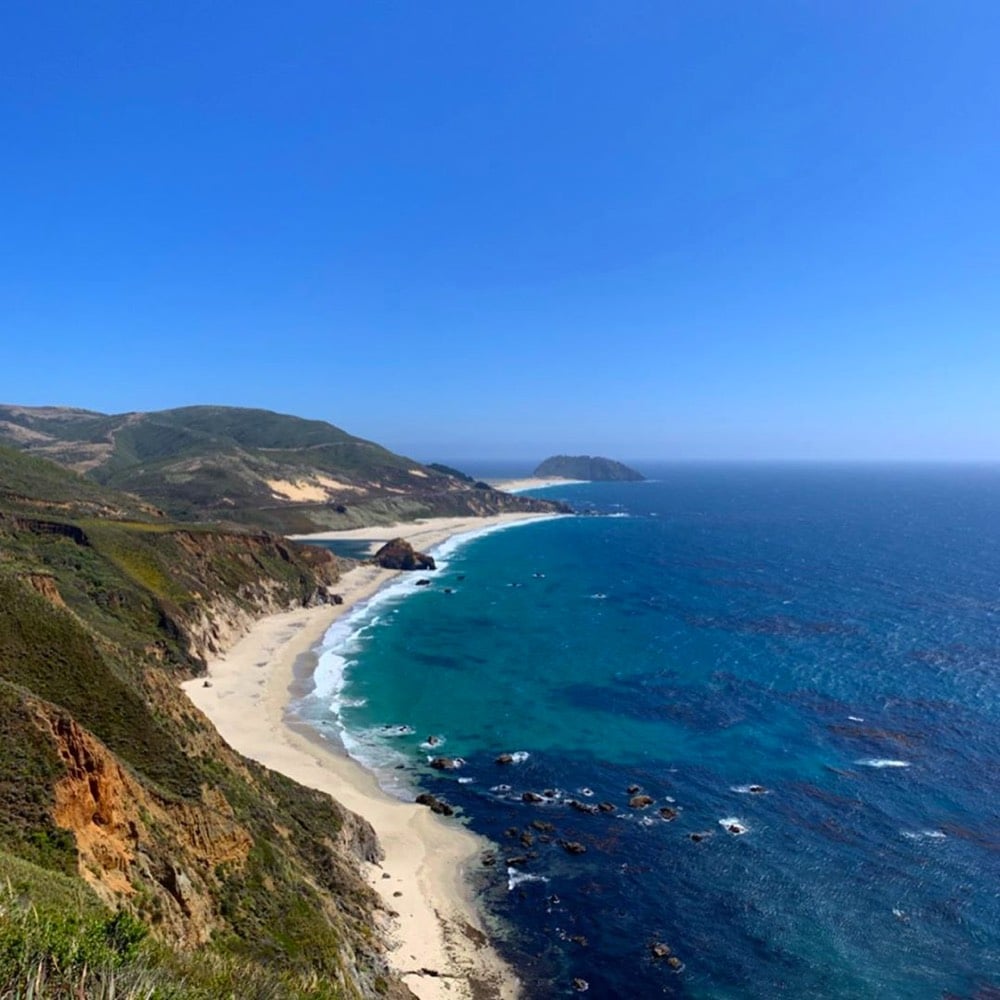
Not much to say about Big Sur other than it’s gorgeous but crowded. Around each curve was a seemingly better view than the last.
The redwoods. Where do I even start? They were my absolute favorite part of the trip. I spent the better part of three days exploring Big Basin Redwoods State Park, Humboldt Redwoods State Park, and Redwood National and State Parks and even at the end of the third day, I was looking up at these 300-foot monsters and saying “wow!” It was like going to church. I can’t wait for my kids to spend some time exploring the redwood forests.
When I lived in SF from 2000-2002, my favorite place to visit was Muir Woods and I was really looking forward to seeing it again. When I swung by to visit on this trip, I was frustrated to learn from the friendly park ranger at the entrance that parking now requires advance reservations. So no Muir Woods for me this trip. Luckily there were many more redwoods to be had elsewhere…
Along almost the entire route of my trip (I stuck mostly to Highway 1 and the 101), I passed people working in fields. They were everywhere, toiling away to earn a hard living so their families could eat, so that they could pay their taxes, so that they could make a good life for their children. The news of ICE raids and the continued separation of children from their parents by the most inhumane administration in recent American history were never far from my mind.
Every summer when I was a kid, my dad, my sister, and I would take a roadtrip to a different part of the country: Florida, Virginia, Texas. Sometimes we took a car and camped along the way (with occasional motel stays) and other times we drove in a used motorhome my dad bought one year (approximately one of these). But the ocean was always a constant as a destination. My sister and I had grown up in Wisconsin but had never seen the ocean before, and after our first trip to the Gulf Coast of Texas, we were hooked. One year we drove out to California and up the coast to Oregon. I remember vividly the freezing cold ocean and the winding coastal roads — we almost got our camper stuck in a particularly tight hairpin curve. I loved those roadtrips…they are my absolute happiest memories from childhood. Driving some of those same curves in northern California this time around, I waved to pretty much any RV I saw, as if I were saying hello to my past teenaged self, who was getting a taste of what awaited him in this whole wide world.

When I was in the Bay Area, I got to fulfill a long-time dream of mine: visiting the Pixar campus in Emeryville. I gotta say, stepping into the main building, designed by Steve Jobs to foster collaboration among the company’s employees, gave me goosebumps. I could have spent hours looking at all of the sketches, storyboards, and ephemera from Incredibles II that they had hanging on the walls. I visited the recording studios, the screening rooms, the secret speakeasy, and saw a few of the animators’ wildly decorated cubicles. They told me how the process of making a movie at Pixar has changed from “laying down the track in front of a moving train” to “laying down the track in front of a moving train while also building the train”…it sounds like they’ve really worked hard on making their development process as asynchronous as possible. I was told that Pixar has an entire team just for making crowds now.
My tour guides showed me some of the company’s favorite misrendered scenes culled from an internal mailing list, including an amazing rain tornado around a car in Toy Story 4. I saw in action the AI spiders that were designed to weave the cobwebs in TS4.
Typically, cobwebs must be made by hand, but, because of the number of cobwebs which the crew wanted to include, Hosuk Chang (Sets Extensions Technical Director) wrote a program to create a group of artificial intelligence spiders to weave the cobwebs just like a real spider would.
We actually saw the AI spiders in action and it was jaw-dropping to see something so simple, yet so technically amazing to create realistic backgrounds elements like cobwebs. The spiders appeared as red dots that would weave their way between two wood elements just like a real spider would.
They showed me a scene from TS4 and how it was made — the different layers of shading and lighting, storyboards, effects, the different cameras and lenses that were available for the director’s use. One cool tidbit: the virtual cameras used in the Toy Story movies are human-scale and shot from human height so that the toys actually look like toys. Ok, another cool tidbit: the virtual cameras & lenses are based on actual cameras and actual lenses so the directors know what sort of depth of field, angle, and views they’re going to get with a given setup. The software is incredible — they showed me a screen with like 30 different camera/angle/lens/focus combinations so that a director can simultaneously watch a single scene “filmed” all those different ways and choose which shot they want to go with. I mean…
To get the motion just right for the baby carriage scene in the antique store for TS4, they took an actual baby carriage, strapped a camera to it, plopped a Woody doll in it, and took it for a spin around campus. They took the video from that, motion-captured the bounce and sway of the carriage, and made it available as a setting in the software that they could apply to the virtual camera. I MEAN…
I also heard a few Steve Jobs stories that I’m going to keep to myself for now…they are not mine to tell. Thanks to Tom, Ralph, and Bob for showing me around and being so generous with their time. Ok,
I had forgotten that driving though the groves of eucalyptus just north of San Francisco was so wonderfully fragrant. Way better than one of those Muji aroma diffusers. But I’ll tell you: I do not miss living in SF. I spent a lovely afternoon walking around my old neighborhood, wandering in Golden Gate Park, and stopping in to check out the Dahlia Garden (my favorite place in SF), but that was enough for another few years.
While driving, I listened to To Kill a Mockingbird on audiobook; I’d never read or listened to it before. A favorite line: “Delete the adjectives and you’ll find the facts.” I’m not sure I’ve been successful in curbing my adjective use in this post.
At dinner one night, I asked an LA pal about work and she said she’d quit her bartending job to deliver weed — better schedule and pay. There were cannabis dispensaries everywhere in California and Oregon. The one I visited in central CA had a security guard outside checking for IDs and weapons, a double door system in the reception area, and once you got into the retail space, you could find out more about a product by placing it on a sensor and the info would appear on a nearby touchscreen. But at other dispensaries, like the one I walked past in Arcata, the door was wide open and you could just mosey on in. Let’s just say I slept pretty well on this trip.
After seeing the 45-minute-long line for lunch at the Tillamook Creamery (and a 20-minute-long line just for cheese samples), I decamped to a local Burger King to try the Impossible Whopper for the first time. All the people saying that the Impossible patty tastes just like a real burger have either never tasted meat before or don’t pay a whole lot of attention when they eat. It’s the best veggie burger patty I’ve ever had, but it sure ain’t beef.
A few small towns caught my attention. Cambria, CA was a cool little place I would gladly spend more time in — Moonstone Beach was beautiful. Los Alamos, CA is possibly the quaintest town I have ever seen — ate a great breakfast at Bob’s Well Bread Bakery. I breezed through Arcata, CA and explored the downtown a bit, but it had such a cool vibe that I’d definitely go back for another look.
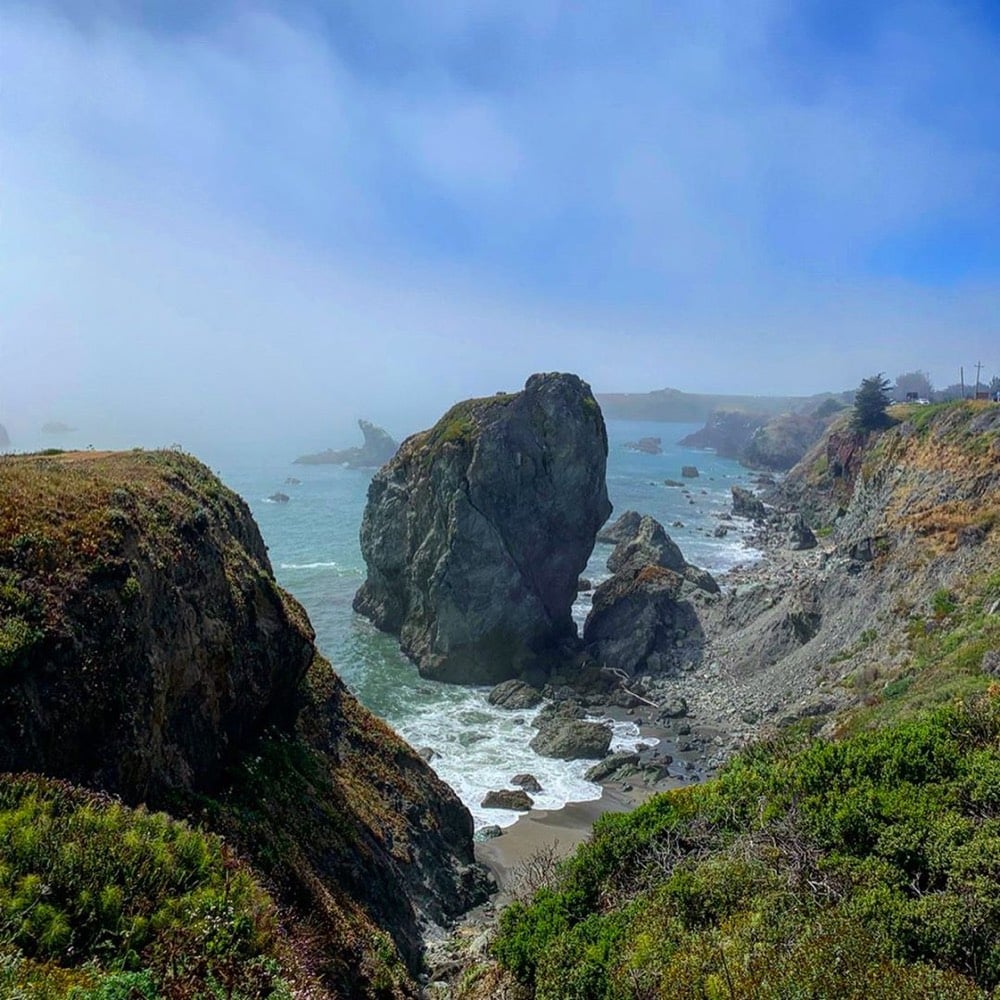
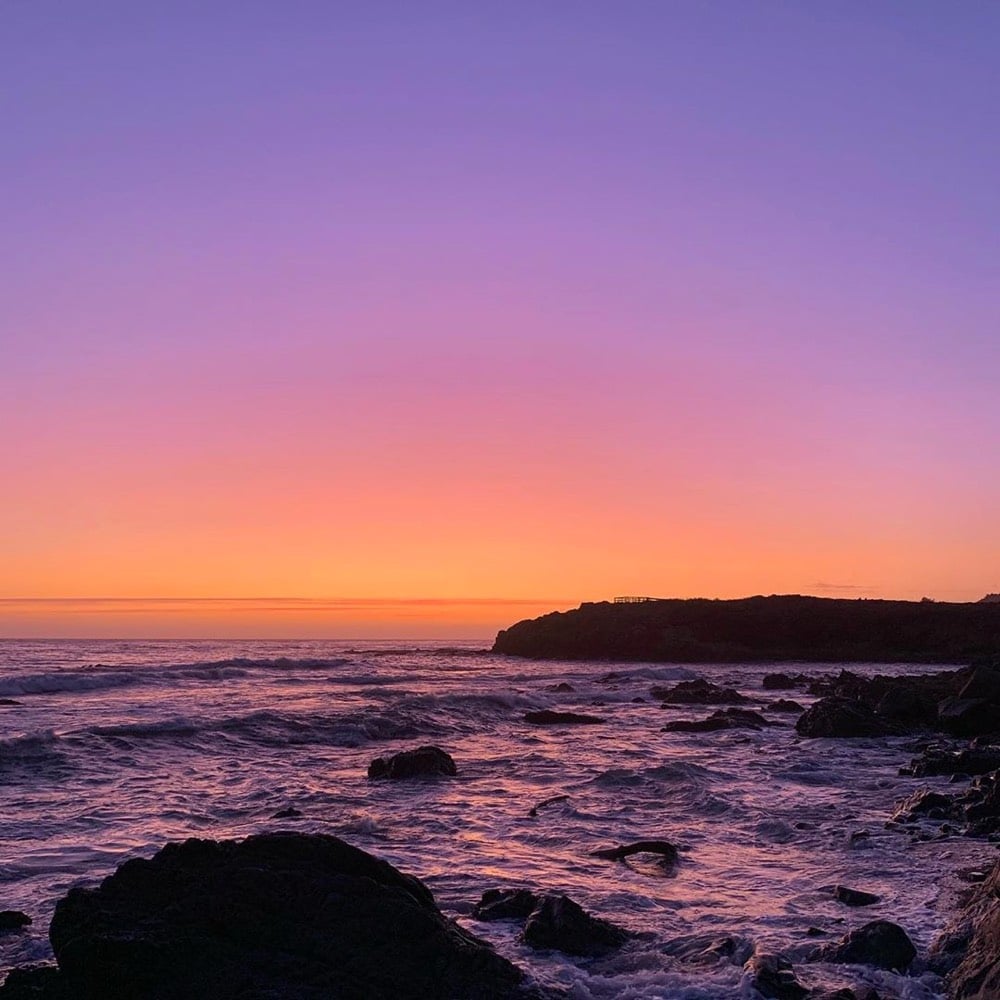
Sometimes the problem with going on vacation is that you have to take yourself along with you. No matter how astounding the sights, how engaging the catchups with friends, how relaxing it is, and how far away the rest of the world seems, your thoughts and anxieties and hang-ups come with you everywhere you go. Near the end of my trip, I splurged on a nice hotel room for two nights in Yachats, OR and mainly sat on the rocks and watched the waves crash. It was perfect. The ocean remains my ultimate happy place and I need to find a way to spend more (or perhaps all) of my time closer to it.

And then it was time to head home. You can check out a bunch of my photos from the trip on Instagram and in this Instagram Story. Thanks to my friends Alex, Michael, and Matt for the accommodations & fellowship along the way. This trip was not the once-in-a-lifetime experience that last year’s western roadtrip was, but I did feel similarly at its conclusion:
Doing this roadtrip reminded me of many great things about this country & the people who live in it and gave me the time & space to ponder how I fit into the puzzle, without the din of the news and social media. If you can manage it, I encourage you all to do the same, even if it’s just visiting someplace close that you’ve never been to: get out there and see the world and visit with its people. This world is all we have, and the more we see of it, the better we can make it.
Thanks for following along with my journey.

A photo of Jupiter taken by the Hubble Space Telescope in late June was recently released by NASA. Among other things, it shows just how much smaller, redder, and rounder the Great Red Spot has gotten.
The Great Red Spot is a towering structure shaped like a wedding cake, whose upper haze layer extends more than 3 miles (5 kilometers) higher than clouds in other areas. The gigantic structure, with a diameter slightly larger than Earth’s, is a high-pressure wind system called an anticyclone that has been slowly downsizing since the 1800s. The reason for this change in size is still unknown.
The spot was “once big enough to swallow three Earths with room to spare” but has been shrinking steadily since a brief expansion in the 1920s. As the storm contracts, it has stretched up into the Jovian atmosphere.
Because the storm has been contracting, the researchers expected to find the already-powerful internal winds becoming even stronger, like an ice skater who spins faster as she pulls in her arms.
Instead of spinning faster, the storm appears to be forced to stretch up. It’s almost like clay being shaped on a potter’s wheel. As the wheel spins, an artist can transform a short, round lump into a tall, thin vase by pushing inward with his hands. The smaller he makes the base, the taller the vessel will grow.
Recently amateur astronomers have observed “flakes” or “blades” coming off of the storm and dissipating into the larger atmosphere, a formerly rare phenomenon that now seems more common.
The Hubble photographs also yielded a rotating view of the planet as well as a very cool stretched-out photo of the surface:

Ctrl Shift Face created the popular deepfake videos of Bill Hader impersonating Arnold Schwarzenegger, Hader doing Tom Cruise, and Jim Carrey in The Shining. For their latest video, they edited Freddie Mercury’s face onto Rami Malek1 acting in a scene from Mr. Robot:
And for the first time, they shared a short visual effects breakdown of how these deepfakes are made:
Mercury/Malek says in the scene: “Even I’m not crazy enough to believe that distortion of reality.” Ctrl Shift Face is making it difficult to believe these deepfakes aren’t real.
If you need to convince yourself to go to Iceland, this short film by Vadim Sherbakov should do the trick for you. Just stunningly beautiful landscape masterfully shot.
Islandia — is a Latin name for Iceland and relative to the old language since this film portraits primordial and rough nature of Iceland. For the short duration of the film, you will be transported to a place that easily could be a million years ago. From unbelievable landscapes and vast valleys to painting-like terrain and majestic waterfalls and lakes - this film shows the unparalleled beauty of Iceland and its unearthly glory.
Watching the film, I wondered what Iceland would have looked like back when it had trees — probably even more amazing. (via colossal)
I don’t talk about it much on the site for some reason, but Mario Kart is one of my all-time favorite video games. So I am very excited that Mario Kart Tour is coming out on iOS on September 25 (just in time for my b-day). You can pre-order it here — the game is free with in-app purchases to unlock more gameplay (just like Super Mario Run). Here’s a short trailer that shows how the gameplay works:
New research, including DNA evidence, shows that Aaron Burr had a secret family of color. “Aaron Burr fathered two children, John Pierre and a girl, Louisa Charlotte, with a woman of color named Mary Emmons, who hailed from Kolkata, India.”
Because of the Electoral College and the way the primary system works in the US, presidential candidates end up spending a disproportionate amount of time is so-called “battleground states” like Pennsylvania, Ohio, and our dysfunctional friend Florida and primary states like Iowa and New Hampshire and less time where most of the US population actually lives (NY, CA, TX, IL, and in cities). The campaign for the National Popular Vote has produced a map that shows where the candidates did campaign events in 2016:
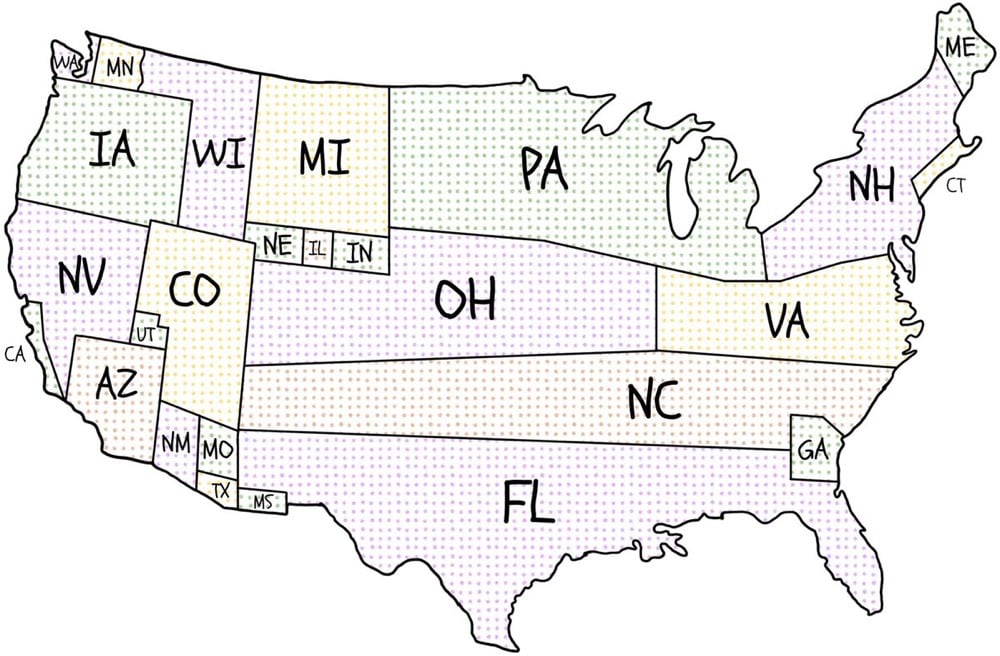
Because of these state winner-take-all statutes, presidential candidates have no reason to pay attention to the issues of concern to voters in states where the statewide outcome is a foregone conclusion. In 2012, as shown on the map, all of the 253 general-election campaign events were in just 12 states, and two-thirds were in just 4 states (Ohio, Florida, Virginia, and Iowa). Thirty-eight states were completely ignored.
And here’s the map for the 2012 election, which is even more extreme:

State winner-take-all statutes adversely affect governance. “Battleground” states receive 7% more federal grants than “spectator” states, twice as many presidential disaster declarations, more Superfund enforcement exemptions, and more No Child Left Behind law exemptions.
Also, because of state winner-take-all statutes, five of our 45 Presidents have come into office without having won the most popular votes nationwide. The 2000 and 2016 elections are the most recent examples of elections in which a second-place candidate won the White House. Near-misses are also common under the current state-by-state winner-take-all method of awarding electoral votes. A shift of 59,393 votes in Ohio in 2004 would have elected John Kerry despite President Bush’s nationwide lead of over 3,000,000 votes.
I don’t know about you, but I found it extremely difficult to not watch something called “A Year Ago I Put Saltwater in a Jar, This Happened”.
Last year, this YouTuber put some seawater, sand, and a few small plants in a large jar and sealed it up and over the course of the next year, a number of surprising things occurred in this closed ecosystem.
The ecosphere has housed crabs, starfish and a lot more and is currently still housing a lot of crustaceans, paramecium, worms, other invertebrates and even spionid worms.
So cool — there are allll sorts of things in ordinary seawater and sand. See also The Solitary Garden.
Hasbro now owns Death Row Records? Mr. Potato Head and Snoop Dogg, together at last.

By photographing two separate nighttime scenes, one in the northern hemisphere and the other in the southern hemisphere, amateur astrophotographer Maroun Habib cleverly produced this dazzling image of the complete galactic plane visible from Earth.
Is it possible to capture the entire plane of our galaxy in a single image? Yes, but not in one exposure — and it took some planning to do it in two. The top part of the featured image is the night sky above Lebanon, north of the equator, taken in 2017 June. The image was taken at a time when the central band of the Milky Way Galaxy passed directly overhead. The bottom half was similarly captured six months later in latitude-opposite Chile, south of Earth’s equator. Each image therefore captured the night sky in exactly the opposite direction of the other, when fully half the Galactic plane was visible.
See also The Earth Rotating Beneath a Stationary Milky Way, which went viral after I posted it two weeks ago. (via @surfinsev)
Michael Bierut noticed that Succession neatly embodies the five basic types of horrible client. “[Roman] changes his mind every few minutes & always forgets to tell you he cancelled the project three weeks ago.”
A list of modern dating proverbs. “Give a man a fish and you feed him for a day. Teach a man to fish and it’s the only profile picture he’ll ever use.”
For the New Yorker, Nick Paumgarten writes about this year’s measles outbreak in the US, the largest such outbreak in decades. The outbreak is solely due to a growing number of people who decline to vaccinate their children, so the fight has become one not against a disease, as it was decades ago, but against dangerous ideas.
But, if we have to pick a Patient Zero, Andrew Wakefield will do. Wakefield is the British gastroenterologist who produced the notorious article, published in The Lancet in 1998, linking the M.M.R. vaccine to autism. The study, which featured just twelve subjects, was debunked, the article was pulled, and Wakefield lost his license to practice medicine — as well as his reputation, in scientific circles anyway. But, owing to his persistence in the years since, his discredited allegations have spread like mold. In the anti-vaxxer pantheon, he is martyr and saint. There are also the movement’s celebrities, such as Jenny McCarthy and Robert F. Kennedy, Jr., stubborn in the face of ridicule, and the lesser-known but perhaps no less pernicious YouTube evangelists, such as Toni Bark, a purveyor of homeopathic products, and the Long Island pediatrician Lawrence Palevsky. If your general practitioner is Dr. Google, you can find a universe of phony expertise. The movement seems to sniff out susceptibility. Not surprisingly, there is money there, though the financial incentives behind this strand of advocacy are less clear than, say, what has led the Koch brothers to champion fossil fuels. This spring, the Washington Post reported that the New York hedge-fund manager Bernard Selz and his wife, Lisa, have given more than three million dollars to anti-vaccination causes and helped finance “Vaxxed,” Wakefield’s 2016 documentary, which purports to reveal a C.D.C. conspiracy to cover up the connection between vaccines and autism. Needless to say, the anti-vaccination ethos is by no means exclusive to the New York tristate-area Orthodox community. It thrives in certain pockets — affluent boho-yoga moms, evangelical Christians, Area 51 insurgents. The vaccination rates are about the same in Monsey and in Malibu. Before New Square, the three most recent big outbreaks of measles occurred among Somali immigrants, in Minnesota; Amish farmers, in Ohio; and a hodgepodge of visitors to Disneyland.
“It’s shocking how strong the anti-vax movement is,” Zucker said. “What surprises me is the really educated people who are passionately against vaccinations. I see this as part of a larger war against science-based reality. We need to study vaccine hesitancy as a disease.” He gave a TEDX talk recently about the crippling disconnect between the speed at which information, good or bad, spreads now and the slow, grinding pace of public-health work. He managed, by way of the general theory of relativity, to establish the equivalence of H1N1, Chewbacca Mask Lady, and Pizzagate: “How do we immunize and protect ourselves from the damaging effects of virality?”
The internet is such an efficient way to spread ideas (regardless of their validity) that you begin to wonder if instant global individual-to-individual and individual-to-everyone communication is an insurmountable Great Filter for societies.

From experimental game developer Pippin Barr, several variations on the game of chess that makes the game more interesting (or at least weirder). In “Clone” mode, every time you move a piece, a copy of that piece is made. In “Chance” mode, selecting a piece causes the piece to change randomly to another type of piece (e.g. from a pawn to a rook) that you can then move. In “Gravity” mode, pieces fall to the bottom of the board unless they’re blocked by other pieces. In “Quantum” mode, a new piece is spawned in each possible new position of a selected piece.
Why are RVs so ugly? “RVs that are the province of people who have $200,000 to spare and who want the freedom to see the beauty of America but in the tackiest, most gas-hungry, and sanitized method possible.”
Older posts




Socials & More