


Scholastic Under Fire for Allowing Schools to Opt Out of ‘Diverse Books’ for Book Fairs. “Why is it appropriate for Scholastic to have an easy censorship option?”

Advertise here with Carbon Ads
This site is made possible by member support. 💞
Big thanks to Arcustech for hosting the site and offering amazing tech support.
When you buy through links on kottke.org, I may earn an affiliate commission. Thanks for supporting the site!
kottke.org. home of fine hypertext products since 1998.
Beloved by 86.47% of the web.
Entries for October 2023
Coming Soon: Planet Earth III
Planet Earth III will begin airing later this year on BBC and, presumably, at some later time in the US. The latest installment in the legendary series, 17 years after the first one was released, will once again be presented by Sir David Attenborough, now 97 years old and still as enthusiastic about sharing the wonders of nature as he ever was.
‘The opening of the series with David was filmed in the beautiful British countryside in exactly the location where Charles Darwin used to walk whilst thinking-over his Earth-shaking ideas about evolution. It seemed the perfect place for David to introduce Planet Earth III and remind us of both the wonders and the fragility of our planet. ….and for him, of course, the sun shined under blue skies one of the only days it did all summer!.’
The video above is a quick first look at the series and here’s a trailer as well:
Looking forward to this…the Planet Earth series is still the gold standard for nature documentaries.
An Epidemic of Chronic Illness Is Killing Us Too Soon. “The United States is failing at a fundamental mission — keeping people alive.”
Michael Lewis finds himself under the microscope. “What happens when a writer who is used to rapturous reception, with a knack for shaping stories, collides with an active public drama he doesn’t control?”
Errol Morris Did Not Like This Q&A About His le Carré Film. “Properly considered, no one should ever under any circumstances talk to anybody else.”
Kelvin Kiptum shatters marathon world record with run of just over two hours. Wow, 2:00:35. “As the 23-year-old ran the final few hundred metres along Columbus Drive, he even had time to blow kisses and wave to the crowd.”
It’s Decorative Gourd Season, Motherfuckers. “I don’t know about you, but I can’t wait to get my hands on some fucking gourds and arrange them in a horn-shaped basket…”
Is food in America better or worse than in other countries (France, Korea, Peru) around the world? It depends on what you mean by “better” and how broad your lens is.
A preview of Spike Lee: Creative Sources, up at the Brooklyn Museum through early February. “There are so many amazing objects in his collection, and so many things that are so important to him and that really tell a story.”
Some of the Most Interesting and Weird Manuals in the Internet Archive

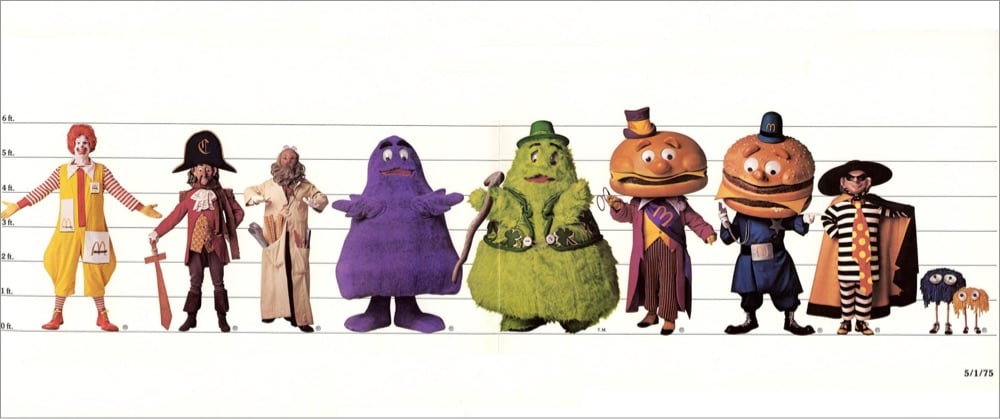
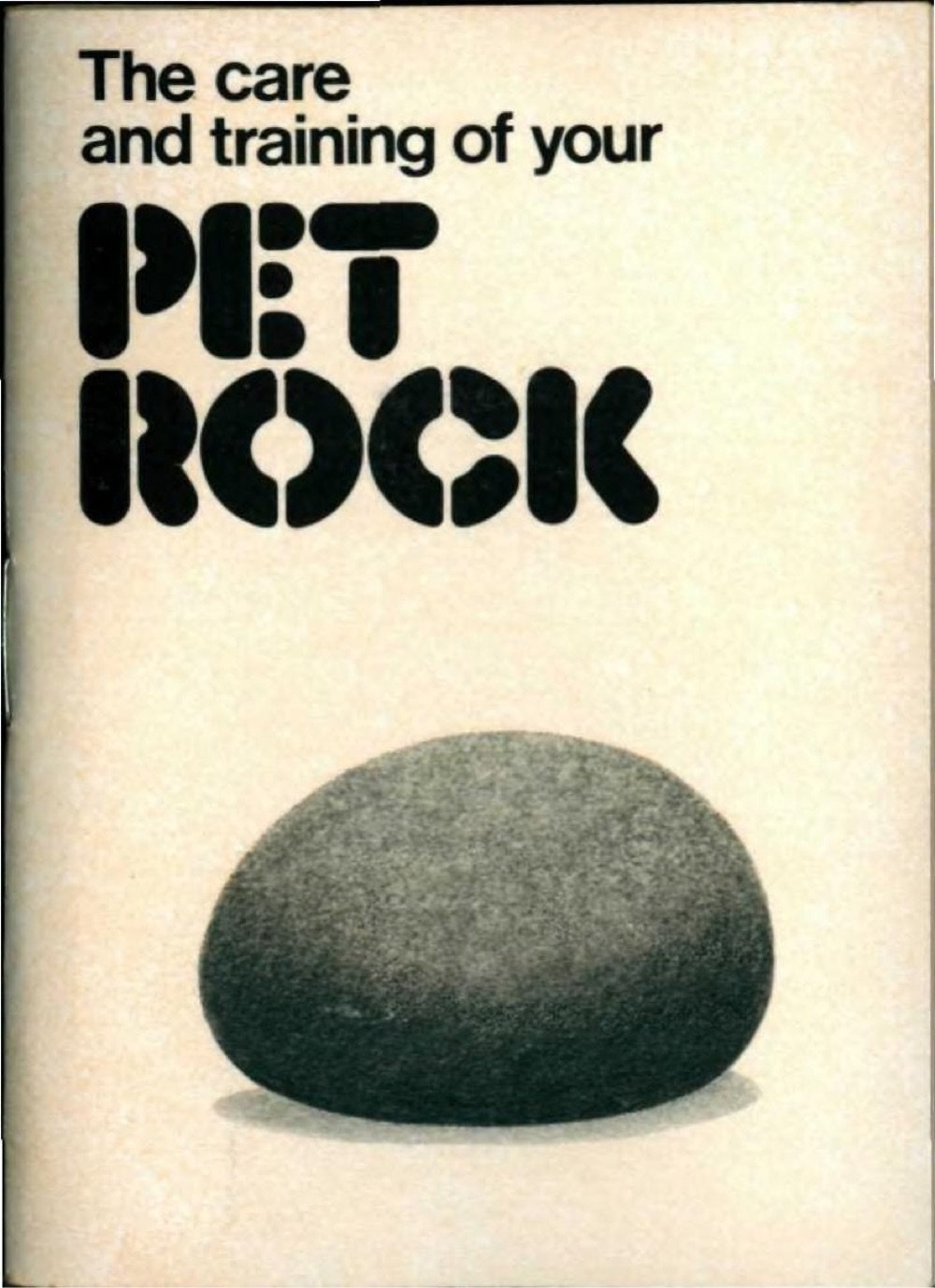
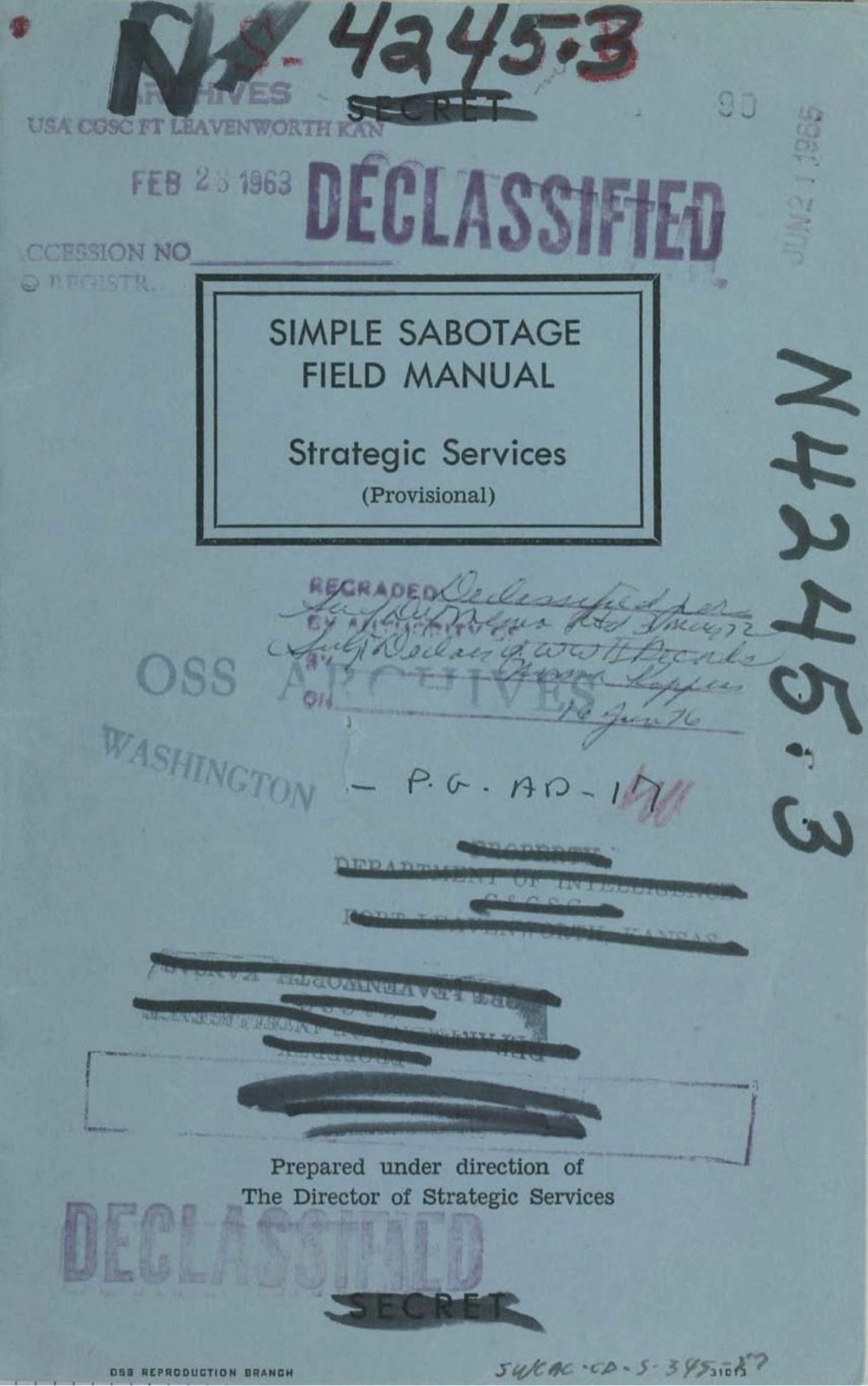
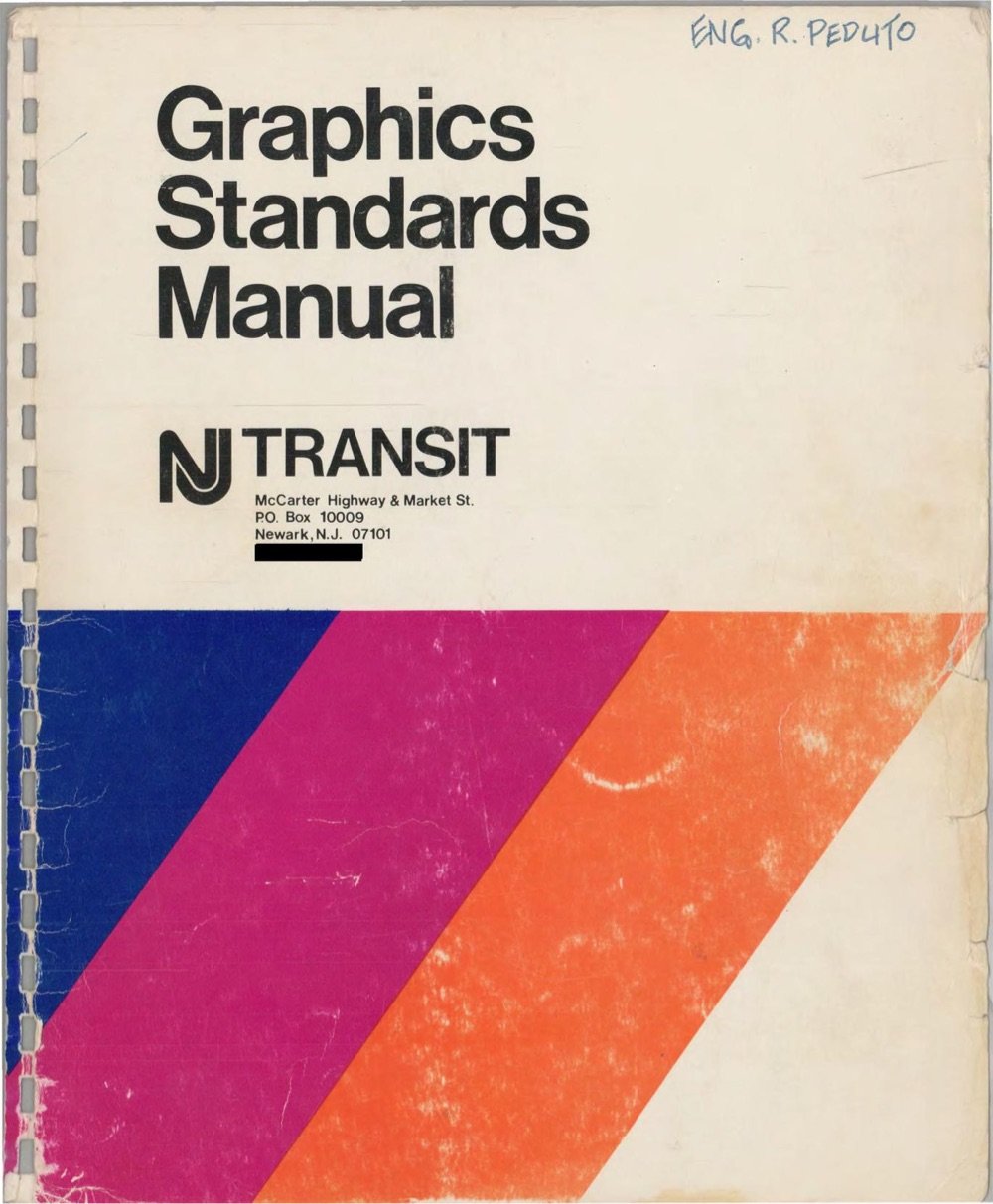
One could spend several hours delving into the Manuals Showcase over at the Internet Archive. Among the collection of handbooks, manuals, and guides, you’ll find gems like the IBM Model B Electric Typewriter User Manual 1954, The Care and Training of Your Pet Rock, CIA Simple Sabotage Field Manual, NJ Transit Graphics Standards Manual, and the McDonalds McDonaldland Specification Manual (1975).
I’ve written about the CIA Simple Sabotage Field Manual before — “some of these things are practically best practices in American business, not against enemies but against their employees, customers, and themselves”.
A Chance Discovery Uncovered the Remarkable Life of One of the First Female Oceanographers, Christine Essenberg. “How many other unknown women in science are out there, hidden away in boxes?”
Vaccines: “The Greatest Benefit Conferred on Humankind”
From The Economist on the occasion of the award of the Nobel Prize for Medicine to Katalin Karikó and Drew Weissman for their work that led to the development of the Covid-19 mRNA vaccines, a lovely short appreciation of vaccines.
The World Health Organisation (WHO) says that vaccines have saved more from death than any other medical invention. It is a hard claim to gainsay. Vaccines protect people from disease cheaply, reliably and in remarkable numbers. And their capacity to do so continues to grow. In 2021 the who approved a first vaccine against malaria; this week it approved a second.
Vaccines are not only immensely useful; they also embody something beautifully human in their combination of care and communication. Vaccines do not trick the immune system, as is sometimes said; they educate and train it. As a resource of good public health, they allow doctors to whisper words of warning into the cells of their patients. In an age short of trust, this intimacy between government policy and an individual’s immune system is easily misconstrued as a threat. But vaccines are not conspiracies or tools of control: they are molecular loving-kindness.
The WHO says that vaccines currently prevent 4-5 million deaths per year. The CDC points to a paper that says that more than 50 million death can be prevented between 2021 and 2030. Vaccination is nothing short of a scientific miracle. (via eric topol)
Critics for The Hollywood Reporter pick their 50 best TV shows of the 21st century (so far). Lots to disagree with here but also “any title [on the list] you had yet to see was surely worth checking out”. And wow, Mad Men.
In iOS 17, users no longer have to include “Hey” when invoking Siri. Siri Price has had to change her name bc every time someone spoke to her, all in-range phones would pipe up. “Now people can’t even say my name. I’m absolutely fuming.”
Huh. Did Medium “borrow” their current logo from Japan Tobacco Inc.’s 1985 logo? They are very similar…
America Is Quickly Becoming More Nonreligious
The Associated Press-NORC Center for Public Affairs Research recently conducted a poll asking Americans about their religious beliefs and found that about 30% of American adults are non-religious (which they refer to as “the nones”, presumably after the book by Ryan Burge).
The decades-long rise of the nones — a diverse, hard-to-summarize group — is one of the most talked about phenomena in U.S. religion. They are reshaping America’s religious landscape as we know it.
In U.S. religion today, “the most important story without a shadow of a doubt is the unbelievable rise in the share of Americans who are nonreligious,” said Ryan Burge, a political science professor at Eastern Illinois University and author of “The Nones,” a book on the phenomenon.
The nones account for a large portion of Americans, as shown by the 30% of U.S. adults who claim no religious affiliation in a survey by The Associated Press-NORC Center for Public Affairs Research.
Other major surveys say the nones have been steadily increasing for as long as three decades.
So who are they?
They’re the atheists, the agnostics, the “nothing in particular.” They’re the “spiritual but not religious,” and those who are neither or both. They span class, gender, age, race and ethnicity.
While the nones’ vast diversity splinters them into myriad subgroups, most of them have this in common:
They. Really. Don’t. Like. Organized. Religion.
But a dislike of organized religion among the nonreligious doesn’t necessarily translate into atheism or agnosticism: 43% of “the nones” say they believe in God.
The MacArthur Foundation has announced 2023’s round of fellows and accompanying $800,000 “genius grants”. Aw shoot, passed over again!
Last month was the hottest September on record by an “absolutely gobsmackingly bananas” margin. “September 2023 beat the previous record for that month by 0.5C, the largest jump in temperature ever seen.” 1.8C warmer than pre-industrial levels.
Every Type of Railcar Explained in 15 Minutes
This video from Practical Engineering offers a brief explanation of dozens of different types of railcars, from passenger train cars like the dining car & sleeper car to freight cars like the boxcar, tank car, and hopper cars (for hauling things like sand or grain) to specialized cars the rail companies use to build and maintain their routes like rail grinders, snowplows, and track geometry cars.
Trains are one of the most fascinating engineered systems in the world, and they’re out there, right in the open for anyone to have a look! Once you start paying attention, its pretty satisfying to look for all the different types of railcars that show up on the tracks.
They even made a little checklist to use for your beginner trainspotting. (via the kid should see this)
“Lise Meitner developed the theory of nuclear fission, the process that enabled the atomic bomb. But her identity — Jewish and a woman — barred her from sharing credit for the discovery, newly translated letters show.”
One Revolution Per Minute
Erik Wernquist made his short film One Revolution Per Minute to explore his “fascination with artificial gravity in space”. The film shows what it would be like to travel on a large, circular space station, 900 meters (0.56 miles) in diameter that rotates a 1 rpm. Even at that slow speed, which generates 0.5 g at the outermost shell, I was surprised to see how quickly the scenery (aka the Earth, Moon, etc.) was rotating and how disorienting it would be as a passenger.
Realistically - and admittedly somewhat reluctantly — I assume that while building a structure like this is very much possible, it would be quite impractical for human passengers.
Putting aside the perhaps most obvious problem with those wide windows being a security hazard, I believe that the perpetually spinning views would be extremely nauseating for most humans, even for short visits. Even worse, I suspect — when it comes to the comfort of the experience — would be the constantly moving light and shadows from the sun.
I calculated that the outer ring of the space station is moving at 105.4 mph with respect to the center. That’s motoring right along — no wonder everything outside is spinning so quickly.
The Hidden Costs of Using an Electric Bike. “An electric bike is going to force you to get a lot more fresh air than you’re used to.” Lolz.
Making It So, a Memoir by “Severe Bastard” Patrick Stewart
Fall always brings brisker days, earlier sunsets, and a whole raft of new books that are impossible to find the time to read. Add this memoir by Patrick Stewart to the pile next to your bed: Making It So (bookshop.org). The Hollywood Reporter has a great video excerpt with audio from the audiobook (narrated by Stewart himself, naturally) about his early days on Star Trek: The Next Generation:
From an accompanying article:
So when he was on set shooting the show’s debut season and co-stars like Jonathan Frakes, Denise Crosby and Brent Spiner would tease him or ad-lib a joke or laugh when they flubbed their lines, it would low-key infuriate him.
“I could be a severe bastard,” he writes. “My experiences at the Royal Shakespeare Company and the National Theatre had been intense and serious… On the TNG set, I grew angry with the conduct of my peers, and that’s when I called that meeting in which I lectured the cast for goofing off and responded to Denise Crosby’s, ‘We’ve got to have some fun sometimes, Patrick’ comment by saying, ‘We are not here, Denise, to have fun.’”
“In retrospect,” Stewart continues, “everyone, me included, finds this story hilarious. But in the moment, when the cast erupted in hysterics at my pompous declaration, I didn’t handle it well. I didn’t enjoy being laughed at. I stormed off the set and into my trailer, slamming the door.”
Update: Gideon Lichfield has a great interview with Stewart for Wired.
Q: There’s a passage where you say that, from your father, “I drew Picard’s stern, intimidating tendencies. But I like to think that my mother is in the captain too, in his moments of warmth and sensitivity.” Do you see Picard as your way of reconciling that conflict between your parents?
A: Very much so, yes. Both Star Trek and therapy have been responsible for that. Having to open the doors into my childhood in order to be an actor became utterly intriguing to me in a way that it never had been before. And I regret that when I look back on some of the roles I played, what I might have brought to them if I just released myself a little bit more.
(via @samuelwade)
Shohei Ohtani’s Impossible, Unrivaled, Bittersweet Season. “It might have been the greatest year of individual achievement in major-league history. Will we ever see anything like it again?”
Several years ago, great white sharks suddenly started disappearing from their traditional habitats in South Africa. Scientists have finally figured out why. “Lots of people weren’t used to thinking of great white sharks as prey.”
Martin Scorsese Breaks Down His Most Iconic Films
This is a treat: almost 25 minutes of legendary director Martin Scorsese talking about how he made his most iconic movies, from Mean Streets and Raging Bull to Gangs of New York and The Irishman. You have to laugh at the number of times he says, “Well, I didn’t want to make this film, but…” From an accompanying profile/interview with Scorsese (which is quite good as well):
It is a peculiar fact about Martin Scorsese that he does not enjoy actually making movies. “I don’t mean to be funny,” he said, “but, the thing is, you get up real early.” And Scorsese has never been a morning person. For most of his life, he recalled, “I’d stay up late watching movies on TV or reading late, or doing homework late, or trying to write scripts late. I lived at night and the streets were dark, and I never saw the light. It took me many years to understand where the sun set and where the sun rose. I didn’t know. I’m not kidding. I learned it in LA. When you’re going on Sunset Boulevard and you hit the Pacific Coast Highway and it’s seven o’clock and the sun is setting — it’s right there.”
He likes to borrow a complaint from Kubrick. “They said, ‘What’s the hardest thing about directing?’ He said, ‘Getting out of the car.’ Because once you get out of the car, the questions start.” Now, when Scorsese gets out of the car in the morning, he looks at his AD and says, “What can’t I have today?”
The teaser trailer for season 2 of The Gilded Age, which premieres on HBO at the end of October. (Yeah, I’m just not going to call it “Max”.)
Supercut of Songs That Stop on the Word “Stop”
You really have to applaud the effort here: YouTuber Todd in the Shadows made a 33-minutes supercut of every song he could find that stops, even momentarily, on the word “stop”. Here are the ground rules:
If there was even the briefest of stops, I counted it. It’s okay if the band holds the note rather than complete silence. But the entire band has to stop, not just a couple instruments; the singer can keep singing though.
I gotta say I did not watch the whole thing, but the very last clip is *kisses fingers*. (via @peterme)
Out today: Going Infinite, Michael Lewis’s book on crypto and Sam Bankman-Fried (whose trial starts today). Lewis’s mini-season of interviews for the book on his Against the Rules podcast was really interesting.
NASA is planning to build long-term housing on the Moon using 3-D printing and soil made out of moon dust. “They believe that by 2040, Americans will have their first subdivision in space.”
Notable Sandwiches. Talia Lavin is “going through Wikipedia’s List of Notable Sandwiches in alphabetical order” and providing some “tasty commentary” about them.
Google Changes Search Queries Without Telling You (to Sell You More Stuff)
Megan Gray on a disturbing piece of information that was revealed in the antitrust case against Google: their search engine replaces some search queries with others that generate more commercial results (and therefore more money for the company). Here’s how it works:
Google likely alters queries billions of times a day in trillions of different variations. Here’s how it works. Say you search for “children’s clothing.” Google converts it, without your knowledge, to a search for “NIKOLAI-brand kidswear,” making a behind-the-scenes substitution of your actual query with a different query that just happens to generate more money for the company, and will generate results you weren’t searching for at all. It’s not possible for you to opt out of the substitution. If you don’t get the results you want, and you try to refine your query, you are wasting your time. This is a twisted shopping mall you can’t escape.
Yuuuck. I think it might be time to switch away from Google search — its results have been getting worse for years and it seems like the company doesn’t care too much about fixing it. I’ve been hearing good things about Kagi and there’s always DuckDuckGo.
Update: Several people wrote in noting that Gray’s article was an opinion piece, not reported, and that there was no corroboration of her claim of Google’s query switcheroo. For their part, Google denies the claim: Per Platformer:
Google does not delete queries and replace them with ones that monetize better as the opinion piece suggests, and the organic results you see in Search are not affected by our ads systems.
(thx, andy)
Update: Wired has removed the story from their website:
After careful review of the op-ed, “How Google Alters Search Queries to Get at Your Wallet,” and relevant material provided to us following its publication, WIRED editorial leadership has determined that the story does not meet our editorial standards. It has been removed.
The Internet Archive has a copy of the original piece. Charlie Warzel has more in a report from the Atlantic. (thx, andy)
The Cody Dock Rolling Bridge
Designed by architect Thomas Randall-Page, the Cody Dock rolling footbridge opens with a “surprising and playful motion” to let boats pass through by simply rolling out of the way.
The bridge rolls on undulating rails cast into the concrete abutments on either bank. Ballast fills the top of each square portal, countering the weight of the bridge deck that connects them. This symmetry allows the whole bridge structure to smoothly role through 180 degrees to a fully inverted position facilitating movement of boats from the river to the dock. This finely balanced is this system allows the 13 tonne bridge to be operated via hand winches only.
Here’s a video about the then-proposed bridge from 2019 that shows the unique rolling mechanism:
And here’s a video from earlier this year that shows the design process and how the finished bridge works:
On Luddites, the rebellion against Big Tech, human rights, and the AI threat: “Robots aren’t coming for your job; bosses are.” Ted Chiang: “Most fears about A.I. are best understood as fears about capitalism.”
Katalin Karikó just won the Nobel Prize for her dogged and live-saving work on mRNA vaccines. Her impeccably timed memoir, Breaking Through: My Life in Science, is coming out next week.
Blaring phones will scare the beejesus out of everyone in America on Oct 4 at 2:20pm ET; FEMA is conducting a test of their public alert system. Maybe set an alarm or calendar notification so you’ll be prepared?
“A cheap malaria vaccine that can be produced on a massive scale has been recommended for use by the World Health Organization (WHO).” Each dose is only $2-4 (4 doses/person) and 100 million doses/yr are already lined up to be produced.
How the Elon Musk biography exposes Walter Isaacson. “We are dealing with not one but two unreliable narrators: Musk and Isaacson himself.”
Using NLP to find similar phrases to “champagne for my real friends, real pain for my sham friends”. Results included “focus for my real friends, real cuss for my faux friends” and “metrics for my real friends, real tricks for my meh friends”.
A Family of Humming-Birds
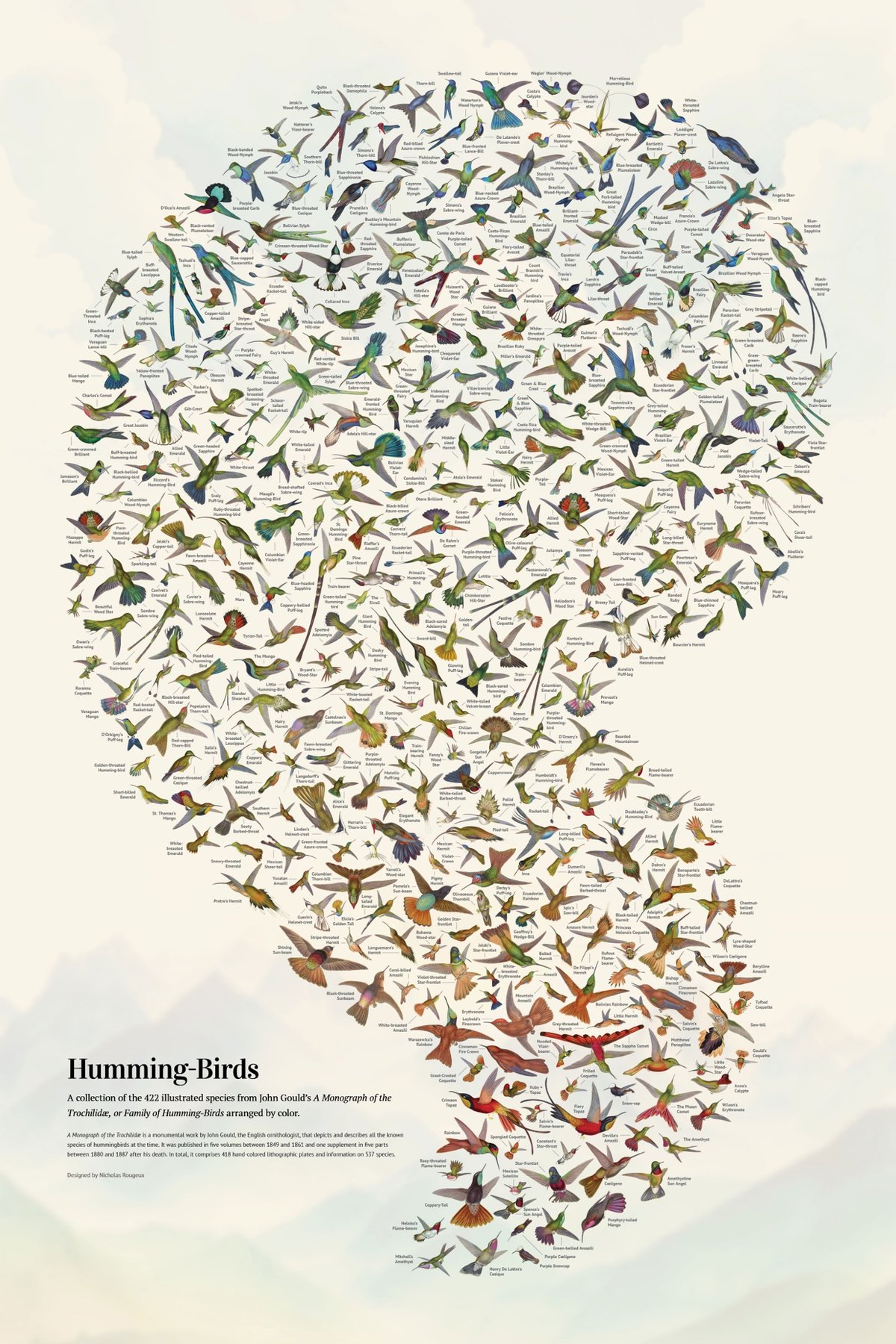
Wow, Nicholas Rougeux has restored John Gould’s A Monograph of the Trochilidæ, or Family of Humming-Birds, which was published between 1848 & 1887 and contains hand-colored lithographic depictions of almost every single hummingbird species known to exist at the time.



From Rougeux’s page about the project:
The monograph is considered one of the finest examples of ornithological illustration ever produced, as well as a scientific masterpiece. Gould’s passion for hummingbirds led him to travel to various parts of the world, such as North America, Brazil, Colombia, Ecuador, and Peru, to observe and collect specimens. He also received many specimens from other naturalists and collectors.
The image at the top of the post is the gorgeous poster that Rougeux created from the drawings in Gould’s monograph…you can order some for your walls and read a making-of.
See also other projects by Rougeux that I’ve posted about.
The new words added to the Merriam-Webster dictionary last month include rizz, cromulent, vector graphics, rewild, jorts, non-player character, jump scare, finsta, beast mode, and thirst trap.
UNESCO Just Named 42 New World Heritage Sites. “Among the newly inscribed group are an archaeological cemetery site in South Korea, a roadside inn in Iran, and a famed hop-growing region in Czechia.”
Why Henry VIII’s Codpiece Is So…Monumental
Perhaps the most prominent part of the most well-known painting of Henry VIII (a now-lost work by Hans Holbein the Younger) is the giant codpiece poking through the male-heirless king’s tunic. Evan Puschak analyzes the painting and fills us in on what makes this a particularly effective work of 16th-century propaganda.
Puschak had some fun with this one…I lol’d at “triple dick”, which under no circumstances should you google (like I did) at work or really anywhere else. Although, “triple dick art history” did lead me to this interesting piece on “ostentatio genitalium”:
Ostentatio genitalium (the display of the genitals) refers to disparate traditions in Renaissance visual culture of attributing formal, thematic, and theological significance to the penis of Jesus.
This bit got me laughing again:
…these Renaissance images shock us because they are so frequently ithyphallic: Christ has risen, but not in the way we have come to expect.
Thomas Zimmer on one of my political pet peeves: the polarization narrative. “The ‘polarization’ paradigm privileges unity, stability, and social cohesion over social justice and equal participation.”
Hayao Miyazaki Announces Return To Filmmaking After Big Time Fuckup At New HVAC Installation Job. “They had to bring in the drywall crew to repair all the damage I caused.”
Using AI voice-cloning to make pop stars cover Weird Al Yankovic songs instead of the other way around. Think Michael Jackson covering Eat It and Madonna singing Like A Surgeon.
Why Rappers Stopped Writing
These days, instead of writing down lyrics and bringing them to the studio to record, many rappers are using the improvisational “punch-in method” to craft songs during the recording session.
Is this good for the music? The jury is out, even within hip-hop. But in this behind-the-scenes video — the latest entry in our Diary of a Song series, which documents how popular music is created — we track the generational shift through exclusive studio footage of young rappers like Doechii, Veeze and Lil Gotit, plus interviews with genre veterans including the artist Killer Mike and the producer Just Blaze, to track this creative shift and its effects on the still-experimental genre of hip-hop, 50 years after its birth.
Interesting technique, but there is definitely some music in that video that is not for me.
The 2023 Nobel Prize in Physiology or Medicine has been awarded to Katalin Karikó and Drew Weissman “for their discoveries concerning nucleoside base modifications that enabled the development of effective mRNA vaccines against COVID-19”.

Socials & More