Entries for October 2023
This is a heck of a time capsule: back in 2011, Chris Floyd photographed 140 people that he followed on Twitter over the course of a year and made a video featuring their portraits and audio of them “talking about Twitter and it’s effect on the way we communicate and form relationships in the modern era”. It’s almost quaint hearing people talk about the site in the time before Gamergate, 4chan, and other factors helped twist it into a very different place.

You can check out more of Floyd’s photographs and people’s stories on the One Hundred & Forty Characters blog. (via noah kalina)
Out today: Deb Chachra’s new book, How Infrastructure Works: Inside the Systems That Shape Our World. This has been getting great reviews in my feeds from folks who got an early look at it.
What To Know About What’s Happening In Israel And Gaza. “Q: Where can I learn more? A: This is a logistically and morally complex situation involving decades of recent history and thousands of years of context, so try your cousin’s Instagram stories.”
A Vermont utility company wants to install batteries in most customers’ homes and bury more power lines. As a VT resident and GMP customer (and EV owner) whose power goes out probably once a month because of downed trees, I like this a lot.
A.V. Club has taken on the task of ranking the best 50 music videos, from the first video ever played on MTV (Video Killed the Radio Star by The Buggles, featuring none other than soundtrack composer Hans Zimmer on keys) to Thriller, Sabotage, Addicted to Love, and Sledgehammer. You can watch the whole list via this playlist on YouTube.
I loved the video for Sledgehammer. I was 12 years old the summer it came out. We didn’t have cable TV then, but I’d turn on MTV anywhere I could, hoping for a glimpse of it. My dad used to take my sister and me on roadtrips all over the country and I vividly remember the rare times we got to stay in a motel (they had to have a swimming pool with a diving board), turning on MTV, and catching that Sledgehammer video a few times every hour. It was only years later, after becoming a Wallace and Gromit fan, that I learned that — of course! — Aardman had done the animation for Sledgehammer.
Thanksgiving FYI is a seasonal newsletter from Jim Ray (“an enthusiastic and dedicated home cook with more than a dozen Thanksgivings under [his] belt”) that’ll bring you tips and recipes to help with your T-Day festivities.
This is great and I loved it to bits: a 15-minute video from the Life Where I’m From YouTube channel about a tiny izakaya (13 seats!) in Tokyo owned and operated by a woman called “Mama” by her regulars.
When Mama is busy, regulars at this izakaya will serve themselves, get their own beers, get their “bottle-keep” and make their own drinks. They’ll also help out Mama-san by serving other customers as well. […] Bottle keep is when a customer buys a bottle and the shop holds on to it for them. Then the next time they visit they can drink from that bottle again.
I’ve got lots of thoughts about this and connections to make! The izakaya’s casual help-yourself atmosphere reminded me of a post I made here more than 20 years ago called Business Lessons From the Donut and Coffee Guy.
“Next!” said the coffee & donut man (who I’ll refer to as “Ralph”) from his tiny silver shop-on-wheels, one of many that dot Manhattan on weekday mornings. I stepped up to the window, ordered a glazed donut (75 cents), and when he handed it to me, I handed a dollar bill back through the window. Ralph motioned to the pile of change scattered on the counter and hurried on to the next customer, yelling “Next!” over my shoulder. I put the bill down and grabbed a quarter from the pile.
I followed that up with another post a few years later:
I get my occasional donut in another part of town now, but I noticed something similar with my new guy. Last Friday, the woman in front of me didn’t order anything but threw down a $20, received a coffee with two sugars a moment after she’d stepped to the window, and no change. As they chatted, I learned that the woman pays for her coffee in advance. The coffee guy asked her if she was sure she owed today. “Yep,” she replied, “It’s payday today; I get paid, you get paid.” Handy little arrangement.
Get to know your customers and trust them — it’s a simple thing that even some small businesses never master.
If this place was on my commute home, I would definitely be a regular — it seems more like someone’s living room than a bar. But there are definitely spots with similar vibes in all sorts of places in the world. Last year, I went to a restaurant in Philadelphia called Her Place that also felt like this. From my sabbatical media diet:
A unique dining experience that’s not unlike going over to someone’s house for a dinner party. There are two seatings a night, at 6:00 and 8:30; all parties are seated at the same time. It’s a set menu with no substitutions and everyone in the restaurant is served at the same time. Every course or two, the chef quiets the diners to explain what’s coming up, who cooked it, where the ingredients are from, and anything else she thinks is relevant. It’s operationally smart and creates a great dining environment. Esquire just named it one of the best new restaurants in America.
Great meal and experience. I felt like a regular even though I’d never been there before. Speaking of, I wrote about being a regular back in 2013:
This is a totally minor thing but I love it: more than once, I’ve come in early in the evening, had a drink, left without paying to go run an errand or meet someone somewhere else, and then come back later for another drink or dinner and then settle my bill. It’s like having a house account without the house account.
I really miss that place — I moved away several years ago now but went back to visit as often as I could. But Covid (and an asshole landlord) killed it.
One last thing Mama’s izakaya reminded me of is when I visited a restaurant in Istanbul called Meşhur Filibe Köftecisi.
While I waited for my food, I noticed an order of köfte going out of the kitchen…to a diner at the restaurant across the street. When he was finished, the staff at that place bussed the dishes back across the way. Meanwhile, my meal arrived and the köfte were flavorful and tender and juicy, exactly what I wanted…no wonder the place across the street had outsourced their meatballs to this place. I’d noticed the owner, the waiter, and the cook drinking tea, so after I finished, I asked if I could get a tea. The owner nodded and started yelling to a guy at the tea place two doors down. A few minutes later, a man bearing a tray with four glasses of tea arrived, dropping one at my table and the other three for the staff. Just then, a server from the place across the street came over to break a 100 lira bill. Me being a big nerd, this all reminds me of Unix and the internet, all of these small pieces loosely joined together to create a well-functioning and joyous experience. There’s only one thing on the menu at Meşhur Filibe Köftecisi, but you can get anything else within yelling distance. I declined dessert…who knows where that would have come from.
(via andy, who correctly guessed this was up my alley)
How has the design of romance novel covers changed over the past 13 years? They’ve become less raunchy, more racially diverse, and much more likely to use illustration.
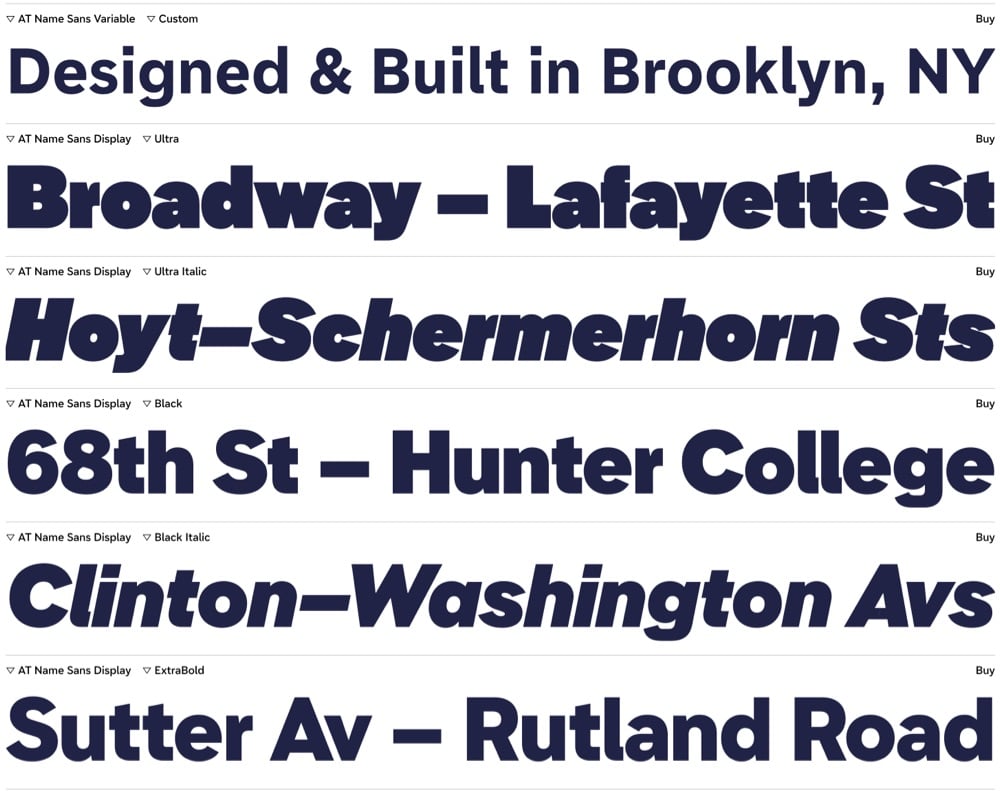
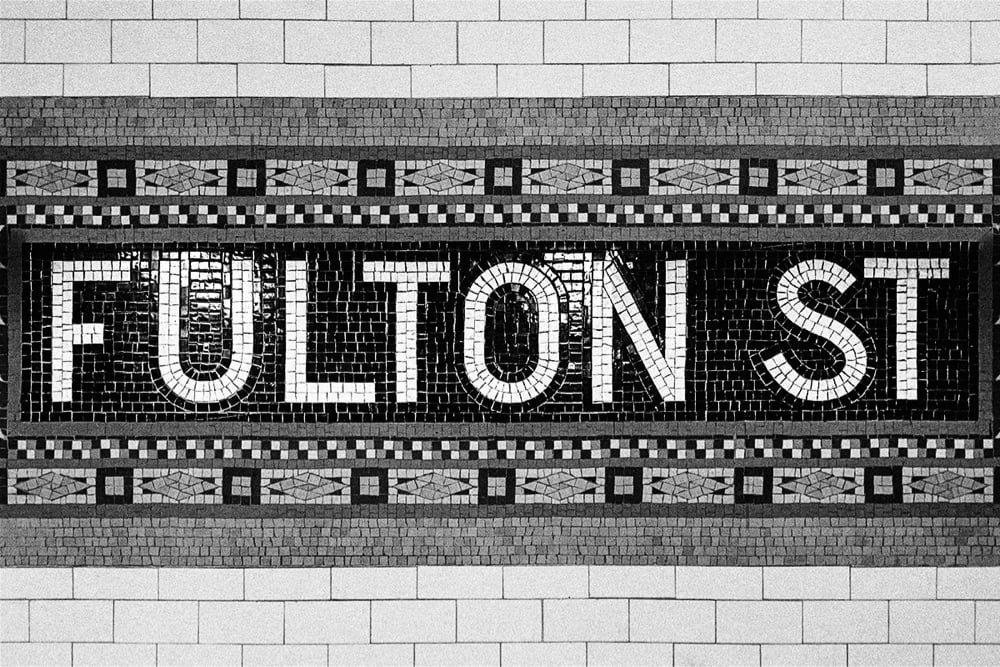
Name Sans is a typeface based on the tile mosaic lettering found in NYC subway stations.
The architects and craftworkers who designed & laid these tiles used a letter construction that was part geometric and part grotesque, with typographic optical corrections often either exaggerated or totally missing. Name Sans interprets these ideas into an extensive type system that is at once anonymous and full of personality, useful for everything from branding to wayfinding to digital interfaces.
Lovely. I like this a lot.
If the first solar entrepreneur hadn’t been kidnapped, would fossil fuels have dominated the 20th century the way they did? “The condition for his release required forgoing his solar patent and shutting down the company. Cove refused…” 1905! Wow.
Mona Chalabi asked ChatGPT, in two separate questions, if Israelis and Palestinians deserve justice; its answers were tellingly different. “ChatGPT, like all artificial intelligence, has been taught by us.”
Artist Wendy MacNaughton sat strangers down in pairs to draw one another, maintaining eye contact the whole time. “Go slow and pay attention. Really, slow waaaay down, and draw what you see, not what you expect to see.” This is lovely.
For the past few months, I’ve been working on a new commenting system for kottke.org and today I’m launching it in beta. If you’re a kottke.org member, you can try it out by heading to the comment section of this very post. (More on this in a bit but: comments are public but only members can post them.) I wrote up some community guidelines; I’d appreciate you reading them before participating.
So why comments? And why now? Blog comments have been long since left for dead, a victim of spam, social media, toxicity, and neglect. But there are still plenty of sites out there with thriving communities. My particular favorite is Cup of Jo, which has some of the best comment threads on the web:
They are always good, often great, and occasionally sublime. Years and even decades after most websites have removed their comment sections for being toxic and unwieldy, Cup of Jo readers are in there delivering on the original promise of the web as a way to connect humans with one another by providing advice, reflections, stories, and support to each other.
Why can’t we have that here on kottke.org? I think we can. “Always good, often great, and occasionally sublime” describes a lot of the feedback I get via email and social media — kottke.org readers are a super-interesting bunch and very often share things that are more interesting than whatever thing I posted that prompted them to write in. Reader comments become more valuable to everyone who reads the site when they’re relocated from my inbox and from disparate threads on various social sites to the site itself. Some days, my inbox is the best thing on the internet and I want to bring that vibe to the site.
The timing feels right. Twitter has imploded and social sites/services like Threads, Bluesky, and Mastodon are jockeying to replace it (for various definitions of “replace”). People are re-thinking what they want out of social media on the internet and I believe there’s an opportunity for sites like kottke.org to provide a different and perhaps even better experience for sharing and discussing information. Shit, maybe I’m wrong but it’s definitely worth a try.
As I mentioned above, comments can be read by anyone but only active members of kottke.org can post comments. I’ve done it this way for two main reasons:
- The biggest reason is moderation. I am a big believer in the active moderation and facilitation of conversation in social spaces (*glances sideways at various social media trash fires*). By making commenting members-only, I’m hoping for a manageable number of comments from people who are already inclined to support the well-being of the site so that I can maximize the time I spend posting to the site.
- I have been very deliberate about making sure everything I produce is available on the open web — it’s at the heart of the site’s membership program. But allowing members to comment and help build a community on the site seems like a good way to provide some extra benefit to those who have chosen to support the site (and the development of the comment system itself) while keeping everything I do publicly available.
My friend Tim put it more succinctly: “Tying [comments] to membership creates good, aligned incentives and makes moderation easier and meaningful.” Yeah, that!
I realize basing a person’s ability to comment on kottke.org on their ability to contribute financially is not ideal. In a perfect world, I would hire a moderator or two to help me facilitate conversation here and open it up to anyone and everyone. But kottke.org is still a small, one-person site and I can’t swing that right now, particularly for a new thing like this. Anyone can still comment on posts on social media and I very much welcome your feedback and input via email.
Ok, that’s the vision. Now for some logistics:
- Not every post on kottke.org will have comments, but I’ll be turning them on for posts that have a chance of generating some good feedback and discussion. Both main posts and Quick Links can have comment threads attached to them. I’m gonna start slow, but hopefully there will be at least a few threads to participate in every day.
- Did I mention the community guidelines? I’d love for you to read them before participating here!
- As I said above, the comment system is in beta and I am looking for feedback, suggestions, complaints, etc., either in the comments below or via email. Help me kick the tires a little bit.
- I use Memberful for the membership program and if you have trouble logging in (e.g. getting stuck in a login death loop) in order to comment, it might have something to do with a browser extension or ad blocker that you have installed. Temporarily disabling them will likely fix the problem. If you’re still having trouble, send me an email!
Ok, that’s all I have for now. Go try it out! ⬇️ I have no idea if this is going to work or if people will want to use it, but I’m committed to giving it my time and attention for the next few months to find out. Thanks for reading and for the support.
An appreciation of Jaleel White and the iconic television character he created: Steve Urkel. I had completely forgotten that Urkel was not part of the main cast of Family Matters, came in mid-season one, and took over the show.
I loved this letter in the recent Metropolitan Diary from the NY Times (gift link). It begins:
My friend Tom runs a popular whale watch cruise out of Sheepshead Bay. Recently, an avid whale watcher and good friend, Buddy, died. One of Buddy’s wishes was that Tom spread his ashes on the ocean he loved so much.
So, on a beautiful summer evening, Tom canceled his usual nightly cruise and organized a private memorial service. More than 80 of Buddy’s friends and family members came to say a last goodbye.
A serious-looking young woman who sat quietly by herself was among the passengers. None of the other people, including the crew members, knew who she was.
I won’t spoil the ending…you’ll have to click through to read.
I’ve never been to any memorial services at sea, but I did go whale watching in Alaska once. The extremely salty captain of the boat had two prosthetic hands with hooks on them (as Tom Nash demonstrates in this video). After we got underway, he left his first mate in charge and came out on the windy deck, got a cigarette and a matchbook out of his shirt pocket, tore off a match, and, with a single try, lit the cigarette. In, like, whipping 20 mph winds with the boat heaving in the waves. He was standing right in front of me when as he did it and it remains one of the most physically impressive things I have ever seen a person do. The man was so perfectly in his element that it was almost magical.
Black Success, White Backlash. “Throughout American history, every moment of significant Black advancement has been met by a white backlash.” Obama → Tea Party.
A New York Museum’s House of Bones. “The American Museum of Natural History holds 12,000 bodies — but they don’t want you to know whose.” The remains of nearly 100,000 people are held in the collections of US museums, most of them Native Americans.
Pete Davidson hosted Saturday Night Live last night and somehow said exactly the right thing to open a comedic television program after an unspeakably tragic week.
This piece on How to Compete with Patreon by Siderea is interesting throughout, but this bit on enabling “non quid pro quo patronage” caught my eye:
There is an entire little universe of people using Patreon to be funded to do good works in the world. These may be open source contributors. They may be activists. They may be journalists or bloggers. They do not make things that they exchange for money with the people who pledge them on Patreon.
Their patrons do not pay these creators to give things to them. Their patrons pay these creators to give things to the world: to release code for anyone to use, to engage in activism that changes the world for the better, or to write things that anyone can read.
I’m one of them. The number one reason I signed up for Patreon as my funding platform nine years ago, was because it was literally the only way of funding my writing that did not entail my selling it: my withholding it only for those people who paid me for it.
She continues:
What I want to do is write openly on the internet where anyone can read what I write. Where what I write can be cited by anyone who wants to refer to it in any internet discussion.
The audience of my writing is not my patrons, and it is not just the people who pay me for it. It’s the whole world.
And that, quite explicitly, is what my patrons pay me to do.
I could not have put this better myself. This sort of win-win patronage is at the heart of what I do here on kottke.org with the membership program; it’s what Tim Carmody calls Unlocking the Commons:
The most economically powerful thing you can do is to buy something for your own enjoyment that also improves the world. This has always been the value proposition of journalism and art. It’s a nonexclusive good that’s best enjoyed nonexclusively.
Anyways. This is a prediction for 2019 and beyond: The most powerful and interesting media model will remain raising money from members who don’t just permit but insist that the product be given away for free. The value comes not just what they’re buying, but who they’re buying it from and who gets to enjoy it.
I modelled my membership program, in part, after that “little universe of people using Patreon”. Watching what’s going on in the world of paid newsletters and paywalled media, the nonexclusive future of media that Tim hoped for is struggling for air, but I remain thankful to have found a group of readers who understand and support that vision in this tiny corner of the web.
A sharpness classification chart for knives, including how you can test them by cutting paper and hair in different ways. The edge of a “very sharp” knife doesn’t reflect light while an “insane sharp” blade “cuts a free hanging hair”.

This is a great overview and review by Teri Kanefield of Heather Cox Richardson’s new book, Democracy Awakening.
She opens with: “America is at a crossroads.”
But crossroads aren’t new. We’ve been at them before.
She shows how this moment is part of an ongoing struggle between a small group of white people who think that America was founded on principles of white supremacy and should remain that way, and the rest of us.
Throughout US history, the white supremacists have seized power and implemented minority rule: secession, Jim Crow & anti-immigration laws. Then the majority pushes back: the Civil War & Reconstruction, The New Deal.
The current GOP is a backlash against Brown v Board of Education (the Supreme Court case that declared racial segregation in schools unconstitutional.)
Richardson traces in detail how that backlash happened, and how today’s backlash echoes the language and attitudes of the Confederacy.
She shows Nixon and others tied taxes to “redistributing wealth” to “undeserving” people as a way to get lower income racists aboard an economic agenda that hurt them.
I really have to make time to read this book!
One of these days, I’m going to find the time to try this 5-minute baguette recipe. “It’s a super easy recipe with no kneading required.”
Ozempic Can’t Fix What Our Culture Has Broken. “Solving for obesity will require more than drugs. It will require solving for a culture that makes being fat a woman’s burden, a means test for dignity, work, social status, and moral citizenry.”
Last month we got a glimpse of the newest season of the Apple+ series For All Mankind (“Imagine a world where the global space race never ended.”) in the form of a teaser trailer that did not give a whole lot away. Well, a proper trailer has dropped and it looks like the gang will be colonizing Mars and harvesting precious metals from asteroids. As I wrote last month:
Is it just me or, if you tilt your head and squint, can you see For All Mankind as a prequel/origin story for The Expanse?
It is maybe too much to ask of a prestige drama these days, but it would be cool to see the birth & development of a Belter-like language a la the beginnings of an Antarctic accent.
Mary Lou Retton Crowdfunded Her Medical Debt, Like Many Thousands of Others. From winning gold medals & being on a Wheaties box to medical debt: only in America. It’s almost like we should have a national crowdfunding initiative for health care…
Emily Witt on a family that fled Tennessee because the state’s anti-trans laws denied their trans teen access to gender-affirming health care. Forced migration, denial of health care: let’s be honest: this is genocide, official definition be damned.
How do I navigate grief and hopelessness after a tragedy? How can I get through my grief and sadness? Sitting with grief can feel like we’re frozen in shock or being pulled between heavy feelings and numbness. In this calming visualization, Headspace Meditation and Mindfulness Teacher Dora Kamau teaches us that grief is non-linear and how to practice self-compassion throughout each phase of grief. We’ll learn ways to be present with our grief or intense sadness so that we can allow our emotions to move through us instead of feeling stuck.
See also How Do You Help a Grieving Friend?, How to help a friend through a tough time, according to a clinical psychologist, What To Do About Our Collective Pandemic Grief Before It Overwhelms Us, Grief Is Unexpressed Love, and How to Process Our Collective Global Trauma. (via the kid should see this)
John Ganz on The Trap: “The division of the world into intrinsically opposed hordes and swarms attacks the very notion of shared humanity. I refuse to indulge in the despair that accepts the logic of the enemies of mankind.”
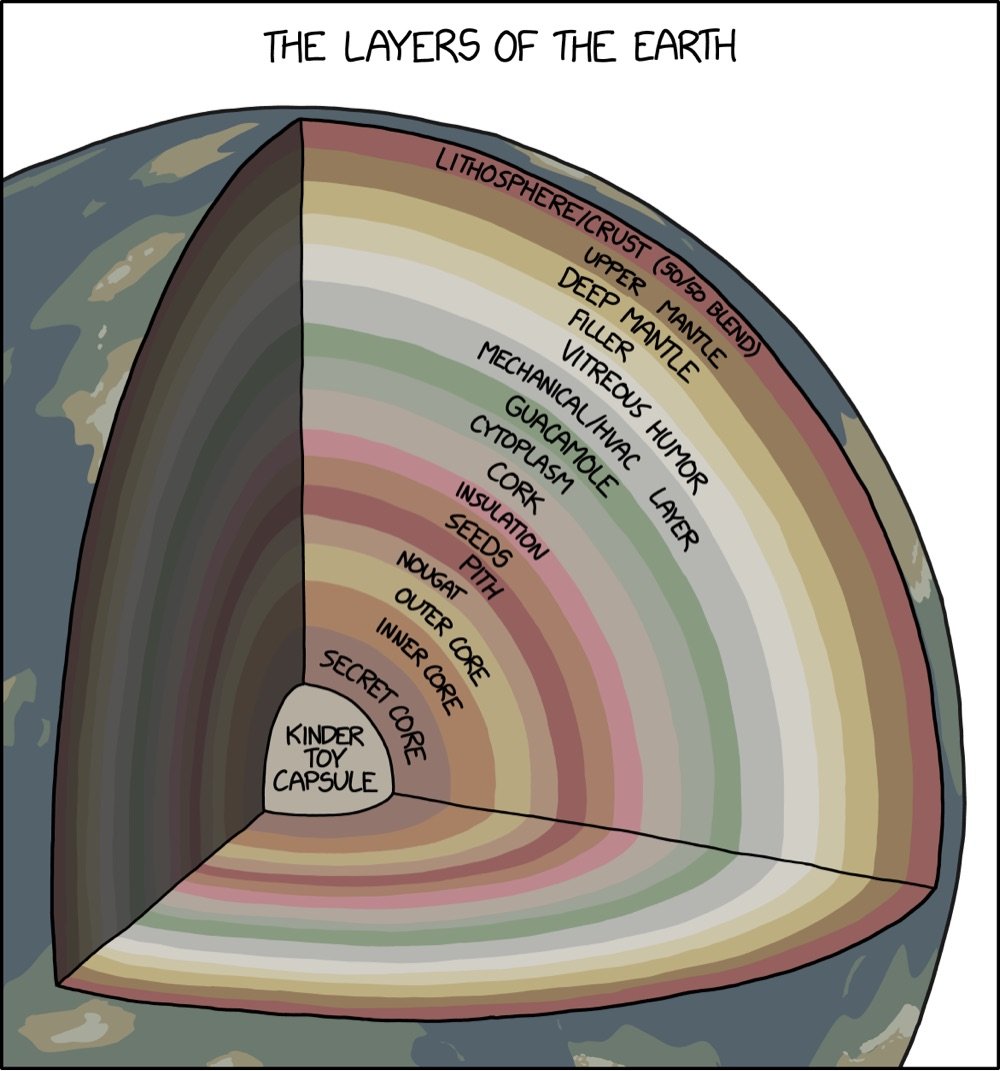
From XKCD, a 3D cutaway map of the many layers of the Earth, from the familiar crust around the outside to the more mysterious layers like nougat, vitreous humor, guacamole, and cork.
Over 130 animators, actors, filmmakers, and even puppeteers joined forces to remake a 1994 episode of the TV show Frasier called My Coffee With Niles. The episode was split into 185 sections, each 6-12 seconds long, and a different animator or filmmaker took charge of each section. Love this…just an incredible array of styles on display here.
You can read more about the project on their Instagram account. (via @spiritduplicator.bsky.social)
Update: Cartoon Brew has an interview with the project leader about how it all came together.
Taffy Brodesser-Akner profiles Taylor Swift, from the (relatively) cheap seats. “Our only proof that she was actually in the stadium was that the people close to the stage seemed to believe that she was, and we chose to believe them.”
I ran across this Slate piece by George Saunders yesterday and thought it was worth reposting. (Content warning: this article lists many violent acts, none of which are performed.)
At precisely 9 in the morning, working with focus and stealth, our entire membership succeeded in simultaneously beheading no one. At 10, Phase II began, during which our entire membership did not force a single man to suck another man’s penis. Also, none of us blew himself/herself up in a crowded public place. No civilians were literally turned inside out via our powerful explosives. In addition, at 11, in Phase III, zero (0) planes were flown into buildings.
During Phase IV, just after lunch, we were able to avoid bulldozing a single home. Furthermore, we set, on roads in every city, in every nation in the world, a total of zero (0) roadside bombs which, not being there, did not subsequently explode, killing/maiming a total of nobody. No bombs were dropped, during the lazy afternoon hours, on crowded civilian neighborhoods, from which, it was observed, no post-bomb momentary silences were then heard. These silences were, in all cases, followed by no unimaginable, grief-stricken bellows of rage, and/or frantic imprecations to a deity. No sleeping baby was awakened from an afternoon nap by the sudden collapse and/or bursting into flame of his/her domicile during Phase IV.
It’s a timely reminder of the overwhelming huge number of people in the world who are not militant extremists — but also of the power held by the tiny minority that are.
Six Months Ago NPR Left Twitter. The Effects Have Been Negligible. “The numbers confirm what many of us have long suspected - that Twitter wasn’t worth the effort, at least in terms of traffic.” Yeah, same here. Don’t miss it at all.
The trailer for aka Mr. Chow, a documentary about the legendary restaurateur who has returned to art later in life. Out Oct 22 on HBO.
Hey all. I’m going to be launching a new thing here soon (more on that in a few days), but you may have already noticed some changes around here. Design tweaks mostly. What you don’t see is that I pretty much ripped out the main guts of the site and rewrote a key piece of it…painful but necessary for some upcoming features. Hooooopefully it’s all working properly, but let me know if you see anything amiss? Especially with the membership stuff?
Anyway, one of the changes that people using RSS/newsreaders to read the site will have noticed is that the Quick Links are no longer bundled up into a few digests/day…they now arrive as they’re posted, one at a time. So if you got a bunch of old Quick Links clogging up your feedreader this morning, sorry about that — it should be a one-time thing.
Also regarding the RSS feed: the QL RSS items do not have titles (they are optional IIRC) and I’m getting a glimpse of the ways in which various newsreaders, uh, deal with title-less items. 😬 I’ve tested Feedly and Feedbin, but if you use another newsreader, would you mind emailing me a screenshot of how it handles these title-less Quick Links? Thanks!
Update: Ok, I’ve got FreshRSS, Newsblur, Unread, Reeder, NetNewsWire, Newsify, Newsboat, Inoreader, The Old Reader, Tiny Tiny RSS, Vienna, and a few others. I think I’m all set, thank you!


Over a period of eight years, Trevor Traynor took dozens of photos of newsstands and their operators. The project started in NYC but came to include newsstands in LA, Lima, Tokyo, Jerusalem, Marrakesh, London, Rome, Paris, and several other places around the world. (via present & correct)
The turn-of-the-century volcano photography of Tempest Anderson. “You know, Anderson, you are sure to be killed, but it will be such a very great satisfaction to you afterwards to think that it was in the cause of science.”
This new series from Netflix looks pretty good — and it’s got an impeccable pedigree: it’s based on Anthony Doerr’s All the Light We Cannot See, a Pulitzer Prize winner, National Book Award finalist, and a bestseller to boot. The four-part limited series premieres November 2nd.
What Americans Know About Religion, a Pew Research survey from 2019. Atheists and agnostics tend to know more about religion than Christians do.
The climate crisis has cost $16 million per hour in extreme weather damage over the past 20 years. That’s $2.8 trillion total…likely “a significant understatement”. And it’s only going to get worse.
How Red-State Politics Are Shaving Years Off American Lives. “[State-level] investments began to diverge sharply along red and blue lines, with conservative lawmakers often balking at public health initiatives they said cost too much or overstepped.”
US citizens or permanent residents with permanent disabilities can get a free lifetime pass to US National Parks (and other federal lands).
You have likely heard Yo-Yo Ma play his most famous piece before. Maybe even dozens of times. But Ma’s rendition of Bach’s Cello Suite No. 1 takes on a whole new dimension when accompanied by a babbling brook and bird calls in the forests of the Great Smoky Mountains. A lovely moment of peace in a world that could really use some right now.
During a recent show, Jerry Seinfeld seemed to tease the return of Seinfeld: “something is going to happen that has to do with that ending”.
Prada is helping design the spacesuits the astronauts will wear on NASA’s Artemis III mission that’s schedule to land on the Moon in 2025.
From the Milwaukee Public Library’s meme-tacular Instagram account: trying to read as a kid in America.
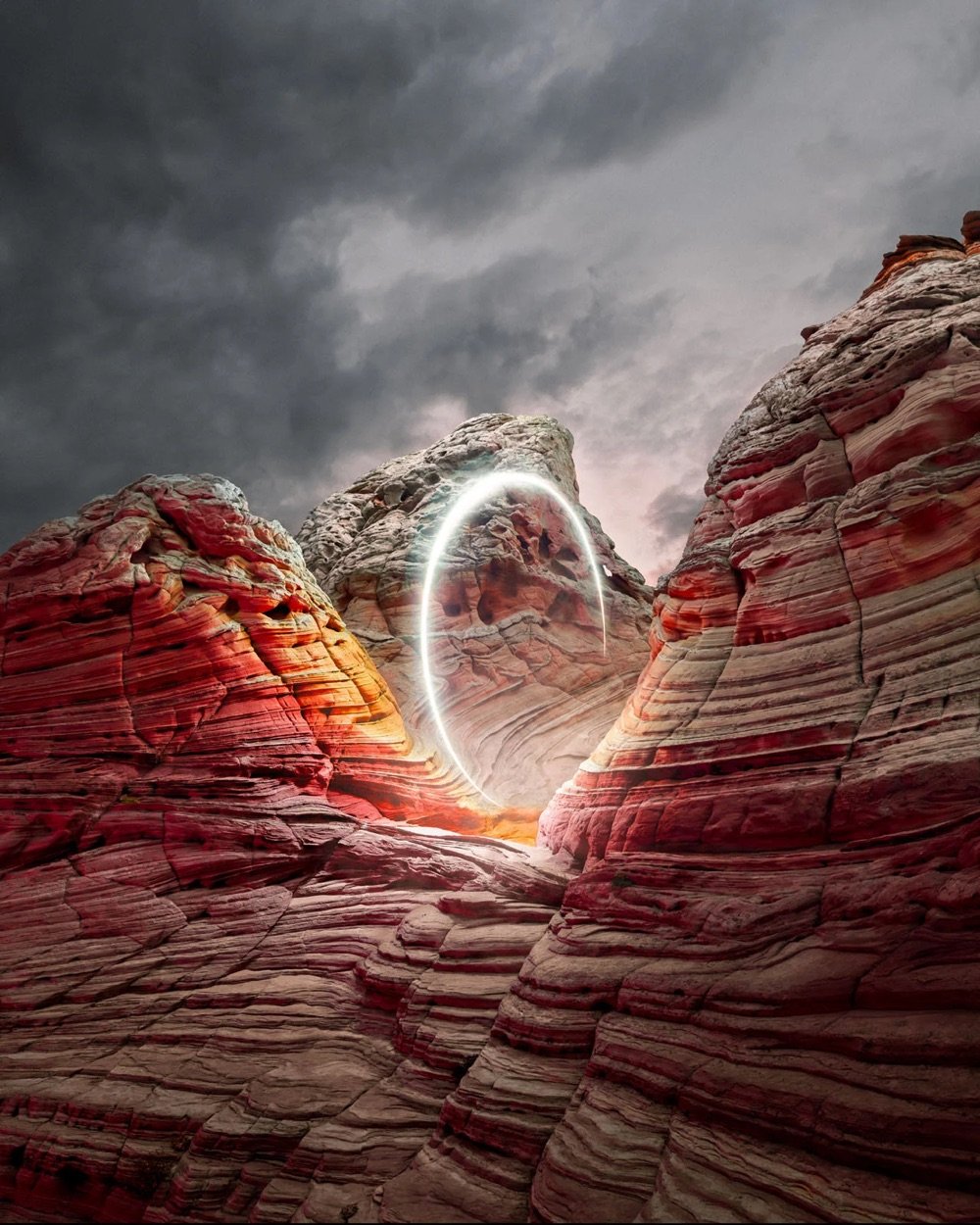


Photographer Reuben Wu was commissioned by Apple to take some of his wonderful light-painted photos with Apple iPhone 15 Pro Max in a project called The Inner Landscape.
So proud to be one of the first photographers to reveal a new series of images captured on the Apple iPhone 15 Pro Max and celebrate its launch. “The Inner Landscape” is a series of six unearthly places that feel more intimate than epic, more ambiguous than explicit, making up a body of work that feels cohesive through its sense of connection and psychological space.
I love Wu’s work. More information about this project can be found at Colossal, Petapixel, and on Wu’s Instagram.
‘What Is Broken in American Politics Is the Republican Party’. “A grown-up Republican Party — even a deeply conservative one — would accept the rule of law, the norms of liberal democracy, and the legitimacy of the opposing party.”
Amazon has a bunch of stuff on sale today & tomorrow for an “event” they’re calling Prime Big Deal Days. I’m not going to do a big roundup here, but here are a few things you might be interested in if you’re an Amazon shopper:
You can find more deals on the Prime Big Deal Days page.
When you buy through links on kottke.org, I may earn an affiliate commission. Thanks for supporting the site!
Newer posts
Older posts


Socials & More