kottke.org posts about video games
Gregory Wieber does these engaging, info-rich videos on tech history — I posted his HyperCard Changed Everything video back in the spring. For one of his latest videos, Wieber goes through a short history of Christopher Alexander’s landmark book, A Pattern Language (Bookshop), which anyone interested in building anything should at least have paged through once in their life,1 and how his work inspired not only object oriented programming and the invention of wikis, but also SimCity and The Sims.
This is really impressive: a software engineer got a Game Boy emulator running at 30 fps on a tiny e-ink screen.
If you’re familiar with e-paper, you know that they normally refresh much slower (2-3 times a second), not nearly quick enough to play even a simple video game. This guy wrote his own display driver that got the refresh rate up to 30 times per second. From the transcript of the video explaining how e-paper works and how he hacked the display to make it play games:
Unlike conventional displays like LCD or OLED, ePaper stores its image physically using charged black and white pigment particles. By changing the electric field, the display moves the pigments towards or away from the surface, which in the end gives us black- or white-looking pixel. And usually a sequence of several electrical pulses called a waveform is needed to move the pigment back and forth, before finally driving it towards the new image. This helps produce a clean result without leaving too much of the previous image behind. But this takes a lot of time.
The project is open source — you can get the plans and code on GitHub. This engineer was inspired by Wenting Zhang’s e-paper Game Boy emulator:
Zhang has also made a color e-ink display that runs at 60 fps. Very cool. (via yanko design)
It might be that this text-only quiz game from 1993 is the most challenging F1 video game of all time. Here are a couple of the 23 questions from Gerhard Berger’s Formula 1 Quiz:
3. Which team was the best in the 80’s?
Statistically, it’s McLaren, but that’s not a correct answer. The correct answer is “Mc Laren.”
4. Who is the youngest champion of ever?
The correct answer in 1993 was Emerson Fittipaldi, but his full name cannot be accepted because it contains too many characters for the computer. The game will not take “Fittipaldi,” “Emerson,” or “E Fittipaldi.” The answer must be “Fit.”
The real quiz, it soon becomes clear, is not a test of one’s F1 knowledge, but figuring out what the game expects to hear.
Berger is a former F1 driver, and the game is so weird and forgotten that it’s not even listed on his Wikipedia page — and it might not have been an official game at all. What is listed on his Wikipedia page is the epic prank war he waged against teammate Ayrton Senna:
In an Australian hotel room, Berger filled Senna’s bed with frogs. An infuriated Senna confronted Berger, who replied, “Did you find the snake?” Senna retaliated by putting strong-smelling French cheese in the air conditioning unit of Berger’s room.
It seems likely it was in this spirit that Gerhard Berger’s Formula 1 Quiz game was created: as a prank Berger himself would have enjoyed. You can play a cracked version of the C64 game for yourself on the Internet Archive (answer “N” and “N” if you want to play it in hard mode as intended) and watch this gameplay video:
In this video, Patrick Hicks tells the story of the development of the classic educational video game The Oregon Trail and how Prince (you know, the genius musical artist) was one of the first people in the world to play the very first version of the game.
The basic story is that a college history major (Don Rawitsch) teamed up with two friends (Bill Heinemann and Paul Dillenberger), both of whom were math majors and had some programming experience, to make a computer game to liven up the history class that Rawitsch was student teaching. While developing the game, Heinemann & Dillenberger tested it out with some kids at the high school at which they were student teaching…and one of those kids was Prince Rogers Nelson.
Paul would later say that he heard about Prince before he even met him. One of the other teachers told him, “There’s this kid here who basically is running his own business. He’s this amazing musician who plays all these instruments and writes his own songs.” And then later, Paul realized that that was Prince.
But listen to Hicks tell the whole thing…it’s a good story. And if you want to hear a lot more of the story, here’s Gaming Historian’s feature-length documentary (the Prince anecdote is at ~24:00).
You can play the familar 1980s version of the The Oregon Trail online.
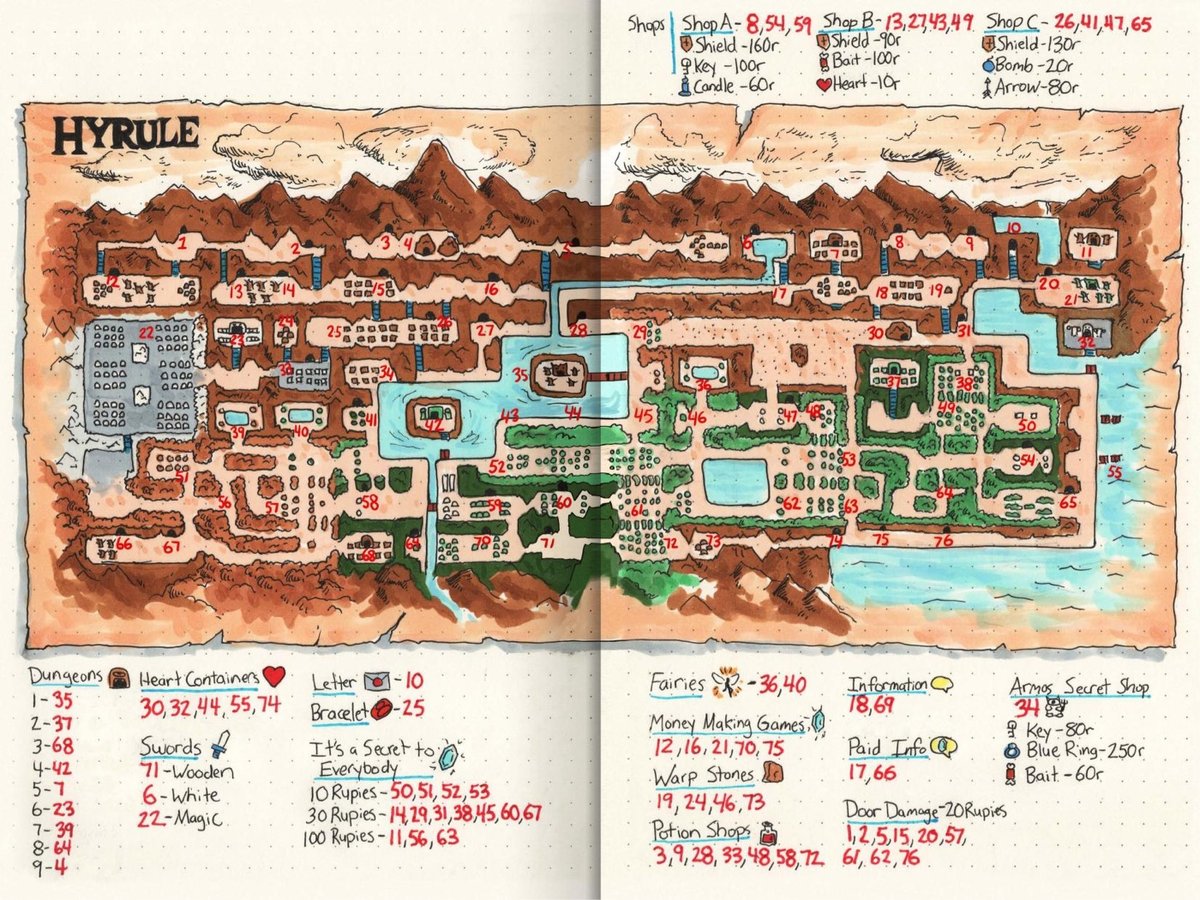
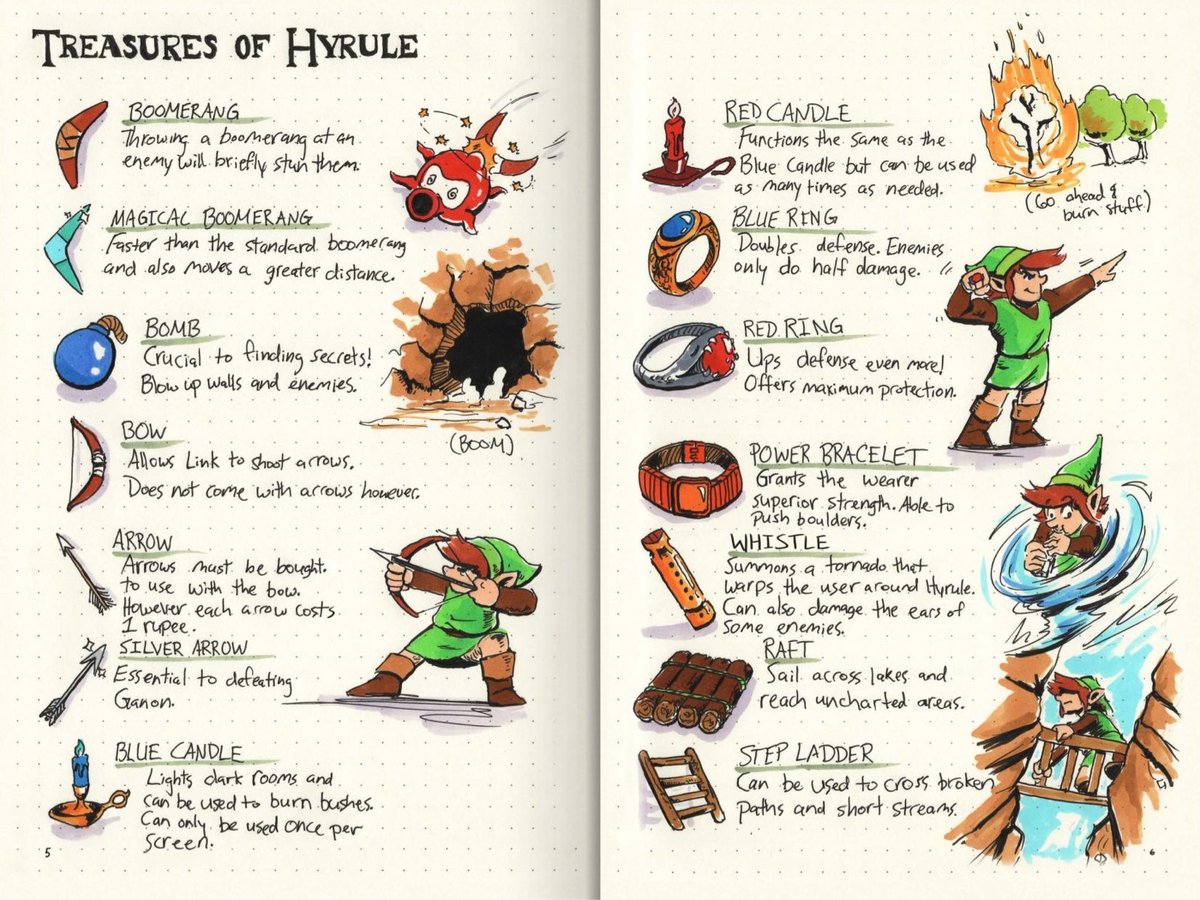
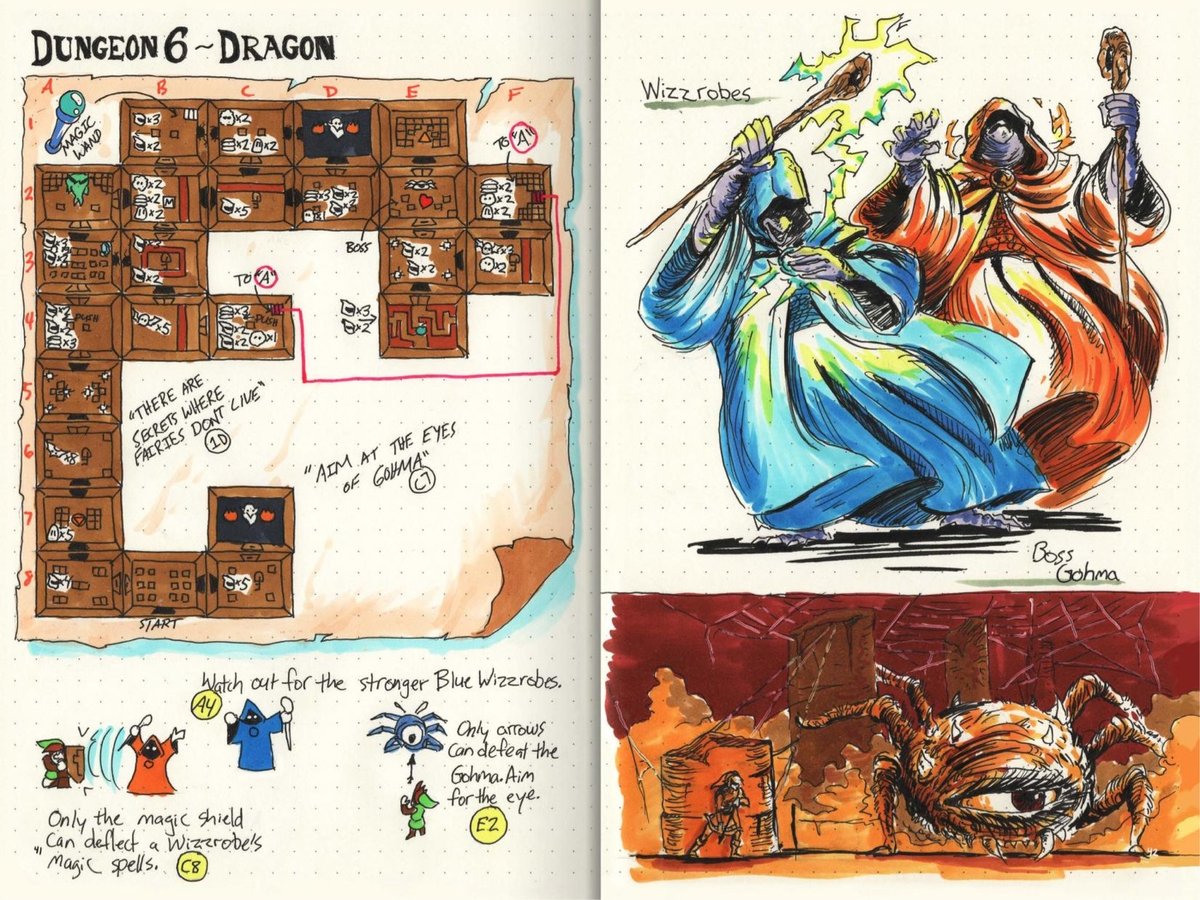
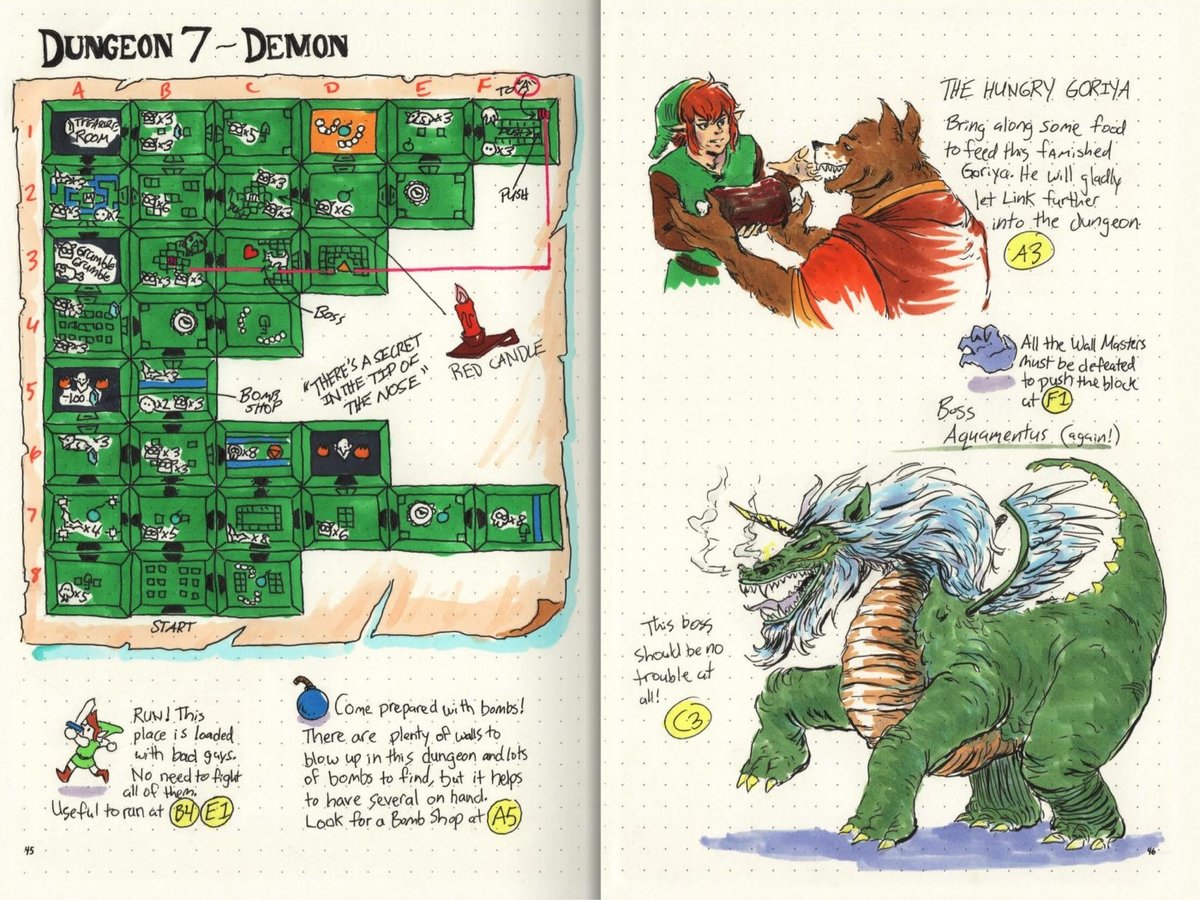
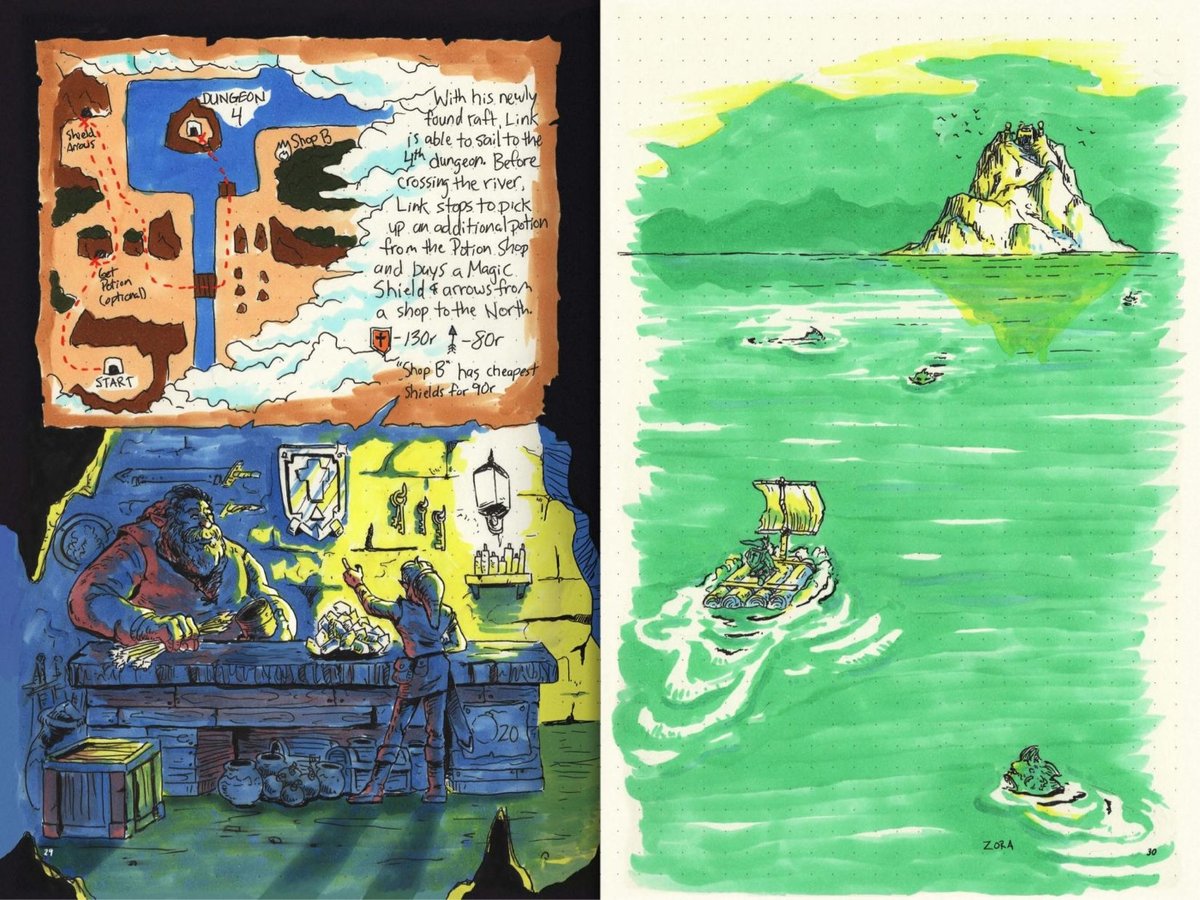
Philip Summers hand-draws game guides for old school video games. He’s done guides for games like Mega Man, Castlevania, Teenage Mutant Ninja Turtles (NES), and Metroid.
But my favorite one is The Legend of Zelda game guide because Zelda was (and still is, tbh) my absolute favorite NES game — and you can get it for free at the Internet Archive. Somewhere in my personal archive is the map I drew for the second quest of Zelda; I also still have my original game cartridge.
Senior living communities generally don’t go viral or gain media attention for positive reasons, so it’s nice to see this story about the University Village Retirement Community in Tulsa, Oklahoma and their champion Wii bowling team.
On this recent Thursday in June, their hopes are pinned on Phyllis Wimer, known as Phyllis Killer or Phyllis the GOAT for the many strikes she bowls; Charlene “the Grasshopper” Giles, whose hop gives her some extra oomph as she releases the ball; “Marvelous” Marcia Ness, who describes herself as a “tough old broad,” ready to bowl after recovering from a broken wrist and back; and “Rollin’” Ron Demaree, who grips the lower-left handlebar on his motorized wheelchair to propel himself upward and forward for more power in his roll.
Phyllis the GOAT is 95 years old and rolls 300s in practice sessions like it’s nothing. Here’s a local news segment on the team from a few months ago:
I was very into Wii Sports 20 years ago (!!!) and still occasionally play Switch Sports with the kids (golf, bowling, and tennis mostly). They’re great party/gathering games and evidently also great for staying active and sharp in your 90s.

Yesterday I linked to a Windows 3.x NYT crossword puzzle app from 1992 that you can play directly on the Internet Archive. I was a Windows user back in the day (my conversion to Apple didn’t happen until the early 00s) and so of course I had to see what other Win3.x games they had in their collection and re-discovered a couple of old favorites:
- The Incredible Machine. I loved this game…it was an early physics puzzler where you had to build contraptions to accomplish certain goals (like getting a ball into a hoop) with a limited selection of materials. (I just played for 20 minutes and I still love it.)
- Tripeaks. I’d forgotten about this solitaire variant.
- Freecell. This isn’t the official Microsoft version, but it’s close enough. I played Freecell much more than solitaire or Tripeaks.
- Pipe Dream. I actually had this one on Nintendo, I think. Or maybe my neighbor did? Another fun little puzzler.
- Minesweeper. Everyone’s played this at some point.
- Tetris. Ditto. Although I played mostly on my Game Boy.
- Klotski. Ok this one was the biggest nostalgia bomb of all. The name sounded familiar so I clicked on it and wow, I played so much of this one and had completely forgotten all about it until I played the demo. Wow wow wow.
- Doom. Of course.
Ok, that’s enough, I need to get back to work!
“Ugh, this kid is so sweaty!” my son exclaimed as he came under attack in some game he was playing. This was a few years ago; my ears perked up and I asked him what he meant. He explained that “sweaty” was a derogatory term for gamers who were trying super hard to win. Such players were referred to as “sweats”.
Recently I read something — can’t remember what — and came across the word “swot”. I hadn’t heard that before, so I looked it up. “Swot”, a dialect variant of “sweat”, is a derogatory word in informal British English meaning “a person who studies hard, especially one regarded as spending too much time studying”.
I wonder if these two meanings evolved independently from each other; that would be super interesting. Know Your Meme traced “sweaty” back to its use among those who played the FIFA game series in 2014. It’s possible that British gamers smuggled “swot” into gaming terminology and it quickly evolved into “sweat”. I’m not sure how common “swot” is in Britain…or if “sweat” is used interchangeably with “swot”. But if I had to guess, I’d say they weren’t related. If any etymologists out there are looking for a challenge…
In just a few days (Dec 5), the entirety of Quentin Tarantino’s Kill Bill duology will be released in theaters as one four-hour-long film. Here’s the trailer:
Quentin Tarantino’s KILL BILL: THE WHOLE BLOODY AFFAIR unites Volume 1 and Volume 2 into a single, unrated epic—presented exactly as he intended, complete with a new, never-before-seen anime sequence.
And there will be an intermission. I haven’t seen KB in awhile and am looking forward to this.
Oh, and QT has a Kill Bill collab with Fortnite? Apparently in the original script, there was a scene where Yuki Yubari (Gogo Yubari’s twin sister) tries to get revenge on Kiddo, but it was cut because the director deemed it “too much to chew” for one shoot. Using Unreal Engine 5, Fortnite characters, and a motion-captured Uma Thurman, Tarantino has finally made the scene a reality. You can find it in the game or watch it on YouTube:
Speaking of Daft Punk, did you know they released some new music recently? Ok well, that’s not quiiiite true, but in late September, Epic launched the Daft Punk Experience in Fortnite and IMO it’s a) extremely cool, nd b) should be considered a part of the group’s official discography.
For a taste of what it’s like, here’s the seven-minute intro to the experience:
I watched this live when it launched, on a big TV and with the sound turned up, and it was awesome. Again, no new music, but definitely a new music video experience.
During the intro, you can control your player slightly but the game mostly moves you through it. After you’re inside the pyramid though, there’s a lot to do. The main event is a concert playing some of the songs from their Alive 2007 tour; here’s what that looks like from start to finish (33 min):
You can move freely around and dance, including with other players who are in the pyramid with you. During some songs, you can bounce really high on the dance floor or fly around the room.
Off of the main pyramid are four smaller interactive rooms (in order of coolness):
- Dream Chamber Studios: You can choose from almost two dozen Daft Punk songs and mix them together, adjust tempos, etc. This room alone makes the whole experience worthwhile…it’s the easiest way to create DP remixes.
- Around the World. You and up to three other players work to recreate and then customize the iconic Around the World music video. Oh, and you’re all Lego characters.
- Daft Club: Dance to music from Random Access Memories. (You can see the full Daft Club sequence in the latter part of this video.)
- Robot Rock Arena: You and some teammates join forces to defeat robots using musical weapons.
In all, that’s six new interactive audiovisual experiences from Daft Punk, featuring 31 songs from their discography. It’s huge.
The easiest way to see/experience all of this is to play the game…the Daft Punk Experience is still playable afaik. Fortnite is a free download and the DPE is free as well. If you’re a Daft Punk fan, it’s worth checking out for sure.
Super Mario Bros. Remastered is an open source, fan-created, remastered version of the original Super Mario Bros. The trailer is above.
The game includes new levels, custom modes and characters, a custom level editor, and more. You need the SMB1 NES ROM to play it — “none of the original assets are contained in the source code, unless it was originally made by us!”
You can download versions for Windows, Linux, and MacOS…check out all the options and details on Github.
Dan Sinker recently visited an arcade full of old school vintage arcade games and documented some of the wonderful typography and design of the game cabinet marquees.


After a while though, I became captivated not by the games themselves but by the incredible art on the cabinets and specifically the marquee, the sign set above the screen, tempting a kid from 1983 to spend their hard-earned quarters. The marquee back then had to do a lot of work, because the games themselves were all low resolution and blocky affairs. The marquee had to sell the idea of the game, the excitement around the concept and the story because the on-screen graphics alone weren’t going to do it. So you made sure that your marquees did the job, filling it with exquisite hand-lettered logos, art borrowed from the pages of fantasy novels, sci-fi, and comics, and vivid color palettes that would shine out into the dark arcade.
I’ve been to Funspot in New Hampshire a few times and it’s so fun to walk around and marvel at all of the 70s, 80s, and 90s graphic design — to see what the past thought the future was going to look like.


Lego is coming out with a near 1:1 replica of Nintendo’s iconic Game Boy handheld video game system. It’s not playable, but you can insert & remove Lego game cartridges and use different lenticular screens to pretend. Here’s a short video showing how it “works”:
You can preorder the kit from Amazon; the price is $60, which is only $30 less than the actual Game Boy cost when it was released.1
I still have my original Game Boy from 1989 — it’s sitting on a table near where I’m typing this. I played so so much Tetris on that thing… (via moss & fog)
A perfect game in Tetris is defined as achieving the max score (999,999) in the least amount of time possible, meaning you need to score a bunch of Tetrises in a row (and nothing else) at the highest possible starting speed. A few years ago, a player used a tool to develop a sequence of moves and timing to score a perfect game, proving that it was possible. But could a human do it just by the playing the original game in the way it was intended? Well, you’ve got to watch the video to find out.
I’ve said it before — I love these Tetris analysis videos. Both aGameScout, who did the video above, and Summoning Salt (who made this feature-length video about the history of Tetris world records) are world-class at using video to explain the innovation, competition, and cooperation that allow these players to keep pushing higher and faster, past what anyone thought possible even a few years ago.
Thinking back to the Jackson Goldstone post, what I really want is a aGameScout- or Summoning Salt-caliber video about the differing riding styles of mountain bike riders, how each of them uses their own style to go faster, and where the innovations are happening. I’m sure these videos exist and I just don’t know where to find them, but if they don’t, this would be a hell of an opportunity for someone with ace communication & video editing skills.
Lagarto Films is a film collective based in Puerto Rico that makes interactive YouTube videos and games. This is pretty clever actually…they use keyboard shortcuts to skip to different parts of the video, Choose Your Own Adventure style. So you can play a game of Uno:
Or direct the action in a short cops & robbers film:
Play Grand Theft Auto in real life:
There are many more of their interactive videos in this playlist. (thx, ollie)
Older posts





Socials & More