


Every Tree Can Be a Buddha

I began at the end. The Chōishi-michi pilgrimage route is an amazing 12-mile trail that winds its way up through the forest from the Jison-in temple in the town of Kudoyama in the valley to the Danjo Garan temple in the town of Kōyasan in the mountains. The origins of the trail date back to the founding of Kōyasan as a center for the esoteric Shingon school of Buddhism by Kūkai (aka Kōbō Daishi) in 819 CE. Legend has it that Kūkai used the trail to visit his mother; ever since, for some 1200 years, Buddhist faithful have been using the Chōishi-michi to worship in sacred Kōyasan. I was going to follow in their footsteps, for my own ends.
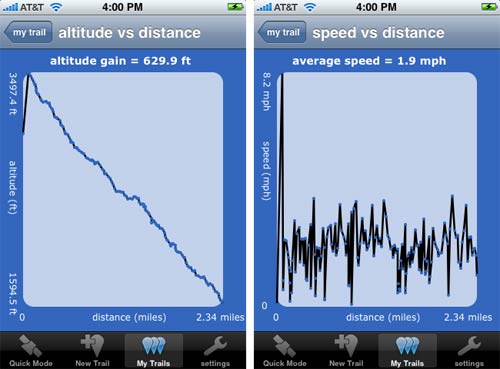
To climb up a mountain like a proper pilgrim, you need to start at the base. Seeing as my lodgings were already in Kōyasan, my journey began by a) catching the bus down a winding forest road; b) where I boarded a cable car for the ludicrously steep journey down to Gokurakubashi; c) where I got on an extremely local train; and d) finally disembarked at the Kudoyama train station and walked to the starting point. One hour and 30 minutes after I’d left my guesthouse, I stepped through the gate of the Jison-in temple. Now all I had to do was climb the entire 4100 feet of elevation back to where I’d started.

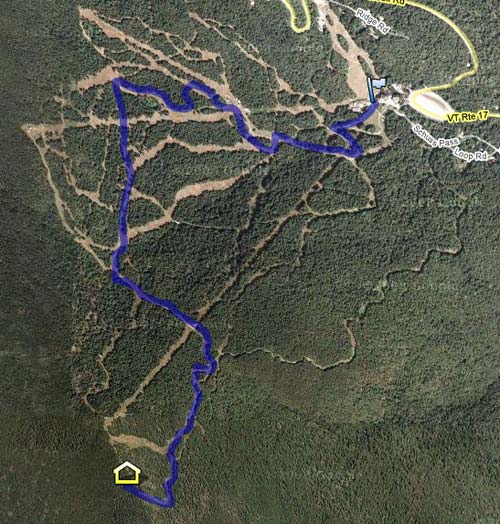
When establishing the Chōishi-michi some 1200 years ago, Kūkai marked the route with wooden guideposts, one every 109 meters. You don’t want your pilgrims getting lost — how are you going to find eternal salvation if you can’t even make it to the temple? The markers were replaced with more sturdy stone gorintō in the late 13th century. 180 of these stone markers are situated along the route from to Jison-in to Danjo Garan, along with another 36 markers from Danjo Garan to the Mausoleum of Kōbō Daishi in the Okunoin Cemetery. In the spirit of wayfinding, perhaps a map of my there-and-back-again route would be useful:

———
I was thankful for the frequent stone markers as I’d gotten a little lost on my hike the previous day. I was traveling on — or I was supposed to be traveling on — the Nyonin-michi pilgrimage route (Women’s pilgrimage route) and doing pretty well when I took a wrong turn right near the end.
This particular trail, though popular, wasn’t on All Trails and markers were sparse, so I was doing a lot of pinching & zooming of Google Maps and a PDF I downloaded from the internet. The trail curved right and I stayed straight, wondering why this bit of the trail was a little less blazed than the rest of it had been, and I popped out into the backyard of a temple. Oh no, I thought, I’m not supposed to be back here; only monks are supposed to be back here. I’m offending so many ancestors right now.

More pinching and zooming — ok, there’s a road off to the northwest. I set off and walked by what looked like some recent graves? The ancestors: so mad right now! What a disgrace of a pilgrim I am. I found myself crouching as I walked almost on tiptoe, trying to evade detection — even though the Buddha surely knew where I was and what I’d done. The road was just where the map said it would be; I slipped through a gap in the fence and followed it downhill for a quarter mile, not entirely sure I wasn’t still in a restricted area.
I came up on the other side of the temple and realized I’d stumbled into the backyard of Kōbō Daishi’s Mausoleum, where Shingon founder Kūkai entered into eternal meditation in 835 CE,1 aka one of the absolute holiest places in all of Japan, aka I am in deep, deep shit with the ancestors. Abandoning my plans for lunch, I entered Okunoin Cemetery through a proper entrance and made my way to the mausoleum. Wishing to make amends, I bowed at every bridge and threshold where everyone else was bowing and threw some coins into the saisen box.2 Many of the people around me were quite emotional about being there. The whole atmosphere just felt good, peaceful, numinous.
———


Ok, back to the Chōishi-michi, the big 12-miler. The first few miles felt almost straight up and then the trail leveled off for a while. The weather was cool but humid, so I hiked in shorts sleeves, sweating. It rained intermittently. Fog crept up the mountainside. I hiked though persimmon orchards; they’re in season right now. Small stands sold oranges & persimmons on the honor system. The path was well marked, not only with the stone gorintō but with well-placed signs in Japanese and English pointing the way to Kōyasan.


Walking the narrow path between the forest’s tall evergreen trees felt like entering a European cathedral with a towering vaulted ceiling. A bamboo forest earlier on the hike had a similar feeling; spaces such as these make you look up and feel whatever power or force or presence you believe in. You feel small and big all at once. The forest: unbelievably beautiful.

I heard voices through the trees and then the crack of something — was that a golf ball? Am I hiking through a golf course? The trail came to a clearing and lo, the tee for the 13th hole. The path also passed by vending machines,3 crossed roads, and zagged through tiny towns. The modern world, built up around this ancient trail.
I stopped for lunch around the halfway point: a sandwich, apple & custard pastry, and a small can of consommé flavored Pringles procured the night before at FamilyMart. FamilyMart is one of the big three convenience stores (konbini) in Japan — the other two are Lawson and 7-Eleven. Before you come to Japan for the first time, everyone tells you how amazing the konbini are: “You’re not going to believe this, but…” And then you get here and damn, they were right. The consommé Pringles were delicious.
After lunch: one foot in front of the other. Pilgrim mode locked in. Maybe I should become a monk, I think. I’m pretty good at being a pilgrim, the hiking part of it, I mean. I’m fine being alone with my thoughts. The clothes look comfy. I could be a monk with the internet at the center of my practice. Hours spent doomscrolling is kind of like meditation, right? It’s certainly a flow state of sorts, like the blood gushing from the elevators in The Shining. I’m into aesthetics. And I— oh, it’s ascetic? Ah. Maybe I’ll just stick to my secular life then.
Another stone marker. Another 109 meters. Keep going. I pass one every 90-100 seconds or so. Early on, the markers flew by; I didn’t even notice some of them. Now I’m searching them out ahead, peering up the slope I know (via All Trails) steepens sharply right at the end. Is this is the last one? No. But keep going. It’s damp, the rocks are wet. An inch of moss covers everything save for the well-worn pilgrimage path. It feels like a rain forest. Another stone marker. Another 109 meters. Keep. Going.
I sense the top of the hill — something about the light changes. I see a guardrail ahead. Emerging on the side of the road, I cross it and make for the Daimon gate, the traditional entrance into town. On the threshold, I bow deeply. Stepping over, I pump my fist in the air — I’ve made it back to Kōyasan.
———
A weary pilgrim deserves a hot bath. My guesthouse is a further few hundred feet. The woman who runs it is very nice and a little kooky; I like her. After the sacred backyard debacle the other day, I told her about all the ancestors I’d offended. She chuckled and told me, the ancestors, they don’t mind so much. She cooked me breakfast (delicious, nutritious) every morning — you don’t look like a tofu person, she said, eyeing me. Correct.
On my last morning, I asked her about a bunch of boxes stacked on a table. I have an interest in incense, she said. Apparently it’s quite involved and the most skilled practitioners are equal in expertise to those who do the chadō tea ceremony. She opened one of the boxes and showed me a very expensive twig of charcoal, which is so special that they sell it by the stick. When the charcoal burns, it does so purely, without giving off any gases or sparking or spitting. Afraid she’s trapped me into politely listening to her going on about her hobby, she checks in: are you actually interested in this? My turn to chuckle; personally & professionally, I’m interested in all sorts of things, even fancy charcoal.
The guesthouse has a kick-ass bathtub, deep and quick-to-fill. My host keeps a selection of bath salts and I select a yuzu one. Tired but happy and fulfilled, I soak a long while, easing the pain in my aching feet & back, the yuzu scent filling my pores.
———
After bathing, I set out to finish my journey. I’d previously walked the length of town to the Okunoin Cemetery and back a couple of times, but I wanted to do the whole thing in one day: from Jison-in temple to Kōbō Daishi’s Mausoleum at the far end of the cemetery, a proper pilgrimage. Well, not quite proper…because I was tired from my hike, I caught the bus instead of walking. The quest is the quest, whatever it takes.

Okunoin Cemetery is one of the most breathtaking and magical places I’ve ever been. Imagine a redwood forest like Muir Woods with Buddhist temples and a 1200-year-old cemetery with tens of thousands of faithful buried in it. The soaring trees create that cathedral effect and even an atheist like me can’t help but feel holy in the presence of so many souls, including Kūkai/Kōbō Daishi himself.
I hopped off the bus and started into the cemetery. Night had fallen and it was quite dark; should I have brought my headlamp? Ah, no need…the way is lit by hundreds of lanterns lining the path at about shoulder height. There are also some brighter, taller lights, a concession to safety I suspect. They’re the wrong temperature though, a rare misstep in a country with an unrivaled collective attention to detail. Whereas the lanterns glow with a pleasant amber light, these safety lights are a cold, garish blue, a color as harsh to the eye as the word “garish” (or “harsh” for that matter).

Aside from a few other people, I’m the only one here at this hour. Why are my shoes. So! LOUD!!? Each footfall echoes about the whole place and the crunch of the sand on the wet pavement under my soles is deafening. Once again, I am disturbing the ancestors. I try to walk quieter but somehow that’s even louder? How is anyone supposed to be eternally meditating with all this racket going on? Definitely not monk material, neither me nor my cacophonous shoes.
What’s that noise?! Some kind of animal? Ok, I can still hear the faint sound of traffic on the nearby road and anywhere with automobile noise isn’t scary — dangerous perhaps, but not scary. I hear another noise, one that I can only describe as “probably bird but what if monkey?” Or maybe Ghibli monster? I gotta say, in case you didn’t know, Hayao Miyazaki sure nailed Japan. Hit it out of the park. Everywhere I go, I am reminded of his work: small food stalls, beautiful parks, tiny trucks, cute little train stations, forest paths — the just-so touches of Japan reflected and amplified by the meticulous and rich detail of Studio Ghibli’s work.

The cemetery oozes Ghibli energy; it is not difficult to imagine thousands of Miyazaki’s weird little guys hanging from every tree and lurking behind every gravestone. Buoyed by their benevolent presence, I make a full loop of the cemetery in the dark, all the way to Kōbō Daishi’s Mausoleum and back to the entrance again.
And then, not wanting to wait 25 minutes for the bus, I walked all the way back to my guesthouse again, stopping at a sushi place for dinner. When I poked my head through the door, there was one other customer, an old guy smoking a cigarette who gestured for me to join him at the communal table. A menu was produced; I ordered so much sushi. Baseball was on the TV in the corner — game 1 of the Japanese equivalent of the World Series. The old couple running the place brought me sake, six massive fatty tuna rolls, six even larger salmon nigiri, and a much larger bowl of miso soup than I was expecting. As the three of them chatted, we all watched the baseball and I finished everything they brought me. I’d walked a total of 17.5 miles and needed to replenish.
I rolled out of there around the 4th inning of the game, arigato gozaimasus all around, and limped the rest of the way back to the guesthouse with a full belly, full heart, and teeming mind — back to where I began, at the end, completely satisfied by one of the best, most fulfilling days I’ve had in a long time.
- Adherents believe Kūkai didn’t die but merely entered into a deep meditative trance to await the future Buddha.↩
- A busy Buddhist temple sounds not unlike the slot floor of a Vegas casino, except it’s the patrons, and not the house, paying out before praying.↩
- Everyone tells you “there are vending machines everywhere in Japan” and you’re like haha ok, and then you realize within a few hours of arrival that they’re right. Japan is lousy with vending machines.↩
Socials & More