kottke.org posts about art
This is kind of nuts. Diana Smith creates CSS-only hand coded “paintings.” Here are the rules she sets for herself.
- All elements must be typed out by hand
- Only Atom text editor and Chrome Developer Tools allowed.
- SVG use is limited, and all shapes can only use hand-plotted coordinates and bezier curves - without the aid of any graphics editor.

If you’ve ever done anything around web development / front end design, you’ll appreciate the craft in minutia that goes into these projects.

Dutch art gallery Cook & Becker is releasing a series of high quality art prints taken from the very Studio Ghibli-like game Ni No Kuni II. Beautiful stuff.
A large part of the appeal of the Ni No Kuni series is how the games look: it’s like you’re wandering around inside a lush Studio Ghibli animated film while playing a fantastical role-playing game. That was certainly true of the recent Ni No Kuni II: Revenant Kingdom — this in spite of the fact that the famed animation house wasn’t technically involved. It still bore the telltale signs of a Ghibli production, however, including the charming character designs of Yoshiyuki Momose and huge, stunning locations including mysterious, bioluminescent forests and vast kingdoms.
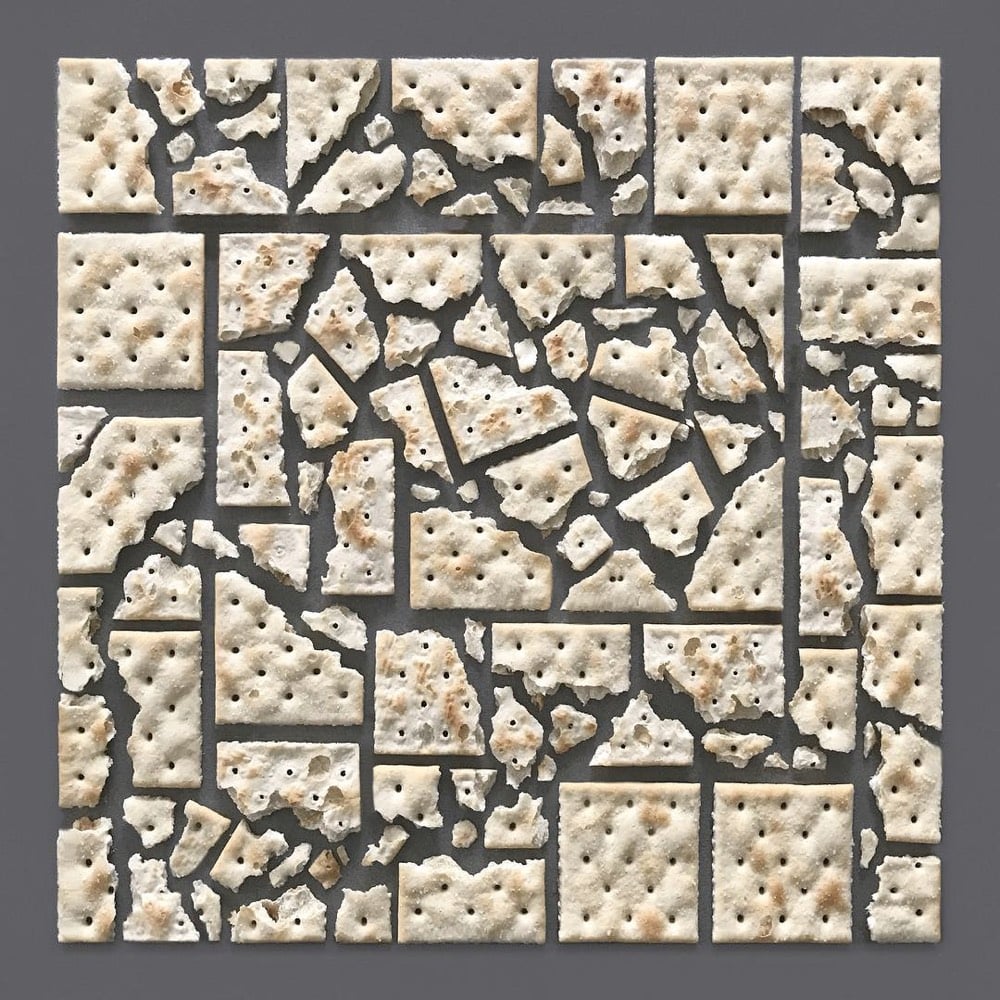
This arrangement of saltine crackers by artist and prop stylist Kristen Meyer is giving me all sorts of feelings. Meyer has done many other similar arrangements (see her site and Instagram) but the geometric chaos of this one is *kisses fingers*
See also gradient food photography, Always. Be. Knolling., common objects painstakingly organized into patterns, and Things Organized Neatly. (via colossal)
Modern art museum patrons are often confounded by all-white paintings like those of Robert Ryman. Like, what the hell? It’s just a white painting? “I could do that.” In this video, Vox’s Dean Peterson talks with The Whitney’s assistant curator Elisabeth Sherman about how you might approach thinking about minimalist art.
The art critic Peter Schjeldahl, writing about a retrospective of Ryman’s work for the New Yorker, gets at what the artist is attempting to communicate with his work:
Always, Ryman invites contemplation of the light that falls on his paintings (which when I saw them, on a recent cloudy day, was glumly tender as it filtered through the Dia skylights) and of their formal relation to the rooms that contain them. There’s no savoring of style, just stark presentation. His work’s economy and quietness may be pleasing, but its chief attraction is philosophical. What is a painting? Are there values inherent in the medium’s fundamental givens — paint skin, support surface, wall — when they are denied traditional decorative and illustrative functions? Such questions absorb Ryman. Do they excite you? Your answer might betray how old you are.
And Ryman himself talked about why he uses white in an interview with Art21:
White has a tendency to make things visible. With white, you can see more of a nuance; you can see more. I’ve said before that, if you spill coffee on a white shirt, you can see the coffee very clearly. If you spill it on a dark shirt, you don’t see it as well. So, it wasn’t a matter of white, the color. I was not really interested in that. I started to cover up colors with white in the 1950s. It has only been recently, in 2004, that I did a series of white paintings in which I was actually painting the color white. Before that, I’d never really thought of white as being a color, in that sense.
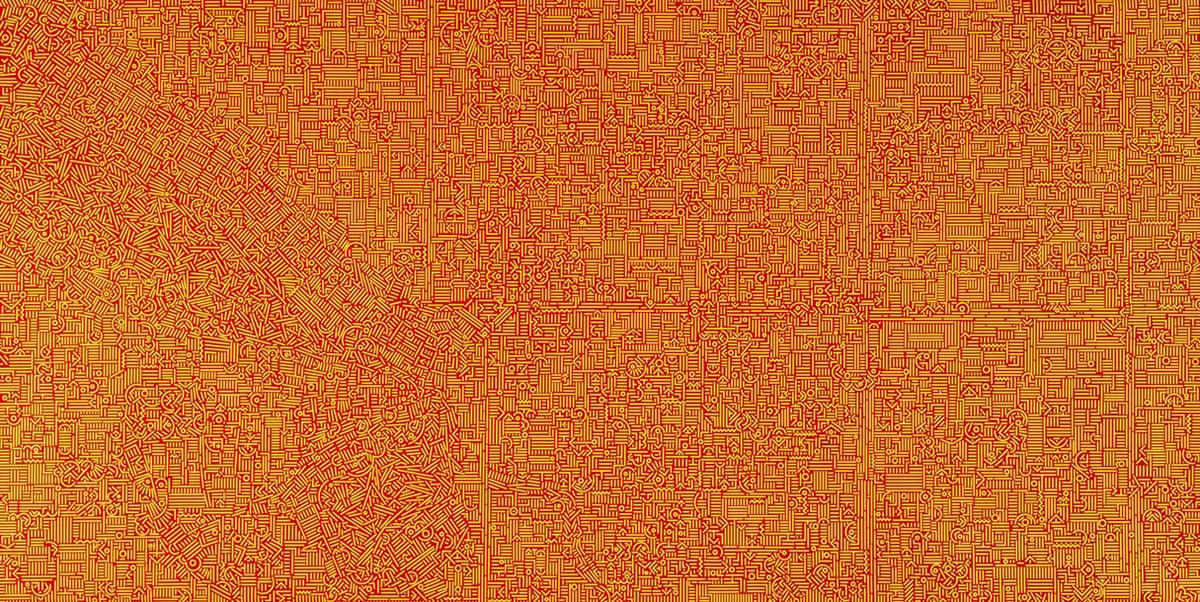
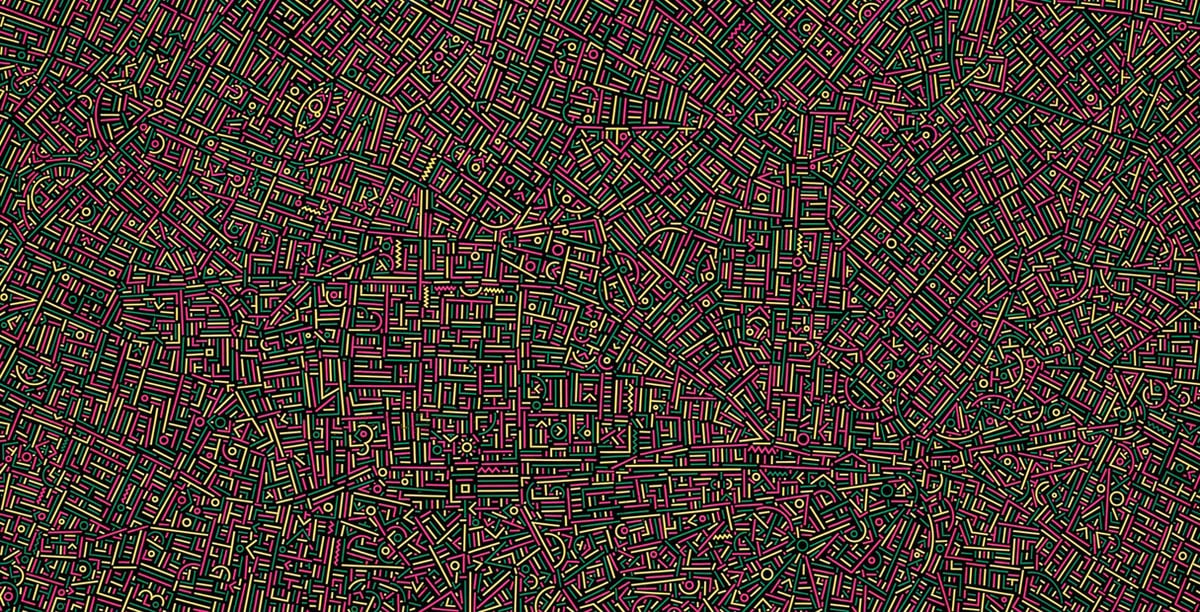
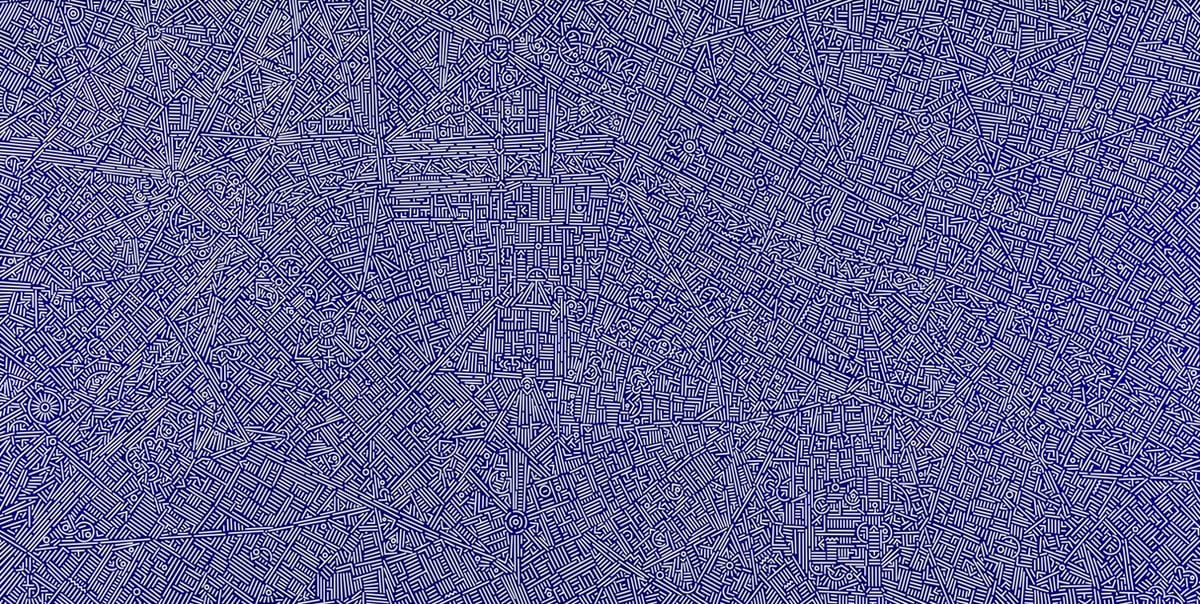
After Piet Mondrian moved to New York in 1940, his work became influenced by Manhattan’s grid system, particularly expressed in Broadway Boogie Woogie. Similarly, for his City DNA project, Xinjian Lu studied satellite maps of cities like Beijing, Athens, New York, and Los Angeles and then created these maze-like paintings that resemble the street layouts of each city. Mondrian++. Holy moly, I *love* these.
From top to bottom, Lu’s paintings depict Beijing, London, and Paris.
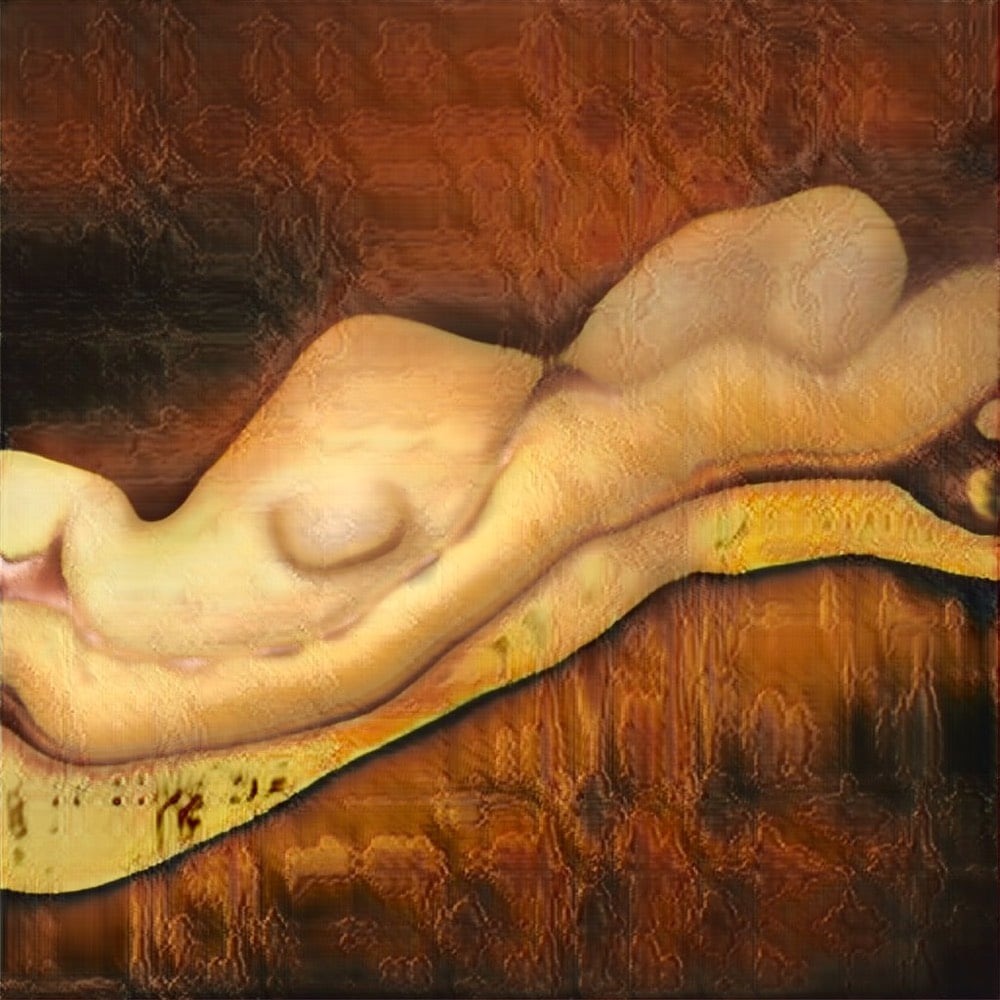
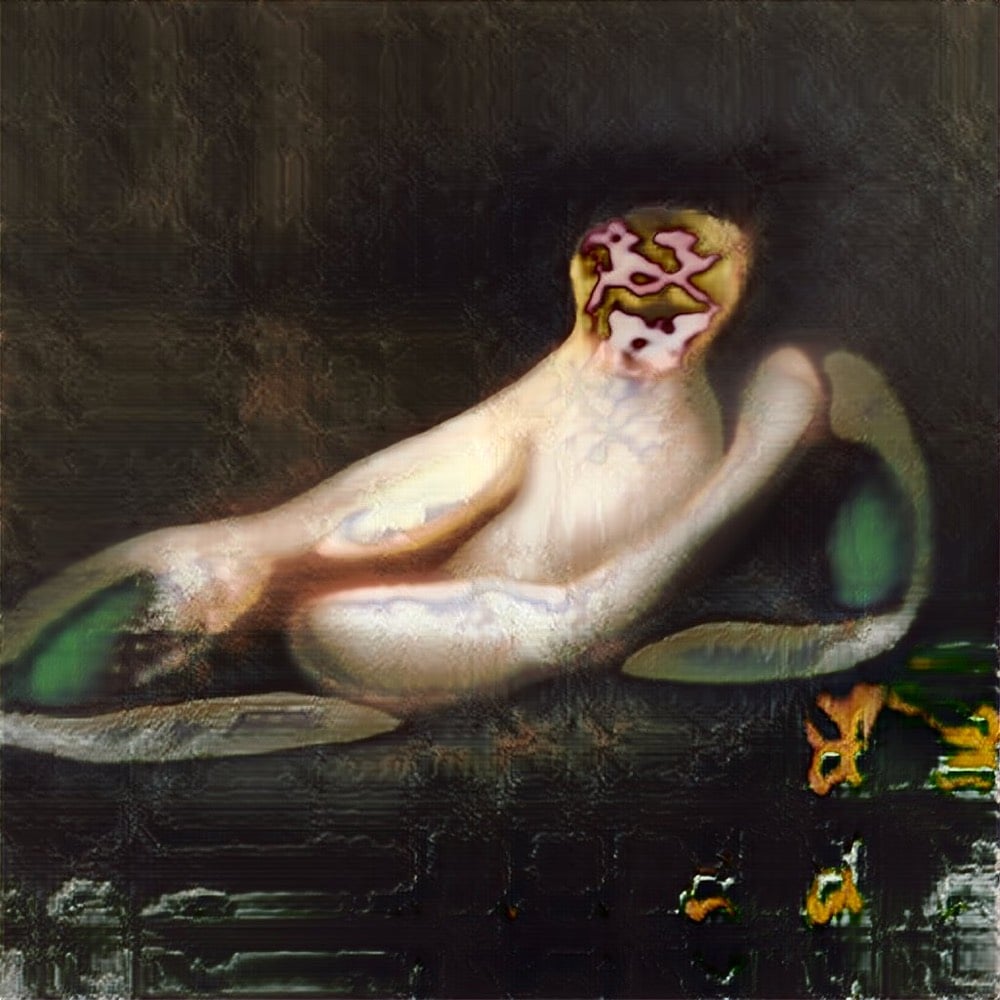
Titian on shrooms? Francis Bacon turned up to 11? Picasso++? Dali, um, well, Dali would probably come up with something like this tbh. Robbie Barrat is a machine learning researcher at Stanford who’s using an AI program to generate nude portraits (more, more, and more).
Usually the machine just paints people as blobs of flesh with tendrils and limbs randomly growing out — I think it’s really surreal. I wonder if that’s how machines see us…
(via boing boing)


Oh, I love these photos by Reuben Wu. As part of his project Lux Noctis, Wu flies drones in circles around mountain peaks and takes long-exposure photos, creating these beautiful haloed landscapes. Wu spoke to Colossal about his interest in zero-trace land art:
Recently Wu has evolved his process of working with the drones to form light paths above topographical peaks in the mountainous terrain. “I see it as a kind of ‘zero trace’ version of land art where the environment remains untouched by the artist, and at the same time is presented in a sublime way which speaks to 19th century Romantic painting and science and fictional imagery,” said Wu to Colossal.
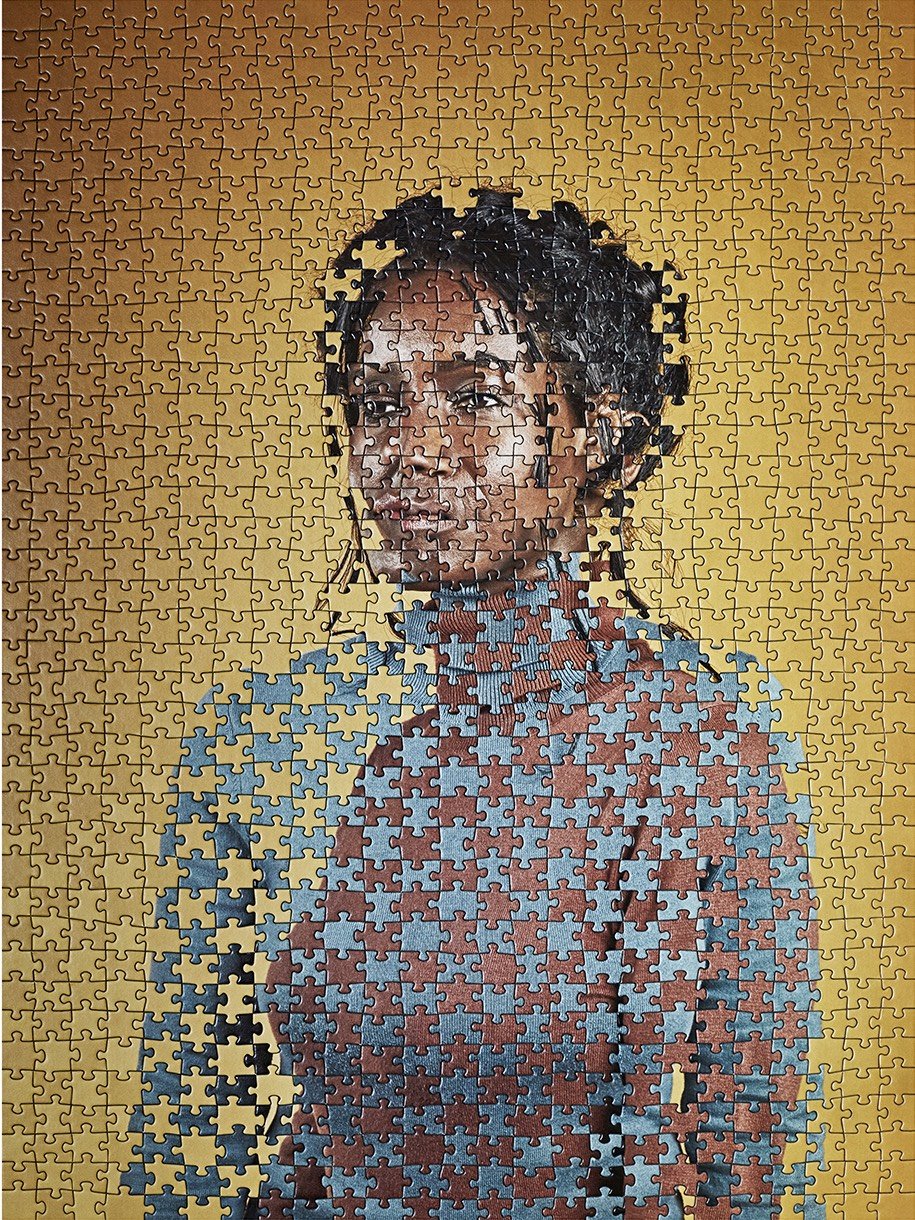


For her project entitled Within 15 Minutes, artist Alma Haser made identical jigsaw puzzles out of portraits she’d taken of identical twins and then swapped every other piece when putting them together, creating these serendipitously fragmented portraits. She said of her first attempt last year:
So today for no apparent reason I thought I’d test out a crazy idea I had. For the project I have been switching just the faces of the identical twins, but today I decided to see what it would look like to swap every other pieces with reach other. Completely entwining the beautiful @being__her sisters. And wow, what an effect! It really make you double take at their faces, trying to decipher one for the other.
You can follow Haser’s work, including the twin puzzles, on Instagram.

Pioneer Works in Red Hook, Brooklyn is currently showing six large-scale pieces by local artist Anthony McCall. The main hall of the massive warehouse space is blacked out and filled with haze for the show of his Solid Light Works series, which he began work on in 1973. The pieces require thirty feet of clearance from the floor to ceiling for the vertical and horizontal cones of light.

McCall regards these works as occupying a place somewhere between sculpture, cinema, and drawing: sculpture because the projected volumes must be occupied and explored by a moving spectator; cinema because these large-scale objects are not static, but structured to progressively shift and change over time; and drawing, because the genesis of each installation is a two-dimensional line-drawing.
Solid Light Works explore the intersections of light, movement, drawing, and space that form evanescent and ever changing three-dimensional forms that exist not only as “objects” in space but also as environments to be experienced.
In anticipation of the show’s closing, Pioneer Works will stay open all night on Saturday. I hope someone’s sending a street style photographer to capture the crowd.
In the latest installment of Nerdwriter, Evan Puschak explains why Francisco Goya’s painting Saturn Devouring His Son is so disturbing, not only from the standpoint of the subject matter but also the circumstances surrounding its creation.
I am especially fond of Art History Nerdwriter because the first video of his I ever watched was on Jacques-Louis David’s The Death of Socrates. I’ve been a fan ever since.
This short film from 1968, set to Classical Gas, shows 3000 years of fine art in just three minutes. As the final frame of the film says:
You have just had all of the Great Art of the World indelibly etched in your brain. You are now cultured.
As mesmerizing as the film is, especially for 1968, the backstory is perhaps even more interesting. Mason Williams, who wrote and recorded Classical Gas, saw this film by UCLA film student Dan McLaughlin and arranged, with McLaughlin’s permission, to have the original soundtrack replaced with his song and to have it aired on The Smothers Brothers Comedy Hour on CBS, then the number one show on TV in America.
The impact of the film on television opened the door to realizations that the viewer’s mind could absorb this intense level of visual input. It was a double shot of a hundred proof music and video that polished the history of art off in three minutes! It was also the beginning of the fast images concept now called kinestasis (a rapidly-moving montage technique set to music) that has over the years been exploited so effectively by television commercials, documentaries, etc.
Curiously, a similarly produced film called American Time Capsule also aired on The Smothers Brothers Comedy Hour that year. Directed by Chuck Braverman, it showed 200 years of American history in less than 3 minutes:
McLaughlin’s film was produced and aired first (he made it in 1967) and was the inspiration for Braverman’s film (see the relevant snippets from David Sohn’s Film: the Creative Eye) but Braverman made a career out of the technique.
I was actually working in the same building as [Tommy Smothers], at CBS as an assistant — really as a messenger — trying to get into the cameraman’s union in the news department. They literally made the Comedy Hour just upstairs. I called, made a meeting, and Tommy looked at my other work and we discussed doing a film on the history of the United States — American Time Capsule. I made it and it aired on the weekend before the November ‘68 election and it was a huge hit. It catapulted me into a career. Not only did it appear on the Smothers’ Brothers Show, which was huge, but it appeared on The Tonight Show within a few weeks and then 60 Minutes picked it up. So I got a reputation right away for being the king of the fast-cut montage. I ended up doing dozens of commercials and lots of title sequences.
My favorite use of the technique is in the trailer for A Clockwork Orange:1
But anyway, getting back to Mason Williams and Classical Gas, after the success of the 3000 years of art video, he wrote a sketch about video jockeys playing music videos on TV:
As a result of the response to the CLASSICAL GAS music video, in September of 1968 I wrote up a piece for The Smothers Brothers Comedy Hour, projecting the idea that someday VJ’s would be playing hit tapes on TV, (as well as DJ’s hit records on radio), a prophesy of what was, 13 years later, to become MTV.
All this film and media history, just barely surviving in YouTube videos, video descriptions, partial scans of out-of-print books, and interviews & obituaries scattered willy-nilly all over the we, what a mess. What a fascinating mess. (via open culture)
In a new video for Vox, Phil Edwards talks about one of my favorite low-tech technologies: dazzle camouflage. Instead of trying to hide warships with paint the color of the ever-changing sky or sea, dazzle camouflage aimed to confuse the enemy by disguising the silhouettes and headings of ships.
World War I ships faced a unique problem. The u-boat was a new threat at the time, and its torpedoes were deadly. That led artist Norman Wilkinson to come up with dazzle camouflage (sometimes called “razzle dazzle camouflage”). The idea was to confuse u-boats about a ship’s course, rather than try to conceal its presence. In doing so, dazzle camouflage could keep torpedoes from hitting the boat — and that and other strategies proved a boon in World War I.
More recently, this strategy has been used on people’s faces to thwart facial recognition and on Cristiano Ronaldo’s football cleats to confuse opponents as which way he’s moving his feet.
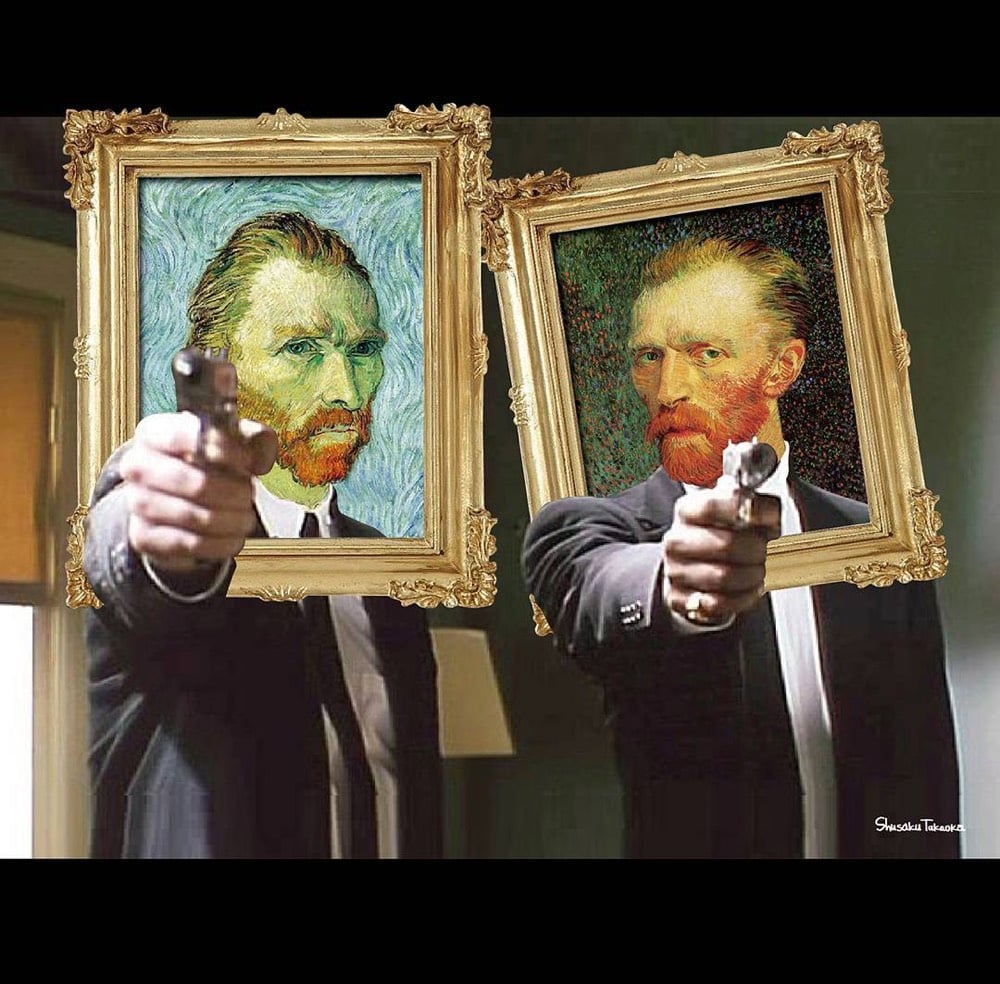
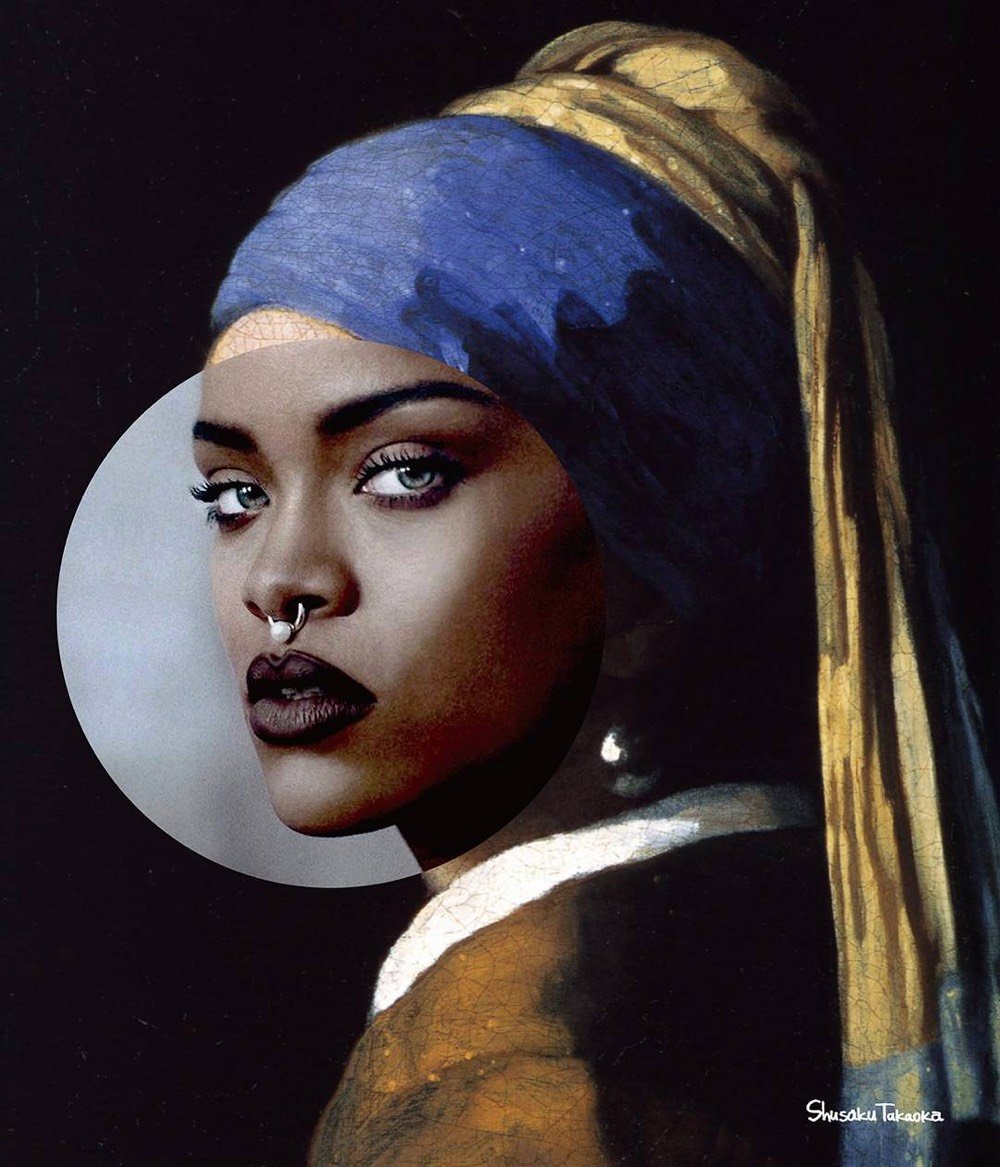
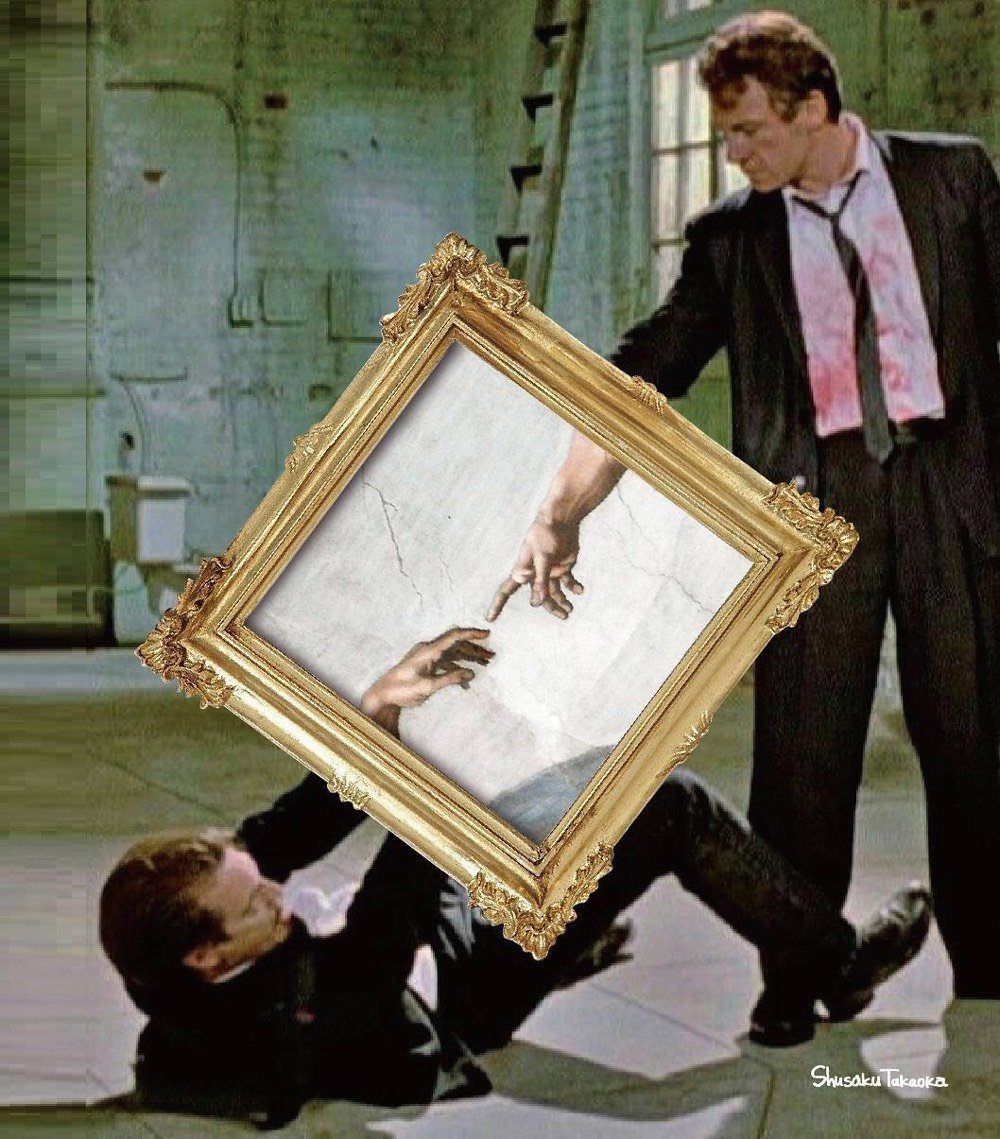
Japanese graphic designer Shusaku Takaoka takes famous artworks and cleverly incorporates them into movies scenes or celebrity photos. If you scroll back through his earlier photos,1 you can see him experimenting with various techniques before hitting his stride around September of last year.


Origami artist Ross Symons makes tiny origami creations and posts them to his Instagram account, White on Rice. The account became pretty popular and Symons was able to turn his hobby into his full-time job doing installations, exhibitions, and social media campaigns featuring origami.
Over the weekend, Symons’ art was featured on Noticing, kottke.org’s free weekly newsletter. You can read the full issue here: Lobsters Considered, Superteens Against the Autocracy, The Mister Rogers Fan Club or subscribe here to have it land in your inbox each week.
Newer posts
Older posts



Socials & More