

Advertise here with Carbon Ads

This site is made possible by member support. 💞

Big thanks to Arcustech for hosting the site and offering amazing tech support.

When you buy through links on kottke.org, I may earn an affiliate commission. Thanks for supporting the site!

kottke.org. home of fine hypertext products since 1998.

Beloved by 86.47% of the web.

🍔  💀  📸  😭  🕳️  🤠  🎬  🥔

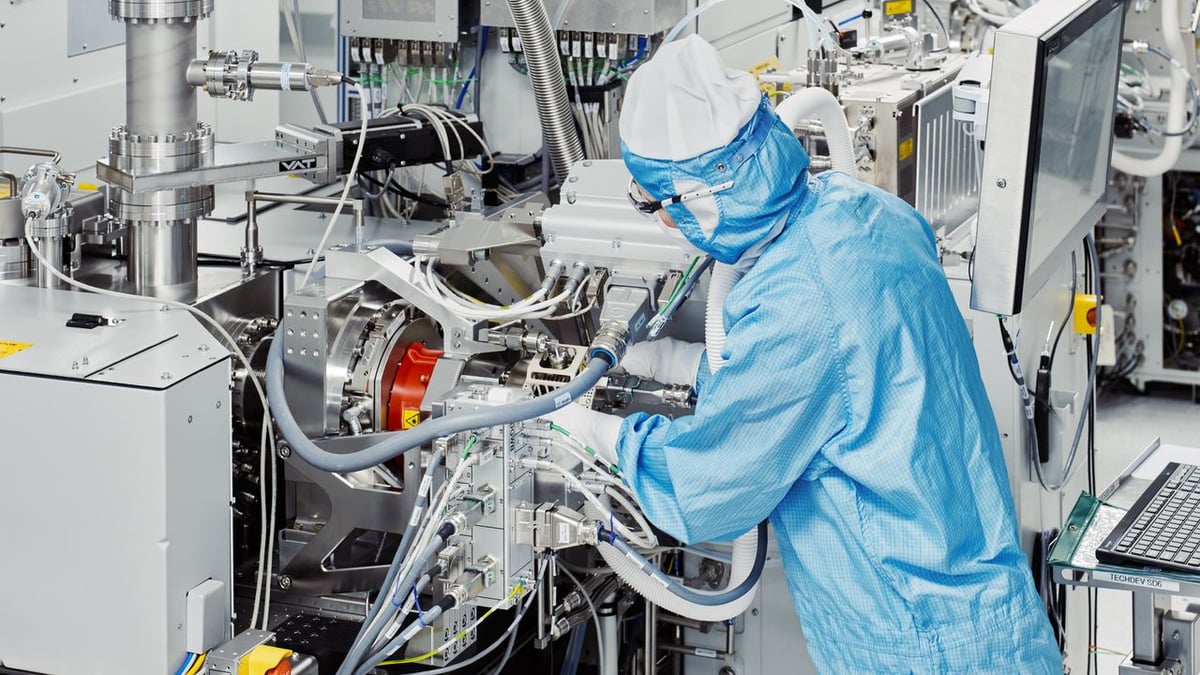
Computer Chips Are the Most Magnificent Things Humanity Has Ever Made. “The phone in your pocket is several orders of magnitude more sophisticated than the computers used for the Apollo mission. One AirPod could easily calculate a path to the moon.”

Fave · 7

Comments  2

Sort by: thread — thread . latest . faves

Jason Kottke

Archive link: https://archive.li/UJm6A

Jason Kottke

Also, you're gonna look at this article and think, it's so long and I don't have time for this and you'd be right but you should read it anyway because it is realy really good. A couple of passage to whet the appetite:

No single institution, no matter how crazy its employees, could do it alone. Even if you could somehow conjure terrestrial starlight on an industrial scale, it would immediately disappear into anything—a stray particle of air, say, or the glass lenses used to collect light. ASML collaborated with the storied German lens crafter Zeiss. Mulkens, who is also an amateur cyclist, despite having broken his shoulder four times, said, “It is five hundred and ninety-two kilometres to Zeiss, and I have done it more than one hundred times.” Jos Benschop, a sly, wolfish vice-president at ASML, assumed a mask of theatrical German intensity: “When you design things together, you need to see each other, you have to have almost daily contact—you need to look into each other’s eyes.” The collaboration produced mirrors that are the smoothest man-made objects in the known universe. If you blew one up to the size of the planet, the highest mountain would have the elevation of a face-down playing card. Other mirrors that Zeiss contributed could direct a beam of light to hit a dime on the moon; in fact, they could successfully target either the left or the right half of that dime.

And:

A major module of the EUV machine is fashioned at an ASML facility in Connecticut that has the aura of an alchemist’s atelier. When I visited, in July, arcane prisms rotated on medieval-looking polishing machines. The facility hires the sorts of people who fix their own motorcycles. One young employee sat at a workbench in front of a block of milled amber glass that appeared extraterrestrial. The block, which bears a chip’s blueprint, levitates inside the machine. It moves with the precision necessary to trace a strand of DNA, even while enveloped in a robot that accelerates with forces great enough to tear an airliner apart nine times over. The entire apparatus is like an MRI machine that is expected to scan hairline fractures in the middle of a violent plane crash. The engineer proceeded by feel. He paused now and again to tap his fingers gently against a particular spot. It seemed less like engineering than like reflexology. This felt poignantly ironic. When you dig down to the very bedrock of A.I., you discover that underneath all of its cognitive power is a dude drumming his fingers with occult proficiency.

In order to comment or fave, you need to be a kottke.org member. Check out your membership options.

Note: If you are a member and tried to log in, it didn't work, and now you're stuck in a neverending login loop of death, try disabling any ad blockers or extensions. Or try logging out and then back in. Still having trouble? Email me!