



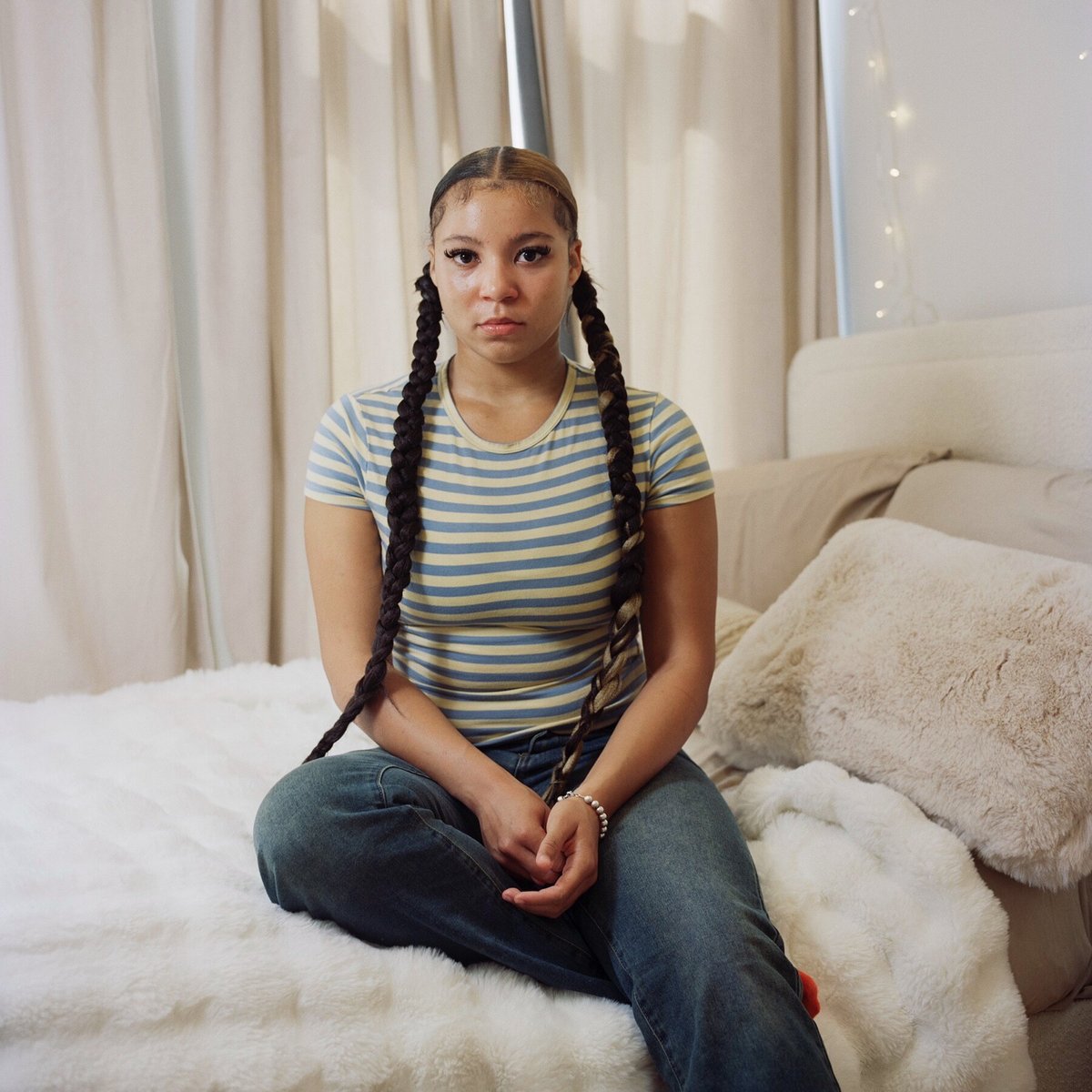
Amazing piece by Nikole Hannah-Jones about the betrayal her child felt at her school choice. “So you had money to send me to one of the best schools, and you chose not to? Because other kids are disadvantaged, you didn’t want to put me in a great school?”

Advertise here with Carbon Ads
This site is made possible by member support. 💞
Big thanks to Arcustech for hosting the site and offering amazing tech support.
When you buy through links on kottke.org, I may earn an affiliate commission. Thanks for supporting the site!
kottke.org. home of fine hypertext products since 1998.
Beloved by 86.47% of the web.
Comments 19
thread
latest
popular
This piece is a follow-up to one she wrote in 2016: Choosing a School for My Daughter in a Segregated City (gift link).
See also The Problem We All Live With.
Such as a deveasting read—as a parent and as a person wants a better world for all kids. My partner and I sent out kids to public schools. I'm very sorry to say that we tapped out at middle school. I felt like we were letting our community down. But in the end, our kids undeniaby got a better education. I suppose one way we tried to live with the decision was to make sure they understood and appreciated the opportunities they had. I think we succeded in that. But at what cost?
you shouldn't be that sorry to say you did what you did. literally nobody can fault you for doing what's best for your kid. everybody wants to do what best for their kid.
I think about this with my current district all the time. we have separate honors enrollment in grades 3-8, magnet middle schools and magnet high schools.
I know that this is problematic for the students as a whole, but it lets individual students shine in a ways they wouldn't otherwise? Do I wish it was different? Absolutely. I would prefer a system where there are honors classrooms in every school, versus a separate magnet experience. it would ensure the best teachers aren't only shared by the best students. It would ensure the worst students have a chance to be influenced by the best. It would create more well rounded best students. I think it would lift many boats.
But that's not what the system is now. So I'm not going to start a one man mission to change it with my one student. I'm going to go with the flow, get her into a great high school so she can excel in the system that is in place.
In her most recent (and perhaps final) book, An Education, Diane Ravitch offers a pretty excellent play-by-play on how Bloomberg & Associates stripped NYC public schools of any shred of equity by jet propelling a corporatist school-choice movement, no better than the likes of Florida, but just kept it all looking like neighborhood pubic schools. Woof.
There is so much going on in this essay and I empathize with most of it because I encounter the plight of parents trying to do right by their kids daily, and there is so much mobility right now between charters and public schools in the aftermath of COVID and the culture wars. It is unfortunate that public school has become the site of so many other systemic failures, which were touched on here, but not nearly enough. Some things that stood out to me...
This is a systemic reality nationwide given tenure. Seasoned teachers (and its no guarantee that they're better) get their pick in terms of assignment. I think it's a mistake to assume that new teachers are less qualified though. Often newer folks who are in the more energetic phase of their careers will seek schools like #307 out for its myriad of challenges. How teachers are hired, trained, and placed needs a hard look, but it's challenging given iron-clad collective bargaining agreements. Newer teachers receive a ton of evaluative support, but adults working in these environments often come from circumstances similar to those of their students hoping to make a difference. Are educators in these environments getting the social-emotional support they need to get through every day? Not even a little bit.
I empathize with this the most, and I found this to be the most insightful part of the essay. It is impossible. When you work at a school where learning loss is the least severe trauma, where the real work isn't teaching and learning, but providing a safe space in which to triage the impact of everything that ails our society on kids, a secondary trauma response manifests in the adults in the room, and that is to keep everyone together and "okay" and survive. This was acute during COVID and we never recovered. Adults who are doing this instead of automatically expelling students are keeping the promise and the mandate the author has tried to invoke as a parent alive because they know the easier choice can throw a young person into an even more brutal system from which there is no escape.
This is so complicated and difficult. I was touched by the time and attention given to the topic, but there is so much more to this that we all need to think about and unpack. So many more people need to take an interest in the system and get involved, not just tack their aspirations to it.
I thought about this all day and it has certainly made the rounds at work. I keep thinking about how school has fallen prey to prevailing consumer culture. How they're often treated like apps with features you can opt in and out of as opposed to living breathing communities that you fully inherit when you enroll. I'm not accusing the author of doing this. She hung on righteously to the community and it might have cost her daughter's trust. (Although I think that relationship will more than recover given the honesty between mother and daughter.) I read through nearly all of the comments in the NYT this afternoon and speaking only as a practitioner, this one stood out to me as vital. We have to support people working on the ground with all of the manpower and resources, personal and professional, that they need to meet their classrooms and school communities where they are.
It's one step closer to destroying class mobility for so many people. America's public schooling used to be a bastion of an educated populous. Now its scarcity mentality and class separation.
When was American's public schooling great?
I was public school educated. While i wasn't the smartest, they did entertain my potential. I think saying it's been bad paints with a large brush.
I went through the California public school system in the 1980s, an era I refer to as being "double Reagan'd" as he cut funding to public schools as governor, and as president, and the schools were fine. Not great, but not terrible, or so I thought. Then I met my husband who went to public schools in suburban Texas, and now I live in Kansas, with the KC suburbs and their famously amazing public schools, and I feel cheated! My husband's high school had Japanese language classes! So the TLDR is that the quality of public schools very much depend on local funding, something we all need to pay attention to, and continue fighting for. Local elections are in the odd years, generally, so next year is the one to keep tabs on.
Totally agree, Alana! I'm a product of mediocre public schooling in the 80s and 90s and had to supplement my education with independent learning and then make the most our of my college experience.
My point above was that I don't think there was any golden age of public education. If any thing, more standards since the 2000s have improved things in a lot of underperforming districts.
I'm a huge advocate of public schools and I am fortunate that I'm able to give my kids the opportunity to attend A+ public schools.
And, oh, by the way, there are plenty of private institutions failing to meet the needs of their students. I've seen this first hand! But it's in their interest to not self-report on their failures. And since their business model relies on the illusion of superiority, it's rare that you read those stories in the NYT.
i feel insanely grateful that i went to an excellent and diverse and complex public school. i was a minority who grew up in a district that was getting increasingly diverse over the years i was in it. The district did an impressive job of shaping their staff and faculty to be increasingly accommodative of the community, and in some cases reflective of the diversity of the community, and absolutely everyone in the school was better of for it.
Except the HS football team. The football team reeeeallly started to suck.
Research consistently shows that home environment and economic resources outweigh school selection when predicting student outcomes. Going to a "good school" isn't what will lead to a child's success, but rather most parents who would've made that choice tend to have the time and resources to help at home as well.
Both my kids go to public school and while there are "better" options, I'll trade a few test scores on an algebra exam to have more exposure to children of different ethnicities, abilities, religions, and economic backgrounds.
Did you...read this article though? The above is the assertion of the NHJ's first article and yes, of course, on the whole, but her experience as outlined also complicates this pithy assertion. When we're seeing an general attack on public education, vulnerable populations are the first to be affected. Then what we define as a vulnerable population grows from not only those with a notably poor home environment and lack of resources to children of color and those lacking generational wealth (ie even educated working parents even from the middle class or upper middle classes who are time poor.) The individual can only do so much when the system is collapsing.
I am a parent in a similar type of school district to NYC public schools and we worry about everything mentioned in the article and don't have the added complication of parenting a Black child in America.
Damon Young, Every Choice A Parent Makes Is Ideological:
Her original piece 10 years ago, from before I had a kid, has stuck with me so deeply and informed my understanding of why public education matters and how we need to live our values. I am impressed that she published this update, which really complicates the original essay even as it re-asserts those values. God forbid my parenting challenges and mistakes be this public.
This piece will stick with me for a long time. The word that kept coming to me throughout was brave.
Brave to write about their original decision a decade ago, brave to stick with it during those initially tough times (and do everything they could to make it work), brave to 'pivot' when they needed to, brave to face the brutal reality of their choices when their daughter confronted them, and brave to write about all of it and share their story with us. And I'm considering everyone (Nikole Hannah-Jones, her husband, Faraji, and her daughter, Najya) brave in this situation, but major props to Nikole in this piece & her responses in the NYT comment section.
Everyone will have a point of view on what they did. But, we don't receive many retrospectives like this. Grateful for their bravery in all of it.
There's more for anyone interested, as this week's episode of This American Life has Nikole Hannah-Jones "revisits that [2016] argument [she made in the NYT], and that choice, in a series of conversations with producer Chana Joffe-Walt and with her daughter, Najya, who’s now 16 and has her own very different views." Wherever you find podcasts or https://www.thisamericanlife.org/898/an-argument .
The fact of the matter is that the student population is not the root cause of the problem and, on some level, the funding isn't really the problem either (because the hardest schools often are spending much more per student).
The problem is the stress, crime, exhaustion, poverty, minimal parenting, and disconnection from the value of education that exists in many communities. You can't blame the kids for growing up in those circumstances.
If you are an average first-year teacher learning the trade and you are in a "normal" school, the pace of student challenges, outbursts, and disruptions is hard but manageable. But in the hardest schools, the room is out of control from the get-go. You never really get your head above water. Don't blame the kids, ask yourself why some groups of kids are like that and some aren't.
p.s. Another nice admission that she was not 100% right came from Angela Duckworth. Just "trying harder" is not enough for these kids or their teachers. The whole situation is the problem:
https://www.angeladuckworth.com/situated
I found this reflection an honest and vulnerable look at the alternative from a kid who did get sent out to “good” schools, and what we mean when we say “good”
If you feel like this comment goes against the grain of the community guidelines or is otherwise inappropriate, please let me know and I will take a look at it.
In order to comment or fave, you need to be a kottke.org member. Check out your membership options.
Note: If you are a member and tried to log in, it didn't work, and now you're stuck in a neverending login loop of death, try disabling any ad blockers or extensions. Or try logging out and then back in. Still having trouble? Email me!