



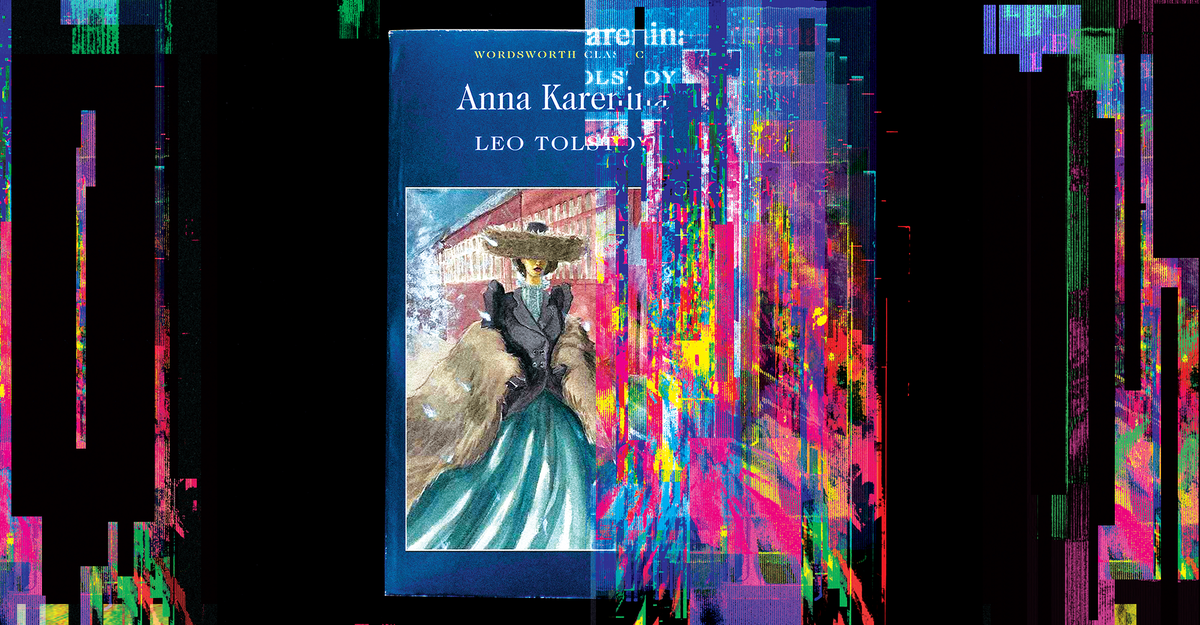
The End of Reading Is Here. “The decline of reading will bring about changes of the same magnitude. It will affect our innermost thoughts, our society’s politics and culture, and how we tell the history of our civilization.”

Advertise here with Carbon Ads
This site is made possible by member support. 💞
Big thanks to Arcustech for hosting the site and offering amazing tech support.
When you buy through links on kottke.org, I may earn an affiliate commission. Thanks for supporting the site!
kottke.org. home of fine hypertext products since 1998.
Beloved by 86.47% of the web.
Comments 15
thread
latest
popular
A few years ago I deleted all of the social media, news, and gaming apps from my phone, and replaced them with an e-reader app. Now I always have a book in my pocket for idle moments, and I've been reading a couple of novels per month. Plus I don't get so much of that post-social-media wasted-time queasiness. It's wonderful, I highly recommend it!
I read Kottke.org 3 times a day. Does that count, lol?
I don't have children, but I sometimes wonder how most parents position reading to their children. If you want your child to read, my assumption is that generally leading by example works best, i.e. reading in front of kids makes kids want to read.
But I do think we as a culture need to acknowledge that almost everyone would be better served by an editor, and this applies everywhere (even on me writing this post). Books are often bad and writing stale, and when that happens it's frustrating because the time spent can be much higher than with other media.
I think reading is the hardest of all ways to consume media, but also the most rewarding. For me, it generates the most consideration but also requires the most imagination.
A few months ago, there was a discussion that happened in a few corners online and even here on Kottke dot org about the ability to envision an apple in your mind. And for many people, that was a challenge, and my assumption is that there is a correlation between the inability to envision the apple and having difficulty reading. Does being able to picture that apple easily also mean picturing a suffering character in a story more easily?
Almost 3 years ago, I started a book club with some friends and it has far and away been the best thing to happen to my reading life. My brain loves a deadline and seems to thrive on shame (or whatever I might experience from my club if I didn't finish the book), and because of this I've read 17 books and about 8000 pages.
I generally advocate being a proponent for things rather than focusing on the negative aspects. I think that's more likely to bring people in. For me, I think we shouldn't talk about reading being good, but rather about books that are good and how they shaped us and what we learned from them — and that is more likely to make someone read, rather than simply saying reading is good or noting people aren't reading.
I'd love to hear more people's thoughts on this. I'm very open to ideas here. How do we have a more literate society?
I love to hear that people are still reading! But why? What is your reason for choosing reading over podcasts, audiobooks, online puzzles and games, youtube, social media, movies, TV, chat rooms, message boards, blogs, etc?
Why do you read?
Noah, great question!
Off the top of my head:
I think that's likely false. One of the joys of reading is that the images may not be very well-defined. As an example, I read The Lord of the Rings when I was perhaps 11 or 12 and have read it since (but not recently). I didn't have clear images of what that world was 'meant' to be like, but rather a mass of overlapping impressions. Then the films came out and I'm no longer even sure I could read the books again since the films have tied them down way too far. Even better examples might be the Sprawl trilogy or the Gormenghast books.
As a librarian audiobooks still count. the format doesn't matter as long as the content gets into your head. when my son was young and in the car they'd ask me to start an audiobook. It was awesome.
For me, audiobooks and podcasts are human voices, and as an introverted extrovert I have a certain amount of human voice I can hear a day, and I have found that both cut into my daily amount. So my answer, when people ask if I listen to a certain podcast, is always no. I have zero in my media rotation.
I am a teacher and a huge part of my job is to literally teach kids how to read. That said, the number of use cases for reading are dropping.
Reading has gone from the best way to learn almost everything to a good way to connect with long-form, deep, and powerful ideas. The problem is, for a lot of people, that is not something that they do very often. So why read?
I believe (with no evidence) that the best ways of growing a capacity for empathy are Fiction books, plays, movies, and television, in that order. I don’t know how you convince anyone of that, or even that empathy is a worthy goal.
I don’t disagree with anything you said, but I will say that few things annoy me more than Googling “How do I…” and only finding 15 minute videos for an answer I’m sure would be a paragraph of text.
Nature shows are absolutely not the best way to learn about blue whales or neanderthals if you want more than a very shallow level of knowledge. Do teachers really think that.
I could say similar things about your other claims.
I think you just gave a great example of what I think of as passive vs active learning here. While GPS is extremely convenient, I don't know how many people I have traveled with who after a couple days in a city still have no idea where they are because they only use the GPS. As a teen with a new driver's license, and user of the Thomas Guide maps, I had to learn how to read a map, but also to actually navigate. If you understand more than the route, the map fills in.
I thought this was worth posting from the article:
And yet, strangely, Americans are probably reading more words than ever before. What has changed is what they read, and how. People are bombarded with emails, text messages, X posts, Reddit threads, Instagram captions. This explosion of textual fragments has come at the expense of devoting sustained attention to longer written works that convey rich and complicated information. Maryanne Wolf, a cognitive neuroscientist at UCLA, argues that people are losing the ability to think deeply about writing. That doesn’t mean they are forgetting how to decode individual words. Rather, they are losing the higher-order abilities of comprehension and synthesis. America, in other words, isn’t illiterate. It’s postliterate.
I love reading real books, it's a peaceful way to take in information. I also read a fair amount on screens which is okay, but not as pleasant or as immersive, for me at least. My kids (15 and 9) still read real occasionally, but usually when I've asked them to take a break from screens. It's better than not at all, and I do think they appreciate the restfulness of it. I go back to longreads.com occasionally when I want a well-written, long-form (but not too long) read. Lots of good ones on there now under the editor picks.
https://www.nytimes.com/2026/07/09/style/too-many-books-new-york-city-apartment-scholar-landlord.html?unlocked_article_code=1.wVA.h803.GgsNFTr-sHWC&smid=url-share
Felt relevant. I moved twice last year and that meant my books all moved twice too.
If you feel like this comment goes against the grain of the community guidelines or is otherwise inappropriate, please let me know and I will take a look at it.
In order to comment or fave, you need to be a kottke.org member. Check out your membership options.
Note: If you are a member and tried to log in, it didn't work, and now you're stuck in a neverending login loop of death, try disabling any ad blockers or extensions. Or try logging out and then back in. Still having trouble? Email me!