


How to Make a Living as an Artist
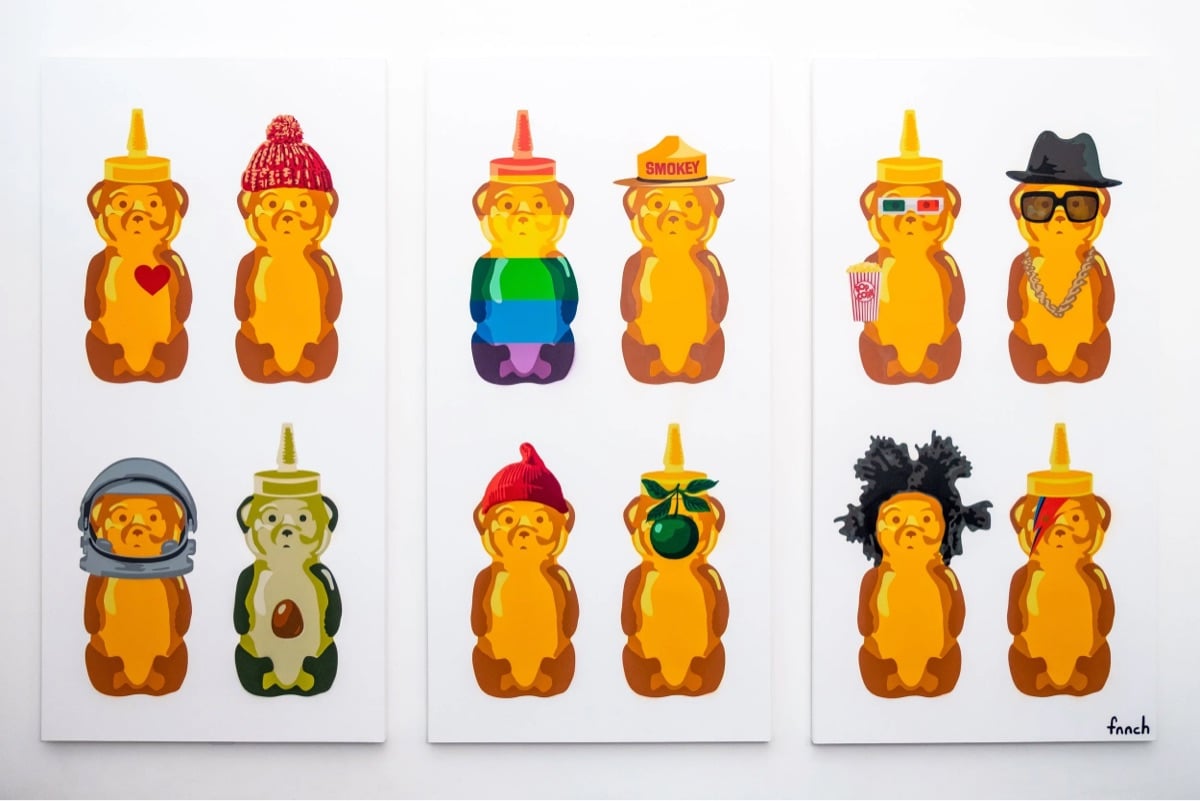
Contemporary pop artist fnnch’s essay on How to Make a Living as an Artist is pretty great. Lots in here that resonates with my experience of turning a creative hobby (KDO) into a business.
Most people who enjoy making art should not try to make it their full time job. When you turn an avocation (hobby) into a vocation (job) you have to do new things you do not enjoy. Emails, events, meetings, accounting, and more. These are not only a drag but can actually strip the joy from the rest of your art practice.
Even the work itself can become a burden because you now have to make it. Amateurs can wait for inspiration; professionals must create every day.
If you enjoy making art, ask yourself why that is not enough? Why do you need to make money from this activity? Why do you need to do it with more of your time? Can it not perhaps give you more joy remaining a hobby?
I have played the drums for many years, and while I was once tempted to go pro, I have always resisted. Drumming is a refuge for me. A joy. An escape. I play when I want. I don’t play when I don’t want. This is no longer true for my painting. Beware. Think hard.
And:
Making your challenge more difficult is that artists are usually not just entrepreneurs but solopreneurs. There is rarely enough money in art to support even a single person, so we do not get to specialize as one might in high tech entrepreneurship, in which it is totally common to have one co-founder focus on product and another on sales. Most people, at least at first, must do it all. Most artists do not want to do it all. They want to just make art. I am sorry. Some people have a gallery or life partner who acts as a business partner. But most of the time, there is no one to help you. You must think about your art practice as a business.
Image: paintings of various honey bears by fnnch.
Comments 6
thread
latest
popular
There’s a biz book about this called The Entrepreneur’s Dilemma. You’re an artisanal baker. You love baking and people love your baked goods. Everyone encourages you to open a bakery. You do and suddenly you’re doing everything but baking, the thing you actually loved doing in the first place. I’ve had several friends go through this. The sad thing is that once they give up or the business fails, they’ve fallen completely out of love with the art or craft they tried to build a business from.
I’ll go further: I’ve been making these unique light sculptures over the past year. I’ve never done art, this was just pure creative inspiration. I love doing it and I love the works. None of my previous creative work (writing and music, mostly) has had anything like the positive response I’ve had from this work. From almost the beginning EVERYONE, including my wife, has been encouraging me to sell them. I want no part of it. I told my wife she can sell them if she wants to, just leave me out of it.
The capitalist system had brain rotted people. We cannot ever just enjoy anything without arm chair business consultants.
I get his point. And for many people, this is a good wake up call. Creating a business (any business) is very difficult, and it changes your relationship to that thing that inspired you. However, that does not have to be a negative thing -- it is just something you need to be aware of from the beginning, and be ready to embrace.
He says: "When you turn an avocation (hobby) into a vocation (job) you have to do new things you do not enjoy."
I'd offer a slight change, based on my experience:
When you have any vocation (job), you have to do things you do not enjoy. Normally you have to do those things for someone else, helping their dream become a reality. I decided to do that work for my own dream instead. Yes, my relationship to my avocation, my creative output, changed. But that helped make my dream come true, of having a career grounded in my own creativity, instead of someone else's.
In the 90s I started making jewelry and considered making a job out of it. I soon realized that the two available paths were "churn out pieces quickly at low cost and sell in volume" (ick!) or "be good enough to sell individual pieces for a large amount of money" (not realistically within my reach at the time). Later in life I briefly attempted to have a software consulting business, and very quickly realized that 80% of the work was sales & bookkeeping, both of which I am terrible at.
Now I pursue photography as a hobby, and I have zero interest in trying to monetize it. In fact I post my photos online as CC-BY-SA (use as you will, including commercially, just give me credit) because in the current internet reality even trying to enforce copyright is a futile & miserable task.
That said, I am outstandingly lucky to be able to afford to pursue this expensive and time-consuming hobby without needing to make money from it. Most people need to produce income from their time, which leads to compromises and deals with the devil of capitalism.
This was my son's rationale- coming out of high school everyone was asking if he was going to pursue art. He wanted to save that as a refuge, and make the art for himself instead under direction from someone else.
If you feel like this comment goes against the grain of the community guidelines or is otherwise inappropriate, please let me know and I will take a look at it.
In order to comment or fave, you need to be a kottke.org member. Check out your membership options.
Note: If you are a member and tried to log in, it didn't work, and now you're stuck in a neverending login loop of death, try disabling any ad blockers or extensions. Or try logging out and then back in. Still having trouble? Email me!