



People Who Don’t Like People Are Making All of Our Decisions. “We are living in the ultimate revenge of the nerds, driven by a crew of socially awkward tech bros who won’t stop until the society that they never quite fit into is obliterated.”

Advertise here with Carbon Ads
This site is made possible by member support. 💞
Big thanks to Arcustech for hosting the site and offering amazing tech support.
When you buy through links on kottke.org, I may earn an affiliate commission. Thanks for supporting the site!
kottke.org. home of fine hypertext products since 1998.
Beloved by 86.47% of the web.
Comments 4
To add insult to injury, the excitement people have for some of these dehumanizing technological adoptions increase my own misanthropy. It's a misanthropic death spiral.
This is an astute observation. It's important to ask what we lose as we chase after promises of greater efficiency and cost savings from companies whose motives may not be aligned with the greater good of society.
This is a catchy take but doesn't hold water. Even forgiving the over-broad categorization of tech workers as "nerds", most tech workers don't like the way AI is being deployed any more than anyone else - and maybe even less. It feels important not to lose sight of what (I think) the reality is: a small group of men have become too rich and powerful, which has driven them mad, and they're now wreaking havoc on everyone else. A tale as old as time, right?
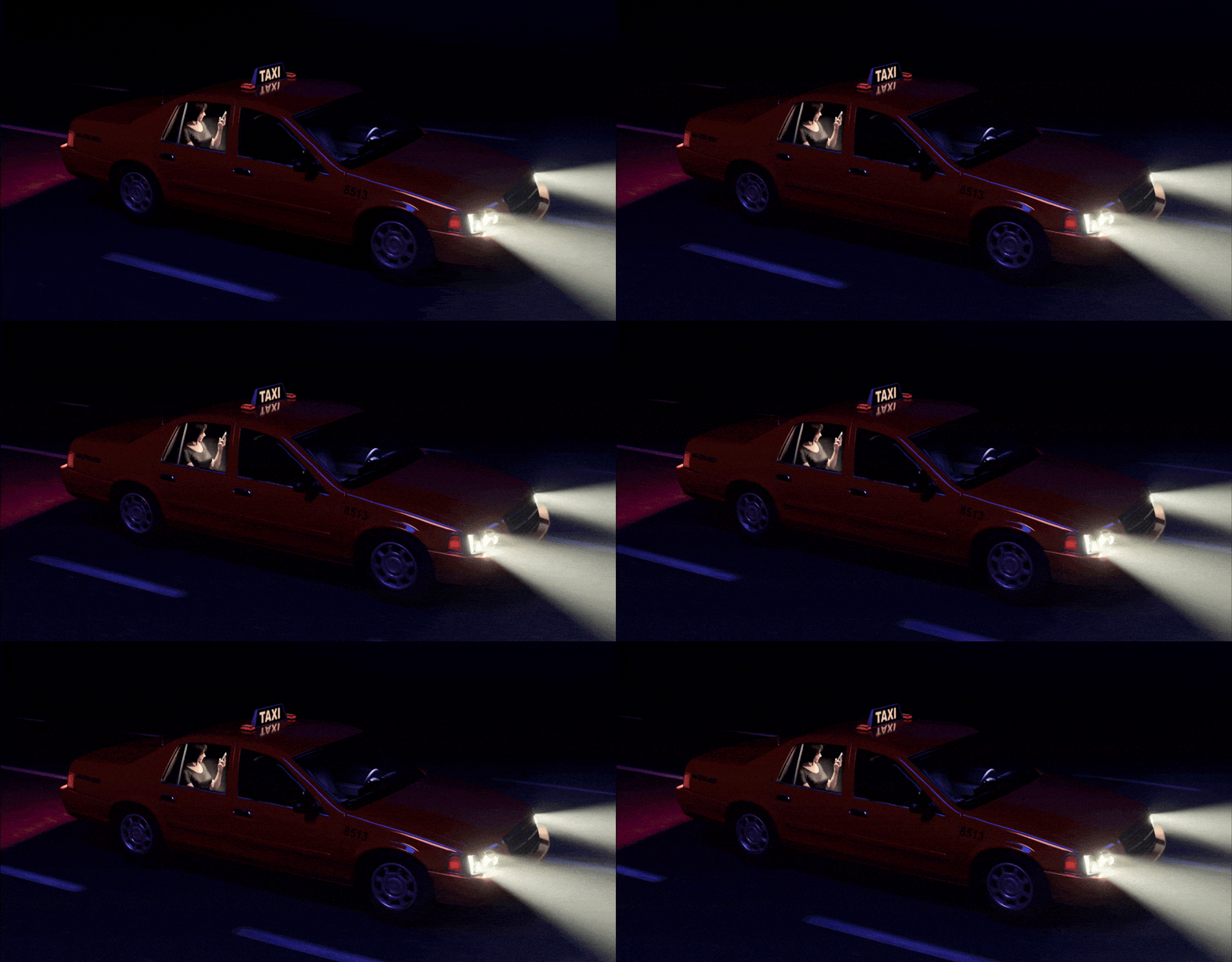
I think the reality of the situation is more complicated than any short magazine piece or blog comment can convey. But one thing I'd say about US tech workers' attitudes on AI (and more generally, on their attitudes towards "futuristic" conveniences that tend to take humans out of the loop like online shopping, app-driven delivery, robotaxis, self-driving cars, social & streaming algorithms, etc.) is that there's a definite generational divide at work here.
Tech workers in their 20s and early 30s are more likely to embrace this stuff and idolize the Altmans, Thiels, and Musks of the world than older workers. Like, not everyone who works at Meta, Google, MS, etc. are true-believers, but a lot of them are. And if you look at startups now, that whole ecosystem was shaped by the likes of Y Combinator and Andreessen Horowitz — those founders are 1000% on board with all this stuff.
If you feel like this comment goes against the grain of the community guidelines or is otherwise inappropriate, please let me know and I will take a look at it.
In order to comment or fave, you need to be a kottke.org member. Check out your membership options.
Note: If you are a member and tried to log in, it didn't work, and now you're stuck in a neverending login loop of death, try disabling any ad blockers or extensions. Or try logging out and then back in. Still having trouble? Email me!