




Letraset Fill Patterns
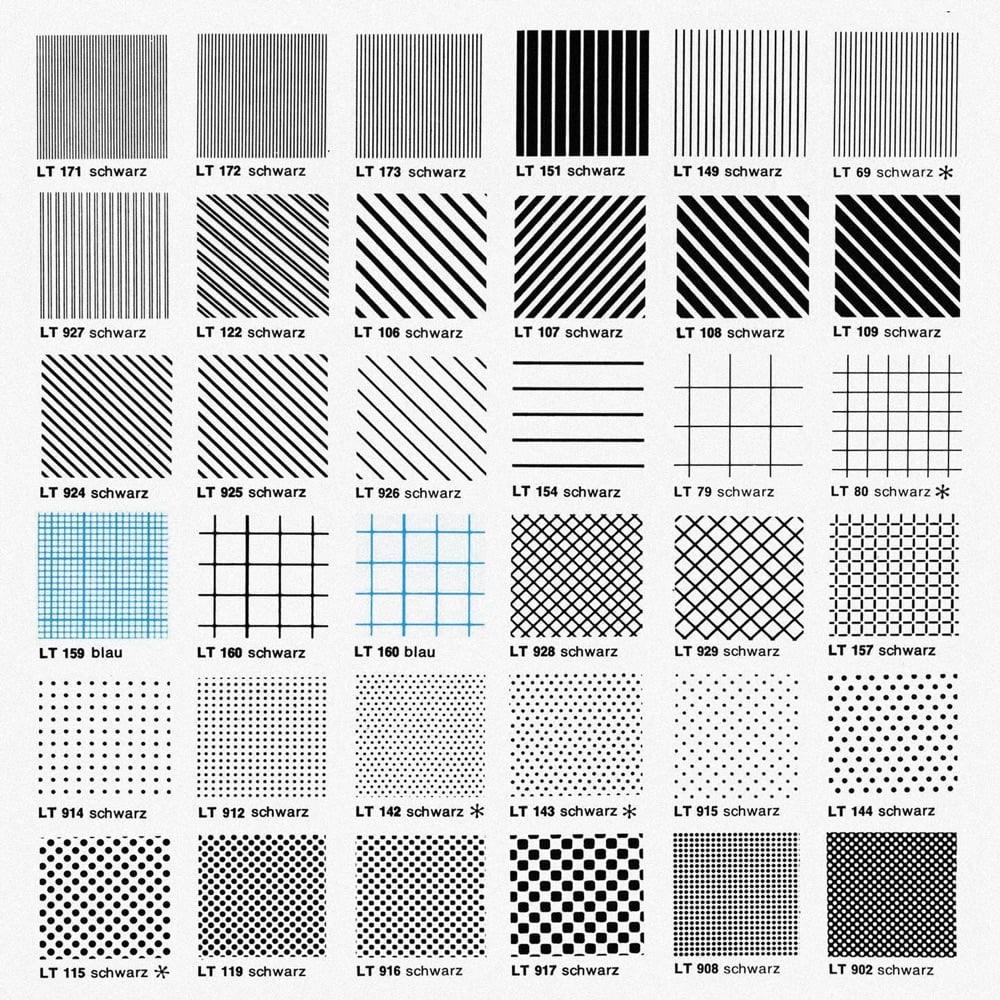
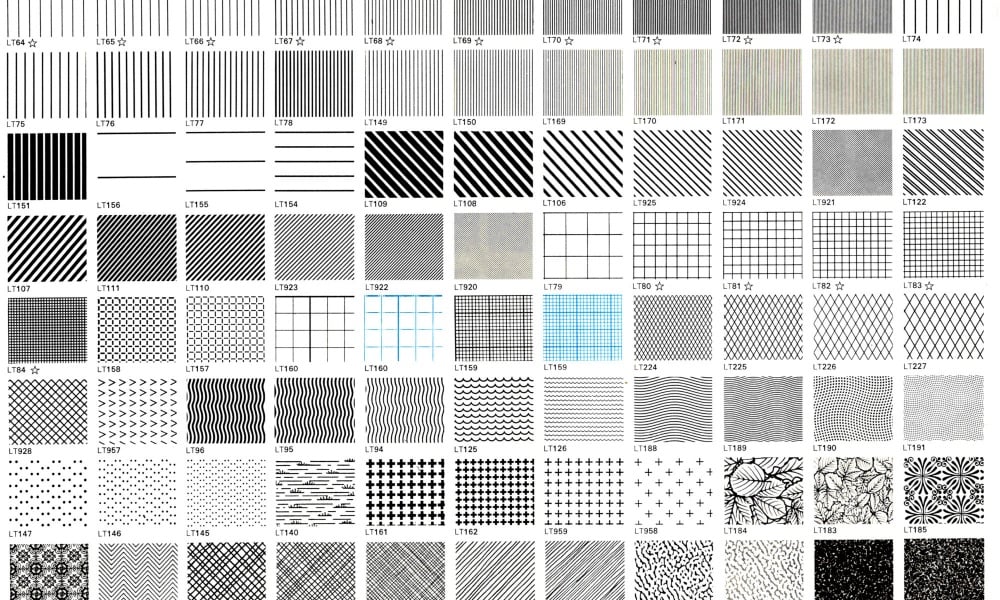
I never did any print design — I went straight to digital via a copy of Aldus PhotoStyler that I got who knows where — but these Letraset fill patterns make me feel some kinda way. Especially the dotted patterns. 😍
See also How to Apply Letraset Dry Rub-Down Transfers and Retroset. (via present & correct)
Comments 4
I got into design about the same time as you. But I have a dad who was an architect, so I grew up playing with Letraset rub offs, using the tracing templates (loved making toilet tracings), and sniffing real Magic Marker brand markers.
I still have the burnishing tools I used on these transfer sheets gathering dust on my workbench!
As far a evoking a very-bygone era, the bubbled-plastic feel of a successfully transferred Letraset letter is second only in my mind to the acrid smell of sticky wax we'd roll on the back of exacto-cut blocks of phototype copy.
In 1992, I started working as an editor for Steve Jackson Games, producing various roleplaying game sourcebooks. I started helping out their short-handed production department, where they pasted printed pages (laid out in Ventura Publisher) onto boards, and filled in blank spaces with hand-drawn, black-and-white artwork (well, photocopies of the original art, scaled to fit). We would then "shade" the artwork with Letraset rub-down patterns, usually lines or dot patterns. We'd end up with a stack of 128 boards that we shipped off the printer. Over the next few years, we transitioned to using QuarkXpress for layout, scanning the artwork in, and shading it in Photoshop 2.0. Production time for a book went from 2-3 weeks to 2-3 days, but I missed the physicality of the wax and the paper and the rub-down patterns.
These bring back memories of creating desktop patterns for classic MacOS and Windows 3.1 - you couldn’t set a wallpaper back then but you could set repeating patterns like these in different colors, IIRC.
If you feel like this comment goes against the grain of the community guidelines or is otherwise inappropriate, please let me know and I will take a look at it.
This thread is closed for new comments & replies. Thanks to everyone for participating!