Entries for June 2018
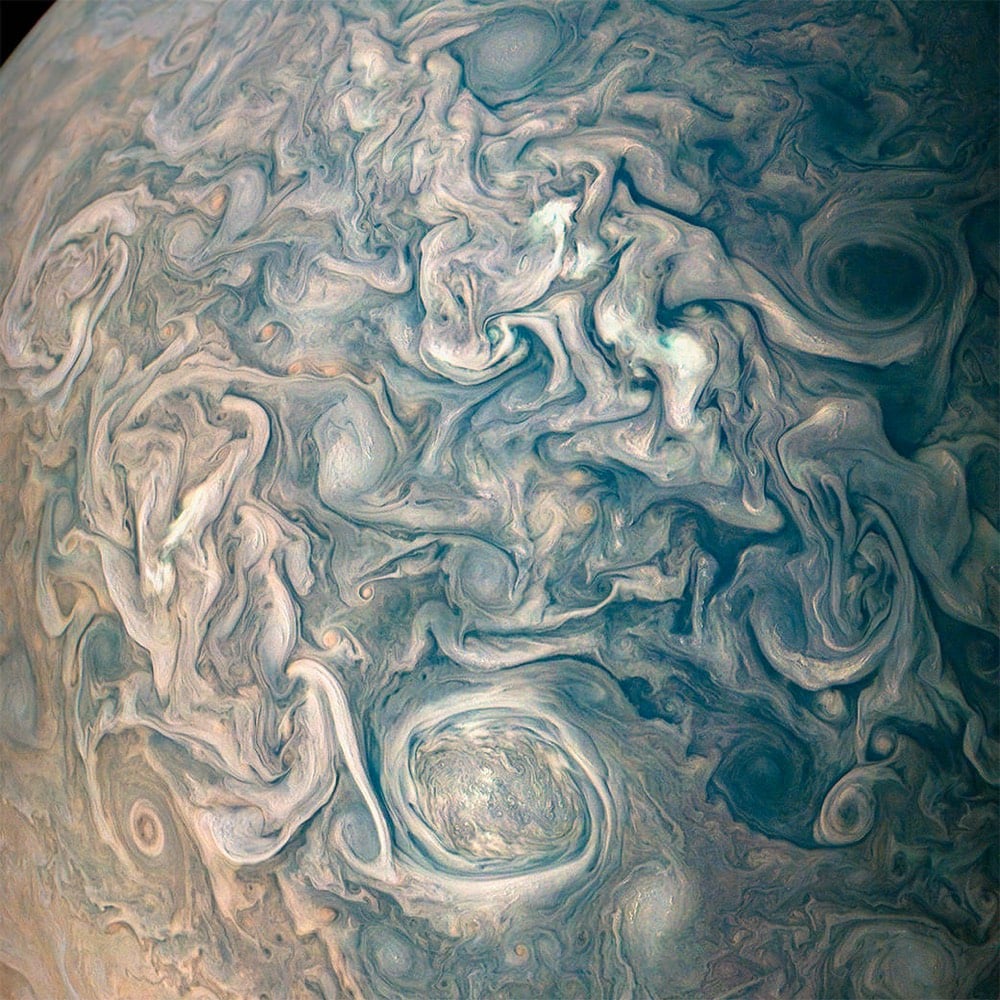
This newly released photo of the chaotic clouds of Jupiter would make a great marbled paper pattern.
NASA’s Juno spacecraft took this color-enhanced image at 10:23 p.m. PDT on May 23, 2018 (1:23 a.m. EDT on May 24), as the spacecraft performed its 13th close flyby of Jupiter. At the time, Juno was about 9,600 miles (15,500 kilometers) from the planet’s cloud tops, above a northern latitude of 56 degrees.
The region seen here is somewhat chaotic and turbulent, given the various swirling cloud formations. In general, the darker cloud material is deeper in Jupiter’s atmosphere, while bright cloud material is high. The bright clouds are most likely ammonia or ammonia and water, mixed with a sprinkling of unknown chemical ingredients.
You can view a “charmingly British” short film about making marbled paper right here.
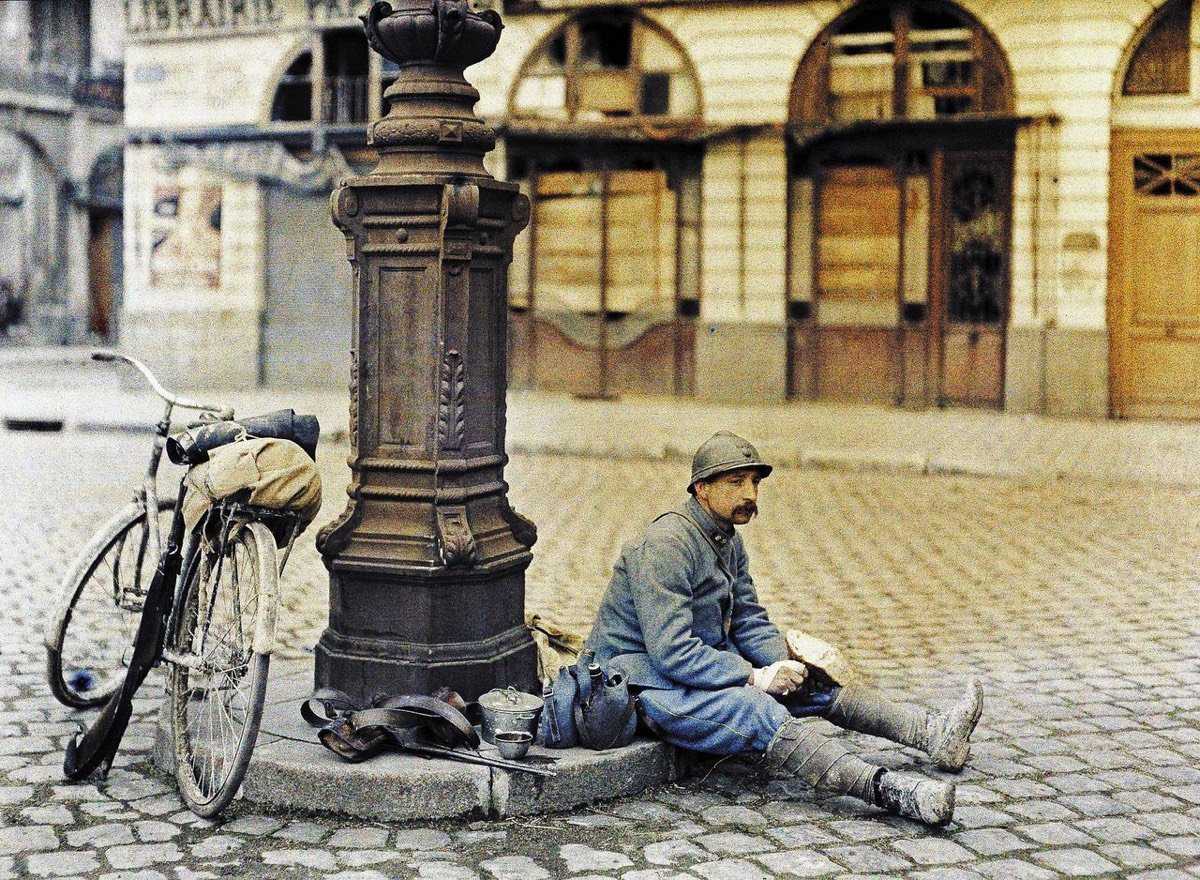
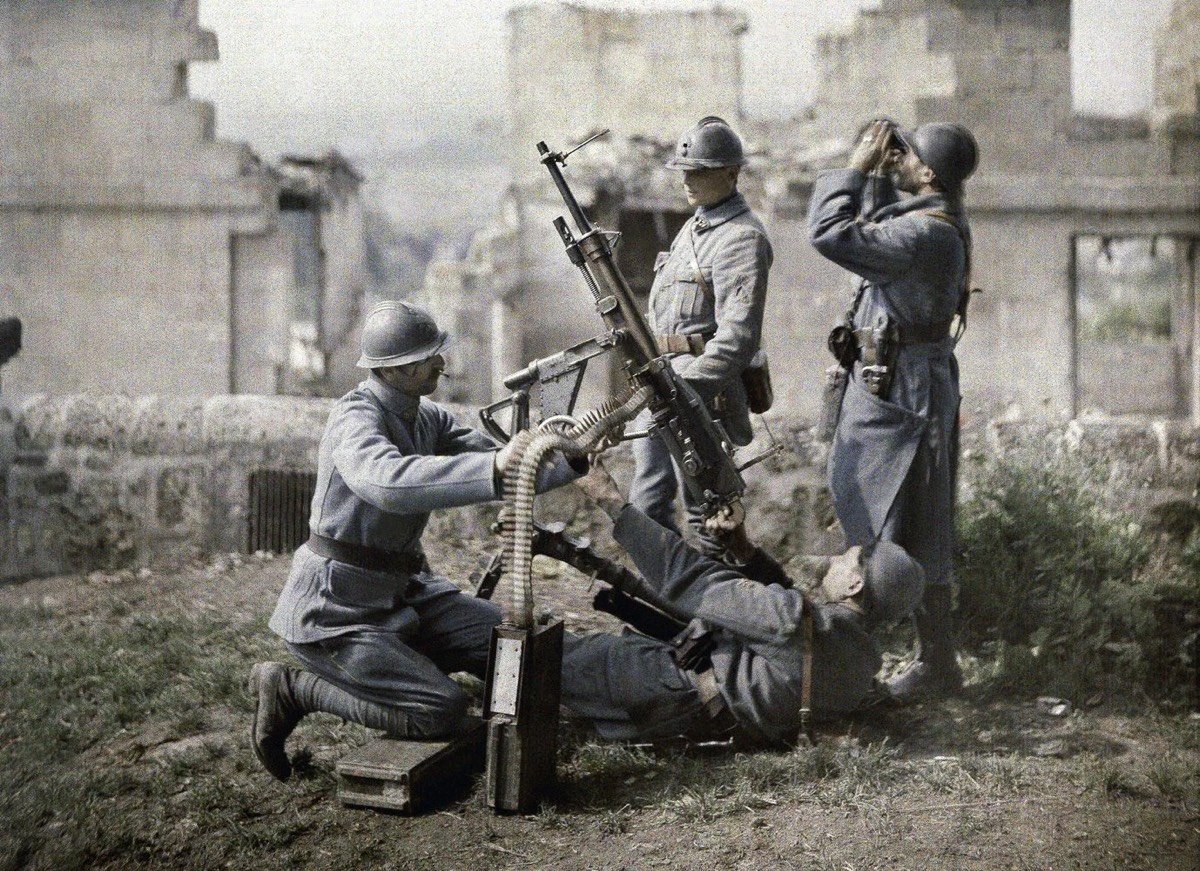
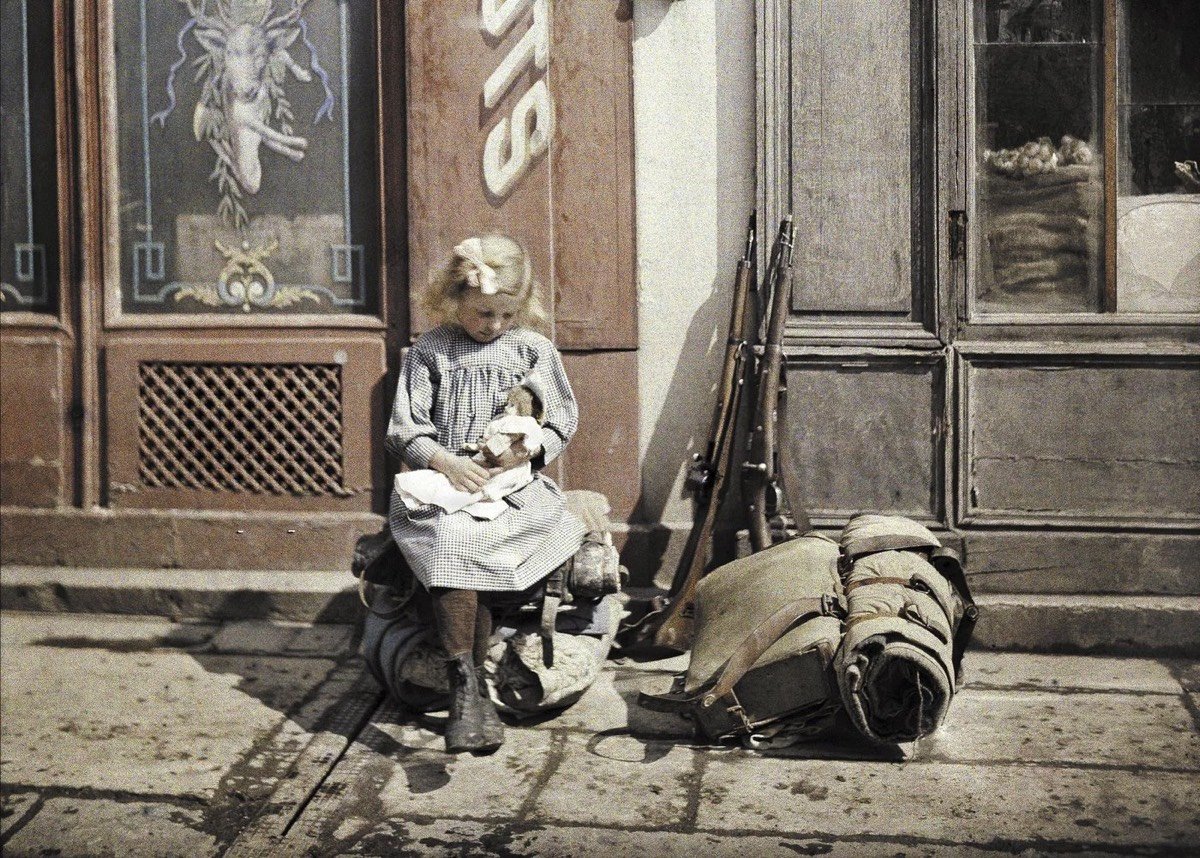
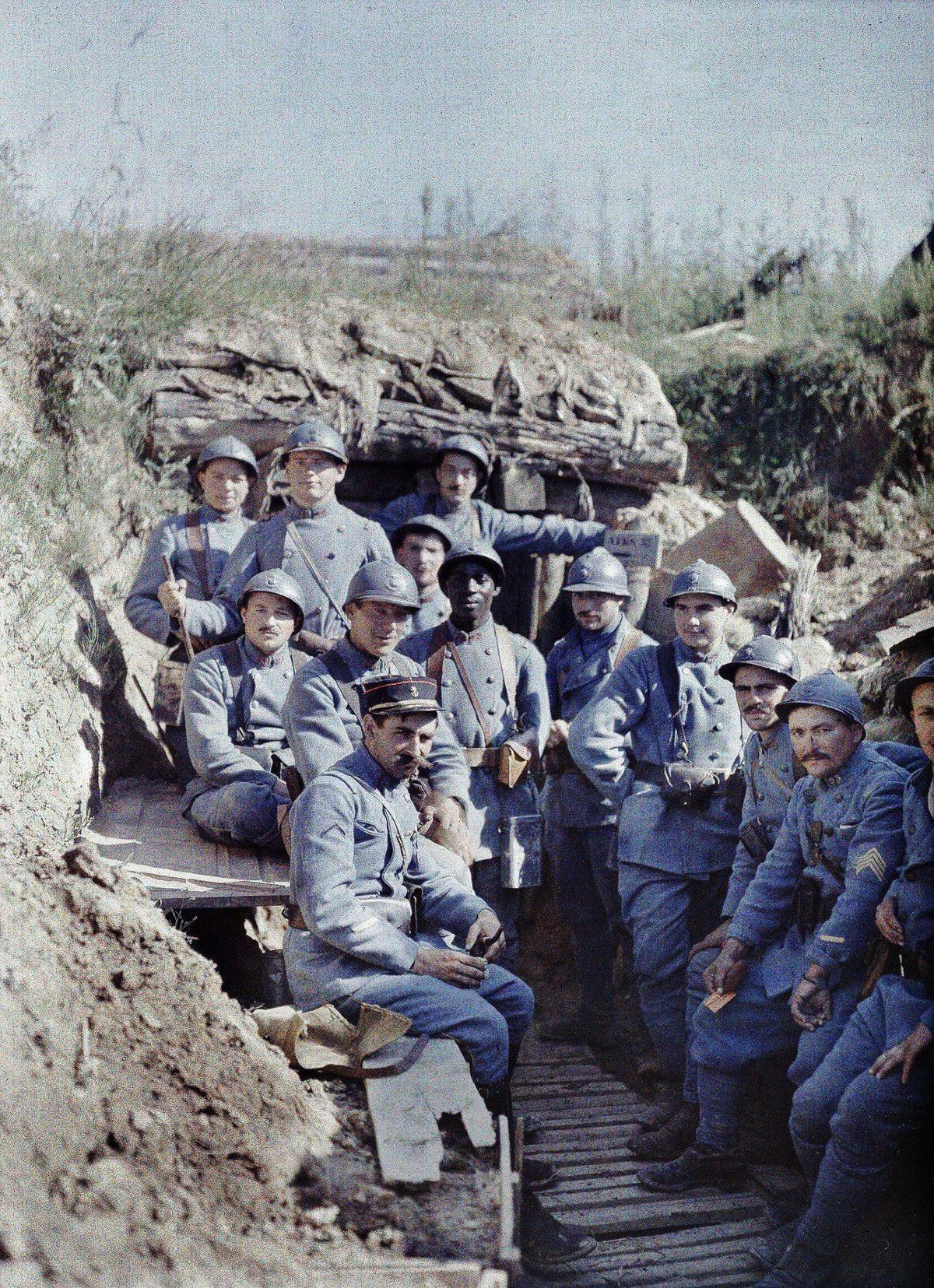
When World War I started, color photography was still in its experimental stage so most of the imagery of the war is in black and white. But a few photographers managed to capture color views the battlefield, military operations, and scenes of daily life during the conflict. You can check out a bunch of the WWI color photos here, here, here, and here. There’s even some color film footage from the war:
As I’ve written before, early color photography is a form of time travel, connecting long-ago events to the present.
Until recently, the color palette of history was black and white. The lack of color is sometimes so overpowering that it’s difficult to imagine from Matthew Brady’s photos what the Civil War looked like in real life. Even into the 1970s, press photos documenting the war in Vietnam were in B&W and the New York Times delivered its news exclusively in B&W until the 90s, running the first color photograph on the front page in 1997.
Which is why when color photos from an event or era set firmly in our B&W history are uncovered, the effect can be jarring. Color adds depth, presence, and modernity to photography; it’s easier for us to identify with the people in the pictures and to imagine ourselves in their surroundings.
Lots more early color photography in the archives.
Update: From 2006, a song called The War Was in Color by Carbon Leaf. Here are the first two stanzas:
I see you’ve found a box of my things:
Infantries, tanks and smoldering airplane wings
These old pictures are cool. Tell me some stories
Was it like the old war movies?
Sit down son. Let me fill you in
Where to begin? Let’s start with the end
This black and white photo don’t capture the skin
From the flash of a gun to a soldier who’s done
Trust me grandson
The war was in color
(thx, adam)
Mick Kalber is posting daily flyover videos of the eruption of the Kilauea volcano in Hawaii. This one, from June 23, is one of the better ones from the past week and features a frothing ocean of erupting lava and a speedily flowing river of molten rock.
The Volcano Goddess, Pele is continually erupting hot liquid rock into the channelized rivers leading to the Pacific Ocean. Most of the fountaining activity is still confined within the nearly 200-foot high spatter cone she has built around that eruptive vent. Her fiery fountains send 6-9 million cubic meters of lava downslope every day… a volume difficult to even wrap your mind around!
According to the USGS, the temperature of the lava when it erupts is around 2140 °F, which is pretty hot but not as hot as a kiln can get when firing some high-fire clays and porcelains. (thx, christopher)
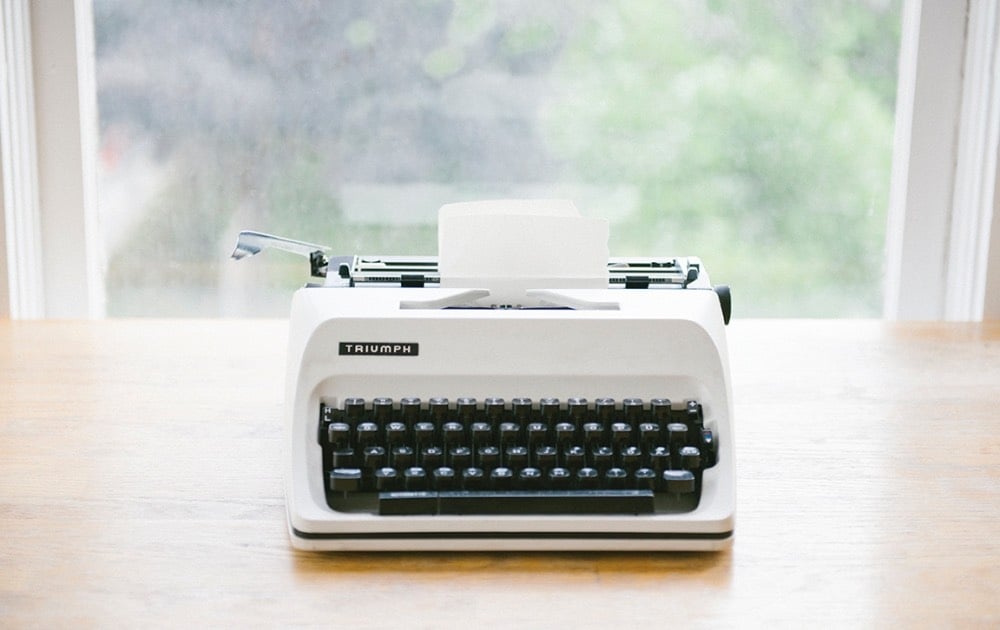

100 useful things “is an expanding collection of durable objects presented by the people who use them every day”.
We believe things come to life when they are used. In a tiring world of perishable items that easily break, this is our tribute to durable objects designed and produced so well that their owners may never have to change them again. 100 useful things tell the stories about the extraordinary items people use all the time and keep forever.
The site currently showcases just over 20 objects, some ordinary and others classic (like the Leica M6 camera, the Braun ET66 calculator, and the Nelson platform bench), each accompanied by a story from that particular item’s owner.
I got my Leica camera when I was assisting fashion photographer Mikael Jansson in 1996. I took all my photos with a point-and-shoot camera, but Mikael thought it was about time for me to buy a real camera, so I went and bought the absolute best camera for ambient light you could get. Henri Cartier-Bresson style. Since then I’ve been using it all the time. It’s a very durable camera.
McSweeney’s on the experience of going to the doctor while female. “But do me the favor of allowing me to disregard everything you’ve presented to me.”
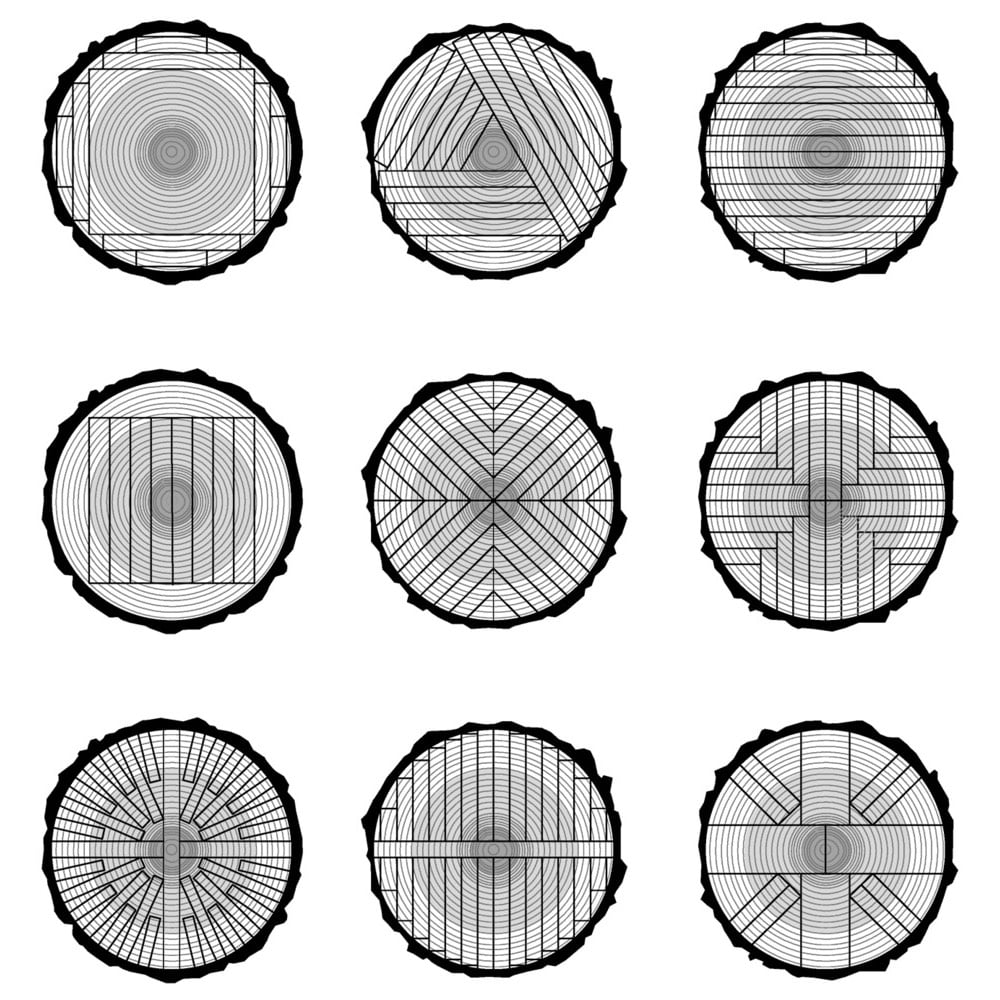
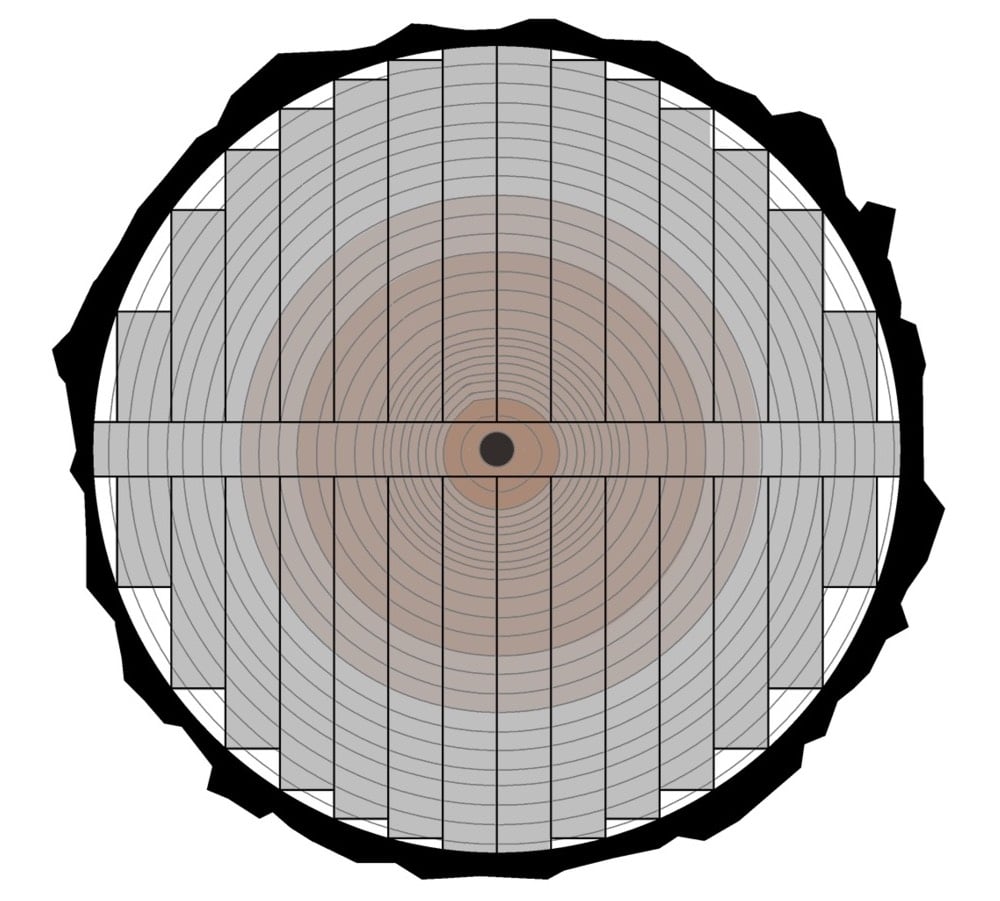
At ArchDaily, José Tomás Franco walks us through the cut patterns that are most used to saw wood into different shapes & sizes.
The lumber we use to build is extracted from the trunks of more than 2000 tree species worldwide, each with different densities and humidity levels. In addition to these factors, the way in which the trunk is cut establishes the functionality and final characteristics of each wood section. Let’s review the most-used cuts.
Each cut pattern produces wood with grain patterns and composition that makes it more or less suited to particular uses. For instance, the “interlocked cut” produces thin boards that are “quite resistant to deformation”.
Watch as Peter Song of Kung Fu Kitchen and Shuichi Kotani of Worldwide Soba make noodles by hand.
I can watch people pull noodles all day, the strands multiplying exponentially from dough to a meal in a matter of seconds. (Kin Jing Mark doubles his dough 12 times to make 4096 noodles in this video.)
But watching Kotani make soba noodles with his eyes closed was almost spiritual. He combines the flour and water using only his sense of touch in a three-step process (sand garden, volcano, ocean wave) so that the dough comes together in the right way. And then he turns a circle into a square and I don’t even know what’s real anymore. The resulting soba dough is amazing, like a piece of luxurious fabric.
The Sad, Beautiful Fact That We’re All Going To Miss Almost Everything. “The vast majority of the world’s books, music, films, television and art, you will never see.”
In a lesson for TED-Ed, David Dunning explains the Dunning-Kruger Effect, a cognitive bias in which people with lesser abilities tend to rate themselves as more proficient than they are.
Interestingly, this effect not only applies to those with lower abilities thinking they are better but also to experts who think they’re not exceptional. That is, the least & most skilled groups are both deficient in their ability to evaluate their skills.
Dunning also wrote a longer piece for Pacific Standard on the phenomenon.
In 1999, in the Journal of Personality and Social Psychology, my then graduate student Justin Kruger and I published a paper that documented how, in many areas of life, incompetent people do not recognize — scratch that, cannot recognize — just how incompetent they are, a phenomenon that has come to be known as the Dunning-Kruger effect. Logic itself almost demands this lack of self-insight: For poor performers to recognize their ineptitude would require them to possess the very expertise they lack. To know how skilled or unskilled you are at using the rules of grammar, for instance, you must have a good working knowledge of those rules, an impossibility among the incompetent. Poor performers — and we are all poor performers at some things — fail to see the flaws in their thinking or the answers they lack.
What’s curious is that, in many cases, incompetence does not leave people disoriented, perplexed, or cautious. Instead, the incompetent are often blessed with an inappropriate confidence, buoyed by something that feels to them like knowledge.
Confidence feels like knowledge. I feel like that simple statement explains so much about the world.
See also Errol Morris’ series for the NY Times about humanity’s unknown unknowns.
In closing, I’ll just note that thinking you’re impervious to the Dunning-Kruger Effect is itself an example of the Dunning-Kruger Effect in action. (via open culture)
The Supreme Court upheld Trump’s ban on travel from several predominantly Muslim countries. For those counting at home, that’s 3 checks and no balances. They’re just gonna do whatever they want.
Of course you know he designed the album cover for The Velvet Underground & Nico…Warhol’s name (and not the band’s or the album’s) is right there underneath the electric yellow banana. But he also designed covers for the likes of Paul Anka, John Lennon, The Rolling Stones, Count Basie, Diana Ross, Kenny Burrell, and Aretha Franklin.
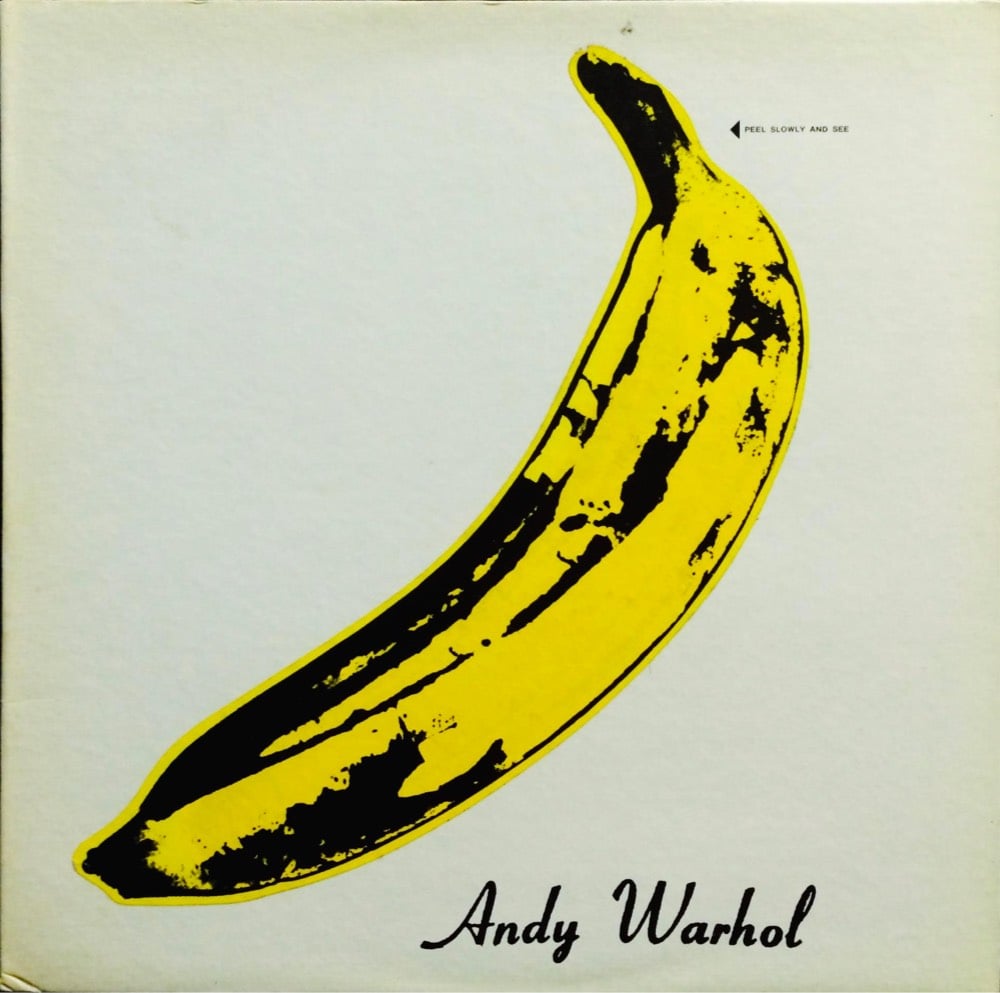

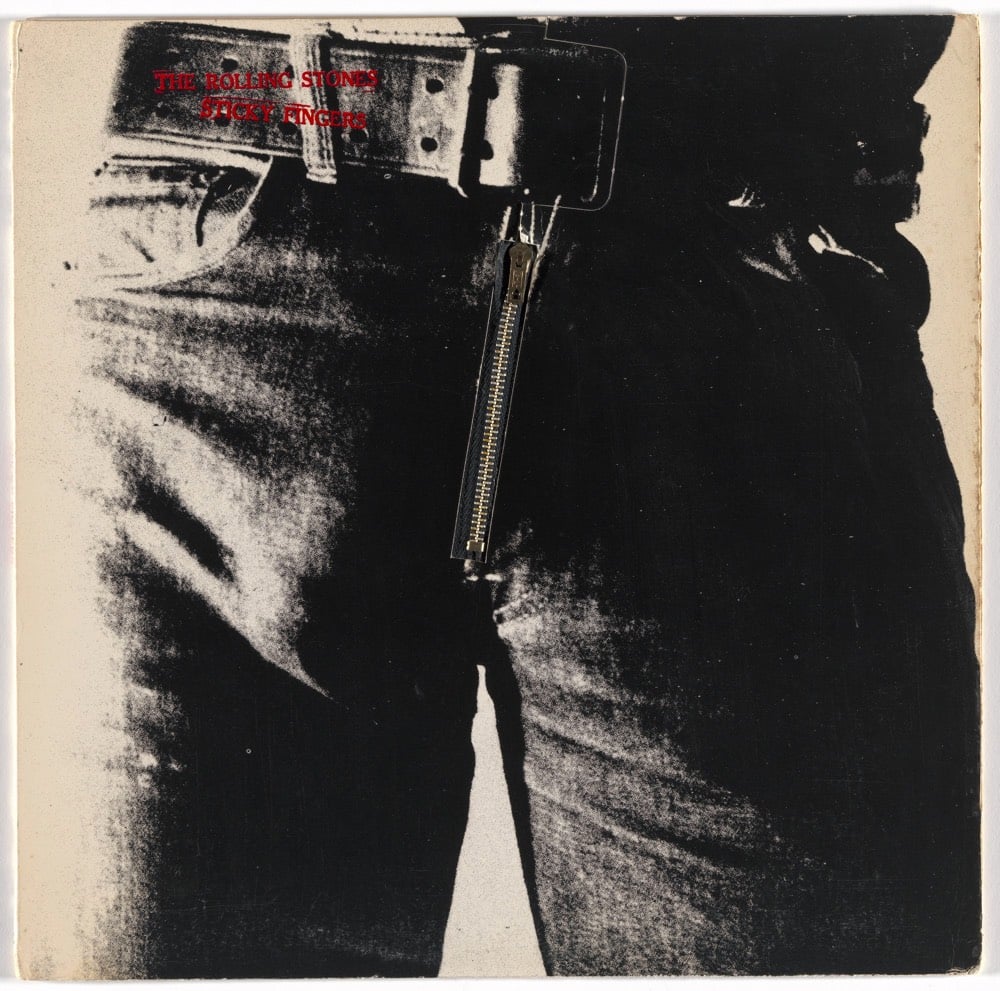
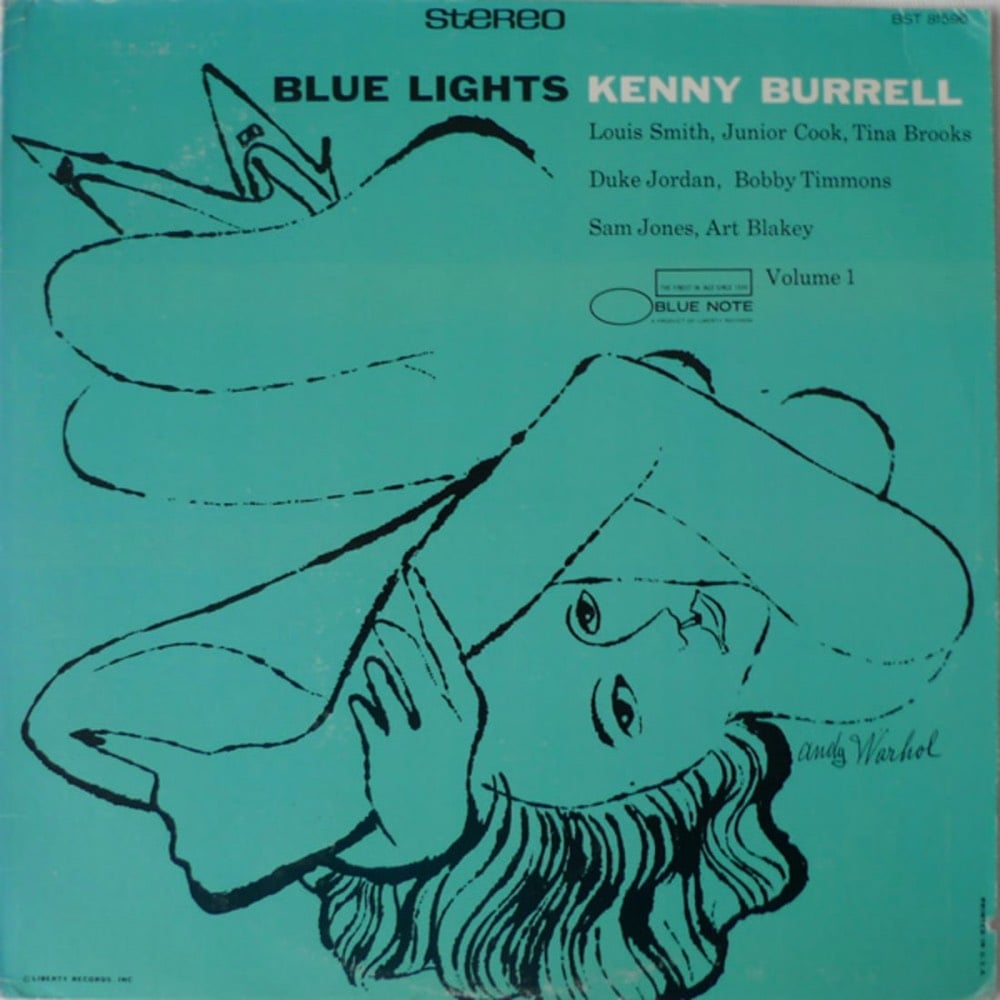
You can see more covers by Warhol here, here, and here. All of the covers he designed are collected in this book, Andy Warhol: The Complete Commissioned Record Covers.
The design of the automatic-drip coffee maker is super simple and clever. By using a one-way value to pump the water to the top of the maker to drip through the grounds, you can get away with using only one heating element at the bottom that both heats the water and keeps the brewed coffee hot.
To engineer an object means to make choices; I’ll show you with this coffeemaker. The key choice: to use a single heating element to keep the cost low — 9 bucks in the case of this coffeemaker. Now the heater must be below the carafe to keep the coffee warm yet it also needs to heat the water for brewing. And since the grounds are at the top, that presents a problem. How do you get the water from down here to up here?
Bill Hammack shows how this works in just over 2 minutes:
Hammack’s videos are great. He also did this 11-minute video about how aluminum cans are designed & engineered and it’s not boring even for a second. (via @macgbrown)
In this 90-second video, Kurt Vonnegut provides eight guidelines for writing a good short story.
1. Use the time of a total stranger in such a way that he or she will not feel the time was wasted.
2. Give the reader at least one character he or she can root for.
3. Every character should want something, even if it is only a glass of water.
4. Every sentence must do one of two things — reveal character or advance the action.
5. Start as close to the end as possible.
6. Be a sadist. No matter how sweet and innocent your leading characters, make awful things happen to them-in order that the reader may see what they are made of.
7. Write to please just one person. If you open a window and make love to the world, so to speak, your story will get pneumonia.
8. Give your readers as much information as possible as soon as possible. To heck with suspense. Readers should have such complete understanding of what is going on, where and why, that they could finish the story themselves, should cockroaches eat the last few pages.
This appears to be a reading of the introduction to a collection of Vonnegut’s short fiction; in it, the list is referred to by the author as “Creative Writing 101”.
See also Vonnegut explaining the shapes of stories. (thx, jeannie)
Humans are so small compared to the size of the Earth, it’s sometimes difficult to comprehend the scale of things like, say, the massive meteorite that struck the Yucatan peninsula about 66 million years ago, an event that triggered the mass extinction of plants and animals, including the dinosaurs. In his recent book, The Ends of the World, Peter Brannen takes a crack at explaining just how big the meteorite was and how quickly the event occurred.
“The meteorite itself was so massive that it didn’t notice any atmosphere whatsoever,” said Rebolledo. “It was traveling 20 to 40 kilometers per second, 10 kilometers — probably 14 kilometers — wide, pushing the atmosphere and building such incredible pressure that the ocean in front of it just went away.”
These numbers are precise without usefully conveying the scale of the calamity. What they mean is that a rock larger than Mount Everest hit planet Earth traveling twenty times faster than a bullet. This is so fast that it would have traversed the distance from the cruising altitude of a 747 to the ground in 0.3 seconds. The asteroid itself was so large that, even at the moment of impact, the top of it might have still towered more than a mile above the cruising altitude of a 747. In its nearly instantaneous descent, it compressed the air below it so violently that it briefly became several times hotter than the surface of the sun.
“The pressure of the atmosphere in front of the asteroid started excavating the crater before it even got there,” Rebolledo said. “Then when the meteorite touched ground zero, it was totally intact. It was so massive that the atmosphere didn’t even make a scratch on it.”
Unlike the typical Hollywood CGI depictions of asteroid impacts, where an extraterrestrial charcoal briquette gently smolders across the sky, in the Yucatan it would have been a pleasant day one second and the world was already over by the next. As the asteroid collided with the earth, in the sky above it where there should have been air, the rock had punched a hole of outer space vacuum in the atmosphere. As the heavens rushed in to close this hole, enormous volumes of earth were expelled into orbit and beyond — all within a second or two of impact.
“So there’s probably little bits of dinosaur bone up on the moon,” I asked.
“Yeah, probably.”
I don’t know if your eyes are as wide as mine are about now but…
We Have a Crisis of Democracy, Not Manners. “I don’t blame staff members at the Red Hen for not wanting to help Sanders unwind after a hard week of lying to the public about mass child abuse.”
I’ve been a bit lax about getting the word out about this lately — been busy in the content mines and with the Noticing newsletter and I am bad at self-promotion — but this is your periodic reminder that kottke.org is financially supported primarily by memberships from readers. If you’d like to support one of the best independent sites on the web, you can check out your options here. It takes less than a minute to sign up and your collective support will keep the site chugging along for the foreseeable future.
If you’re already a member, thank you again! Your support has enabled me to publish the site without compromise & encouraged me to experiment with a few new things, which you’ve gotten glimpses of over the last 18 months via the members-only newsletter.
Speaking of the members-only newsletter, I’ve sent out 2 issues over the past 10 days or so. If you’re a member and haven’t gotten them, your membership may have lapsed because of an expired credit card…you can sign in on the membership page to check your status and renew.
Ok, self-promotion over…that wasn’t so bad. Here’s a fun handclapping clip from Sesame Street to celebrate getting through that together:
(Sesame Street is supported by “viewers like you”…just like kottke.org. Become a member!)
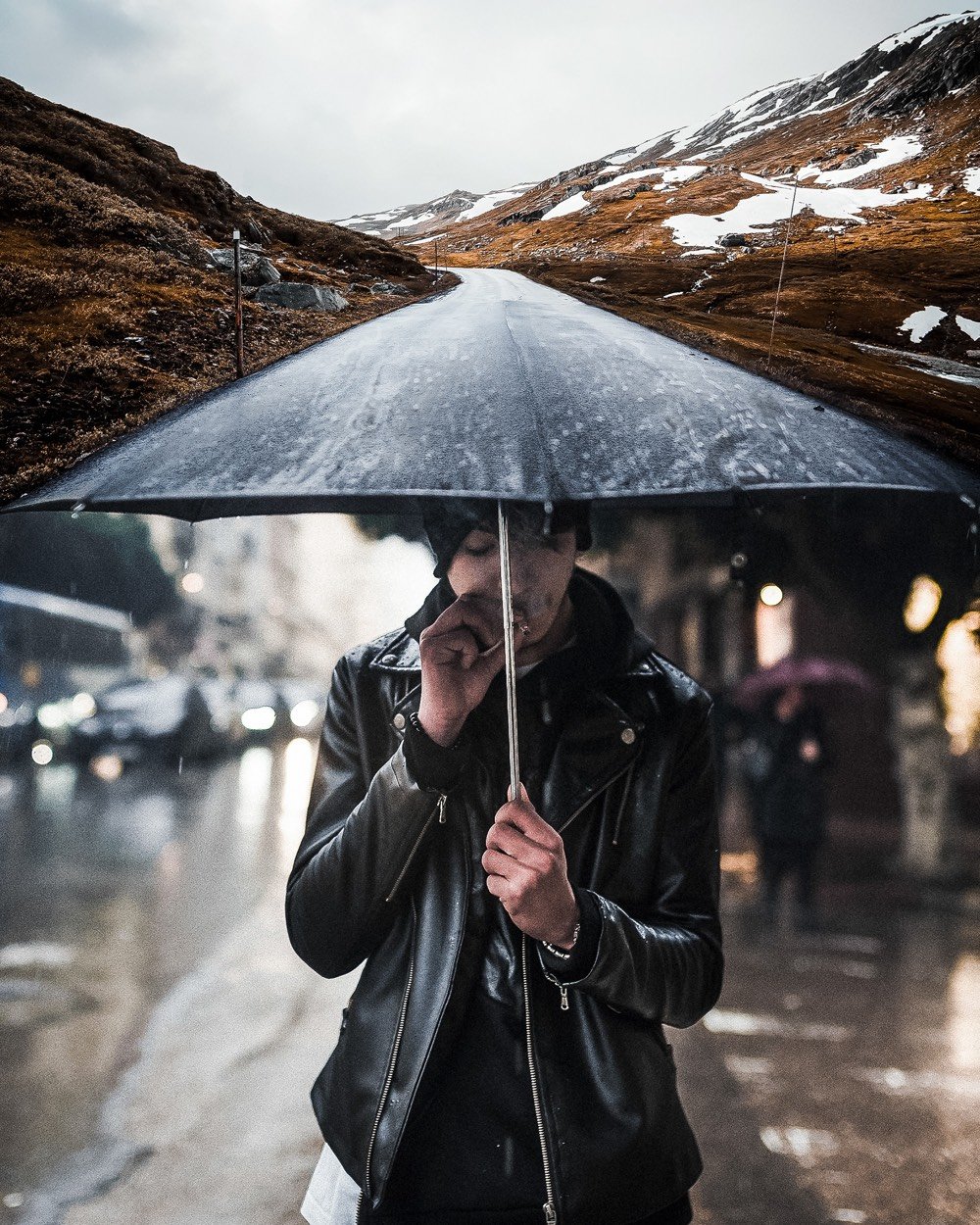

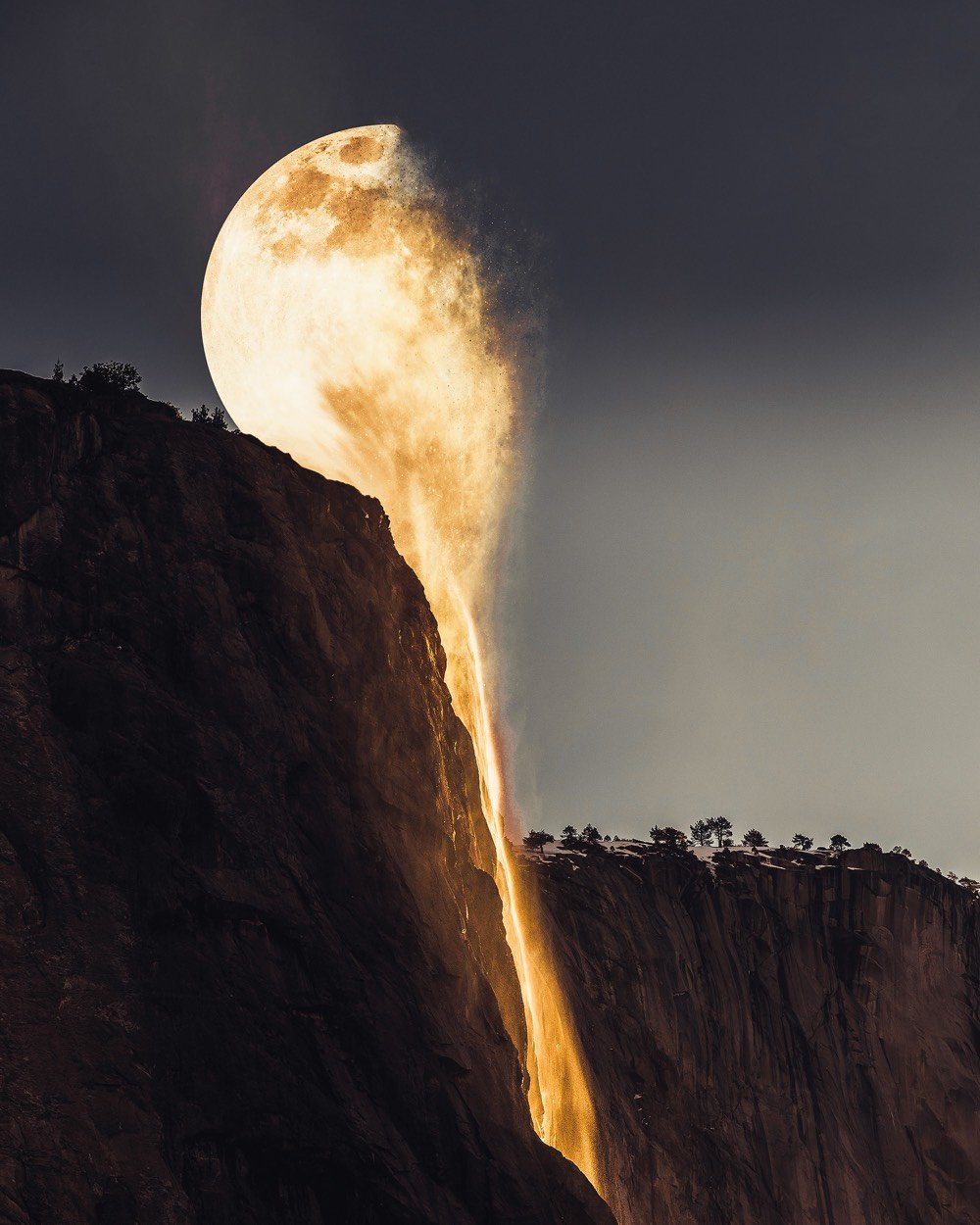
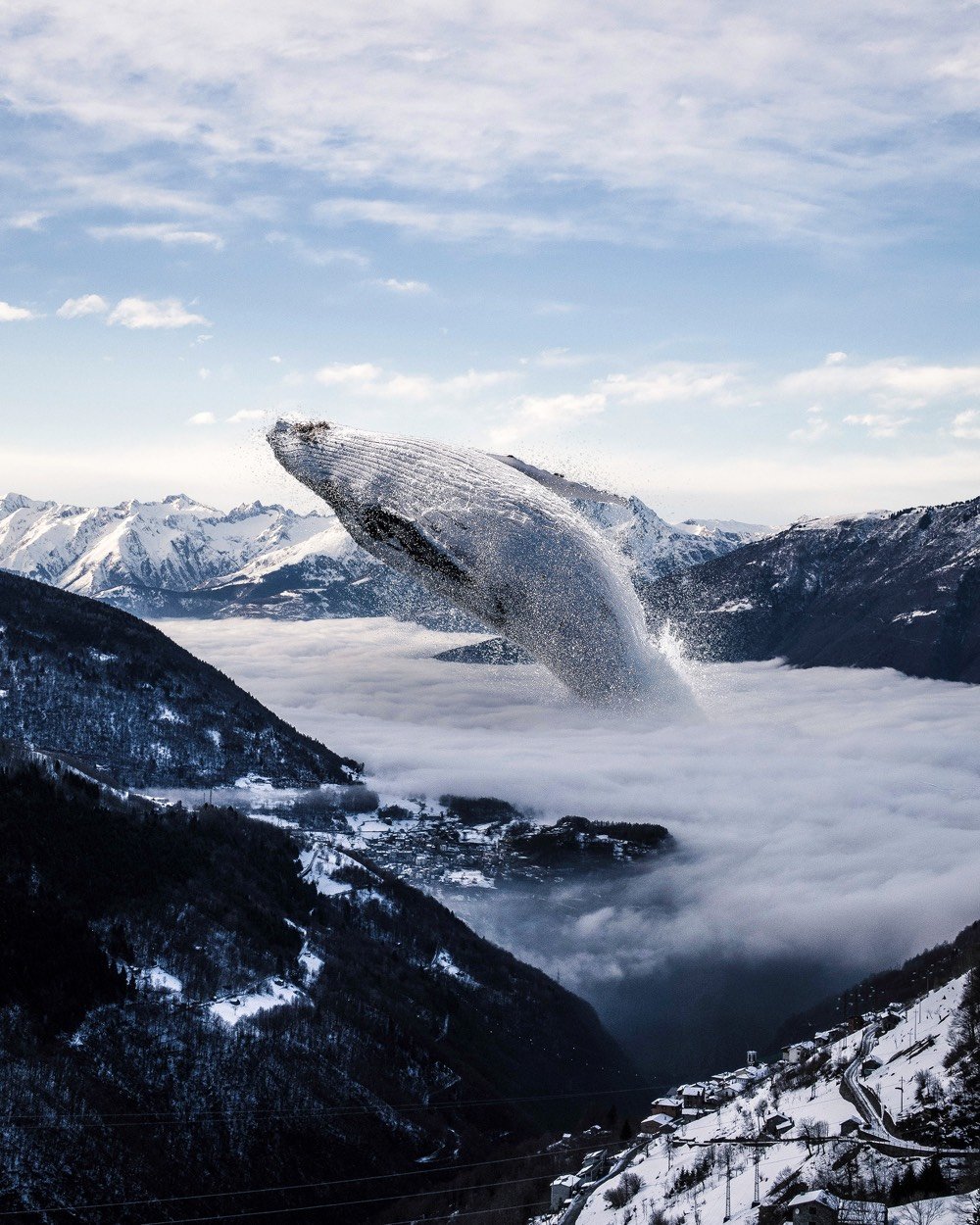
Justin Peters takes stock photos and combines them into fantastical and mind-bending scenes. I’ve seen lots of this sort of thing, but these are particularly well done. The one with the umbrella and the road is a straight-up optical illusion and broke my brain for awhile. (via colossal, which has been a real source of joy & possibility these days)
A couple of years ago, Wayne Easton witnessed the Mahlongwa River cutting a new channel into the Indian Ocean. As the video above begins, you can see water from the river just starting to trickle down the sand into the sea. Sand being sandy, the process happens pretty quickly. As you can see in this second video, the trickle becomes a rushing torrent in a matter of just minutes.
This is the spot in question on Google Maps, but looking at an alternate satellite view, the river doesn’t appear to have a permanent channel to the ocean. Is that normal? (via bb)
In 1988, Dr. James Hansen testified in front of Congress about the future dangers of climate change caused by human activity. That same year, the results of a study released by Hansen and his team at the Goddard Institute for Space Studies detailed three possible scenarios for possible future warming. Their middle-of-the-road prediction has proved to be remarkably accurate over the past 30 years.
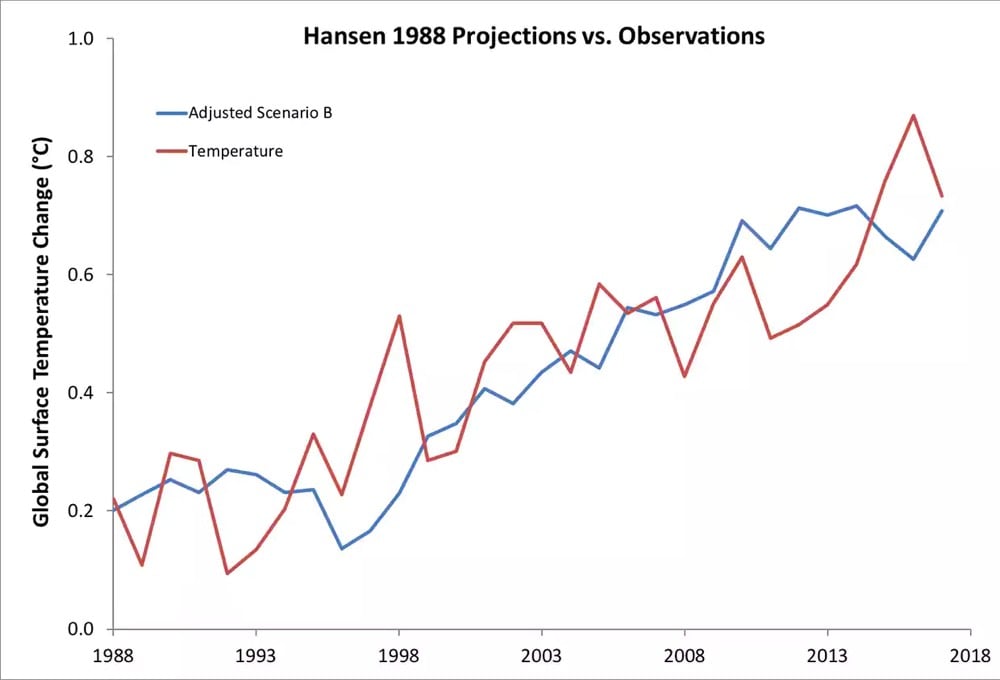
Changes in the human effects that influence Earth’s global energy imbalance (a.k.a. ‘anthropogenic radiative forcings’) have in reality been closest to Hansen’s Scenario B, but about 20-30% weaker thanks to the success of the Montreal Protocol in phasing out chlorofluorocarbons (CFCs). Hansen’s climate model projected that under Scenario B, global surface air temperatures would warm about 0.84°C between 1988 and 2017. But with a global energy imbalance 20-30% lower, it would have predicted a global surface warming closer to 0.6-0.7°C by this year.
The actual 1988-2017 temperature increase was about 0.6°C. Hansen’s 1988 global climate model was almost spot-on.
Scientists have known this was happening for decades and have been telling our government officials about it for more than 30 years. Our present inaction on a national level on this is shameful and “the global poor, the disenfranchised, the young, and the yet-to-be-born” will soon pay the price.
See also a brief history of America’s shameful inaction on climate change.
From Dr. Gregory Stanton, president of Genocide Watch and Research Professor in Genocide Studies and Prevention at George Mason University, a list of the ten stages of genocide that all societies move through when the group in power decides to murder a large group of people, typically on the basis of ethnicity. For each stage, Stanton has helpfully listed preventative measures.
4. Dehumanization: One group denies the humanity of the other group. Members of it are equated with animals, vermin, insects or diseases. Dehumanization overcomes the normal human revulsion against murder. At this stage, hate propaganda in print and on hate radios is used to vilify the victim group. The majority group is taught to regard the other group as less than human, and even alien to their society. They are indoctrinated to believe that “We are better off without them.” The powerless group can become so depersonalized that they are actually given numbers rather than names, as Jews were in the death camps. They are equated with filth, impurity, and immorality. Hate speech fills the propaganda of official radio, newspapers, and speeches.
To combat dehumanization, incitement to genocide should not be confused with protected speech. Genocidal societies lack constitutional protection for countervailing speech, and should be treated differently than democracies. Local and international leaders should condemn the use of hate speech and make it culturally unacceptable. Leaders who incite genocide should be banned from international travel and have their foreign finances frozen. Hate radio stations should be jammed or shut down, and hate propaganda banned. Hate crimes and atrocities should be promptly punished.
(via @libyaliberty)
Alexis Madrigal is great at the systemic sublime — taking an everyday object or experience and showing how it implicates interconnected networks across space, time, and levels of analysis. His history of the drinking straw — or rather, “a history of modern capitalism from the perspective of the drinking straw” — is no exception. It doesn’t give quite enough space to disability, either in its history or its examination of the straw’s future — the stakes of that debate are better-covered in this David Perry essay from a year ago — but there are still plenty of goodies.
Temperance and public health grew up together in the disease-ridden cities of America, where despite the modern conveniences and excitements, mortality rates were higher than in the countryside. Straws became a key part of maintaining good hygiene and public health. They became, specifically, part of the answer to the scourge of unclean drinking glasses. Cities begin requiring the use of straws in the late 1890s. A Wisconsin paper noted in 1896 that already in many cities “ordinances have been issued making the use of wrapped drinking straws essential in public eating places.”
Add in urbanization, the suddenly cheap cost of wood-pulp paper goods, and voila: you get soda fountains and disposable straws, soon followed by disposable paper cups, and eventually, their plastic successors, manufactured by a handful of giant companies to the specifications of a handful of other giant companies, in increasingly automated processes for the benefit of shareholders. It’s a heck of a yarn.

This week’s crisis of children separated from their parents, and both parents and children sent to jails or camps (in most cases) for the misdemeanor of improperly crossing the border, has inspired some excellent critical writing on the power of overpowering imagery, especially the John Moore photograph above.
From Josephine Livingstone, “America’s ‘Poster Child’ Syndrome”:
These poster children present a paradox: They are real, so is their suffering—but they have also been chosen to represent a suffering that is shared by many others… There are several political repercussions of allowing a single child to represent a crisis. The first is that the child herself, literally voiceless in the case of Moore’s photograph, ceases to be an individual. She instead becomes a blank canvas upon which adults project their anxieties and fears. The second is that it obscures the suffering of others—particularly adults. Moore’s photograph captures this young migrant’s isolation so well that it hurts; but, by definition, it leaves out the faces of the rest of her family. It reduces a crisis about human beings of all ages and stages of life to a single image of total vulnerability.
Behind the American response to these images of children lurks an uncomfortable truth: The white majority in this country perceives children of color differently than they perceive adults, in what we might call the visual rhetoric of victimhood. This crisis is happening to babies, toddlers, teenagers, parents, and elderly adults; but the only images that can make America care about its inhumane policy toward immigrants at its borders, the only images that can cause a Republican like Laura Bush to speak on behalf of these foreigners, are photographs of children.
Megan Garber, “How To Look Away”:
In a democracy, if the people are to have a meaningful say over the world and its workings, those people are, fundamentally, obligated to look. And, much more fundamentally, to see. To avert one’s eyes is a privilege that those of us who have the power to act cannot afford to exercise, even when we are complicit in the images. Especially when we are complicit.
It is a dynamic—the democratic alchemy that converts seeing things into changing them—that the president and his surrogates have been objecting to, as they have defended their policy. They have been, this week (with notable absences), busily appearing on cable-news shows and giving disembodied quotes to news outlets, insisting that things aren’t as bad as they seem: that the images and the audio and the evidence are wrong not merely ontologically, but also emotionally. Don’t be duped, they are telling Americans. Your horror is incorrect. The tragedy is false. Your outrage about it, therefore, is false. Because, actually, the truth is so much more complicated than your easy emotions will allow you to believe. Actually, as Fox News host Laura Ingraham insists, the holding pens that seem to house horrors are “essentially summer camps.” And actually, as Fox & Friends’ Steve Doocy instructs, the pens are not cages so much as “walls” that have merely been “built … out of chain-link fences.” And actually, Kirstjen Nielsen wants you to remember, “We provide food, medical, education, all needs that the child requests.” And actually, too, Tom Cotton warns, think of the child-smuggling. And of MS-13. And of sexual assault. And of soccer fields. There are so many reasons to look away, so many other situations more deserving of your outrage and your horror.
And Kainaz Amaria, “Time magazine’s cover isn’t bold or brave. It’s exploitative.”
[When] I saw Time’s cover this morning — and what I can only describe as the misuse of Moore’s original image — my immediate reaction was rage. As a photojournalist, a visuals editor, and an immigrant, I didn’t see it as a powerful statement on President Trump’s attitude toward the family separation crisis or the policies that have ripped more than 2,000 vulnerable children from their parents.
I see it as an insensitive and exploitative play to sell magazines — and one that, albeit unintentionally, offers up this personal tragedy to be memed and ridiculed…
Vox’s Brian Resnick has written about the limits of human compassion and the impact an image can have. In it, he talks to Paul Slovic, a psychologist at the University of Oregon, who says: “Individual stories and individual photographs can be effective for a while. They capture our attention — they get us to see the reality, to glimpse the reality at a scale we can understand and connect to emotionally. But then there has to be somewhere to go with it.”
I haven’t yet read anything comparable diving into the effect of the ProPublica audio of imprisoned children separated from their parents by immigration officials, apart from this behind-the-scenes video on the how the audio was obtained. But I’d certainly be interested in doing so.
The Yale Babylonian Collection has four cuneiform tablets that contain the world’s oldest known food recipes — nearly four thousand years old. Scholars think the recipes weren’t everyday cuisine, but dishes prepared for royal houses, because they’re 1) fairly complex and 2) written down. A Yale-Harvard team decided to cook three of the recipes (two lamb stews, one vegetarian) for an event at NYU called “An Appetite for the Past.”
The undertaking was not without its challenges, says [Yale curator Agnete] Lassen. “Not only were some of the ingredients that were used during this time period not available, but two of the tablets are poorly preserved — there are big holes in them. Some of these terms that appear in the Akkadian original are difficult to translate because these are words that don’t appear very often in the other texts that we have and that makes it very difficult to decipher them.”
“Having an understanding of what the food is supposed to feel and taste like is very important,” says Lassen. “We didn’t know what we were looking for. When we were recreating one of the recipes I kept thinking they were doing this wrong, ‘this is not how I would make this.’ And then when it had boiled for a while it suddenly transformed itself into something delicious.”
I wonder which of our recipes will still survive in four thousand years, and what historians of the future will make of the people who ate this food.
Update: University of Chicago Press has a book of ancient Mesopotamian recipes. “Offering everything from translated recipes for pigeon and gazelle stews, the contents of medicinal teas and broths, and the origins of ingredients native to the region, this book reveals the cuisine of one of history’s most fascinating societies.” I’ve never eaten pigeon, but people I know who have say it’s delicious. (I don’t know anyone who’s eaten gazelle.) Via Amy Drummond.
In partnership with over 30 museums and institutions from around the world, Google Arts & Culture has launched Faces of Frida, a massive collection of art, letters, essays, videos, and other artifacts about the life and work of Frida Kahlo. There’s a *lot* here, including dozens of zoomable high-resolution scans of her artwork and essays by art historians and experts.
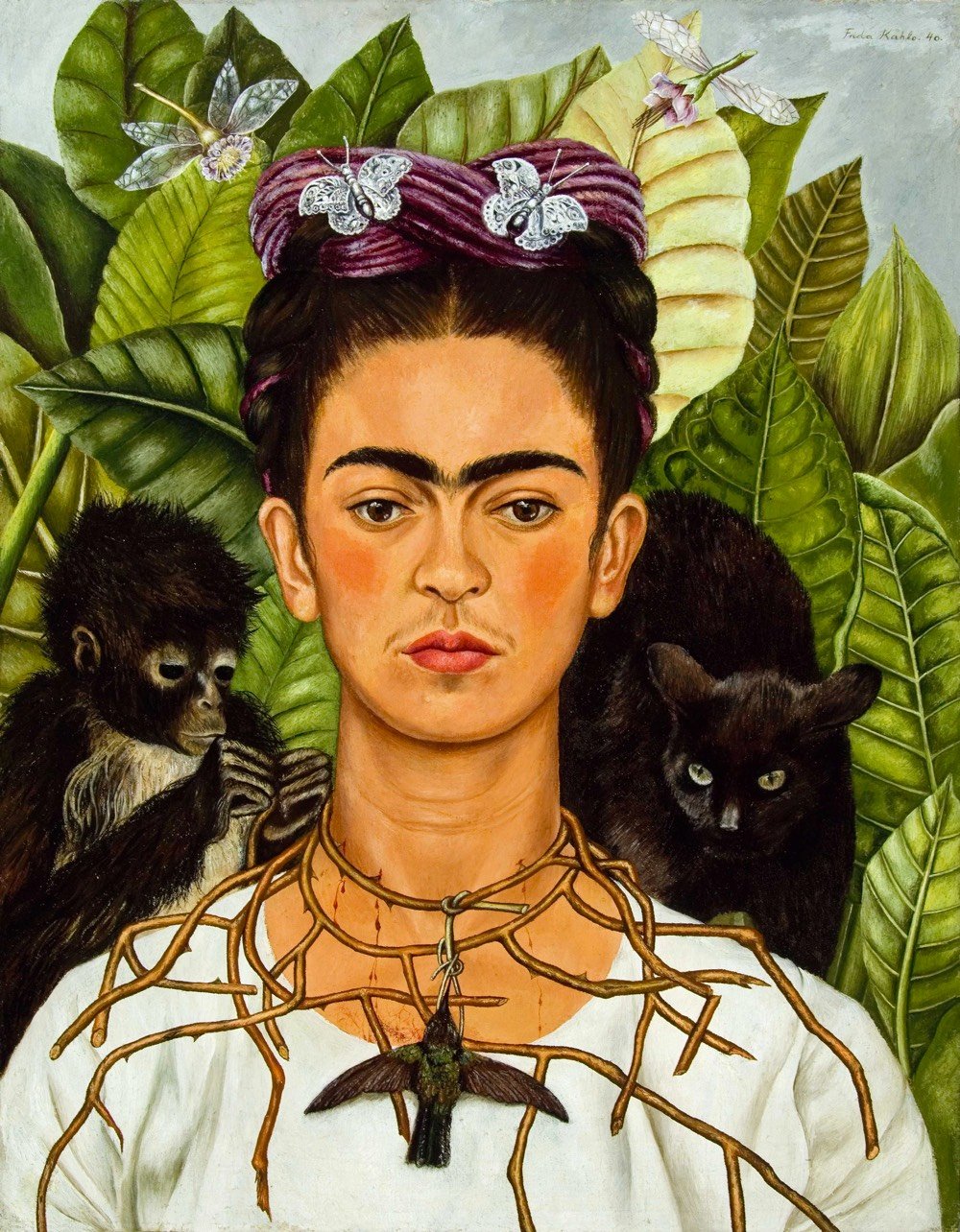
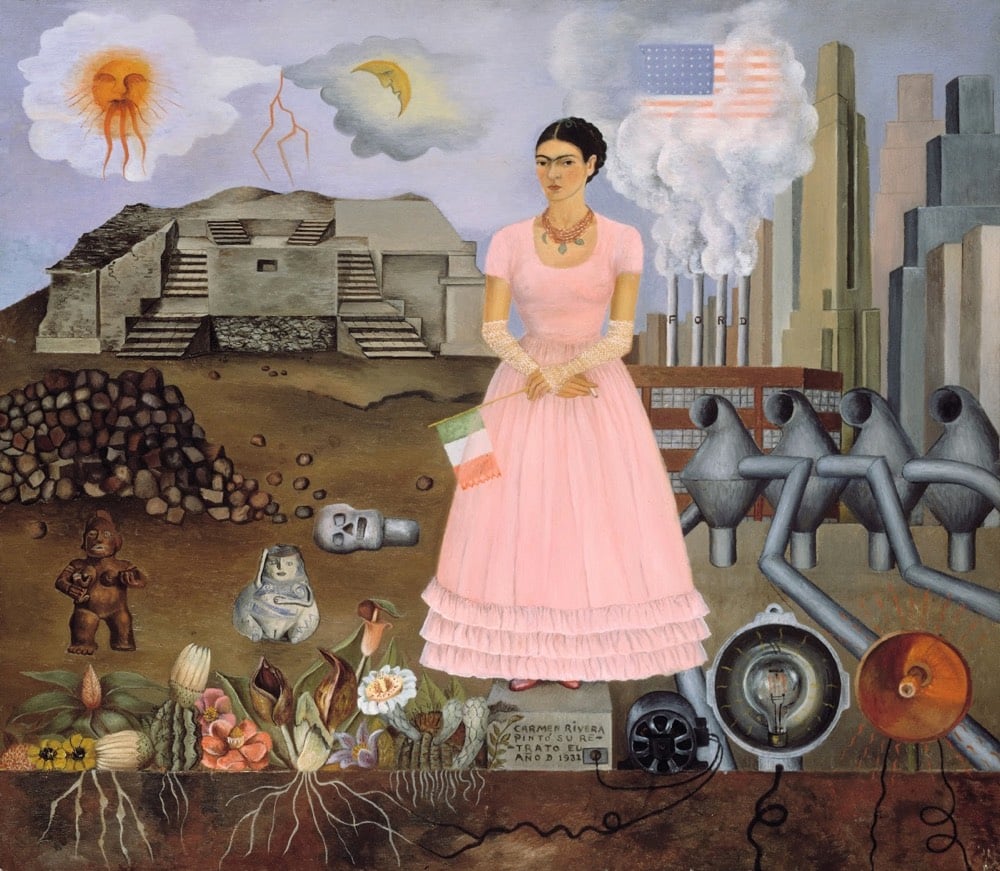
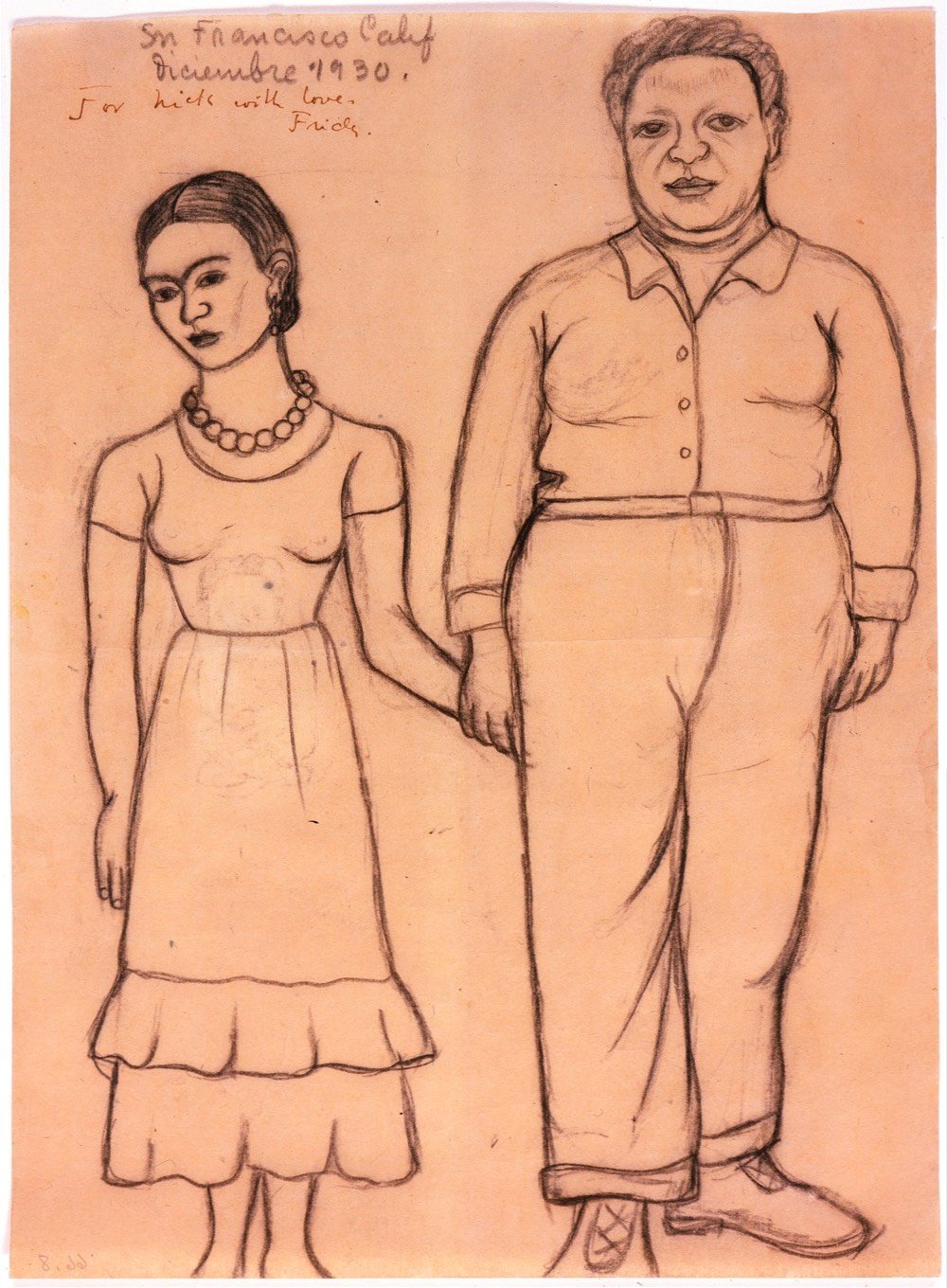

This is the kind of “organizing the world’s information” I want to see more of from Google. (via open culture)
Older posts




Socials & More