Reporting on Long Covid Taught Me to Be a Better Journalist. “[It] solidified my view that science is not the objective, neutral force it is often misconstrued as. It is instead a human endeavor, relentlessly buffeted by our culture, values and politics.”

Advertise here with Carbon Ads
This site is made possible by member support. 💞
Big thanks to Arcustech for hosting the site and offering amazing tech support.
When you buy through links on kottke.org, I may earn an affiliate commission. Thanks for supporting the site!
kottke.org. home of fine hypertext products since 1998.
Beloved by 86.47% of the web.
Entries for December 2023
The Most Scathing Book Reviews of 2023. From Gary Shteyngart’s review of Walter Isaacson’s Elon Musk bio: “I drove my espresso machine hard into the night to survive both craft and subject matter…”
The Pudding announces its picks for the best visual and data-driven stories of 2023. Lots of great work here.
A typology of eggnog cartons. “The peculiarities of the packaging range from festive to banal, minimal to ornate, and many seem to be printed with complete disregard for color alignment.”
Archaeomagnetism is the study of the changes in the Earth’s magnetic field from markers in archaeological items, e.g. these 3,000-year-old Mesopotamian bricks.
Last week, Halley’s comet reached its farthest point away from the Sun and has begun its journey back towards the center of our solar sytem. The comet last visited us in 1986 and will come again in 2061.
Nearly last call: the 2023 Kottke Holiday Gift Guide, which is chock full of gift recommendations from kids to books to kitchen things to Richard Scarry temporary tattoos to my personal, perennial favorites. Take a look!
Learning, Unlearning, and Relearning
This is a quote I like that’s attributed to Alvin Toffler from his 1970 book, Future Shock:
The illiterate of the twenty-first century will not be those who cannot read and write, but those who cannot learn, unlearn, and relearn.
It turns out that’s not a direct quote — it’s been cobbled together from two separate passages in the book:
By instructing students how to learn, unlearn and relearn, a powerful new dimension can be added to education.
and:
Psychologist Herbert Gerjuoy of the Human Resources Research Organization phrases it simply: “The new education must teach the individual how to classify and reclassify information, how to evaluate its veracity, how to change categories when necessary, how to move from the concrete to the abstract and back, how to look at problems from a new direction — how to teach himself. Tomorrow’s illiterate will not be the man who can’t read; he will be the man who has not learned how to learn.”
Somewhere along the line, someone combined Gerjuoy’s observation with Toffler’s phrasing to create, IMHO, a more insightful quote about the flexibility their future (and our present) requires.
For more misattributed quote debunking, see also “I Hate to Write, but I Love Having Written” and Where the Rich Use Public Transportation…
We raise 18 billion animals a year to die — and then we don’t even eat them. “Around 1 out of 4 animals raised for food end up as food waste.”
Why do some geographic areas (Okinawa, Sardinia) produce lots of supercentenarians? Turns out it’s a combination of poor record-keeping, exaggeration, and pension fraud rather than diet, climate, or high-quality medical care.
Highlights from Vagabonding by Rolf Potts
Wandering through the countryside of northern Thailand has rekindled my intermittent desire to live overseas…or at least to spend time travelling for an extended period. In order to learn more about what I’d be signing up for, I recently read Rolf Potts’ classic Vagabonding: An Uncommon Guide to the Art of Long-Term World Travel (Bookshop), the 2003 book that helped kickstart the digital nomad movement. Here’s everything I highlighted on my Kindle while reading it.
Page 15:
This book views long-term travel not as an escape but as an adventure and a passion — a way of overcoming your fears and living life to the fullest.
Page 20:
So, as you prepare to read the book, just keep in mind what martial arts master Bruce Lee said: “Research your own experiences for the truth… Absorb what is useful… Add what is specifically your own… The creating individual is more than any style or system.”
Page 24:
Vagabonding is about using the prosperity and possibility of the information age to increase your personal options instead of your personal possessions.
Page 24:
Vagabonding is an attitude — a friendly interest in people, places, and things that makes a person an explorer in the truest, most vivid sense of the word.
Page 25:
Muir called these folks the “time-poor” — people who were so obsessed with tending their material wealth and social standing that they couldn’t spare the time to truly experience the splendor of California’s Sierra wilderness.
Page 29:
We’d love to drop all and explore the world outside, we tell ourselves, but the time never seems right. Thus, given an unlimited amount of choices, we make none.
Page 29:
Vagabonding is about gaining the courage to loosen your grip on the so-called certainties of this world. Vagabonding is about refusing to exile travel to some other, seemingly more appropriate, time of your life. Vagabonding is about taking control of your circumstances instead of passively waiting for them to decide your fate.
Page 29:
Vagabonding starts now. Even if the practical reality of travel is still months or years away, vagabonding begins the moment you stop making excuses, start saving money, and begin to look at maps with the narcotic tingle of possibility.
Page 32:
Work is how you settle your financial and emotional debts — so that your travels are not an escape from your real life but a discovery of your real life.
Page 33:
Many vagabonders don’t even maintain a steady job description, taking short-term work only as it serves to fund their travels and their passions. In Generation X, Douglas Coupland defined this kind of work as an “anti-sabbatical” — a job approached “with the sole intention of staying for a limited period of time (often one year)… to raise enough funds to partake in another, more personally meaningful activity.”
Page 34:
We need the possibility of escape as surely as we need hope; without it the life of the cities would drive all men into crime or drugs or psychoanalysis. —Edward Abbey, Desert Solitaire
Page 35:
Regardless of how long it takes to earn your freedom, remember that you are laboring for more than just a vacation. A vacation, after all, merely rewards work. Vagabonding justifies it.
Page 35:
Ultimately, then, the first step of vagabonding is simply a matter of making work serve your interests, instead of the other way around.
Page 35:
As citizens of a prosperous democracy, any one of us has the power to create our own free time, outside the whims of federal laws and private-sector policies.
Page 36:
Many people are able to create vagabonding time through “constructive quitting” — that is, negotiating with their employers for special sabbaticals and long-term leaves of absence.
Page 36 (on updating your resume):
List the job skills travel has taught you: independence, flexibility, negotiation, planning, boldness, self — sufficiency, improvisation.
Page 37:
And so I stand among you as one that offers a small message of hope, that first, there are always people who dare to seek on the margin of society, who are not dependent on social acceptance, not dependent on social routine, and prefer a kind of free-floating existence. —Thomas Merton, The Asian Journal of Thomas Merton
Page 46:
For all the most important things in life, the timing always sucks. Waiting for a good time to quit your job? To have that kid? To take a dream trip? Sadly, the traffic lights of life will never all be green at the same time. Conditions are never perfect. “Someday” (“someday I’ll do this, someday I’ll do that”) is a disease that will take your dreams to the grave with you. —Tim Ferriss
Page 53:
This notion — the notion that “riches” don’t necessarily make you wealthy — is as old as society itself. The ancient Hindu Upanishads refer disdainfully to “that chain of possessions wherewith men bind themselves, and beneath which they sink”; ancient Hebrew scriptures declare that “whoever loves money never has money enough.” Jesus noted that it’s pointless for a man to “gain the whole world, yet lose his very self,” and the Buddha whimsically pointed out that seeking happiness in one’s material desires is as absurd as “suffering because a banana tree will not bear mangoes.”
Page 54:
Money, of course, is still needed to survive, but time is what you need to live. So, save what little money you possess to meet basic survival requirements, but spend your time lavishly in order to create the life values that make the fire worth the candle.
Page 55:
Travel can be a kind of monasticism on the move: On the road, we often live more simply, with no more possessions than we can carry, and surrendering ourselves to chance. This is what Camus meant when he said that “what gives value to travel is fear” — disruption, in other words (or emancipation), from circumstance, and all the habits behind which we hide. —Pico Iyer, Why We Travel
Page 55:
On a basic level, there are three general methods to simplifying your life: stopping expansion, reining in your routine, and reducing clutter.
Page 57:
As Laurel Lee wryly observed in Godspeed, “Cities are full of those who have been caught in monthly payments for avocado green furniture sets.”
Page 58:
As I’ve said before, vagabonding is not an ideology, a balm for societal ills, or a token of social status. Vagabonding is, was, and always will be a private undertaking — and its goal is to improve your life not in relation to your neighbors but in relation to yourself.
Page 60:
In this way, simplicity — both at home and on the road — affords you the time to seek renewed meaning in an oft-neglected commodity that can’t be bought at any price: life itself.
Page 71:
Money is not required to buy one necessity of the soul. —Henry David Thoreau
Page 72:
Reading old travel books or novels set in faraway places, spinning globes, unfolding maps, playing world music, eating in ethnic restaurants, meeting friends in cafes… all these things are part of never-ending travel practice, not unlike doing scales on a piano, shooting free-throws, or meditating. —Phil Cousineau, The Art of Pilgrimage
Page 75:
And, as Phil Cousineau pointed out in The Art of Pilgrimage, I tend to believe that “reparation no more spoils the chance for spontaneity and serendipity than discipline ruins the opportunity for genuine self-expression in sports, acting, or the tea ceremony.”
Page 76:
As John Steinbeck wrote in Travels with Charley, “Once a journey is designed, equipped, and put in process, a new factor enters and takes over. A trip, a safari, an exploration, is an entity… no two are alike. And all plans, safeguards, policing, and coercion are fruitless. We find after years of struggle that we do not take a trip; a trip takes us.
Page 78:
When visiting the Holy Land in the nineteenth century, Mark Twain expressed frequent exasperation at the guidebook fundamentalists in his travel party: “I can almost tell, in set phrase, what they will say when they see Tabor, Nazareth, Jericho, and Jerusalem,” Twain wrote in The Innocents Abroad, “because I have the books they will ‘smouch’ their ideas from.”
Page 80:
A good traveler has no fixed plan, and is not intent on arriving. —Lao-Tzu, The Way of Life
Page 86:
Fortunately, you don’t ever need a really good reason to go anywhere; rather, go to a place for whatever happens when you get there.
Page 87:
Vagabonding is not like bulk shopping: The value of your travels does not hinge on how many stamps you have in your passport when you get home — and the slow, nuanced experience of a single country is always better than the hurried, superficial experience of forty countries.
Page 90:
Thus, the biggest favor you can do for yourself when trying to decide what to bring is to buy — and this is no joke — a very small travel bag.
This small pack, of course, will allow you only the minimum: a guidebook, a pair of sandals, standard hygiene items, a few relevant medicines (including sunscreen), disposable earplugs (for those inevitable noisy environments), and some small gift items for your future hosts and friends. Add a few changes of simple, functional clothes and one somewhat nice outfit for customs checks and social occasions. Toss in a small flashlight, a decent pair of sunglasses, a day pack (for carrying smaller items when you leave your hotel or guesthouse), and your smartphone. And then — looking down to make sure you have a sturdy pair of boots or walking shoes on your feet — close the bag and affix a small, strong padlock.
Page 105:
I remember a conversation with a college professor on the train to Sicily, discussing the need to travel. He said, “You can read everything there is in the world about a place, but there is no substitute for smelling it!” He was right! So make plans, but be happy to abandon them, if need be. Kurt Vonnegut once wrote: “Peculiar travel suggestions are dancing lessons from God.” I like that. Do as much research before leaving as possible, but certainly don’t let fears keep you away. On a given day, Los Angeles is far more dangerous than anyplace I’ve traveled. Take normal precautions, use common sense if you have any, and you’ll be fine. —Bill Wolfer
Page 107:
One of the most remarkable travel memoirs of the twentieth century was Juanita Harrison’s My Great, Wide, Beautiful World, which recounted the author’s journey through thirty-three countries over the course of eight years in the 1920s and 1930s. Harrison’s book was a bestseller in 1936 — yet, unlike most bestselling travel authors of that era, she was not an upper-middle-class white fellow who’d studied literature at a fancy university. Harrison was a Mississippi-born African American woman, who’d been working various domestic-labor jobs ever since her schooling ended at age ten.
Page 111:
“Travel in general, and vagabonding in particular, produces an awesome density of experience,” wrote Ed Buryn, “…a cramming together of incidents, impressions and life detail that is both stimulating and exhausting. So much new and different happens to you so frequently, just when you’re most sensitive to it… You may be excited, bored, confused, desperate and amazed all in the same happy day.”
Page 111:
If there’s one key concept to remember amid the excitement of your first days on the road, it’s this: Slow down. Just to underscore the importance of this concept, I’ll state it again: slow… down.
Page 112:
In many ways, this transition into travel can be compared to childhood: Everything you see is new and emotionally affecting, basic tasks like eating and sleeping take on a heightened significance, and entertainment can be found in the simplest curiosities and novelties. “Suddenly you are five years old again,” Bill Bryson observed in Neither Here nor There.” You can’t read anything, you only have the most rudimentary sense of how things work, you can’t even reliably cross a street without endangering your life. Your whole existence becomes a series of interesting guesses.”
Page 113:
Early on, of course, you’re bound to make travel mistakes. Dubious merchants may swindle you, unfamiliarity with cultural customs may cause you to offend people, and you’ll often find yourself wandering lost through strange surroundings. Some travelers go to great pains to avoid these neophyte blunders, but they’re actually an important part of the learning experience. As the Koran says, “Did you think you should enter the Garden of Bliss without such trials as came to those who passed before you?” Indeed, everyone starts out as a vagabonding greenhorn, and there’s no reason to presume you’ll be any different.
Page 116:
Tourist attractions are defined by their collective popularity, and that very popularity tends to devalue the individual experience of such attractions.
Page 118:
“The anti-tourist is not to be confused with the traveler,” wrote Paul Fussell in Abroad. “His motive is not inquiry but self-protection and vanity.” Ostentatiously dressing in local fashions, deliberately not carrying a camera, and sedulously avoiding the standard sights, “the antitourist doesn’t have much integrity or agenda beyond his self-conscious decision to stand apart from other tourists.
Page 128:
Slow down and remember this as you begin your travels: Being busy can be a form of laziness. Lazy thinking, and indiscriminate action. Being selective — in other words, doing less in a smart way — is usually the more productive and fun path. —Tim Ferriss
Page 131:
Travel is the best way we have of rescuing the humanity of places, and saving them from abstraction and ideology. —Pico Iyer, Why We Travel
Page 133:
Those who visit foreign nations, but associate only with their own countrymen, change their climate, but not their customs. They see new meridians, but the same men ; and with heads as empty as their pockets, return home with traveled bodies, but untraveled minds. —Charles Caleb Colton, Lacon
Page 134:
After all, cultural identity is instinctive, not intellectual — and this means that the challenge will come not in how you manage your own manners but in how you instinctively react to the unfamiliar manners of others.
Page 140:
As historian Dagobert Runes quipped, “People travel to faraway places to watch, in fascination, the kind of people they ignore at home.”
Page 140:
To truly interact with people as you travel, then, you have to learn to see other cultures not as National Geographic snapshots but as neighbors.
Page 166:
The secret of adventure, then, is not to carefully seek it out but to travel in such a way that it finds you.
Page 169:
“Good people keep walking whatever happens,” taught the Buddha. “They do not speak vain words and are the same in good fortune and bad.”
Page 183:
The use of traveling is to regulate imagination by reality, and instead of thinking how things may be, to see them as they really are. —Samuel Johnson, from Anecdotes of Samuel Johnson
Page 183:
“Our eyes find it easier on a given occasion to produce a picture already often produced, than to seize upon the divergence and novelty of an impression,” wrote Friedrich Nietzsche. “It is difficult and painful for the ear to listen to anything new; we hear strange music badly.”
Page 184:
“Tourists don’t know where they’ve been,” observed Paul Theroux in 1992, “travelers don’t know where they’re going.”
“Travelers are those who leave their assumptions at home, and [tourists are] those who don’t,” wrote Pico Iyer in 2000.
Page 187:
In this way, “seeing” as you travel is somewhat of a spiritual exercise: a process not of seeking interesting surroundings, but of being continually interested in whatever surrounds you.
Page 188:
Luxury, then, is a way of being ignorant, comfortably. —Leroi Jones, Political Poem
Page 191:
Thus, the purest way to see a culture is simply to accept and experience it as it is now — even if you have to put up with satellite dishes in Kazakhstan, cyber cafes in Malawi, and fast food restaurants in Belize.
Page 192:
Often I feel I go to some distant region of the world to be reminded of who I really am… Stripped of your ordinary surroundings, your friends, your daily routines, your refrigerator full of your food, your closet full of your clothes, you are forced into direct experience. Such direct experience inevitably makes you aware of who it is that is having the experience. That’s not always comfortable, but it is always invigorating. —Michael Crichton, Travels
Page 193:
As Salvador Dalí quipped, “I never took drugs because I am drugs.”
Page 207:
People say you have to travel to see the world. Sometimes I think that if you just stay in one place and keep your eyes open, you’re going to see just about all that you can handle. —Paul Auster, Smoke
Page 208:
If you really want to learn about a country, work there. —Charles Kuralt, A Life on the Road
Page 220:
Travel, after all, is a form of asceticism, which (to quote Kathleen Norris )” is a way of surrendering to reduced circumstances in a manner that enhances the whole person. It is a radical way of knowing exactly who, what, and where you are, in defiance of those powerful forces in society that aim to make us forget.”
Page 221:
Thus, travel compels you to discover your spiritual side by simple elimination: Without all the rituals, routines, and possessions that give your life meaning at home, you’re forced to look for meaning within yourself.
You can get your own copy of Vagabonding at Amazon or Bookshop or learn more about Rolf Potts at his website.
Have you travelled for long periods of time or moved to a different country? Any stories or advice you can offer to others who are thinking of taking the leap?
Joan Westenberg misses the old internet. “Today’s internet feels less like a global community and more like a series of walled gardens, each meticulously maintained to keep out any unpredicted, and thus, unprofitable, elements.”
World of Goo 2!
{Hyperventilating slightly} They’re making a World of Goo 2 15 years after the original one was released?! Holy smokes! I loved World of Goo back in the day and I can’t wait to play this sequel. (via waxy)
This is the lowest price I’ve seen on SAF’s Aranet4 CO2 monitor (for measuring indoor air quality for Covid safety): $149 — that’s 40% off the regular price.
“When I feel irreparably tacky, I remind myself that the artists I admire probably weren’t respected by their elders, either.” Annie Hamilton writes about dating “while being a Niche Internet Micro Celebrity.”
XKCD: label as many US states as you can on this blank map. Lol, this is evil.
Where Do You Call Home?
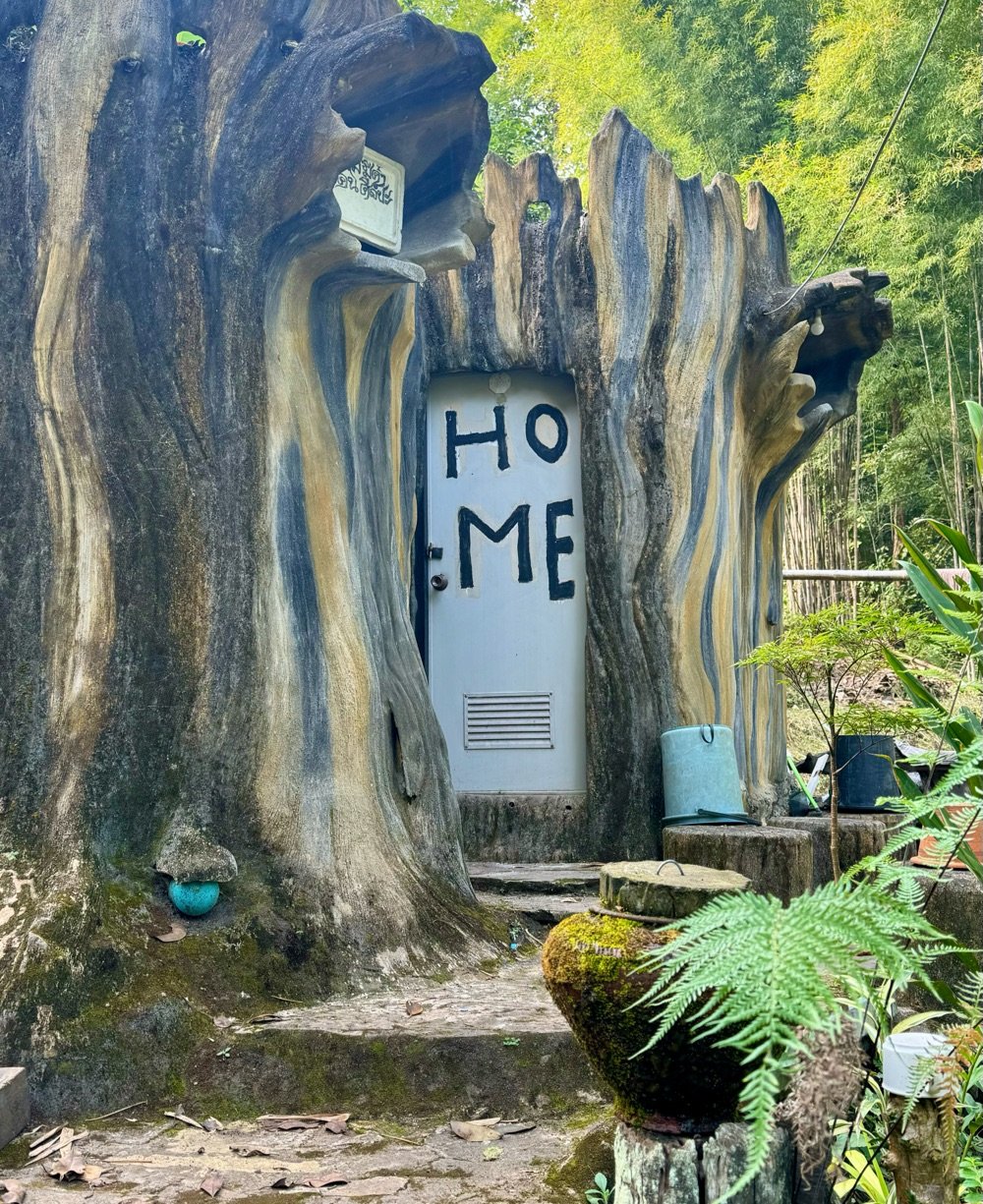
As part of the Walk and Talk I went on with 11 other people in Thailand last week, we had nightly discussions over dinner — one topic per meal for seven nights, with each topic suggested by one of the walkers. I’d known about this aspect of the trip for a few months and I had a hell of a time coming up with something. But on the first day of the trip, I thought of question that I posed to the group on our second night:
Where do you call home? And why?
I’ve been struggling with the concept of home for the past several years. NYC very much felt like home to me shortly after I moved there in 2003 in a way that Minneapolis and (especially) San Francisco hadn’t. Since moving to Vermont in 2016, I’ve never really felt at home here. But NYC isn’t home anymore…and neither is Wisconsin, where I grew up. Where do I want to go to find a home? Do I need to feel at home somewhere? Or is home simply wherever my bed/desk/stuff happens to be? I had more questions than answers around this issue and I was interested in how other people in the group, which included folks that had lived and travelled all over the world, would answer the question.
So, I put the same question to you if you feel like sharing your perspective: Where do you call home? And why?
Science magazine’s 2023 Breakthrough of the Year: GLP-1 drugs like Ozempic and Wegovy.
Always Interesting: “52 Things I Learned in 2023”
At the end of each year, I look forward to Tom Whitwell’s annual list of what he learned over the past 12 months. Here are some of my favorites from 2023’s installment:
6. The US Defense Department earns $100m/year operating slot machines used by soldiers on their bases. [Gabby Means]
8. A specialness spiral is when you wait for the perfect time to use something, then end up never using it at all. “An item that started out very ordinary, through repeated lack of use eventually becomes … seen more as a treasure” [Jonah Berger & Jacqueline Rifkin]
13. Humans are now roughly as tall as we were 12,000 years ago. 4,000 years ago, the average man was 5’4”. [Michael Hermanussen]
22. Hookworm infestation might be a cure for hay fever. [Helen Thompson]
31. Washboard sales went up 57% during the pandemic, inspired by “fears of societal collapse and limited laundry service”, although 40% are sold as percussion instruments. [Kris Maher]
I’ve got my own list that I’ll publish in the next week or two, so look out for that.
‘Tis the season: How to Make Your Own Die Hard Christmas Tree Ornament.
Giorgia Lupi makes infographics to help make sense of her illness: 1,374 Days: My Life With Long Covid. “Always in the back of my mind is the fear that I will never again experience the uncomplicated, illness-free joy of the life I used to have.”
Let’s Take a Journey Through the Secret Queer History of Studio Ghibli Films. “When Ponyo takes that desire [to be human] into her own fins, it’s empowering for her and us alike to see body and soul align with such abundantly queer joy.”
One Year Back
While I was travelling earlier this month, I missed observing the one-year anniversary of my return from a 7-month sabbatical1 and I wanted to briefly circle back to it.
I still haven’t written too much about what I did and didn’t do during my time away — I thought I would but found I didn’t have a whole lot to say about it. The truth is I’m still in the process of, uh, processing it. But it’s clear to me that the extended time off was an incredible gift that has revitalized me — I’m really enjoying my work here and have great plans for the future that I can’t wait to get going on.
So anyway, I just wanted to say thank you again to my readers and members for your support and for trusting that the end result of such a long break would be worth it (when even I was skeptical about it). In an email after she finished her recent guest editing stint, Edith told me “You have the best readers!” I sure do and I feel very lucky for it.
- I still cannot spell “sabbatical” correctly the first time. Apparently it has two Bs and only one T?? ↩
Craig Mod recaps the Thailand walk and talk we did last week. “Our sweat had sweat. We were a moving swamp. The fabric bits on our backpacks had turned sentient. I wanted to apply bleach atop my sunscreen.”
Liz Danzico with a lovely write-up of the walk and talk we participated in last week in Thailand. “Empathy means that you travel out of yourself a little or expand.”
Do Elephants Have Souls? “However, given their mental and emotional chops and awareness of mortality especially, who is to say that they don’t have some sense of the metaphysical?”
Popular Dystopian Fiction If It Were Describing 2023. “The Children of Men — The global birth rate craters not because of environmental pollution but because no one on Earth can afford to have a kid anymore.”
Kumataro Ito’s Illustrations of Nudibranchs from the USS Albatross’ Philippine Expedition (ca. 1908). “The roughly 3,000 species in the family nudibranchia [come] in a delightful, dizzying array of shapes, patterns and colours.”
The Best Podcasts of 2023. I’ve been getting recs for The Big Dig from all sides. Leon Neyfakh & Jay Smooth’s Think Twice: Michael Jackson sounds fascinating as well. What podcasts have stood out for you this year?
A brief write-up by Derek Sivers of the walk & talk I did last week in northern Thailand.
From my friend Adriana X. Jacobs, “I put my doom into a love poem” is 8-bit video game that incorporates some of her poems. “If you find the neighbor’s garden, your afterlife will be extra sweet.”
Free, Well-Designed, Public Domain Ebooks

A group of volunteers at Standard Ebooks is producing well-formatted editions of public domain ebooks.
Standard Ebooks is a volunteer-driven project that produces new editions of public domain ebooks that are lovingly formatted, open source, free of U.S. copyright restrictions, and free of cost.
Ebook projects like Project Gutenberg transcribe ebooks and make them available for the widest number of reading devices. Standard Ebooks takes ebooks from sources like Project Gutenberg, formats and typesets them using a carefully designed and professional-grade style manual, fully proofreads and corrects them, and then builds them to create a new edition that takes advantage of state-of-the-art ereader and browser technology.
They do nice custom covers too. A quick browse reveals titles like The Sun Also Rises, Middlemarch, Winnie-the-Pooh, O Pioneers!, Anne of Green Gables, Uncle Tom’s Cabin, and lots of Shakespeare, Sherlock Holmes, and Agatha Christie.
A lovely holiday gift guide from Jodi Ettenberg, which includes this adorable spagetti monster colander.
Thanks to YouTube’s algorithmic elves for serving up this mini-GBBO episode with Trent Alexander-Arnold, Declan Rice, Kieran Trippier, and Jordan Henderson, who baked gingerbread footballers to be judged by Paul Hollywood.
Psst… I reopened ordering for the Kottke Hypertext Tee for the holidays! Get one for yourself or your favorite HTML fan.
Actor Andre Braugher has died at the age of 61. Aww man, I absolutely loved Braugher in Homicide: Life on the Street.
I’ve discovered a new word that describes my general approach to life: coddiwomple: to travel purposefully toward an as-yet-unknown destination. See also I’ve Never Had a Goal.
The National Lyrics or Things My Dad Says While Refusing to Check Google Maps? “I’d rather walk all the way home right now than to spend one more second in this place.”
From Alexandra Lange, Mark Lamster, and Carolina A. Miranda, it’s the always entertaining 2023 Architecture and Design Awards. Brutalism, Barbie, Beyoncé, Breuer, Bilbao, and lots of other things that don’t start with B.
Hey, just wanted to re-up the 2023 Kottke Holiday Gift Guide — I think most things will still ship before Xmas.
Thanks, and Bye!

Jason will be back tomorrow, so this is my last post. Thanks for having me, it’s been a ton of fun! I would even describe it as life-changing, for me. I know I probably posted too much kid stuff, but if Jason ever has me back, I promise to try to be more expansive. I’m very much looking forward to hearing about his trip, should he want to write about it.
If you’d like, you can keep in touch with me through my newsletter, Instagram, or email. Thanks again for reading, and happy holidays!
Turtles (Comic)
From 2022.

Playing the SpiderHarp
“SpiderHarp started as a large-scale model of an orb spider’s web, with the aim of uncovering the mystery of how spiders sense … vibrations and how it translates into information the spider uses to localize activity on its web.” A recent Oregon Public Broadcasting story [via mefi] led me to this cool video of the SpiderHarp in action. More SpiderHarp here.
Full Moon Haiku Cards
Since May, I’ve been collaborating with a friend of mine, Barry Kuhar, to make “Full Moon Haiku Cards,” themed for each month’s full moon. He writes a haiku (or a haiku-inspired poem) for the inside, I draw the cover, and we sell them at a local restaurant. When the cycle is finished, we plan to offer them as a full set. (Thirteen cards, including the Blue Moon.) On January 25, if all goes according to plan, we’ll be reading from/showing the cards at the Rensselaerville Library, in case anyone is in the area (upstate NY).
I wanted to share the covers and poems because I love them, but also to recommend the act of just getting your own (or your kids’) drawings printed on cards, because it’s really easy and fun. I get the moon cards printed at Albany’s Modern Press, but I’ve also had good experiences using the online services Moo and Smartpress.
Barry and I still have a few more to go (coming up are the Wolf, Snow, Worm, and Pink Moons, before we’re back at the Flower Moon), but here’s what we’ve got so far:

The finished cards end up looking like this:

Diary Comics, Nov. 13-15
Final installment of this sampling from my journal! I’m not sure if it was a success, but it was interesting for me. Thank you for humoring!


“Five sweaters to knit for a little girl.” My faves are Nos. 1 and 2. I’d also recommend Mae (for babies). And the Marieke (Little) is on my list, too, although I haven’t tried it yet. Likewise this Loon Pullover. And this Paul Klee Sweater!
“This family with young kids loves to entertain, so they walled off the basement completely, The Cask of Amontillado-style, to keep the children from coming up and asking for things or firing Nerf guns into the hostess’ famous bœuf bourguignon.” That’s from today’s installment of Evil Witches, a funny/useful parenting newsletter by Claire Zulkey.
This is perhaps a little specific, but since I’m expecting Baby No. 2 in about two weeks, and we have a two-year-old at home, I found this Cup of Jo post helpful and reassuring: “Going From One Kid to Two.” Especially this bit from the comments: “Very few people have two young kids because they’re excited about having a newborn and a toddler at the same time. The payoff comes later.”
More Christmas Music Recs
“Good King Wenceslas” is my favorite carol, and I love this version by the Choir of St. John’s College, Cambridge, from their 1974 album. (However, I also love every version I’ve ever heard.)
The Academy of St. Martin in the Fields, led by Neville Marriner, has a wonderful album that I return to whenever I can’t think of what to listen to: 1994’s Christmas With the Academy [spotify].
And I grew up going to the yearly Christmas Revels concert/play in Cambridge, MA, and while nothing beats the live shows, I also love their albums, especially this spirited 1978 one: The Christmas Revels: In Celebration of the Winter Solstice [spotify]. The Revels also feature the “Abbots Bromley Horn Dance” in every show, and seeing it live usually sends chills up my spine:
Edith’s Best Running Gear of 2020-2023

I appreciate Wirecutter’s “Best Running Gear of 2023” post — likewise their “Cold-Weather Running” recs.
For what it’s worth, the best running items I own are Asics shoes, Lululemon bras, inexpensive Saucony socks, a light Champion vest, cheap Amazon shorts that apparently no longer exist (Baleaf), a nice Ciele running hat (in a color combo that’s no longer available, but this one comes close), and nice Tracksmith pullovers. Also a FlipBelt, for phone-carrying; the Strava app; and The Half Marathoner (newsletter), for personal stories and cool running-related links.
The items that give me the most pleasure are silly mermaid-print leggings, bright Janji artist-collaboration shorts, and colorful Tracksmith shorts (on sale in a color combo that’s no longer available — marigold orange with flame-red fluting).
I was also tempted by Oiselle’s bridal line, but it was not to be, and I see that they are no longer offering it.
Socials & More