

The Simpsons Library


The Simpsons Library Instagram account has been documenting all of the books, magazines, and other printed matter that has appeared on the long-running sitcom.

This site is made possible by member support. 💞
Big thanks to Arcustech for hosting the site and offering amazing tech support.
When you buy through links on kottke.org, I may earn an affiliate commission. Thanks for supporting the site!
kottke.org. home of fine hypertext products since 1998.
Beloved by 86.47% of the web.
The Simpsons Library Instagram account has been documenting all of the books, magazines, and other printed matter that has appeared on the long-running sitcom.
In these tantalizingly short videos, legendary producer Butch Vig details how the songs on Nirvana’s 1991 breakthrough album Nevermind came together. About Smells Like Teen Spirit, Vig says:
Here comes the guitar solo. He basically copied the vocal melody instead of trying to come up with something punky or frantic or strangled guitar like he usually did. He just copied the exact vocal melody and it works really well.
You can find the breakdowns for Teen Spirit and Drain You embedded above and here are Something In The Way, In Bloom, and Polly. Bonus: Vig describes hearing Smells Like Teen Spirit in person for the first time. (via open culture)
Update: Here’s the whole documentary from which these clips were pulled. (via @tape)
Parents in Barcelona are cycling with their children to school en masse – they’re calling it bicibús (bike bus). “What a simple, light-weight way to convert existing streets into bike infrastructure.”
Korean artist Lee Sangsoo makes these minimalist yet expressive sculptures of animals, people, and objects. And they’re perhaps larger than you expect.


I know I’ve said this probably 100 times before, but I’m continually amazed at how, with just a few strokes of a brush or twists of metal, an artist can create something that’s both abstract and familiar. That beige and brown sculpture above…my brain took about 0.03 seconds to recognize that as a siamese cat. Artists hacking the human brain’s pattern recognition ability and us being delighted by it is the gift that keeps on giving. (via colossal)
How To Recognize When Tech Is Leading Us Down a ‘Slippery Slope’. Such arguments are often BS, but if technology makes something significantly cheaper/faster/easier and incentives for misuse are high, then maybe it’s time to pay attention.


For his new book, The Every, Dave Eggers and art director Sunra Thompson are doing 32 separate covers, with more to come “in perpetuity”.
Never one to shy away from pushing boundaries, Eggers teamed up with art director Sunra Thompson for the project, who discovered that the dust jacket printer they were using could run several cover designs on one sheet of paper at once, providing the means to print dozens of different versions at the same time. Thompson decided to exploit this printing feature, enlisting a boatload of artists to design a completely new version of The Every cover.
The hardcover version of the book featuring the 32+ designs will only be available on the McSweeney’s website and in independent bookstores, which doesn’t seem to include Bookshop.org. Amazon, says Eggers, can go pound sand.
“I don’t like bullies,” Eggers wrote in an email. “Amazon has been kicking sand in the face of independent bookstores for decades now.”
The novel follows a former forest ranger and tech skeptic, Delaney Wells, as she tries to take down a dangerous monopoly from the inside: a company called The Every, formed when the world’s most powerful e-commerce site merged with the biggest social media company/search engine.
“One of the themes of the book is the power of monopolies to dictate our choices, so it seemed a good opportunity to push back a bit against the monopoly, Amazon, that currently rules the book world,” he said. “So we started looking into how feasible it would be to make the hardcover available only through independent bookstores. Turns out it is very, very hard.”
How finger counting gives away your nationality. “In parts of the Middle East like Iran, they begin with the pinky, whereas in Japan they start with the fingers extended in an open palm, drawing them in to make a closed fist.”
The latest installment in the excellent Almost Famous series from the NY Times and Ben Proudfoot is about Devon Michael, who as a young actor was almost chosen to play Anakin Skywalker in Star Wars: The Phantom Menace.
Growing up, Michael had small roles in commercials, television shows and movies. At 9 years old, he understood that an opportunity like “Star Wars” could change his life. From 3,000, the producers narrowed it down to three, and soon Michael was at Skywalker Ranch doing a test screen with George Lucas and Natalie Portman.
It’s pretty poignant listening to Michael talk about the disappointment and disillusionment that followed his not getting chosen, as well as a different kind of hardship for Jake Lloyd, who was picked for the role.
The Art of Not Taking Things Personally. Emotional generosity (“the ability to see past behaviours that we don’t understand and proactively look for compassionate ways to explain them”) seems difficult to practice these days.
For his YouTube channel Listening In, Barnaby Martin analyzed the theme that Radiohead wrote for the 2015 Bond film Spectre, a song that he calls “one of the greatest Bond themes ever written”. Somewhat notoriously (at least around these parts), the producers rejected this theme in favor of a lukewarm one by Sam Smith.
After watching Martin’s video, you should watch the Spectre opening credits sequence with the Radiohead theme — it’s so much better than the theme they used in the film.
The Case for Quitting. “There is a significant penalty that comes with staying the course. Powering through is often passive. What you’re doing is avoiding the harder thing, which is confronting the uncertainty of change.”
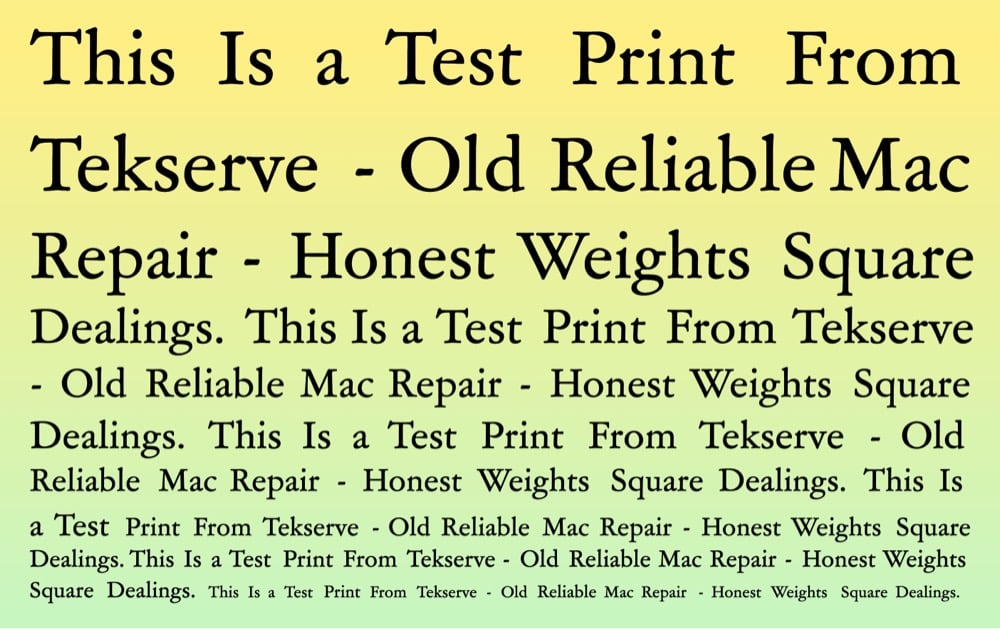
Ahhhh, The Verge has published an excerpt of Tamara Shopsin’s LaserWriter II, “a coming-of-age tale set in the legendary 90s indie NYC Mac repair shop TekServe — a voyage back in time to when the internet was new, when New York City was gritty, and when Apple made off-beat computers for weirdos”.
Joel explains that the LaserWriter II was discontinued almost ten years ago. But Tek always encourages people to fix them. Always. LaserWriter IIs are tanks, one of the most solid printers Apple ever made. The printer has only one design flaw, one thing that consistently breaks, and that flaw takes ten years to surface. Joel pauses for breath. Claire is on the edge of her seat.
He concludes, “The fan blades warp a little over time and suck in dust. This dust eventually gets into the optics and causes pages to ghost.”
Claire prints a test page from the LaserWriter II. The edges of the paper are bright white. They stipple to a black stripe of text in the center, in a kind of reverse ice cream sandwich.
Ghosting is a term used to cover a host of printing problems — double images, an image seen through the backside of the paper. Here Joel uses “ghost” to describe printing so faint it has not actually printed.
I recommend reading LaserWriter II, as well as Shopsin’s memoir Arbitrary Stupid Goal.
The Moon is very slowly ghosting the Earth. “About 600 million years from now, the moon will orbit far enough away that humankind will lose one of its oldest cosmic sights: total solar eclipses.”
Visualization of how the longest running TV shows were rated by viewers over time. IMDB rankings are notoriously inconsistent, but this is still interesting.
Using samples of chopped-down wood left behind by Viking explorers at their settlement in Newfoundland and known chemical markers of powerful solar storms in 993 AD, a group of scientists has determined the exact timing of the first-known visit of Europeans to North America: 1021 AD. If you’re keeping score at home, that’s 471 years before Columbus.
A team of scientists looked at wood found at the L’Anse aux Meadows Viking site. In three cases the trees had been physically cut down, and moreover, they were clearly cut with metal tools — Vikings had metal implements at the time, but indigenous people did not. The wood was all from different trees (one was fir, and another juniper, for example). The key parts here are that the wood was all from trees that had been alive for many decades, and all had their waney edge intact as well.
The scientists extracted 127 samples from the wood, and 83 rings were examined. They used two methods to secure dates. The first was to compare the amount of carbon-14 in each ring with known atmospheric amounts from the time. This gives a rough date for the waney edge of the wood. They also then looked for an anomalous spike in carbon-14 in an inner ring, knowing this would have come from the 993 A.D. event, and then simply counted the rings outward from there to get the date of the waney edge.
In all three samples the waney edge was dated to the same year: 1021 A.D. This would be incredibly unlikely to occur at random.
Outstanding science. It’s incredible how much of a time machine these analysis tools are. There’s so much we don’t know about people who lived 1000 years ago, but it’s astounding that we know anything at all, particularly precise dates like this.
Update: From this Ars Technica piece, some more information on the precision of the dating:
Based on the development stages of certain cells in the waney layer, Dee, Kuitems, and their colleagues say that one of the trees was cut down in the spring, while another was cut down in the summer or fall. The third tree’s final season couldn’t be identified because the cells had been damaged by a conservation treatment, but the results suggest that the Norse cut down these trees within a few months of each other in 1021.
That lends additional support to the other evidence that the Norse only stayed in Newfoundland for a few years.
“One would imagine the dates would have been different if the occupation period of the site was very long,” Dee told Ars. “However, the fact all three of our samples produced the same date does not, of course, mean the site was only occupied for one year. It may indeed have been occupied longer. But I think it is true to say our results support a short occupation.”
An interesting look by @zeynep of the unvaccinated in the US. A leading indicator is not politics or conspiracy thinking but regular access to healthcare and health insurance. For 65+ folks, Medicare access beats Fox News scaremongering.
In-N-Out is pushing back on SF’s vaccine mandate for indoor dining. “We refuse to become the vaccination police for any government.” Oh please…businesses enforce all sorts of govt rules related to customers – over 21 for alcohol, etc.
Oh, I’m excited for this one. I’m not saying The Great was the best show I’ve seen over the past couple of years, but it’s definitely one of the most fun and enjoyable. A synopsis:
The Great is a satirical, comedic drama about the rise of Catherine the Great from outsider to the longest reigning female ruler in Russia’s history. A fictionalized, fun and anachronistic story of an idealistic, romantic young girl, who arrives in Russia for an arranged marriage to the mercurial Emperor Peter. Hoping for love and sunshine, she finds instead a dangerous, depraved, backward world that she resolves to change. All she has to do is kill her husband, beat the church, baffle the military and get the court onside.
The Great was created by Tony McNamara, who co-wrote The Favourite — both have the same punchy, ribald dialogue. You can catch up on season one on Hulu while we wait for the season two premiere on Nov 19.
Ricky Jay’s collection of magical memorabilia is going up for auction later this month. “In keeping with his interest in fraud, for example, Jay also collected spirit photographs…”
“Facebook is planning to change its company name next week to reflect its focus on building the metaverse…” Metaverse? In this economy? Did they move April Fools to mid October?
The 75 Best Movies of the 1920s. Buster Keaton, Luis Buñuel, Fritz Lang, and Teinosuke Kinugasa all figure in the top 20.
When the TV watching experience moved from checking “your local listings” or TV Guide and surfing channels with your remote to scrolling through visual onscreen menus on streaming services, key art was born. Key art graphics are the images that identify shows in streaming menus — ok here, it’s just easier to show you:
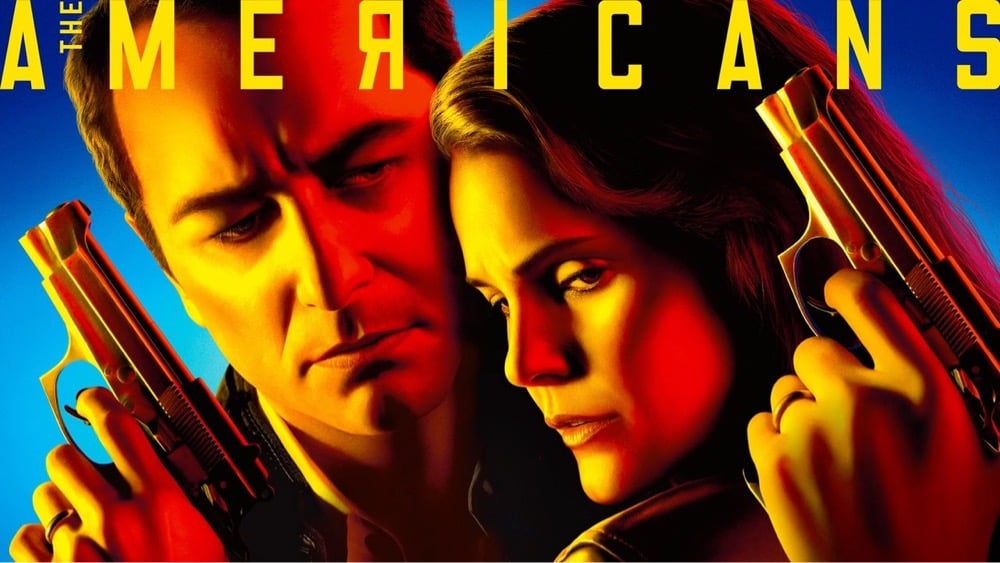
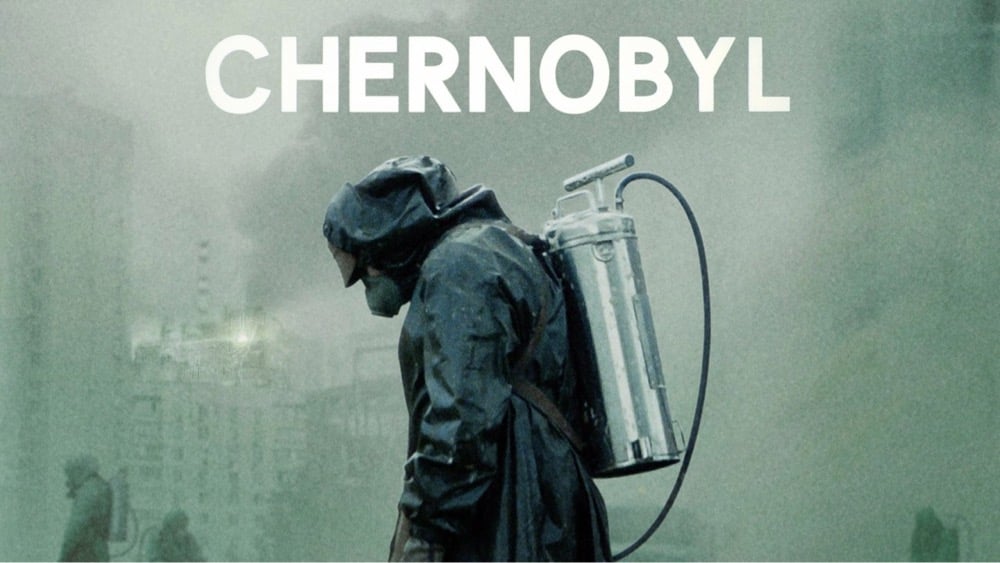
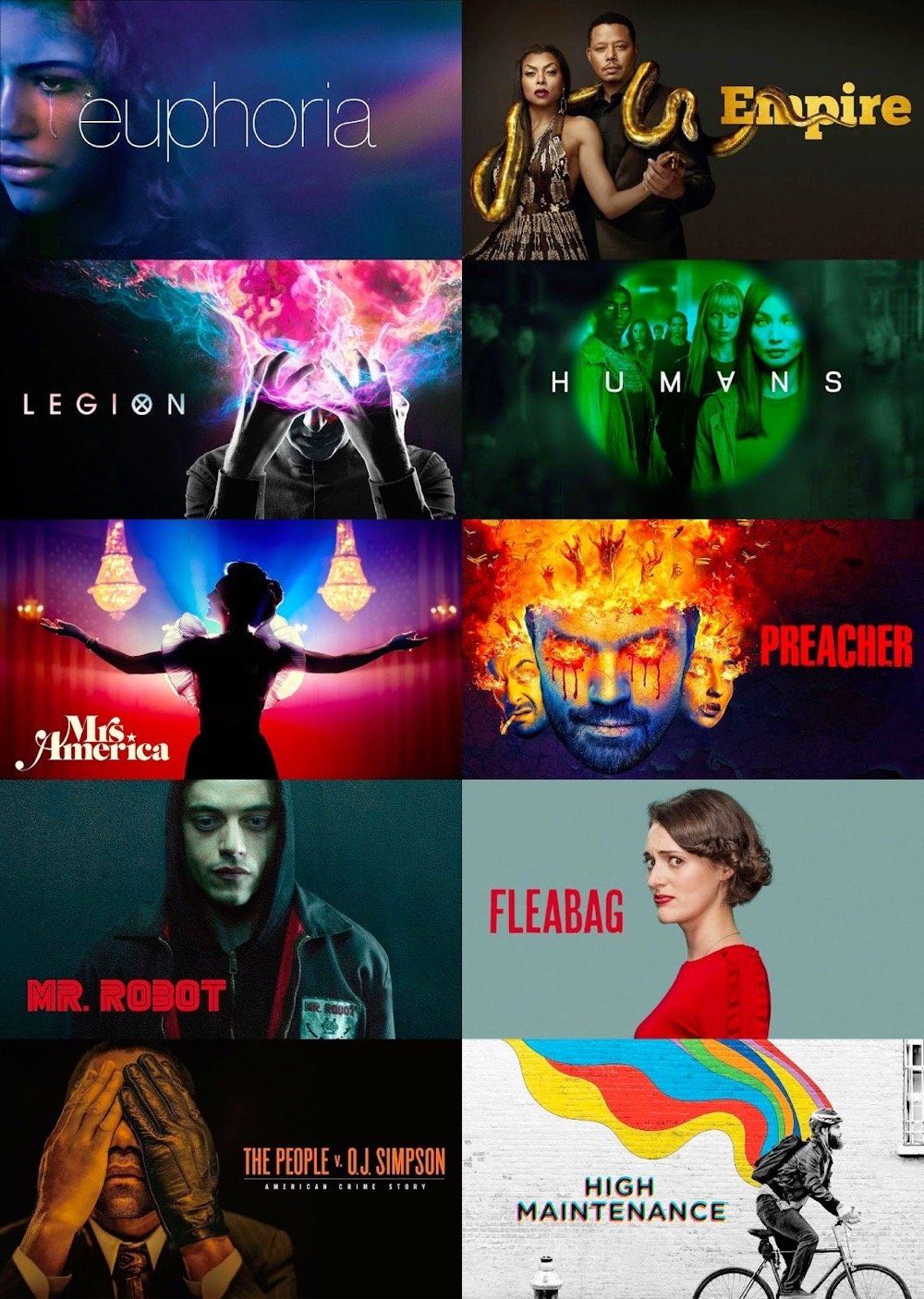
Like the best movie posters and book covers, these images are bold and simple promotional signifiers of a larger piece of media, but as Rex Sorgatz argues in today’s edition of Why is this interesting?, key art is its own thing with its own set of constraints and challenges.
Good key art is so evocative, so iconic, that it becomes the image that springs to mind whenever you think about a show:
One neglected characteristic ties all these images together: They are all horizontal.
It sounds trivial, but going wide helped differentiate TV key art as its own medium, distinct from book covers and movie posters. And because these images appear on streaming platforms, they are unencumbered by other marketing copy, like taglines, cast and credits, and multifarious blurbs.
There is a simple purity to key art.
Sorgatz maintains an archive of his favorite key art here.
For the last nine months, NASA’s Perseverance rover has been rolling around on Mars taking photos and doing science. It’s also been recording audio of its environment with a pair of microphones and in this video, a pair of NASA scientists share some of those recordings and what we might learn about Mars from them.
This is one of my absolute favorite sounds. This is the sound of a helicopter flying on Mars. We used this sound to actually understand the propagation of sound in general through the Martian atmosphere, and it turns out that we were totally wrong with our models. The Martian atmosphere can propagate sound a lot further than we thought it could.
And surprisingly for me, that’s my friend Nina in the video! (We eclipse-chased together in 2017.) I knew she was working on the rovers but didn’t know she was going to pop up in this video I found on Twitter this morning. Fun!
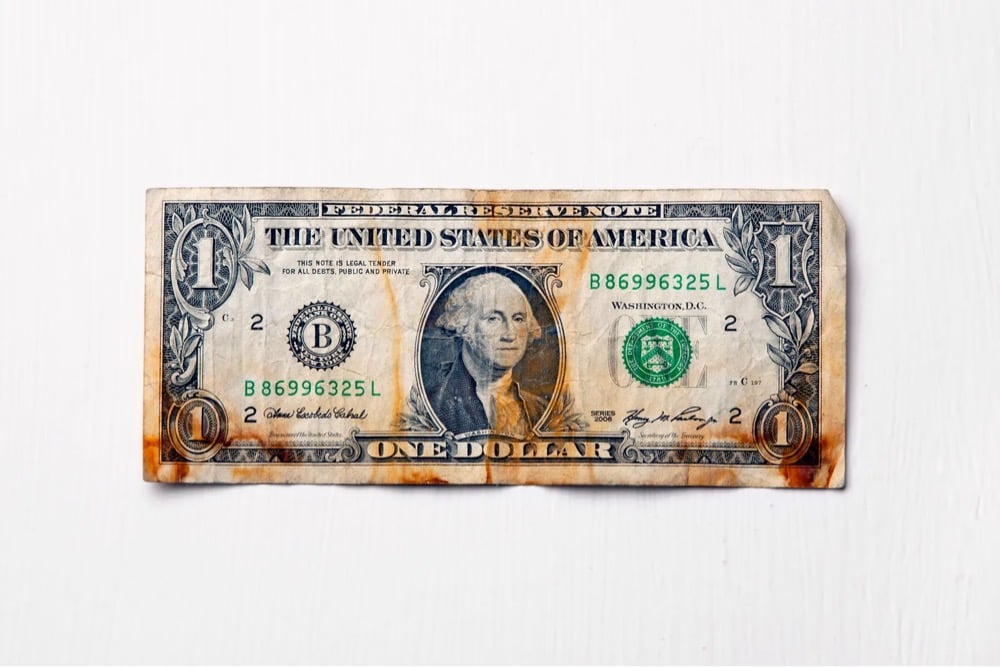
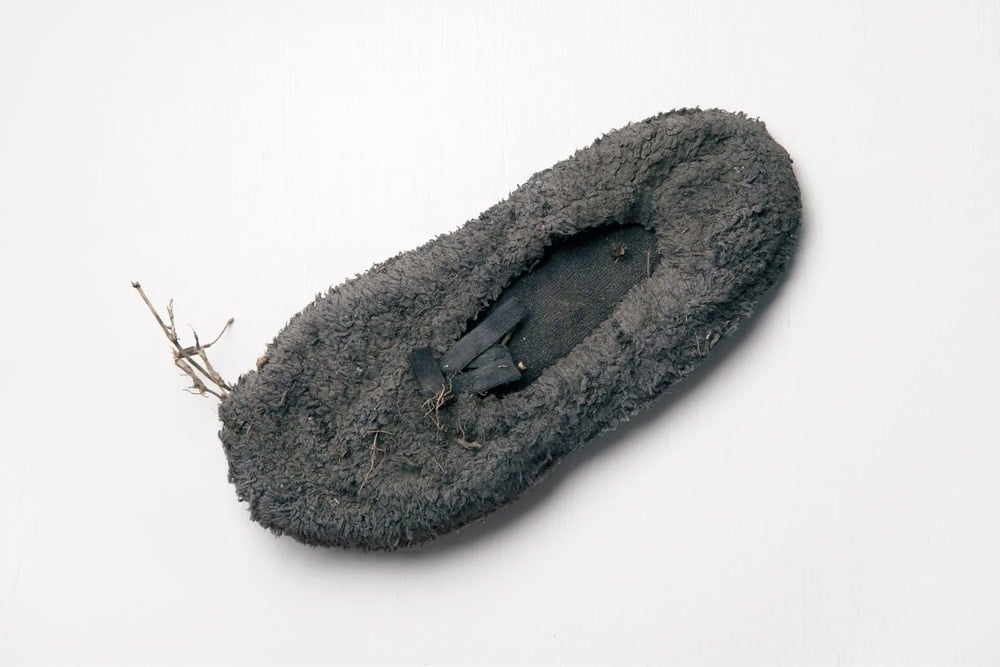
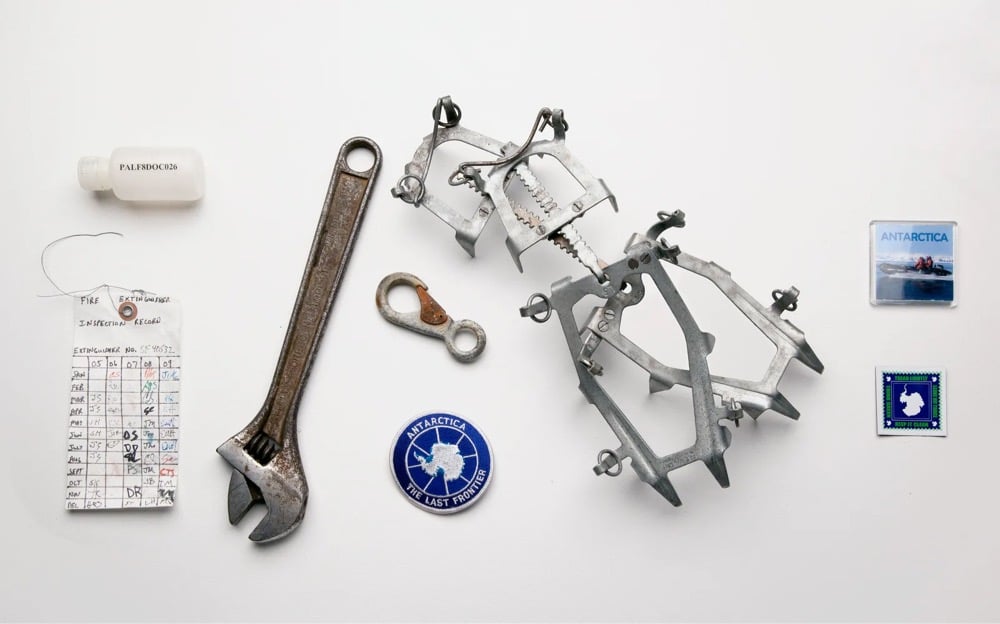
For the last ten years, artist Amy Balkin has been collecting artifacts related to the climate crisis. The collection is called A People’s Archive of Sinking and Melting.
A People’s Archive of Sinking and Melting is a collection of materials contributed by people living in places that may disappear because of the combined physical, political, and economic impacts of climate change, primarily sea level rise, erosion, desertification, and glacial melting.
From a piece about the archive in the New Yorker:
There is an incredible pathos to Balkin’s collection of things. In the light of imagined future eyes, tinged by loss, all manner of things become relevant that would otherwise pass unnoticed. Even two beer-bottle caps, in this context, are mesmerizing. Both are from places that are threatened with a certain kind of disappearance, or, at the very least, radical change; through their corrosion and fading, they seemed to foretell this disappearance somehow. And yet, paradoxically, looking at them, I knew that these pieces of metal would likely outlast me. A future person might see them in a museum, displayed with a label that reads “Beer-bottle caps, common in this time.” But what would that person’s world be like? What would be lost, between now and then, even as these fragments are shored up against ruin?
You can contribute to the archive — instructions for sending in an artifact are here.
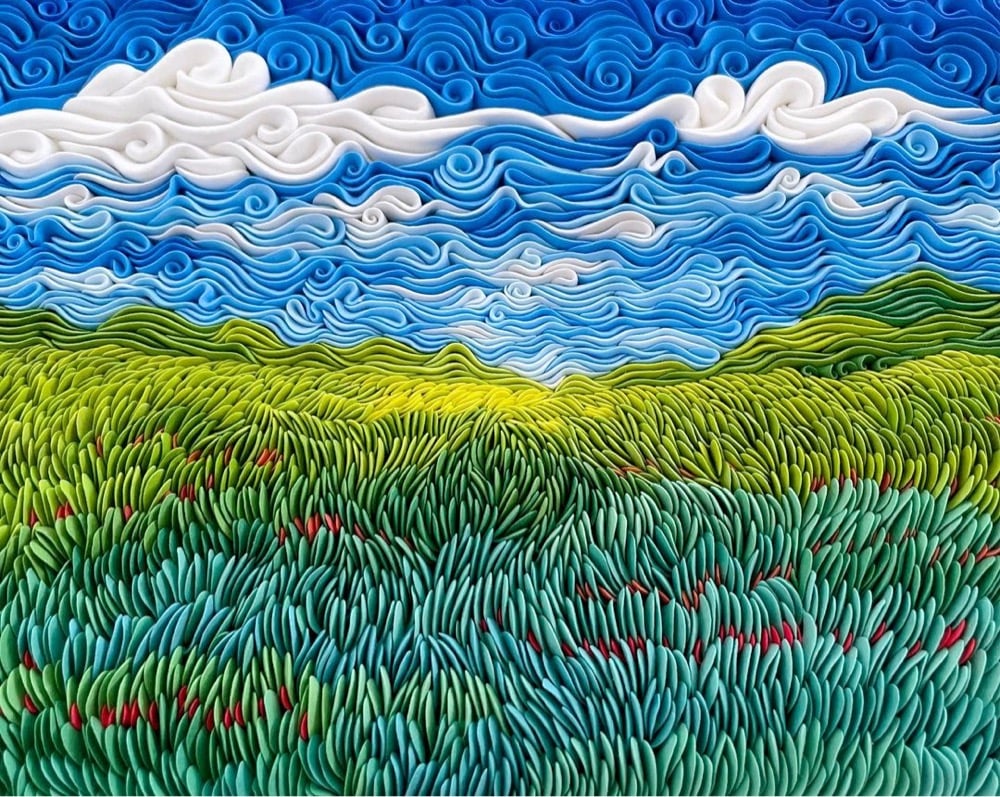
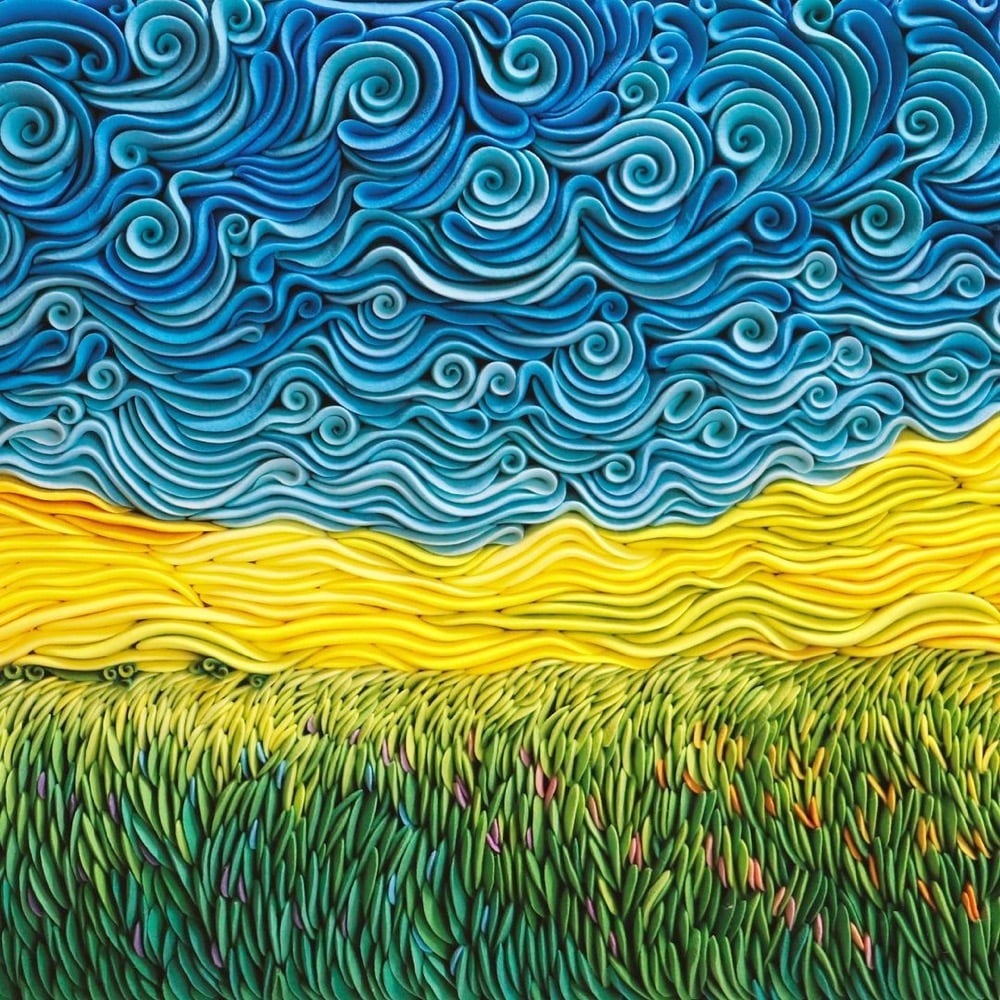
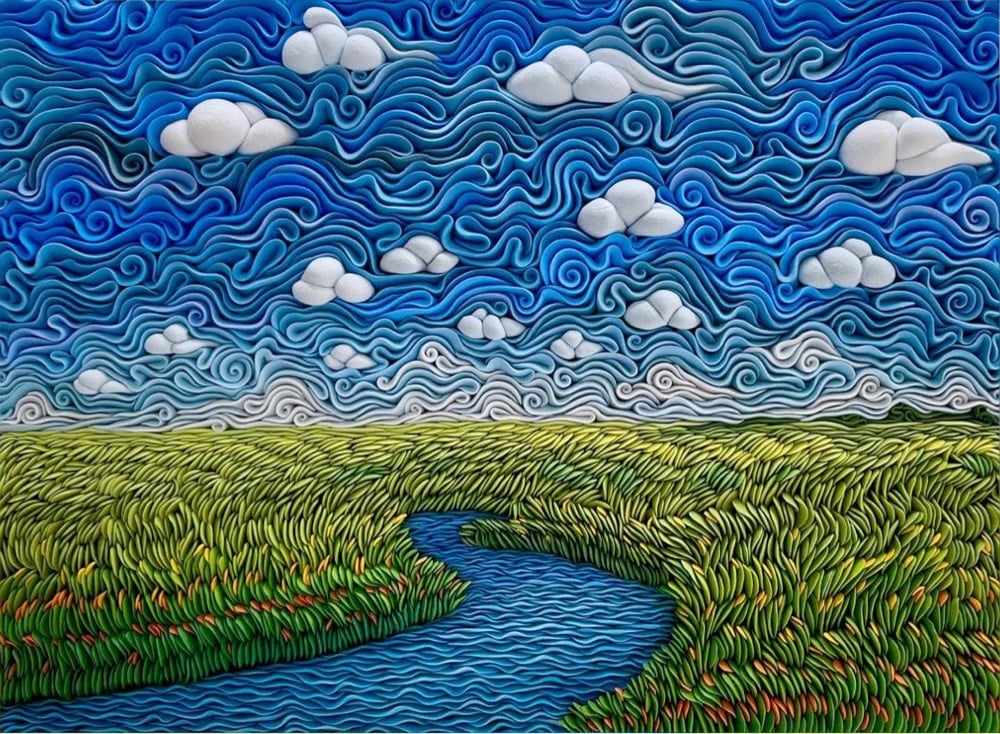
Alisa Lariushkina uses air-dry clay to make swirling sculptures that look like landscape paintings. Lariushkina’s patterns and color palette evoke the style of Post-Impressionist painters — indeed she’s even recreated van Gogh’s Starry Night in clay. (via my modern met)
The Calm Line. “A new hotline in Bogotá takes calls from men struggling with jealousy, control and fear – and challenges long-held assumptions about masculinity.”
Some of the oddest and most interesting electric vehicles for sale on Alibaba, including a fake Lamborghini, a 60mph standing scooter (of death!), a duck boat, a mobile house, and a submarine.
From Storythings, a weekly newsletter called Formats Unpacked that takes a close look at different ways to tell stories and package content. Over the past year and a half, they have covered formats like Hot Ones:
The special magic ingredient — the spice in the sauce, if you will — is the way that each 20+ minute interview is guaranteed to become more compelling as it goes along. How many interview shows can you say that about?
The questions posed by the host, Sean Evans, are well researched softballs. The guests would all be having a comfortable enough time if they weren’t having to endure increasing levels of physical pain.
Army training prepares you for this sort of thing, media training not so much. By the time you reach Da Bomb — the scorching hot and apparently not-even-that-tasty 8th sauce — it’s hard not to let your personality show through.
Ze’s ideas were too small for TV, but perfectly in size and shape for the internet. He was probably too weird for TV too, which made him the perfect host for a daily internet video show in the era of MySpace, Bebo and early Youtube, when the web was still weird and unformed. Slate described him as a ‘Laptop Celebrity’ at the time, because the idea of YouTuber didn’t even exist yet.
Each story consists of nothing more than a single picture with a single quote, but it’s just enough to make the viewer feel as though the protagonist is speaking directly to them. We’re spared any unnecessary story arcs, dramatic backdrops, or interviewer intrusions. What we get is a story that someone had to get off their chest that day. Even if it means telling it to a stranger — in this instance Brandon Stanton, a six-foot-four photographer and blogger. Perhaps this tells us something about our desire for human connection, especially in big cities, where despite being surrounded by millions of people, it’s easy to feel alone or disconnected.
And the singles chart:
Every week, the chart created new stories — acts that were making their debut, roaring up the charts, being replaced by hotter new acts, or reaching the glorious summit of number one. The charts were an ongoing soap opera for pop fans, a mythic world in which their gods fought each other for supremacy.
You can check out the archive and subscribe here.
A fully vaccinated Colin Powell, who had blood cancer, has died of Covid-19. “Powell’s death doesn’t illustrate the futility of vaccines…but the importance of everyone getting vaccinated to protect society’s most vulnerable.”
Last week, William Shatner finally got a chance to boldly go where he hadn’t actually been before: into space. And upon returning from the 11-minute flight, the 90-year-old TV spaceship captain had come down with more than a touch of the Overview Effect. From the transcript of his post-flight remarks:
If…. Everybody in the world needs to do this…
Everybody in the world needs to see the…” (begins to cry) “…It was unbelievable, unbelievable. I mean, you know the little things… weightlessness… to see the blue color just.. go WHIP by!!! And now you’re staring into blackness. That’s the thing… the covering of blue… this sheet, this blanket, this comforter of blue that we have around us. We think, ‘Oh, that’s blue the sky!’
And then suddenly you shoot up through it all of the sudden… as if you whip off the sheet off you when you are asleep and you’re looking into blackness. Into BLACK UGLINESS… And you look down and there’s the blue down there… and the black up there and it’s… it’s just… there is Mother Earth… and comfort… and there is ….is there death? I don’t know! Is that death? Is that the way death is?? WOOP, and it’s gone! Jesus…
It was so moving to me… this experience …it’s something unbelievable. You see it… yeah, you know… weightlessness… my stomach went up and I thought, ‘God, this is so weird…’ but not as weird as the covering of blue… this is what I never expected. Oh, it’s one thing to say, ‘Oh… the sky and the thing and the… gradual…’ It’s all true… but what isn’t true… what is unknown until you do it is… is this pillow.. There’s this soft blue… look at the the beauty of that color! And it’s so THIN! And you’re through it in an instant…
He continued:
I don’t know, I can’t even begin to express what I …what I would love to do is to communicate as much as possible … the jeopardy… the the the moment you see how… The vulnerability of everything, it’s so… small. This AIR which is keeping us alive is thinner than your skin! It’s… it’s a… it’s a sliver! It’s immeasurably small when you think in terms of the Universe! It’s negligible! This air… Mars doesn’t have it! No… nothing… I mean, this…
They should have sent a poet. Jokes aside, I’m sure that if I’d just returned from a flight into space, I’d would be equally flummoxed and unable to articulate what I’d just experienced. Hell, I couldn’t even talk after seeing a solar eclipse.
Ibram X. Kendi on The Second Assassination of Martin Luther King Jr. Ever since his death, King’s work has been twisted into justifying actions and agendas he strongly opposed.



Always great to check back in on the work of Me Kyeoung Lee, who has been drawing delicate & detailed portraits of convenience stores from around Korea. Check out her Instagram for more work and some behind-the-scenes — I was surprised at how large some of her drawings are. (via colossal)
Others (like Timothy Snyder) have been saying this for months and years, but in a succinct 8-minute monologue, Bill Maher1 lays out what’s going to happen over the next three years that will pave the way for Donald Trump and the Republicans to take back the White House and set up the biggest political crisis in the United States since the Civil War.
A document came to light a few weeks ago called the Eastman Memo, which was basically a blueprint prepared for Trump on how he could steal the election after he lost it in November 2020. It outlined a plan for overturning the election by claiming that seven states actually had competing state slates of electors, which while not even remotely true, would have given Mike Pence the excuse to throw out those states and thus hand the election to Trump.
But of course the plan required election officials in those states to go along. Trump thought the ones who were Republican would. Most did not. And that’s what he’s been working on fixing ever since.
You might have strong feelings about Bill Maher. Ok, fine. But he’s right about this.↩
Folks who live on 15th Avenue in the Richmond district of San Francisco report that an abnormal number of Google’s self-driving cars are ending up swirling around at the end of their street.
“I noticed it while I was sleeping,” says Jennifer King. “I awoke to a strange hum and I thought there was a spacecraft outside my bedroom window.”
The visitors Jennifer King is talking about don’t just come at night. They come all day, right to the end of 15th Avenue, where there’s nothing else to do but make some kind of multi-point turn and head out the way they came in. Not long after that car is gone, there will be another, which will make the same turn and leave, before another car shows up and does the exact same thing. And while there are some pauses, it never really stops.
“There are some days where it can be up to 50,” King says of the Waymo count. “It’s literally every five minutes. And we’re all working from home, so this is what we hear.”
(via geoff manaugh)

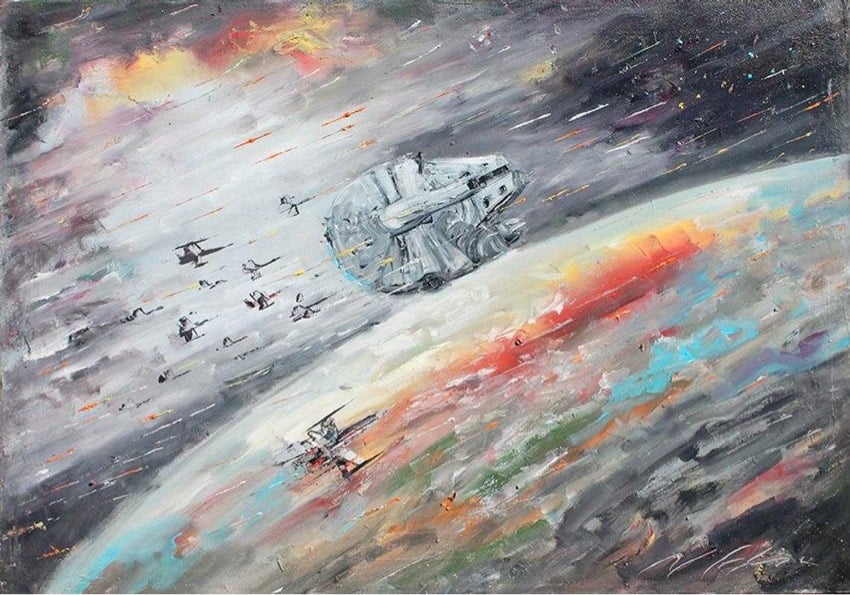
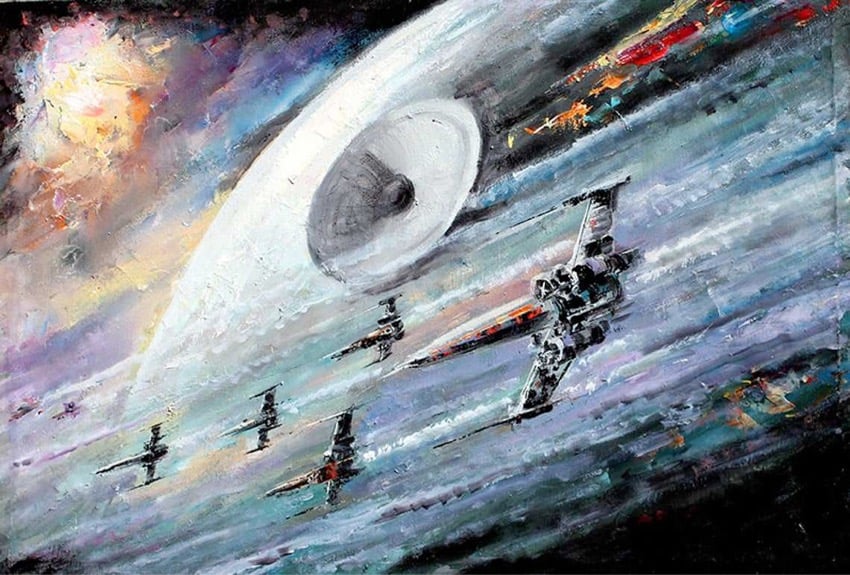
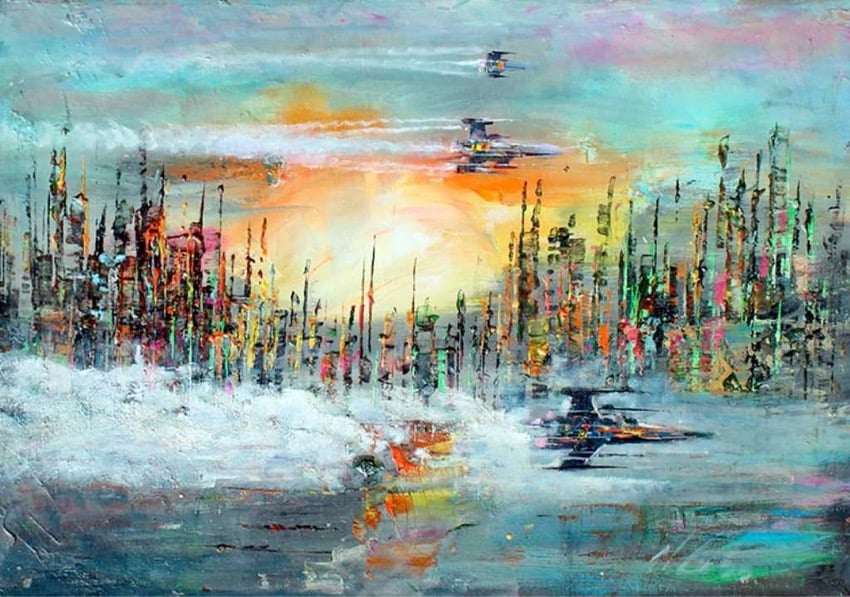
Check out these expressive impressionist oil paintings of scenes from Star Wars by Naci Caba. (He also does paintings of Lord of the Rings and Harry Potter.) Seeing futuristic sci-fi rendered in this medium is giving me a bit of cognitive dissonance.
You can buy prints and even the original oil paintings in his shop or at Etsy. (via digg)
The 200 Best Albums of the Last 25 Years, According to Pitchfork Readers. Radiohead, Kanye, Kendrick, Lorde, LCD Soundsystem, Wilco, and Fiona Apple are all in the top 25.
If you, like me, haven’t had the opportunity to visit the Giza Pyramid Complex outside of Cairo, Egypt, this 2-hour HD walking tour is probably the next best thing — it feels like walking around about as much as a video can. Strap on those headphones for the full immersive experience. (via open culture)
A series of simulations that show how tiny differences in how women are undervalued in the workplace result in huge disparities in executive representation. It’s basically the idea of compounding interest working against them.
Here are the reasons for the “supply chain issues” plaguing the global economy. “A combination of Covid and bad luck has contributed to a complex mess that has no parallel in recent economic history.”
This is 8 hours of an astronaut floating in a colorful galactic sea accompanied by ambient music, i.e. the sort of thing you would have experienced in the chill-out room at a rave in the 90s but is now selling for $70K even though it’s free? Anyway, it’s relaxing and mesmerizing. See also Hours and Hours of Relaxing & Meditative Videos. (via moss & fog)
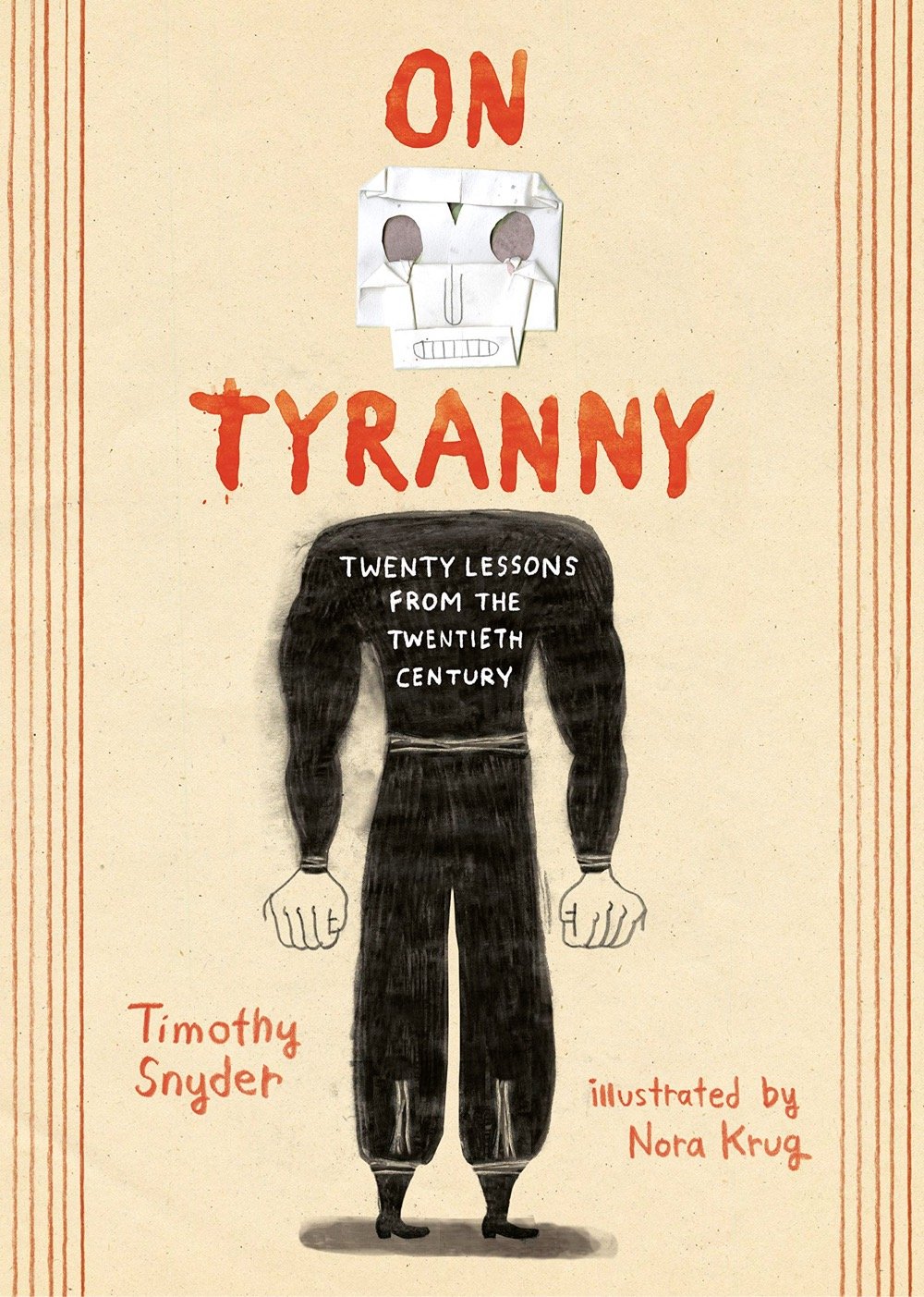
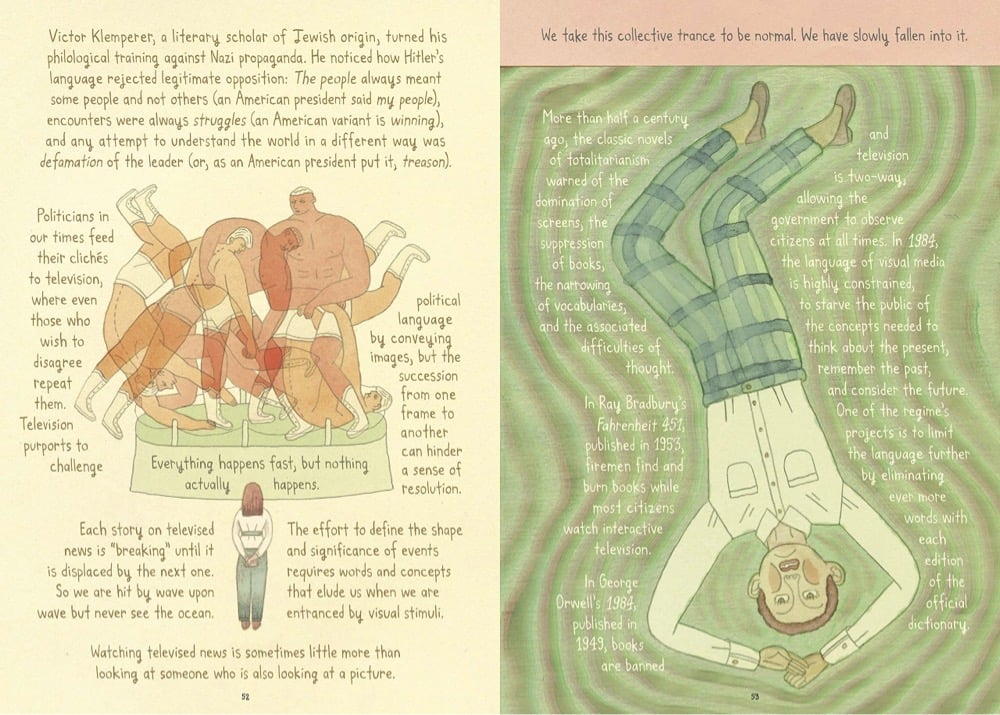
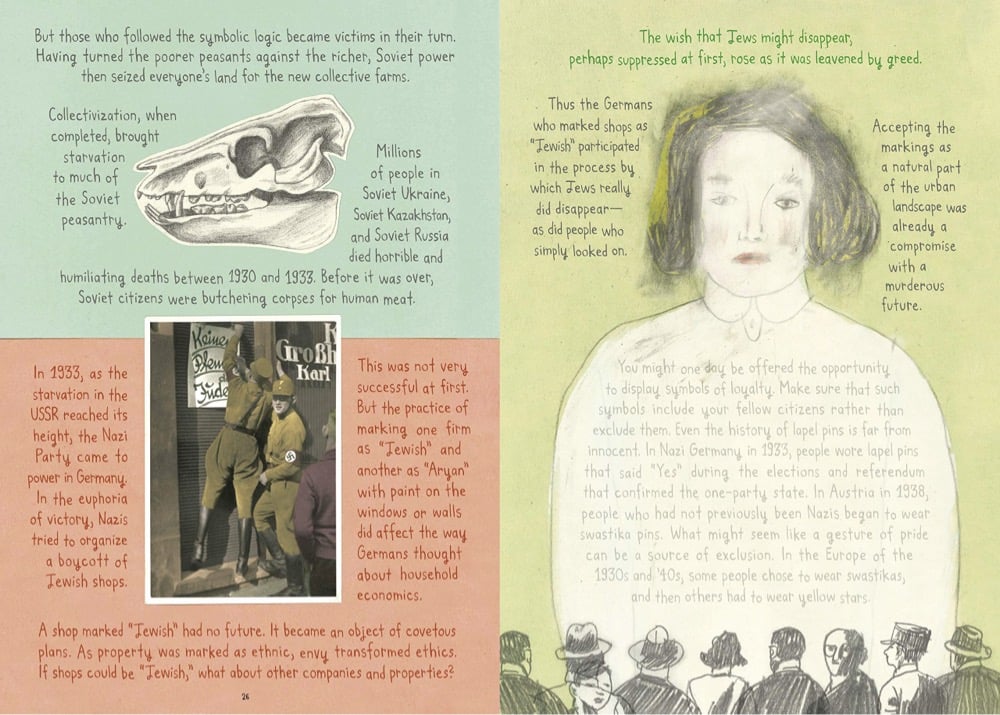
Originally written as a Facebook post in the wake of the 2016 election, Timothy Snyder’s On Tyranny: Twenty Lessons from the Twentieth Century went on to become a bestseller and a prescient warning on what was to come for America. Now, a graphic edition of On Tyranny has been released, designed and illustrated by Nora Krug. From Steven Heller’s piece on the book in Print:
Krug’s goal for this project was to use her medium to echo Snyder’s call for action. “While it was important to me to create images that would highlight the contemporary relevance of Snyder’s message,” she writes, “the use of historic images was clearly essential. At moments in the book that refer to a particular event in time — such as this one about Hitler’s annexation of Austria, when Austrian Nazis captured Jews and forced them to scrub the streets clean — I felt that rather than showing my own visual representation of that event, it was more powerful to feature a historic photograph because of the immediacy of the medium that would make that moment in history come to life.”
Combining Krug’s drawings with historic materials gave her the license to contrast the documentary with the imagined, the factual with the poetic, and to create a narrative tension that emphasizes historical relationships. “More importantly,” she explains, “this combination of mediums allows me to admit to the fact that we don’t exist in a vacuum, that we can only exist in relationship to the past, that everything we think and feel is thought and felt in reference to it, that our future is deeply rooted in our history, and that we will always be active contributors to shaping how the past is viewed and what our future will look like.”
You can order the graphic version of On Tyranny here but it seems to be backordered in most places.
Netflix & David Fincher are releasing a new series of “visual essays for the love of cinema”. I’m excited because Tony Zhou & Taylor Ramos of Every Frame a Painting are involved!


The Natural History Museum in London has announced the winners of the 2021 Wildlife Photographer of the Year contest. Photos above are by Jonny Armstrong, Buddhilini de Soyza, Lasse Kurkela, and Vidyun R Hebbar.
In a two-part video series called Trans Dudes From History, Jackson Bird tells us about some historical people who were probably transgender or transmasculine.
Trans people have always existed, even if they didn’t have the same language we do now and even if most history books won’t tell you about them. In this first volume of my Trans Dudes From History series, I give an introduction to talking about people from history who maybe could’ve been trans and share the profiles of three people — a Spanish conquistador, a stagecoach driver, and a bronco buster — who all transgressed gender in some way.
The introduction in the first video (embedded above) — about history and how we even know people were trans before the language around that was even invented — is really interesting. Part two of Trans Dudes From History is right here.
On self-managed abortion using mail order medication. “Even in states with the strictest abortion laws, pregnant people have a safe, inexpensive option to terminate their pregnancies. But few know about it.”
You’ve probably seen it: a dual-tubed generator console that’s appeared in movies and TV shows like Star Trek (all of them, pretty much), Knight Rider, V, Austin Powers, The Last Starfighter, and even Airplane II. This prop was originally built in the 70s and in the decades since has been placed in scenes requiring an impressive piece of high-tech equipment. The video above is a compilation of scenes in which the console has appeared (parts two & three of the compilation).
The fossil record has provided us with so much information about plants, animals, and organisms that lived hundreds, thousands, millions, and even billions of years ago. But we are actually only seeing evidence of a tiny fraction of the species that lived then and even for those we do know about, there’s often much we still don’t know. Traditionally, dinosaurs have been depicted as drab and often terrible lizards but recent finds of soft tissues (skin, feathers, etc.) and an increased sense of imagination based on our current vibrant biodiversity has people thinking differently about how they looked and behaved.
Socials & More