
Advertise here with Carbon Ads
This site is made possible by member support. 💞
Big thanks to Arcustech for hosting the site and offering amazing tech support.
When you buy through links on kottke.org, I may earn an affiliate commission. Thanks for supporting the site!
kottke.org. home of fine hypertext products since 1998.
Beloved by 86.47% of the web.
Entries for December 2020
A look at life in countries that have controlled Covid-19 very well. “I don’t feel anxious about catching the virus. I don’t feel scared about not wearing a mask to public places. For lack of a better word, it’s really normal.”
Inside the World of Professional Tag
This look inside the world of professional tag — the court setup, the vocabulary, the strategy — by Phil Edwards was the perfect low-stakes thing I needed to watch today. If you’d like to know more after watching, you can check out the World Chase Tag site, including the rules and terminology of the game (which has too many trademarked terms for my taste) or some competition videos (this compilation of the best moves from the last world championships is probably a good place to start).
The Chart of Doom: Ranking Apocalypses
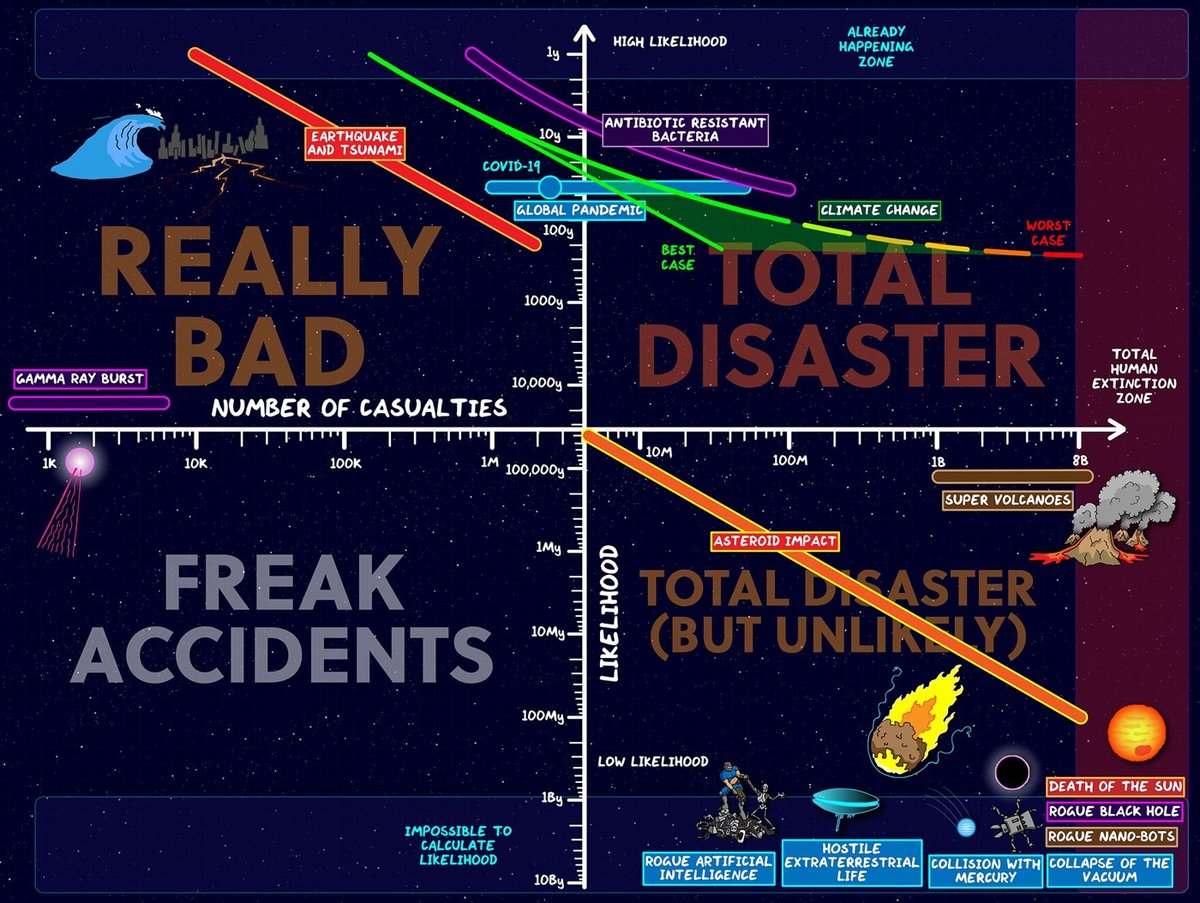
Spurred by the pandemic — what he calls “the first experience we’ve had of a global disaster affecting every single person on Earth”1 — Domain of Science’s Dominic Walliman takes stock of many of the possible catastrophes that might befall humanity, ranking possible threats based on their likelihood and the number of potential casualties.
This year was the first experience we’ve had of a global disaster affecting every single person on Earth. And also how unprepared society was to deal with it, despite plenty of people giving warnings that this was going to happen at some stage.
But in the midst of all the doom I started to wonder, what other things could threaten humanity, that we are not thinking about? So I made the Map of Doom to list all the threats to humanity in one place.
The result is the quadrant chart and the video above as well as the Map of Doom.
One could imagine a third dimension of this chart: what, if anything, humans can do about each of these threats. Earthquakes can be detected, buildings can be designed to withstand them, and evacuation procedures enacted and prioritized. Many effects of climate change can be mitigated. Asteroids can be detected, but doing something about them might prove difficult. We’ve lowered the threat of nuclear war — for now. Supervolcanoes? Yikes.
You can find a list of references used in the video’s description. (via open culture)
Well, I think you could make good arguments for Western colonial expansion and capitalism here. Oh and some past volcanic eruptions.↩
When We Look Back on This…
In remarks to the German parliament today, German Chancellor Angela Merkel advocated for tighter Covid-19 restrictions, as cases & deaths in Germany reach new peaks. The restrictions she’s referring to were recommended by “a national academy of scientists and academics” and are intended at reducing the spread of Covid-19 over the December holidays. The impassioned argument that she makes in this short video clip (full report here) is difficult for me to find fault with (even though conservative members of her parliament and Twitter commenters disagree). Here’s a partial transcript:
If the price we pay is 590 deaths per day, then that is unacceptable in my view. And when scientists are practically begging us to reduce our contacts for a week before we see Grandma and Grandpa, grandparents and older people at Christmas, then perhaps we really should think again about whether we can’t find a way to start the school holidays on the 16th instead of the 19th. What will we say when we look back on this once-in-a-century event if we weren’t able to find a solution for these three days? And it may be the case that sending children home is the wrong thing to do, if so then it will have to be digital lessons or something else. I don’t know, this is not my area of expertise and I don’t want to interfere. I only want to say: if we have too many contacts now, in the run-up to Christmas, and it ends up being the last Christmas with our grandparents, then we will have done something wrong. She should not let this happen.
I teared up watching her talk. In the US, we are dealing with many more cases (which will turn into eventual deaths) and deaths than Germany, both in absolute and per capita terms. It’s like 10 fully-loaded passenger planes a day are crashing with no survivors and there are small things that we all can do to keep many of those people alive and … many of us just don’t want to do those things!
Like Merkel says, we are going to look back on this and be completely ashamed that we didn’t do these things and that we elected people that won’t advocate for these things on our behalf and that we let 300-400,000 Americans die and countless others lose loved ones and go bankrupt and get evicted and lose their businesses and be chronically ill and be food insecure and and and. If we aren’t ashamed, if we don’t reckon with all of this someday, then maybe nothing can redeem us and we deserved it all.
From Sarah Larson at the New Yorker, the best podcasts of 2020. Great list, but IMO any list that leaves off @yourewrongabout is incomplete.
Two Puzzles
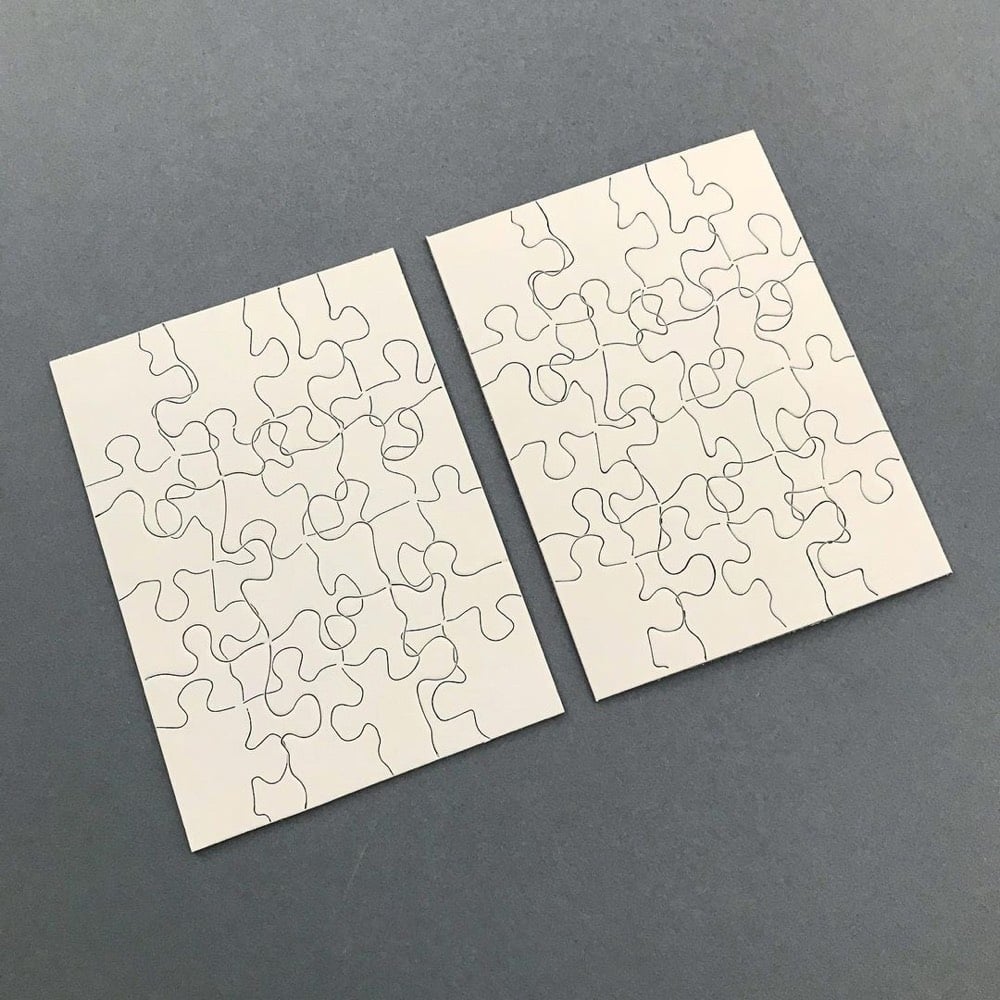
Two Puzzles by Micah Lexier consists of a pair of jigsaw puzzles, each with the die-cut pattern of the other puzzle printed on it. From Lexier’s Instagram:
They look like two of the exact same puzzles, but are in fact different. One is the image of the nine-piece puzzle foil-stamped on to the 16-piece die-cut puzzle and the other is the image of the 16-piece puzzle foil-stamped on to the nine piece die-cut puzzle.
The puzzles are for sale in a limited edition of 100 at Paul + Wendy Projects. (via @kellianderson)
Update: See also Jigsaw Jigsaw, the puzzle for fans of the Droste effect. (via @christopherjobs)
Some good guidance from the CDC about ventilation interventions that individuals, schools, businesses, and other facilities can use to mitigate indoor transmission of Covid-19. Ventilation is important and US businesses are still not up to speed.
Here’s Why Vaccinated People Still Need to Wear a Mask. “The new vaccines will probably prevent you from getting sick with Covid. No one knows yet whether they will keep you from spreading the virus to others…”
Swirling Portraits by Martin Satí
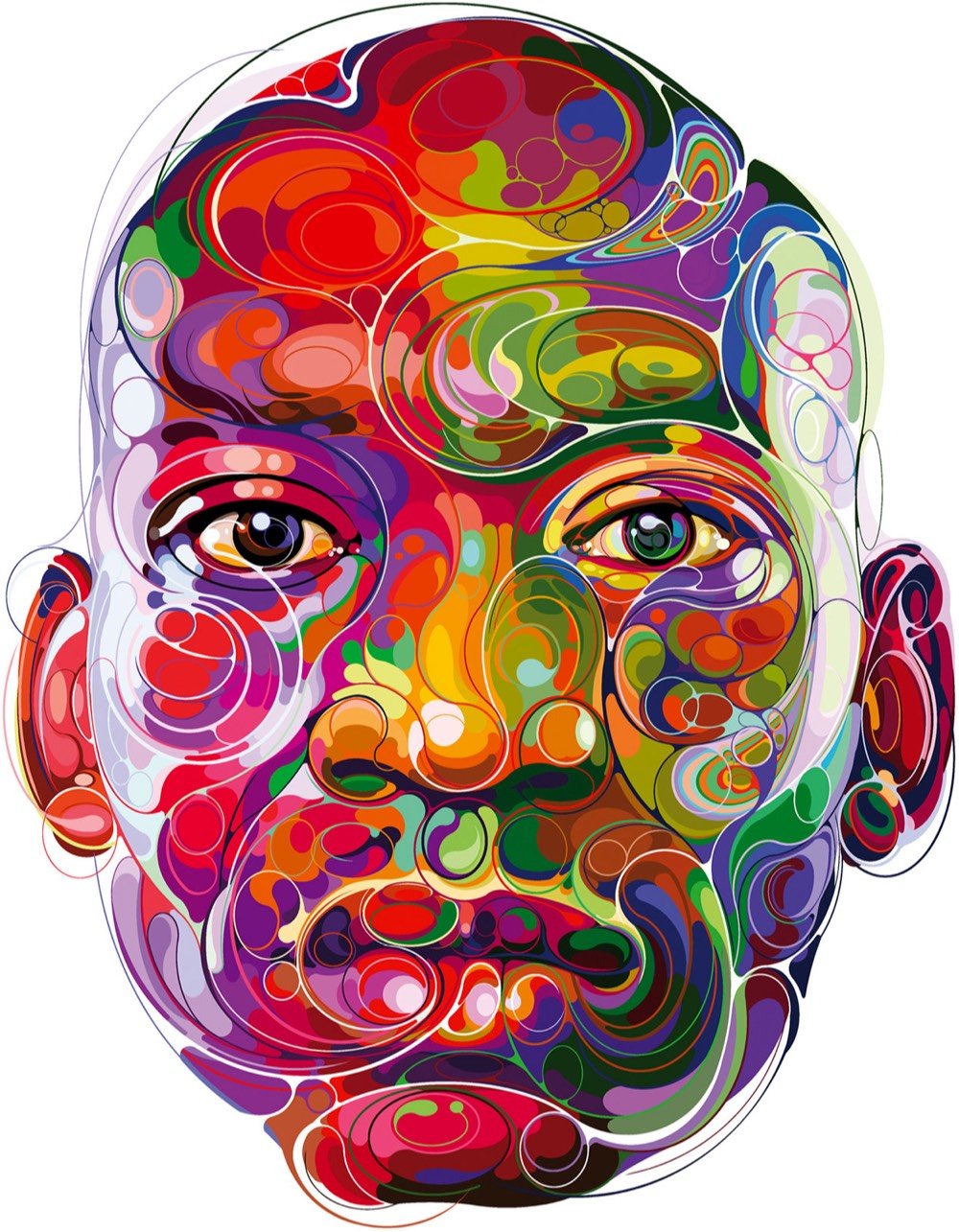

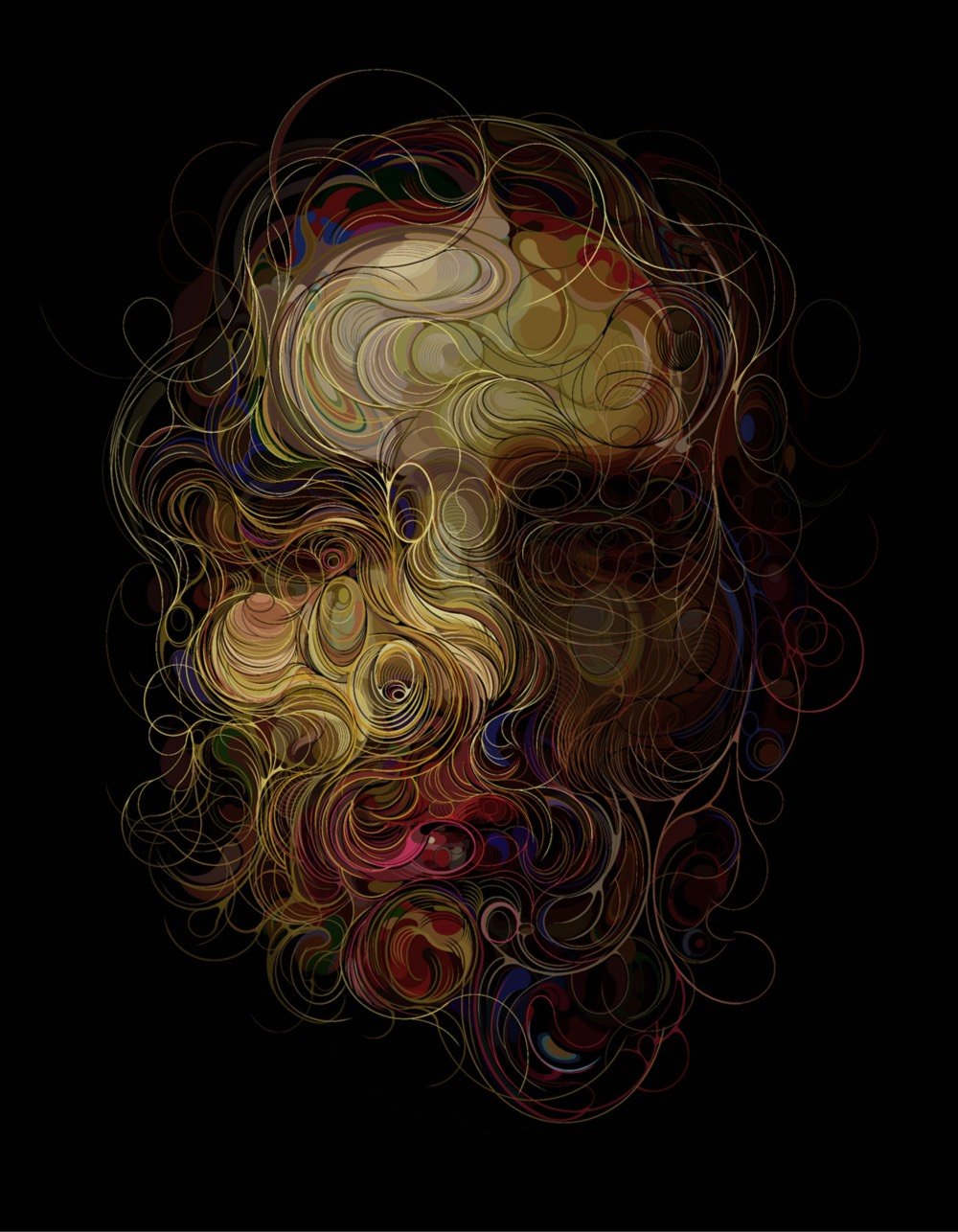
The vibrance and swirl of Martin Satí’s artwork reminds me, variously, of Milton Glaser’s portrait of Bob Dylan, the intricate calligraphy of Arabic art, and marbled paper. The artist shared a bit about his process with Colossal.
Satí shares that his practice, while digital, similarly molds facial features as a sculptor would. Despite using impalpable tools, he says that his “material is like semi-liquid and is difficult to model but at the same time is very rich in movement and liveliness… I work with this material, which I usually call ‘Silicone Pie,’ as an artisan works with ceramics. I am modeling the colors with lines of movement until I achieve an optimal level of detail.”
Mmmm, Silicone Pie. (via colossal)
A Detailed Analysis of the Doctor Who Theme Music

Even if you’re not a total sucker for old episodes of Doctor Who like I am, The Definitive Guide to the Doctor Who Theme Music is worth checking out to see how a very early piece of electronic music was constructed.
Created in 1963, the Doctor Who theme was one of the first electronic signature tunes for television and after nearly five decades remains one of the most easily recognised. The original recording of the Doctor Who theme music is widely regarded as a significant and innovative piece of electronic music, recorded well before the availability of commercial synthesisers.
I found this via Boing Boing, where Clive Thompson writes of the site:
I wish I had an analysis like this for more and more pop songs. The specific, nuanced decisions of musicians, producers and sound engineers are incredibly interesting, but can be really hard to tease apart just by listening to the mixed song.
Pictured above is Delia Derbyshire who, along with Dick Mills, arranged the theme music based on Ron Grainer’s composition.
Recently on the Kottke Ride Home Podcast
The Kottke Ride Home podcast has been humming away since August and host Jackson Bird has been sharing some great stuff lately. From today’s show comes this New York magazine piece by David Wallace-Wells about the stunning speed with which the Covid-19 vaccine was developed:
You may be surprised to learn that of the trio of long-awaited coronavirus vaccines, the most promising, Moderna’s mRNA-1273, which reported a 94.5 percent efficacy rate on November 16, had been designed by January 13. This was just two days after the genetic sequence had been made public in an act of scientific and humanitarian generosity that resulted in China’s Yong-Zhen Zhang’s being temporarily forced out of his lab. In Massachusetts, the Moderna vaccine design took all of one weekend. It was completed before China had even acknowledged that the disease could be transmitted from human to human, more than a week before the first confirmed coronavirus case in the United States. By the time the first American death was announced a month later, the vaccine had already been manufactured and shipped to the National Institutes of Health for the beginning of its Phase I clinical trial.
Monday’s show featured the intrigue behind the discovery of a real life treasure:
And if you look back to last week, Jackson clued us in to Radiooooo (“The Musical Time Machine”), Tetris championships, China’s Chang’e 5 mission to the Moon, and DeepMind’s AI breakthrough in protein folding.
If any or all of that sounds interesting to you, you can subscribe to Kottke Ride Home right here or in your favorite podcast app.
Maps of Alternative Histories
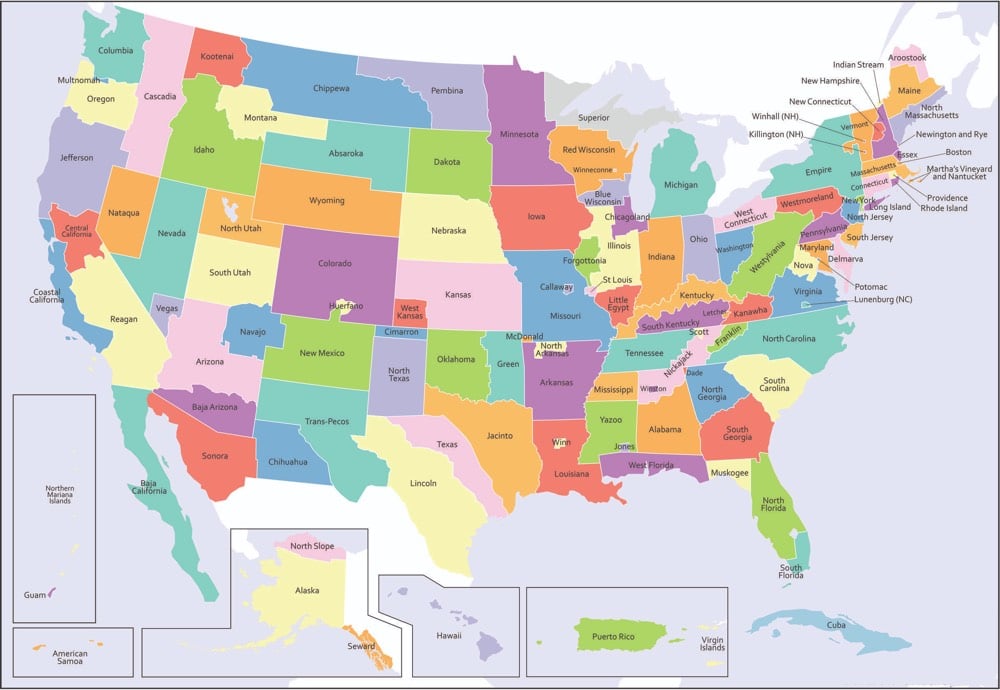
For BBC Future, Sam Arbesman writes about “maps that plot alternative worlds to our own”.
These are the “what if” stories that ask us to imagine our world on a different path: what if a battle, election or assassination had gone the other way, or a pivotal person had never been born? Some of these stories involve time travel to make the change, but many alternate histories are simply imagined differences. What if the Nazis had not been beaten, as in the novel The Man in the High Castle, or what if the Soviets had landed a man on the Moon first, like in For All Mankind?
The map above was created by Andrew Shears and shows what the United States could have looked like if various state partition plans had come to fruition.
One of my favorite alternative history maps not covered by Arbesman is Melissa Gould’s Neu-York, a map of Manhattan after a hypothetical conquest of the United States by the Nazis in World War II (which I blogged about way back in 2003, when kottke.org had comments!)

See also Alternate Map of the Americas Features “Long Chile”.
Why Humans Are Obsessed with Cats
In this short video, Abigail Tucker, author of 2015’s The Lion in the Living Room: How House Cats Tamed Us and Took Over the World, shares a brief overview of the role of cats in human lives, including their evolution from wild cats to tame lap friends.
But really, this is just a good excuse for me to feature once again Kevin Slavin’s marvelously entertaining talk about viral cat videos and the toxoplasma gondii parasite. See also Are Cats Domesticated?, How Humans Domesticated Cats (Twice), and The Self-Domestication of Humans. (via open culture)
Nepal and China have announced the results of a new official measurement: Mount Everest is officially 29,031 feet tall. “According to Nepal’s Department of Survey, the measurement is within centimeters of accuracy.”
The Best Books of 2020

I’m guessing that for most of you, reading books was either a comfort or a near impossibility during this unprecedentedly long and tough year. For me, I got some good reading in earlier in the year and then, as my focus shifted to writing about and researching the pandemic for this site and managing the logistics of safely navigating this new world, my energy for books waned. The last thing I wanted to do at the end of most days was more reading, especially anything challenging.
I also kinda didn’t know what to read, aside from the few obvious choices that were impossible to ignore. As I’m sure it is for many of you, a big part of my “getting the lay of the land” w/r/t books is seeing what my favorite bookstores were putting on their front tables — and that’s been difficult for the past several months. Looking through a bunch of end-of-2020 lists for what books everyone else recommended was especially valuable for me — there really were so so many good books published this year that are worth seeking out. So, here’s a selection of the best books of 2020 and links to the lists I used to find them. I hope you find this useful.
Let’s start with the NY Times. Their 10 Best Books of 2020 includes Deacon King Kong by James McBride while their larger list of 100 Notable Books of 2020 has both Maria Konnikova’s The Biggest Bluff and The End of Everything: (Astrophysically Speaking) by Katie Mack on it. The Times’ critics have their own list for some reason; one of the books they featured is Anna Wiener’s Uncanny Valley.
Isabel Wilkerson’s masterful Caste: The Origins of Our Discontents and The Mirror & the Light by Hilary Mantel (two books I actually read this year) deservedly made almost every list out there, including Time’s 100 Must-Read Books of 2020. Those two books are also, respectively, on Time’s lists of The 10 Best Nonfiction Books of 2020 and The 10 Best Fiction Books of 2020.
The Guardian breaks down their list of the Best Books of 2020 into several categories. The list of the best science fiction and fantasy books of 2020 includes The Ministry for the Future by Kim Stanley Robinson and Kacen Callender’s King of the Rising.
The year-end lists on Goodreads (Best Books of 2020, Most Popular Books Published In 2020) typically cast a wider net on what a broader audience is reading. Suzanne Collins’ Hunger Games prequel The Ballad of Songbirds and Snakes and The Vanishing Half by Brit Bennett made their lists this year.
Kirkus has a bunch of categories in their Best Books of 2020 as well, including the timely Best Fiction for Quarantine Reading in 2020 — I found What Are You Going Through by Sigrid Nunez (“Dryly funny and deeply tender; draining and worth it”) on there.
The NYPL’s Best Books of 2020 has separate lists for adults, teens, and kids. For adult poetry, Nate Marshall’s Finna made their list. And for teen historical fiction: We Are Not Free by Traci Chee.
Some recommended books for kids from various lists (NYPL, NY Times, NPR): Shinsuke Yoshitake’s There Must Be More Than That!, Before the Ever After by Jacqueline Woodson (my daughter is reading this one right now for her book club), and Echo Mountain by Lauren Wolk.
YA novel Clap When You Land by Elizabeth Acevedo and Homie by Danez Smith both made Book Riot’s Best Books of 2020. Oh, and I’d missed that Zadie Smith published a book of pandemic-inspired essays called Intimations.
NPR’s Book Concierge is always a great resource for finding gems across a wide spectrum of interests. Erik Larson’s The Splendid and the Vile and The Lying Life of Adults by Elena Ferrante both made their Seriously Great Writing list and their Cookbooks & Food list includes Ottolenghi Flavor by Yotam Ottolenghi & Ixta Belfrage and Eat A Peach by David Chang.
Speaking of cookbooks and food, among the top titles for 2020 were In Bibi’s Kitchen by Hawa Hassan & Julia Turshen and Falastin by Sami Tamimi & Tara Wigley. (Culled from Food & Wine’s Favorite Cookbooks of 2020 and The Guardian’s Best Cookbooks and Food Writing of 2020.
I saw Mexican Gothic by Silvia Moreno-Garcia on several lists, including Library Journal’s Best Books 2020.
The Book of Eels by Patrik Svensson and The Alchemy of Us by Ainissa Ramirez both made Smithsonian Magazine’s The Ten Best Science Books of 2020.
Hyperallergic has selected Some of the Best Art Books of 2020, including Kuniyoshi by Matthi Forrer.
For the Times Literary Supplement’s Books of the Year 2020, dozens of writers selected their favorite reads of the year. Elizabeth Lowry recommended Artemisia, the companion book to the exhibition of Artemisia Gentileschi’s at The National Gallery and sadly the best way for most of us to be able to enjoy this show.
More lists: Audible’s The Best of 2020 and Washington Post’s The 10 Best Books of 2020. I’ll update this post a couple of times in the next week with more lists as I run across them.
If you’d like to check out what I’ve read recently, take a look at my list on Bookshop.org.
Note: When you buy through links on kottke.org, I may earn an affiliate commission. This year, I’m linking mostly to Bookshop.org but if you read on the Kindle or Bookshop is out of stock, you can try Amazon. Thanks for supporting the site!
The FDA’s analysis of the Pfizer/BioNTech Covid-19 vaccine is looking really good. “This is what an A+ report card looks like for a vaccine.”
Saying goodbye to 500 places that have closed in NYC during the pandemic. “It is difficult to locate the right perspective from which to mourn the death of a favorite business when we are also surrounded by sickness and death.”
Important thing to know about the Covid-19 vaccines: they will keep you from getting sick *but* a vaccinated person may still be able to transmit the virus to others. “This is how vaccines generally work…”
How Japanese People Stay Fit for Life, Without Ever Visiting a Gym. “The first thing we wanted was just to get people walking. Everyone can do that. You walk, you talk, you get exercise and that helps build up a sense of community.”
A Portrait of the Covid-19 mRNA Vaccine
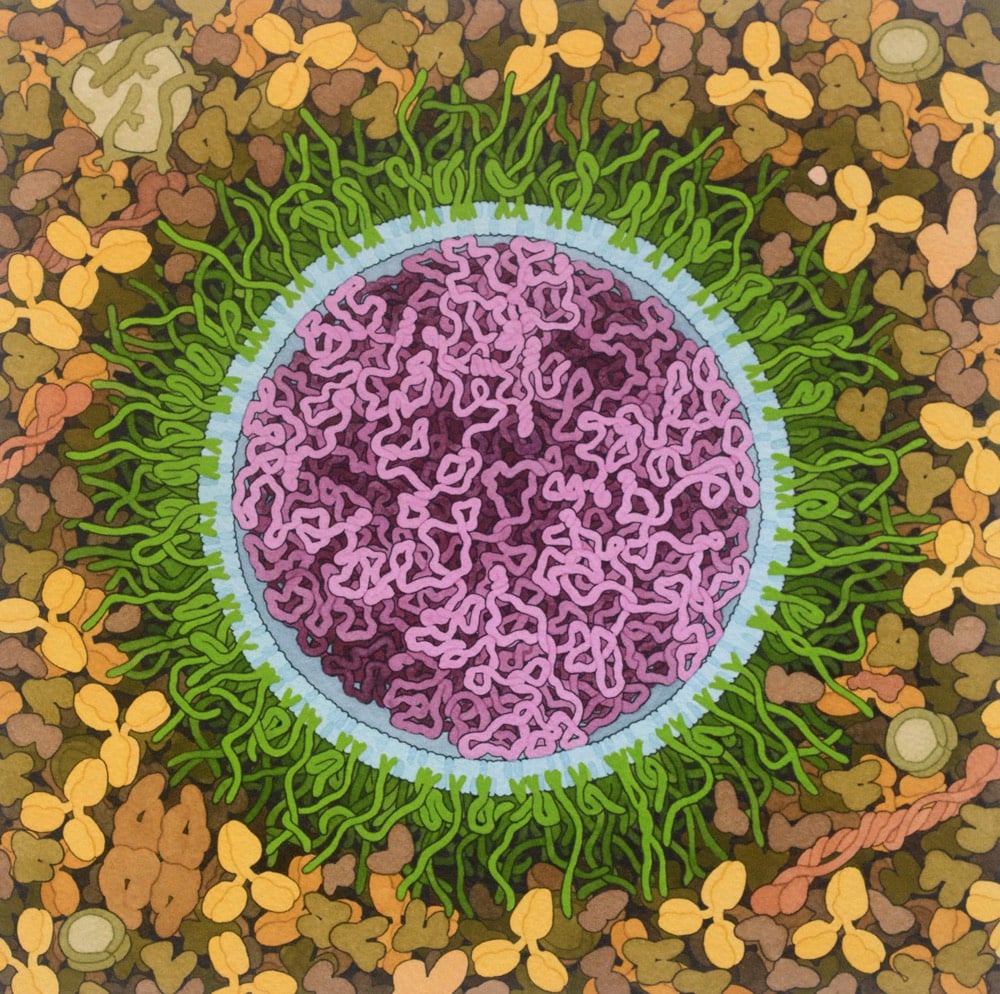
Artist and biologist David Goodsell has done a painting of the Covid-19 mRNA vaccine.
The vaccine structure is highly idealized, with spike mRNA in magenta, lipids in blue, and PEG-lipid in green. The background is blood serum or lymph.
Both the Pfizer/BioNTech and the Moderna Covid-19 vaccines are based on mRNA — you can brush up on how they work at Stat or the CDC.
mRNA vaccines are a new type of vaccine to protect against infectious diseases. To trigger an immune response, many vaccines put a weakened or inactivated germ into our bodies. Not mRNA vaccines. Instead, they teach our cells how to make a protein — or even just a piece of a protein — that triggers an immune response inside our bodies. That immune response, which produces antibodies, is what protects us from getting infected if the real virus enters our bodies.
See also Goodsell’s painting of a SARS coronavirus from back in February.
Combat at the Movies. “In each game you will encounter a classic film as acted out by one or more tanks from the game Combat by Atari.” Movies include Citizen Kane, 2001, and Tokyo Story.
Tis the season: how to make your own “John McClane in the air duct” Die Hard Christmas tree ornament.
The 41 Contiguous US States
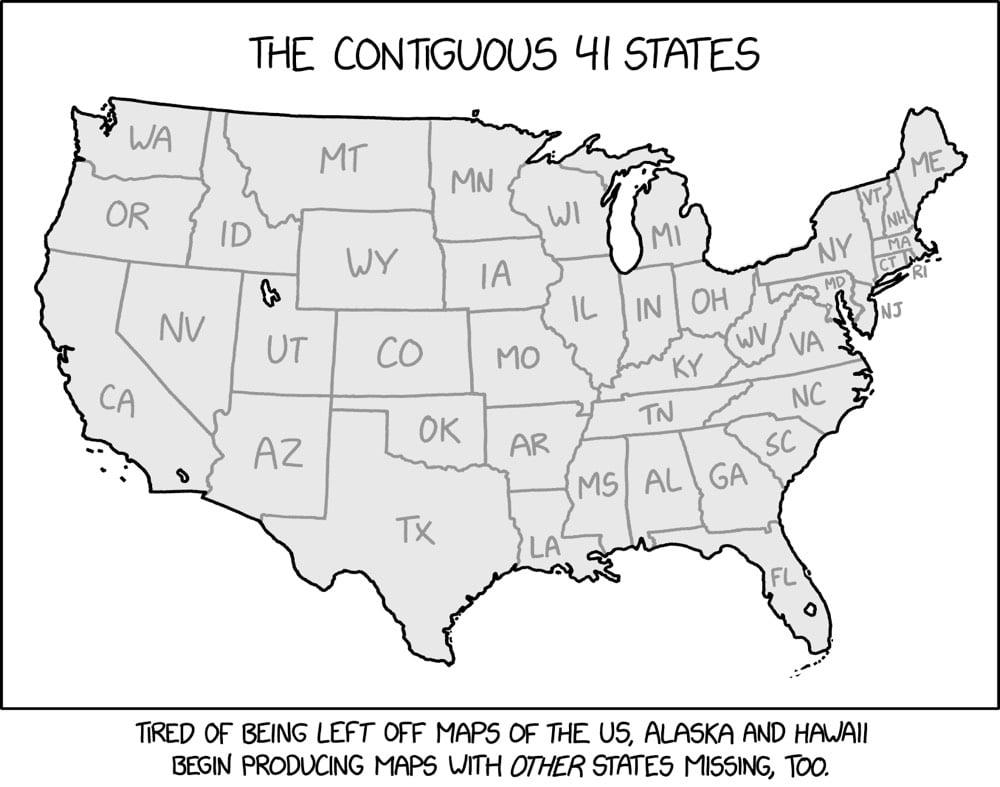
This map of the lower 48 US states hand-drawn by XKCD’s Randall Munroe is super clever: 7 of the states are actually missing. Maybe the pandemic is starting continuing to rot my brain, but I stared at this for an embarrassingly long time before finding any of the absent states. Even now that I know which ones are gone, the map doesn’t look out of place at all. *claps*
How Dating During a Pandemic Is Like Being in a Jane Austen Novel. “You regularly inquire about the health of each other’s family members.”
Dua Lipa’s Tiny Desk Concert
Like almost everything else these days, NPR’s Tiny Desk Concerts have gone remote. Their most recent play-from-home guest was Dua Lipa, who was the artist I listened to more than any other in 2020 (according to Spotify). Before playing a stripped-down acoustic version of Love Again with her band, Lipa said of the song: “It’s really about manifesting good things into your life when things aren’t quite going your way.” That’s a sentiment that a lot of us can relate to nowadays.
NPR has been tracking the 25-year-old singer/songwriter for a while now; she was featured in an episode of their Noteworthy series in August 2016, several months before the release of her debut album.
Dua Lipa walking unrecognized around NYC…won’t ever see that again.
24 high-quality Covid illustrations. Free for commercial and personal use.
Returning to Normal
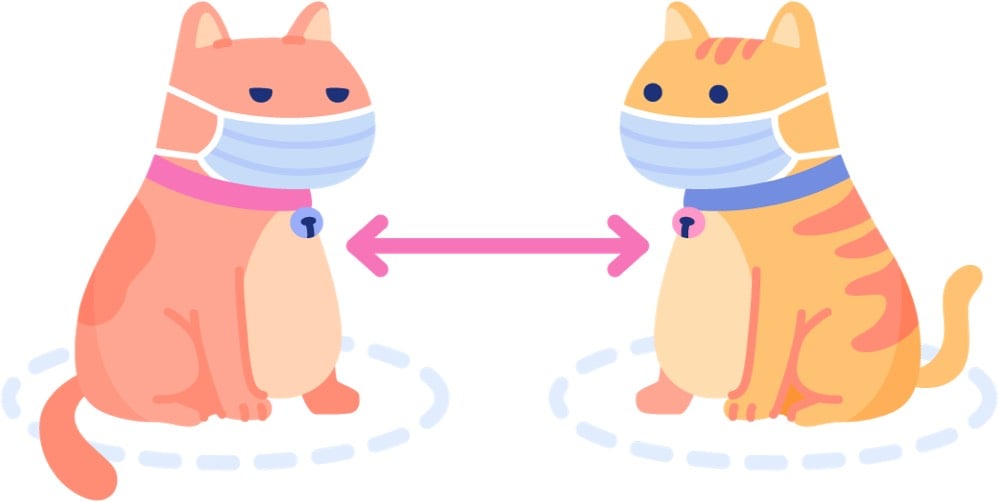
The NY Times recently surveyed 700 epidemiologists about how they are personally living during the pandemic and what they think is going to happen next. Epidemiologists should have a better idea than most of us about how to act during a viral pandemic, so there’s lots of good information in there about vaccines and high-risk behaviors. But I found their answers to a pair of speculative questions about a return to normalcy most interesting.
How and when will life go back to normal?
“For some, it has gone back to normal, and because of this, it will be two to three years before things are back to normal for the cautious, at least in the U.S.”
- Cathryn Bock, associate professor, Wayne State University
“The new normal will be continued masking for the next 12 to 18 months and possibly the next few years. This is a paradigm shift.”
- Roberta Bruhn, co-director, Vitalant Research Institute
What will never return to normal?
“My relationships with people who have taken this pandemic lightly and ignored public health messages and recommendations.”
- Victoria Holt, professor emeritus, University of Washington
“Every part of my daily life that involves interaction with anyone other than my spouse.”
- Charles Poole, associate professor, University of North Carolina
For many people, the pandemic has altered almost every aspect of their lives. If we listen to what epidemiologists are telling us (like we should have back in early 2020 to avoid much of our present hardship), it could help us accept that the pandemic will continue to affect most aspects of our lives even after it is “over”.
Free Covid-19 illustration courtesy of Pixel True.
How 700 Epidemiologists Are Living Now, and What They Think Is Next. “I expect that wearing a mask will become part of my daily life, moving forward, even after a vaccine is deployed.” <– same
Korean Study: Indoor SARS-CoV-2 Transmission from 21 Feet Away in Just 5 Minutes
Zeynep Tufekci reports on a small study from Korea that has big implications on how we think about transmission of SARS-CoV-2. Scientists traced two cases back to a restaurant and discovered that transmission had occurred over quite a long distance in a very short period of time.
If you just want the results: one person (Case B) infected two other people (case A and C) from a distance away of 6.5 meters (~21 feet) and 4.8m (~15 feet). Case B and case A overlapped for just five minutes at quite a distance away. These people were well beyond the current 6 feet / 2 meter guidelines of CDC and much further than the current 3 feet / one meter distance advocated by the WHO. And they still transmitted the virus.
As Tufekci goes on to explain, the way they figured this out was quite clever: they contact traced, used CCTV footage from the restaurant, recreated the airflow in the space, and verified the transmission chain with genome sequencing. Here’s a seating diagram that shows the airflow in relation to where everyone was sitting:
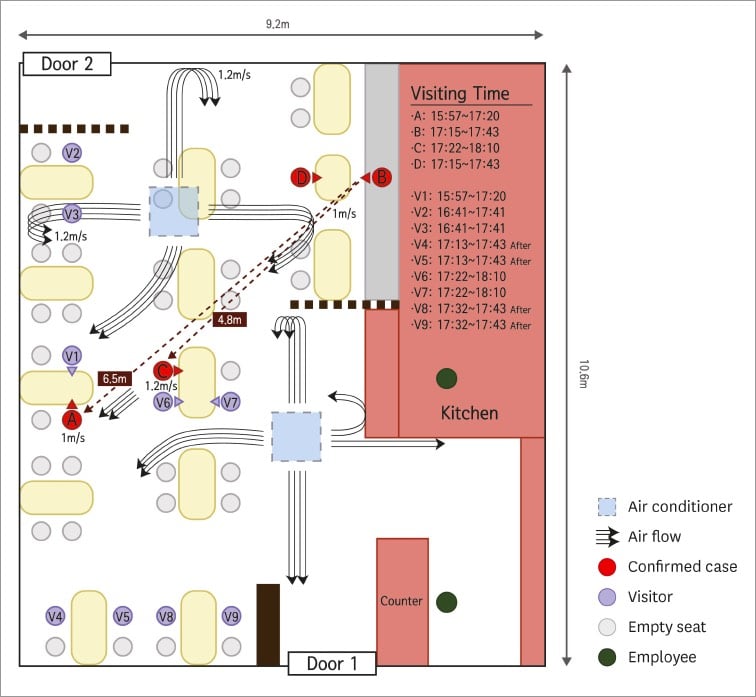
Someone infecting another person 21 feet away in only five minutes while others who were closer for longer went uninfected is an extraordinary claim and they absolutely nailed it down. As Sherlock Holmes said: “Once you eliminate the impossible, whatever remains, no matter how improbable, must be the truth.” And the truth is that in some cases, the recommended 6 feet of distance indoors is not sufficient when people aren’t wearing masks. Airflow matters. Ventilation matters. Which way people are facing matters. How much people are talking/laughing/yelling/singing matters. Masks matter. 6 feet of distance does not confer magical protection. All that can make it tough to figure out if certain situations are safe or not, but for me it’s an easy calculation: absolutely no time indoors with other people not wearing masks. Period. As Tufekci concludes:
I think there are three broad lessons here. One, small data can be extremely illuminating. Two, air flow and talking seem to matter a great deal. Three, sadly, indoor dining and any activity where people are either singing or huffing and puffing (like a gym) indoors, especially with poor ventilation, clearly remains high risk.
Read her whole post — as she says, it’s “perhaps one of the finest examples of shoe-leather epidemiology I’ve seen since the beginning of the pandemic”.
My Recent Media Diet, The Late 2020 Edition
Forgive me reader, for I have been lazy. It’s been 7 months since I’ve shared a list of the movies, books, music, TV, and podcasts that I’ve been watching/reading/listening to, uh, recently. But I’ve been diligently keeping track1 and so here’s everything I’ve consumed since early May. Warning: soooo much TV and soooo many movies (and bad ones at that) and very few books. At the end of most days — after work, parenting, cooking yet another meal I’m not actually in the mood for, and constantly refreshing Instagram — I just don’t have enough left in the tank for books. (Oh, and as usual, don’t pay too much attention to the letter grades!)
Winds of Change. A fun ride but ultimately kind of empty? (B)
How to Be an Antiracist by Ibram X. Kendi. Perhaps not what you’d expect going in — thought-provoking on almost every page. (A)
The Ezra Klein Show — Madeline Miller. Super interesting, especially if you’ve read Song of Achilles or Circe. (A-)
Godzilla. This was sort of the tail end of my pandemic disaster movie film fest. (C+)
Fetch the Bolt Cutters. I love that this exists but it is not for me. (B-)
The Mirror & the Light by Hilary Mantel. I knew it was coming, Thomas Cromwell’s downfall; it’s historical fact after all. But somehow the actual moment shocked me, despite Mantel’s careful foreshadowing over hundreds of pages. (A)
Normal People. No way in hell was this going to be as good as the book, but they somehow did it. Stellar casting. (A-)
Fleabag Live. I wanted to love this like I loved the TV show but could not get into it. (C+)
Star Wars: The Rise of Skywalker. Whatever else you might think about the third SW trilogy, the casting was fantastic. (B+)
Partysaurus Rex. One of my favorite Pixar shorts. (A-)
Iron Man 3. The only MCU movie I hadn’t seen. It was…fine? (B)
Dunkirk. A masterpiece. (A)
Arrival. Another masterpiece. (A)
Kursk. This should have been better. (B)
Harry Potter at Home. My kids and I listened to this in the car and loved it. (A-)
Watchmen. After admitting I’d stopped watching after a few episodes, several of you urged me to keep going. I finished it but still was not as dazzled as everyone else seemed to be. Maybe if I’d read the graphic novel? (B+)
Against the Rules with Michael Lewis (season two). This season was all about coaching and may have been even better than the first season. (A-)
The General. A silent film masterpiece from Buster Keaton. The kids were a little bored at first but ultimately loved it. (A-)
The Endless. Solid sci-fi horror. (B)
13th. A powerful argument that slavery is still constitutionally legal and alive & well in the United States. (A)
Ida. Beautiful film. (B+)
The Last Dance. I grew up watching and rooting for Jordan and the Bulls, so this was the perfect nostalgic entertainment. Jordan comes off as both more and less of a dick than I remember. (A-)
Da 5 Bloods. This was a mess. (C+)
Undone. Inventive animated sci-fi with plenty of plot left for season two. (B+)
Celebrate Your Body (and Its Changes, Too!): The Ultimate Puberty Book for Girls by Sonya Renee Taylor. Borrowed this from my daughter to brush up on how to help her approach some changes coming down the pike. (A-)
Beyond Meat. I snuck some of their ground “beef” into a casserole to try it out and see if the kids would notice. They didn’t at first, but once I told them, the three of us agreed that it was not that tasty — and definitely didn’t taste like beef. Plus I had an upset stomach until noon the next day. (C-)
Knives Out. I enjoyed this much more the second time. (A-)
Honeyland. A maddening microcosm of modernity. (A)
The Conversation. Maybe this hit me on an off-night? (B+)
The Great. Super fun show from the screenwriter of The Favourite. (A-)
Hamilton. Obviously better in person (and 4 years ago), but the performances and music are so great it doesn’t matter. (A)
Slate Money — Modern Monetary Theory. Really interesting alternate way of thinking about the economy, federal debt, inflation, and taxes. They kinda jumped right into the middle of it though, leaving this interested MMT beginner a little baffled. (B)
12 Monkeys. So very 90s. Brad Pitt is great in this though. (B+)
Cloud Atlas. An underrated gem. (A)
The Old Guard. Engaging and built for a sequel. But what isn’t these days? (B+)
Cars 2. I’d only ever seen the first 2/3s of this because my then-4-year-old son was so upset that the onscreen baddies were going to kill Lightning McQueen that we had to leave the theater. (B-)
Nintendo Switch. Such a fun little console that doesn’t take itself too seriously. (A-)
Greyhound. Not Hanks’ best effort. (B)
Radioactive. An overly complicated movie about a complex woman. (B+)
Ratatouille. The scene where Ego takes his first bite of ratatouille still gives me goosebumps. (A)
The Speed Cubers. Heartwarming story. (B+)
Project Power. Incredible that they were able to turn the story of Henrietta Lacks into a superhero movie. (B+)
Pluto TV. Am I the last person on Earth to find out about this app? Dozens of channels of reruns that you can’t pause and are interrupted by ads, just like old school TV. I’ve been watching far too much old Doctor Who on here. (B+)
Folklore. I don’t really get Taylor Swift and that’s ok. (C)
This Land. Excellent and infuriating — this had me yelling at my car radio. (A)
13 Minutes to the Moon — Apollo 13. Not as good as season one about Apollo 11 or Saving Apollo 13, but still compelling. (B+)
Black Panther. Had to rewatch. Rest in peace, Chadwick Boseman. What a loss. (A-)
Conversations with Friends by Sally Rooney. Anything she writes, I will read. (A)
Master and Commander: The Far Side of the World. I had forgotten how slow this starts, but once it gets going it’s completely gripping, even the quiet parts. (A-)
Contact by Carl Sagan. First time I’d read this in many years. Did not resonate as much as it had in the past. (B+)
Contact. They should have sent a poet. (A-)
True Grit. Hailee Steinfeld is fantastic in this. (A)
Being John Malkovich. Terrific performance by Malkovich. This was a favorite movie of mine for years but its impact on me has lessened. (B+)
Reply All, Country of Liars. The origin story of QAnon. But let’s just say there are some unreliable narrators in this story. (B+)
Jurassic Park. A blockbuster masterpiece. (A)
50 First Dates. One of the very few Sandler comedies I really like. (B+)
I’m Thinking of Ending Things. Really did not vibe with this one. (C+)
Pride & Prejudice. I am a huge sucker for this film. (A)
MASS MoCA. Took a day trip down here back in October. My first museum since Feb. Sol LeWitt, James Turrell, Jenny Holzer, great building, virtually no one here on a weekday — very much worth the 6-hour RT car ride. (A+)
Palm Springs. Groundhog Day + 50 First Dates. (A-)
Kona Honzo. After getting a taste of mountain biking on a borrowed bike, I upgraded to this hardtail. Had some really great rides on it but also stupidly crashed, landed on my face, had to go to the ER, and got 9 stitches on my chin. Would not recommend crashing (stupidly or otherwise, but especially stupidly), but I liked mountain biking enough to get back on the bike a couple of weeks later. (A-)
My Octopus Teacher. As I said previously: “It’s such a simple movie but it packs a surprising emotional wallop and is philosophically rich. Even (or perhaps especially) the bits that seem problematic are thought-provoking.” (A)
His Dark Materials. I like the show but the main character is so irritating that I don’t know if I can keep watching… (B+)
You’re Wrong About — Princess Diana. I never fully understood the appeal of Princess Diana but now I do. Excellent 5-part series. (A)
Human Nature. Documentary on Netflix about the discovery and potential of Crispr. (B+)
The Booksellers. Was ultimately not that interested in this. (B)
Ted Lasso. Mister Rogers’ Neighborhood + Major League. Who knew you could make radical empathy funny? (A+)
The Queen’s Gambit. So well done in almost every way. (A)
Haywire. Solid Soderbergh thriller. (B+)
Enola Holmes. I will watch almost any Sherlock Holmes adaptation, riff, or spin-off. (B+)
The Trial of the Chicago 7. I loved this. Classic Sorkin and great ensemble cast performance. (A)
Zama. Maybe surrealist film is not my cup of tea. (B)
AlphaGo. I’d read a lot about the events in this film, but seeing it play out was still gripping and surprising. This and My Octopus Teacher would make a great double feature about the shifting definition of what makes humans human. (A)
The Way I See It. Pete Souza reflects on his proximity to power. (B+)
The Queen. Had to watch this after the Princess Di You’re Wrong About series. (B+)
Lego Star Wars Holiday Special. Is this canon now? If so, I have some questions. (C)
Carol. Holy shit, wonderful! I think I held my breath for the last two minutes of the movie. (A+)
Song Exploder. TV version of the OG podcast. The REM episode was great. (B+)
Rogue One. I wouldn’t call this the best Star Wars movie, but it isn’t not the best Star Wars movie either. (A-)
Little Women. Rewatched. I love this movie. (A)
Tenet. Primer + James Bond. Maybe the pandemic has made me dumber, but this totally confused me. In a bad way — it could/should have been simpler. (B)
Caste by Isabel Wilkerson. A masterful examination of the skin color-based caste system of the United States, compared and contrasted with the caste systems of India and Nazi Germany. (A)
Past installments of my media diet are available here.
People have asked so here’s the extensive system I use to keep track of everything: the Notes app on my phone.↩
How to post a tweet that contains a link to the tweet itself. “Fundamentally the challenge is just correctly guessing what ID a given tweet is going to get…”
The Case of the Missing 2020 Gift Guide
Well, I might as well just say it: I will not be doing a holiday gift guide this year. For a whole bunch of interconnected reasons, mostly pandemic related, it just didn’t seem like a great idea. I usually enjoy putting the list together every year, but I sat down last week to start compiling links and just couldn’t muster the desire or energy. I don’t know about you, but my attention span over the past several months has not been conducive to doing projects that take more than an hour or two to complete, and the gift list usually takes me many hours spread over several days.
I know that some of you were looking forward to the list and I’m sorry to disappoint. But there’s some good news: last year’s gift guide is still perfectly serviceable. So are the guides from 2018, 2017, etc. Much of my advice stays the same from year-to-year: charitable giving should be high on your list; you can’t go wrong with the lists from Wirecutter, The Kid Should See This, Tools & Toys, and Serious Eats; and I still would love to hear from the reader who finally splurges on the 55-gallon drum of personal lubricant.1 If you were waiting on this year’s list, I hope that going back through these old lists will help you out.
One thing I will do soon is my annual compilation of the best books of the year (here’s 2019’s list). If your family and friends are anything like mine, books are a good 50-60% of the total gifts given, so hopefully that post will give you some ideas. Look for the 2020 list either tomorrow or Monday.
Welp, there’s now a 275-gallon container of personal lubricant for sale on Amazon for $9700. What a world.↩
Warner Bros. is releasing all 17 of their 2021 movies (plus Wonder Woman 1984) simultaneously in theaters and on HBO Max. Films include Dune, the new Space Jam, The Suicide Squad, and Matrix 4.
What If the Earth Got Knocked Out of the Solar System?
The Milky Way galaxy may be home to billions or even trillions of rogue planets (planets that don’t orbit stars). In this video, Kurzgesagt considers how the Earth could go rogue (by following a nearby massive star away from the Sun) and what would happen to our oceans, atmosphere, and lives if it happened.
The first part of the video is pretty bleak — “as the days turn dark, the final winter of humanity would begin” — while the second part is hopeful: we’ll be able to predict our ejection thousands of years before it happens and may be able to prepare. In light of the world’s response to the pandemic and climate change, it would certainly be interesting to see if human civilization could get it together to save itself from a cold death in outer space. I have no doubt that scientist could accurately diagnose the problem and supply solutions, but the politics would be a total mess.
Great lede from a high school journalism student about a hypothetical fire in the cafeteria. Quick, someone hire her!
“The story of the coronavirus in [Iowa] is one of government inaction in the name of freedom and personal responsibility.” Heartbreaking and heartbreakingly avoidable. This extremist philosophy has got to be stamped out.
Aerial Photo of Manhattan, Circa 1931

This is an aerial photo of Manhattan taken circa 1931. You can see all the way from 125th Street in Harlem down to the tip of Manhattan and beyond. That tall spike 25 blocks south of Central Park is the Empire State Building, which was completed in 1931. Also visible in the photo to varying degrees: Central Park’s Hooverville, the Statue of Liberty, several of the East River’s bridges, the Metropolitan Museum of Art, Governors Island, and the much more uneven shorelines on both the Hudson and East River sides of the city. See also this aerial map of NYC from 1924, which is also available at NYCityMap (click on “Map Type” in the upper right) and a 1931 aerial photo of lower Manhattan.

Note: I tried and failed to track down the source and exact date of this photo. The earliest instances I could find were uncredited posts on Reddit and Facebook from a couple of years ago. Any idea where this came from? Would love to properly credit the source and nail down the year. (via @marinamaral2)
Socials & More