Entries for September 2020
The breadth of scale of measurable objects in the universe — our distance from the most distant objects we can observe (billions of light years away) to particles measured in something called a yoctometer (1×10-24 meters) — is staggering to think about. That’s where the Universe in a Nutshell app comes in. Developed by Kurzgesagt & Wait But Why (both kottke.org favorites), you can use the app to quickly and easily zoom in and out through objects at all the scales of the universe, like quarks, DNA, cells, earthworms, Europe, Jupiter, the black hole at the center of our galaxy, the Crab Nebula, galaxies, and galaxy superclusters.


You can tap on any object you encounter to learn more about it, like an interactive Powers of Ten. I spent 20 minutes just now playing around and it’s really fun. You can download the app for $2.99 from the App Store or on Google Play.
To mark the release, Kurzgesagt made a video comparing the sizes of stars:
And Wait But Why’s Tim Urban wrote a post about the scales of objects: The Big and the Small.

As winter weather approaches here in North America, those seeking relief from pandemic isolation might take inspiration from the Norwegian concept of friluftsliv (meaning roughly “open-air living”).
In Norway this is not as outlandish as it might seem in other nations. The Reads are simply following the concept of friluftsliv, which translates roughly to “open-air living” and is deeply engrained in the country’s heritage.
From the remote Arctic to urban Oslo, friluftsliv means a commitment to celebrating time outdoors, no matter the weather forecast. “It’s the most natural thing for me because I’m Norwegian,” says Alexander, who documents their father-daughter journeys on Instagram.
The idea is as Norwegian as cross-country skis and aquavit. But amid a pandemic that’s upended rhythms of daily life around the globe, friluftsliv might also be a model for coming more safely — and sanely — through the northern hemisphere’s approaching winter season.
I wrote last year about The Secret to Enjoying a Long Winter and I’ll have more to say about how that approach worked out for me personally in a future post (short version: well), but for now I’ll just mention that one of my favorite things I did last winter was going on a 7-mile walk in the freezing cold with a friend. We were both dressed appropriately and keeping warm through movement — being out in nature and the engaging conversation was so enjoyable that I could have cared less about the temperature. (via kottke ride home)


Alexey Vasilyev’s photos of the remote Russian territory of Yakutia (also known as Sakha, ultra-cold in the winter and hot in the summer) and the people who live there are really something.
Yakutia is the largest region of Russia, but it is almost not explored by man. The number of population is only one million on three million square kilometers. There is no other corner on the Earth where people live in such a severe and contrasting climate. In summer the air warms up to 40 degrees Celsius and in winter it drops to 60 degrees below zero. There is the longest duration of winter, temperatures below zero and snow lies here from October to mid-April.
The transport system has made Yakutia one of the most inaccessible areas in the world. There are almost no railways and few roads. Some places can be reached by plane or helicopter only. The remoteness from the world and severe climatic conditions determined a special way of life and culture of local residents.
That culture includes an enthusiasm for filmmaking, which Vasilyev has also captured.
However, Yakutia is famous not only for the severe climate and gold which is mined here, but also for the cinema. Yakut films participate in international festivals in Europe and Asia, receive awards, which are already more than 80. Yakut Hollywood is called “Sakhawood”.
People with different experiences are engaged in filmmaking. Most directors have no special education, for some of them directing is not the main way to earn money. Actors are people who work in the theater, or people who have never acted in a movie before. About 7-10 feature length films are shot here per year, from romantic comedies to fairy tales, based on local legends and beliefs. Sometimes Yakut movies have better box office than world blockbusters.
You can find more of Vasilyev’s work on Instagram.
Gig Economy Company Launches Uber, But for Evicting People. “Civvl aims to make it easy for landlords to hire process servers and eviction agents as gig workers.”


The winning entries from the Insight Investment Astronomy Photographer of the Year 2020 competition are here and they are spectacular. As longtime readers can attest, I will never get tired of looking at photos of the sky and space.
Above from top to bottom: Nicolas Lefaudeux’s tilt-shift shot of the Andromeda Galaxy, Alain Paillou’s ultra-contrasty photo of the Moon, Kristina Makeeva’s aurora shot, Evan McKay’s self-portrait under the Milky Way, and Olga Suchanova’s 3-month exposure of the Sun’s path through the sky using a beer can pinhole camera. You can read a little bit about how Suchanova got that shot on 35mmc:
If exposure times on the order of minutes seem long, try months. Olga Suchanova (London, UK) used a pinhole camera made from a beercan — and not just any beercan, but a Peter Saville design for the Tate Modern — to record the solargraph below.
She used Ilford paper, exposed for 3 or 4 months at an art residency in Almeria, Spain. The long exposure traces the sun’s path across the sky over multiple days — sunny days make brighter lines, and as spring turns to summer, the sun rises higher in the sky. The fantastic colours — another consequence of the long exposure — are created spontaneously on black and white paper, without the need for development or any other chemical processing.
William Gibson asks what the collective weight is of all the SARS-CoV-2 virus in the world. Various guesstimates are presented in the thread; a rough consensus seems to be on the order of grams?


Each year, photographers entering the Comedy Wildlife Photography Awards capture animals in various hilarious (and often anthropomorphic) situations and this year’s finalists can hopefully provide you with some relief from the absolute shitstorm that’s raging outside our skulls here in 2020. [Uh, how about something a little more upbeat next time? -ed] (via digg)
Hi folks. As you may have seen here recently, there is now an official kottke.org podcast: Kottke Ride Home (subscribe here). Every weekday, host Jackson Bird brings you 15 minutes of “the coolest stuff that happened in the world today”. Last week, Jackson and I talked on Skype for a special weekend bonus episode of the podcast: A Conversation with Jason Kottke (more listening options).
This is a peek behind the scenes of Jason’s process, his philosophies, and general thoughts on the internet — where it’s been, and maybe where it’s going. We talked about what running the blog looks like now, how it’s changed over the years. The evolution of patronage models, and his current thoughts on them. We talked a bit about burn out and managing that tension between what you really want to do versus what may appear to be the path of success online. And about the increasingly challenging task of maintaining ownership over what you create online. We also compared and contrasted our experiences as an OG blogger versus an OG vlogger, and how terrible both of those words are.
I thought this was a really good conversation. Jackson had some great questions that got me talking about some stuff I don’t normally get into. Hopefully we’ll do another one again soon. In the meantime, subscribe to Kottke Ride Home to get the best of the internet into your ears every weekday.
Alan Kahn, aka the Speed Bag King and author of The Speed Bag Bible, can seemingly do anything with a boxing speed bag…like make music. Just watch this 45-second video of him getting warmed up on the bag and then performing a tiny virtuoso concert for a small group of amazed onlookers.
See also Kahn punch drumming the William Tell Overture. Again, this starts off slow but wait for the complex stuff to kick in over the course of the video. (via @austinkleon)
The Root 100, a list of the most influential African Americans in 2020. Lots of bold-faced names (Nikole Hannah-Jones, Yamiche Alcindor, Ibram X. Kendi, Issa Rae) but spend some time getting to know the folks farther down the list too.
In the next day or two, the official number of people who have died from Covid-19 in the United States will pass 200,000 (the actual death toll passed 200,000 back in July). To mark the grim occasion yesterday, the Washington National Cathedral tolled its mourning bell 200 times in remembrance, once for each 1000 people who have died.
We toll this 12-ton bell for every funeral held at the Cathedral. Funerals mourn the loss, but they also celebrate the lives of our loved ones, and point us to the hope of resurrection.
This gesture cannot replace the lives lost, but we hope it will help each American mourn the toll of this pandemic.
The tolling goes on for more than 19 minutes and you hear a number of deaths equal to 9/11 every 17 seconds. I recommend listening as long as you are able, to remember those who have been lost, and to inspire action so that 200,000 more Americans don’t have to die before this is all over.
See also A Time Lapse World Map of Every Covid-19 Death from back in July.
Mary Magdalene in Ecstasy is a painting made in the 1620s by Artemisia Gentileschi. The painting was presumed lost until it was rediscovered in a private collection in France and sold at auction for more than $1 million in 2014.
As part of season 2 of Google Arts & Culture’s Art Zoom project (previously), British singer/songwriter FKA twigs gives her personal interpretation of the painting in the video above.
Scholars assumed it was painted in the 1620s, when Artemisia Gentileschi left Florence and moved back to Rome. She had separated from her husband and become an independent woman, the head of her own household, a rarity at that time.
When making my own album, entitled “Magdalene,” it was a time of great healing for me. When I was researching about Mary Magdalene and I was looking at a lot of paintings of her, she seemed so poised and so together. But the irony is in finishing my music, I found a deep wildness, a looseness, an acceptance, a release. And that’s exactly what I’m experiencing in this painting.
I found this incredibly soothing to watch and listen to…almost ASMR-like. And as usual, you can zoom around the painting yourself; this is not even halfway zoomed in…at full zoom you can see individual brushstrokes and cracks in the painting.
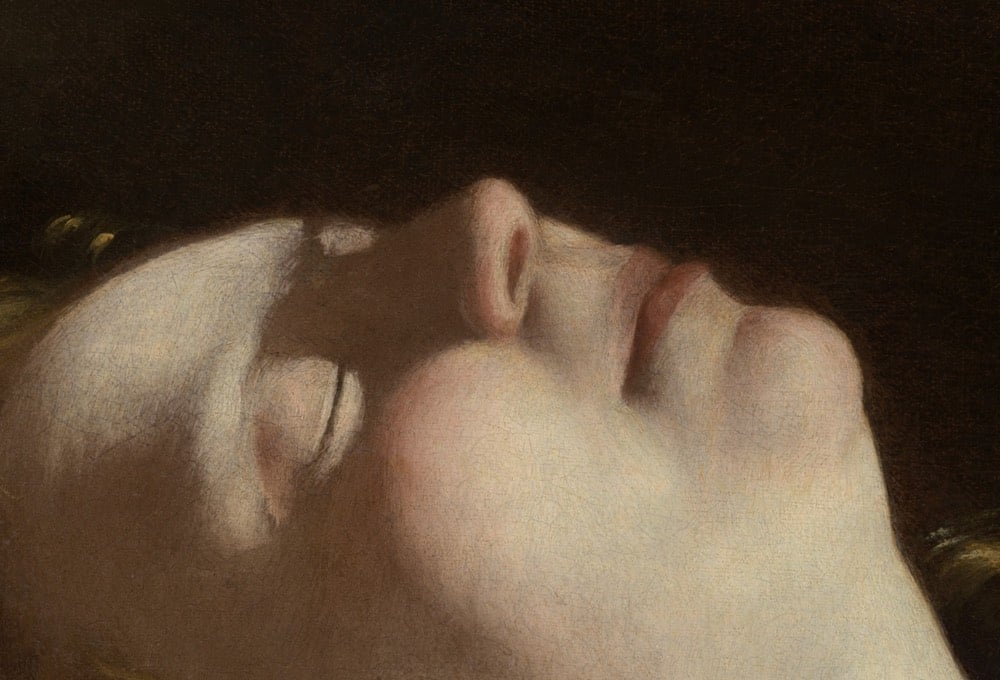
Update: FKA twigs gives tours of two additional Gentileschi paintings: Self-Portrait as Saint Catherine of Alexandria and Judith Beheading Holofernes.
(via @norabz)
Back in early April, the USPS had a plan to send free face masks to every household in America. The White House blocked it. This would have saved many lives and prevented many severe infections.
Former model Amy Dorris says that Donald Trump sexually assaulted her in 1997. This makes at least 2 dozen women to come forward with sexual assault and rape accusations against Trump.

A Promised Land is a forthcoming memoir from Barack Obama that he says is “an honest accounting of my presidency, the forces we grapple with as a nation, and how we can heal our divisions and make democracy work for everybody”. Here’s the official description of the book:
In the stirring, highly anticipated first volume of his presidential memoirs, Barack Obama tells the story of his improbable odyssey from young man searching for his identity to leader of the free world, describing in strikingly personal detail both his political education and the landmark moments of the first term of his historic presidency — a time of dramatic transformation and turmoil.
Obama takes readers on a compelling journey from his earliest political aspirations to the pivotal Iowa caucus victory that demonstrated the power of grassroots activism to the watershed night of November 4, 2008, when he was elected 44th president of the United States, becoming the first African American to hold the nation’s highest office.
Reflecting on the presidency, he offers a unique and thoughtful exploration of both the awesome reach and the limits of presidential power, as well as singular insights into the dynamics of U.S. partisan politics and international diplomacy.
A Promised Land will be released November 17 but you can preorder it on Bookshop or for the Kindle.
Update: The Atlantic is running the adapted and updated preface to Obama’s book.
First and foremost, I hoped to give an honest rendering of my time in office — not just a historical record of key events that happened on my watch and important figures with whom I interacted but also an account of some of the political, economic, and cultural crosscurrents that helped determine the challenges my administration faced and the choices my team and I made in response. Where possible, I wanted to offer readers a sense of what it’s like to be the president of the United States; I wanted to pull the curtain back a bit and remind people that, for all its power and pomp, the presidency is still just a job and our federal government is a human enterprise like any other, and the men and women who work in the White House experience the same daily mix of satisfaction, disappointment, office friction, screwups, and small triumphs as the rest of their fellow citizens. Finally, I wanted to tell a more personal story that might inspire young people considering a life of public service: how my career in politics really started with a search for a place to fit in, a way to explain the different strands of my mixed-up heritage, and how it was only by hitching my wagon to something larger than myself that I was ultimately able to locate a community and purpose for my life.
You can even listen to Obama read the excerpt in an embedded audio player.
Wow! Hrishikesh Hirway’s Song Exploder podcast is now a Netflix series! (For those who have never listened, Song Exploder features musicians telling the stories of how their songs were created.) Check out the trailer above, featuring song explosions by Alicia Keys, Lin-Manuel Miranda, R.E.M., and Ty Dolla $ign.
Hirway says on Twitter:
I still don’t fully believe it but @SongExploder, a podcast I started in my bedroom!, is going to be a @netflix series.
If anyone at Netflix wants to talk about kottke.org becoming a series, let me know!! It can be about literally anything and everything. (Hey, we’ll call it “Anything and Everything”! The wheels are already in motion…)
After a fellow named Zikubi beat the speedrun record for Super Mario Bros 3 with a time of just over three minutes, speedrun analyst Bismuth made the video above to explain how he did it…by changing the game with the gameplay itself.
The first couple minutes go exactly as you’d expect, but the speedrun takes a weird turn when, instead of using the second warp whistle to go to level 8, he uses it to go to level 7. And once in level 7, Mario races around randomly, letting opportunity slip away like a blindfolded birthday boy unwittingly steering himself away from the piñata. It’s only later, during the explanation of how he got from level 7 to the final screen so quickly, that you realize Mario’s panicky idiot behavior is actually the player actively reprogramming the game to open up a wormhole to the ending. Watch the whole explanation — it’s a really fascinating little hack.
See also Bismuth’s explanation of a Super Mario Bros world record speedrun, which includes a short argument by me about why video game speedrun breakdowns are interesting to watch even if you don’t play video games.
In the video analysis of this speedrun, if you forget the video game part of it and all the negative connotations you might have about that, you get to see the collective effort of thousands of people over more than three decades who have studied a thing right down to the bare metal so that one person, standing on the shoulders of giants in a near-perfect performance, can do something no one has ever done before. Progress and understanding by groups of people happens exactly like this in manufacturing, art, science, engineering, design, social science, literature, and every other collective human endeavor…it’s what humans do. But since playing sports and video games is such a universal experience and you get to see it all happening right on the screen in front of you, it’s perhaps easier to grok SMB speedrun innovations more quickly than, say, how assembly line manufacturing has improved since 2000, recent innovations in art, how we got from the flip phone to iPhone X in only 10 years, or how CRISPR happened.
(via @craigmod)
In Search of a Flat Earth is a documentary essay by Folding Ideas’ Dan Olson that starts out talking about people who believe the Earth is flat (and why it’s so difficult to convince them otherwise) but then takes a sharp turn toward a more recent and much more worrying conspiracy theory, QAnon. Lots of interesting information and observations throughout.
See also QAnon, Conspiracy Theories, and the Rise of Magical Thinking.



Study of the Creative Specimens is a collection of fantastical hybrid creatures created for Adobe’s 99U conference by Mark Brooks and illustration studio alademosca. Prints are available from Paper Chase Press. (via colossal)
The title of this video is “David Lynch being a madman for a relentless 8 minutes and 30 seconds” is perfect and requires no further information or contextualization. (thx, david (no relation))
A great piece by model Emily Ratajkowski about the ownership of one’s image. “The problem with justice, or even the pursuit of justice, in the U.S. is that it costs. A lot.”
Months into the pandemic, some consumer goods are still difficult to find. “The coronavirus has eaten away at the entire system by which things are bought and sold in America, and few signs of improvement are on the horizon.”
NY governor Andrew Cuomo enlisted actor Paul Rudd to do a public service announcement about the benefits of wearing a mask during the pandemic. Rudd, who often looks like he hasn’t aged a day in the past 20 years but is actually 51 years old, is in total “how do you do fellow kids” mode in this video, deploying some totally plausible youth lingo in an effort to get his fellow youths to mask up.

From historians Keisha N. Blain (author of Set the World on Fire) and Ibram X. Kendi (author of How to Be an Antiracist) comes what sounds like a fascinating new book, Four Hundred Souls: A Community History of African America, 1619-2019. As editors, Blain and Kendi assembled 90 Black writers & poets to write a chronological history of Black America. Details on the bookseller sites are sparse, but Kendi explained the project on Instagram:
Histories of Black America have almost always been written by individuals, usually men. But why not a community of writers chronicling the history of a community? Keisha and I assembled a community of eighty Black writers and ten Black poets who represented some of the best Black recorders of Black America at its four-hundred-year mark. Though the project was conceived in late 2018, most of the pieces were written in 2019. We wanted the community to be writing during the four hundredth year. We wanted FOUR HUNDRED SOULS to write history and be history, a diary entry in the history of letters when Black America symbolically turned four hundred years old.
In different ways and forms, eighty writers each chronicled five years of Black America’s history in succession, amounting to four hundred years. They related that history, those five years, to our time. The volume’s first writer, Pulitzer Prize-winning creator of the 1619 Project, journalist Nikole Hannah-Jones, writes from August 20, 1619 to August 19, 1624. The volume’s final writer, Black Lives Matter co-founder Alicia Garza, writes from August 20, 2014 to August 19, 2019. All 90 contributors are leaders in their fields. I can’t wait to introduce all of them. The lineup is beyond belief.
FOUR HUNDRED SOULS has ten sections, each spanning forty years. Each section concludes with a poem that recaptures forty years of the history in verse. Sometimes history is best captured by poets — as these ten Black poets show. Indeed, the lives of Black Americans have been nothing short of poetic.
That sounds super interesting, in both form and content. You can preorder Four Hundred Souls today; it comes out on Feb 2nd.
A coalition of organizations led by Project South (which was founded as the Institute to Eliminate Poverty & Genocide — more on that last word in a minute) has filed a complaint based on a whistleblower about an ICE concentration camp in Georgia where, the complaint alleges, detained immigrants are not being properly treated for Covid-19, important medications are being withheld, conditions are appalling, and women are being given unnecessary hysterectomies. From a piece about the complaint:
Multiple women came forward to tell Project South about what they perceived to be the inordinate rate at which women in ICDC were subjected to hysterectomies — a surgical operation in which all or part of the uterus is removed. Additionally, many of the immigrant women who underwent the procedure were reportedly “confused” when asked to explain why they had the surgery, with one detainee likening their treatment to prisoners in concentration camps.
“Recently, a detained immigrant told Project South that she talked to five different women detained at ICDC between October and December 2019 who had a hysterectomy done,” the complaint stated. “When she talked to them about the surgery, the women ‘reacted confused when explaining why they had one done.’ The woman told Project South that it was as though the women were ‘trying to tell themselves it’s going to be OK.’”
“When I met all these women who had had surgeries, I thought this was like an experimental concentration camp. It was like they’re experimenting with our bodies,” the detainee said.
According to Wooten, ICDC consistently used a particular gynecologist — outside the facility — who almost always opted to remove all or part of the uterus of his female detainee patients.
“Everybody he sees has a hysterectomy — just about everybody,” Wooten said, adding that, “everybody’s uterus cannot be that bad.”
According to the UN’s Genocide Convention of 1948, “imposing measures intended to prevent births” within “a national, ethnical, racial or religious group” is genocide. Congresswoman Alexandria Ocasio-Cortez commented:
The fact of the matter is the United States has engaged in a program of mass human rights violations targeting immigrants.
I’ll remind you, as I have with increasing frequency lately about the activities of our country’s increasingly authoritarian government, that forced sterilization in detention camps is literally what the literal Nazis did (inspired by, you guessed it, America’s treatment of “undesirable” populations).
You can read the complaint here and check out this thread from Brooke Binkowski for more context and examples of detainee mistreatment at the hands of the increasingly extra-legal ICE.
So admittedly I was not the biggest fan of the first season of The Mandalorian — I don’t particularly care for westerns, space or otherwise, and in terms of the off-piste Star Wars tales, preferred Rogue One and even Solo to Mando’s adventures. But there is something compelling there and because I was indoctrinated in the ways of The Force as a child,1 I will watch the new season that starts on Disney+ October 30.
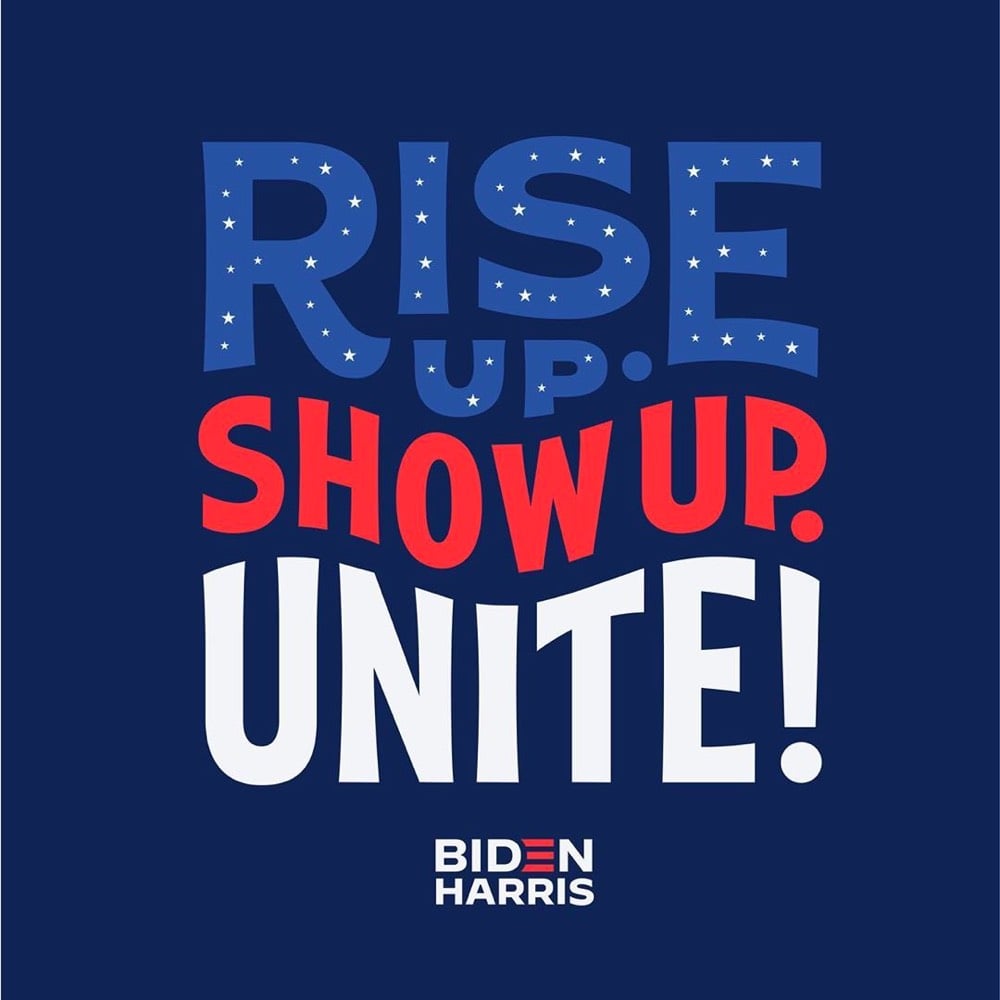
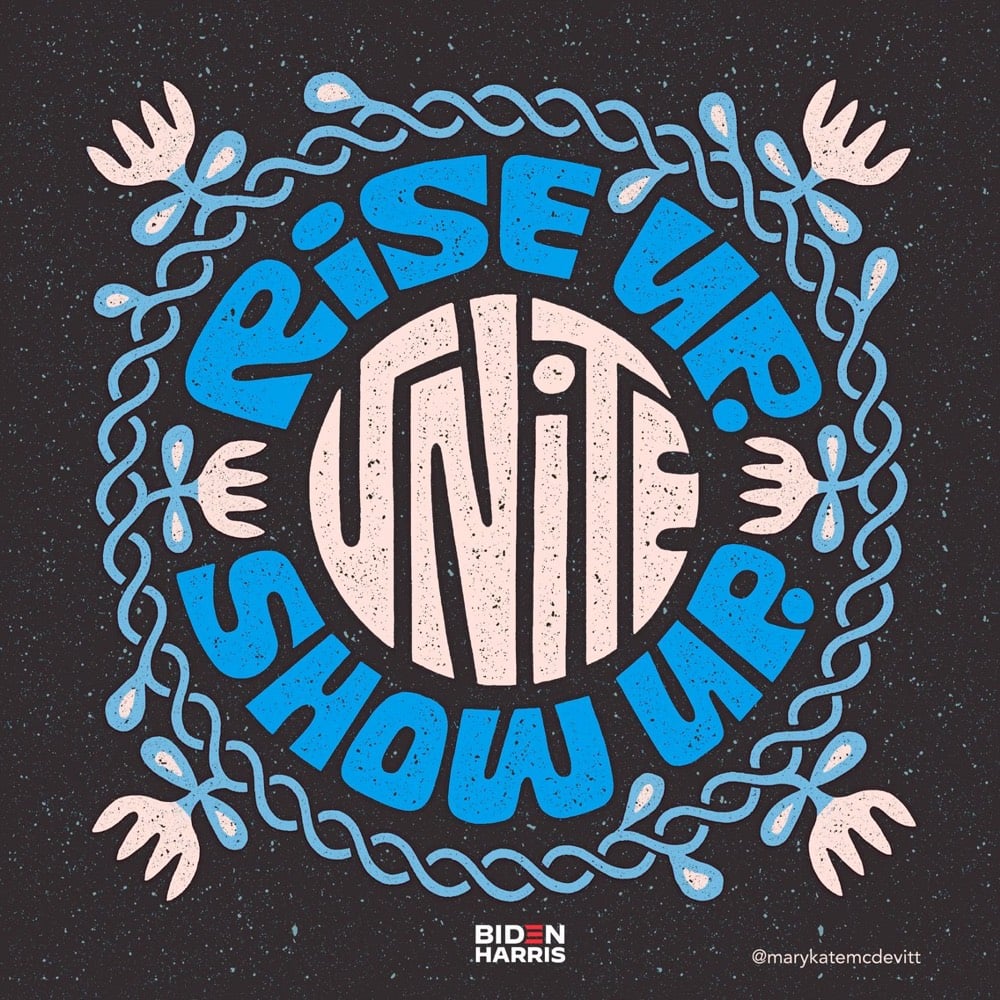
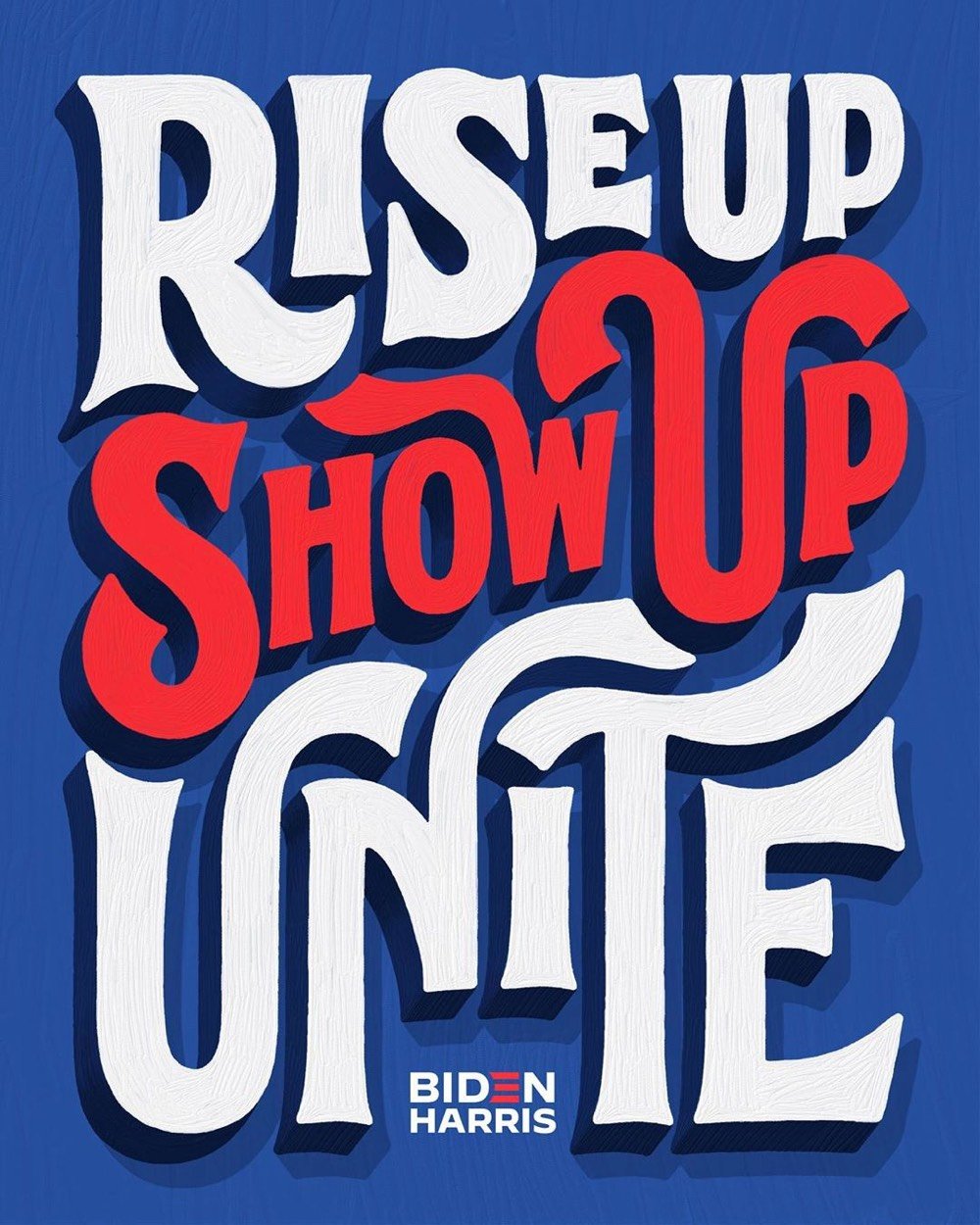
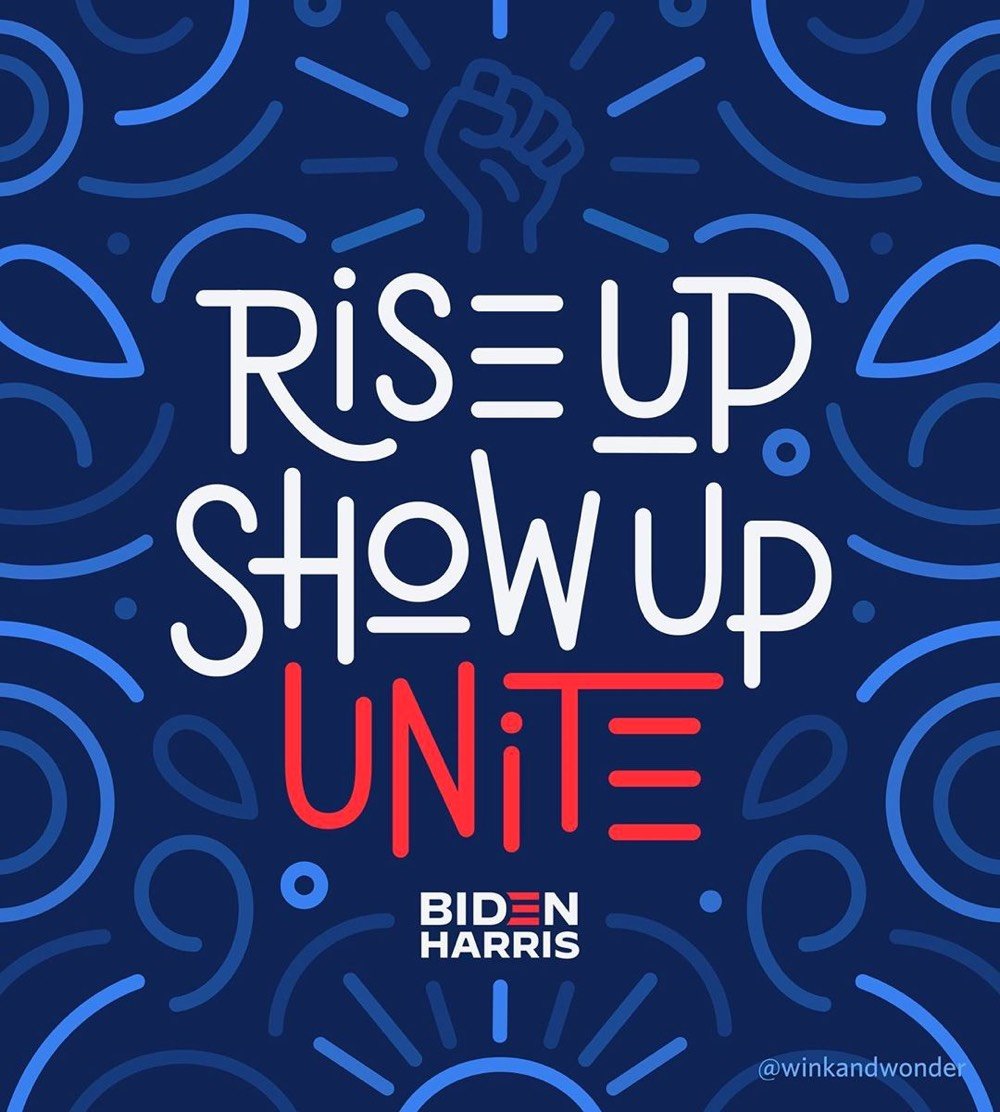
A group of creatives led by Jessica Hische are creating unofficial posters for the Biden/Harris campaign in order to increase visibility of the campaign.
Last week, I [Jessica Hische] had a good conversation with the Biden creative team. I shared that one of my concerns for the upcoming election was the lack of visible support for the campaign. There are a lot of folx within the creative world and beyond posting on social media about voting (a wonderful and necessary message), but few of those posts mention the candidates by name. It’s somewhat implied that if you’re promoting voting or voting rights that you’re likely voting Biden and encouraging a Biden vote, but it’s not explicit. There’s a “I guess I’ll vote for him if I have to” vibe throughout leftist social media, but exasperated resignation doesn’t get people to the polls.
From top to bottom, art by Jessica Hische, Mary Kate McDevitt, Lauren Hom, and Joanna Muñoz. You can participate by downloading a template that includes the Biden/Harris logo — you can find the link at the bottom of the article.
My god, this story of a man named Chris Tofte trying to save his family from the Oregon wildfires. (Maybe don’t read this if you’re feeling emotionally fragile right now…)
Back in the Jeep, struggling to navigate a road once so familiar but now shrouded by smoke-filled darkness, Chris almost ran over what looked like a bikini-clad woman on the road. Once he was closer, he realized she was wearing underwear. Her hair was singed, her mouth looked almost black, and her bare feet were severely burned.
He impatiently tried to help her into his car, explaining how he needed to find his wife and son, feeling like she was resisting.
Finally, she spoke. “I am your wife.”
We are in a spectacularly unprecedented moment in our nation’s history. If you do not believe that is the case, perhaps these two recent news reports in completely sober (and even socially conservative) publications will persuade you. Charlotte Alter reports from my home state of Wisconsin for Time magazine:
In more than seven dozen interviews conducted in Wisconsin in early September, from the suburbs around Milwaukee to the scarred streets of Kenosha in the aftermath of the Jacob Blake shooting, about 1 in 5 voters volunteered ideas that veered into the realm of conspiracy theory, ranging from QAnon to the notion that COVID-19 is a hoax. Two women in Ozaukee County calmly informed me that an evil cabal operates tunnels under the U.S. in order to rape and torture children and drink their blood. A Joe Biden supporter near a Kenosha church told me votes don’t matter, because “the elites” will decide the outcome of the election anyway. A woman on a Kenosha street corner explained that Democrats were planning to bring in U.N. troops before the election to prevent a Trump win.
One in five. 20%. Alter continues:
This matters not just because of what these voters believe but also because of what they don’t. The facts that should anchor a sense of shared reality are meaningless to them; the news developments that might ordinarily inform their vote fall on deaf ears. They will not be swayed by data on coronavirus deaths, they won’t be persuaded by job losses or stock market gains, and they won’t care if Trump called America’s fallen soldiers “losers” or “suckers,” as the Atlantic reported, because they won’t believe it. They are impervious to messaging, advertising or data. They aren’t just infected with conspiracy; they appear to be inoculated against reality.
Democracy relies on an informed and engaged public responding in rational ways to the real-life facts and challenges before us. But a growing number of Americans are untethered from that. “They’re not on the same epistemological grounding, they’re not living in the same worlds,” says Whitney Phillips, a professor at Syracuse who studies online disinformation. “You cannot have a functioning democracy when people are not at the very least occupying the same solar system.”
Alter found conspiracy thinking on the left (Trump created Covid?!) but it was way more batshit crazy on the right:
On a cigarette break outside their small business in Ozaukee County, Tina Arthur and Marcella Frank told me they plan to vote for Trump again because they are deeply alarmed by “the cabal.” They’ve heard “numerous reports” that the COVID-19 tents set up in New York and California were actually for children who had been rescued from underground sex-trafficking tunnels.
Arthur and Frank explained they’re not followers of QAnon. Frank says she spends most of her free time researching child sex trafficking, while Arthur adds that she often finds this information on the Russian-owned search engine Yandex. Frank’s eyes fill with tears as she describes what she’s found: children who are being raped and tortured so that “the cabal” can “extract their blood and drink it.” She says Trump has seized the blood on the black market as part of his fight against the cabal. “I think if Biden wins, the world is over, basically,” adds Arthur. “I would honestly try to leave the country. And if that wasn’t an option, I would probably take my children and sit in the garage and turn my car on and it would be over.”
(At this point, you may want to take a short break, as I did, to either fully absorb this madness or to try to wipe your mind of it completely. Neither worked for me, but I did have a nice little stroll.) Ok, ready for round two? From The Economist, How construction workers in Ohio view the election:
“He’s done a great job, he’s got everyone back to work. I’m pretty much 100% for him,” said Kyle, a 30-year-old electrician. “He shoots his mouth off but at least that shows he’s honest,” said Jason, a pipe-fitter, who said he especially liked Mr Trump’s commitment to reducing the national debt. “He’s done more for our country than the past ten presidents put together,” said an older builder, Jeff, skimming wet concrete on a new road. “He’s made — who is it, China or Japan? — pay our farmers billions of dollars. He got health care done, which the Democrats could never do. He built the wall.”
None of this is true, aside from Trump shooting his mouth off. These lies aren’t as spectacular as the blood-drinking pedophilia, but in some ways they’re even worse because they’re so easily fact-checked (e.g. Trump has increased the national debt) but still believed.
Bonus items that I randomly ran across this morning: 1) A recent local news report on an anti-mask rally in Utah, where some folks assert that Covid-19 is a hoax and that asymptomatic carriers don’t exist (oh, and a woman draws a parallel between George Floyd not being able to breathe and people not being able to breathe with a face mask on). 2) The assistant secretary of public affairs at the Department of Health and Human Services, an actual government official, “accused career government scientists on Sunday of ‘sedition’ in their handling of the pandemic and warned that left-wing hit squads were preparing for armed insurrection after the election”.
I’ve said this several times before, but I keep coming back to this quote from Hannah Arendt:
If everybody always lies to you, the consequence is not that you believe the lies, but rather that nobody believes anything any longer. This is because lies, by their very nature, have to be changed, and a lying government has constantly to rewrite its own history. On the receiving end you get not only one lie — a lie which you could go on for the rest of your days — but you get a great number of lies, depending on how the political wind blows. And a people that no longer can believe anything cannot make up its mind. It is deprived not only of its capacity to act but also of its capacity to think and to judge. And with such a people you can then do what you please.
Fox News, talk radio, and Facebook — aided and abetted by clueless mainstream media outlets who feel the need to cover “both sides” equally — have been pounding away on Americans for decades, feeding them misinformation and hate. Trump ratcheted that rhetoric up, legitimized it with the office of the president, and is reaping the rewards — “with such a people you can then do what you please”.
Newer posts
Older posts


Socials & More