



Professional lightsaber training in Singapore

Advertise here with Carbon Ads
This site is made possible by member support. 💞
Big thanks to Arcustech for hosting the site and offering amazing tech support.
When you buy through links on kottke.org, I may earn an affiliate commission. Thanks for supporting the site!
kottke.org. home of fine hypertext products since 1998.
Beloved by 86.47% of the web.
Entries for September 2015
Radiohead + D’Angelo = OK LADY
A brand-new, free-to-listen/download covers/mashup medley EP from Roman GianArthur, featuring labelmate Janelle Monae on the beautiful duet “NO SURPR:SES.”
D’Angelo and Radiohead: it’s two great late-90s/early-00s/still-pretty-damn-good-in-10s tastes that taste great together!
(via Wired and elsewhere)
A walk down 14th Street after the Age of Bloomberg
Brendan O’Connor has sketched a short, poignant, four-dimensional map* of one of Manhattan’s most iconic streets, from the Hudson to the East River, and from 2001 to the present.
There is an idea of New York, and especially of Manhattan, as a place where the wealthy and the less wealthy (and even the not-at-all wealthy!) live in close proximity, even adjacent, to each other, and that this arrangement produces ambition in the latter to attain what the former has, and some amount of respect for the humanity of the latter in the former. This is not just incidental to life here, the thinking goes, but integral to it: Everyone, or almost everyone, suffers the city together.
The story of 14th Street both encapsulates this high-low fantasy and shows how it has been and continues to be erased in favor of something much more lucrative.
[The] High Line is a magnet for more than tourists’ money: According to a study conducted by the New York City Economic Development Corporation, before the park’s construction in 2003, the surrounding West Chelsea neighborhood—a mix of residential properties and light industrial businesses—were valued at eight percent below Manhattan’s overall median. In 2005, the city rezoned West Chelsea for luxury development, and, by 2011, residential property values appreciated beyond borough-wide values. “The park, which will eventually snake through more than twenty blocks, is destroying neighborhoods as it grows,” Jeremiah Moss wrote in the New York Times in 2012. “And it’s doing so by design. While the park began as a grass-roots endeavor—albeit a well-heeled one—it quickly became a tool for the Bloomberg administration’s creation of a new, upscale, corporatized stretch along the West Side.”
*Most street maps lie in at least two ways in order to fit two-dimensional constraints.
- They omit pitch and elevation. This is admittedly a bigger problem in cities like San Francisco than it is in most places, but the experience of walking along any street is shaped by its sloping uphill or downhill, its seat above or below.
- They eliminate the axis of time, which is relegated to real estate transaction documents and local folklore.
Related: The New York Times’ terrific “Reshaping New York” interactive map from 2013.
The life and death of languages
John McWhorter looks at Aramaic, once the lingua franca of the near east, now reduced to about half a million speakers (who separately call it Chaldean, Syriac, Assyrian, Mandaic, etc.).
Aramaic, then, is in a splintered and tenuous state. Yet it was the English of its time—a language that united a large number of distinct peoples across a vast region, a key to accessing life beyond one’s village, and a mark of sophistication to many. The Aramaeans—according to Biblical lore named for Noah’s grandson Aram—started as a little-known nomadic group. But they were seekers, and by the 11th century B.C.E. they ruled large swaths of territory in Mesopotamia, encompassing parts of modern-day Iraq, Syria, and Turkey, including, for a spell, the city of Babylon itself. On the basis of this expansion alone, however, theirs would likely have become just one of various languages of the area that briefly enjoyed fame and then vanished in the endless game of musical chairs that was ancient Middle Eastern politics. The Aramaeans themselves were in Babylon only temporarily: In 911 B.C.E., the Assyrians, who spoke a language called Akkadian, ousted them. But the Assyrians unwittingly helped the Aramaeans’ language extinguish their own.
Namely, the Assyrians deported Aramaic-speakers far and wide, to Egypt and elsewhere. The Assyrians may have thought they were clearing their new territory, but this was like blowing on a fluffy milkweed and thinking of it as destruction rather than dissemination: The little seeds take root elsewhere.
There are many differences between English and Aramaic — English is supposedly simple and easy to learn, while Aramaic is manifestly not — but that actually had little effect on English’s emergence as a global language, or on Aramaic’s rise and decline. But one set of differences between the two languages, McWhorter argues, really is material:
At this point, I am supposed to write that English’s preeminence could end as easily as Aramaic’s. Actually, however, I doubt it: I suspect that English will hold on harder and longer than any language in history. It happened to rise to its current position at a time when three things had happened, profoundly transformative enough to stop the music, as it were: print, widespread literacy, and an omnipresent media.
Together, these things can drill a language into international consciousness in a historically unprecedented way, creating a sense of what is normal, cosmopolitan, cool even—arbitrary but possibly impregnable. If the Chinese, for example, rule the world someday, I suspect they will do it in English, just as King Darius ruled in Aramaic and Kublai Khan, despite speaking Mongolian, ruled China through Chinese translators in the 13th century C.E. Aramaic held sway at a time when a lingua franca was more fragile than it is today.
The High Times softball dynasty
High Times, the magazine for marijuana enthusiasts, has a really, really good softball team. They are called “the Bonghitters,” and are defending their championship in the New York Media Softball League.
The mainstreaming of marijuana has helped High Times thrive despite the downturn in print media… This success translates to stability for the team. Media softball rosters are flexible, a mix of current and former staffers, friends, and friends of friends. There’s occasional grumbling about “ringers,” but usually the only credential you need is an invitation. Still, every team needs a few regular employees. Typically, there’s an employee who schedules games, recruits players, sets lineups, and makes sure somebody brings a bat. Each team also needs a keeper of the park permit; the best fields and time slots are almost impossible to get if it lapses. So staff cuts or overhauls can be catastrophic.
Perhaps we can add this to the shortlist of nonstandard economic indicators. Is your media organization healthy? ? How good is your softball team?
The intellectual at war
Bernard-Henri Levy (known as BHL) is a French philosopher and public intellectual who seems to have come from central casting. Sixty-six, handsome, he wears gorgeous tailored shirts unbuttoned halfway down his chest, weighs in on any public dispute that catches his fancy (like when he argued that his good friend, the IMF chief Dominique Strauss-Kahn, could not have assaulted a hotel employee since, as everyone knows, the finest hotels always send in cleaning brigades of two people).
He is, in short, ridiculous, all the more so because he takes himself so seriously, and is taken seriously by others.
All this is background to explain what is absurd, charming, and inexplicably funny about this slideshow of photographs of BHL in various combat zones over the years.
This photo series of Bernard-Henri Levy covering war is absolutely everything you want it to be. And more. http://t.co/G9bdzGASkH
— Paul Hamilos (@PaulHamilos) September 7, 2015


The end of Key and Peele
Wesley Morris expertly examines the show’s achievements:
American television has always been fundamentally white. Its points of view emanate from the vantages of those who control the industry and create its content. If it deals with race as a problem, it typically can do so only if it believes there’s a solution. But as a black viewer, I’m never looking for contrition, simply an acknowledgement of a condition; I don’t need television — or American culture — to provide a remedy. Black America has tended to see the discrepancy between the cultural importance to diagnose and the delusion to attempt to cure. Merely giving a nonwhite person a speaking role is not absolution. That contradiction is visible to a black audience almost anytime it sees itself chauffeuring, housekeeping, mammying, best-friending, sidekicking, saying everything about white characters while saying nothing about itself. That was the biracial brilliance of Key and Peele. It understood race as real and racism as inevitable, and never lost sight of the way in which individual white people can be agents of change but also of offense, wittingly or not supporting a system of demoralization.
Kwame Opam discusses how the show lived and grew across the world wide web:
Key & Peele’s greatest strength and weakness was its format; as a sketch show, it’s best remembered for its bite-sized bits — most of which wound up online. “Substitute Teacher,” which first aired in 2012, is one of the show’s earliest highlights. It quickly went viral, and right it now boasts more than 80 million views on YouTube. Earlier this year, Paramount even announced it plans on turning it into a feature-length film. But the episode it premiered on only pulled in 1.16 million viewers at the time, a drop in the bucket compared to its online views. And it makes sense, especially for a huge swath of the population that doesn’t have cable. Why wait for the show when you can watch the best clips on the internet?
This is a complex but not unique irony: how a slice of pop culture in 2015 can be popular enough for the President himself to take notice (and embrace it), and to seem to have zeitgeist-defining properties, but not be quite popular enough to sustain a half hour in basic cable.
Maybe that’s tied to something Morris and Opam touch on but don’t quite name. More than any show on television, to my mind, Key and Peele felt young. Not young in the shallow way that all media, maybe especially television, seem to exploit young talent; not young in the same reckless, juvenile way Chappelle’s Show or vintage Saturday Night Live was; young in the open, searching, insouciant, absurdist key that’s so important to sketch comedy.
That’s what’s in the mix of what Morris rightly identifies as the show’s blend of sadness and acceptance. It’s youth knowing that this is not forever, that it would be wrong to linger, that the future (and everything good, bad, and unchanging that comes with it) is inevitable.
Interviewing Kermit’s new partner
No, not his new girlfriend Denise (although I hope for Kermit nothing but happiness), but Steve Whitmire, the puppeteer who became the man behind the frog (and Ernie, and several other beloved characters) after Jim Henson’s death. It’s also a sweet, mournful look into the mystery of puppeteering:
Until Being Elmo, the documentary about long-time Elmo performer Kevin Clash, nobody knew who Clash was. Elmo was just Elmo. Consider the secondary performer, the underling to the already-invisible: They don’t play a fictional character; they gesture a single limb. That dark empty sleeve is the foxhole of puppeteers—you dig in, protecting your neighbor and hope you come back alive. Survive and your own identity awaits. Jerry Nelson began as a right hand for the Muppets in 1965—eventually he would perform one of the most recognizable Sesame Street citizens, Count von Count. If anyone knows the value of digits, it’s a 4-year-old learning their numbers by extending one finger at a time until, finally, their hand is open, the better to grab on.
The Muppets premieres on September 22, and a Jim Henson documentary will air on September 15.
Bill Murray owns a baseball team
Bill Murray is a co-owner of the Charleston RiverDogs, a Class A minor league team in the South Atlantic League. His official title is “Director of Fun.” In 2012, Amy Nelson and an SBNation video team went down to interview Murray for his induction into that league’s hall of fame.
(“But wait, Tim, this was three years ago.” Well, I missed it until today, when it was revealed that Murray has actually seen the little video. And now I have seen it, and like all things Bill Murray touches, it is a goddamn delight. Enjoy.)
A new species of the genus Homo
There’s a new (extinct) hominin on the block (in a cave system in Africa): Homo naledi.

Basically, Homo naledi had humanlike hands, legs, and feet, but tiny little australopithecine skulls, i.e., brains.
And, there are a lot of them, fossil-wise: “Representing at least 15 individuals with most skeletal elements repeated multiple times, this is the largest assemblage of a single species of hominins yet discovered in Africa.”
But we don’t yet know exactly how long ago they lived: maybe two million years ago, when the Homo genus emerged, or as late as a hundred thousand years ago, when it contracted to, well, us. In an accompanying article, Chris Stringer gets a little testy about it.
Frustratingly, the rich and informative H. naledi material remains undated. Given that this hominin material could conceivably even date within the last 100,000 years, I am puzzled by the apparent lack of attempts to estimate its age. This could have been achieved directly via radiocarbon dating (even if only to test whether the material lies beyond the effective range of that method) or indirectly based on ancient DNA samples. For example, after ancient DNA was successfully recovered from the Sima de los Huesos fossils, it was used to date them to about 400,000 years old (Meyer et al., 2014). Moreover, tests on even small fragments of bone and tooth enamel could have narrowed down the possible age range and at least ruled out either a very ancient or very young age (Grün, 2006).
As Dan Cohen points out, this discovery is also unusual in that it didn’t make its splash at Science or Nature, but eLife, a free, open-access journal. Study leader Lee Berger tells Buzzfeed the article was rejected by Nature because the authors couldn’t meet the mag’s demands to squeeze the whole thing into 2500 words. Well, whatever the reason for going open-access, we of the science-following-but-not-institutional-password-having-audience approve.
Update: Ed Yong has a terrific account of the discovery, with a ripping narrative about the caving team’s expedition and an intelligent analysis of the new species and its implications. Well worth reading.
The manifest glory of JJ Watt
I’m increasingly ambivalent about football (see here, here, here), but HBO’s Hard Knocks, the recurring documentary miniseries inside an NFL training camp, is still the best TV show I’ve seen all year.
The show’s stars included coaches, families, undrafted rookies and journeyman free agents, all in orbit around the Houston Texans. A huge part of the draw, though, is all-pro defensive lineman JJ Watt, maybe the NFL’s best player at any position. Watt does freakish things, like flipping half-ton tires end over end, or box-jumping sixty-one inches (kind of like jumping onto the roof of a car from a standstill).
Earlier this summer, Grantland’s Shea Serrano got to run through drills with Watt:
Watt is the best defensive football player on the planet — probably the best football player full stop. His body looks like what Superman would draw if someone asked him to draw what he wanted to look like. My body looks like if someone asked Superman to draw a pile of mashed potatoes wearing shorts.
Sports business may be evil, its fundamental practices barbaric, its media representations distorted and misleading, and its role in American life exaggerated beyond all reason. But god, it’s compelling to watch human beings who are better at what they do than anyone else on the planet, who do things that don’t completely seem possible.
Reviewing jail on Yelp
An emerging genre:
“When I would shower, I would take my clothes and wash them, people thought it was funny, but it was really a way for me not to get my own clothes robbed being there was no jump suits,” [Jason A.] wrote in a 1-star review of Rikers. “Food tasted like wet noodles and grill gristle…. I later learned to get a muslim halal card, and a jewish card, and know the kitchen staff to see which card would get me a better meal for the day.”…
In reviewing the Wayne County Jail, Athena Kolbe, a Detroit social worker, says her aim was twofold: first, she wanted potential visitors to “be prepared for it mentally when you go into it.” Second, “when you come out of it, know that all that disrespect you experienced, everybody else is also experiencing that. It’s not just you.”
This is what you need to know might be the best feature of any good review, and is arguably most essential when you don’t have a lot of choice in the matter. Not just jails, but hospitals, homeless shelters, emergency psychiatric services — there is a fair amount of official information, and there has always been informal word-of-mouth, but not many opportunities to get frank advice or to tell your story. Not much to make the experience anything but lonely and terrifying.
The New Yorker Minute
“The New Yorker Minute” is a reader-service email newsletter that triages articles in The New Yorker (the magazine) to let you know whether or not they’re worth reading. (Or, alternatively, how excited you should be to read them or not read them). Each issue is sorted into “Read This,” “Window-Shop These,” and “Skip Without Guilt.” Even the poetry, fiction, and cartoons get short notes from editors dedicated to those sections. Fun, surprisingly useful, nearly essential.
College football is rigged
Sports and education are the two parts of American life where our meritocratic fantasies crash hardest into exploitative reality.
In “BROKE,” SBNation’s Spencer Hall has a powerful argument for paying student-athletes, specifically college football players.
When and if [student-athletes] do receive their degree, it might mean even less in terms of real future dollars than those received by their peers. The networking they might have done with others on campus is restricted by their class schedules and practice; the networking with wealthy alumni that might benefit them in business is explicitly forbidden in many instances, something Princeton’s own Michael Lewis points out in The Blind Side. The athlete receives no dividend or funds kept in trust for their well-above-average financial contributions to the university on graduation.
By rule they are separated from the income they make, and by system they are separated from the university education they were promised. They are neither amateurs nor professionals, and effectively moved as undeclared contraband through the United States tax system.
Hall’s argument is intercut with a personal essay about growing up with his own family precariously in and out of poverty. The two halves don’t quite join up, but it helps break some of the abstractions around the amateur ideal and gives the whole thing an added urgency.
Pop economics and the rebirth of the cover song
Why are there so many cover versions of hit songs on Spotify, YouTube, and other streaming music services? It’s not just because of searches and the artistic equivalent of SEO, but because there is an economic engine to support them:
Every time one of Scofield’s songs is downloaded on iTunes, she makes around 60 cents, after paying a processing fee and, when it’s a cover song, royalties to the original artist. But if one of her songs is streamed on Spotify, she’ll make just a fraction of a cent. Both Scofield and Young have done the math: “You would have to play one of my songs on Spotify 150 to 400 times in order to equal what I would make from one iTunes download,” Young says. Scofield agreed that to balance revenue on the platforms, she needed at least several hundred times more Spotify streams than iTunes downloads…
Spotify’s microeconomy of cover artists gave rise to a cottage industry of easy-to-use online licensing services. Over the past several years, dozens of these services have emerged, like SongFile and Easy Song Licensing, an amateurish-looking website that promises it can clear a cover song for you in one to two days. Jonathan Young uses Loudr, a licensing and digital distribution startup that operates in the same way most of these companies do. For $15 per song, plus royalty fees (calculated by the number of times a song is streamed), Loudr will do the work of securing a license and putting the song up online. All Young has to do is pay and wait.
This is essentially an updated throwback to pop music in the 1940s and 1950s (and to a lesser extent the 1960s), where publishers would push hit songs on as many artists as possible to get maximum exposure/run it into the ground. It’s fun to look at the recording history of a standard like “Baby, It’s Cold Outside”:
The following versions were recorded in 1949:
- The song in its original form was released on the soundtrack for Neptune’s Daughter sung by Ricardo Montalban and Esther Williams.
- The recording by Dinah Shore and Buddy Clark was recorded on March 17 and released by Columbia Records as catalog number 38463. It first reached the Billboard Best Seller chart on May 6, 1949, and lasted 19 weeks on the chart, peaking at number four.[8]
- The recording by Margaret Whiting and Johnny Mercer was recorded on March 18 and released by Capitol Records as catalog number 567. It first reached the Billboard Best Seller chart on May 6, 1949, and lasted 19 weeks on the chart, peaking at number four.[8]
- The recording by Don Cornell and Laura Leslie with the Sammy Kaye orchestra was recorded on April 12 and released by RCA Victor Records as catalog number 20-3448. It first reached the Billboard Best Seller chart on June 24, 1949, and lasted 10 weeks on the chart, peaking at number 13.[8]
- The recording by Ella Fitzgerald and Louis Jordan was recorded on April 28 and released by Decca Records as catalog number 24644. It first reached the Billboard magazine Best Seller chart on June 17, 1949 and lasted seven weeks on the chart, peaking at number 17.[8]
- A parody recording was made by Homer and Jethro with June Carter; it went to number 9 on the country charts and number 22 on the pop charts.
Non-charting recordings were made:
- By Esther Williams and Ricardo Montalban on April 7, 1949 released by MGM Records as catalog number 30197.
- By Pearl Bailey and Hot Lips Page on June 23, 1949 released by Harmony Records as catalog number 1049.
- By Louis Armstrong and Velma Middleton.
I mean, look at the cluster of dates! March 17, March 18, April 7, April 12, June 23. Some of the cover versions beat “the original” to market.
Then as now, the money isn’t in the performance, especially on the record; it’s in the song.
Today, the [star] artist retains more power than in the 1940s, and there’s a stigma against artists who don’t write their own material. But I wouldn’t be surprised if at some point, we start to see more established artists get into the game of covering new (and old) hit songs, not just young artists looking for a little exposure. The economics of the thing line up the same way for everybody.
The new arcades
There seem to be two dominant business models for game arcades in 2015:
- run it as a museum;
- sell beer.
And even then, it’s tricky.
“Don’t do quarters,” Wilson says. “Local and state licensing and taxes are geared from the 1980s which makes it impossible to make a buck that way.” The laws aren’t up to date, and owners still have to pay the same amount to register arcade machines, even if revenue is much smaller than it was in the ’80s. Wilson adds that customers often think a quarter should hold the same 25-cent value in 2015 that it did in 1983.
And:
[A]fter all the work that goes into finding these machines, they are then introduced to a world very different from the arcade homes they once knew. It’s akin to taking fragile dinosaur fossils from a museum collection and throwing them into the middle of a party.
“We have 20-30-plus-year-old video games in a very high-traffic, kind of high-energy environment,” Horne says. “The games tend to get pretty beat up.”
It’s surprising how much of a premium is placed on using vintage machines, given the problems with keeping them in repair.
A motherboard fried on KFS’s Off Road cabinet, and Horne has never been able to find a replacement. Some of the early Nintendo titles, such as Super Mario Bros., have systems that won’t work with newer monitors.
A museum is one thing, but you can imagine a working arcade using modular, replicated equipment. Modern computer guts running emulated software in rebuilt or reused cabinets. Call it physical emulation.
Maybe the market’s just not big enough to make it worthwhile. Or it would lack authenticity. It just doesn’t seem like it would be that hard to do (and could make new kinds of games and business models a lot more feasible).
(Related: see Laura June’s 2013 history of arcades.)
Bagel pluralism
Murray’s Bagels in New York will now toast customers’ bagels on request, doubtlessly reviving a debate about the appropriateness thereof that rivals the oxford comma, shorts on men, and the pronunciation of GIF in its ferocity over the smallest things.
To this I say, let a million flowers bloom, à chacun son goût, de gustibus non est disputandum, whatever blows your hair back. Judge not your fellow citizens’ bagel choices, whether in flavor, condiment, or the preparation thereof. But customers, you too should not judge your bagelry too harshly if they are not able to toast your bagel to your specifications. Your indignation is as unwelcome as the prejudice against you.
After all, those machines take up a lot of counter space. And you’re holding up the line.
The history of technology is the history of pockets

Diana Kimball writes on the complex symbiosis of devices, clothing, and the body:
In a very real way, what people tuck into their pockets signals what they care about. Ötzi the Iceman carried fungus to make fire. Japanese men in the Edo period carried medicine and seals. Queen Elizabeth I carried a miniature jewel-encrusted devotional book. European women in the 18th century carried money, jewelry, personal grooming implements, and even food. Here in 2015, we carry cellphones?—?never letting them out of our sight.
If what we put in our pockets is important, to advertise a product as pocketable is to imply that it’s indispensable: something you’ll always want by your side. Pocket watch manufacturers adopted this approach early; purveyors of pocket knives, pocket handkerchiefs, and pocket books (also known as paperbacks) followed suit. Technologies all, these tools still seem primitive relative to slim electronic bricks we haul around today. To find a direct ancestor of the cellphone, we need only look back as far as 1970: the year the pocket calculator was born.
It’s a short essay, but still manages to cover multiple historical periods, eastern and western traditions, different problems faced by men and women — remarkable range. A beginning.
(photo via Matthew Rutledge at Flickr)
Greening the text
John McPhee, maybe our greatest living nonfiction writer (depending on how you feel about Joan Didion), has a lovely essay on omission in this week’s The New Yorker. Along with a tidy analysis of Hemingway’s iceberg metaphor and some great shaggy-dog stories about citrus fruits, General Eisenhower, and more, he includes an exercise he learned writing for Time that he’s adapted for his students at Princeton.
After four days of preparation and writing—after routinely staying up almost all night on the fourth night—and after tailoring your stories past the requests, demands, fine tips, and incomprehensible suggestions of the M.E. and your senior editor, you came in on Day 5 and were greeted by galleys from Makeup with notes on them that said “Green 5” or “Green 8” or “Green 15” or some such, telling you to condense the text by that number of lines or the piece would not fit in the magazine. You were supposed to use a green pencil so Makeup would know what could be put back, if it came to that. I can’t remember it coming to that…
The idea is to remove words in such a manner that no one would notice that anything has been removed. Easier with some writers than with others. It’s as if you were removing freight cars here and there in order to shorten a train—or pruning bits and pieces of a plant for reasons of aesthetics or plant pathology, not to mention size. Do not do violence to the author’s tone, manner, nature, style, thumbprint. Measure cumulatively the fragments you remove and see how many lines would be gone if the prose were reformatted. If you kill a widow, you pick up a whole line.
Greening seems like such a material thing, wholly specific to print — not just to the fact of magazine layout, but a specific kind of workflow. One’s tempted to say with digital writing, we’ve overcome those space limitations, but I’m less sure. Twitter’s the obvious example, but doing web layout, I’ve killed more than my share of lines to preserve symmetry or squeeze everything into a smaller space.
Where did the summer go?
Tim Kreider on The Summer That Never Was.
I never went to Iceland. I suppose I should say I didn’t go to Iceland this summer — never sounds a little melodramatic, possibly terminal. It’s not as if I’ve died and all hope of ever having gone to Iceland is obviated. But for some reason this missed opportunity is causing me more than the usual, near-toxic level of regret. I’ve had a free apartment in Reykjavik on offer for several years, and somehow I’ve never made it there. The owner of the apartment sends me photos of the aurora borealis that break my heart.
This was going to be the summer I finally went. Airfares were cheap. I’d just finished writing a book in May, and for the first time in three years the awful obligation to Work on My Book was not weighing on my soul. The summer looked as wide open and shimmering with possibility as the summers of childhood.
But events conspired against me. I just couldn’t afford the flight until some checks I was waiting on arrived, and though all other transactions in the 21st century are conducted electronically and instantaneously, the process of paying writers is apparently still carried out by scriveners and counting-houses and small boys dispatched with shillings in their hands, so by the time I got the money I’d run out of summer.
Summer is almost over, and I feel like I missed it this year. I don’t normally feel this way, but I mostly didn’t get to spend it in the place or with the people I wanted to. But my kids got a much better summer out of it, so in the end it was well worth it. No regrets. Today, I’m going to the beach with a book, to hopefully recover a little of that summer feeling before fall arrives. I hope you all had happy summers, and I will see you all in a week — you’re in good hands with Tim Carmody until then.
The Civil War, remastered
Twenty-five years after its first airing on PBS, Ken Burns has remastered his epic documentary, The Civil War, and PBS will be airing the new version all this week, starting tonight. The remastered series will also be available on Blu-ray in October.
Donald Trump on Citizen Kane
Many years ago, Errol Morris interviewed Donald Trump about Citizen Kane as part of a project called The Movie Movie.
The table getting larger and larger and larger with he and his wife getting further and further apart as he got wealthier and wealthier, perhaps I can understand that.
Trump acquits himself pretty well on Kane and its lessons — although I would not characterize Kane’s fall as “modest” — and his commentary about the film is probably the first actually interesting thing I have ever heard him say. But I watched all the way to the end and he shoots himself in the foot in the most Trumpian & misogynistic way — it’s actually perfect.
The Movie Movie, according to Morris’ web site, was based on the idea of putting modern day figures like Trump and Mikhail Gorbachev into the movies that they most admire. So Trump would star as Kane in Citizen Kane and Gorby would be in Dr. Strangelove as who, Strangelove himself? Man, what a fantastic idea. Joshua Oppenheimer used a variant of this idea to powerful effect in The Act of Killing, a film executive produced by Morris.
Morris himself turned a bit of the original The Movie Movie idea into a 4-minute clip for the 2002 Oscars of people — some of them famous: Trump, Gorbachev, Tom Brady, Christie Turlington, Keith Richards, Philip Glass, Al Sharpton — talking about their favorite movies.
1969 Bell System logo redesign pitch video by Saul Bass
From 1969, this is the video that Saul Bass made to pitch AT&T on a new corporate identity. What a time capsule. Here’s the logo, which remained in use until 1983, when Bass designed the “Death Star” logo to replace it.
.svg)

Star Wars Episode IV: Laser Moon Awakens
The Auralnauts provide an alternate soundtrack and dialogue for Star Wars.
(via @waxpancake)
“This job is so cool because it’s about imagination, then destruction.”
Chris Wondolowski is a striker for the San Jose Earthquakes in MLS. Here’s how he goes about his job of putting the ball in the net. Unsurprisingly, 99% of being a striker involves not kicking a football.
A major part of my job is to lie (sorry, Mom). I have to use deception to manipulate two, sometimes three, defenders guarding me. It’s a 90-minute game of chess. If I know we don’t have the ball in a threatening spot, I’ll often sacrifice my positioning for a little while so I can soften up the defenders for later. I want to build up their confidence and make them think they’re all over me. For example, I always know the exact spot I want to end up when a play is building in the middle of the field. And if I see that my teammate is running down the wing with the ball, I know he’s maybe eight seconds away from crossing the ball into the box. I can’t simply run to my spot right away. I need to use about 7.5 seconds before the potential pass comes to confuse the defenders. I need to make them believe that I’m going anywhere else but that spot.
Wondo is also one of a number of athletes who uses visualization before games to prepare himself for success.
Long before the game starts, whether I’m at home at Avaya Stadium or on the road, I’m already on the field starting my work. But I’m not warming up or kicking a ball around; I’m imagining how the whole game will play out in my head. I walk the entire field listening to music, from one goal area to the other. I’m visualizing where the other 21 men could be, how the ball might come to me, and how I can get it past the defenders and the goalie. I might also picture the ball arcing through the air from a corner kick, then me jumping up, making contact with my head and the ball going into the top corner, splashing against the netting before settling in the grass. (It’s the little details that make it real.) No matter what, in my head, I’m envisioning myself scoring. Every time, the ball lands perfectly in the back of the net.
Haven’t cried on the subway lately? Here are seven of the most moving podcasts ever recorded.
The varying wavelengths of colors
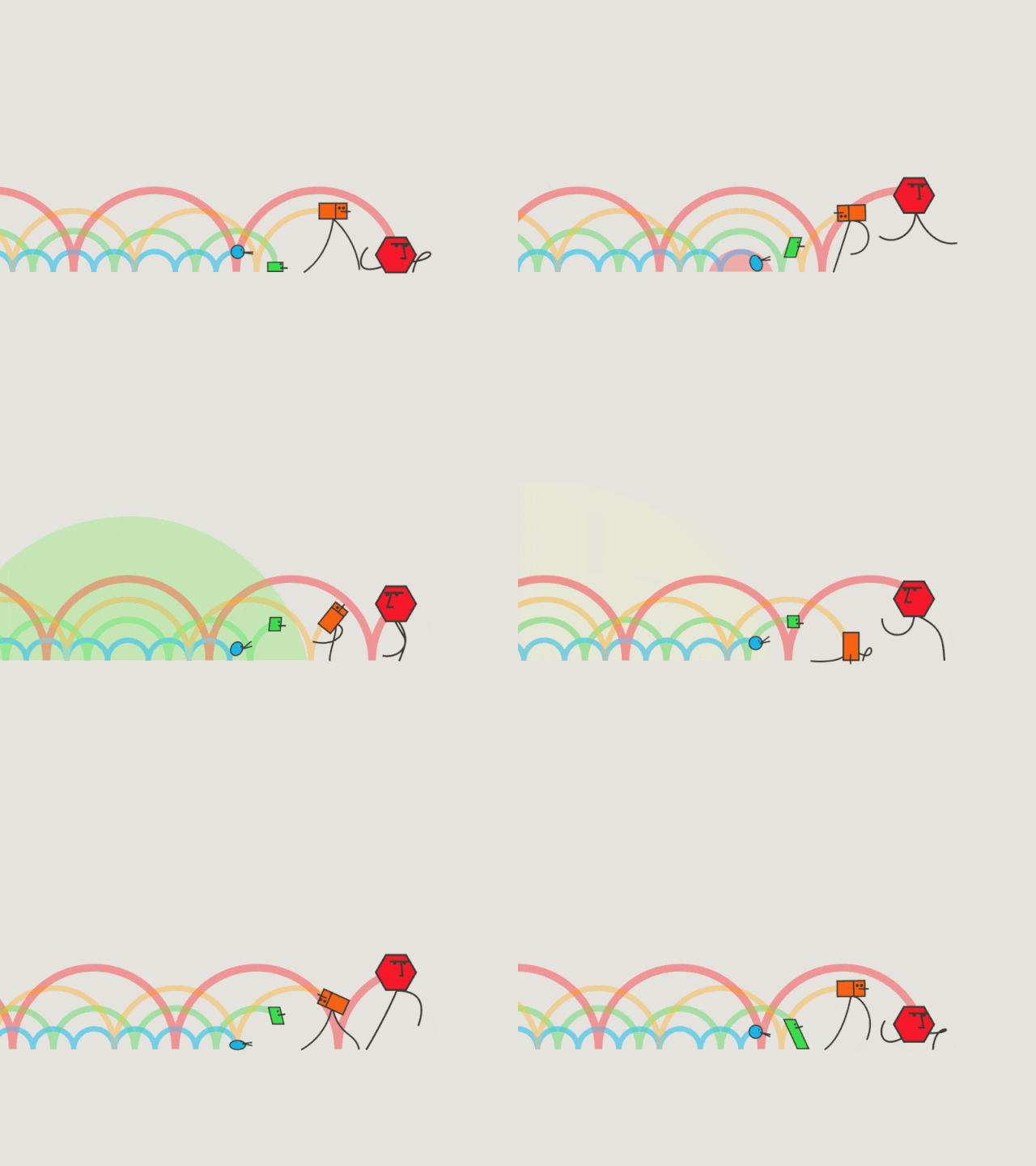
Rain-Bros by Daniel Savage is a fun visualization of the different wavelengths of light in the visible spectrum, from the loping walk of red to blue’s energetic bounce.
Hanging in the Woods
[This is NSFW.] Artist Hilde Krohn Huse needed a minute or two of film of herself hanging naked upside down from a tree branch for a project she was working on. But when the rope tightened around her ankle too much, things went a little wrong.
My first thought was, “OK, you’ve fucked up, Hilde, but let’s try to get you out of this so nobody needs to know.” I hauled myself up, hand over hand, until I was swinging horizontally, just below the branch, and tried to yank my foot free.
It was hopeless. Righting myself, I put my free foot back on the ground to rest for a moment, then tried again, pulling myself up and fighting, puppet-like, against my bonds. My left foot, taking my weight in the lowest noose, started to spasm and I knew my strength wouldn’t hold out. But my pride was still uppermost — the idea of having to draw the attention of others to my humiliating plight still seemed unthinkable. I was losing strength, but full of adrenaline, my face dragging along the woodland floor, leaving me spitting twigs.
As any good artist would, Huse turned her ordeal into an art piece in the form of the 11 minutes of video shot before her camera shut off:
Making Nemo
From 2003, a 25-minute documentary (plus a few extras) on how Pixar made Finding Nemo.
How far does Pixar go to get a movie made correctly? Far. For instance, everyone on the Nemo team got certified in scuba diving. (via @drwave)
How a volcanic eruption changed the world
The eruption of Mount Tambora in Indonesia in 1815 was the most powerful volcanic eruption in recorded history. According to Tambora: The Eruption That Changed the World by Gillen D’Arcy Wood, the eruption affected the world’s weather for at least three years, inspired artists & writers, triggered famine, contributed to the world’s cholera epidemic, and altered economic systems all over the world.
Here, Gillen D’Arcy Wood traces Tambora’s global and historical reach: how the volcano’s three-year climate change regime initiated the first worldwide cholera pandemic, expanded opium markets in China, and plunged the United States into its first economic depression. Bringing the history of this planetary emergency to life, Tambora sheds light on the fragile interdependence of climate and human societies to offer a cautionary tale about the potential tragic impacts of drastic climate change in our own century.
William Broad reviewed the book recently for the NY Times.
The particles high in the atmosphere also produced spectacular sunsets, as detailed in the famous paintings of J.M.W. Turner, the English landscape pioneer. His vivid red skies, Dr. Wood remarked, “seem like an advertisement for the future of art.”
The story also comes alive in local dramas, none more important for literary history than the birth of Frankenstein’s monster and the human vampire. That happened on Lake Geneva in Switzerland, where some of the most famous names of English poetry had gone on a summer holiday.
The Tambora eruption must have also unleashed quite a racket, perhaps louder than Krakatoa’s loudest sound in the world.
The Danish Girl
The Danish Girl is an upcoming film starring Eddie Redmayne as transgender pioneer Lili Elbe, who was one of the first people to undergo gender reassignment surgery. It’s based on a novel of the same name which presents a fictionalized account of Elbe’s life.
The film may well net Redmayne another Oscar nomination, but I don’t know how the transgender community will react. From a quick look on Twitter and the past reception of Oscar-hopeful films dealing with similar issues (see The Imitation Game’s portrayal of Alan Turing’s sexuality), I’m guessing it may not be so well-received.
Why America Needs a Slavery Museum
The Whitney Plantation in Louisiana is the only US museum and memorial to slavery. The Atlantic has a video about the museum and its founder, John Cummings, who spent 16 years and $8 million of his own money on it.
The Wolfpack, the lost tribe of the Lower East Side
The Wolfpack is a documentary that follows the six Angulo brothers, whose father kept them sequestered (along with their sister and mother) inside a four-bedroom apartment on the Lower East Side of Manhattan for fourteen years because he thought the city unsafe, allowing only annual or semi-annual trips outside. The boys’ only access to the outside world was through movies, which they recreated in their tiny apartment. The trailer:
With no friends and living on welfare, they feed their curiosity, creativity, and imagination with film, which allows them to escape from their feelings of isolation and loneliness. Everything changes when one of the brothers escapes, and the power dynamics in the house are transformed. The Wolfpack must learn how to integrate into society without disbanding the brotherhood.
They did not mess around when it came to their filmmaking…this is a surprisingly realistic Batman costume made out of cereal boxes and yoga mats:

The Wolfpack won the Grand Jury Prize at Sundance this year, and the brothers made a few videos to thank the festival for their prize. Here are the Clerks and The Usual Suspects thank yous:
They also filmed a scene from one of their favorite movies of 2014, The Grand Budapest Hotel:
The Wolfpack was out in US theaters earlier this summer and is now on Amazon Instant…I think I’m going to watch this tonight. (via @quinto_quarto)
Serious Seinfeld
If you recut the scenes from seasons seven & eight of Seinfeld to emphasize certain aspects of Susan’s death-by-envelope, you get a feel-good TV movie about George Costanza, a man who finds triumph in the midst of tragedy.
Her death takes place in the shadow of new life; she’s not really dead if we find a way to remember her.
The bicycle gymnast
Nicole Frýbortová can do things on a bicycle that will make your eyes pop out of your head, including a no-hands, one-foot, backwards wheelie.
(via @atenni)
Google has a new logo

….and it still looks like a middlebrow kids clothing brand logo.
So why are we doing this now? Once upon a time, Google was one destination that you reached from one device: a desktop PC. These days, people interact with Google products across many different platforms, apps and devices-sometimes all in a single day. You expect Google to help you whenever and wherever you need it, whether it’s on your mobile phone, TV, watch, the dashboard in your car, and yes, even a desktop!
Today we’re introducing a new logo and identity family that reflects this reality and shows you when the Google magic is working for you, even on the tiniest screens. As you’ll see, we’ve taken the Google logo and branding, which were originally built for a single desktop browser page, and updated them for a world of seamless computing across an endless number of devices and different kinds of inputs (such as tap, type and talk).
Update: The design team shares how they came up with the new logo.
Update: When I said that Google’s new logo “still looks like a middlebrow kids clothing brand logo”, this is pretty much what I meant.
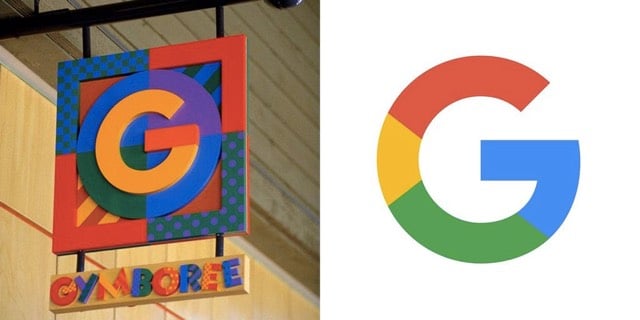
Gymboree’s identity (1993-2000) vs. Google’s new identity (Sep 01, 2015)
(via @buzz)
Mad Max: Fury Road as an ancient Egyptian painting
From illustrator @takumitoxin, a wonderful rendering of the events of Mad Max: Fury Road in the style of an ancient Egyptian painting.

Fury Road is out on Blu-ray today (and streaming). This movie was the perfect summer entertainment.
Reissue of the NASA Graphics Standards Manual
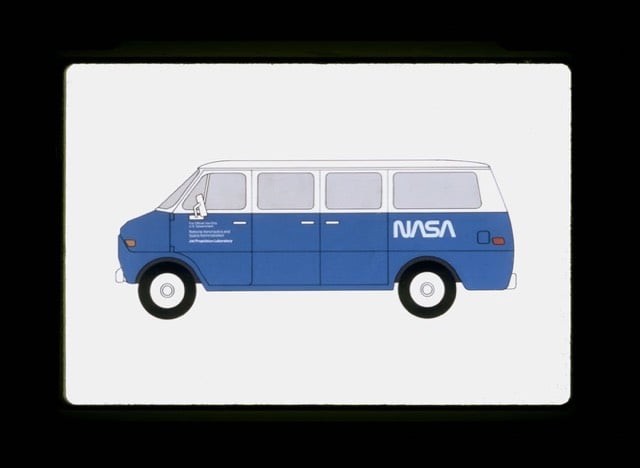
When I posted about NASA’s logo battle, I included a link to some photographs of the NASA Graphics Standards Manual. At the time, I mused to myself that someone should reprint the manual…hey, maybe the guys who did the standards manual for the NYC subway. Well, lo and behold, that is exactly what’s happening. Jesse Reed & Hamish Smyth just launched a Kickstarter campaign to reissue the 1975 NASA Graphics Standards Manual.
Our Kickstarter will support the printing of a reissue of the manual. It will be printed and bound as a hardcover book, using high quality scans of [the original designer’s] personal copy, who is in full support of the campaign.
Instant order.
Update: It’s not a printed copy, but possibly (?) in response to the Kickstarter, or other renewed attention, NASA has released the standards manual as a free downloadable PDF.
Nerds don’t get politics
At Vox, David Roberts argues that tech nerds are too dismissive and ignorant of politics, particularly if they are as interested as they say they are in changing the world. The piece includes this fascinating one-paragraph take on the state of contemporary American politics:
So that’s where American politics stands today: on one side, a radicalized, highly ideological demographic threatened with losing its place of privilege in society, politically activated and locked into the House; on the other side, a demographically and ideologically heterogeneous coalition of interest groups big enough to reliably win the presidency and occasionally the Senate. For now, it’s gridlock.
Socials & More