Entries for September 2015
Edward Snowden has come up with a solution to the Fermi Paradox that I hadn’t heard of before. Maybe we haven’t discovered intelligent life elsewhere in the Universe, says Snowden, because their communications encryption is indistinguishable from cosmic background radiation.
“If you look at encrypted communication, if they are properly encrypted, there is no real way to tell that they are encrypted,” Snowden said. “You can’t distinguish a properly encrypted communication from random behaviour.”
Therefore, Snowden continued, as human and alien societies get more sophisticated and move from “open communications” to encrypted communication, the signals being broadcast will quickly stop looking like recognisable signals.
“So if you have an an alien civilization trying to listen for other civilizations,” he said, “or our civilization trying to listen for aliens, there’s only one small period in the development of their society when all their communication will be sent via the most primitive and most unprotected means.”
After that, Snowden said, alien messages would be so encrypted that it would render them unrecognisable, “indistinguishable to us from cosmic microwave background radiation”. In that case, humanity would not even realise it had received such communications.
Snowden shared his hypothesis with Neil deGrasse Tyson on Tyson’s podcast, StarTalk.
With California in the midst of a particularly intense multi-year drought and 2015 looking to be the warmest year on record by a wide margin,1 Edward Burtynsky’s “Water” series of photographs is especially relevant.


Many of photos in the series are on display in Berkeley through February and are also available in book form.
Update: Burtynsky also collaborated on a documentary about water called Watermark. Here’s a trailer:
The film is available to watch on Amazon Instant and iTunes. (via @steveportigal)
The succession of English/British kings and queens explained, from William the Conquerer in 1066 to little Prince George, perhaps, in 2067-ish. For a list of English monarchs organized into their houses (Plantagenet, Tudor, etc.), Wikipedia is the place to go.
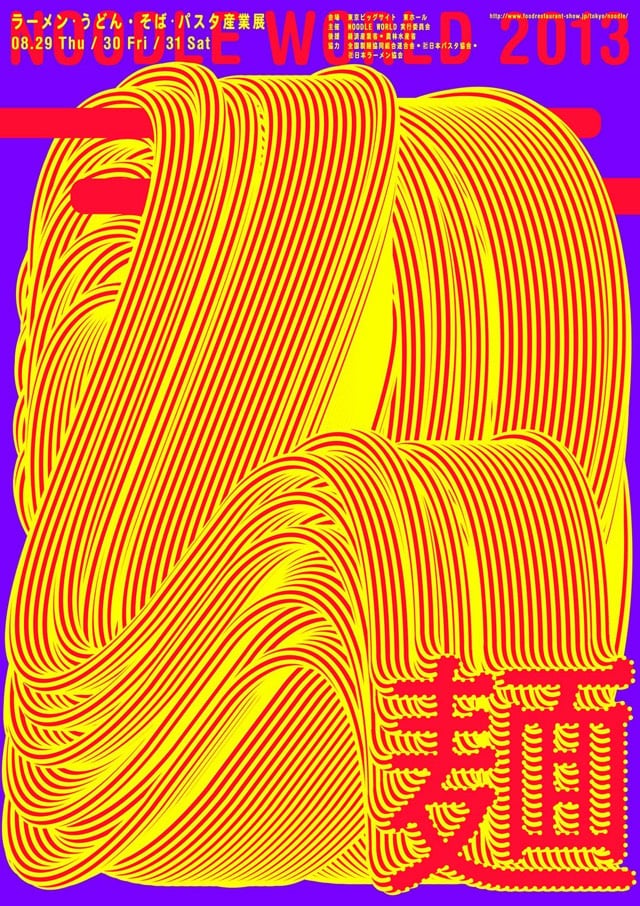
I love this poster by Korean designer Chae Byung-rok. His web site is currently down, but you can see more of his work on It’s Nice That. (via @djacobs)
Pilot Bobby Breeden recently set the official world record for shortest combined distance for takeoff and landing. Flying a single-engine taildragger plane (a Super Cub?), Breeden took off using only 24 feet of runway and landed in just 20 feet.
I’ve covered STOL (short takeoff and landing) aircraft on the site before…they are amazing. This Super Cub even landed on the side of a snowy mountain. I mean, fuuuuuuu… (via @gak_pdx)
A pair of filmmakers, Wylie Overstreet and Alex Gorosh, built a scale model of the solar system in the Nevada desert and made a time lapse of the result. For orbits, they drove their car in circles around “the Sun”. The Earth they used was the size of a marble, which made Neptune’s orbit seven miles across. (via the kid should see this)
Gene Kogan used some neural network software written by Justin Johnson to transfer the style of paintings by 17 artists to a scene from Disney’s 1951 animated version of Alice in Wonderland. The artists include Sol Lewitt, Picasso, Munch, Georgia O’Keeffe, and van Gogh.

The effect works amazingly well, like if you took Alice in Wonderland and a MoMA catalog and put them in a blender. (via prosthetic knowledge)
The backlit photos of Pluto just posted by NASA are breathtaking. Look at this:

Just 15 minutes after its closest approach to Pluto on July 14, 2015, NASA’s New Horizons spacecraft looked back toward the sun and captured this near-sunset view of the rugged, icy mountains and flat ice plains extending to Pluto’s horizon. The smooth expanse of the informally named Sputnik Planum (right) is flanked to the west (left) by rugged mountains up to 11,000 feet (3,500 meters) high, including the informally named Norgay Montes in the foreground and Hillary Montes on the skyline. The backlighting highlights more than a dozen layers of haze in Pluto’s tenuous but distended atmosphere. The image was taken from a distance of 11,000 miles (18,000 kilometers) to Pluto; the scene is 230 miles (380 kilometers) across.
As they say, best viewed large. Some of those features don’t look like mountains at all, but like reptile scales or huge shards of ice pushed up into the sky. Fantastic.
I have previously explored the question of the earliest born person ever to be photographed, which is probably cobbler John Adams, born in 1745. Motion pictures were invented sometime after photography, so the people filmed don’t stretch quite so far back.
Ben Beck lists the earliest born person to be filmed as Rebecca Clark, who was born in 1804. She was filmed in 1912 when she was 108. But there may have been an older person caught on the very first film shot in the Balkans. The Manakis brothers bought a Bioscope camera in London in 1905 and after bringing it back home to what is now Greece, they filmed their 114-year-old grandmother Despina weaving:
Being 114 in 1905 would place Despina’s year of birth at around 1791, only a few years after the formation of the United States. There’s no independent confirmation of her age outside of the film’s original title and Milton Manaki’s memoirs (published in Romanian), but even if she were only 102 at the time, she would best Clark’s 1804 birth year. (via @KyleOrl)
The worlds in many of Quentin Tarantino’s movies are connected; here are ten of the biggest connections, including the Vega brothers, Red Apple cigarettes, and Big Kahuna Burger. Tarantino has even said that some of his movies are watchable within others…e.g. the characters in Pulp Fiction could have watched From Dusk Till Dawn in the theater.
Who would have guessed 15 years ago that this self-styled rebel, who wrote about waitress blow jobs and shooting heroin in his best-selling 2000 memoir, Kitchen Confidential, would become America’s contemporary answer to, say, Mark Twain — our most enthusiastic chronicler of life outside our borders?
Josh Eells tags along to get a firsthand look at Anthony Bourdain’s world domination.
From 1915, a short film of Claude Monet painting one of his series of Water Lilies paintings. Monet created about 250 oil paintings depicting the lilies and other flowers in his flower garden at Giverny.
Open Culture has posted a few other videos of old masters at work and at leisure, including Edgar Degas, Auguste Renoir, and Auguste Rodin.
Pascal’s triangle1 is a simple arrangement of numbers in a triangle…rows are formed by the successive addition of numbers in previous rows. But out of those simple rows comes deep and useful mathematical relationships related to probability, fractals, squares, and binomial expansions. (via digg)
Posted here purely for the sake of completeness, here is a supercut of every1 supercut, parody, analysis, and compilation of Wes Anderson and his movies, the whole twee ball of wax.
The aspect ratio of a movie can have a significant effect on how the scenes in the movie are perceived by the viewer. Changing the ratio during a movie (as in Interstellar, The Dark Knight Rises, etc.) can be an effective way to signal a thematic change.
The Nerdwriter takes on Children of Men, specifically what’s going in the background of Alfonso Cuarón’s film, both in terms of references to other works of art & culture and to things that push the plot along and contribute to the tone and message of the film.

The issue of The Collective Quarterly on Vermont’s Mad River Valley is wonderful and gorgeous.
When we visited the Mad River Valley — which includes the towns of Warren, Waitsfield, Moretown, Fayston, and Duxbury — we found grown men who loiter outside the local general store like furtive minors, sheepishly asking inbound customers if they’d be willing to help them circumvent the three-bottle limit on the impossible-to-find Sip of Sunshine double IPA from Lawson’s Finest Liquids. We shared drinks with backwoods boys, each with a quirky approach to extreme sports: kayaking raging rivers, big-air huck fests in sleds, and cliff-jumping at near-suicidal heights. We met a man who builds houses in the trees for the disabled youth of the Mad River Valley. We found a woman who forges artful kitchen knives out of old horse-hoof rasps from her father’s blacksmith operation. We ran into a socialist German refugee whose politically charged puppet shows in the fields of the Northeast Kingdom draw thousands.
And of course there were the architects. By some estimates, there are more architects per capita in Warren, Vermont, than anywhere else in the United States. Throughout the ’60s and ’70s, these freewheeling designers hacked together zany, experimental constructions on Prickly Mountain, heralding the arrival of the design/build movement.
I’ve spent quite a bit of time there, and I can tell you that the magazine definitely captured it. From just this summer, here’s Ollie doing a 360 off a cliff at the swim hole and views of another more peaceful swim hole as well as from a hike I took:


Camera Restricta is a speculative camera design by Philipp Schmitt that won’t allow you to take photos if too many have already been taken by others at that location.
On the other hand, I sometimes have the chance, and then the responsibility of course, to take the last photo of a place before the shutter retracts permanently. Or maybe even the first photo of a place, where no photos have been taken yet. This is then guaranteed to be a truly unique capture.
It would be cool to pair this with a service that automatically deposits not-taken photos of heavily photographed places you visit into your account, i.e. when Camera Restricta won’t let you take a picture of the Eiffel Tower, a photo of it found online and taken from your exact location would be placed in your Dropbox photos folder. (via @bdeskin)
Last month I shared a video showing the thousands of nuclear weapons that humans have detonated on Earth. I hadn’t really thought about it too much apart from the two dropped in Japan in WWII, but those weapons created some permanent physical changes in the landscape of the Earth. For instance, dozens of circular scars are visible at this testing range in Nevada near Area 51.

Also located in the same area is the Sedan Crater, the largest man-made crater in the United States. The crater is 320 feet deep, 1280 feet across, listed on the National Register of Historic Places, and was made by a thermonuclear device with a 104 kiloton yield detonated in 1962.

Now, I haven’t read a whole lot about nuclear tests, but this one seems particularly idiotic. The purpose of the Sedan shot was not to test a new kind of weapon or to determine the effects of the bomb, but to move earth. Yeah, no big deal, we’re just gonna use a fusion bomb like a big stick of dynamite. Sedan was part of Operation Plowshare, an effort to use nuclear devices for peaceful purposes like mining and moving earth. From Wikipedia:
Proposed uses for nuclear explosives under Project Plowshare included widening the Panama Canal, constructing a new sea-level waterway through Nicaragua nicknamed the Pan-Atomic Canal, cutting paths through mountainous areas for highways, and connecting inland river systems. Other proposals involved blasting underground caverns for water, natural gas, and petroleum storage. Serious consideration was also given to using these explosives for various mining operations. One proposal suggested using nuclear blasts to connect underground aquifers in Arizona. Another plan involved surface blasting on the western slope of California’s Sacramento Valley for a water transport project.
The Pan-Atomic Canal! This quaint US government video has more on Sedan:
In my post the other day, I said that the Soviets didn’t care about their citizenry when testing nuclear devices. Apparently the US didn’t either: the Sedan shot — the purpose of which, as a reminder, was to move a bunch of dirt — resulted in a significant amount of nuclear fallout, about 7% of the total radioactive fallout generated by all the nuclear tests in Nevada. Fallout from the test reached as far as West Virginia and was particularly high in counties in Iowa and Illinois. Buy hey, they moved 12 million tons of soil! (via @kyledenlinger)
In retrospect, it was an unlikely set of conditions that came together to produce the Space Age. Not just the postwar blend of prosperity and paranoia, but a series of scientific breakthroughs, both pure and applied, that happened in such close succession that we nearly had a surplus, one that had to be invested in something.
We had to know our world well enough to be able to escape it, but not so well that we couldn’t ignore the price we were paying. And now that window may be closing.
Here are two stories that have me in an elegiac mood. “This Used To Be the Future” is a photoessay by Rachel Sussman that looks at NASA’s Ames Research Center in Silicon Valley. Most stories about Ames focus on the cutting edge stuff, the public/private partnerships; Sussman focuses on the old stuff, the military leftovers, the junk.
Next is a piece in Scientific American on plutonium-238. NASA uses the slow-burning plutonium to power its long-range probes and interplanetary craft.
Over the past half-century, NASA has used a total of 140 kilograms of Pu-238 to push the frontiers of exploration. Coupled to one of the agency’s “thermoelectric” generators that convert heat into electricity, four kilograms of the stuff can power a spacecraft for decades. Pu-238 was used in Apollo-era science experiments on the Moon, in the Galileo mission to Jupiter and in the Pioneer and Voyager space probes now exiting our solar system. Hefty hunks of Pu-238 power the Mars Curiosity rover, the Cassini orbiter at Saturn and the New Horizons spacecraft now roaming beyond Pluto. In the future, Pu-238 could power robotic probes to burrow beneath the ice of ocean-bearing moons, planes to fly in the alien atmospheres of other worlds, ships to sail the liquid ethane seas of Saturn’s moon Titan and much, much more.
Those future missions can only occur if there’s enough plutonium to go around. Practically all of NASA’s Pu-238 stockpile was made as a byproduct of building nuclear weapons during the Cold War. As the Cold War wound down, so too did the Department of Energy’s Pu-238 production; it made its last batch in 1988, shutting off NASA’s supply save for occasional deliveries of small, lower-quality batches from Russia that ceased in 2010. At present, only about 35 kilograms of Pu-238 are left for the space agency, and radioactive decay has rendered all but 17 kilograms too weak to be readily used in NASA’s thermoelectric generators. NASA and DOE officials estimate there is only enough for four more generators, one of which is already committed to NASA’s upcoming Mars 2020 rover.
The plutonium shortfall makes it impossible for NASA to plan future missions that would require it, but in the absence of specific mission needs, nobody wants to make any more. Solar-powered craft could eventually fill in the gap, but the technology’s not there yet.
So the stars get further and further away.
Jonathan Hickman is currently writing Secret Wars for Marvel, but the roots of that story go back to his earlier run on Fantastic Four. There’s a great scene where Reed Richards, Mister Fantastic, resigns from the Singularity Conference (think TED/O’Reilly/Davos on steroids), a group of scientists he founded, as they argue for increasingly limited approaches to exploration.
The other scientists are basically correct. It is irresponsible to fund manned space missions in a global recession. Our global population may be impossible to sustain on our planet going forward. But Mister Fantastic, being a superhero, rejects the premise. “The future of man is not one billion of us fighting over limited resources on a soon-to-be-dead planet, but one trillion human beings spanning an entire galaxy,” he says. “The future of man is not here. It is out there. Because it’s our new horizon. Because it’s what’s next.”
It’s a corny, Sorkin-esque speech…. but I love it. It thrills me. And it makes me afraid.

I would like to think that that time isn’t over yet, that there is a way to reconcile what we know now with what we were willing to risk for the sake of knowledge then — that if not in outer space, then in medicine or genetics or some other field. But part of me wonders if the time for us to come together to do big things — that space age, that Marvel Age, that time of the Fantastic Four — is over. And all that’s left is how we manage our decline.
Using the cronut as the point of departure, Helen Rosner urges chefs and writers and everyone to look beyond hybrid wordplay and dig deeper into the conditions for the latest “it” dish:
From a trademarked pastry to the entire concept of “street food,” a trend follows a predictable path, one that’s consistent whether applied to technology (the hype cycle identified by tech research company Gartner), youth culture (Fuse Marketing’s five-point map), or gastronomy (the eleven-stage process broken down in the food-culture-skewering book Comfort Me With Offal). However detailed your drilldown, the story is the same: Something bubbles up for one reason or another, feeling right to a small group of people who are open to new ideas and who speak with loud, influential voices. More people pick up on that right-ness, and then more people pick up on the fact that people are picking up on something, ultimately reaching a critical mass of interest and awareness.
At this point, most of the early adopters tend to fall away: trends are driven at different points in their life cycles by a desire to fit in and a desire to stand out; if someone’s engine is the latter, she’ll cut and run when adherence to the gospel of locavorism becomes more about the former. Once Starbucks puts a flat white on their menu, cortado devotees start eyeing matcha. Once your mom buys bacon-scented hand soap for the guest bathroom, there’s an unshakeable pall cast over your Benton’s-washed bourbon. When something makes that leap into ultra-mass culture, showing up on t-shirts at Target and as a punchline on the Tonight Show, it’s a sign that its original engine — novelty, exclusivity, difference — has worn out.
It’s that “why do things bubble up in the first place” question that’s harder to answer. These things are always time-dependent, sometimes place-dependent, and usually driven by more than just food. (Ditto trends in tech or whatever. There are games beyond the game.)
“The thing that truly jumpstarts a trend is that it solves a problem we perhaps didn’t consciously realize needed solving,” writes Rosner.
Trends are driven by broader forces: Kale and quinoa are driven by an obsession with healthfulness and nutritional density, artisanal-everything is a backlash to the sterility of mass production, toast with fancy things on it looks incredibly pretty on Instagram. And not all these forces are consumer-side: The sudden glut of hip chicken sandwich restaurants isn’t the result of some shady collusion of culinary illuminati; rather, it nails the intersection of comfort food, Southern food, and fast-casual’s potential for extraordinary (and extraordinarily scalable) profits.
Also, it should be delicious.
Super Mario Brothers was released for Famicom in Japan on September 13, 1985.
When was the game released in the United States? Nobody knows.
Here’s Nintendo’s official anniversary video.
Legendary designers Shigeru Miyamoto and Takashi Tezuka broke down the first level of the game for Eurogamer. (My favorite part? The subtle way that Mario is designed to have “weight,” and how this affects the player’s identification with and affection for the character.)
Kyle Orland at Ars Technica has thirty little-known facts about the game:
The original instruction booklet for Super Mario Bros. details how “the quiet, peace-loving Mushroom People were turned into mere stones, bricks and even field horse-hair plants.” That means every brick you break in the game is killing an innocent mushroom person that would have been saved once Princess Toadstool “return[ed] them to their normal selves.”
Digg has a video on the character’s evolution (including cameo appearances in other Nintendo games):
Samir al-Mutfi’s “Syrian Super Mario” reimagines the game with obstacles faced by Syrian refugees. (Grimly, the player has 22,500,000 lives to lose.)
And of course, Super Mario Maker, the game that lets players make their own Super Mario Bros. levels, was released for Wii U. Users’ levels are already being repurposed for social commentary, from the existential dread of “Waluigi’s Unbearable Existence” to the more lighthearted “Call Your Mother, You’ve Got Time.”
“The Incredible Machine” (not to be confused with the 1975 film) is a 1968 documentary about experiments at Bell Labs focusing on graphics, voice, and other art and media applications. Technicians draw circuits using an electric stylus, animate titles for a movie presentation, and look at sound waveforms of different words trying to replicate speech.
It’s a treat to see the state-of-the-art the year of 2001: A Space Odyssey, especially when one of the Bell Labs computers sings “Daisy Bell”/”A Bicycle Built For Two”.
Also, mind the rabbit hole: the related links bar on YouTube leads to dozens of similar vintage computing videos.
(Via @katecrawford)
Get ready to update the OED. There’s a new attestation of English’s most colorful and versatile word, from the year 1310.
Dr Paul Booth of Keele University spotted the name in ‘Roger Fuckebythenavele’ in the [Cheshire] county court plea rolls beginning on December 8, 1310. The man was being named three times part of a process to be outlawed, with the final mention coming on September 28, 1311.
Dr Booth believes that “this surname is presumably a nickname. I suggest it could either mean an actual attempt at copulation by an inexperienced youth, later reported by a rejected girlfriend, or an equivalent of the word ‘dimwit’ i.e. a man who might think that that was the correct way to go about it.”
We’ve doubtlessly been using the word “fuck” in English for a lot longer; this is just an unusual set of conditions that’s led it to be preserved in the written record. Like an animal falling into a tar pit.
(Via @kirstinbutler)
At 19 (so, around 1983 or 1984) Rosie Perez moved from Brooklyn to Los Angeles to help a cousin with her children and go to college for biochemistry. Then she was recruited to be a dancer on Soul Train.
In her line dance solos, you can see early versions of many of the moves that would be immortalized in the opening credits of Do the Right Thing.
You also see a lot of what Perez calls “face dancing.” “Face dance means you don’t know what the hell the rest of your body was doing but your face is fierce. That’s face dancing.”
According to this Esquire article, Don Cornelius was dead set on packaging Perez as part of a girl group of hip-hop/R&B dancer-singers. Perez was uncertain and wouldn’t sign the contract. This led to a confrontation where Cornelius grabbed Perez, and in response, she threw a box of chicken at him.
That fight ended Perez’s time on Soul Train, but she soon had jobs choreographing Bobby Brown, The Fly Girls on In Living Color, and more. Arguably nobody did more to bring hip-hop dance to mainstream attention than Rosie Perez. (via @eugenewei)
Newer posts
Older posts




Socials & More