kottke.org posts about politics
Writer and comedian Zach Mander took quotes from Karl Marx and paired them with illustrations from books by Richard Scarry like What Do People Do All Day? and Cars and Trucks and Things That Go.
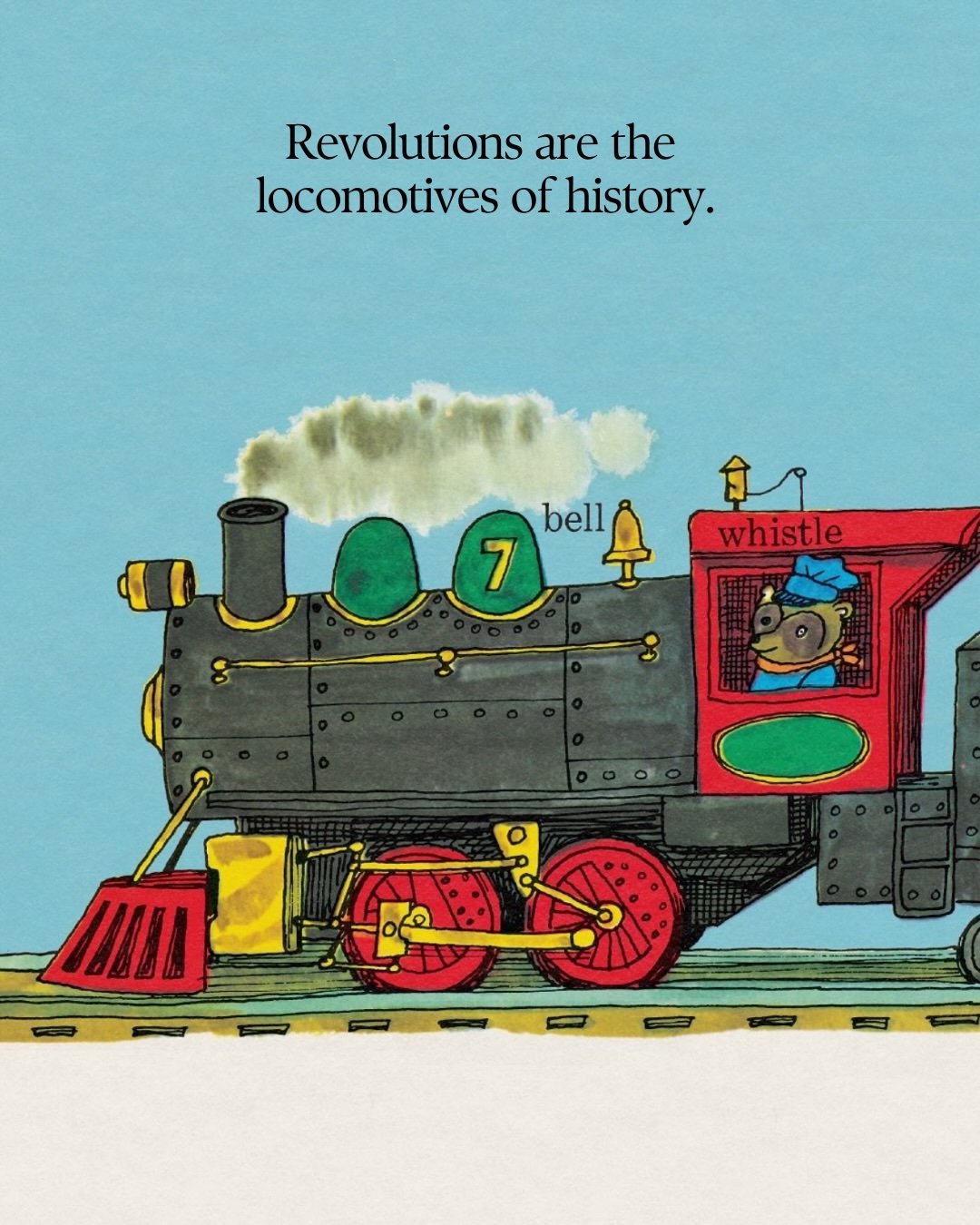
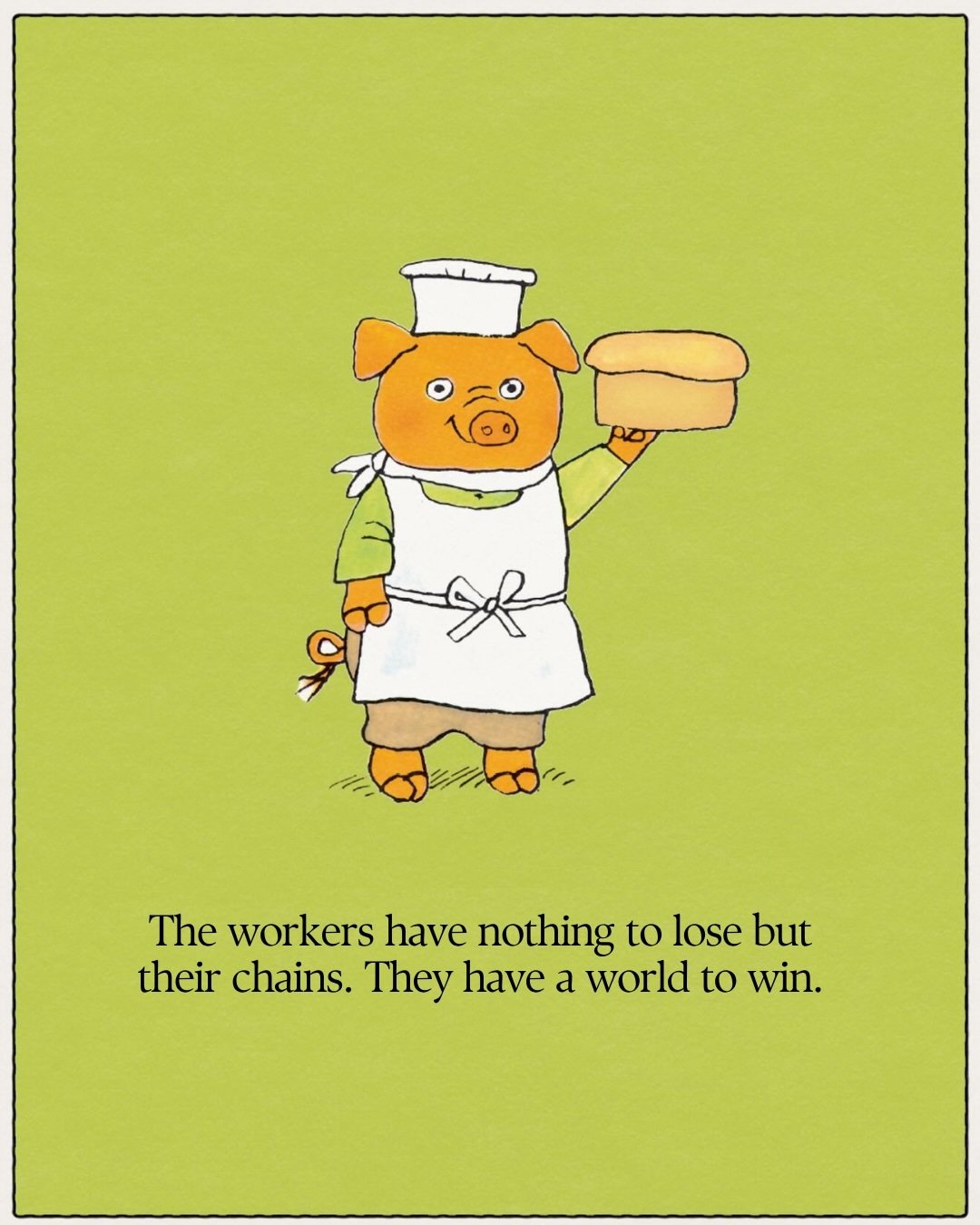
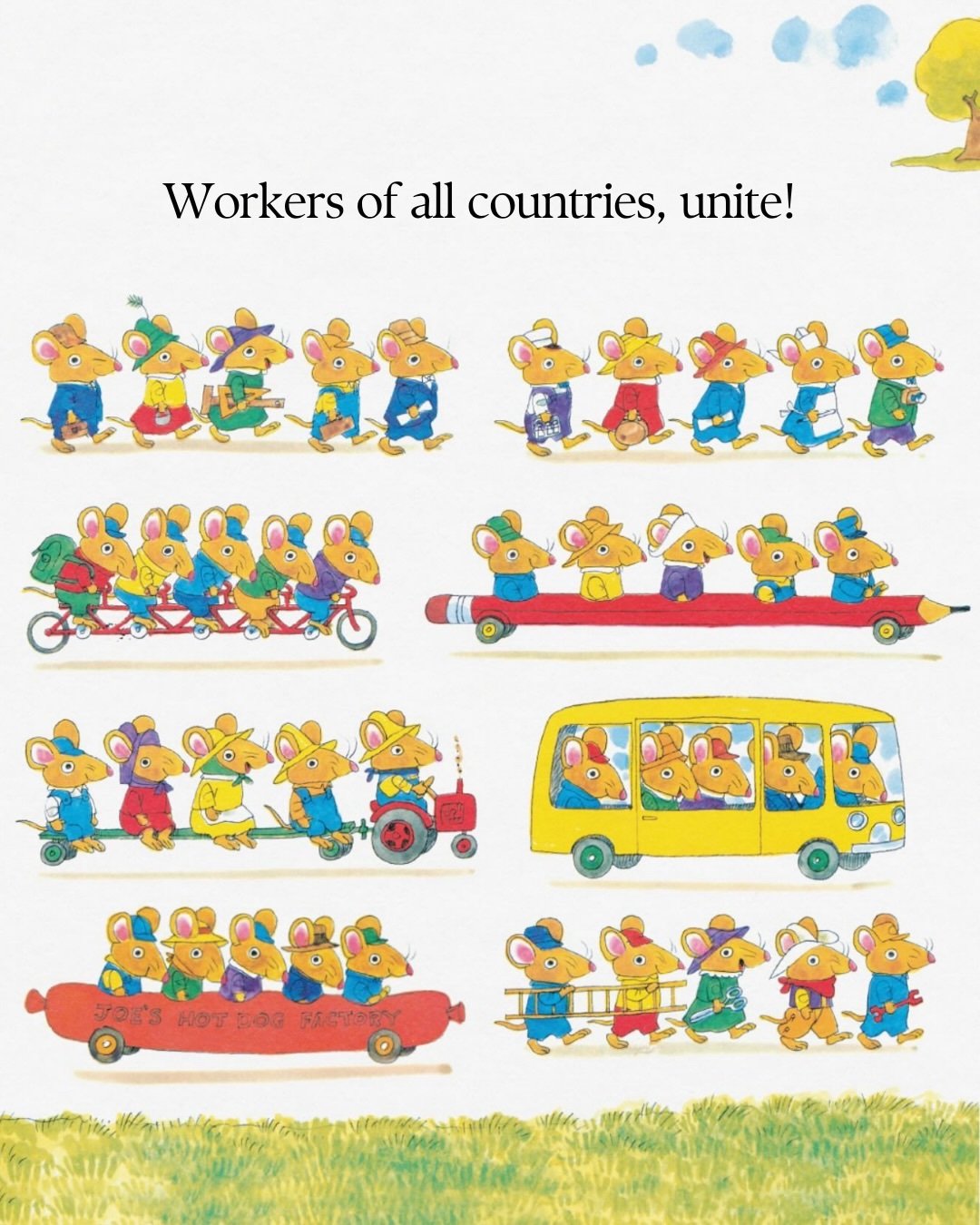
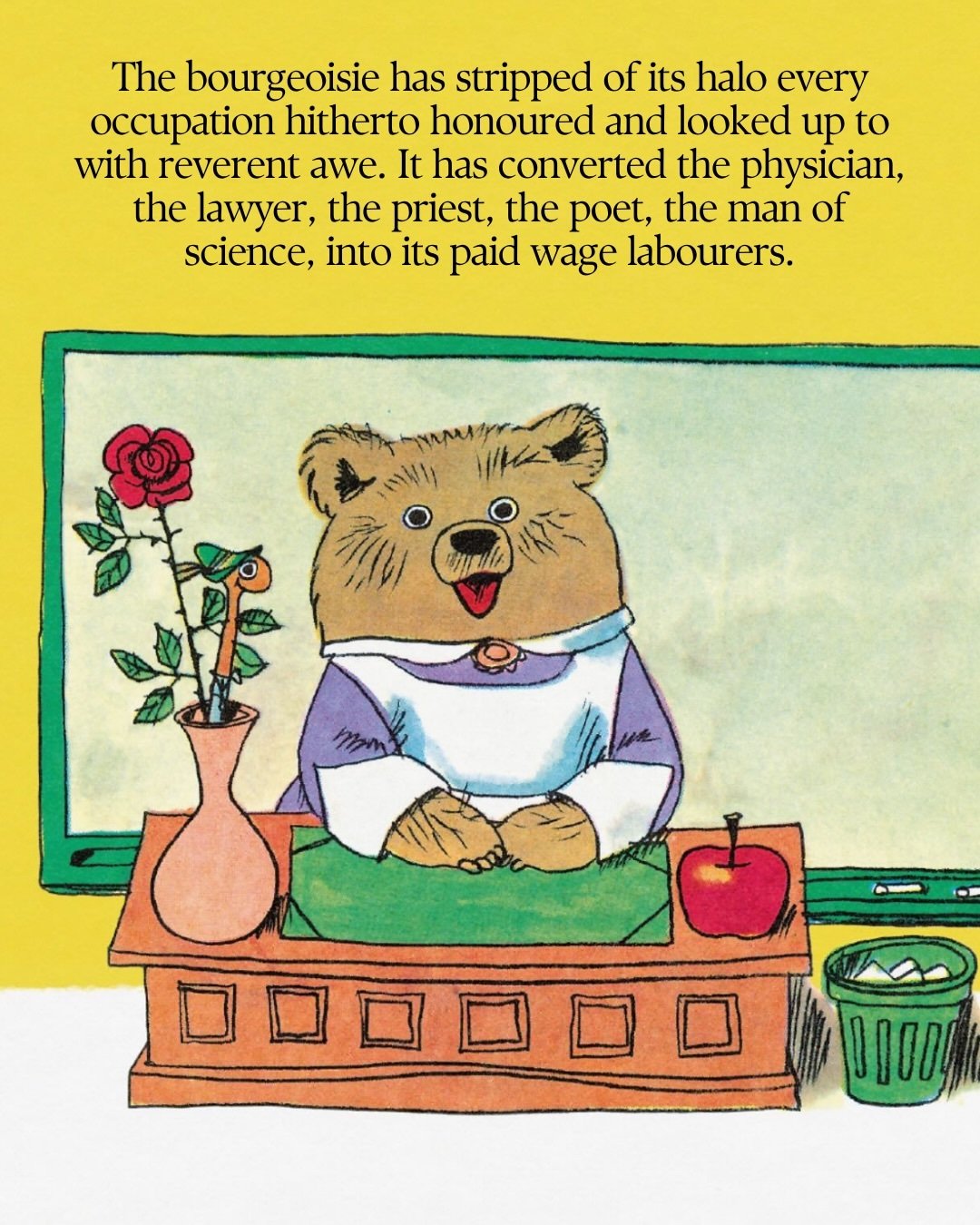
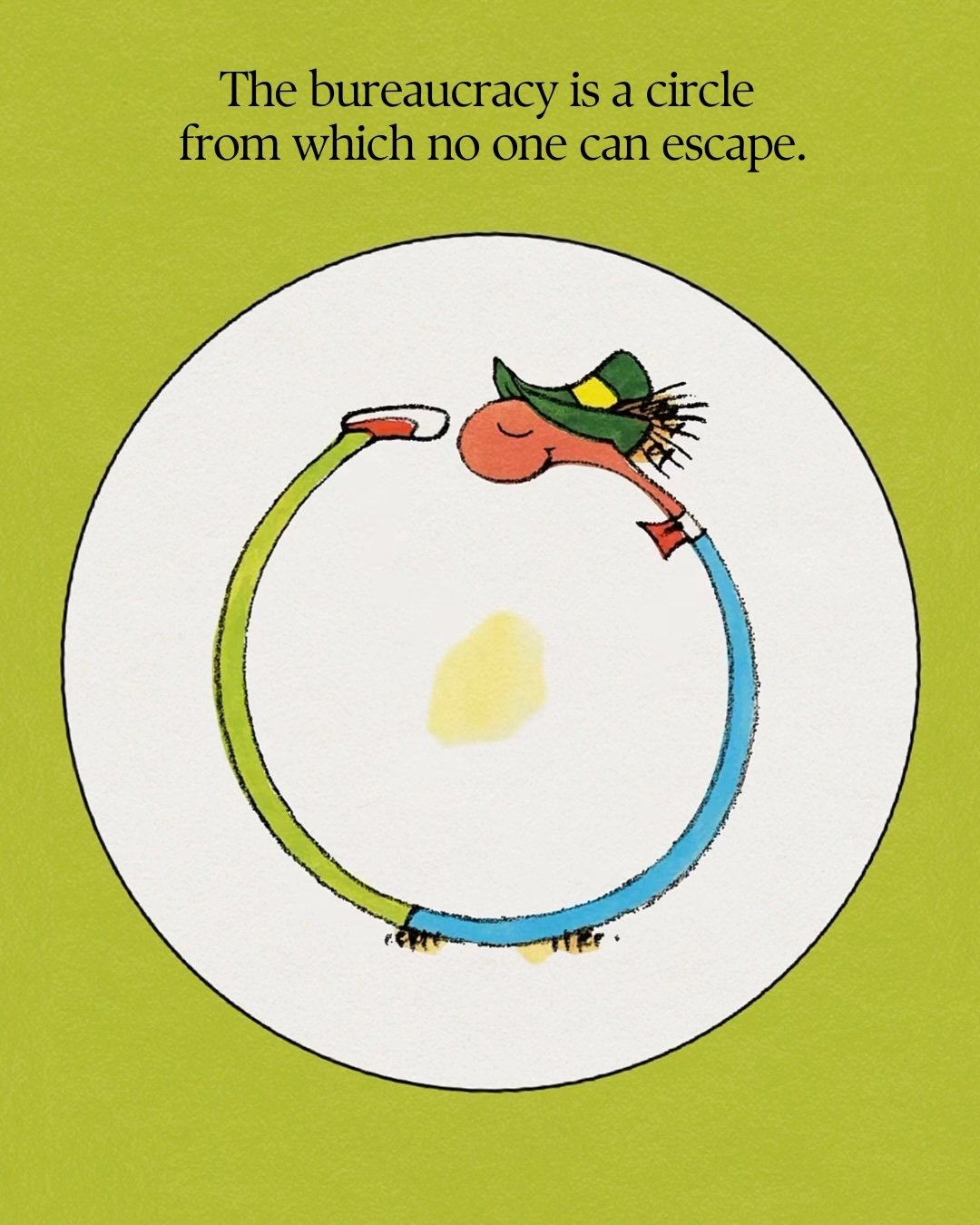
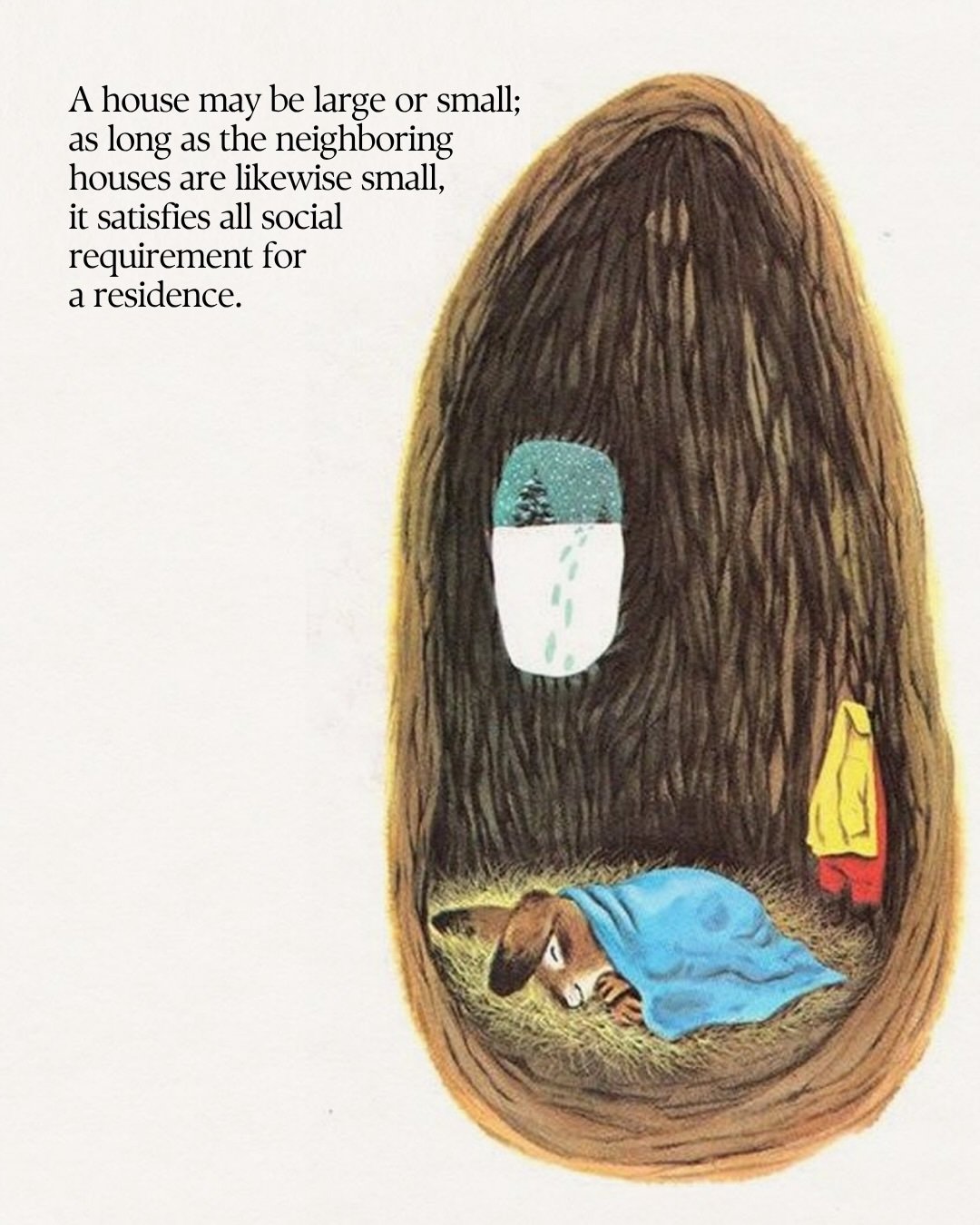
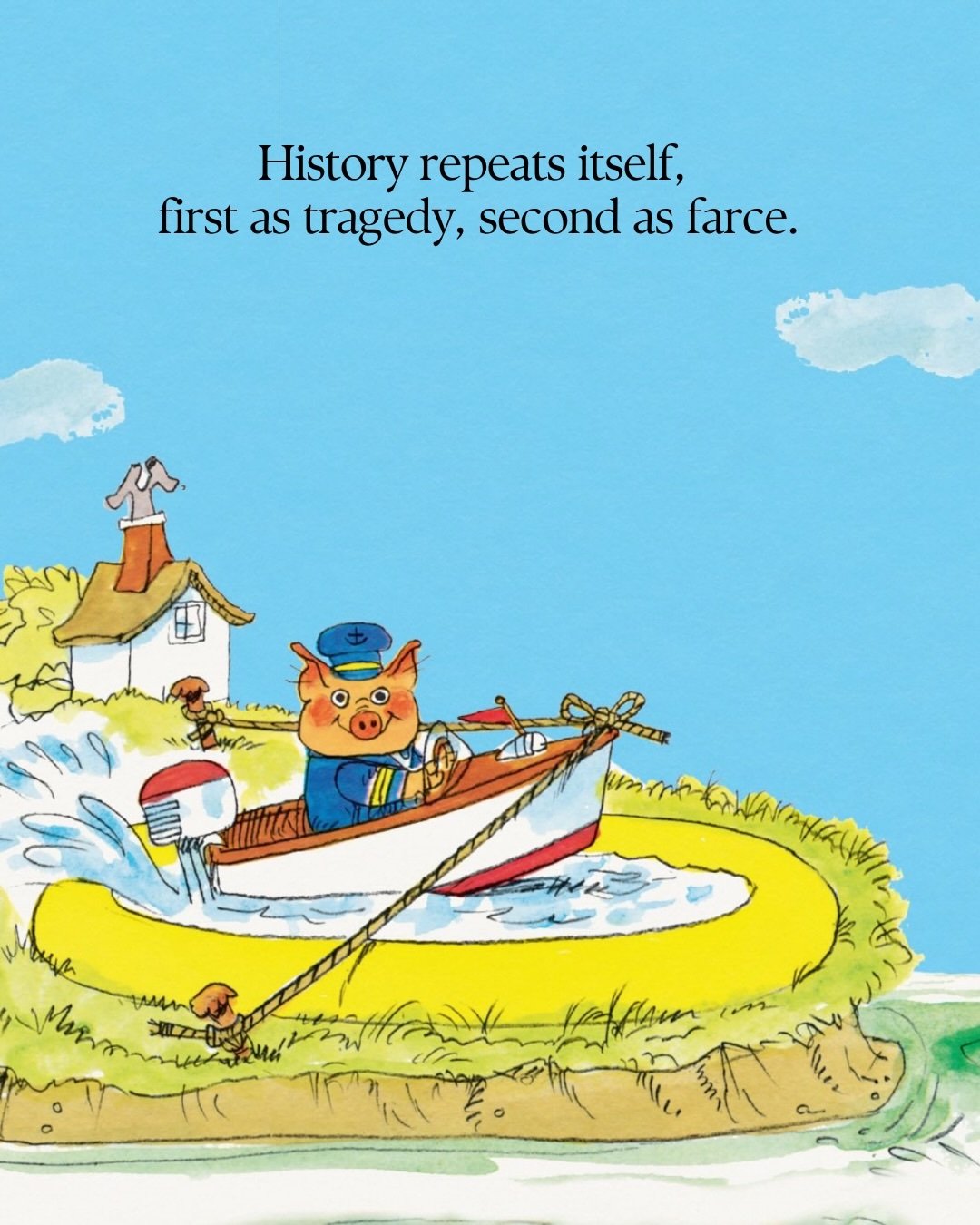
See also Mamdani’s Richard Scarry socialism.
I’ve been reading a bit about the recent election in Serbia and some of the details are fascinating. A student-led coalition toppled the 12-year corrupt reign of “the increasingly authoritarian leader” Aleksandar Vučić in recent elections. But in order to ensure voters and allies that this wasn’t a grab for power on the part of the students, the students ruled themselves out.
Supporters had the votes, but they needed the losing side to stay. The strict rules were a promise: to those who had opposed running, that it would not turn the movement into a party; to voters, that the list was no party in disguise.
No student may run: anyone enrolled in 2024/25, or with studies on hold, is excluded. The drafters wanted no suggestion that students were building political careers. Former members of the ruling coalition’s 20 parties are barred, and so are former officials of parliamentary opposition parties. That leaves doctors, academics, artists, former athletes and activists. Ordinary members of opposition parties were not barred, but almost none with a party past. The list is led by Ilija Srdanović, a cardiologist and professor in Novi Sad.
The result is the Student List. From a pre-election piece in the NY Times: Something Astonishing Is Happening in My Country. The World Should Take Note.
The students’ list of 250 candidates is remarkable in itself. Comprising professors, scientists, doctors, workers, actors and activists, the candidates — most of whom had been unknown to the public — were selected through a lengthy sequence of scrutiny and interviews. University faculties proposed candidates, then reviewed nominees from across the country. After discussing the options, student assemblies made their choices. Thousands participated in this decision-making process — an extraordinary experiment in bringing direct democracy into mainstream politics.
The established opposition, meanwhile, has been pushed aside, with many of its parties backing the student list. The student movement has turned the election into something like a referendum on the regime, captured in its slogan: “Serbia or the mafia.” Many assumed the students were too inexperienced or naïve for electoral politics. But with some polls putting support for the student list above 40 percent, the race appears to be tight.
The students are coming for the machine. And, astonishingly, they might win.
Super interesting, right? US electoral politics don’t work the same as Serbia’s, but I wonder if there’s a way to inject some aspect of the Student List into US elections?
See also How to Give Away a Fortune, which resonates with the Serbian movement IMO.
PRRI’s 2026 American Values Survey reveals some, uh, interesting views on whether Americans think empathy is a good thing or not. Those respondents unaffiliated with a religion were much more inclined to think that empathy is “a foundational moral value that helps build a healthy society”.
With the exception of white evangelical Protestants (42%), around two-thirds or more of all major religious groups believe that empathy is a foundational moral value for a healthy society, including about eight in ten religiously unaffiliated Americans (83%), members of other non-Christian religions (80%), and Jewish Americans (77%). By contrast, a majority of white evangelical Protestants (54%) believe empathy can become dangerous when it leads people away from building a society guided by God’s truth.
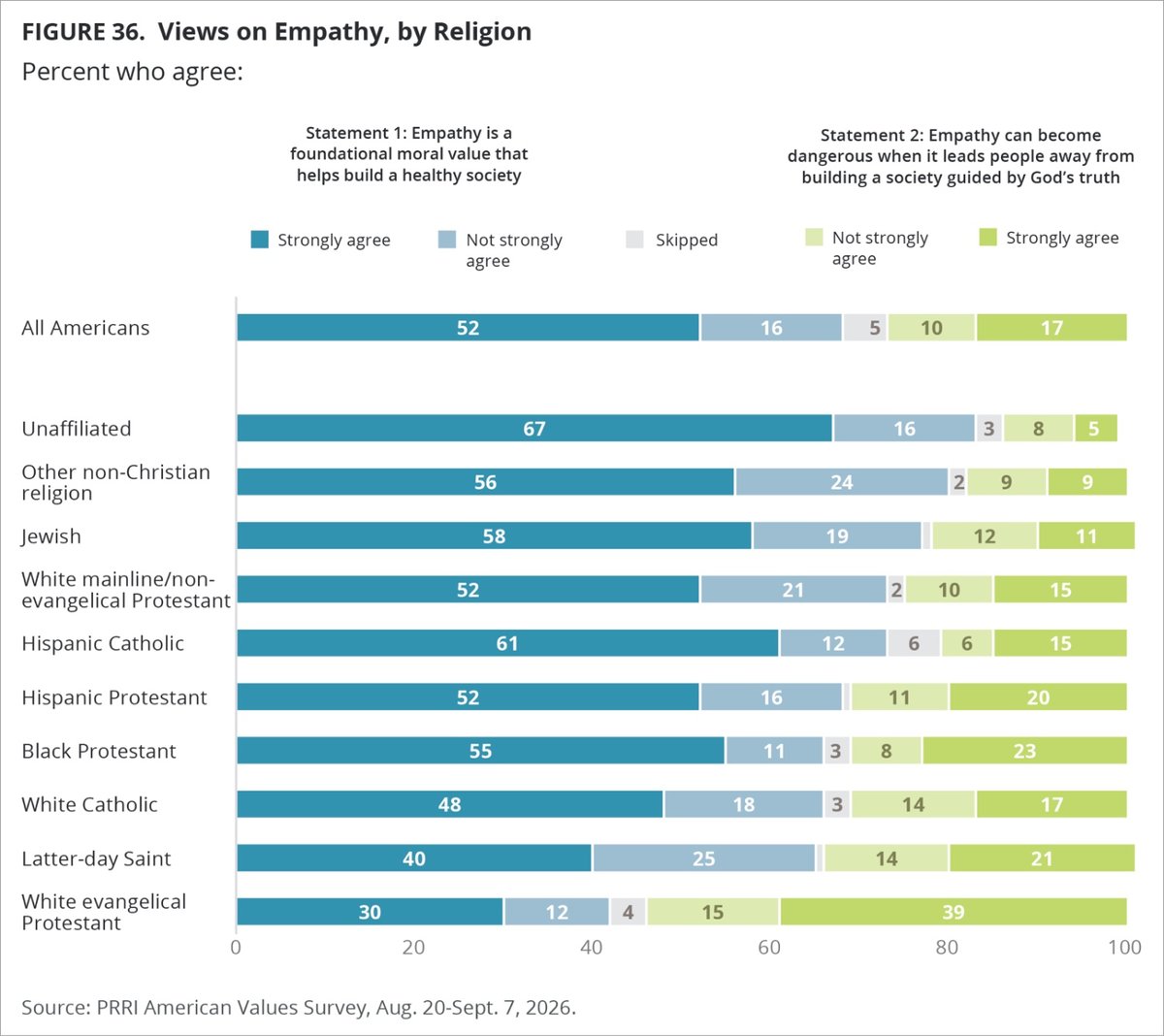
Here’s the breakdown by party:
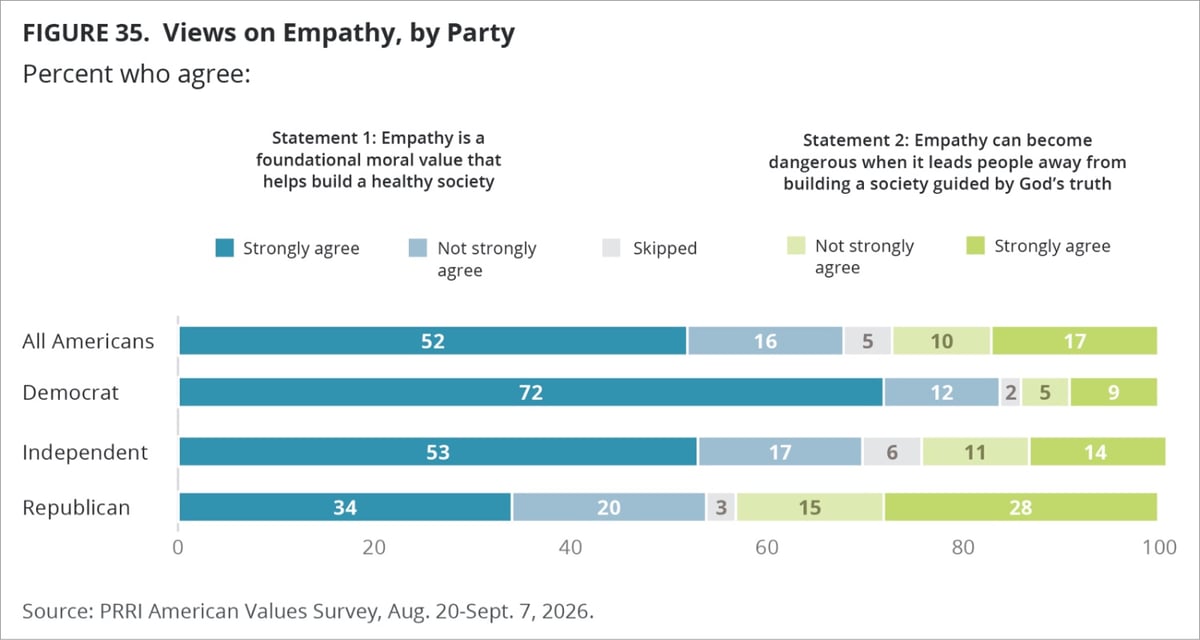
(Btw, “not strongly agree” seems to mean “agree, but not strongly” and not “disagree”. Grammatically correct but a little confusing if you don’t read it carefully…)
See also How empathy came to be seen as a weakness in conservative circles.
Writing for Vanity Fair (archive link), Ta-Nehisi Coates says that Donald Trump is the most visionary politician of his era.
Through a mix of moxie, cynicism, and misanthropy, Trump has made himself into the dominant American of our age. Sometimes a man meets his moment, and Trump met his in the wake of a black presidency and a conservative movement doggedly and patiently pursuing a decades-long counterrevolution. The marriage of Trump’s charisma to a fundamentalist right wing has been bountiful: three Supreme Court justices in four years, the subsequent destruction of national abortion rights, the banishment of affirmative action, the hollowing of the Voting Rights Act.
And the genie may not go back in the bottle:
But some things can’t be unseen. The example that Trump has set, the scope of what is possible should one embrace the dark powers of the White House, will not dissipate. It turns out that you can deploy secret police onto American streets. You can deport immigrants in defiance of the courts. You can have the Justice Department badger your enemies. And you can become very rich while doing it. And some of the most powerful sectors in America, those who most loudly extol their own love of country, will stand around and watch you do it. Asked why he was making deals during his second term, Trump gave a succinct and chillingly accurate summation: “I found out that nobody cared.” And to the extent that there is a genius to Trump, it is in his apprehension of this reality—so very few people who matter care. When you’re president, they let you do it.
Coates recently discussed this piece on Vanity Fair’s podcast.
Late in his life, the prominent English mathematician and philosopher Bertrand Russell was subject to an attempt in the early 1960s by Oswald Mosley to provoke him into a debate about the merits of fascism. Before WWII, Mosley had founded the British Union of Fascists. BUF had a corps of paramilitary personnel, nicknamed “Blackshirts” for their uniform color, at its disposal and Mosley “publicly espoused antisemitism and sought alliances with Benito Mussolini and Adolf Hitler”.1 After the war and having left Britain in disgrace, he was an early Holocaust denier. From Wikipedia:
Mosley was a pioneer in the emergence of Holocaust-denial. While not denying the existence of Nazi concentration camps, he claimed that they were a necessity to hold “a considerable disaffected population”, where problems were caused by lack of supplies due to “incessant bombing” by the Allies, with bodies burned in gas chambers due to typhus outbreaks, rather than being created by the Nazis to exterminate people. He sought to discredit pictures taken in places like Buchenwald and Belsen. He also claimed that the Holocaust was to be blamed on the Jews and that Adolf Hitler knew nothing about it.
With all that as context, Russell wrote a letter to Oswald in January 1962 emphatically declining his invitation to engage in discourse about fascism:
Dear Sir Oswald,
Thank you for your letter and for your enclosures. I have given some thought to our recent correspondence. It is always difficult to decide on how to respond to people whose ethos is so alien and, in fact, repellent to one’s own. It is not that I take exception to the general points made by you but that every ounce of my energy has been devoted to an active opposition to cruel bigotry, compulsive violence, and the sadistic persecution which has characterised the philosophy and practice of fascism.
I feel obliged to say that the emotional universes we inhabit are so distinct, and in deepest ways opposed, that nothing fruitful or sincere could ever emerge from association between us.
I should like you to understand the intensity of this conviction on my part. It is not out of any attempt to be rude that I say this but because of all that I value in human experience and human achievement.
Yours sincerely,
Bertrand Russell
That’s how it’s done.
Jamelle Bouie:
The details of what is happening here are important — that’s why I laid them out — but it’s also important to step back and make a more fundamental point: the president of the United States is engaged in a conspiracy against the voting rights of the American people, which is to say that the president is engaged in a conspiracy against the Constitution itself. And this is part of a larger effort, spearheaded by the most fanatical of his allies, like Stephen Miller, to end the American republic and supplant it with an authoritarian regime in which President Trump holds sovereign authority over the whole nation.
It is important to say, as well, that this is all out in the open, as plain as day.
*repeated hair tearing-out noise*
Jamelle Bouie almost never misses. In this video that’s just shy of 10 minutes long, he chastises American political & cultural pundits for their lack of moral seriousness w/r/t their focus on “wokeness” instead of the real harms being done by the authoritarian Trump regime. (And he worked in a reference to Jonathan Frakes saying no.)
I bring this up because this is just a great example of a phenomenon I’ve been struck by over the past year. Which is that, in the midst of a government that is systematically dismantling Americans’ rights, that is systematically dismantling the post-World War II world order, that is systematically tearing apart the social safety net, that is trying to exert nearly totalitarian control over large parts of American life, which is constructing concentration camps and throwing migrants into them, which has killed two Americans on the street and is looking to suppress as much as possible dissent, even bringing the full force of the federal government against people it wrongly accuses of wrongdoing — as we observe all of this, so many of our pundits and professional commentators are still obsessed with people they got mad at in 2020 and 2021.
They are obsessed with fighting the specter of wokeness — whatever that misappropriation of African American vernacular means. They look at overzealous college students, overbearing HR departments, or colleagues who put pronouns in their signatures as tantamount to a Cultural Revolution. And meanwhile, as the Secretary of Defense quite literally purges Black people from the highest reaches of the military, it doesn’t look like anything to them.
They don’t even comment on it. The Republican Party has turned pretty openly against liberal democracy. Republican lawmakers are confirming election deniers to lifetime appointments. They’re nominating election deniers to high-ranking offices like governor. And meanwhile, pundits, reporters, the press — they’re obsessed with “Hey, did Francesca Hong once say that she thought we should cancel Thanksgiving?”
I would note that the free speech absolutists are awfully quiet these days too.
Bouie was reacting specifically to this David Brooks piece and this one from from Ross Douthat (with the amazing titular admission that he can’t tell the good guys from the bad guys these days)1 and possibly this one too. Michael Hobbes has been talking about this on Bluesky as well:
There were excesses in 2020 but they were mostly low-stakes efforts by well-intentioned people to address real injustices.
The excesses of the right during the same era were far more harmful. The reckoning we need now is about how elites lost sight of that.
…
Centrists convinced themselves annoying leftists on twitter were an equivalent threat to Jan 6 insurrectionists. They wildly inflated the threat of left-wing authoritarianism while ignoring how it was taking hold on the right.
Meanwhile, the right never meant any of it. They moaned about “cancellation” for a decade but embarked on mass firings as soon as they took power. They pretended to care about “free speech restrictions” and “educational indoctrination” while embarking on them every chance they got.
The excesses of the Woke 1 era mostly amount to cringe public statements, harmless vocabulary updates and loss of prestige for public figures.
The backlash to Woke 1, on the other hand, is imprisoning dissidents, dismantling public education and eroding democracy. That’s what needs reckoning.
This is an extremely 2026 story (derogatory): because of the Trump regime’s assualt on scientific funding, a group of scientists who has been studying marmot populations in Colorado since 1962 turned to OnlyFans to fund their research this year.
From The NY Times:
In June, Daniel Blumstein, a biologist, sat in a field in Gothic, Colo., waiting to see a marmot. The rodent was elusive, leaving his thoughts to wander.
He lamented a lack of funding for his work amid federal cuts to scientific research. Then he alighted on the television show “Margo’s Got Money Troubles” and that’s when the epiphany came.
Perhaps the show’s plot, about a single mother who, unable to find conventional work, turns to the adult-content site OnlyFans to support herself, could be applied to marmots and research funding.
Back at his lab, Dr. Blumstein pitched the idea (with a wholesome spin) to his colleagues, who offered mixed feedback. But then one of his graduate students suggested naming the profile OnlyMarms.
Here’s the G-rated OnlyMarms account on OnlyFans; you can also donate to the project directly. More from Live Science:
OnlyFans is a subscription platform that allows users to pay creators to see exclusive photos and videos. The platform has become popular with adult-only content creators, but it hosts others too, including musicians, athletes and celebrities — and now marmots.
“We’re trying this out of frustration with an extremely challenging funding environment,” Blumstein said. “If we’re lucky, it can help raise money for supplies and some expenses. But unless we are very lucky, it won’t replace the federal funding that has driven discovery in the US since the 1950s.”
We’ve got GoFundMe for healthcare and now OnlyFans for science funding. The privatization of the United States is coming along nicely and the future looks bright!
I appreciate the plain speech of Science magazine’s Derek Lowe in his recent piece, The Assault On Science Funding Continues.
When I talk to people about this subject (and that includes some journalists as well) and say what I’m about to at the end of this paragaph I am sometimes met with disbelief. But I mean what I say and I am trying my best to say what I mean: The Trump administration hates academic science funding, full stop. They hate where that money goes, and they hate who it goes to. They want to keep all that money for themselves, to hand out to favored cronies who can help them get elected and to steer yet more money and more power back into their hands.
That’s it. That’s the story. They are naturally not putting it in those words, but instead talking about “gold standard science” and the “reproducibility crisis” and funding “bold inquiry” for “transformational breakthroughs”. This is all bullshit, and it’s important to realize that. Shameless hand-waving bullshit, delivered in a how-dare-you-think-otherwise manner is the defining style of the entire Trump administration. You can see it in every appointee, in every part of the executive branch, and in the pronouncements of all of Trump’s supporters. I realize that this is a simple heuristic to apply, and a very unambiguous and unflattering one, but I find it to be all too useful and all too accurate. Give it a try.
Yep. He’s the mob boss president — everything is about favors, taking his cut, deals, tough guy-ness, bending the world to his will, power, and white male supremacy.
To celebrate the 250th anniversary of our great nation, The Onion has produced a Ken Burns-esque film called Birth of a Nation (“the only movie ever named this”).
250 years ago, a group of illiterate men would gather in these hallowed halls to scribble down what historians can now only assume were words. Words that would one day be assigned meaning. Words and pictures. Pictures mostly. That would serve as the founding principles for a grand new experiment that would forever change the course of human history. An experiment that would produce a monstrosity so powerful it would soon be known to the whole world by just one name. America.
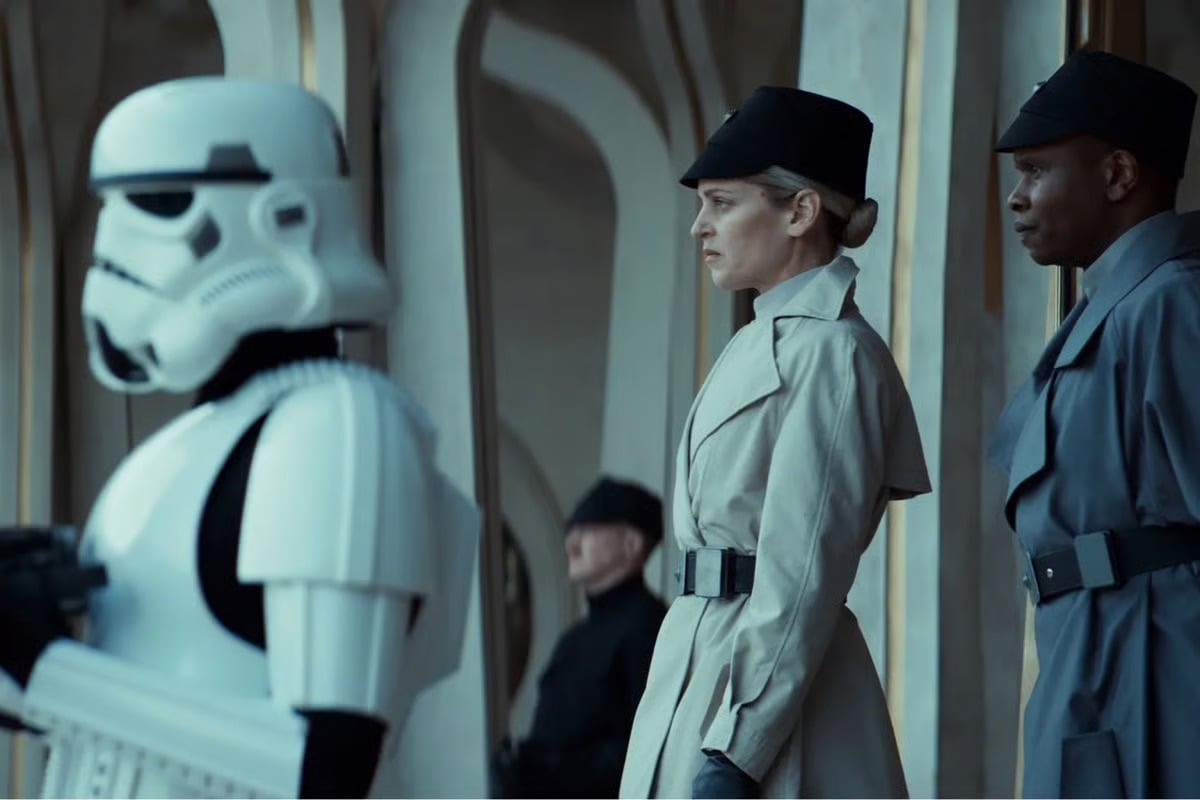
Now that Andor has been out for a while, showrunner Tony Gilroy is free to speak his mind on what the show was all about. I mean, it was pretty clear to the audience, but now he can say his piece. Andor won a Peabody Award and at the awards ceremony, Gilroy gave the following acceptance speech:
We spent six years contemplating a fascist takeover of a galaxy far, far away. Six years thinking about what happens to ordinary beings when an authoritarian, insane, unchecked regime comes into the deal, and the show is really kind of what we learned.
If you’re not willing to fight for the things that you love — your family, community, your culture, your planet, your truth, freedom — there’s an asshole ready to come in and take it away. We learned that bravery and sacrifice and resistance comes in all shapes and sizes, and we learned that courage is contagious.
There’s so much is happening, it’s a fire hose of crap that you just can’t get through. And here we are. There isn’t a new cycle that goes by right now that doesn’t contain a variety of outrages that in any other time in our history in America wouldn’t be grounds for treason.
Please do not stop. Please do not turn out the lights until we can kill this nightmare. And fuck the Empire!
Gilroy also recently appeared on Peabody’s podcast We Disrupt This Broadcast where he talks about the show’s prescience regarding the current political moment. From the transcript:
So any really specific prescient coincidence, and there probably will be some, they’re not intentional. They weren’t intentional at the time. They’re sadly what they are. And we were not looking at the newspaper when we wrote this. It doesn’t behoove me to do that. It’s incredibly, almost narcissistic how people feel that they’re always living at the edge of history in a way that’s just so unique. We feel so special.
And the sad truth is that, you know, we are just in another wheel of history. And I must admit that after 9/11 and Vietnam and Covid and Watergate and all the things I’ve grown up, I’m 68. I kind of thought, well, I’ve seen all the history I’m gonna see. I don’t feel that way anymore. I don’t feel so special anymore as a human who’s lived on the planet and lived in something called civilization. I think sadly, it’s sort of a Catherine Reel of repetitive stupidity.
See also Andor Creator Tony Gilroy Is Free to Speak About Fascism Now and An Interview With Andor’s Creator, Tony Gilroy.
Jamelle Bouie writes that each US president molds the presidency in his own image and Trump has constructed a “government as protection racket and the president as mob boss”.1
So what manner of presidency has Trump devised for himself?
You could call it the pecuniary presidency, a presidency not devoted to the public good or to the preservation of the union or even to some narrow ideological crusade, but to the quest for personal enrichment. A presidency devoted to the aggrandizement of a single person, not to satisfy a grand design for the nation but to squeeze a few million here and a few billion there out of the public coffers for your own benefit.
This isn’t the “honest graft” of Tammany Hall — corruption as the price paid for public improvement. It is petty theft. It’s stealing from the Treasury and using your authority, enhanced by the baroque theories of your allies on the Supreme Court, to make yourself unaccountable. It is government as protection racket and the president as mob boss (a role that Trump has clearly embraced).
As I wrote last month:
I’ve found it useful to think of DJT’s 2nd term primarily as a heist: a theft of money & power from the American people by a con man who finally found the perfect score.
Trump feels like he’s running the largest casino in the world and he’s gonna take his deserved cut.
One of the biggest assholes in the Trump regime is Russell Vought — and that’s really saying something; it’s a fierce competition. He’s the guy who said in 2023 that he wanted to put federal workers “in trauma”. ProPublica produced a video in Oct 2025 about how Vought is acting as a shadow president in his drive to dismantle the US federal government.
Russell Vought is one of the most powerful people in the Trump administration. For almost three decades, he worked in Congress and held prominent roles at conservative think tanks. But he was little known outside of political circles. He’s now the director of the White House Office of Management and Budget and the chief architect of President Donald Trump’s campaign to radically reduce the size of the federal bureaucracy.
In this video, ProPublica reporter Andy Kroll tells the story of Vought’s rise from a young staffer for Texas Sen. Phil Gramm to his role as the driving force behind Trump’s plan to dismantle the so-called “administrative state.” Vought declined to be interviewed. Kroll’s account is drawn from dozens of interviews, thousands of pages of documents and hours of videos and recordings of Vought’s briefings to supporters, including one where Vought says he wanted to put federal workers “in trauma.”
ProPublica and the New Yorker co-published a lengthy companion article as well.
During the Biden years, Vought labored to translate the lessons of Trump’s tumultuous first term into a more effective second presidency. He chaired the transition portion of Project 2025, a joint effort by a coalition of conservative groups to develop a road map for the next Republican administration, helping to draft some 350 executive orders, regulations and other plans to more fully empower the president. “Despite his best thinking and the aggressive things they tried in Trump One, nothing really stuck,” a former OMB branch chief who served under Vought during the first Trump administration told me. “Most administrations don’t get a four-year pause or have the chance to think about ‘Why isn’t this working?’” The former branch chief added, “Now he gets to come back and steamroll everyone.”
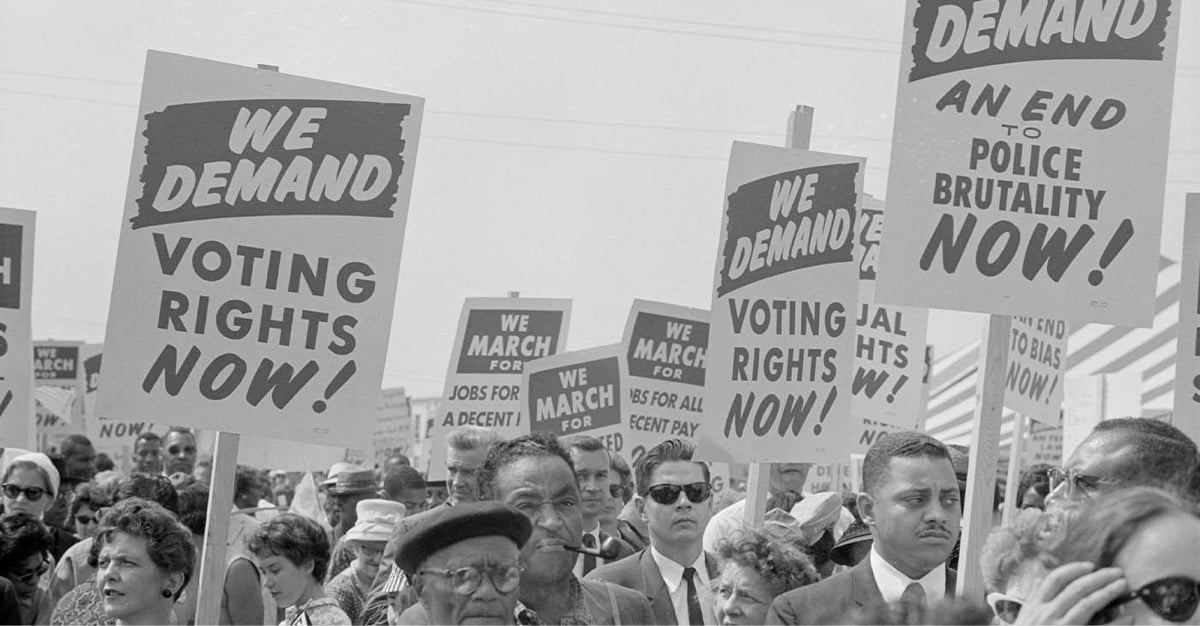
This is a smart piece about where we are in America right now, post-Citizen’s United, post-Voting Rights Amendment, post-Dobbs, mid-MAGA: The VRA Was the Nice Version (archive).
First, let’s be honest about what the Voting Rights Act actually was, because everything here on out flows from it. It wasn’t a gift, not charity, and definitely not some magnanimous extension of democracy to people who’d been waiting their turn.
It was architecture. Lyndon Johnson, who had few illusions about how power actually worked, understood something the current Court either doesn’t know or doesn’t care to.
The bargain was simple: your participation produces results, so stay in the game.
That deal wasn’t made for the benefit of Black Americans alone, though it was Black blood that paid for it. It was made for the benefit of a country that needed a working, peaceful way for people with every reason in the world to burn the whole thing down to instead choose to work within it. The VRA wasn’t just the nice move — it was the smart one. Its purpose was to keep legitimate grievance inside the system rather than outside it.
Now they’ve put it back outside.
And what happens when you can’t work within the system to effect change? People want to route around it (emphasis mine):
The question is whether this country holds or comes apart, and coming apart doesn’t mean a stern editorial in The Atlantic. It means what it has always meant, every time a society told a critical mass of its members that their participation was decoration. It means blood. It means whole regions of this country deciding that the social contract is a piece of paper the other side already burned, and they’re under no obligation to honor a corpse.
That’s the alternative. Not inconvenience, not even a bad news cycle. That.
The whole thing is worth a read.
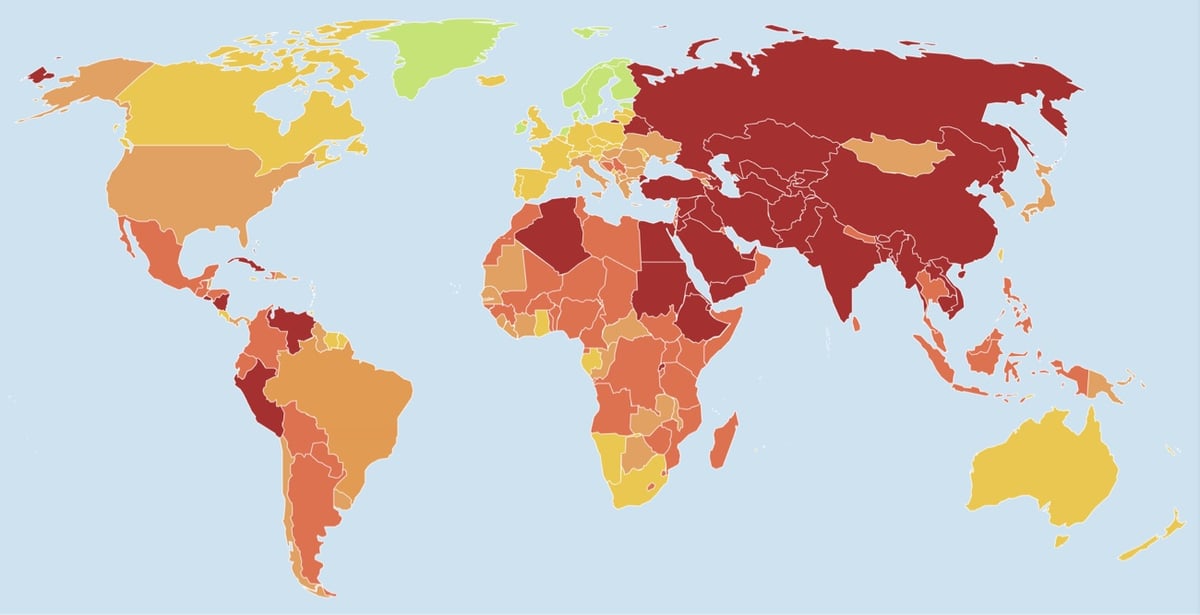
Since Reporters Without Borders started tracking their World Press Freedom Index 25 years ago, the global rating has never been lower than the 2026 score. From a summary of their analysis:
For the first time in the history of the Reporters Without Borders (RSF) World Press Freedom Index, over half of the world’s countries now fall into the “difficult” or “very serious” categories for press freedom. In 25 years, the average score of all 180 countries and territories surveyed in the Index has never been so low. Since 2001, the expansion of increasingly restrictive legal arsenals — particularly those linked to national security policies — has been steadily eroding the right to information, even in democratic countries. The Index’s legal indicator has declined the most over the past year, a clear sign that journalism is increasingly criminalised worldwide. In the Americas, the situation has evolved significantly, with the United States dropping seven places and several Latin American countries sliding deeper into a spiral of violence and repression.
The United States ranks 64th out of 180 countries, a pathetic showing for a country that claims to value the First Amendment:
US President Donald Trump has turned his repeated attacks on the press and journalists into a systematic policy, pushing the US down to 64th place (-7). The detention of Salvadoran journalist Mario Guevara, who was later deported, has contributed to the deterioration of an already tense security environment marked by police violence. The drastic cuts to the US Agency for Global Media (USAGM) workforce had global repercussions, leading to the closure, suspension and downsizing of international broadcasters such as Voice of America (VOA), Radio Free Europe/Radio Liberty (RFE/RL) and Radio Free Asia (RFA) in countries where they were some of the last reliable sources of information.
Some other takeaways from the 2026 report:
Post-Assad Syria has seen the biggest improvement in press freedom of all the countries and territories in the 2026 Index, climbing 36 places in the ranking.
In 2002, 20% of the global population lived in a country where the state of press freedom was categorised as “good.” Twenty-five years later, less than 1% of the world’s population lives in a country that falls under this category.
In some countries, the information space has shrunk over the past 25 years due to political changes and increasingly draconian regimes. This has notably been the case in Hong Kong (140th, -122) since Beijing tightened its control on the territory; in El Salvador (143rd), which dropped 105 places since 2014 and the start of the war on maras, or “gangs”; and in Georgia (135th), which has dropped 75 places as the crackdown on the press has intensified in recent years.
Twenty-five years after the attacks of 11 September 2001 in the United States, expanding the scope of defence secrets and national security has become a means to prohibit coverage of issues of public interest in many countries. This trend, which is particularly prevalent in authoritarian regimes, has also gained traction in democracies and typically goes hand in hand with abusive applications of the law against journalists, notably in the name of combatting terrorism.
(thx, margaret)
Older posts





Socials & More