kottke.org posts about NYC
You’ve probably seen Bruce Davidson’s photos of the gritty 1980s NYC subway, which were collected into a book published in 1986.

Earlier this year, Time posted some previously unpublished photos of the NYC subway taken in 1981 by Christopher Morris, an admirer of Davidson’s.

While not quite exhaustive in scope, Laura Turner Garrison’s piece in Mental Floss about how Manhattan neighborhoods got their names is worthwhile reading.
In recent decades, businesses and real estate agents have tried in vain to clean up the lively reputation of this west side neighborhood by renaming it “Clinton.” Gentrification and expansion from the neighboring theater district have certainly helped the beautification cause. Nonetheless, the area spanning 34th Street to 59th Street and 8th Avenue (or 9th, depending on who you ask) to the Hudson River just can’t shake the nickname “Hell’s Kitchen.”
Not included in the piece is the East Village, which was part of the Lower East Side until the 1960s, when the neighborhood’s new residents (artists, hippies, Beatniks) and real estate brokers recast the area as the eastern outpost of Greenwich Village. (via digg)
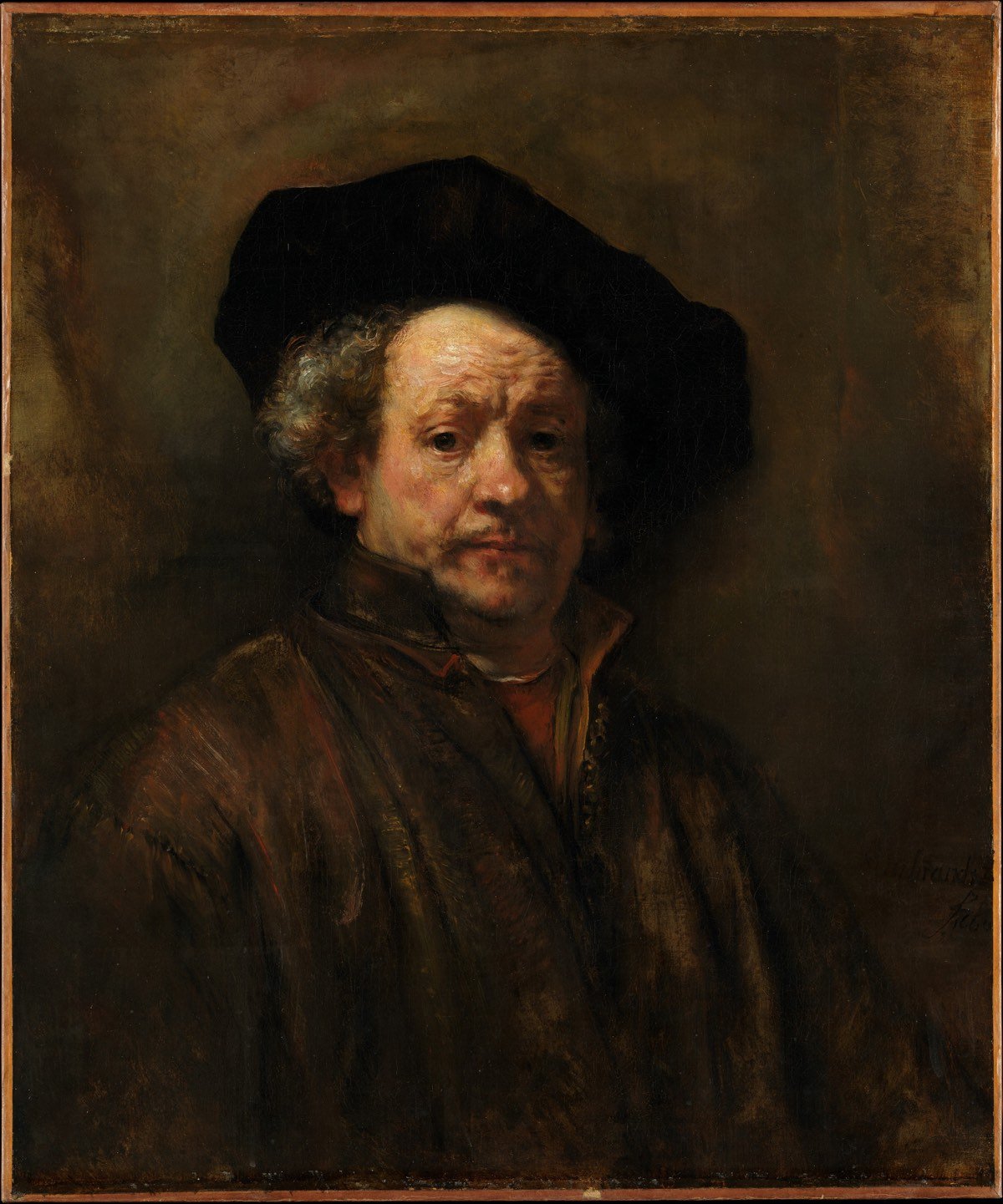
NYC’s Metropolitan Museum of Art has made a whopping 400,000 high-resolution digital images of its collection available for free download. You can browse the collection here.
In making the announcement, Mr. Campbell said: “Through this new, open-access policy, we join a growing number of museums that provide free access to images of art in the public domain. I am delighted that digital technology can open the doors to this trove of images from our encyclopedic collection.”
The Metropolitan Museum’s initiative-called Open Access for Scholarly Content (OASC)-provides access to images of art in its collection that the Museum believes to be in the public domain and free of other known restrictions; these images are now available for scholarly use in any media.
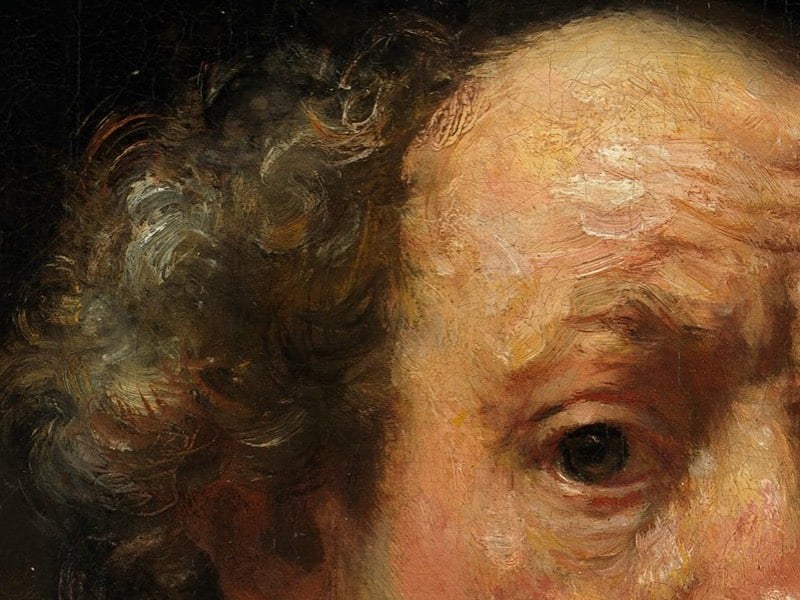
For instance, here’s a 12-megapixel image of Rembrandt’s 1660 self-portrait…you can see quite a bit of detail:
(thx, fiona)
Update: Wendy Macnaughton on why the high-resolution images released by the Met are such a big deal for art students and art history fans.
For someone who went to art school being able to do this is a revelation. I used to go to the museum with my sketchpad and copy the old masters. I’d get as close as I could to understand the brush strokes, colors, lines. The guards knew who to watch out for and would bark suddenly when we stuck our faces over the imaginary line.
As class assignments we were required to copy hundreds — literally hundreds — of the masters drawings and paintings. for those we mostly worked from images in books — a picture the size of a wallet photo.
Which is one of the many reasons this new met resource is fucking phenomenal.
You can get so, so close — far closer than one could in real life.
Update: Today (Feb 7, 2017) the Met announced that they’re releasing 375,000 images under Creative Commons’ CC0 license, which “allows anyone to use, re-use, and remix a work without restriction”. Previously, those works were restricted to non-commercial use only.
The Wordless Music Orchestra will offer live accompaniment of two screenings of There Will Be Blood in NYC in September. The composer of the film’s score, Radiohead’s Jonny Greenwood, will play a musical instrument called the ondes Martenot as part of the performances.
This fall, the Wordless Music Orchestra will once again collaborate with Jonny Greenwood for the U.S. premiere of There Will Be Blood Live: a full screening and live film score to Paul Thomas Anderson’s 2007 masterpiece, which will be projected onto a massive 50’ movie screen at the historic and absurdly beautiful United Palace Theatre: the second-largest movie screen in all of New York City.
For these shows, the film’s original score — comprising music by Jonny Greenwood, Arvo Part, and Brahms — will be conducted by Ryan McAdams, and performed by 50+ members of the Wordless Music Orchestra, including Jonny Greenwood, who will play the ondes martenot part in both performances of his own film score.
Tickets on sale now. See you there? (thx, gabe)
NYCgo has an extensive list of all free movie screenings happening around NYC this summer. Most of them are outdoors. Some highlights:
June 22: Coming to America, Habana Outpost
July 9: Jurassic Park, Museum of Jewish Heritage
July 30: The Princess Bride, Riverside Park
July 31: The Hunt for Red October, flight deck of the Intrepid
August 6: The Big Lebowski, McCarren Park
August 8: Groundhog Day, Hudson River Park at Pier 46
Someone should make an iCal/Google Calendar calendar of these screenings.
Update: Tim made a calendar of all the free movie events. (thx, tim!)
Update: And here’s a Twitter account you can follow for summer movie reminders: @nycsummerfilms. (via frank)
You may have previously read about the Citicorp Center. Joe Morgenstern wrote about the Manhattan skyscraper in a classic New Yorker piece from 1995. The building was built incorrectly and might have blown over in a stiff wind if not for a timely intervention on the part of a mystery architecture student and the head structural engineer on the project.
Tells about designer William J. LeMessurier, who was structural consultant to the architect Hugh Stubbins, Jr. They set their 59-story tower on four massive nine-story-high stilts and used an unusual, chevron-shaped system of wind braces. LeMessurier had established the strength of those braces in perpendicular winds. Now, in the spirit of intellectual play, in his Harvard class, he wanted to see if they were just as strong in winds hitting from 45 degrees. He discovered the design flaw and during wind tunnel tests in Ontario learned the weakest joint was at the building’s 30th floor.
The whole piece is here and well worth a read. Last month, the excellent 99% Invisible did a radio show about Citicorp Center and added a new bit of information to the story: the identity of the mystery student who prodded LeMessurier to think more deeply about the structural integrity of his building. (via @bdeskin, who apparently factchecked Morgenstern’s piece back in the day)

From the NY Times Magazine in June 1976, a list of 101 things to love about New York City. Some of the list is evergreen:
1. Being nostalgic about things in New York that were never so great.
11. Hating Con Edison.
25. The best water-supply system in the nation.
42. The little red lighthouse still under the great gray bridge.
And other items on the list, not so much:
8. Dialing 873-0404.
24. A broken parking meter.
43. Page 1,029 of the Manhattan telephone directory under “Ng.”
57. The personals in The Irish Echo.
Scouting New York has an explanation of some of the items on the list. Apparently 873-0404 was the number for the Dial-A-Satellite hotline; you could call it to get information about satellites passing overhead. (via @mkonnikova)
“My kids used to love math! Now it makes them cry.” So tweeted Louis C.K. earlier this week. His opinion of the new math and standardized tests is echoed by a lot of parents who “have found themselves puzzled by the manner in which math concepts are being presented to this generation of learners as well as perplexed as to how to offer the most basic assistance when their children are struggling with homework.” Rebecca Mead in the The New Yorker: Louis C.K. Against the Common Core.
From the incredible British Pathé archive, film footage from 1893 of the New York City fire brigade rushing to a fire.
Filmed nearly 120 years ago, this is quite possibly the first ever footage of the New York Fire Brigade. The film is very grainy but it clearly shows firemen rushing through New York on horse drawn engines. Behind them, you can see some sort of electric powered streetcar or trolley system with ‘Clinton Avenue’ on the back.
Man, I really like these paintings from Jeremy Mann’s Cityscape series. Particularly the NYC street scenes, like this one in Hell’s Kitchen:
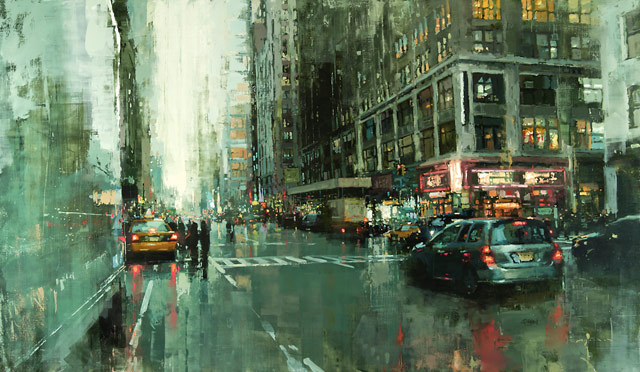
Mann’s paintings seem to hold a lot of detail, even up close, but there are also broader strokes visible only from afar. Not sure if that’s novel (unlikely) but I haven’t seen it elsewhere. (via colossal)
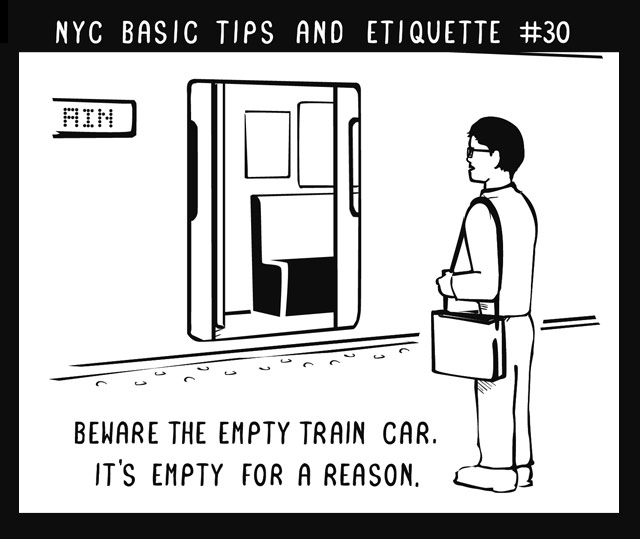
Nathan Pyle has written and illustrated a book about the unwritten rules for how to behave on the streets of NYC. It’s called NYC Basic Tips and Etiquette (only $6!).
In NYC Basic Tips and Etiquette, Pyle reveals the secrets and unwritten rules for living in and visiting New York including the answers to such burning questions as, how do I hail a cab? What is a bodega? Which way is Uptown? Why are there so many doors in the sidewalk? How do I walk on an escalator? Do we need be touching right now? Where should I inhale or exhale while passing sidewalk garbage? How long should I honk my horn? If New York were a game show, how would I win? What happens when I stand in the bike lane? Who should get the empty subway seats? How do I stay safe during a trash tornado?
In support of the book, Pyle animated a few of the tips and put them on Imgur. Also, the Apple ebook contains the animated versions of the illustrations. You fancy!
Data visualization of Citi Bike trips taken over a 48-hour period in NYC:
Love seeing the swarms starting around 8am and 5:30pm but hate experiencing them. I’ve been using Citi Bike almost since the launch last year and I can’t imagine NYC without it now. I use it several times daily, way more than the subway even. I hope they can find a way to make it a viable business.
Drone Week on Kottke continues with this beautiful drone video of NYC from Randy Scott Slavin.
I found two more videos and a bunch of stories about a drone crashing a crime scene last year. (thx, noah)
For the first post on his new blog, Tobias Frere-Jones discovers that most of the type foundries in New York in the 1800s and 1900s were all located within a few blocks of each other in lower Manhattan. Why there? Newspapers and City Hall.
I was able to plot out the locations for every foundry that had been active in New York between 1828 (the earliest records I could find with addresses) to 1909 (see below). All of the buildings have been demolished, and in some cases the entire street has since been erased. But a startling picture still emerged: New York once had a neighborhood for typography.
Gruber beat me to the punch in noting that Frere-Jones’ site doesn’t use any of the fonts from the company he was recently ousted from but instead a pair of faces (Benton Modern and Interstate) he designed before he formed his partnership with Jonathan Hoefler. Before I discovered Whitney (another Frere-Jones creation), Interstate was my go-to font for graphics for the site. Big TFJ fan, is what I’m saying.
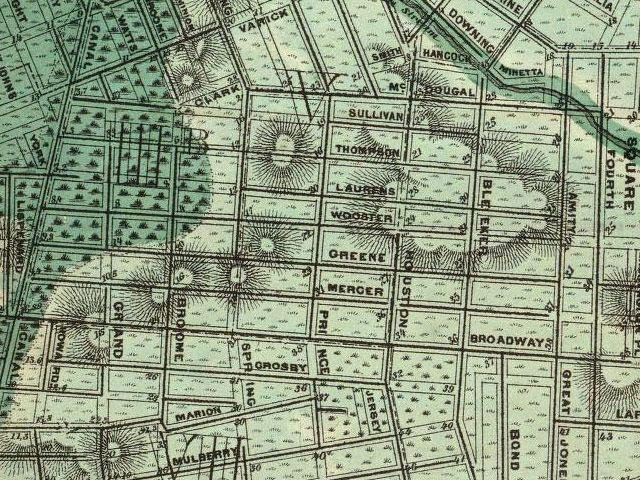
Last week, the New York Public Library released a massive collection of maps online…over 20,000 maps are available for high-resolution download. An incredible resource.
Newer posts
Older posts






Socials & More