kottke.org posts about NBA
Yesterday I posted an incredible fact about LeBron James: he has played against 35% of all of the players that have ever played in the NBA. Wondering about the Great Span of the NBA, I looked for the oldest player from LeBron’s rookie season, then for the oldest player in that player’s rookie season, and so on.

What I found is that just four players span almost the entire 79-year history of the league: Bob Cousy, Kareem Abdul-Jabbar, Kevin Willis and LeBron James.
- The NBA was founded in 1946
- Bob Cousy, played 1950-1970 (14 seasons)
- Kareem Abdul-Jabbar, played 1969-1989 (20 seasons)
- Kevin Willis, played 1984-2007 (21 seasons)
- LeBron James, played 2003-present (22 seasons)
What’s more, all four are still alive: James is 40 years old, Willis is 62 years old, Abdul-Jabbar is 78 years old, and Cousy is 97 years old. Collectively, the four of them have either played with or against almost all of the players that have ever played in the NBA. Incredible.
Yesterday on her Instagram story, cognitive scientist Lera Boroditsky posted a short clip of a lecture in which she posed an intriguing question: if she switched brains with LeBron James, which of them would win in a 1-on-1 game? Some relevant facts: LeBron is 6’8”, 250 pounds, a 4-time NBA champion, 19-time All-Star, 4-time league MVP, and is the all-time NBA points leader. He also possesses a singular basketball mind:
“I can usually remember plays in situations a couple of years back — quite a few years back sometimes,” James says. “I’m able to calibrate them throughout a game to the situation I’m in, to know who has it going on our team, what position to put him in.
“I’m lucky to have a photographic memory,” he will add, “and to have learned how to work with it.”
Boroditsky is 5’3”, 105 pounds, and by her own admission knows nothing about basketball and has “no hops”. So who would win? Boroditsky’s body with LeBron’s brain or LeBron’s body with Boroditsky’s brain? And why?
Ok this video from The Pudding is cool for two different reasons. First, you learn about which NBA player had the most unexpectedly great performance since 1985 (e.g. when a guy who is usually good for 6-8 pts inexplicably drops 50). But, you also get a fun little tutorial in how statistical analysis works and the importance of paying attention to the right data in order to get an answer that’s actually meaningful and relevant. How to interpret data in this way is an under-appreciated aspect in the bombardment of data and statistics we see in the media these days and teaching more people about it doesn’t have to be boring or stuffy.
The Pudding also sets an example here by working in the open: the data they used for their analysis is available on Github.
Last night, in the third quarter of an eventual loss to the Oklahoma City Thunder (a team name that didn’t even exist when James made his NBA debut), LA Lakers forward LeBron James broke the once-untouchable all-time NBA scoring record, formerly 38,387 points and held by the great Kareem Abdul-Jabbar. Afterward, James had this to say about the moment:
Everything just stopped. It gave me an opportunity to embrace it and look around and seeing my family, the fans, my friends. It was pretty cool. I probably can count on my hands how many times I have cried in 20 years, either in happiness or in defeat. So that moment was one of them when I kind of teared up a little bit. It was ‘I can’t believe what’s going on’ tears.
The Athletic liveblogged the occasion as it happened and detailed how James was able to break the record.
James’ path to the all-time scoring record will look much different than his predecessor, and it’s quite obvious why: 3-pointers.
The impact of long-range shooting within the NBA has grown since the league embraced 3-pointers during the 1979-80 season. How has that affected James’ path to the top of the NBA’s scoring list? During Abdul-Jabbar’s final season in 1988-89, NBA teams averaged 6.6 3-point attempts per game. This season, James is averaging 6.7 3-point attempts on his own.
But let’s pause for a tribute to man James passed for the record: Kareem Abdul-Jabbar Is Greater Than Any Basketball Record.
Guided by the footsteps of Jackie Robinson and Bill Russell, Abdul-Jabbar pushed forward, stretching the limits of Black athlete identity. He was, among other qualities, brash and bookish, confident and shy, awkward, aggressive, graceful - and sometimes an immense pain to deal with. He could come off as simultaneously square and the smoothest, coolest cat in the room.
In other words, he was a complete human being, not just the go-along-to-get-along, one-dimensional Black athlete much of America would have preferred him to be.
James has run with the branding concept that he is “More Than an Athlete.” Fifty-plus years ago, Abdul-Jabbar, basketball’s brightest young star, was already living that ideal.
From The Ringer, How LeBron James Broke the All-Time Scoring Record:
Just how long has James been playing in the NBA at a high level? Long enough to face nine father-son duos in games.
LeBron James opened his NBA career on Oct. 29, 2003, scoring 25 points in 42 minutes in a loss to the Sacramento Kings. On the Kings’ bench sat Jabari Smith, a 6-foot-11 center in his third year who wouldn’t remove his warmups that night.
Nineteen years, two months and 18 days later, James would be reminded of that matchup by another Smith, Jabari Smith Jr., a rookie with the Houston Rockets who is Jabari Smith’s son.
“Hey, you played against my dad in your first NBA game ever,” the rookie told LeBron.
“Why you do that to me,” a chuckling James said, to which Smith responded, “You feel old, don’t you?”
From The NY Times, How LeBron James Outscored Kareem Abdul-Jabbar and All the N.B.A. Greats:
James had a head start on catching Abdul-Jabbar because he was drafted out of high school, which wasn’t allowed in Abdul-Jabbar’s day. Then known as Lew Alcindor, Abdul-Jabbar first spent four years at U.C.L.A., where he was one of the most dominant college basketball players in the country.
James, at 38, is one of the oldest players in the league and in his 20th season. When Abdul-Jabbar was 38, he was in just his 17th professional season. By the time he hit his 20th year, he was no longer as dominant as he had been. James, with the good timing of being able to start this journey at 18 years old, is still proving every day just how much he has left, scoring 40 points on several nights this season and almost reaching 50 in a January game against Houston. He could be the first player to score 40,000 points.
On a personal note, I’ve never been that excited about LeBron James. I don’t hate him, but I didn’t really root for him or enjoy watching him play. Part of my aversion was no doubt due to many people trying, far too early, to place James on the GOAT throne, ahead of the player I grew up watching and rooting for, Michael Jordan. If I were in charge of drafting players for an all-time team, I’d still select Jordan first — his unique combination of drive, athleticism, and skill is still, IMO, the best in the game, ever. But with his versatility and longevity, LeBron James has more than earned the status of the NBA’s greatest player of all time.
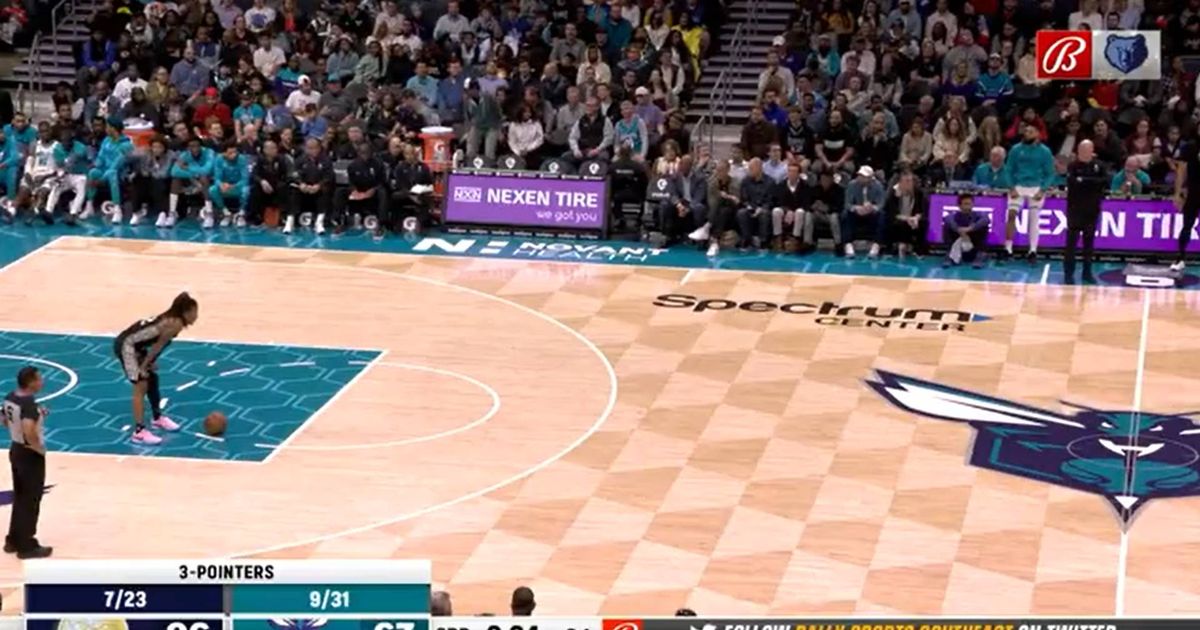
If you’ve watched a high-level basketball game in the last ten or so years (NBA, WNBA, NCAA), you’ve probably seen something a little strange. Instead of throwing the ball inbounds directly to a teammate, the inbounder will slowly roll the ball on the floor in their general direction… and then the ball handler will wait as long as possible before he picks it up and starts dribbling. Sometimes it’s just a few seconds, and sometimes it feels like an eternity. What is this, and why do they do it?
It’s called “walking the dog,” and it exploits a rule that’s as old as the shot clock itself. The shot clock (24 seconds long in the NBA) begins counting down as soon as a team takes possession of the ball after an inbounds pass. If you don’t shoot and make contact with the rim within 24 seconds, the other team takes possession of the ball.
The shot clock is designed to speed up play. Walking the dog is a loophole designed to slow it down. You use it for two reasons: to delay starting the shot clock (giving you longer to get down court and set up a play) and to run time off the game clock (giving your opponent less time to control the ball and score).
Walking the dog is very old — the 60s Celtics used to use it after the other team scored to give them more time for their legendary center Bill Russell to get down court and set up the offense. And generally, that’s been how it’s used in the modern NBA, to get more time back on the shot clock. But in recent years, more ball handlers have been walking the dog to run time — sometimes, lots of time — off the game clock. So it’s becoming more controversial.
One of the most notorious dogwalkers is Ja Morant, who usually makes highlight reels for his explosive dunks. But his slow roll strolls up the court are becoming just as much a signature move:
Two years ago, Morant became a regular dog walker in his sophomore season and quickly got his team to buy in. He’s utilized the move 41 times across all quarters and has been the ball handler on 23 of those 34 plays in crunch time, wasting over three minutes of game clock. In just over half this season, Morant has wasted more time walking the dog than any team had in an entire year and holds three of the longest dog walks recorded in the NBA this season (his teammate Desmond Bane has one of the others)…
The Grizzlies don’t discuss this in practice or plan these plays in advance. Morant often motions to his inbounder to roll the ball in slowly in these situations right as they materialize, especially when leading late in a game. The guy will do anything to shave a few seconds off. He’ll leap out of the way instead of catching the ball if the inbounder throws it too hard in his direction. If Morant finds himself inbounding, he’ll play dumb and misplace the ball as the game clock keeps running.
How has Morant become so good at walking the dog? He declined to speak with ESPN for this story, but his teammates think it boils down to his speed and athleticism. Opponents are hesitant to really press him 75-plus feet from their own hoop. If they make a mistake, he could have a huge runway with a numbers advantage. Others think it’s more a combination of fatigue and a never-ending game of chicken.
How do you stop a player from walking the dog? It’s so simple that it’s stupid: send a defender to make them pick up the ball. There’s some risk on either side here: an inattentive ball handler might allow an aggressive defender to steal a rolling ball. But an overaggressive defender might accidentally foul the ball handler in the back court while trying to steal the ball. That’s exactly what happened to Ben Simmons in a recent game against Morant:
As the Grizzlies’ star guard makes his way up the court, he lets the basketball roll alongside him, slowly, slowly, slowly, an inch at a time, untouched. Morant only needs to maintain a slow walk to keep up as he scans the court, uncontested by any Nets defender.
The ball rolls another inch, another inch, another inch. Morant is almost at half court. He keeps letting the ball roll alongside him, knowing the 24-second shot clock won’t start until he touches it — burning precious game clock at the same time, almost 21 seconds now.
As he crosses half court, Morant finally picks up the ball and glances over to his bench. His defender, Ben Simmons, suddenly closes on him and lunges at the ball, looking for a steal — but he’s too late. Morant sees it coming and protects the ball. Simmons hits him in the arm. Whistle. Foul. That’s Simmons’ sixth; he’s out of the game.
Thanks in part to that play, Memphis wins by 10. Afterward, Morant explains that he was baiting Simmons, knowing he’d bite based on past experience. Clips of the play soon go viral.
Personally, I like it when clever players find ways to play games-within-a-game in sports, especially basketball. So I have no problem with walking the dog. Other people think it’s boring, unfair, or it slows down the game too much. It definitely seems like if a lot of games come to a literal standstill, then the league office might step in and make a rules change. But until then, it’s worth enjoying the players who play this game — and all of its wrinkles — the best.
The three-point shot has become the focus of the offensive strategy of every successful NBA team. But is it also making the game boring?
The math states that scoring one-third of your shots from behind the 3-point line is as good as scoring half your shots from inside the line. In other words: Shooting as many 3s as possible will likely lead to a higher score.
The league took notice, and teams and players followed suit. 3s have become so prevalent in recent years that fans are criticizing the league for being oversaturated with them. Critics worry that the game is on the verge of becoming boring because everyone is trying to do the same thing. And that’s led some to wonder if the NBA should move the 3-point line back.
Check out the “additional reading” in the YouTube description, like The NBA is at a breaking point with three-point shooting and Is It Time to Move the NBA 3-Point Line Back? (2014).
Yesterday I watched a bit of the Champions League match between PSG and Borussia Dortmund, played at the Parc des Princes stadium in Paris, which has a seating capacity of almost 48,000 under normal circumstances. But for yesterday’s game, the game was played in a completely empty stadium in order to help prevent the spread of COVID-19. Without the chants, jeers, and cheers of the crowd, you can clearly hear the actual sounds of the game like the players talking to each other and the ball being kicked.
Here’s another video from a Borussia Monchengladbach & FC Koln match played under similar circumstances. This shot from just before kickoff really underscores just how huge and empty these stadiums are.

I’m not sure how much the empty stadium hampered the potential spread of the virus though — PSG fans gathered in huge numbers outside Parc des Princes to cheer on their team during the match and celebrate the win afterwards.
The NBA was considering playing their games in front of empty stadiums, but then Utah Jazz player Rudy Gobert tested positive for COVID-19 (after touching all the microphones as a way to mock coronavirus fears — life comes at you fast!) and now the NBA has suspended its season for at least a month. MLB and the NHL have done likewise.

David Remnick writes what everyone knows: “the best broadcaster in the [NBA] is Doris Burke. This has been the case now for years. There is no one remotely close.”
But because this is David Remnick, he doesn’t just do the easy job of showing how Burke outshines her ESPN/ABC colleagues Jeff Van Gundy and Mark Jackson, but also provides a mini-history of women in the press box and broadcast booth. (He even includes the transition phrase, “There is a long history to all of this.”)
“The thing is that in sportswriting the breakthroughs came at least twenty years ago and more,” [Sally] Jenkins said. “But television sports has far more trip wires than sports journalism. Sports TV is still Wall Street. And there is no real change unless there is mandate from a guy on high. All the breakthroughs—and here you can name whatever women behind microphones—are decisions made by a single man at the top who wants to be Branch Rickey.”
“The reality is that I’m fifty-two years old,” Burke told Sports Illustrated last season. “And how many fifty-five to sixty-year-old women do you see in sports broadcasting? How many? I see a lot of sixty-year-old men broadcasting.” Burke is better than all of them. That might not matter.
24-year-old NBA superstar Giannis Antetokounmpo has led the Milwaukee Bucks to the Eastern Conference Finals this year, but as a child in Greece, he lived the life of a stateless undocumented immigrant.
Until recently, even the children of African immigrants who were born here found it difficult to secure legal residency, let alone citizenship. Their stateless status denied them national health care, Civil Service jobs and access to sports leagues. Antetokounmpo only gained Greek citizenship six years ago — just as he was about to go to New York for the N.B.A. draft.
“He was given Greek citizenship in order to prevent him from traveling to New York as a Nigerian,” said Nikos Odubitan, the founder of Generation 2.0, an advocacy group that helps second-generation immigrants gain legal status in Greece.
Danny Chau went to Milwaukee to speak with refugees from places like Syria and Myanmar about their lives, their struggles, and their awareness of Antetokounmpo’s story: Giannis Through the Eyes of Milwaukee Refugees.
Kasim serves as a medical interpreter at Aurora Health Care, Wisconsin’s largest home care organization. I walk past the Aurora pharmacy several times during my stay; above one of the entrance gates hand a vinyl FEAR THE DEER banner. I ask Kasim about the Bucks, about what he knows of the professional sports franchise that has brought new life to much of the city this season. For refugees like Kasim, they may as well be from another planet.
“I heard of this, but again, because of the situations, we are a bit away from the sports,” Kasim says. “We don’t have any chance. But now, I come here, I’m working at the community center, at the same time fulfilling other responsibilities, so time is pretty busy. So I don’t get the time to self-care.” Kasim, often solemn and deliberate in his speech, couldn’t help but let out a smile, having essentially wrapped the term “self-care” in sonic air quotes.
I tell him about Giannis.
He lives here in Milwaukee?
About how he’s one of the best basketball players in the world.
He’s from here or he came here with his parents?
About how, as a child, he, too, had no official claim to the home he had always known. About how he would peddle sunglasses, DVDs, and whatever else he could to make 200 or 300 euros a month for his family. And how his status as an undocumented person meant knowing that at any moment, police could ask his parents for their documentation, and that they could be sent back to Nigeria in an instant.
(via @sampotts)

One of the best things about the contemporary NBA is that the league is overflowing with villains, great players that it’s easy to root against. It’s just as easy to love LeBron as to hate LeBron, to love or hate the Warriors, to love or hate James Harden or Kyrie Irving or John Wall. You could heat these guys’ guts, and love their entertainment value as heels at the same time.
One of the very best heels is Oklahoma City center Steven Adams, the New Zealand-born, ponytail-clad, Aquaman-resembling brute who sets screens and clears the boards for Russell Westbrook and Paul George. ESPN gave Adams a mostly sympathetic profile that at the same time made it clear why someone like Draymond Green would want to kick Adams in the nuts.
There’s no “NBA’s Strongest Man” contest where players lift Jumbotrons or heave backboards onto the upper concourse, but among peers and people around the league, Adams is widely considered the NBA’s strongman, a walking concrete wall of power and physicality.
“That guy is the strongest, most physical guy in the league,” says Wizards coach Scott Brooks, who coached Adams for two seasons in OKC.
Says teammate Jerami Grant: “He is for sure, definitely the strongest guy in the NBA.”
In a league trending toward speed, spacing, shooting and slashing, Adams is the counterpoint. Old school. A “throwback,” as San Antonio Spurs coach Gregg Popovich calls him.
Adams is a bruising, physical relic of the past, a back-to-the-basket brute who will grind possessions in the post and overpower you to get there.
“That m——-f——- is strong. Like, I’m serious,” Philadelphia 76ers star Jimmy Butler said last season. “He hit me with one screen and I thought my life was over.
“He’s from Krypton or something.”
Wait: why don’t we have strongman competitions duringthe NBA All-Star weekend or something? That would be amazing! I would rather watch that than layup drills or half of the stuff they show. I want to see Marc Gasol and Boogie Cousins throwing barrels at each other.
Darius Miles was drafted 3rd overall by the LA Clippers in the 2000 NBA Draft. After 8 seasons, a major injury, and $62 million, Miles was out of the league and bankrupt. In this entertaining and affecting article for The Players’ Tribune, Miles explains how he got to the NBA and what went wrong.
It’s crazy to think about, but six years after we were at the peak with the Young Clippers, I was basically out of the league. I was 27 years old, and I had doctors telling me that my knee was too messed up to play basketball ever again.
My whole life, I used basketball as an escape. When you grow up how I grew up, I think you’re probably bound to have some kind of PTSD. I ain’t a doctor, but when you grow up running from gunshots all the time, I think there’s something inside you that never leaves. I used to feel this pressure on me — I’m talking like a physical pressure, you know? But I used to be able to go out onto a basketball court and just unleash it. You could let it all out. You could dunk the shit outta that motherfucker in front of 100 people or 20,000 people and feel good for a minute.
Basketball got taken away from me at 27, and I was lost. I was just kind of going through the motions. Then a couple years later, my momma got taken away from me, and I pretty much went insane.
Miles’ friend and former teammate Quentin Richardson edited the piece and wrote one of his own for the Tribune as well.
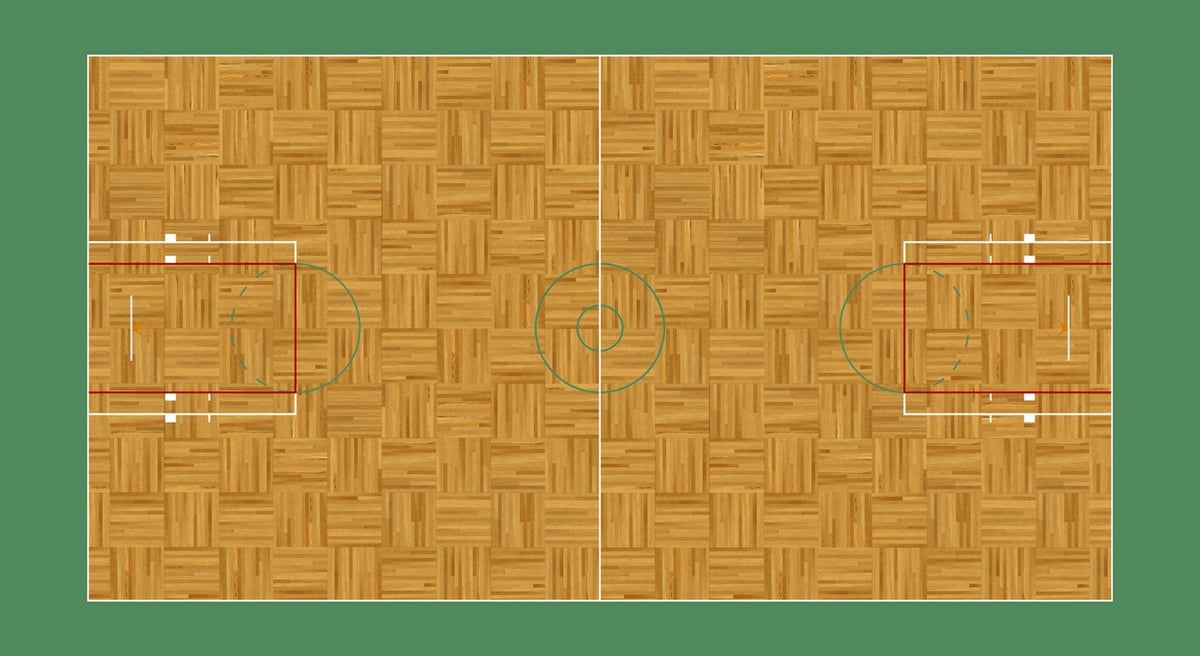
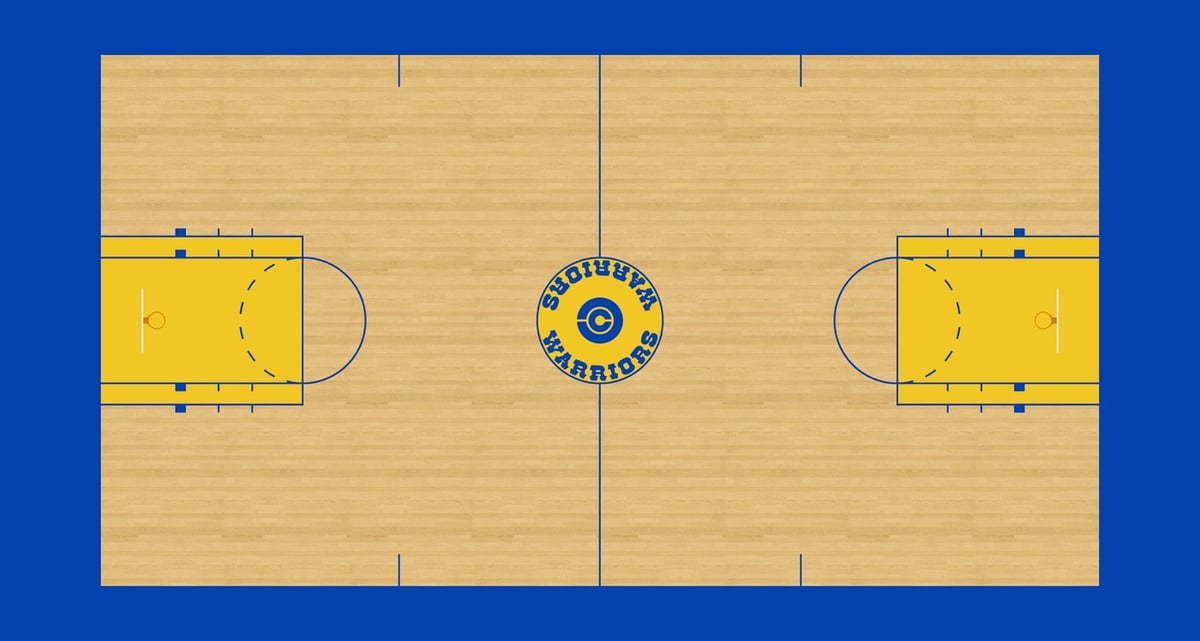

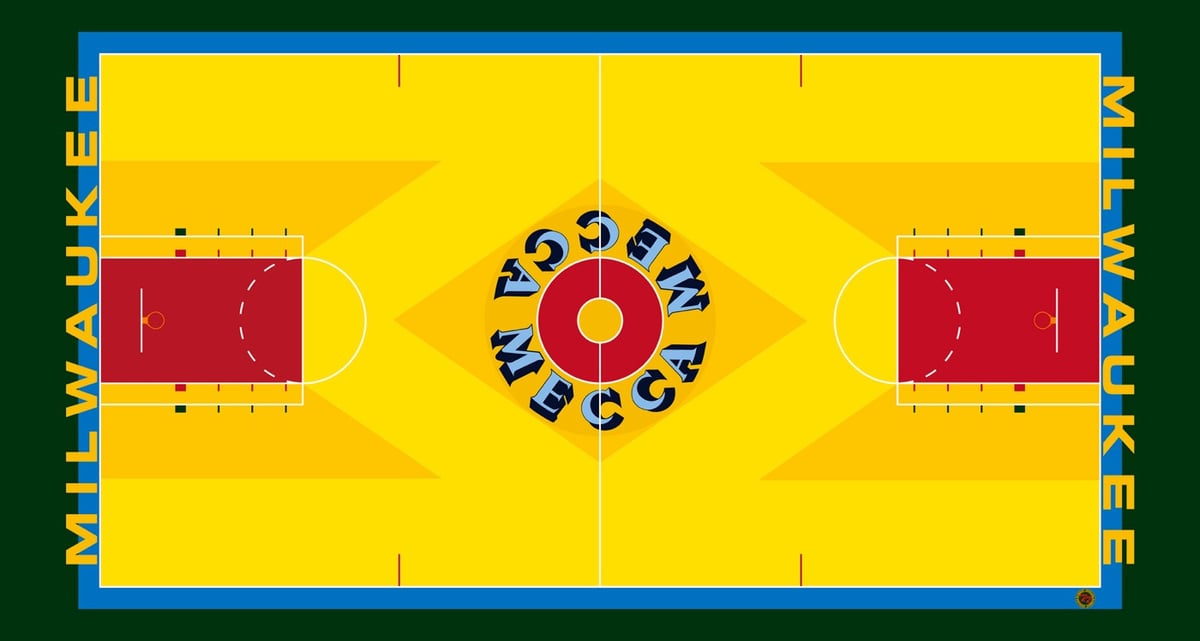
Flickr user kodrinsky has compiled a massive collection of more than 1100 illustrations of NBA courts dating back to the 50s, an online museum of basketball hardwood. The collection contains floors for every NBA team with additions documenting even small changes in arena names, team logos, free-throw lane layouts, paint schemes, sponsors, and even wood patterns.
Above are the courts for the Boston Celtics (1964-1966), the Golden State Warriors (1975-1979), the Philadelphia 76ers (1978-1979), and the Milwaukee Bucks (1977-1979).

LeBron James, as a basketball player, is arguably better now than he’s ever been. More importantly, LeBron James’s beard is inarguably better now than it’s ever been.
Look at that fullness, that thickness, that beautiful roundness! That, my friend, is the beard of a man with a dietician, a dermatologist, and a barber on retainer.
It is the beard of a dad and a daddy both.
It is a beard fully realized. It is a Philly beard.
Here I need to explain. I was born in Detroit, but lived for many years in Philadelphia. The men of Philadelphia, and particularly the black men of Philadelphia, are known for their lustrous beards. Some of it is the influence of Islam; some of it may just be needing to be outdoors in cold weather. But it’s a source of civic pride and power.
This was the first video I ever saw on the Philly beard, made by the now-defunct Phillybeard.com in 2009:
The local PBS station made its own version, emphasizing some of the qualities needed for a proper Philly beard:
Even Al-Jazeera America got in on the action, with this excellent essay on the Philly beard by Hisham Aidi, tying to the city’s hip hop and jazz traditions as well as Islam:
But overseas the moustacheless, bushy beard is not so identifiably hip-hop and has caused considerable controversy, with security officials in Europe and the Middle East mistaking the Philly for a jihadi beard. In February 2014, for instance, Lebanese police arrested Hussein Sharaffedine (aka Double A the Preacherman), 32, a Shia rapper and frontman for a local funk band. Internal Security Forces mistook him for a Salafi militant and handcuffed and detained him for 24 hours. In Europe hip-hop heads such as French rapper Medine — a Black Powerite who wears a fierce beard that he calls “the Afro beneath my jaw” — complain of police harassment. French fashion magazines joke now crudely about “hipsterrorisme.” European journalists are descending on Philadelphia to trace the roots of what they call la barbe sunnah and Salafi hipsterism.
But just as not everyone who rocks a Sunnah is Sunni, it’s a mistake to conflate the moustacheless Sunnah with the Philly beard as such. For instance, check out Questlove and Black Thought, two classic examples of the Philly beard, avec une moustache:

These, I think, are the key criteria for a Philly beard:
- A full beard, trimmed only at the edges of the cheek and the neck;
- A trimmed moustache. The lips should be visible;
- That roundness. A Sunni muslim might grow out their beard long, so it gets that verticality. The Philly beard is round — as Medine says, it is an “afro beneath the jaw”;
- It has to be well-cared for. A Philly beard is not unshaven; a Philly beard is deliberate.
Even though LeBron James does not live in Philadelphia, nor has ever lived in Philadelphia, nor had anything to do with Philadelphia other than beating the Sixers and occasionally saying nice things about our rookie Ben Simmons, if I had to point to an example of a Philly beard, after the guys from The Roots? I would point to LeBron James.
This of course, leads to the obvious question: is LeBron, who has never before worn a beard quite like this, announcing without announcing, hiding in plain sight, via the medium of his face, his preferred free-agency destination in 2018?
The answer, for any fan of the Philadelphia 76ers, is clearly yes.
Naysayers, like my brother, would say the beard’s meaning is ambiguous. Perhaps it signals his intention to join James Harden with the Houston Rockets. But James Harden’s beard is not a Philly beard. Harden has to wear that thick moustache on top to hide his baby face. Harden’s beard is not round, but rectangular. It’s an impressive beard. But it is not the beard LeBron James is wearing. LeBron’s is a Philly beard.

Look: suppose you had to choose between playing in Los Angeles with Lonzo Ball (no beard, no hope of one), Brandon Ingram (sick, scraggly beard), Kyle Kuzma (my guy is from Flint, represent, but still), and maybe Paul George (who plays your position already) — OR you could play with Ben Simmons, Joel Embiid, Robert Covington, Markelle Fultz, Dario Saric, and MAYBE JJ Redick, for an equally storied franchise, but one that hasn’t won a title since 1983, AND you can stay in the Eastern conference and stick it to Dan Gilbert and Kyrie Irving forever — why would you not sign with the Sixers? Play in a city that would love you, love your children, is just a few hours away from home in Akron, and would love the hell out of that beard?
I think the choice is obvious. LeBron will be a Sixer in 2018. He’ll teach Simmons how to shoot, Embiid how to become indestructible, and be Magic Johnson and Dr. J rolled into one. I’ll make this promise now, with the web as my witness: I will move back to Philadelphia if this happens. And I will love every second of these young talents filling in around LeBron’s dad-game.
Trust the process; believe the beard.


The NBA right now is surprisingly flush with “unicorns”: long, thin athletes like Kevin Durant, Giannis Antetokounmpo, Anthony Davis, and Kristaps Porzingis, seven-foot-tall guys who can handle the ball and shoot from range like the best guards from twenty years ago. The impossible build-your-own players from old video games are suddenly real and dunking on your head. Everyone is enamored of them.
I love them too. But before the unicorns, there were the mules. (Mulicorns?) Short, often chubby swiss-army-knife frontcourt/backcourt players who were nearly as versatile as the unicorns, but won through a combination of toughness, savvy, surprising athleticism, and unsurprisingly big butts. The mulicorns didn’t shoot as well from range (everyone shoots better now), they didn’t look as superhuman, but they were just as fun to watch. Okay. Almost as fun to watch. They got the job done. And as an amateur undersized, thoroughly chubby, surprisingly versatile power forward myself, they’ve always been my favorite guys to watch play.
Charles Barkley was a mulicorn. Ricky Pierce, Fat Lever, Adrian Dantley, Wes Unseld, Larry Johnson, Super John Williams. Magic Johnson was just a few inches too tall to be a mulicorn, but he’d be a mulicorn today. The best true mulicorn in the league right now is Draymond Green, whose bizarre blend of physical traits, creative skills, photographic memory, and I-will-tear-your-house-down-to-win attitude might prove as tough to clone as a hundred Giannises.
But the all-time mulicorn, and one of my favorite players ever, is the recently not-retired, just-playing-in-France, could-sign-with-a-competitive-NBA-team-at-any-time, Boris Diaw. Behold his majesty:
I asked my brother Sean, a math teacher and football and basketball coach who may be an even bigger Boris fan than I am and never, ever writes things on the internet, to tell me why he loves Boris so much.
Boris Diaw is like the bass player who always makes the song sound better. Or your buddy who the group just works better when he is there. He is the ultimate glue guy.
He also reminds me of that dude at the gym who you pick up on your team and you would win the court all day, and you couldn’t really keep track of who scored all of the points. But everyone would defend a little better, run a little harder and throw that extra pass.
He had the Sabonis thing where he passed really really well for a big guy. He also fit into my theory that every guy I liked could have played on the old Celtics team or the Bad Boys Pistons. Super smart; plays the game the “right way”; plays defense and moves the ball. A role player who understands their position on the team but can be the guy at least for moments. Tend to be really skilled and tough big guys. Guys who play the way that you hope you would play if you were 6’8”.
His teams were always better when he got there and worse when he left. He got traded for Joe Johnson, and somehow the Suns got better. That is a reoccurring story with him. His teams were always better when he got there and worse when he left. That one time he went to the Bobcats and then they were good. It was like him and Stephen Jackson and they made the playoffs.
When he went to the Spurs, it was a whole other level. Who has Tim Duncan and gets more fun to watch when they sub? He and Manu made everyone on the team play basketball. It was what people who like soccer describe, but I never really understood.
He is like the real life most interesting guy in the world.
There are amazing Boris Diaw stories. This Jonathan Abrams profile for Grantland sets a high standard. But this anecdote from David Griffin might be my favorite.
“Boris walks into the gym one day wearing flip-flops and holding his customary cappuccino, which was a staple for him every morning,” Griffin recalled. “It was during pre-draft workouts, so he sees the Vertec [machine] and asks what it is.
“We tell him it measures your vertical leap by determining how many of the bars you can touch. He asks what’s the highest anyone has ever gone, and we tell him Amare’ [Stoudemire] cleared the entire rack.
“Boris puts down the cappuccino, takes off his flip-flops and clears the entire rack on the first try. Then he calmly puts his flip-flops back on, picks up his cappuccino and walks away, saying, ‘That was not difficult.’”
I hope he comes back.
Since the late 1980s, the winning percentage of road teams has been rising in the NBA. After speaking to dozens of players, coaches, and team officials, Tom Haberstroh found a fairly accepted answer: “NBA players are sleeping more and drinking less”. Players are taking their careers more seriously and partying less on the road while transportation coordination has improved. Ubiquitous cameras and big sponsorships keep bad behavior in check. An additional factor is that with apps like Tinder and Instagram, companionship can be delivered to a player’s hotel room like Seamless or Postmates without the need to drink at the club for a few hours beforehand.
Indeed, various apps have done for sex in the NBA what Amazon has done for books. One no longer needs to leave home to find a party. The party now comes to you. And lifestyle judgments aside, the NBA road life is simply more efficient — and less taxing — when there aren’t open hours spent trolling clubs.
“It’s absolutely true that you get at least two hours more sleep getting laid on the road today versus 15 years ago,” says one former All-Star, who adds that players actually prefer Instagram to Tinder when away from home. “No schmoozing. No going out to the club. No having to get something to eat after the club but before the hotel.”
The NBA player staring at a 9:30 a.m. team breakfast in a hotel conference room the morning of the game can now log seven or eight hours of z’s and still enjoy a tryst. Thanks to direct messaging and texting, some NBA players even arrange to have keys left at the front desk so dates can be inside the room when a player arrives at the hotel.
As Haberstroh says further down in the article, “Partying is the midrange jumper of nightlife.” (via mr)
Older posts






Socials & More