Entries for August 2023
Craig Mod has my favorite take to date on Oppenheimer: that it should have been more like Richard Rhodes’ The Making of the Atomic Bomb:
My ideal version of this film would have begun in the 1900s or ’10s, with flashes of Relativity and then the steps of Quantum Mechanics with Planck, Bohr, and Heisenberg. Quantum tunneling with Gamow and Gurney. The nuclear shell model with Maria Goeppert Mayer and J. Hans D. Jensen. Chadwick’s discovery of the neutron. Anderson’s positron unveiling. Hold the camera longer on Lawrence and his cyclotron. What’s going on there? (I mean, ya got Josh Hartnett’s pretty head, plaster it up!) Shoot in high-grade mega-IMAX-bokeh the oddly simple experimental setups, the beakers, the blips, the radiation tick-tick-ticks, the iterations, the step-by-step expansion of understanding the fabric of everything around us. Give us an hour of this, this arguably greatest moment of human insight. You can still call the film Oppenheimer. Let the man loom, weave him between it all as he makes his way through Europe, sets up at Berkeley, is selected to lead Los Alamos. Ramp up the Nazi threat. Show the diaspora of brilliance more clearly. Believe the audience is willing to sit through more than just “Is it a wave … or is it particle?” Oh! There is so much excitement, so much incredible science to be mined, and Nolan mined so little.
Mod and I both share a love for that masterpiece of a book and I would watch the hell out of an 10-part HBO series (in the vein of Chernobyl) based on it, American Prometheus, and John Hersey’s Hiroshima.
“These people enjoying a very casual conversation about Miyazaki movies have no idea that there is an absolute Miyazaki freak lying in wait among them.”
Don’t check the clock! 15 ways to get back to sleep when you wake at 3am. “Most of us don’t have a sleep problem, we have an anxiety and stress problem.” That rings true for me.
Produced by Venus & Serena Williams and US soccer star Alex Morgan and directed by Rachel Ramsay & James Erskine, Copa 71 is a forthcoming documentary about a women’s soccer tournament that took place in Mexico City in 1971 that was the first, albeit unofficial, Women’s World Cup. A short teaser trailer is above. From a piece in Variety about the film:
In August 1971, more than 100,000 football fans packed Mexico City’s Azteca Stadium for a historic tournament. Teams from England, France, Denmark, Argentina and Italy flew in for 21 days of matches alongside Mexico’s national team, while eager sponsors lined up for a piece of the action. The players, who received a hero’s welcome wherever they went, might as well have been the Rolling Stones.
They were, in fact, a group of around 100 women — many of them teenagers — taking part in a pioneering unofficial Women’s World Cup. And just as quickly as they tasted fame, it was snatched away as the tournament was all but erased from football history.
Many of the competitors were just teenagers — from Wikipedia:
England’s team included 13-year-old Leah Caleb, 14-year-old Gill Sayell, and 15-year-old Chris Lockwood; their captain was 19-year-old Carol Wilson and they were accompanied by referee Pat Dunn as a chaperone and trainer. 15-year-old Susanne Augustesen scored a hat-trick for Denmark as they beat Mexico 3-0 in the final.
Copa 71 is premiering at the Toronto Film Festival in September and then hopefully will find its way into theaters and onto streaming. (thx, meg)
San Francisco Has a Problem With Robotaxis. A century ago, cities surrendered to the gasoline-powered car. Will they do the same for autonomous vehicles?
A recent paper suggests we could transform asteroids into rotating space habitats using existing (or near-future) technology in just 12 years for only $4.1 billion.




From Greg Maletic, glamour shots of his collection of calculators from 1968-1983 (and here).
In the 1970s, calculators weren’t just for calculating. They were luxury items. In a world before iPods and iPhones, calculators were the first aspirational personal electronics.
Calculators 1968-1983 showcases these remarkable design objects, along with stories behind why they look and operate the way they do. And how, in just a few decades, one of the world’s most important products went from indispensable to irrelevant.
You can see the collection in person next weekend in Portland…details are here.
Oh, and if the design of the calculator in the last photo above looks somewhat familiar, the Calculator app on the original iPhone was based on a similar model from Braun. (via @cabel)
Catia Lattouf and an assistant run a medical clinic and rehab center for hummingbirds in her Mexico City apartment.
With dozens of the tiny birds buzzing overhead, along walls and the window of her bedroom, Lattouf explained that she began caring for them a year after surviving colon cancer in 2011. It started with one hummingbird that had an eye injured by another bird.
A veterinarian friend encouraged her to try to help it. She named it Gucci after the brand of the glasses case she kept it in. The bird became her inseparable companion, perching on her computer screen while she worked.
“It wrote me a new life,” she said of the nine months the bird lived with her.
I’m not entirely sure I’d like 60 hummingbirds constantly flitting around my house, but I’m not entirely sure I wouldn’t like that either.
Climate Change Is Changing How We Dream. “In another [dream], she’s sitting in a lecture given by a climate scientist. But the professor starts yelling at her for not paying attention, and she fails the course. The meaning was pretty clear…”
You’d be hard pressed to find a better portfolio of digital design work than this one from Mike Matas. The original iPhone interface elements, Delicious Library, and one of the best-designed apps ever, Facebook’s Paper.
David Simon complains about getting a speeding ticket in NYC for doing 36mph in a 25mph school zone at 5:40am in the summertime; here’s why he’s wrong. “Anyway, next time take the train, asshole.”
Madeline Miller (Circe, Song of Achilles) got sick in February 2020 with what turned out to be Covid, which then turned into Long Covid. It has profoundly affected her life (gift link).
I reached out to doctors. One told me I was “deconditioned” and needed to exercise more. But my usual jog left me doubled over, and when I tried to lift weights, I ended up in the ER with chest pains and tachycardia. My tests were normal, which alarmed me further. How could they be normal? Every morning, I woke breathless, leaden, utterly depleted.
Worst of all, I couldn’t concentrate enough to compose sentences. Writing had been my haven since I was 6. Now, it was my family’s livelihood. I kept looking through my pre-covid novel drafts, desperately trying to prod my sticky, limp brain forward. But I was too tired to answer email, let alone grapple with my book.
When people asked how I was, I gave an airy answer. Inside, I was in a cold sweat. My whole future was dropping away. Looking at old photos, I was overwhelmed with grief and bitterness. I didn’t recognize myself. On my best days, I was 30 percent of that person.
I turned to the internet and discovered others with similar experiences. In fact, my symptoms were textbook — a textbook being written in real time by “first wavers” like me, comparing notes and giving our condition a name: long covid.
Even if Miller were physically able to get back to some semblance of “normal life”, the current policies and attitudes w/r/t Covid make it next to impossible.
Despite the crystal-clear science on the damage covid-19 does to our bodies, medical settings have dropped mask requirements, so patients now gamble their health to receive care. Those of us who are high-risk or immunocompromised, or who just don’t want to roll the dice on death and misery, have not only been left behind — we’re being actively mocked and pathologized.
I’ve personally been ridiculed, heckled and coughed on for wearing my N95. Acquaintances who were understanding in the beginning are now irritated, even offended. One demanded: How long are you going to do this? As if trying to avoid covid was an attack on her, rather than an attempt to keep myself from sliding further into an abyss that threatens to swallow my family.
I cannot remember where I read this (it was likely more than a year ago), but it would be more accurate/helpful if we thought of the disease caused by the SARS-CoV-2 virus as a chronic vascular disease (aka Long Covid) that often comes with short-term symptoms and acute, life-threatening effects instead of the other way around.
Supermarket AI meal planner app suggests recipe that would create chlorine gas. Eep! “Pak ‘n’ Save’s Savey Meal-bot cheerfully created unappealing recipes when customers experimented with non-grocery household items.”
An amazing explanation of the cultural geography of the United States, with particular emphasis on whether Pittsburgh is part of the Midwest.
Librarians share their tips for getting into books if you’re a grownup who doesn’t read. Try books that are the sources for TV or movies you like, graphic novels, or audiobooks.
ProPublica has a new report that contains a fuller picture of Clarence Thomas’s corruption: private jets, yacht vacations, VIP passes to sporting events, and luxury resorts, all paid for by wealthy men. Resign or impeachment; he must go.
A short TED-Ed video on the flow state of creativity and how you might enter it more easily.
Flow is more than just concentrating or paying attention; it’s a unique mental state of effortless engagement. And those who more frequently experience flow report higher levels of positive emotions, creativity, and feelings of accomplishment. But what exactly is flow? And how can we find it in our daily lives? Explore steps you can take to increase your chances of finding flow.
While I am not feeling particularly in the groove today, over the past several weeks I’ve been in the flow state a lot, working on a couple of projects for the site. It’s been a long time since I’ve had that feeling for more than a couple of hours every few months and booooooy does it feel good. There is almost nothing that fills me with as much joy as the “effortless engagement” of being in the flow state. I’m very glad it’s back in my life — I’d been afraid it was gone forever. (via open culture)
A report on the world’s last internet cafes. Near-ubiquitous mobile internet has killed off most of them, but they’re hanging on in places like Uganda, Nepal, Lagos, Mexico, Argentina, and Hong Kong.
The MAGA Mental Health Crisis. “[Lots of good, already hurting people] understand the gravity of these moments for our nation and they are rightly terrified by the lack of accountability, the absence of conscience, and the poverty of empathy.”
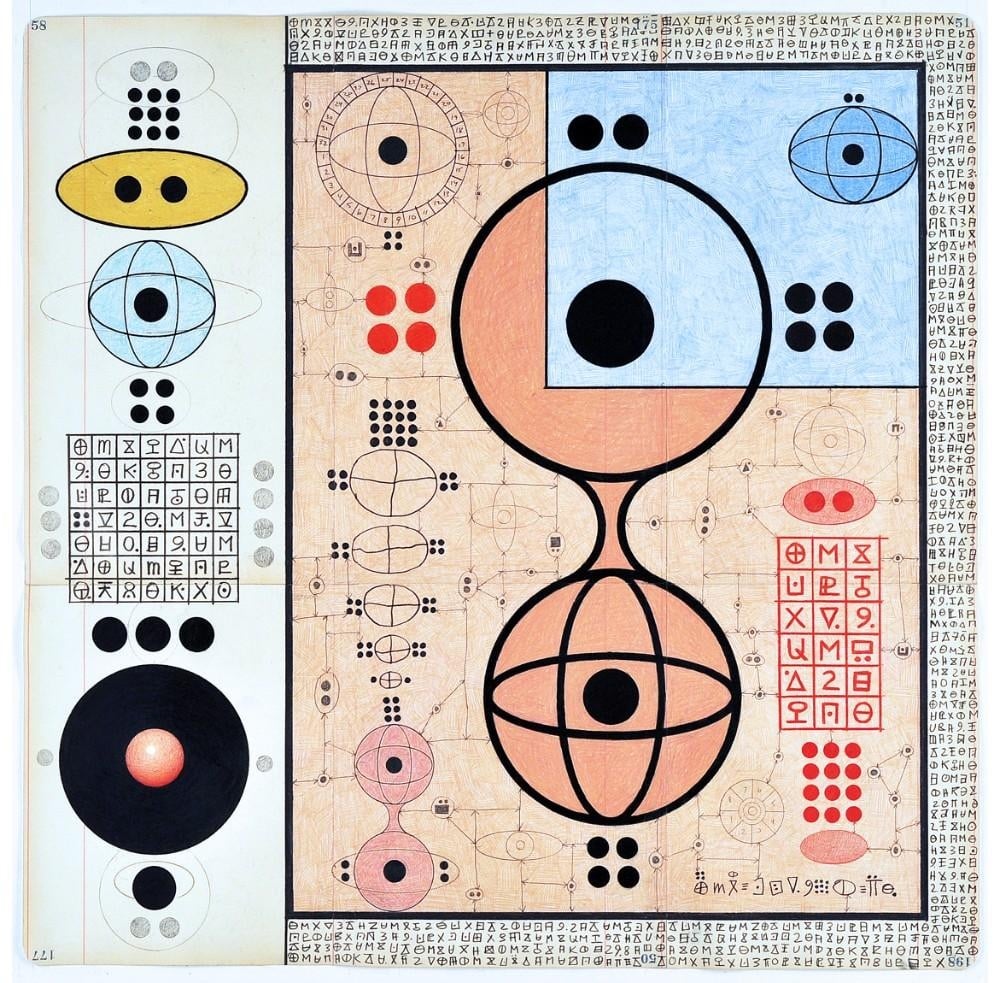



Oh wow, I love these spaceship paintings from Karla Knight. They’re from a series called 33 Spaceships for Another Planet but she’s been doing these diagrammatic/picographic paintings and drawings for some time now. It’s fun to back through Knight’s older work and see how her ancient yet futuristic style evolved. Here’s my best stab at a succinct description of her aesthetic: imagine Hilma af Klint as the production designer for Wes Anderson’s Stargate.
Julia Evans’ list of tactics for soliciting good comments on blog posts is excellent. I’ve been thinking about blog comments recently and this is helping me work through some things.
A digital museum of video game levels that you can walk through and fly around. Mostly Nintendo for now it looks like.
This short, relaxing, mesmerizing video of an Martian impact crater called Aram Chaos was taken by the HiRISE camera on the Mars Reconnaissance Orbiter. The images were run through an enhanced color red-green-blue filter, which tends to highlight the structure and geology rather than the true color. For example, the blue in the video often represents basalt, an igneous rock of volcanic origin.
Tsar Bomba, tested by the USSR in 1961, was the most powerful nuclear weapon ever created. It was so big it didn’t fit inside the aircraft, the mushroom cloud was 40 miles high, and the flash was visible from Norway & Alaska.
Game designer Luc Bernard has designed a Holocaust museum for Fortnite. I don’t think it’s live yet, but the code is 4491-8501-3730 for when it launches.
You know me; I love a good book cover. The AIGA’s annual roundup of the best designed books and covers is usually aces and the results of the 2022 competition (announced at the beginning of July 2023) is no exception. Here are a few I picked out that I didn’t feature in The Best Book Covers of 2022 back in December.
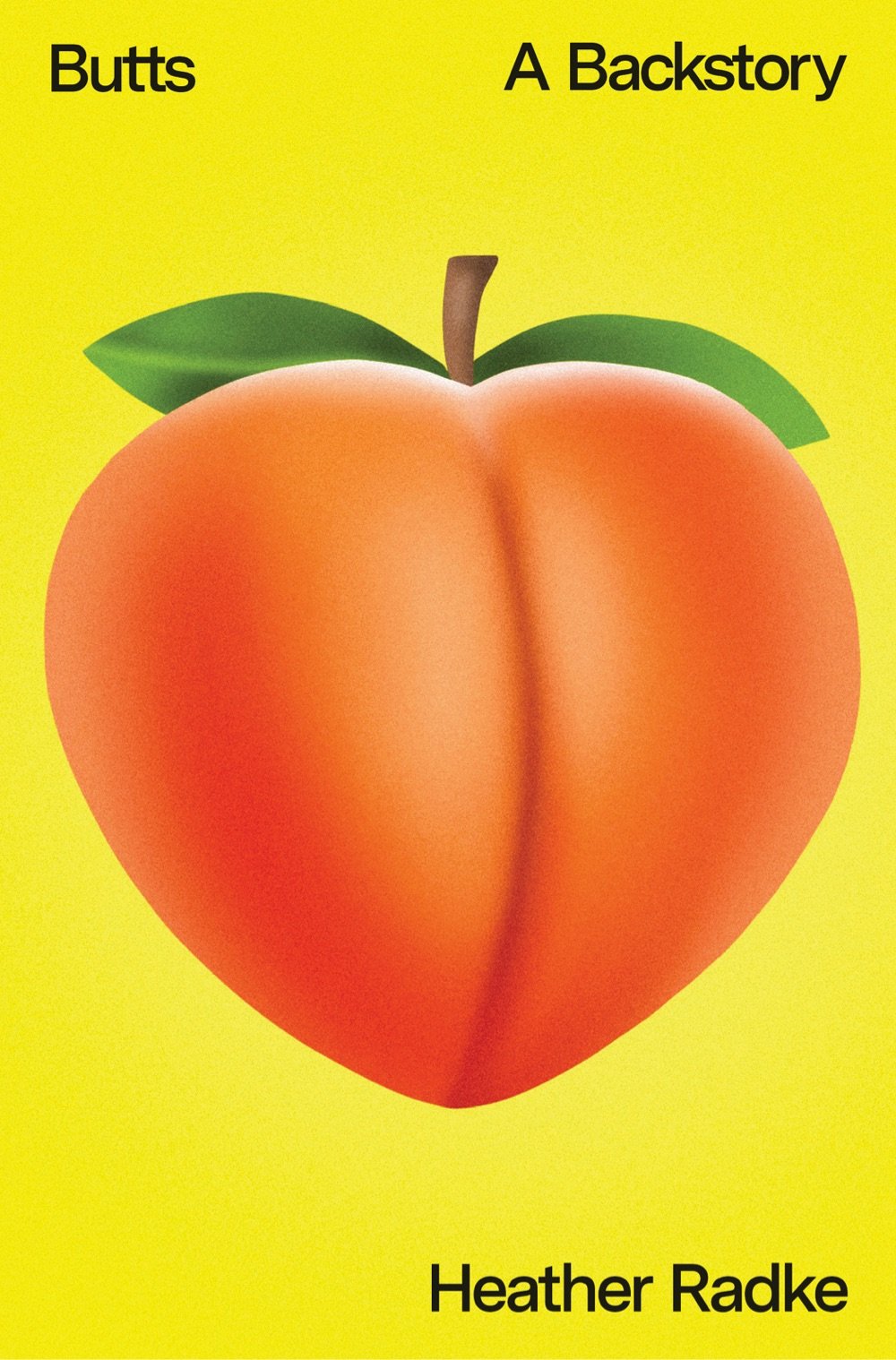
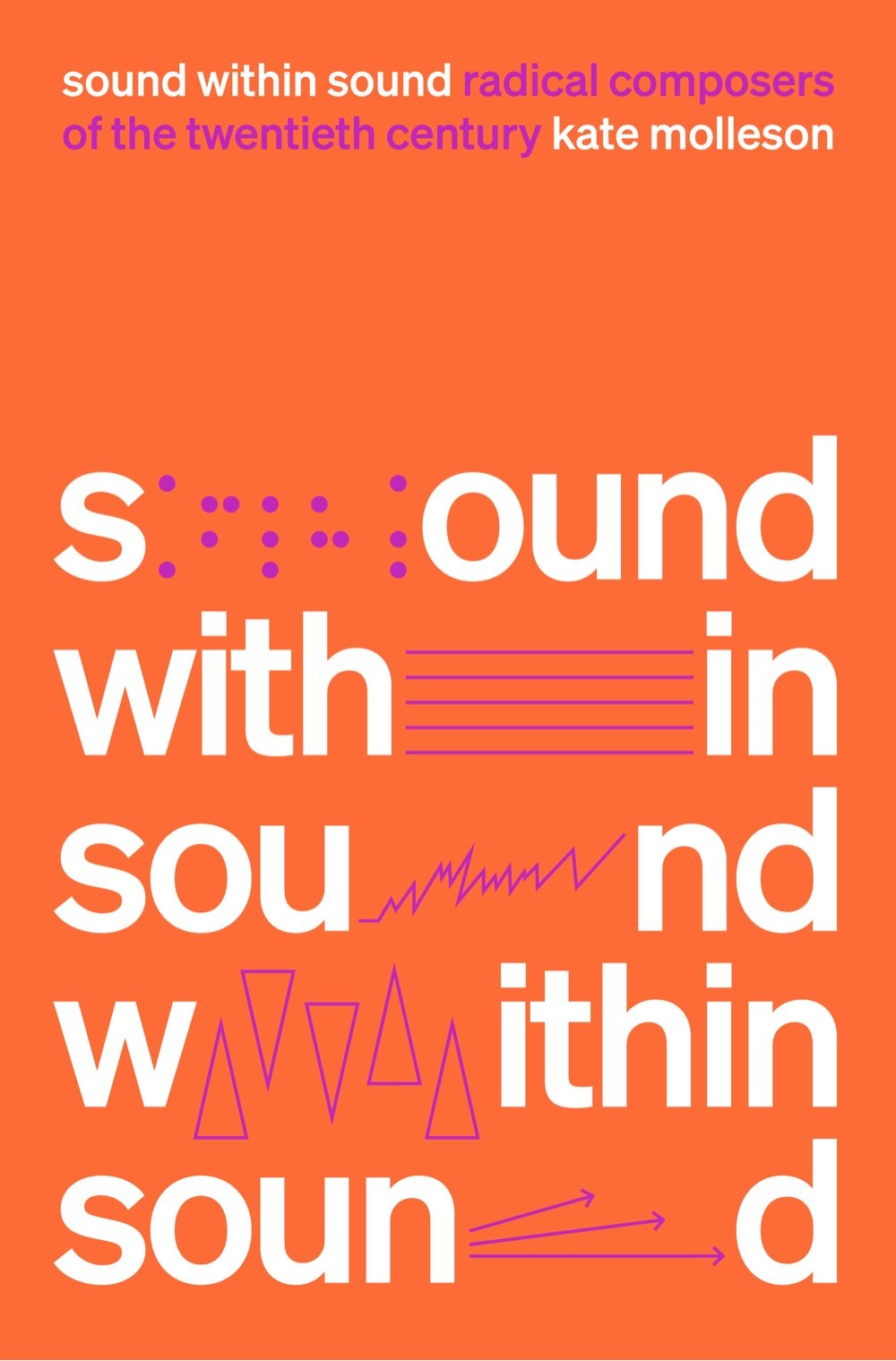

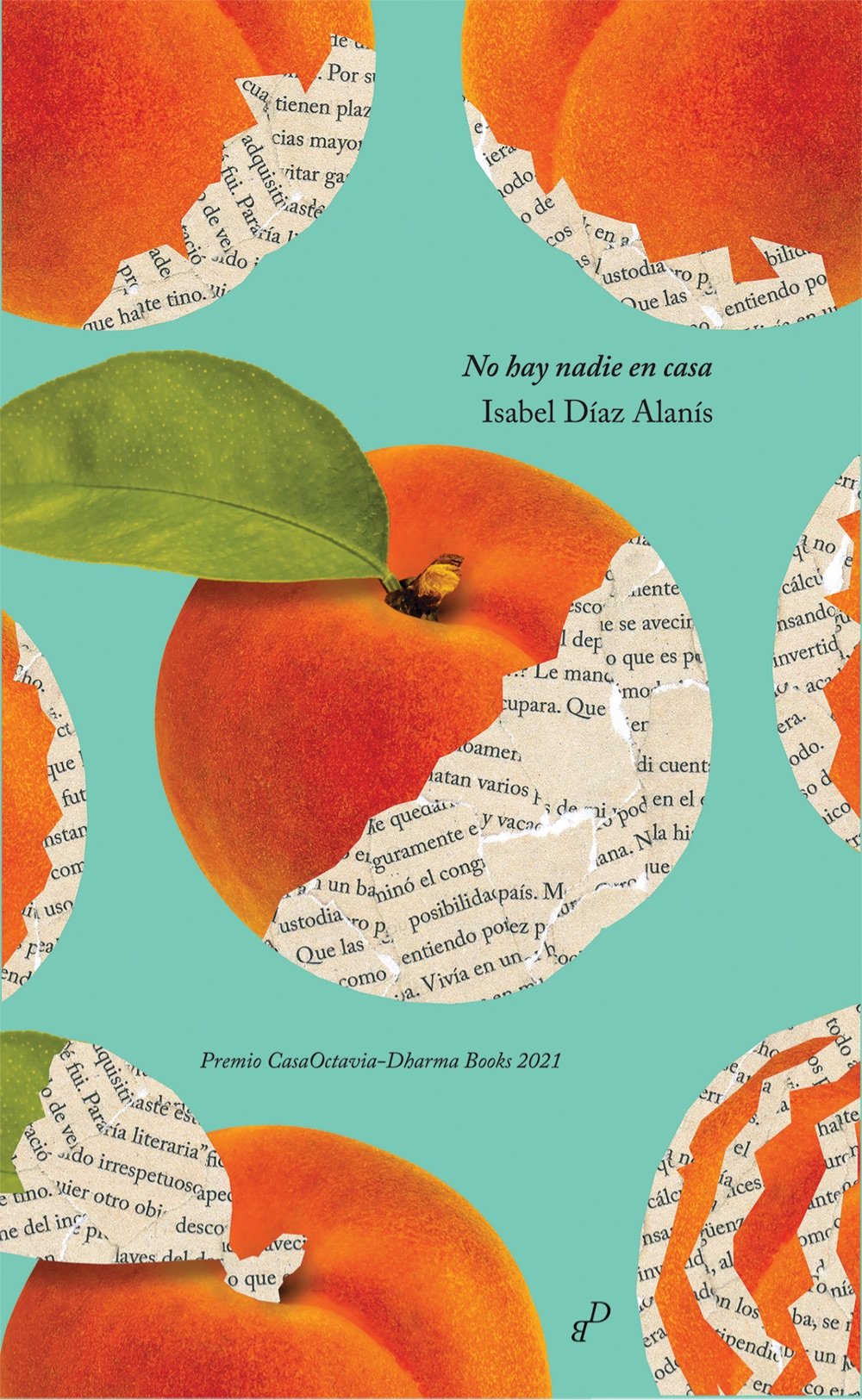
Uh, I guess I’m really into orange today? Anyway, these covers are from:
Butts: A Backstory by Heather Radke.
Sound Within Sound: Radical Composers of the Twentieth Century by Kate Molleson.
Sabit Fikir by Paul Valéry.
No hay nadie en casa by Isabel Díaz Alanís.
Flashback, a weekly history quiz from the NY Times; you’re given historical events to put into the correct order on a timeline.
Andrew Dessler, a climate scientist at Texas A&M, says that the most likely way people will be impacted by the climate crisis won’t be with some big disaster but with a bunch of small changes that add up to something unmanageable.
Let me give you an example of a tiny impact that I just heard about. My wife told me about a new group of members at her gym: active 70-ish-year-olds who used to go on walks around their neighborhood. Due to the unbearable heat in Texas, though, they joined a gym and now walk indoors on treadmills. This story embodies several aspects of climate impacts that everyone should understand.
First, this is an example of non-linear climate impacts. Although temperatures have been rising gradually over the last century, it was only recently that they crossed a critical threshold that made outdoor walks literally unbearable for these people.
Second, this is what adaptation to climate change looks like. Contrary to how it is typically portrayed by climate dismissives, adaptation is not free. These people are paying $50 per month for the gym membership that is an inferior replacement for something they used to get for free: an environment cool enough to walk in.
So these people are worse off financially and not getting as good of an experience as they used to. And they’re the lucky ones — they have the opportunity and resources to do this.
There’s also the non-monetary costs of adaptation. When it’s too hot to go outside during the day, you are a prisoner of air conditioning instead of going outside and getting fresh air and exercise. We’ve lost something valuable but difficult to quantify.
Some great points here. Reading it made me think of the gun problem here in the US. The focus is often on the immediate damage that guns do (mass shootings, suicides) but there are hundreds of other ways, large and small, in which guns make Americans’ lives worse. For many people, the number of guns in this country and the hard-line views held by those who own them add up to a general vibe of feeling unsafe and under threat. For me, it definitely seems like “we’ve lost something valuable but difficult to quantify” by allowing so many guns to exist in our communities.
“Crinkle crankle walls” (ribbon shaped walls) actually use fewer bricks than a straight wall because they are stable at a thickness of one brick while a straight wall needs a thickness of two bricks.
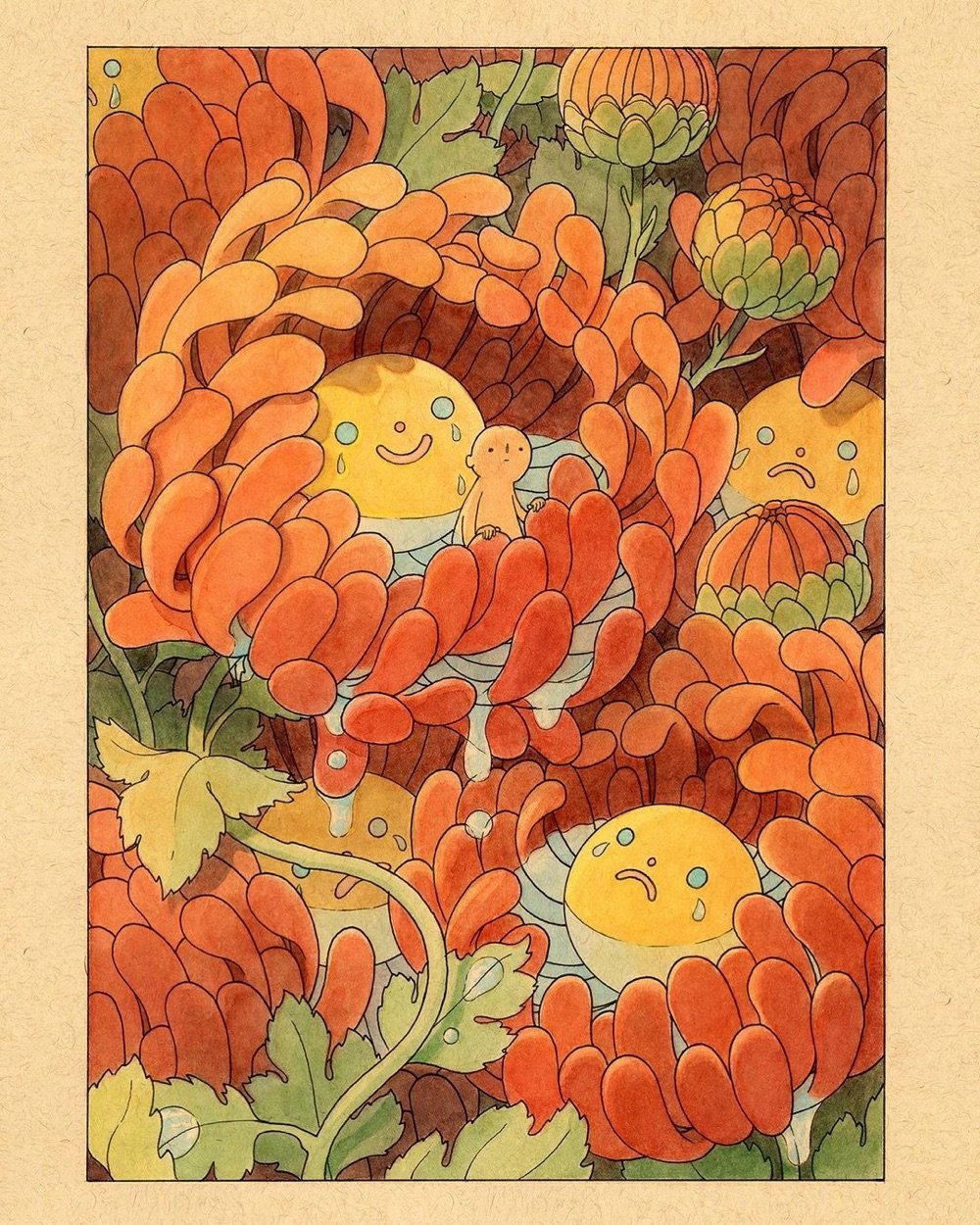


I really enjoyed taking a spin around Felicia Chiao’s Instagram (previously) — it’s chock full of vibrant, expressive and dreamy work. Oh and take a look at her sketchbook tours — and you can buy a reproduction of her 6th sketchbook here (here too).
For the First Time, There’s a Pill for Postpartum Depression. “Because the pill works faster than other antidepressants and is taken for only two weeks, it may encourage more treatment of the debilitating condition.”

David Zipper, who researches and writes about mobility and transportation, recently did a big thread on Mastodon (and Bluesky) about car bloat: the way in which cars and trucks have gotten much bigger and heavier in the US over the past few decades and how it’s bad for society. The whole thread is worth a read…here are a couple of Zipper’s points:
Tall vehicles have bigger blind spots and are more likely to strike a person’s torso or head. Heavier vehicles exert more force crashing into a person, bicycle, or smaller car. They also have longer braking distances.
Heavier cars exert more pressure on tires, eroding them faster. Tire particles are absorbed into water, where they damage ecosystems. They also float through the air, harming human health when ingested.
For further reading, Zipper links to a number of pieces he’s written in recent months: The Blatant Greenwashing of SUVs, EVs Are Sending Toxic Tire Particles Into the Water, Soil, and Air, Carry That Weight, and The Car Safety Feature That Kills the Other Guy. Zipper’s solution to these problems is government action: for example, taxing vehicles by weight, testing vehicles for pedestrian and cyclist safety, or requiring drivers have commercial driver’s licenses for larger vehicles.
The image above is from Carsized and compares a 2018 Dodge Ram to a 2005 VW Jetta.
Data Baby: My Life in a Psychological Experiment, a forthcoming book by my pal Susannah Breslin. “What if your parents turn you into a human lab rat when you’re a child? Will that change the story of your life? Will that change who you are?”
Scrabble is one of those games where pro/expert gameplay differs so much from amateur/novice gameplay that it might as well be a totally different game. In this entertaining recap of the finals of the 2023 Scrabble World Championships, former US champ Will Anderson explains how finalists David Eldar and Harshan Lamabadusuriya think and strategize throughout the best-of-seven series.
Gameplay aside, the thing that stood out for me is how many of the words played I’d just never heard of before. Like, at least 60% of them. Like I said, it’s just a completely different game at the expert level, with a shit-ton of memorization required. I don’t play Scrabble for this reason — because if you don’t have a bunch of two-letter words and Q,Z, & X words memorized and you’re playing against someone who does, it’s not fun. But it is fun to see two heavyweights of the game go at it on equal terms. (via peterme)
Paul Reubens Never Got the Critical Reappraisal He Deserved. “For Reubens in particular, the homage paid to him comes with the sad sting of too little, too late.”
Why haven’t internet creators become superstars? “Bella Poarch can get a half-billion views in one year on TikTok but the caliber of companies reaching out to her for celebrity sponsorship deals is HyperX High Quality Gaming Gear, not LVMH.”
It is astounding to me the number of YouTube channels that I have never heard of with subscriber bases larger than that of many countries. (This goes double and triple for Instagram and TikTok.) Alan Becker has over 23 million subscribers and makes videos pitting animated characters against various other entities. His latest video is Animation vs. Math and it is super nerdy and engaging. You might have to be a bit of a math nerd to enjoy this fully, but even if you only get the gist of what’s going on (like I did for at least half of the video), it’s still pretty entertaining. You can check the comments for an explanation of the math or this illustrated explainer.
This is lovely: Sheila E. runs across someone playing her song The Glamorous Life on a portable speaker at the mall and something surprising happens that I do not want to ruin…
In a June piece for The Guardian and the video above from just a few days ago, Robert Reich outlines five crises — including wokeness, the trans panic, and critical race theory — that Republicans have manufactured in order to deflect from their true agenda.
Virginia governor Glenn Youngkin’s “day one” executive order banned the teaching of critical race theory. DeSantis and Greg Abbott, the Texas governor, have also banned it from schools.
Here again, though, there’s no evidence of a public threat. CRT simply teaches America’s history of racism, which students need to understand to be informed citizens.
Banning it is a scare tactic to appeal to a largely white, culturally conservative voter base.
However, I would argue that Reich needed to go a bit further. While the crises are inventions, their consequences go beyond mere distraction and into the territory of active harm, particularly of queer and trans people, Black people, and people of color. That’s why I modified the title from his original.
A vintage toaster museum. Types of toasters include perchers (“the bread stands alone”), drive thrus (“the bread drives thru the toaster”), and droppers (“the bread falls through a trap door”).
Don’t post photos of your boarding pass on social media. “Your frequent flier number, name, and PNR are valuable for identity theft, enabling fraud like opening credit card accounts or making unauthorized purchases.”
In the 1994 Caribbean Cup qualifying group stage match between Barbados and Grenada, the 90 minutes of normal time ended with an intentional own goal by Barbados and then with Grenada trying to score either a goal or an own goal and Barbados defending both nets. Say what?! How did this happen?
Well, it was the confluence of a few things:
- The match would go into overtime in case of a tie.
- The “golden goal” rule was in effect for overtime…the first goal wins and the match is immediately over. Oh, and the goal is worth 2 goals, not just one.
- To qualify for the next round, Barbados not only needed to win the match, they needed to win it by two goals…a one-goal difference would not be enough.
I found out about the match by reading this SBNation article but Wikipedia does a better job in clearly explaining why that combination of factors resulted in chaos:
The match started off routinely and Barbados scored the first two goals, establishing the two-goal winning margin they required: in the 83rd minute, the game changed when Grenada scored a goal, which would take Grenada through to the finals unless Barbados could score again.
Barbados attempted to score for the next few minutes, but as time ran out they switched to a different strategy: tying the game so they could attempt to achieve the two-goal margin with the golden goal in extra-time. In the 87th minute, they stopped attacking, with Barbados defender Terry Sealey and goalkeeper Horace Stoute passing the ball between each other before Sealey intentionally scored an own goal to tie the game at 2-2.
With just three minutes of normal time left, the Grenadian players caught on to the Barbadians’ plan, and realised that they would advance in the tournament by scoring a goal in either net, since they would still qualify for the finals with a 1-goal loss. This saw normal time finish in a highly unusual manner, with Grenada trying to score a goal in (and Barbados trying to defend) both nets. For the next three minutes, Barbadian players successfully defended both sides.
As 90 minutes had expired with the score at 2-2, the game went on to extra time, where the winning “golden goal” would count double — thus, Barbados only had to score once to qualify for the 1994 Caribbean Cup. Trevor Thorne scored the winning goal for Barbados to advance to the next round with a score of 4-2.
Venus flytraps are calculating and efficient killers. “The fly, by fighting for its life, tells the plant to start killing it, and how vigorously to do so.”
Japan’s Hayabusa-2 spacecraft returned physical samples from an asteroid called Ryugu and recent analysis shows that they contain “tiny grains of rock made from stars that died before the Sun ever existed”.
From Adam Kovacs’ YouTube channel Adam Something comes this brisk 10-minute video essay on why European malls are doing better than their American progenitors. I thought his third point, about poor urban planning, was particularly interesting: malls tend to fail in America because they are not integrated into the fabric of towns and cities (because very little is integrated into the fabric of cities and towns in many places these days).
Malls, hell, all commerce has to be an organic part of towns and cities. People should be able to get to them by means other than a car, and conveniently. Such integrated commercial spaces are far more resilient. If your commercial spaces aren’t resilient — if you just plop a big box outside the town — don’t be surprised when it goes bust in a few years. And then it’s bulldozed for the next thing to be put up for it to go bust the same way and then get bulldozed and then the next thing and the next and the next so on and so forth.
When this species of water beetle gets eaten by a frog, rather than accepting its fate to be digested, it crawls through the frog’s bowels and emerges through its butt. “The quickest run from mouth to anus was just six minutes.”
Thalassotherapy: salt water therapy. I love the ocean and I always feel so much better when I am around it.
Newer posts
Older posts



Socials & More