


The Food Disgust Test measures how sensitive people are to potential triggers like raw meat or fish, sanitation, food spoilage, etc.

Advertise here with Carbon Ads
This site is made possible by member support. 💞
Big thanks to Arcustech for hosting the site and offering amazing tech support.
When you buy through links on kottke.org, I may earn an affiliate commission. Thanks for supporting the site!
kottke.org. home of fine hypertext products since 1998.
Beloved by 86.47% of the web.
Entries for April 2023
It’s OK to Be Angry About Capitalism by Bernie Sanders. “Unfettered capitalism is to blame for an unprecedented level of income and wealth inequality, is undermining our democracy, and is destroying our planet”.
The Slow but Inevitable Overwhelm of Consumer Capitalism
In his animated short film Five Cents, which was inspired by his student debt struggles, Aaron Hughes deftly (but gently) skewers modern consumerism, as his film’s character navigates a series of escalating purchases with a little found money. (via the kid should see this)
An update on book bans shows an increase in this “deeply undemocratic” activity, esp in Texas, Florida, Missouri, Utah, and S. Carolina. “Overwhelmingly, book banners continue to target stories by and about people of color and LGBTQ+ individuals.”
The Amazing Story of How Philly Cheesesteaks Became Huge in Lahore, Pakistan. Pakistani visitors to the US brought cheesesteak knowledge back with them and restaurants started serving them in the 90s.
Shin Oh’s 3D Pixel Rooms



These are lovely: voxel rooms of Malaysian hawker stalls and other shops by Shin Oh. She started making them after quitting her job due to anxiety and depression:
At that point in my life, I lost passion and interest in everything, I was feeling worthless, I felt like there was nothing I was good at,” Shin shares. But, later in her career break she discovered voxel art, and this, she says, is when things started to change. Noticing that voxel art was making her “more focused, relaxed and calm” after six months she began to share her creations on social media, and receiving good responses, she felt herself regaining her “long-lost” self confidence. “Making voxel art is now my hobby and my job, it’s a fun way for me to explore and express myself,” Shin concludes. “Voxel art has saved my life.”
(via present & correct)
Wes Anderson’s Staged Re-Creations of Out of Sight, Armageddon, and The Truman Show for the 1999 MTV Movie Awards
Wow, I’d never seen these before today! For the 1999 MTV Movie Awards, Wes Anderson created three promo spots, each one a staged re-creation of a nominated movie in the style of the Hollywood-inspired plays in Rushmore (Serpico & the Vietnam War one). All three shorts (Armageddon, Out of Sight, The Truman Show) star Jason Schwartzman as Max Fisher, along with the rest of the Max Fischer Players. (via open culture)
The Russian “Firehose of Falsehood” Propaganda Model. This is the modern Republican playbook too; to combat it, you can “find ways to help put raincoats on those at whom the firehose of falsehood is being directed”.
SpaceX’s new Starship rocket exploded just four minutes into its first test flight, undergoing what the company called “a rapid unscheduled disassembly” (a phrase that aptly describes what’s happening at Twitter as well, albeit slightly slower).
We’ve Been Measuring the Economy All Wrong. Current models assume a competitive economy but ours is more monopolistic, meaning tax cuts don’t result in companies investing those savings in R&D and hiring; they just give it to shareholders instead.
Ed Yong is back from his sabbatical with a piece on how prevalent but invisibile Long Covid is in America. “Long COVID is a mirror on our society, and the image it reflects is deeply unflattering.”
Almost 75% of all films from the golden age of silent films (1912-1929) have been lost. “The main reason so many silent films were lost, however, is that almost no one thought they were worth saving.”
Chonky Pixel Abstracts Made With Excel


Internet artist evbuilds creates these chunky pixelized abstract images in Microsoft Excel.
Excel is one of those rare pieces of software that is terrifically useful at what it’s designed to do but also powerful enough where you can make it do things that perhaps it really shouldn’t be doing. See also The Excel Spreadsheet Artist, Making Music in Excel, and Super Mario Bros Recreated in Excel.
I love this: a 48-yo woman from Ohio who plays a lot of Candy Crush accidentally entered a $250,000 tournament and is now in the semifinals. “It was like: ‘You qualify.’ And I’m like, ‘Well, that’s nice’. I didn’t even know I was playing.”
Volcanic microbe eats CO2 ‘astonishingly quickly’, say scientists. “Discovery of carbon-capturing organism in hot springs could lead to efficient way of absorbing climate-heating gas.”
“Earlier this month, Twitter quietly removed transgender-specific protections from its hateful conduct policy.”
This is lovely: scroll up to ride an elevator from the Earth’s surface to space, passing landmarks along the way. “Congratulations! You have made it 0.01% to the moon.”
The Washington Post peeked inside the training data set used for LLMs from Facebook and Google and found Russian propaganda sites, white supremacist sites, extremist Christian sites, anti-trans sites, etc.
A new daily game from The Pudding: Where in the USA is this? “There are five photos from the same place. You have five guesses to figure out where. A new photo is revealed after each guess.”
Netflix is shutting down its DVD rental service in September. “The DVD service has shipped more than 5 billion discs across the U.S.”
An Epic Improvisation
Hahaha you thought I was kidding about this being a Larnell Lewis fan site today, but I’ve got one more video for you. This is a live recording of a song by the jazz fusion band Snarky Puppy and — hold on, before you wander off having heard that collection of words, let me preface this by saying that I am not really a jam band person or a jazz fusion person and I thought this was pretty amazing.
So anyway, legend has it that Snarky Puppy were all set to record a live record in Holland and their regular drummer couldn’t make it, so they called Lewis to fill in. He learns the music on the plane ride over to Europe and — what? yeah, he learned the music on the plane ride over and then when he gets there…just watch the video above to see what happens.
I admit I didn’t quite get what was so special about this at first, but around the 4:20 mark things really start to get interesting and by the end I was grinning like an idiot. Cory Henry does the keyboard solo and Lewis backs him on it like they’ve been playing together for three lifetimes. As one of the YouTube commenters put it:
I just discovered this about 2 hours ago… I’ve been a musician for 20+ years… After watching this performance, I’ve now been a musician for about 2 hours.
(via @caleb, who noted the many reactions to this video on YouTube)
A map of the differing costs of a McDonald’s Big Mac across the US. The cheapest Big Mac can be found in Oklahoma ($3.49) while the most expensive is in western Massachusetts ($8.09). 🍔
Drummer Plays Metallica’s Enter Sandman After Hearing It Only Once
Ok sorry everyone but kottke.org is a Larnell Lewis fan blog today. This morning, I featured a video of Lewis, a Grammy-winning musician and music professor, explaining the 13 levels of complexity of drumming. In response, a pair of readers sent me this video, in which Lewis hears Metallica’s Enter Sandman for the first time (!) and then largely succeeds in playing it after a single listen (!!). You may find yourself wanting to skip to the part where he starts playing, but it’s really fascinating to watch him encoding the music into his brain and body through a combination of active listening, moving his body to the drumbeat, and spatially mapping the music to his drum kit. (thx, robert & matthew)
A Brief Compendium of Vintage Opium Underworlds. “I’ve always been stopped in my tracks by these images because they seem like such rare and almost unreal insights into late 19th century society.”
Woo, David Grann’s newest book, The Wager: A Tale of Shipwreck, Mutiny and Murder, is out today!
In Anxious Anticipation

What I like about the still image above, along with the rest of the images in a project called In Anxious Anticipation by Aaron Tilley & Kyle Bean, is that it makes a noise. It’s so cool how your brain sees what’s about to happen and then you hear eggs smashing on a hard surface — splat, splat, splat. More still art should make noise! (via moss & fog)
This might be my next read: Stone Blind by Natalie Haynes (author of A Thousand Ships), a retelling of the Medusa myth, “one of the earliest stories in which a woman - injured by a powerful man - is blamed, punished, and monstered for the assault”.
The 13 Levels of Complexity of Drumming
I love Wired’s video series on the levels of complexity of various activities, and they got someone really good to show us about drumming. Larnell Lewis is a Grammy Award-winning musician and a professor of music at Humber College in Toronto and his tour of the 13 levels of drumming, from easy to complex, is super clear, entertaining, and informative. Aside from the names of some of the drum kit pieces, I did not know a damn thing about drumming before watching this and now my eyes have been opened to how amazing drummers are to be able to do all of that (and look cool as hell at the same time). Like, I can’t even comprehend how they keep all those rhythms going at the same time…it just seems like magic to me. Watching Lewis’s solo at the end gave me a real boost this morning.
Some of my other “levels” favorites: A Demonstration of 16 Levels of Piano Playing Complexity, Robert Lang on the 11 Levels of Complexity of Origami, How to Draw a Self-Portrait in 11 Levels of Increasing Complexity, and Tony Hawk on the 21 Levels of Complexity of Skateboard Tricks.
The makers of Boggle quietly changed the arrangements on the letter cubes in 1987 so that all the Fs and Ks appeared on the same cube, making it impossible to make words containing both of those letters, possibly to ban the F-bomb.
Slivers of Portraits
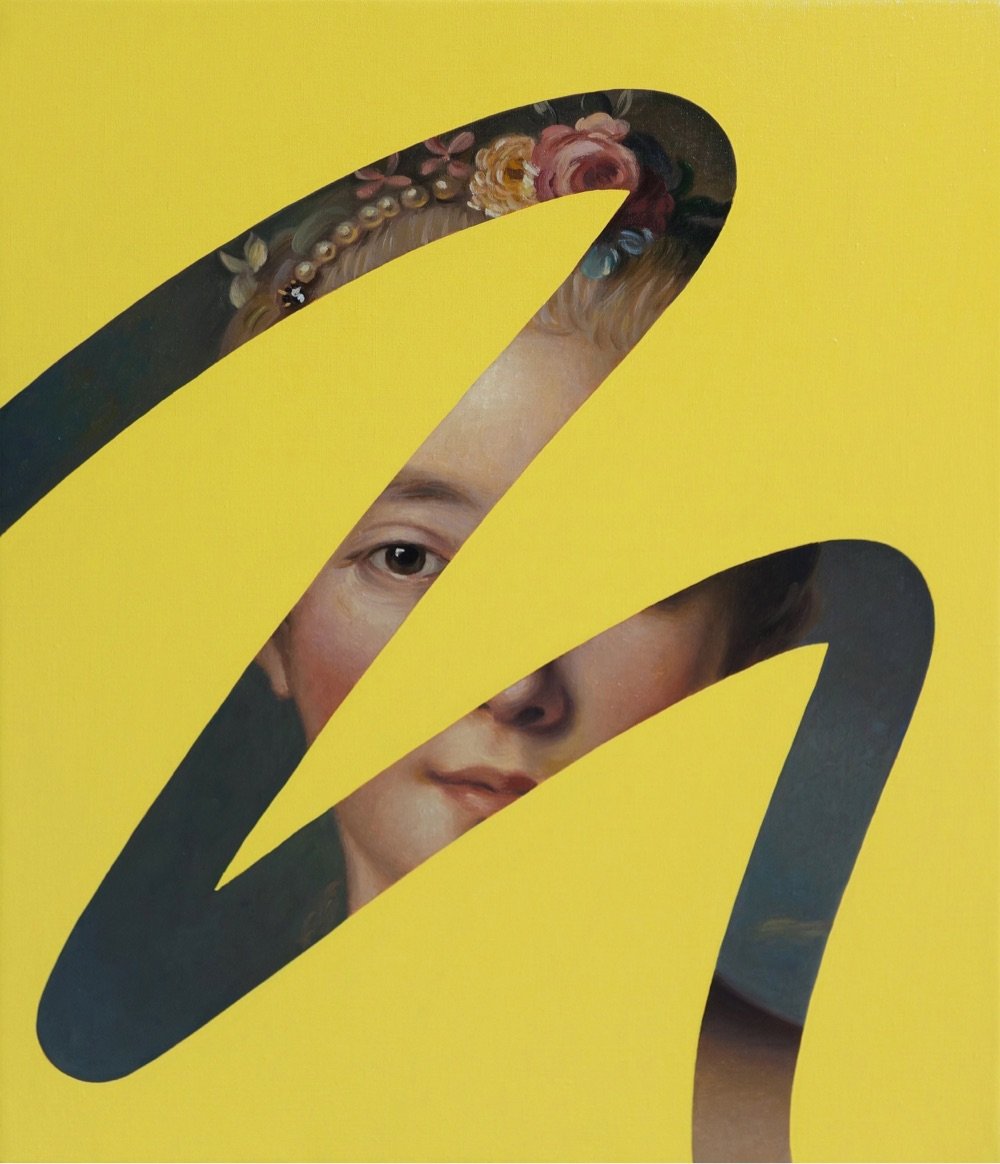

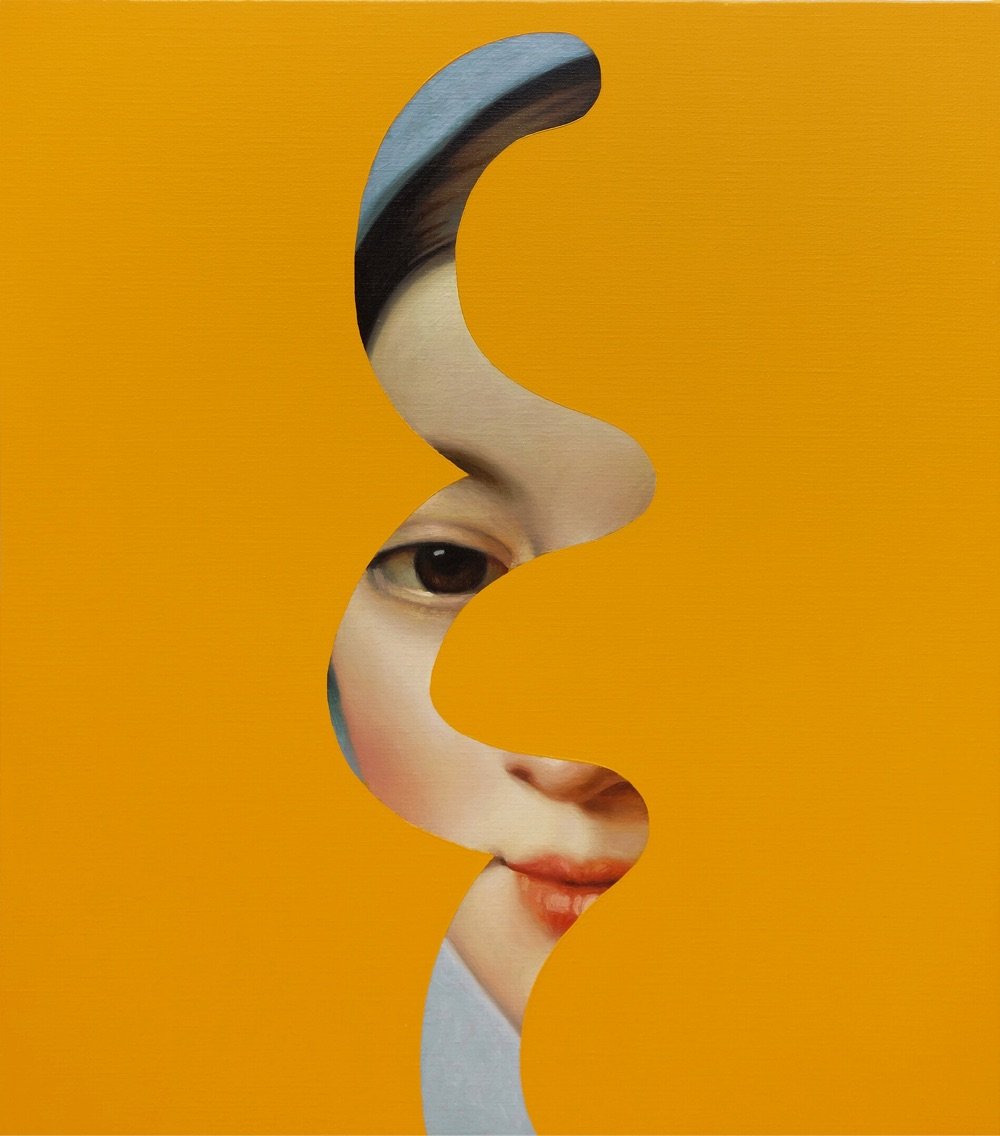
I like these paintings by Spanish artist Lino Lago where traditional oil painted portraits peek through bright color fields. He calls them Fake Abstracts. (via colossal)
Volunteers in Maine created what they believe is the world’s largest ice carousel - 1776 feet in diameter and weighing 146,000 tons.
The Fictional Brands Archive

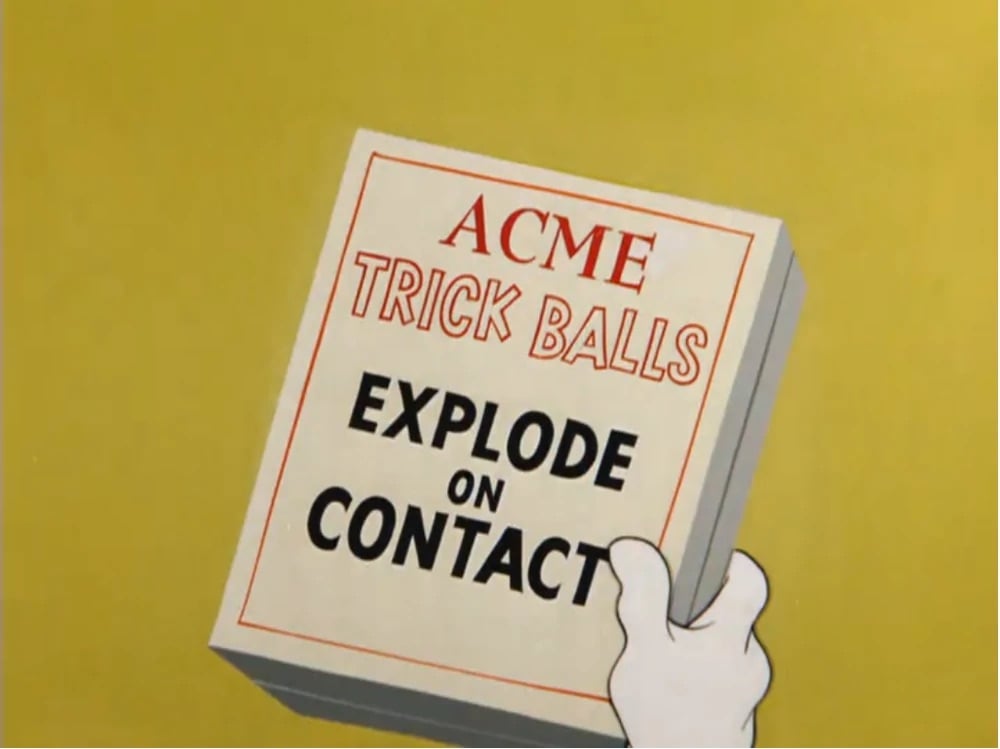
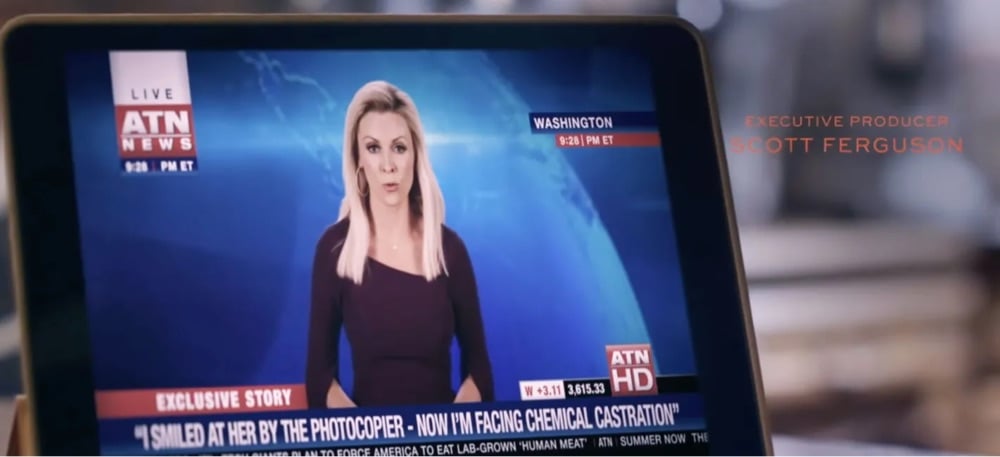
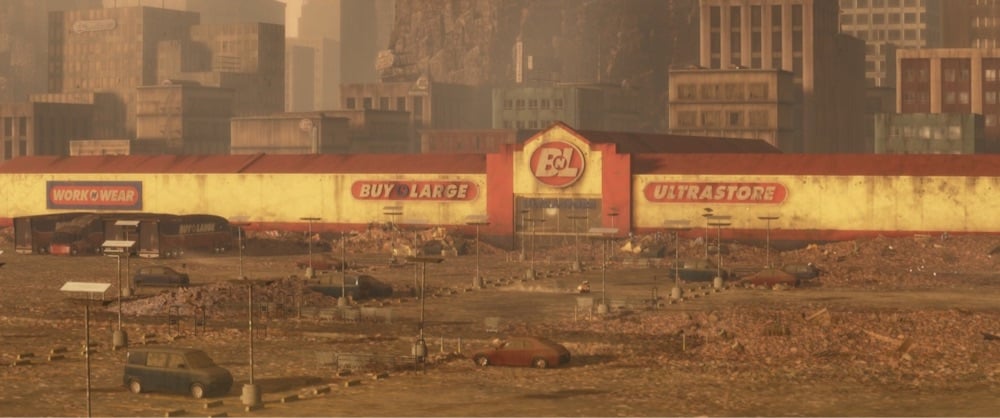
The Fictional Brands Archive is a collection of fictional brands found in movies, TV shows, and video games — think Acme in Looney Tunes, Pixar’s Monsters, Inc., and Nakatomi Corporation from Die Hard. Very cool. But gotta say though, the dimming mouseover effect makes this more difficult to use than it needs to be… (via sidebar)
11 Facts About Shakespeare’s First Folio. “Without the First Folio, 18 of Shakespeare’s plays would have been lost to time,” including Macbeth, The Tempest, All’s Well That Ends Well, and Twelfth Night.
A History Of The World According To Getty Images
An extraordinary amount of human history — cultural, scientific, artistic — is held in private hands, unable to be viewed or used unless a steep price is paid. In his compelling short film A History Of The World According To Getty Images, director Richard Misek takes a look at several historical films that are in the public domain but are not publicly available…you have to pay thousands of dollars to companies like Getty Images to see and use them.
‘A History of the World According to Getty Images’ is a short documentary about property, profit, and power, made out of archive footage sourced from the online catalogue of Getty Images. It forms a historical journey through some of the most significant moments of change caught on camera, while at the same time reflecting on archive images’ own histories as commodities and on their exploitation as ‘intellectual property’.
As the largest commercial image archive in the world, Getty Images is particularly worthy of attention here. Many of the defining images of the last century — for example, the Apollo moon landings and the first breach of the Berlin Wall — are owned by Getty. These images live in our heads, and form a part of our collective memory. But in most cases, we cannot access them, as they are held captive behind Getty’s (as well as many other archives’) paywalls.
I found his comments about filmmaking, photography, and power really interesting:
Newsreel cameras document power. But what strikes me most about my exploration of the Getty archive is how much the act of filming is itself an expression of power — men filming women, the rich filming the poor, colonizers filming the colonized. […] Whenever I search a news archive, I always hope I’ll find some images that aren’t about power, and once in awhile I do. But by and large, the past offers no surprises, as it is the source of all the inequalities and injustices that still exist.
Once the film finishes the festival circuit this summer, a high-resolution download will be available from this website, thereby making six public domain clips available online for free. (via aeon)
Thomas Bangalter’s first post-Daft Punk release is an orchestral ballet score.
A new study has shown “that Black residents in counties with more Black physicians - whether or not they actually see those doctors - had lower mortality from all causes”.
Concerning Rogue Waves
Tsunamis, tidal waves, storm surges, and other hazardous aquatic events can all unleash the great power of the sea on ships and shorelines, but rogue waves are the largest and most mysterious waves that our oceans can muster. Rogue waves are a fairly recent discovery…until you look carefully at the historical record. This video looks at all the different kinds of big waves and tracks previously unacknowledged rogue waves from their depiction in art (Hokusai’s Great Wave Off Kanagawa) to a suspected 220-foot wave that battered an Irish lighthouse.
The Mobile Phone Museum houses a collection of over 2600 models of mobile phone from 250+ brands. Don’t miss their ugliest phones and most wanted phones.
The theme to Super Mario Bros will be included in the collection of the Library of Congress this year, the first video game sounds to join the registry.
Good thoughts from Annalee Newitz on Substack. They’re not neutral - they pay and promote writers. “Substack has promoted hate speech and misinformation by paying and/or not moderating its top authors and celebrities.”
Mike Masnick on Substack’s unwillingness to moderate content (which they have been consistent about since their launch). “Chris Best wants to pretend that Substack isn’t the Nazi bar, while he’s eagerly making it clear that it is.”
The Lisa Personal Computer: Apple’s Influential Flop
The Apple Lisa was the more expensive and less popular precursor to the Macintosh; a recent piece at the Computer History Museum called Lisa “Apple’s most influential failure”.
Apple’s Macintosh line of computers today, known for bringing mouse-driven graphical user interfaces (GUIs) to the masses and transforming the way we use our computers, owes its existence to its immediate predecessor at Apple, the Lisa. Without the Lisa, there would have been no Macintosh — at least in the form we have it today — and perhaps there would have been no Microsoft Windows either.
The video above from Adi Robertson at The Verge is a good introduction to the Lisa and what made it so simultaneously groundbreaking and unpopular. From a companion article:
To look at the Lisa now is to see a system still figuring out the limits of its metaphor. One of its unique quirks, for instance, is a disregard for the logic of applications. You don’t open an app to start writing or composing a spreadsheet; you look at a set of pads with different types of documents and tear off a sheet of paper.
But the office metaphor had more concrete technical limits, too. One of the Lisa’s core principles was that it should let users multitask the way an assistant might, allowing for constant distractions as people moved between windows. It was a sophisticated idea that’s taken for granted on modern machines, but at the time, it pushed Apple’s engineering limits - and pushed the Lisa’s price dramatically upward.
And from 1983, a demo video from Apple on how the Lisa could be used in a business setting:
And a more characteristically Apple ad for the Lisa featuring a pre-stardom Kevin Costner:
How to help when someone is having a panic attack. “As a support person, you need to find your own stillness, so that the other person’s fear can find a resting point.”
Why are teens suddenly obsessed with chess? Can personally attest to this…my teen has been playing a ton of chess online lately.
“What’s the Healthiest Way to Handle a Creeping Feeling That the World Is Ending?”
The end of the world is nigh…or at least it feels like that sometimes these days. As historian and archaeologist Ian Morris says in the video, the five factors that crop up throughout history when a major societal collapse occurs seem to be present today: mass migrations, epidemic disease, collapse of states, major famines, and climate change. So, how should we think about the potential impending disintegration of society? How should we prepare? How should we feel about it?
In this short film, filmmaker Ryan Malloy explores, in a “fretful yet lighthearted” way, how one should prepare for the apocalypse by talking to a historian & archaeologist (the aforementioned Morris), a therapist, and a couple of different types of preppers.
Putting together a supply kit made me realize just how helpless I’d be if disaster struck. When you think about it, it’s almost like we live in a world run by magic. I don’t know how water, electricity, and gas gets to my house, but they’ve always been there. It wouldn’t take much, even just a small crisis for them to be gone. What would it be like to live without these things?
A Quick Membership Reminder

It’s been a hectic few weeks here at Kottke HQ — lots going on personally/familially but I’ve also been pretty focused on the website. The site celebrated its 25th anniversary last month. I built and launched a micro-site for the Kottke Ask Me Anything & spent a couple of sessions answering reader questions. I went on The Talk Show to discuss the early days of blogging with John Gruber and put some cool t-shirts out into the world. It’s been fun to continue to build up a presence for kottke.org over on Mastodon. I rejiggered the Quick Links infrastructure (which has made it easier/faster for me to post them) and have been working on a couple of behind-the-scenes projects that will hopefully streamline & shore up things around here. Oh, and I also kept up the regular stream of posts and links you know and love. *phew*
Once again, I’d like to thank kottke.org members for supporting all of this activity on the site, with relatively few membership solicitations like this one, very minimal advertising, no popup newsletter sign-up forms, a full-text RSS feed w/ no ads, and open for everyone to read. As I wrote last month:
Perhaps nearest and dearest to my heart, member support keeps the site free, open, and available to everyone on an internet that is increasingly paywalled. It’s not difficult to imagine an alt-universe kottke.org with ads crammed into every bit of whitespace, email collection forms popping up on every visit, and half the site behind a members-only paywall. No shade to those who have gone that route to keep things running - I’d probably make more money with members-only content on Substack or whatever and that pull is tempting. But seriously, I love you folks so much for collectively keeping all of kottke.org on the open web. Thank you.
If you’re not already a member (or are a former member) and you’ve been liking what’s been going on here in recent months after my return from sabbatical and can manage it, please consider supporting the site by purchasing a membership. Thanks for reading!
This is why I do not like Substack: they do not want to take responsibility for hate speech. Substack is a safe haven for racists, transphobes, homophobes, anti-vaxers, etc. and they condone it because they profit from it.
Google Maps has been updated to help people better explore US National Parks - offline maps, better directions, and listing popular trails and landmarks.
Perhaps it’s helpful to think of Elon Musk as an accelerant for all the bad stuff that was slowly happening at Twitter before he got there. “In the long run we will be thankful that Elon is effectively putting the company out of its misery.”
Socials & More