Entries for April 2022

You may have noticed, while twisting apart Oreos (aka the world’s favorite “trilayer laminate composite”) to get at the creme inside, that the creme tends to mostly stick to one half of the cookie. MIT graudate student Crystal Owens decided to study this phenomenon and has co-authored a paper about the failure mechanics of the Oreo’s layer of creme in the journal Physics of Fluid. From Ars Technica:
“I had in my mind that if you twist the Oreos perfectly, you should split the creme perfectly in the middle,” said Owens. “But what actually happens is the creme almost always comes off of one side.” The experiments showed that this creme distribution is not affected by rotation rate, the amount of creme filling, or the flavor. Rather, the pre-existing level of adhesion between the creme and the chocolate wafers seemed to be the determining factor. Cookies from the package within any one box typically separated with the same preferred orientation most of the time. This suggests that it has something to do with how the cookies are manufactured and then oriented during packaging, as well as how they are stored.
They even built a 3D printed “oreometer” so that people can study this phenomenon without using an expensive rheometer.
As a very amateur kitchen scientist myself, the Oreo situation reminds me of what happens when you try to tear three connected pieces of paper towel apart in one move by pulling on the outside pieces in opposite directions: the middle piece of paper towel almost always ends up attached to one of the outside pieces. In fact, in extensive testing over the past 3-4 years, this maneuver has only separated all three pieces a few times.1 (thx, eric)
A simulation of trying to read online in 2022. The only thing they missed was the refreshing interstitial ad that repeatedly makes you lose your place in the text. (@kottke proudly does none of this.)
Wow, NASA just released a video shot by the Mars Perseverance rover of a solar eclipse by the moon Phobos. The video description calls it “the most zoomed-in, highest frame-rate observation of a Phobos solar eclipse ever taken from the Martian surface”. According to this article from JPL, the video of the eclipse is played in realtime; it only lasted about 40 seconds.
Captured with Perseverance’s next-generation Mastcam-Z camera on April 2, the 397th Martian day, or sol, of the mission, the eclipse lasted a little over 40 seconds — much shorter than a typical solar eclipse involving Earth’s Moon. (Phobos is about 157 times smaller than Earth’s Moon. Mars’ other moon, Deimos, is even smaller.)
Just a hunk of space rock passing in front of a massive burning ball of gas recorded by a robot from the surface of an extraterrestrial planet, no big deal.
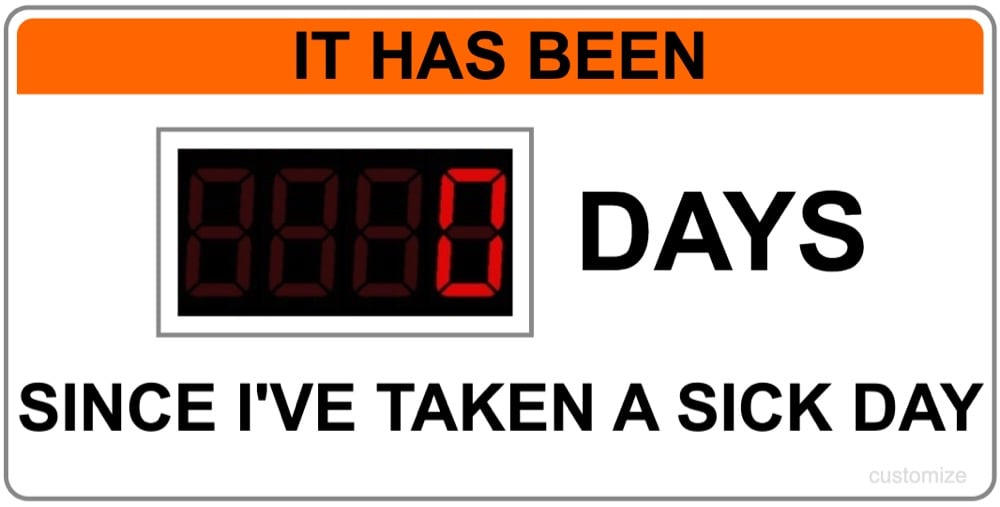
Welp, I woke up feeling like garbage and it seems I’ve finally gotten the cold that’s been going around in my family for the past two weeks. It’s weird being sick — it’s been such a long time. Aside from a couple of 1-day post-vaccine reactions and a stomach bug I picked up in Mexico last summer, the last time I was sick was when I got Covid way back in early February 2020.
You know, feeling the way I do right now, I don’t enjoy being sick. So I’m going to continue to mask up at the grocery store, on planes, subways, and buses, and generally anywhere else where a lot of strangers are sharing air. I’m just fine without frequent respiratory illness, thanks.
Anyway, I’m taking the day off to rest up and recuperate — I hope to be back with you tomorrow at something approaching full strength.
Where did the blues originate? Mississippi? Africa? Texas? New Orleans? @tedgioia surveys the claims.
Seán Doran strikes again. In this short flyover rendered in 8K resolution by Doran, we’re treated to a detailed look at a crater on Mars. The imagery is from the HiRISE camera onboard the Mars Reconnaissance Orbiter. Beautiful — worth taking a second or third pass to catch all the details.
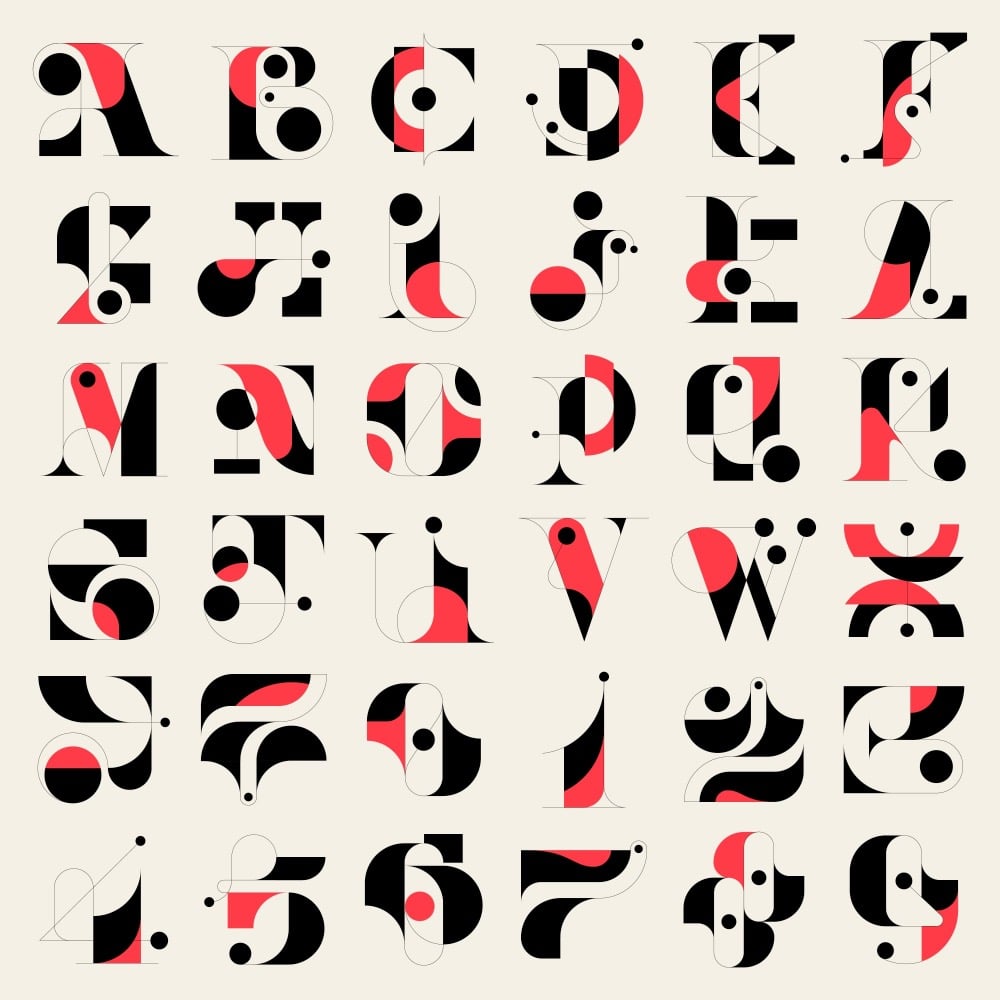
I love this messy modernist typeface from LA-based designer Adam Goldberg. Maybe the J is my favorite?
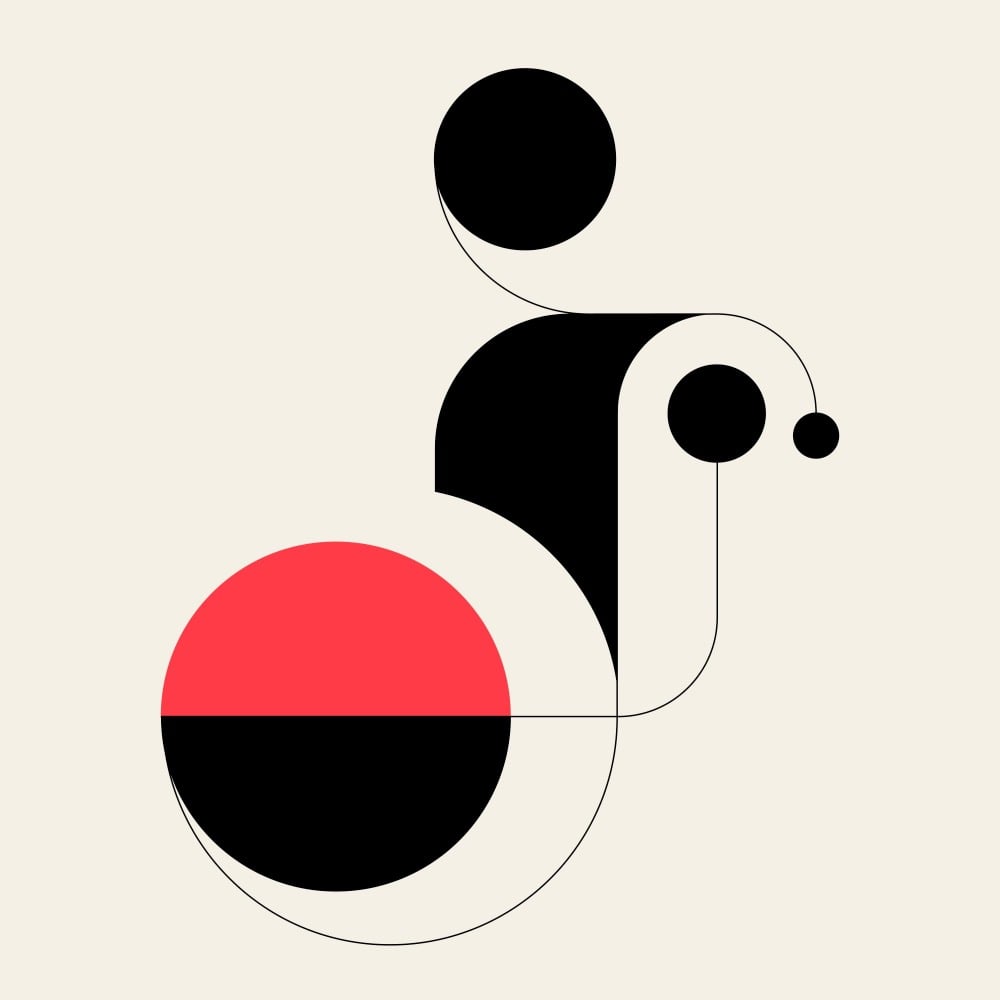
I also quite like the concept of messy modernism — that seems like my wheelhouse. (via colossal)
A father and daughter at a tailoring workshop in Japan have mastered kaketsugi, the art of invisibly mending clothes — that is, repairing holes and tears in fabric so seamlessly and completely that they appear to never have been damaged in the first place. The before and after photos are incredible…you absolutely cannot tell where the repair was made, even under close inspection.


A short 5-minute video of the pair at work is available on YouTube while a 25-minute feature is available here. (via iancu)
From the Brick Technology YouTube channel, a demonstration on how to build a 5-speed manual transmission with Lego. It even has a gear stick and goes in reverse. Unloaded, 1st gear spins an axel at 384 rpm and 5th gear spins at 3000 rpm. Really impressive.
See also Designing a Lego Car to Cross Gaps and Engineering a Capable Climbing Lego Car.
If we’re going to address the climate crisis, we need to fight despair and keep hope alive. Rebecca Solnit wrote a piece for The Guardian about 10 ways we can guard against our feelings of dread and fear.
2. Pay attention to what’s already happening
Another oft-heard complaint is “nobody is doing anything about this”. But this is said by people who are not looking at what so many others are doing so passionately and often effectively. The climate movement has grown in power, sophistication and inclusiveness, and has won many battles. I have been around long enough to remember when the movement against what was then called “global warming” was small and mild-mannered, preaching the gospel of Priuses and compact fluorescent lightbulbs, and mostly being ignored.
One of the victories of climate activism — and consequences of dire climate events — is that a lot more people are concerned about climate than they were even a few years years ago, from ordinary citizens to powerful politicians. The climate movement — which is really thousands of movements with thousands of campaigns around the world - has had enormous impact.
See also We Have the Tools to Fix the Climate. We Just Need to Use Them. (via life is so beautiful)
Because of their relevance to social media, the algorithm has become an everyday concept. Why do we see the posts we see on Instagram or TikTok? Oh, it’s the algorithm. This video from BBC Ideas explains that the term has its roots in the work of 9th century Persian mathematician Muḥammad ibn Mūsā al-Khwārizmī, who also gave the world the word “algebra”. (via the morning news)
Starting on May 1, Lego is introducing minifigs of The Muppets!


The Muppets are such a sprawling concern that not all your favorites are here, but you’ve got Kermit, Fozzie, Miss Piggy, Rowlf, Gonzo, Dr. Bunsen Honeydew, Beaker, Animal, Janice, The Swedish Chef, and Statler & Waldorf — that’s a pretty good lineup.
Update: I love this Lego-ized version of The Muppet Show opening theme they did. So good.
I had always heard that the engineering of Roman aqueducts was impressive, but as this video demonstrates, I didn’t know the half of it. The stuff about how precise the descending slope of the aqueducts were over several hundred miles is just incredible. (via open culture)
Is there a physical limit to how loud a noise can be? As you might imagine, the answer is somewhat complicated, even if you assume normal atmospheric conditions. In video, Benn Jordan discusses a few possible answers, as well as how we should think about the question in the first place. One possible answer is 194 decibels, although experiencing a sound that loud would probably kill you.
See also The World’s Loudest Sound, aka the sound generated by the Krakatoa volcanic eruption in 1883, which Jordan mentions in the video.
The Thin Blue Line got Randall Adams out of jail after 12 years. Blackfish almost bankrupted Seaworld and pressured them to end their orca breeding program. Making A Murderer almost got Brendan Dassey out of jail. But in this video essay, Eliz Mizon “argues that documentaries start conversations, but they can’t spark real change.”
I’ve featured storm chasing photographer Mike Olbinski’s work here on kottke.org pretty frequently. His latest video celebrates a decade of capturing haboobs (dust storms). Here’s a haboob primer:
Just how do haboobs form? When air is forced down and pushed forward by the front of a traveling thunderstorm cell, it drags with it dust and debris. Winds of speeds up to 60 mph can stir up dust and sand and create a blowing wall as high as 10,000 feet. Haboobs usually last only 10 to 30 minutes, but on rare occasions can last longer and create hazardous conditions for ground transportation systems, air traffic and motorists.
I have to admit: before watching this video, I was unaware that there were professional jump ropers. But of course there are, and Tori Boggs is perhaps the best one in the world. She’s won dozens of world championships and holds some impressive world records. And the tricks she can do with a rope…it’s a joy to watch someone who so obviously loves what they do perform at such a high level. (via the kid should see this)
What ‘Severance’ Gets Right About Infantilizing Office Perks. “Who wants to give up the two hours a day they gain by not commuting for a coffee mug?”
In an uncompromising TED Talk from a few days ago, Garry Kasparov warns we must confront “true evil” in the world when we see it, in this case Vladimir Putin and his regime.
Actually, my first article of warning was published in “The Wall Street Journal” on January 4, 2001. I saw evil because I heard evil. Putin was telling us what he was. All we had to do was listen. When Putin said that there was no such thing as a former KGB agent, I knew Russia’s fragile democracy was in danger. When Putin said that the collapse of the Soviet Union was the greatest geopolitical catastrophe of the 20th century, I knew Russia’s newly independent neighbors were at risk. And when Putin talked at the Munich Security Conference in 2007 about a return to spheres of influence, I knew he was ready to launch his plan. It was the language from the Molotov-Ribbentrop Pact, 1939. The language Hitler and Stalin used to divide Europe. And a year later, in 2008, Putin invaded the Republic of Georgia. 2014, Ukraine.
It’s a paradox, isn’t it? Dictators lie about everything they have done, but often they tell us exactly what they’re going to do. Just listen. Anyone who is surprised at Putin’s war crimes in Ukraine must not be aware about his long record, beginning with the Second Chechen War in Grozny more than two decades ago. Vladimir Putin has been a war criminal from the start.
When he was talking about the problem with compromising with authoritarians, I was reminded of a phrase I’ve heard in a couple of different contexts recently: meeting a racist halfway on their views is still racism; meeting a fascist halfway on their views is still fascism. As Rebecca Solnit put it in an article about the 2020 election: “Who the hell wants unity with Nazis until and unless they stop being Nazis?” Meeting a brutal authoritarian halfway, Kasparov is arguing, is still tyranny.
“Free-speech absolutist” Elon Musk offers to buy Twitter for $41 billion in hostile takeover bid. This would make the service worse in so many ways.


For his project Black Sun, Danish photographer Søren Solkær travelled all over Europe to capture the murmurations of migrating starlings.
The starlings move as one unified organism that vigorously opposes any outside threat. A strong visual expression is created — like that of an ink drawing or a calligraphic brush stroke — asserting itself against the sky. Shapes and black lines of condensation form within the swarm, resembling waves of interference or mathematical abstractions written across the horizon. At times the flock seems to possess the cohesive power of super fluids, changing shape in an endless flux: From geometric to organic, from solid to fluid, from matter to ethereal, from reality to dream — an exchange in which real time ceases to exist and mythical time pervades.
These photographs are also available on Instagram and in book form from Solkær’s website. (via ny times)
The port of Amsterdam is one of the busiest seaports in Europe. But it gets really busy when there are tall ships from all over the world and everyone wants to get out on the water to see them. This is a time lapse video taken at the 2015 SAIL maritime festival that shows the port absolutely teeming with ships and boats of all shapes and sizes.
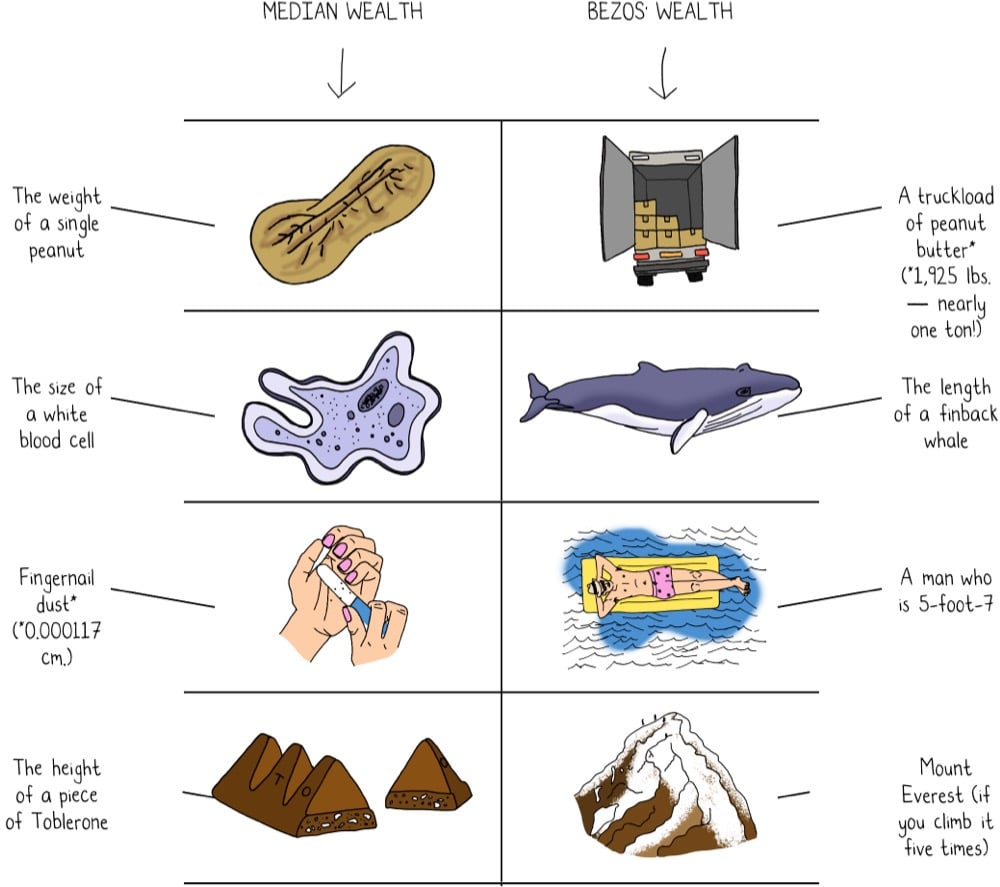
In 9 Ways to Imagine Jeff Bezos’ Wealth, Mona Chalabi provides us with some data visualizations that can help us wrap our heads around just how much money Amazon founder Jeff Bezos has. For instance, if the width of an Oreo cookie represents the median net worth of a US household, Bezos’ wealth is twice the width of the Grand Canyon.
See also 1 pixel wealth, Printing Money, and Spend Bill Gates’ Money.
Building on the lessons of World War II, Ukrainians are trying to save their art and other important cultural artifacts from destruction during Russia’s invasion. When an invader repeatedly tries to deny the cultural distinction of a people for decades and even centuries, like Russia has done with Ukraine, saving buildings and statues and paintings can be of great importance.
Because under the 1954 convention, “damage to cultural property means damage to the cultural heritage of all mankind”. So attacks on cultural heritage are a considered war crime. But treaties can only do so much. In the years since, conflicts around the world have rendered immeasurable damage to cultural heritage. A lot of it intentional. Like the Taliban’s destruction of the Bamiyan buddhas. And Isis’ attacks on ancient sites all over Syria.
“That cultural heritage is not only impacted, but in many ways it’s implicated and central to armed conflict. These are things that people point to that are unifying factors for their society. They are tangible reflections of their identity.”
And Putin has made it clear that identity is at the ideological center of Russia’s invasion: “I would like to emphasize again that Ukraine is not just a neighboring country for us. It is an inalienable part of our own history, culture, and spiritual space.”
“He thinks that we don’t really exist and they want to destroy all the signs of our identity.”
BTW, regarding the destruction of the museum that housed works by Maria Prymachenko at the start of the video: according to the Ukrainian Institute, the works were saved from burning by local residents.
Profiles of combat volunteers signing up to fight in Ukraine. “I’m a young man going through a divorce, and I was, like, ‘Well, I have no sense of purpose anymore.’ I had left the army, I am losing my family. So I saw this war on TikTok.”
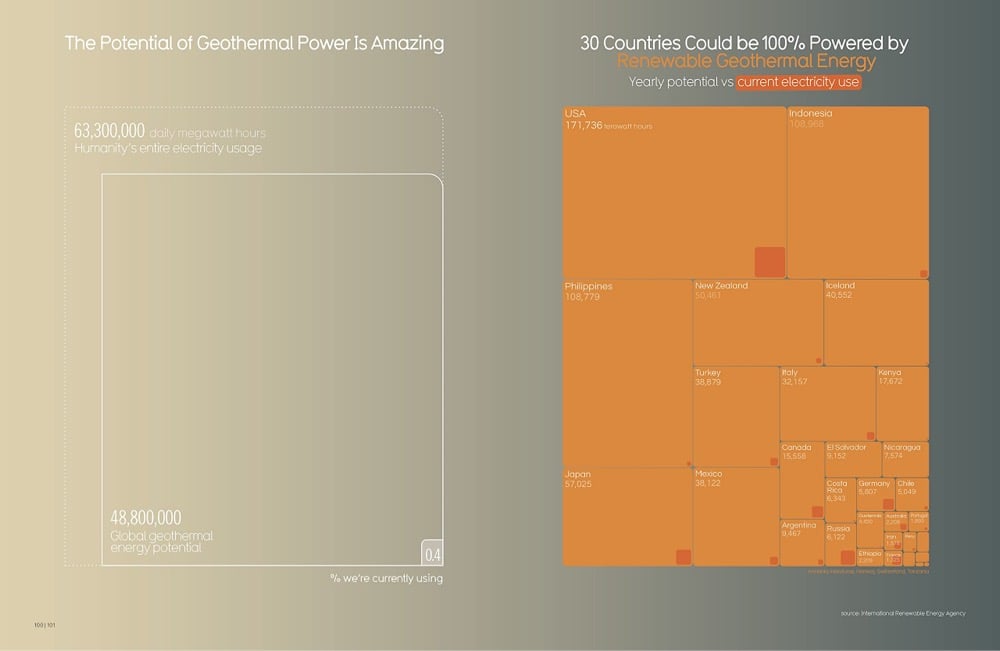
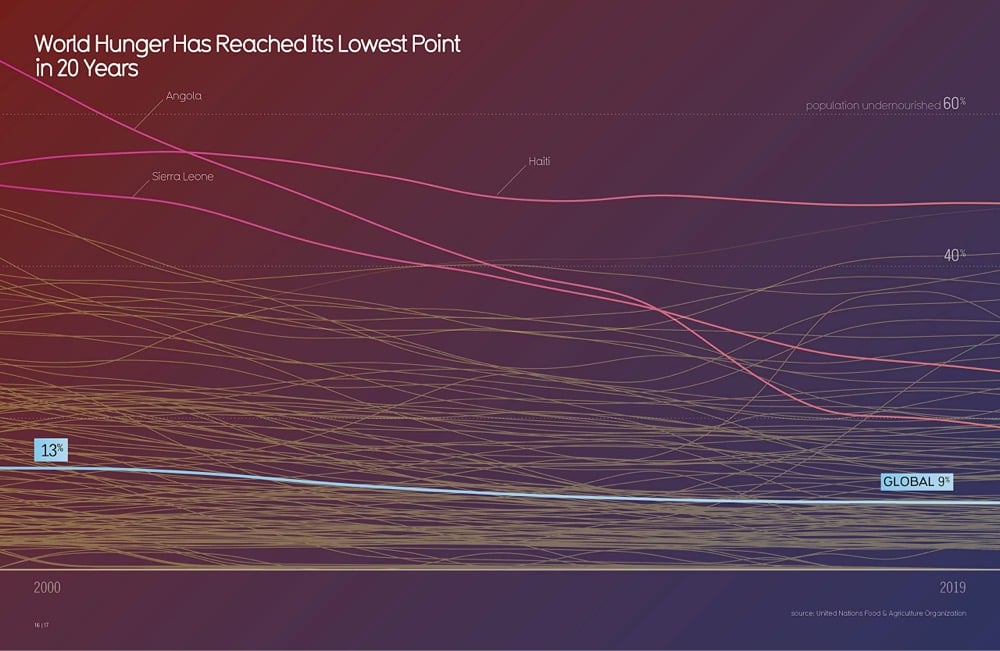
For the past few years, David McCandless at Beautiful News Daily has been sharing infographics about positive developments in the world, the “stuff we can’t always see because we’re fixated on the negativity of the news”. Now all that good news has been bundled into a new book, Beautiful News: Positive Trends, Uplifting Stats, Creative Solutions. Here are a couple of sample pages from the book:
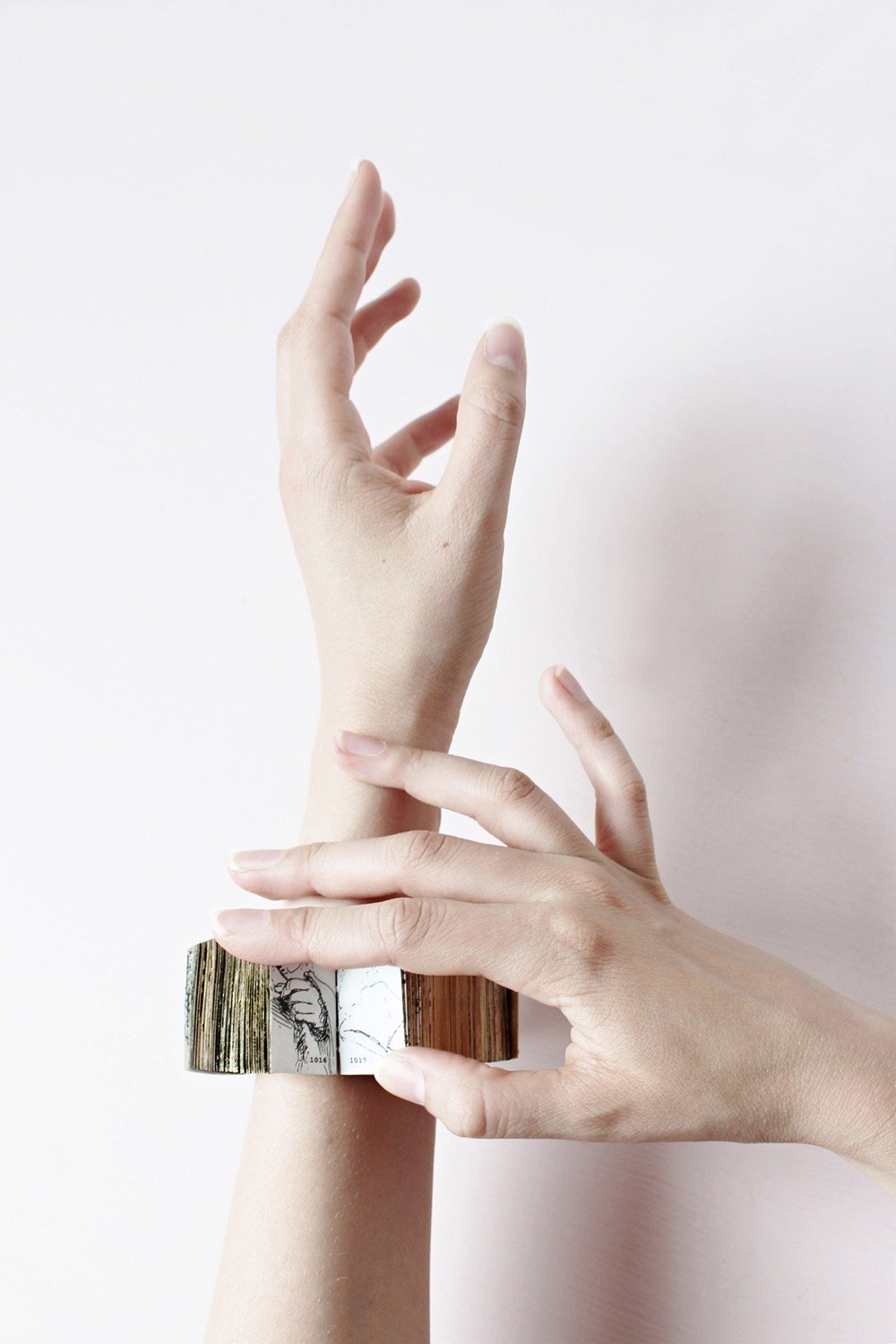
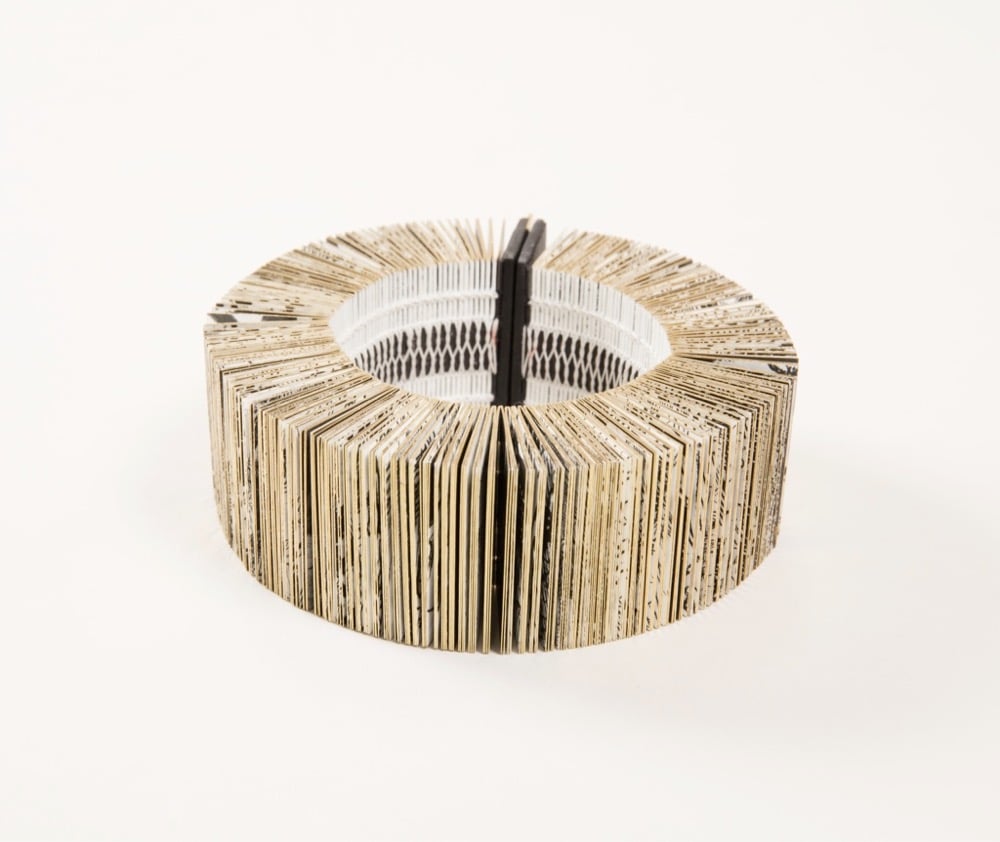
Inspired by the online availability of high resolution images from the Rijksmuseum’s collection, design firm Duinker and Dochters created a book of 1400 images of hands from Rembrandt’s work that is wearable as a bracelet. From the Cooper Hewitt:
Designers Lia Duinkers and Lyske Gais, are fascinated by the details Rembrandt achieved in his depiction of hands. From hundreds of images of Rembrandt’s hand illustrations, they created an intriguing book-bracelet, an intricate piece that not only pays homage to the talent of Rembrandt, but also spotlights the genius of Duinker and Gais’s skills in graphic design, bookbinding, and jewelry design. Entitled “Rembrandt’s Hands and a Lion’s Paw” the book-bracelet is comprised of 1400 miniature pictures of hands derived from 303 Rembrandt etchings and drawings in the collection of the Rikjsmuseum and available as high-resolution images on the museum’s website.
Here’s what the bracelet looks like in its storage box:
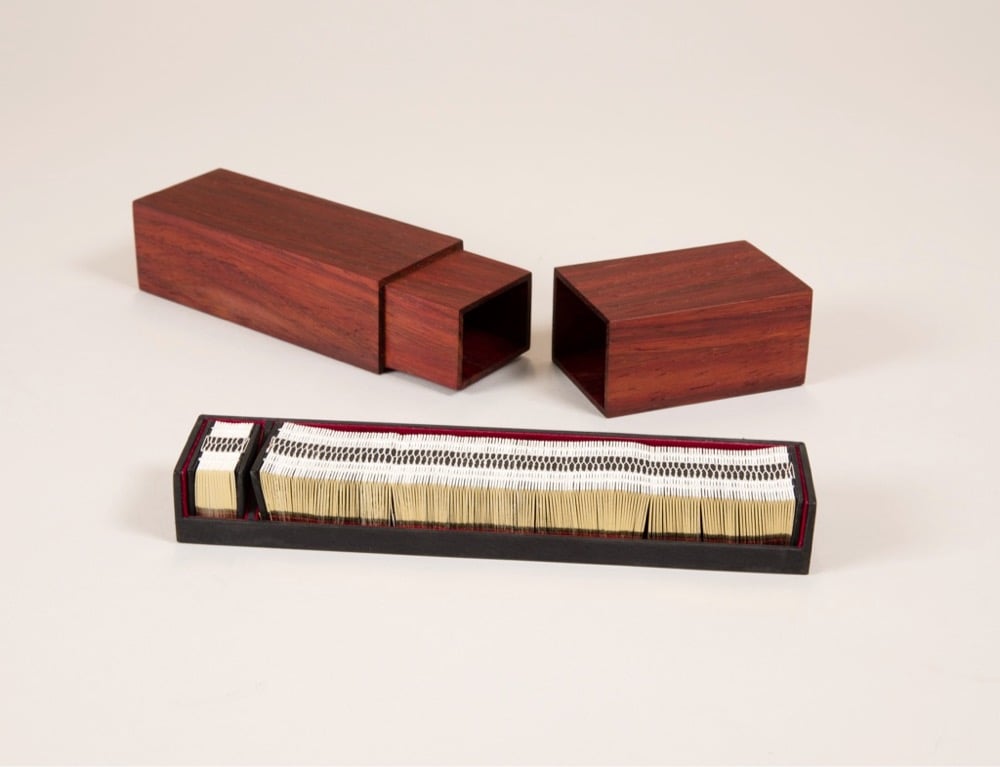
What a fantastic little object…you can marvel about how it was made on their website. (via colossal)
In January 2020, John Hendrickson wrote an article for The Atlantic about Joe Biden’s stutter…and his own. Hendrickson has written a memoir about his “lifelong struggle to speak”: Life on Delay: Making Peace with a Stutter.
In Life on Delay, Hendrickson writes candidly about bullying, substance abuse, depression, isolation, and other issues stutterers like him face daily. He explores the intricate family dynamics surrounding his own stutter and revisits key people from his past in unguarded interviews. Readers get an over-the-shoulder view of his childhood; his career as a journalist, which once seemed impossible; and his search for a romantic partner. Along the way, Hendrickson guides us through the evolution of speech therapy, the controversial quest for a “magic pill” to end stuttering, and the burgeoning self-help movement within the stuttering community. Beyond his own experiences, he shares portraits of fellow stutterers who have changed his life, and he writes about a pioneering doctor who is upending the field of speech therapy.
Sounds fascinating and the cover is fantastic (who designed it?):

See also Austin Kleon’s Our Stutter:
Around Christmastime, my son started stuttering differently and more frequently.
“Why are you so glitchy?” my 5-year-old asked him. “I’m worried about you.”
We might’ve been worried, too, except that we’d been through it before. The previous Christmas, we’d called Dr. Courtney Byrd at the Lang Stuttering Institute here in Austin, Texas, and she assured us that it was perfectly normal for stuttering to change during the holidays and that even good, exciting events can cause changes in stuttering.
So now, when Our Stutter changes, our listening changes.
We listen with more love.
The segment he references from This American Life featuring JJJJJerome Ellis is fantastic and a must-listen if you’ve never heard it before.
Update: Hendrickson reports that the cover is by Oliver Munday, whose work I admire greatly.
When you think about TV shows about the workplace, The Office is likely top of mind. So, cutting an intro to new workplace darling Severance to match the visual style of The Office intro with The Office theme song was going to happen eventually…and here it is. Nicely done.
See also The Unskippable Opening Credits for Severance.
Anne Kadet interviewed some chess hustlers in Washington Square Park about their chess work in the park and what they’ve learned about life playing chess.
If you want a game, I say one game, five dollars, five minutes. So we play a five-minute game for five dollars. If you said you don’t want no clock, I might say I give you one game, $10, because without the clock, it’s longer. You’re wasting time.
Some people say $5 to the winner. That means, we play each other and whoever wins gets the $5. That’s tricky, because I don’t know how strong you are. You might beat me and I lose $5. I’ve wasted time AND I’ve lost money! So I’m one of those people who don’t say $5 to the winner.
I’ll give you a lesson, a half hour for $20. I have some children that come just to see me once a week and I give them a lesson — $20 for a half hour. And there’s a lot of NYU students that come by, we give them a discount for being students. One hour for 40 bucks.
Marcel A. offered this advice that applies to nearly any situation:
The one thing I tell my students is that when you get to a confrontation of any type, you have to remain calm. When you remain calm, you can see the board a lot clearer. You can see the person you’re playing or arguing with a lot more clearly, for who and what they are. So you don’t even have to entertain that shit. You understand?
Nathaniel W. shares what he’s learned about people:
They timid, they’re not willing to take a chance. See this? [He moves a pawn forward one space.] That means sometimes people don’t want to be hurt. They have a fear of losing.
And E.G.G.S. offers perhaps the wisest advice of all:
I’m stuck right now. I can’t give any life advice.
The whole thing is worth a read.
See also The Last Chess Shop in NYC. (via fave 5)
A long profile of MacKenzie Scott by the NY Times. In just under three years, she’s given away $12 billion of her fortune.
Etsy sellers are on strike this week. “On April 11th, thousands of Etsy shops have committed to going into vacation mode, suspending sales for a little over a week in protest of recent changes on the platform.”
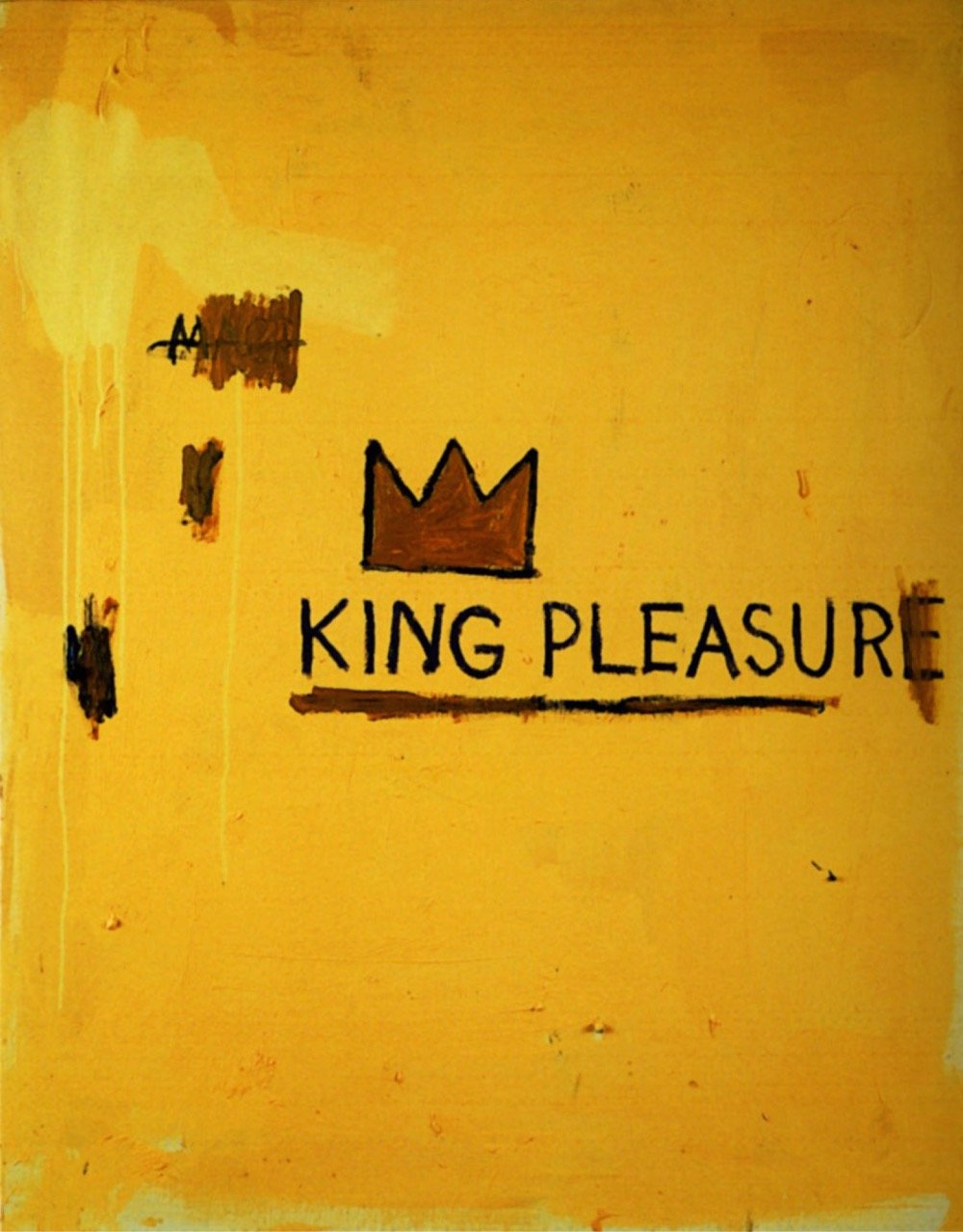
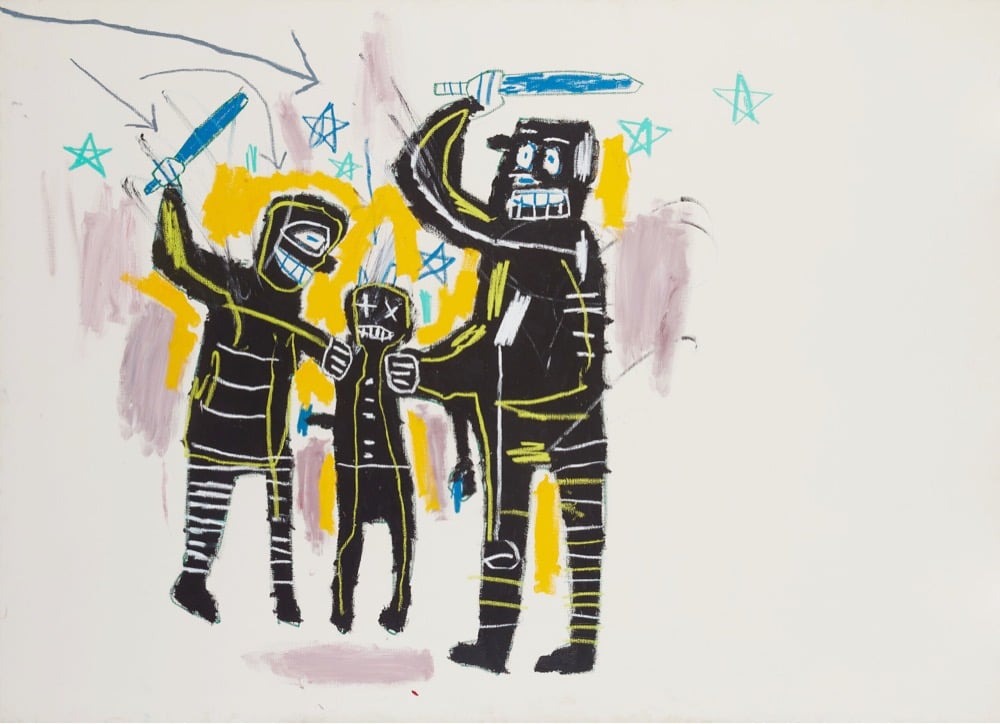
Jean-Michel Basquiat: King Pleasure is a new exhibition of the life and work of Jean-Michel Basquiat, curated by his two younger sisters, Lisane Basquiat and Jeanine Heriveaux. It opened this past weekend in NYC and includes a bunch of work that’s never been exhibited before. From the NY Times:
The show, “Jean-Michel Basquiat: King Pleasure,” features more than 200 artworks and artifacts from the artist’s estate — 177 of which have never been exhibited before — in a 15,000-square-foot space designed by the architect David Adjaye. Providing perhaps the most detailed personal portrait to date of Basquiat’s development, the show comes at a time when the artist’s market value continues to soar and his themes of race and self-identity have become especially resonant. (The mayor’s office is to proclaim Saturday, the show’s opening, Jean-Michel Basquiat Day.)
“They’re literally opening up the vaults,” said Brett Gorvy, a dealer and a former chairman and international head of postwar and contemporary art at Christie’s. “These are paintings I’ve only seen in books.”
This looks great; definitely hitting this the next time I’m in NYC. Tickets are available here. (via pentagram, who did the identity for the exhibition)
Newer posts
Older posts



Socials & More