Entries for September 2021
This is a lovely, almost poetic piece by Daniel Riley about the sport of freediving and one of the best freedivers in the world, Alexey Molchanov.
Freediving is, after all, a lifelong opportunity to radically reshape one’s body and mind in the process. In pursuing depth, humans must train their lungs and brains to unlock secret sources of clarity and strength and oxygen and potential that are hidden within the body. They are secrets that, once revealed, make the divers not just more effective at their craft, they argue, but more effective, conscious, skillful, and thoughtful as human beings. There is a shift in perspective. A global realignment within one’s consciousness. The look in their eyes when they talk about this thing…every diver who’s gone truly deep sounds like those rarest of individuals who’ve seen the earth from the moon, or died and been resuscitated.
Alexey learned how to excel in the sport of freediving from his mother Natalia Molchanova:
When Alexey was younger, his mother, Natalia Molchanova, was the world’s best freediver, a distinction that she held for many years. She was a pioneer in the sport and the practitioner of a mind-and-body-control technique called “attention deconcentration.” She passed her secrets to her son, who perfected them and uses the regimen to reach a state of intense calm. By doing so, he can slow his heart rate, his metabolic rate, while simultaneously slowing the activity of his brain and his body. His focus deepens. He relaxes to the point of seeming asleep. He takes deep, drowsy breaths, like a summer breeze filling a sail.
I first learned about freediving from Alec Wilkinson’s 2009 piece in the New Yorker, where Natalia explained attention deconcentration:
To still the unbidden apprehensions that might interfere with her dive - what she describes as “the subjective feeling of empty lungs at the deep” — Molchanova uses a technique that she refers to as “attention deconcentration.” (“They get it from the military,” Ericson said.) Molchanova told me, “It means distribution of the whole field of attention — you try to feel everything simultaneously. This condition creates an empty consciousness, so the bad thoughts don’t exist.”
“Is it difficult to learn?”
“Yes, it’s difficult. I teach it in my university. It’s a technique from ancient warriors — it was used by samurai — but it was developed by a Russian scientist, Oleg Bakhtiyarov, as a psychological-state-management technique for people sho do very monotonous jobs.”
I asked if it was like meditation.
“To some degree, except meditation means you’re completely free, but if you’re in the sea at depth you will have to be focussed, or it will get bad. What you do to start learning is you focus on the edges, not the center of things, as if you were looking at a screen. Basically, all the time I am diving, I have an empty consciousness. I have a kind of melody going through my mind that keeps me going, but otherwise I am completely not in my mind.”
After reading both of these great pieces, you can check out one of Molchanov’s recent world record dives:
Every year for the past several years on September 21, Demi Adejuyigbe makes a video featuring the 1978 Earth, Wind & Fire song September (which begins “Do you remember, twenty-first night of September?”) This year, for what he says is his final effort, Adejuyigbe made a whole-ass movie, complete with special effects. Gonna watch this later with my daughter, who is 12 today (and owns the t-shirt).
In tandem with the video, Adejuyigbe is raising money to benefit The West Fund (a pro-choice Texas organization), Imagine Water Works (a New Orleans organization focused on Hurricane Ida relief efforts), and The Sunrise Movement (a climate emergency advocacy group) — you can donate here.
Update: Adejuyigbe shared some behind-the-scenes stuff from the video production, including how they did the rotating bathroom.
we spent 4 days in the heat up in Valenica constructing 5 walls for the set and fitted them into a giant 10x10 rotating wheel gimbal (one of only 3 in CA apparently! spent a long time just tracking one down!)
(via waxy)
An appreciation of the college education by Agnes Callard. “Let me come out and tell you what a university is for: a university is a place where people help each other access the highest intellectual goods.”


For the next two weeks, L’Arc de Triomphe in Paris will be wrapped, an installation that realizes a project begun by the late husband and wife team Christo and Jeanne-Claude in 1961.
L’Arc de Triomphe, Wrapped, a temporary artwork for Paris, is on view for 16 days from Saturday, September 18 to Sunday, October 3, 2021. The project has been realized in partnership with the Centre des Monuments Nationaux and in coordination with the City of Paris. It also receives the support of the Centre Pompidou. The Arc de Triomphe is wrapped in 25,000 square meters of recyclable polypropylene fabric in silvery blue, and with 3,000 meters of red rope.
In 1961, three years after they met in Paris, Christo and Jeanne-Claude began creating works of art in public spaces. One of their projects was to wrap a public building. When he arrived in Paris, Christo rented a small room near the Arc de Triomphe and had been attracted by the monument ever since. In 1962, he made a photomontage of the Arc de Triomphe wrapped, seen from the Avenue Foch and, in 1988, a collage. 60 years later, the project will finally be concretized.
Jeanne-Claude died in 2009 and Christo followed in 2020, so the project was completed by their team according to their wishes. I would have liked to have seen this in person…The Gates in NYC were wonderful.
Welp, from the small glimpses we get in this trailer, Joel Coen’s The Tragedy of Macbeth, starring Denzel Washington and Frances McDormand, looks pretty fantastic. Out in theaters on Dec 25, streaming on Apple+ Jan 14.
So many female body parts are named for men; here are their official medical names. Fallopian tube = uterine tube, G-spot = internal clitoris, Kegel muscles = pelvic floor muscles.
Is Jane Austen the Antidote to Social Media Overload? “Racking up likes and followers today resembles the nonstop friending of 19th-century England. But Austen’s characters figured out how to disengage.”

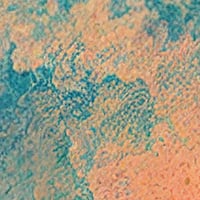
The full moon was wonderful last night and Andrew McCarthy captured this colorful image of our nearest celestial companion. McCarthy explained where all those colors come from:
Back to this image, this was captured through a telescope and involved capturing thousands of frames to reveal the details. But what about the colors? The moon is gray, of course, but not *perfectly* gray. Some areas have a subtle blue tint, and others have a more orange tint. By teasing out those subtle colors, I can reveal the mineral composition of the moon! Blues denote titanium presence, while orange shows iron and feldspar present in the regolith. You can also see how impacts paint the surface with fresh color in the ejecta as they churn up material.
A print is available, but only for a very limited time (~6 more hours as of pub time).
In Living While Black, in Japan, directed by Keith Bedford and Shiho Fukada, a group of African-Americans talk about what it’s like to live in Japan as Black people versus their experiences living in the United States.
“I didn’t leave because I was running away from anything. I left because I felt I could be more myself in Japan.”
“Living in Japan, as an African-American, I’ve honestly never felt more free.”
“You know, I can do things here in Japan that I can’t do back at home, in the U.S.”
“I can catch a cab when I’m not trying to catch a cab. People in stores that are supposed to serve you, serve you, like they serve everybody else.”
If you’re talking about the origins of rock & roll, Sister Rosetta Tharpe has to be included in those conversations. Her early fusion of gospel, the blues, and the electric guitar (as on 1944’s Strange Things Happening Every Day, a contender for the first rock & roll record) had a huge influence on men like Little Richard, Chuck Berry, and Elvis Presley, who ended up winning much of the credit for this innovation. This 60-minute BBC documentary from 2011 is a good place to start learning about Tharpe — part 1 is embedded above and here are parts two, three, and four.
I found this via Ted Mills at Open Culture, who writes:
As the doc makes clear, Tharpe had a rebellious streak, didn’t do what she was told, and pushed boundaries in a very segregated America. She invited the all-white Jordanaires to tour with her, surprising house managers and booking agents alike. And she carried on a love affair and creative partnership with fellow gospel singer Marie Knight for decades, very much on the down low.
So perhaps this is the reason Tharpe has not been on our collective radar — we’ve been slow to admit that rock guitar was created by a queer black woman devoted to the Lord.
And if you want to see the whole clip of Tharpe performing Didn’t It Rain from the opening scene of the documentary, there’s really not a better way to spend eight minutes (bc you’ll probably want to watch it twice):
Damn.
Ambient Chaos, a fun soundboard from @nealagarwal. Church bells + bees + casino + waves is my jam right now.
I don’t know if this is comforting or what, but psychologist Steven Taylor published a book two months before the start of the Covid-19 pandemic called The Psychology of Pandemics that predicted many of the behaviors we’ve been seeing over the past 18+ months, including masking backlash, the acceptance of conspiracy theories, vaccine resistance, and wholesale denial that the pandemic is even happening.
Taylor would know because he predicted it. He wrote a remarkable little book back in 2019 called “The Psychology of Pandemics.” Its premise is that pandemics are “not simply events in which some harmful microbe ‘goes viral,’” but rather are mass psychological phenomena about the behaviors, attitudes and emotions of people.
The book came out pre-COVID and yet predicts every trend and trope we’ve been living for 19 months now: the hoarding of supplies like toilet paper at the start; the rapid spread of “unfounded rumors and fake news”; the backlash against masks and vaccines; the rise and acceptance of conspiracy theories; and the division of society into people who “dutifully conform to the advice of health authorities” — sometimes compulsively so — and those who “engage in seemingly self-defeating behaviors such as refusing to get vaccinated.”
He has no crystal ball, he says, it’s just that all of this has happened before. A lot of people believed the Spanish flu pandemic of 1918 was spread by the Germans through Bayer aspirin. It’s all based on basic psychology as to how people react to health emergencies.
The denialists and refuseniks today are engaging in what the psychology field calls “psychological reactance.” It’s “a motivational response to rules, regulations, or attempts at persuasion that are perceived as threatening one’s autonomy and freedom of choice,” the book describes. Think what happens when someone says “Eat your broccoli.”
Following onto that is what psychologists term “motivated reasoning.” That’s when people stick with their story even if the facts obviously are contrary to it, as a form of “comforting delusion,” Taylor says. The book covers “unrealistic optimism bias,” in which people in pandemics are prone to convincing themselves that it can’t or won’t happen to them.
The book almost wasn’t even released at all — Taylor’s publisher told him the book was “interesting, but no one’s going to want to read it”.
You’re Still Exhausted. “Life is still exhausting because the pandemic was and remains exhausting in so many invisible ways – and we still haven’t given ourselves space to even begin to recover.”
Lara Hogan’s book Demystifying Public Speaking is now available online for free. I’ve pretty much retired from speaking in public, but I have heard many great things about this book.
Dr. Alan Braid, a practicing OB/GYN in the state of Texas for 45 years, explains why he provided medical care in the form of an abortion to a woman in violation of the state’s absurd and dangerous new law.
A new Texas law, known as S.B. 8, virtually banned any abortion beyond about the sixth week of pregnancy. It shut down about 80 percent of the abortion services we provide. Anyone who suspects I have violated the new law can sue me for at least $10,000. They could also sue anybody who helps a person obtain an abortion past the new limit, including, apparently, the driver who brings a patient to my clinic.
For me, it is 1972 all over again.
And that is why, on the morning of Sept. 6, I provided an abortion to a woman who, though still in her first trimester, was beyond the state’s new limit. I acted because I had a duty of care to this patient, as I do for all patients, and because she has a fundamental right to receive this care.
I fully understood that there could be legal consequences — but I wanted to make sure that Texas didn’t get away with its bid to prevent this blatantly unconstitutional law from being tested.
Braid concluded his piece: “I believe abortion is an essential part of health care.” Absolutely.
The winners of the 2021 Ig Nobel Prize. “Each winner has done something that makes people LAUGH, then THINK.” The peace prize winner studied whether beard growing evolved to protect from face punching.
In this engaging video we meet Aaron Fletcher, a traveling shepherd who has been “guerrilla grazing” and living off the land for 12 years.
He lets his sheep graze — with permission — public parks and side lots. Homeless by choice, he offers his services to small farms in exchange for food or a place to stay (though half his calories come from his sheeps’ milk).
With a tiny metal cart home pulled by his sheep, he has a bed, a refrigerator/evaporative cooler, a shower (he uses a pesticide sprayer to pump up the water pressure), power (solar panel), sun oven, a mailbox stove for heat, bicycle tire wheels and a corrugated plastic roof.
Fletcher makes cheese and butter from his sheep milk and forages for seeds, fruits, vegetables and herbs.
I heard about this from @hova414, who teases it better than I can:
An “anti-consumer” gives one of the most impressive product demos I’ve ever seen; a nonstop highlights reel of ingenious off-grid inventions. Come for the wearable teepee, stay for the solar banana bread.
My jaw legit dropped open at the solar bread part — that solar oven! It’s absolutely fascinating to listen to him explain how he efficiently uses space, public resources, and a limited amount of tightly curated technology products to live a happy and healthy life, an outcome many of us have been told by capitalism is impossible. I also enjoyed his distinction between being a selfish prepper and a community prepper:
By the way I’m a prepper, but I’m not like a normal prepper as in… I call it selfish prepping. I’m a community prepper. I’m not so interested in trying to survive in a post-apocalyptic situation if everyone around me is suffering. So I’m trying to figure out how to bring up the community so that they can all thrive.
You can learn more about Fletcher’s life and how he lives it on his website and check out his YouTube videos for more clever DIY tips.
Update: Milkshake duck alert — Fletcher’s brand of off-the-grid anti-authoritarianism apparently includes being an anti-vaxxer, as evidenced by some of the videos in his feed. “I’m not so interested in trying to survive in a post-apocalyptic situation if everyone around me is suffering” indeed… :(


The Royal Museum Greenwich has announced the winners of the Astronomy Photographer of the Year for 2021. Zhong Wu won the galaxies category with a 360-degree view of the Milky Way (above, top), a mosaic which took two years to create — the northern hemisphere portion of the galaxy was photographed in China and the southern part in New Zealand. Jeffrey Lovelace’s photo of the crescent moon over Death Valley sand dunes (above, bottom) took the prize in the skyscapes category.

That’s Meredith Southard’s cartoon for the New Yorker, a play on the marshmallow test. It’s funny because it’s true. I have an avocado in the fridge that I’m planning on using for lunch — but maybe it’s all brown inside?! So excited to find out if I’m actually eating lunch or not in a few minutes.
This piece by @tressiemcphd (feat. @shrinkthinks) about Covid denial, empathy, and grief is really interesting. “I am afraid that the onslaught of Covid denial stories is robbing me of [my humility] by undermining my empathy for others.”
As we learned from reading about the pink salt ponds of Camargue, France, flamingos get their distinctive pink coloring from the food that they eat — halophile algae and tiny animals like shrimp that feed on the algae. In this video from the San Diego Zoo, we get to see an underwater view of a flock of flamingos, at once graceful and gawky, feasting on the tiny critters. What a neat view! (via colossal)
Before Food Trucks, Americans Ate ‘Night Lunch’ From Beautiful Wagons. (Working on my night lunch!)

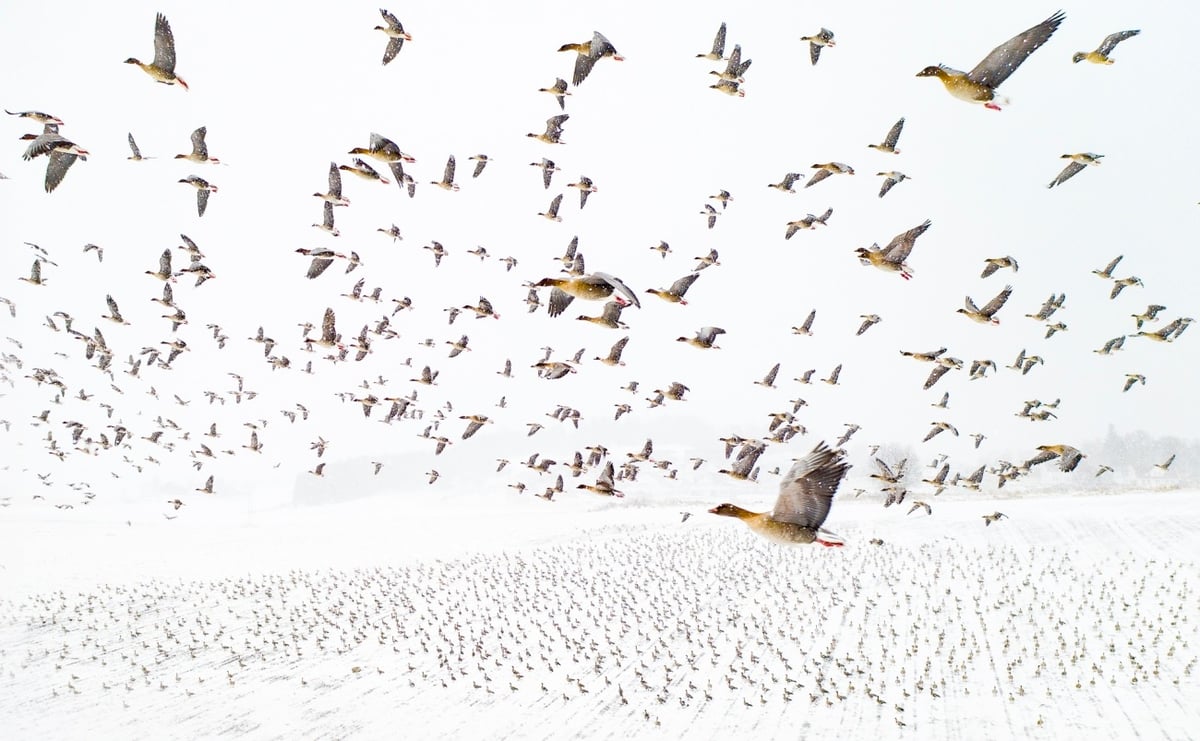
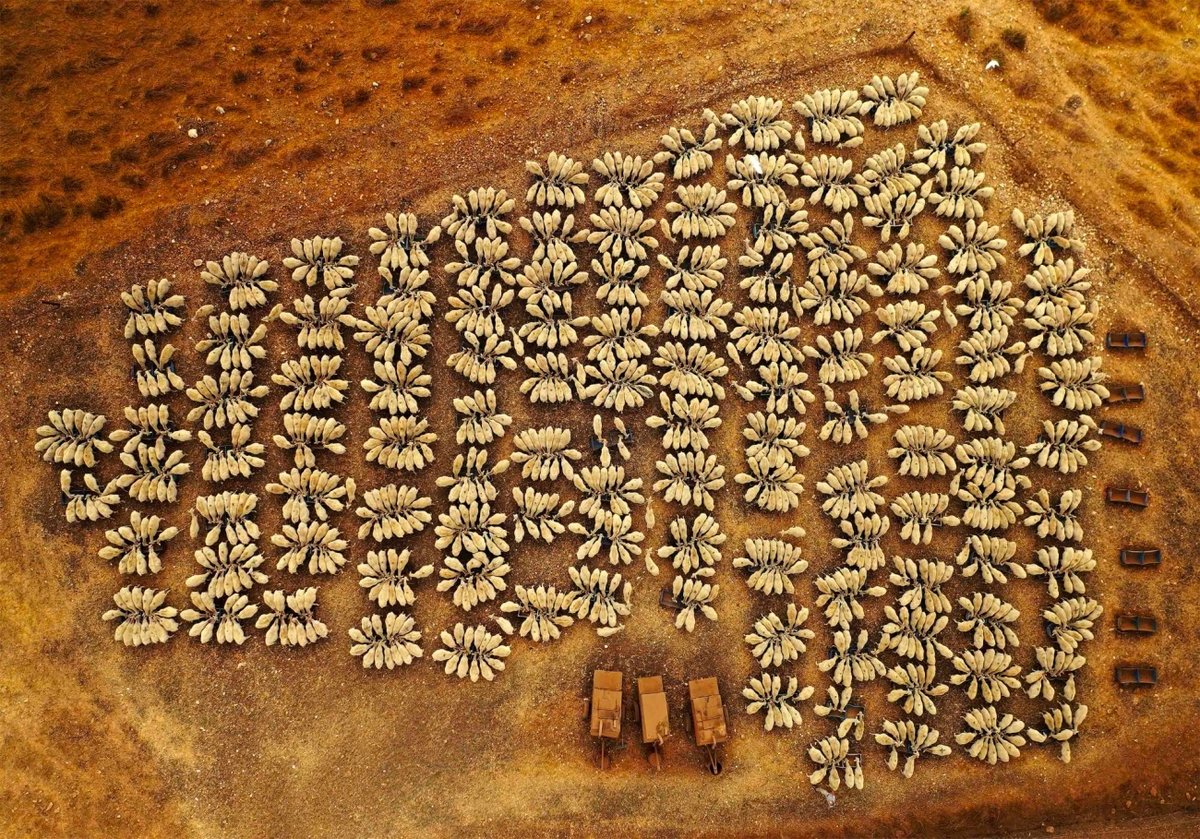


Drones have been around for awhile now, but I have yet to tire of the bird’s-eye images captured from above this remarkable planet of ours. The gallery of the winning images in the 2021 Drone Photo Awards is full of tiny doses of the overview effect. I’ve chosen a few of my favorites above. Photo credits, from top to bottom: Ran Tian, Terje Kolaas, Yoel Robert Assiag, Oleg Rest, and Md Tanveer Hassan Rohan.
See also this drone photo of Cao Bang, Vietnam that I shared recently. (thx, caroline)
Join cheesemonger Anne Saxelby as she shows us how to cut, serve, store, and accompany more than two dozen cheeses that cover the entire spectrum of cheese-dom, from Parmigiano-Reggiano to Cheddar to Roquefort to Burrata. This video is like a private cooking class with a very thoughtful & knowledgable host — and it made me incredibly hungry. A good pairing might be Saxelby’s recent book, The New Rules of Cheese.
But….. at the first mention of the word “fridge”, I could not help but think of this classic interview with French marketing consultant Clotaire Rapaille: In America, the Cheese Is Dead.
For example, if I know that in America the cheese is dead, which means is pasteurized, which means legally dead and scientifically dead, and we don’t want any cheese that is alive, then I have to put that up front. I have to say this cheese is safe, is pasteurized, is wrapped up in plastic. I know that plastic is a body bag. You can put it in the fridge. I know the fridge is the morgue; that’s where you put the dead bodies. And so once you know that, this is the way you market cheese in America.
After Anthony Bourdain died in 2018, I listened to the audiobook version of his fantastic Kitchen Confidential (read by Bourdain himself) and in retrospect, the trip he took to Tokyo documented in one of the final chapters was a clear indication that his career was headed away from the kitchen and out into the world. His long-time producer Lydia Tenaglia saw this too…she cold-called him after reading the book and pitched him on doing a TV show called A Cook’s Tour, where the intrepid Bourdain would travel to different locations around the world to experience the food culture there.
I met him at a point in his life where he had never really traveled before. He had written a book, Kitchen Confidential, and I had read somewhere that he was going to try to write a follow-up book called A Cook’s Tour. I approached him — I kind of cold-called him — and I said, “Listen, I work in television.” And at that point I was freelancing for other companies as a producer and a shooter and an editor. I called Tony, and he was still working in a kitchen at the time, and I said, “Would you mind if me and my husband, Chris, came and shot a short demo and we try to sort of pitch the idea of A Cook’s Tour — meaning you traveling the world, kind of exploring the way other people eat — as a television series?” And he was like, “Yeah, sure. Whatever.” I don’t think he had any expectations at that point. Again, he hadn’t really traveled.
A Cook’s Tour intrigued the folks at the Food Network and the show ended up running for 35 episodes over two seasons. And they are now all available to watch for free on YouTube. I’ve embedded the first episode above, where he goes (back) to Tokyo, but he also visits Vietnam, San Sebastian, Oaxaca, Scotland, Singapore, and Brazil during the show’s run. More from Tenaglia on how the show came about:
So that was the start of our relationship and our time together. We, fortunately, were able to pitch and sell that idea, A Cook’s Tour, to the Food Network. Me and Chris, my husband, and Tony, just the three of us, all went out on the road together for that first year, and we shot 23 episodes of A Cook’s Tour, and we kind of figured out the format of the show on the road. It was really Tony tapping into the references he did have — you know, films and books and things he had seen and knew about only through film and reading.
So he was able to bring all of those cultural references to the table, and the three of us together were able to kind of play with the format of what those visuals would look like, so that it wasn’t just about him eating food at a restaurant. It was really about everything that was happening around him — or the thoughts he was having internally as he had these experiences or the references that he had seen through film that he loved and books that he had read, like The Quiet American, and how those things related to what he was experiencing.
So it became this kind of sort of moving, evolving format that was very much based on, predicated on the location that we were in and those references that he could call up. The show just kind of began to take shape. I mean, really there was no format of the show going into it. We just said, “Hey, we’re going to travel around the world, and this guy … he’s a chef, and he’s written this great book, and he’s going to try food in other countries.” And that’s what sold the project to the Food Network at the time. Then, as we went and actually made the show, we really started to play with the format and turned it into something else.
I would say that 17 years later the show has gone through various iterations. We did the two seasons of A Cook’s Tour on the Food Network, and then we did eight seasons of No Reservations on the Travel Channel, and now we’re on Parts Unknown. And the show has evolved as Tony has evolved, as the crew has evolved, as the technology has evolved. The show has sort of turned into this kind of, you know, one man’s initial foray into the world, and I think today, 17 years later, he’s really kind of evolved into more of a cultural anthropologist.
The show’s very sociopolitical — it’s about people and characters. The food and the people are just the entry point. It’s really about all the context around it. The more you can bring story to that and the more you can bring references to that — film references … character references — the more you can introduce interesting, unique characters into the equation, I think that’s what keeps the show very fresh and why it’s continuing to evolve all these years later. Each show is very different from the one before it.
It’s fun to watch the prototype of what eventually became a very beloved and different show. (via open culture)


When it was built in the 1920s in Turin, Italy, the Fiat factory was designed with a racetrack on the top of the building, both for car testing purposes and for racing.
The factory’s best-known symbol is the test track, which is a superb piece of design modeling, and construction that occupies the whole roof surface of the workshops. Two 443 meters straights, joined by parabolic bends, form a continuous track for testing the cars.
Originally, as soon as the cars left the assembly lines they could flow directly upward to the test track through the snail-shaped ramps completing the whole processing cycle inside the factory. Moreover, these spiraling ramps inside the building allowed the cars to be driven back down and into showrooms.
The track was a little over 1/2 mile long. Many more views at Rare Historical Photos. (via @laxgani)

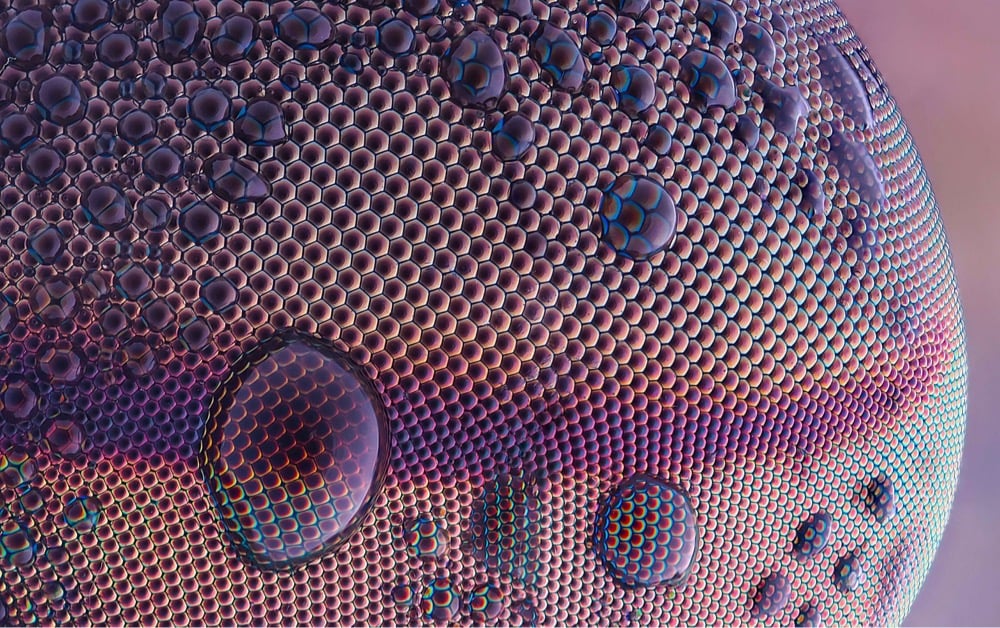
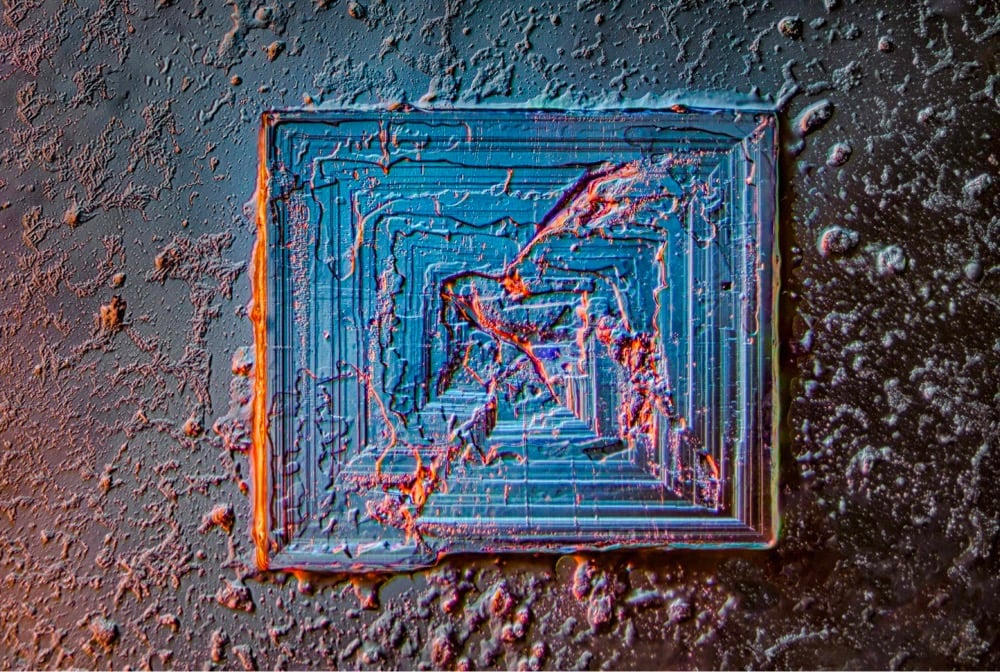
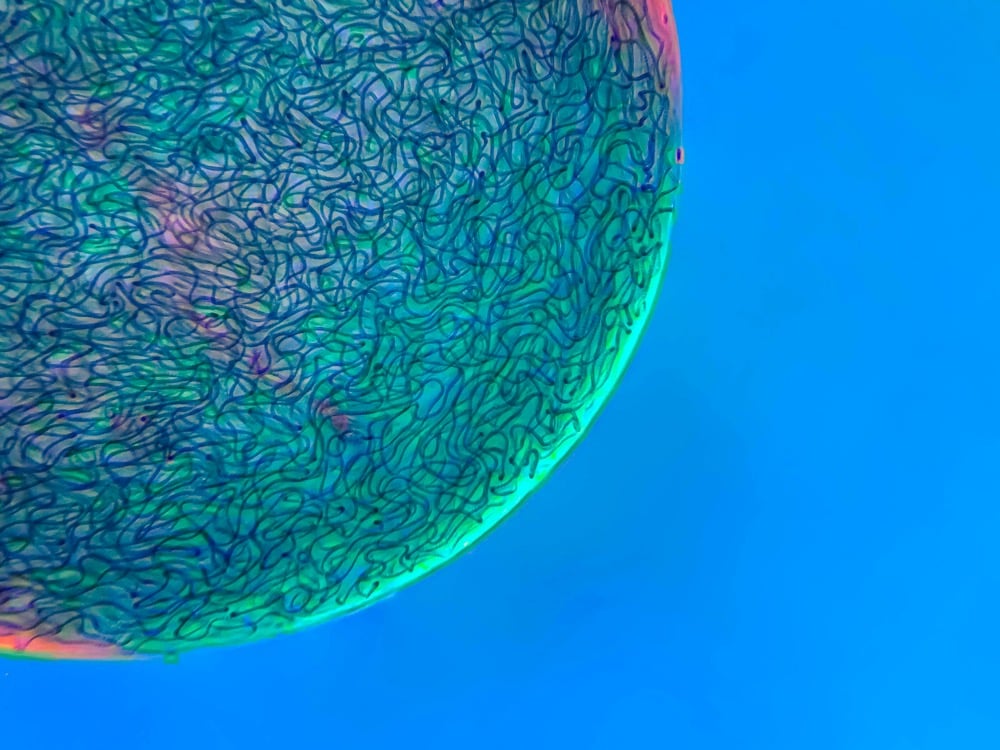
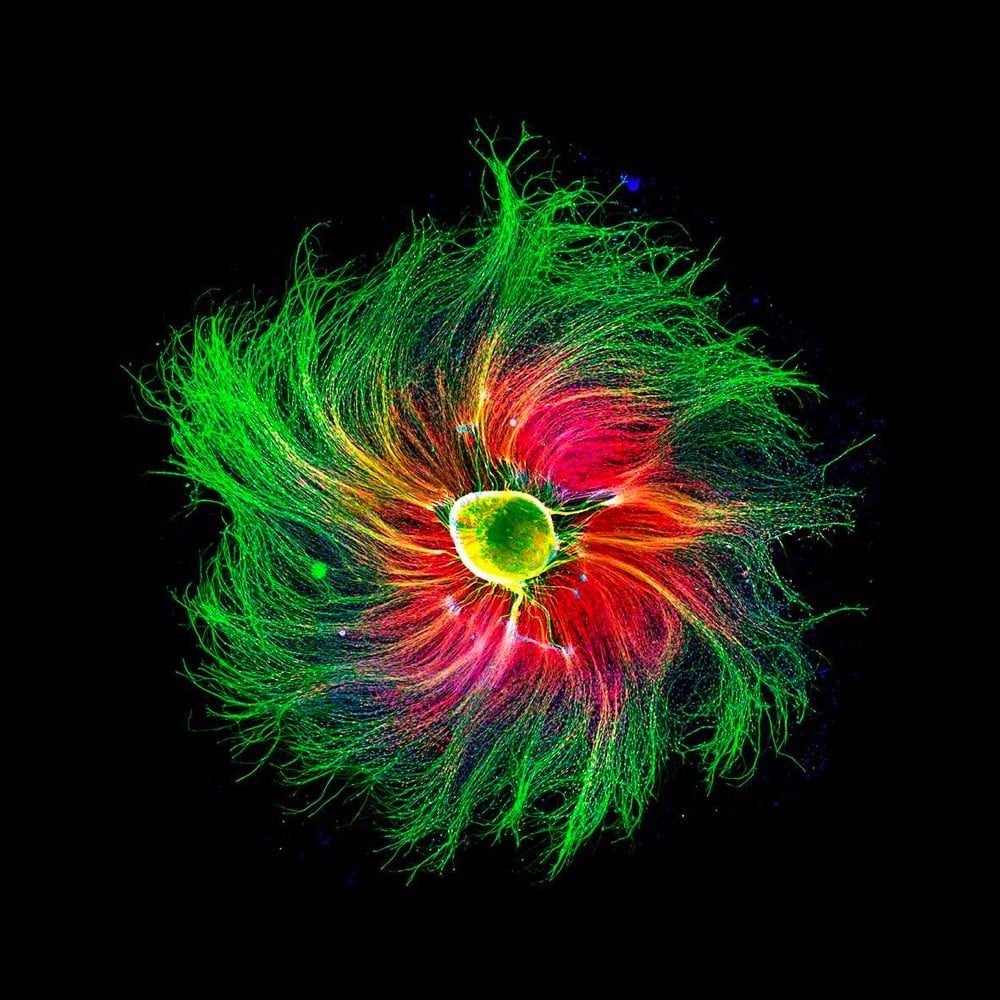
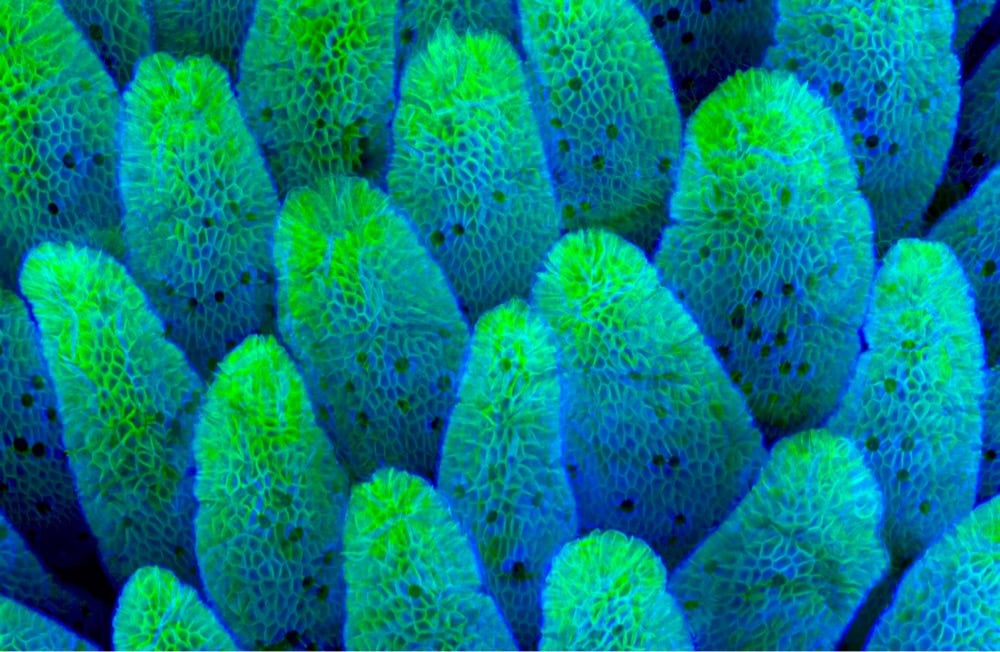
This is always a favorite of mine… Nikon has announced the winners of the Small World Photomicrography Competition for 2021. As always, I’ve shared a few of my favorites above. Photo credits from top to bottom: Jason Kirk, Oliver Dum, Saulius Gugis, Martin Kaae Kristiansen, Paula Diaz, and Caleb Dawson.
Fossil Fuel Capitalism Is Cutting Our Lives Short. “A new study shows that 17 billion life years could be saved if air pollution was reduced to WHO standards.”
What if you substituted a bowling ball for the ball in sports like ping pong, golf, cricket, tennis, and soccer — but also in darts and skeet shooting? This very funny video imagines just that.
Season 5 of the excellent Scene on Radio podcast is about the climate crisis. “We’ll trace the evolution of the colonizing, extractive Western culture that has driven us into the ecological ditch, and we’ll look at potential solutions – the repair.”
Newer posts
Older posts



Socials & More