

Charles Kellogg could put out fires using just the sound of his voice. Another cracking story from @tedgioia.

Advertise here with Carbon Ads
This site is made possible by member support. 💞
Big thanks to Arcustech for hosting the site and offering amazing tech support.
When you buy through links on kottke.org, I may earn an affiliate commission. Thanks for supporting the site!
kottke.org. home of fine hypertext products since 1998.
Beloved by 86.47% of the web.
Entries for June 2021
100 3D Artists Interpret the Same Scene of a Walking Person
Clinton Jones challenged his community of 3D artists to interpret a simple animation of a person walking with a heavy load. 2400 people participated and Jones collected the 100 renders for this video. What a fantastic illustration of the power of constraints and the abundance of human creativity. Ok, much of the imagery is borrowed from Star Wars and other sci-fi universes, but the stuff that isn’t is delightful. Even with no explicit narrative connection between the scenes, somehow this all seems like part of one big journey. One of the simplest stories we tell is someone moving from one place to another and it doesn’t need to be The Odyssey, Fury Road, or Thelma & Louise to be compelling.
You can also watch a video featuring all 2400 entries (it’s 2h 45m long) and a montage from a previous challenge featuring 125 artists.
See also Transfiguration: An Ever-Evolving Walking Figure. (via waxy)
I think this is the first political ad I’ve ever seen that features time travel? Great commercial for @JonesForAR, who’s running for governor of Arkansas.
Unexpected Minor Planet to Visit the Inner Solar System Soon
Well, this is cool: a recently discovered minor planet estimated to be between 62 and 230 miles across is currently journeying through our solar system and sometime in 2031 will be almost as close to the Sun as Saturn.
And it turns out, astronomers are about to witness the closest pass of this incredible round trip. Currently, 2014 UN271 is about 22 Astronomical Units (AU) from the Sun (for reference, Earth is 1 AU from the Sun). That means it’s already closer than Neptune, at 29.7 AU. And it’s not stopping there — it’s already traveled 7 AU in the last seven years, and at its closest in 2031, it’s expected to pass within 10.9 AU of the Sun, almost reaching the orbit of Saturn.
Before then, it’s expected to develop the characteristic coma and tail of a comet, as icy material on its surface vaporizes from the heat of the Sun. This close pass would give astronomers an unprecedented close look at Oort cloud objects.
C’mon NASA, let’s a get a probe fired up and visit this very unusual object!
What It’s Like to Be a Transgender Dad
In a TEDx Talk from 2017, LB Hannahs talks about their experience as a transgender dad, comfort vs authenticity, and the collision of theoretical gender roles & identities with the practicalities of parenthood.
Now, for most people, what their child will call them is not something that they give much thought to outside of culturally specific words or variations on a gendered theme like “mama,” “mommy,” or “daddy,” “papa.” But for me, the possibility is what this child, who will grow to be a teenager and then a real-life adult, will call me for the rest of our lives, was both extremely scary and exciting. And I spent nine months wrestling with the reality that being called “mama” or something like it didn’t feel like me at all. And no matter how many times or versions of “mom” I tried, it always felt forced and deeply uncomfortable. I knew being called “mom” or “mommy” would be easier to digest for most people. The idea of having two moms is not super novel, especially where we live.
So I tried other words. And when I played around with “daddy,” it felt better. Better, but not perfect. It felt like a pair of shoes that you really liked but you needed to wear and break in. And I knew the idea of being a female-born person being called “daddy” was going to be a harder road with a lot more uncomfortable moments. But, before I knew it, the time had come and Elliot came screaming into the world, like most babies do, and my new identity as a parent began. I decided on becoming a daddy, and our new family faced the world.
(thx, megan)
Guest Vocalist Dave Chappelle Sings Creep at Foo Fighters’ MSG Show
Well this is peak…something: last night surprise guest Dave Chappelle led fans in a singalong of Radiohead’s Creep at the Foo Fighters’ Madison Square Garden show (which you had to be vaccinated to get in to). Not much more to say about it — you’re either going to watch it or not based on that info. Nature is healing?!
A career waiter explains why restaurants are having trouble hiring staff. “Workers are staying away because the industry has never treated them with respect…”
A new study indicates the high death rate of Black Americans during the pandemic was due primarily to the poor quality of the hospitals they were admitted to. “Hospitals mattered more than […] age, income, or other medical conditions.”
The Best Commercial About a Rock Quarry You’ll See Today
This advertisement from Vermont granite company Rock of Ages, featuring views of their majestic quarry accompanied by soaring opera, is way better than any commercial for a local quarry has any right to be.
See also The Quarryman’s Symphony, an all-time favorite post of mine about the hand signals used by a quarry boss guiding his marble harvesting crews. (via @AndrewLiptak)
There will almost certainly be another wave of Covid-19 cases in the US because of the delta variant (B.1.617.2) – the UK is already seeing one. How bad it gets depends on how many more ppl are vaccinated.
The secret weapon of many top European football teams is their grounds-management team. The pitch affects how fast teams can play. “When Pep Guardiola arrived at Manchester City in 2016, he asked for the grass to be cut to just 19mm.”
Sourcing Design Objects Used in Star Trek
Production designers working on science fiction movies and TV shows are part-time magicians because they routinely have to invent the future using things from the present. The site Star Trek + Design is collecting the futuristic design objects — chairs, cups, silverware, sofas — that designers used on the sets of Star Trek movies and TV shows to depict the future.
Being drawn to the aesthetics of Trek, especially of The Next Generation, made me curious about the specific objects that set designers used to create the visual embodiment of what living and working on a starship would look like in a technologically-advanced, post-scarcity future.
For instance, this is an RBT Chair by Teknion used in Star Trek: Discovery:

Park Avenue glasses made by Anchor Hocking were used for barware in TNG:

Voyager used Arne Jacobsen’s AJ Flatware in several episodes (as did Kubrick’s 2001):

Check out the site for many more sourced objects.
See also Film and Furniture, a Site About the Decor in Movies.
Supporting your country’s football team is complicated these days. “England is by many objective measures a terrible country ruled by terrible people with a terrible past and a terrifying future, and I support England.”
Great White Sharks Closely Observed from Above
Carlos Gauna has been recording great white sharks and other sea life with a drone off the coast of California, capturing behaviors that many of us rarely see. This video includes infrared footage, so we can observe what sharks get up to in the dark. (via digg)
Some Fun Typefaces for 2021
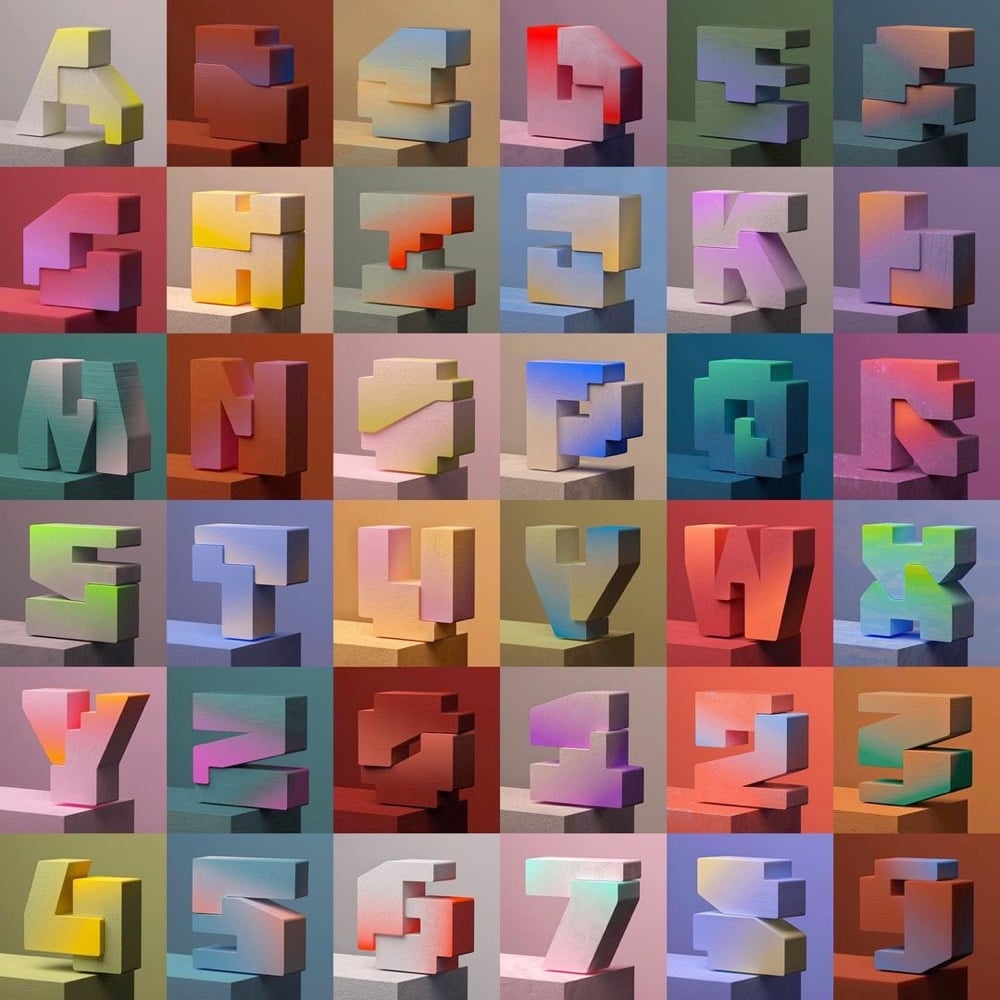
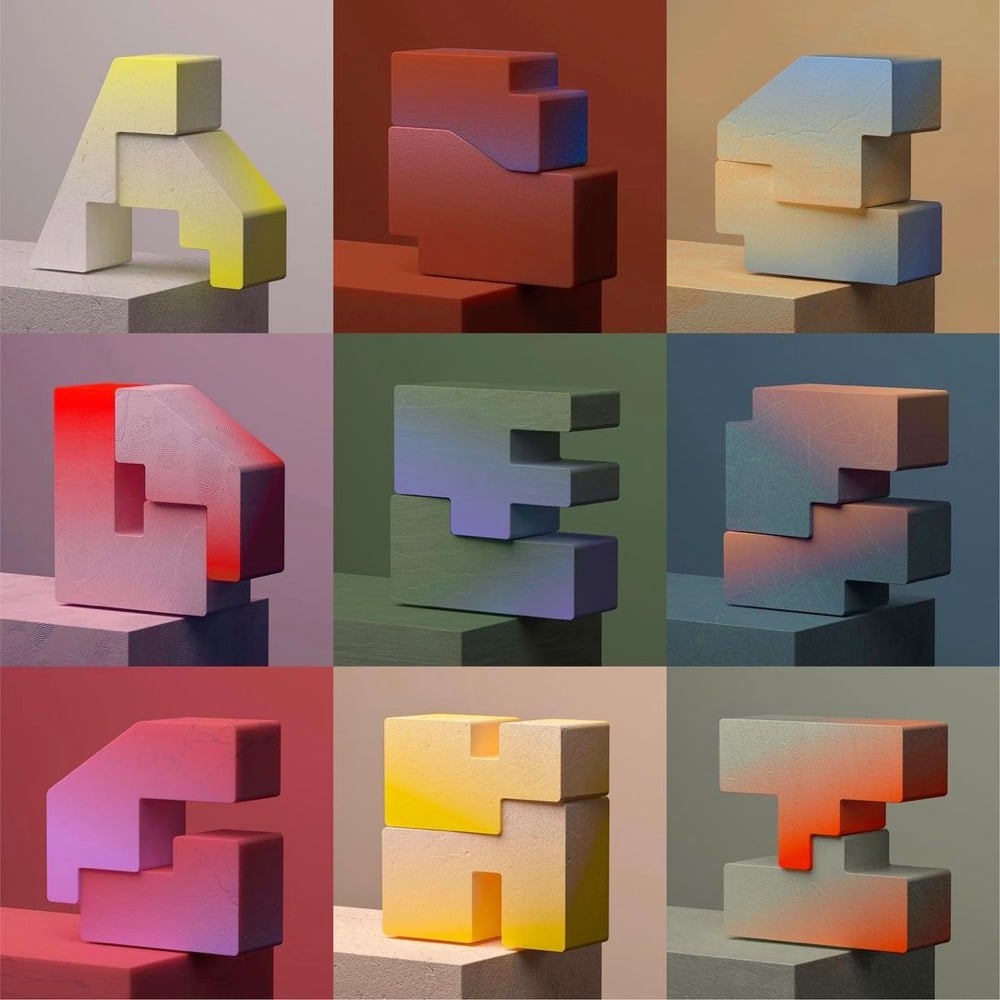
Adobe recently announced the winners of their 36 Days of Type contest and Khyati Trehan’s effort (pictured above) was among them. I also really liked David Oku’s colorful animated typeface. You can check out more work from this year’s project here and here (including this entry of handmade and found items).
There’s No Such Thing as a Tree
Obviously, there are trees. But speaking phylogenetically, trees aren’t a thing. Some things that are trees evolved from things that are not trees and other things that are trees evolved into things that aren’t trees. Confused? This might clear things up.
“Trees” are not a coherent phylogenetic category. On the evolutionary tree of plants, trees are regularly interspersed with things that are absolutely, 100% not trees. This means that, for instance, either:
The common ancestor of a maple and a mulberry tree was not a tree.
The common ancestor of a stinging nettle and a strawberry plant was a tree.
And this is true for most trees or non-trees that you can think of.
See also there’s no such thing as a vegetable and there’s no such thing as a fish.
What would the evolutionary tree of salmon, lungfish, and cows be? The answer, it appears at first glance, is simple. Salmon and lungfish, being fish, would cluster nicely together on one branch, and very non-fishy cows would be off on a separate branch. Right? Wrong. Contrary to what you might expect, what you see above is their evolutionary tree. Working up from the root, the lineage that leads to salmon branches off first. Keep tracing up the tree, and you’ll see that the lineage from which the salmon branched off eventually branches into two new lineages: the one leading to lungfish and the other leading to cows. In other words, a cow and a lungfish are more closely related to one another than either is to salmon.
(via @smorewithface)
Patrick Stewart Does Hamlet on Sesame Street
Patrick Stewart, displaying the Shakespearian acting chops that landed him the role of Captain Picard on Star Trek: The Next Generation, appeared on Sesame Street in 1996, performing a parody of Hamlet’s soliloquy with the letter “B”. Stewart never doesn’t give it his all when acting.
Gerrymander Jewelry, pendant necklaces in the shape of oddly shaped Congressional districts. They take custom orders but “some districts are too breakable” to sell because they’re so gerrymandered.
Just started listening to Nixon at War, a podcast about Richard Nixon & Vietnam hosted by @kbandersen. A sequel to the excellent LBJ’s War and LBJ and the Great Society podcasts.
Dragon’s Blood Trees

This is a dragon’s blood tree from the island of Socotra off the coast of Yemen in the Arabian Sea. You can see the mathematics of nature at work here — self-similarity at different scales, growing to fill the available space, efficient branching behavior…I bet there’s some cool Fibonacci shit going on here too. The photo was taken by Daniel Kordan — you can see more of this series at Colossal, on Instagram, or at Fstoppers. (via colossal)
California’s Last Fire Season Was a Historic Disaster. This One Might Be Worse.
Cycling myth: wide tires are slower than thin tires. “The increased vibrations of the narrower tires caused energy losses that canceled out the gains from the reduced flex.”
The Rashomon Effect
In Akira Kurosawa’s 1950 film Rashomon, the story of the murder of a samurai is told from several different viewpoints and each account of the event is different and even contradictory. In real life as in cinema, the Rashomon Effect describes how events can be recalled in contradictory ways by well-meaning but ultimately subjective witnesses. In this short TED-Ed video, the Rashomon Effect and its implications are explained and explored. (via open culture)
“Researchers have found that Earth’s energy imbalance approximately doubled during the 14-year period from 2005 to 2019.” The Earth is increasingly absorbing more of the Sun’s energy than it is emitting thermal radiation.
Three Transgender Kids Share Their Stories
Over at A Cup of Jo, Joanna Goddard interviewed three kids who are transgender about their experiences. Here’s Violet, she/her, age 13:
What do you wish people knew about being trans?
The main thing is that it’s not a choice. It’s a choice to come out, but being trans is not a choice. It wasn’t like one day I woke up and felt the way the wind blew and wanted to be a girl. I ALWAYS knew I wasn’t a boy. It wasn’t that I wanted to be a girl; I WAS a girl. I just had to put that into words and explain that.
Aya, she/her, age 9:
How did you tell your parents?
There was one night when my sister was like, ‘So… Mommy’s a girl, I’m a girl, Daddy’s a boy, and you’re a boy.’ But I immediately was like, ‘No, no, I’m a girl.’ And that was the first time, but there was another time. We were driving back from Mommy’s school, and she was telling me about the different words like transgender and all different words and when she described transgender, I was like, that’s me. I was five.
And this:
Also, fun fact: When we were watching a Mo Willems episode about drawing, he told us that his child is transgender — the one from Knuffle Bunny. Trixie is now Trix!
The comments on the post are worth reading as well — CoJ has the best comments section on the internet, quite a feat for 2021.
A Minute by Minute Account of the Day the Dinosaurs Died
Perhaps the most consequential day in the Earth’s recent history was when a massive asteroid struck the planet 66 million years ago. It resulted in earthquakes, tsunamis, fireballs raining from the sky, volcanoes, atmospheric heat shocks, wildfires, global winter, and the extinction of 75% of all species on Earth, including the dinosaurs. This video by Kurzgesagt leads us through what happened that day, minute by minute.
This video reminded me of Peter Brannen’s eye-popping description of this event from his book The Ends of the World:
“The meteorite itself was so massive that it didn’t notice any atmosphere whatsoever,” said Rebolledo. “It was traveling 20 to 40 kilometers per second, 10 kilometers — probably 14 kilometers — wide, pushing the atmosphere and building such incredible pressure that the ocean in front of it just went away.”
These numbers are precise without usefully conveying the scale of the calamity. What they mean is that a rock larger than Mount Everest hit planet Earth traveling twenty times faster than a bullet. This is so fast that it would have traversed the distance from the cruising altitude of a 747 to the ground in 0.3 seconds. The asteroid itself was so large that, even at the moment of impact, the top of it might have still towered more than a mile above the cruising altitude of a 747. In its nearly instantaneous descent, it compressed the air below it so violently that it briefly became several times hotter than the surface of the sun.
“The pressure of the atmosphere in front of the asteroid started excavating the crater before it even got there,” Rebolledo said. “Then when the meteorite touched ground zero, it was totally intact. It was so massive that the atmosphere didn’t even make a scratch on it.”
Unlike the typical Hollywood CGI depictions of asteroid impacts, where an extraterrestrial charcoal briquette gently smolders across the sky, in the Yucatan it would have been a pleasant day one second and the world was already over by the next. As the asteroid collided with the earth, in the sky above it where there should have been air, the rock had punched a hole of outer space vacuum in the atmosphere. As the heavens rushed in to close this hole, enormous volumes of earth were expelled into orbit and beyond — all within a second or two of impact.
“So there’s probably little bits of dinosaur bone up on the moon,” I asked.
“Yeah, probably.”
A big story from the NY Times on how Amazon thrived during the pandemic, often with little regard for their employees. “Amid the pandemic, Amazon’s system burned through workers…”
Surprising Shared Word Origins
Using publicly available datasets of English words, their etymologies, and their semantic distances, software engineer Daniel de Haas generated pairs & triples of words that have a common origin but otherwise are unrelated to each other.
“actor” & “coagulate”
Both of these words derive ultimately from the Latin “ago”, meaning “act”, “do”, “make”, and a bunch of other things.English “actor” is a short hop away from “ago”, but “coagulate” takes a longer path: “ago” ➔ “cogo” (“collect”) ➔ “coagulum” (“a clot”) ➔ “coagulo” (“to clot”).
“educate” & “subdue”
I never would have picked those two words out of a lineup as having a shared etymological root, but sure enough it sits right there — the “du” in the middle of each word, which ultimately derives from Latin “duco”, meaning “lead”.“Educate” comes from the Latin “eductus”, meaning to “lead or bring out”, and then the Latin “educare” (“raise, train, mould”). I love the image of education as the process of extruding a refined person out of a base of unrefined material.
“Subdue” comes from the latin “subduco”, meaning “lead under”. Again, a very clear physical description of what the word means — to put beneath you, or bring under control.
Update: Oh here’s a good one: the words “fascism” and “fajita” are both derived from the same Latin root.
Embroidered Forests


I am enjoying these embroidered forest landscapes by Katrin Vates. The stitching provides a lovely & subtle variable depth to the bushy trees that you don’t get from a drawing or painting.
The Information Visualization Revolution
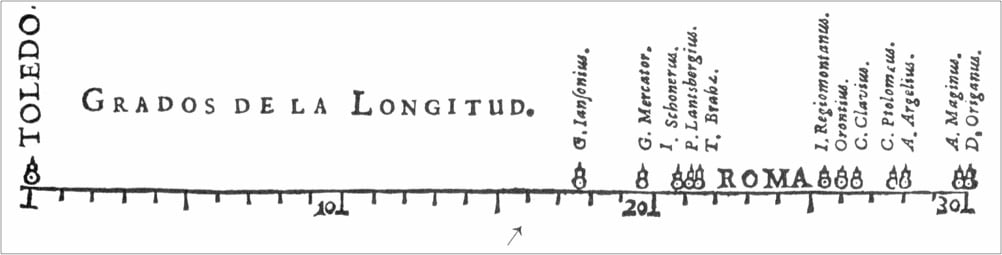
For the New Yorker, Hannah Fry wrote a brief history of information visualization, a quiet innovation that has changed the world:
Van Langren could have put these values in a table, as would have been typical for the time, but, as Friendly and Wainer observe, “only a graph speaks directly to the eyes.” Once the numbers were visualized, the enormous differences among them — and the stakes dependent on those differences — became impossible to ignore. Van Langren wrote, “If the Longitude between Toledo and Rome is not known with certainty, consider, Your Highness, what it will be for the Western and Oriental Indies, that in comparison the former distance is almost nothing.”
Van Langren’s image marked an extraordinary conceptual leap. He was a skilled cartographer from a long line of cartographers, so he would have been familiar with depicting distances on a page. But, as Tufte puts it, in his classic study “Visual Explanations” (1997), “Maps resemble miniature pictorial representations of the physical world.” Here was something entirely new: encoding the estimate of a distance by its position along a line. Scientists were well versed in handling a range of values for a single property, but until then science had only ever been concerned with how to get rid of error — how to take a collection of wrong answers and reduce its dimension to give a single, best answer. Van Langren was the first person to realize that a story lay in that dimension, one that could be physically seen on a page by abstracting it along a thin inked line.
Van Langren’s graph, which Fry says “might be the first statistical graph in history”, is pictured at the top of this post.
It’s Great to Hang Out After Self-Isolating for a Year - I’m Not Acting Weird, Am I? “Say, can we talk about how when we walked in here a minute ago, I straight up screamed? I was just stunned to be inside of a business.”
Bone Music: Forbidden Soviet Records Made From Used X-Ray Films


During the Cold War, the Soviet Union controlled the music recording industry and even restricted the types of music that were allowed to be played & listened to. Or they tried to anyway. Enterprising Soviet bootleggers took used x-ray films, many of them still containing images of bones and skulls, and recorded forbidden music on them, including jazz and rock & roll from the West. They called it ribs, bones, bone music, or jazz on ribs. From a 2017 article in Vice:
X-rays proved to be an suitable medium. They were cheaply and easily (albeit illegally) acquired from local hospitals that were required to throw out the flammable sheets. They took the groove relatively well, though nowhere near as well as vinyl — some X-ray discs apparently sound like listening to music through sand — and they were easy to fold into a shirt sleeve of pocket for a quick transaction. The X-rays were also stunningly beautiful.
And from an NPR article on Soviet samizdat:
Before the availability of the tape recorder and during the 1950s, when vinyl was scarce, ingenious Russians began recording banned bootlegged jazz, boogie woogie and rock ‘n’ roll on exposed X-ray film salvaged from hospital waste bins and archives.
“Usually it was the Western music they wanted to copy,” says Sergei Khrushchev. “Before the tape recorders they used the X-ray film of bones and recorded music on the bones, bone music.”
“They would cut the X-ray into a crude circle with manicure scissors and use a cigarette to burn a hole,” says author Anya von Bremzen. “You’d have Elvis on the lungs, Duke Ellington on Aunt Masha’s brain scan - forbidden Western music captured on the interiors of Soviet citizens.”
To learn more about bone music, you can check out Stephen Coates’ book X-Ray Audio, The X-Ray Audio Project (which includes digital recordings made from some of the bone records — here’s Lullaby of Birdland by Ella Fitzgerald), and this short documentary:
pOrtal, a Seamless Sci-fi Video Link Between Cities


pOrtal is a project that allows for people in two different locations to interact via circular video screens. Right now, the link is between Vilnius, Lithuania and Lublin, Poland but there are plans to add more cities (Reykjavik/Vilnius and Vilnius/London to start). The production is a bit over-the-top (e.g. the video), but the idea of fun, seamless, sci-fi presence between two locations is a good one. (via moss & fog)
Socials & More