

Advertise here with Carbon Ads
This site is made possible by member support. 💞
Big thanks to Arcustech for hosting the site and offering amazing tech support.
When you buy through links on kottke.org, I may earn an affiliate commission. Thanks for supporting the site!
kottke.org. home of fine hypertext products since 1998.
Beloved by 86.47% of the web.
Entries for March 2020
Remaking the Spider-Verse Trailer with Traditional Animation Techniques
Animator Pinot Ichwandardi, designer/illustrator Dita Ichwandardi, and their three young children decided to remake some of the iconic scenes from the Spider-Man: Into the Spider-Verse trailer using traditional animation techniques. You can see some of the process and the impressive results in the video above. They drew the scenes by hand, built their own multiplane camera setup (a la Disney), and constructed a camera rig using Lego. You can read more about their process in these two Twitter threads: one, two.
After they were done, Sony Animation invited the family to visit their California campus to meet some of the team that worked on the movie, including producers Phil Lord and Chris Miller.
See also How Animators Created Spider-Verse.
Women who work in the adult film industry, photographed with their children. Each photo is accompanied by a short profile. “How do they balance motherhood with their work?”
Peak Car - Scenes from an Automobile Addicted World
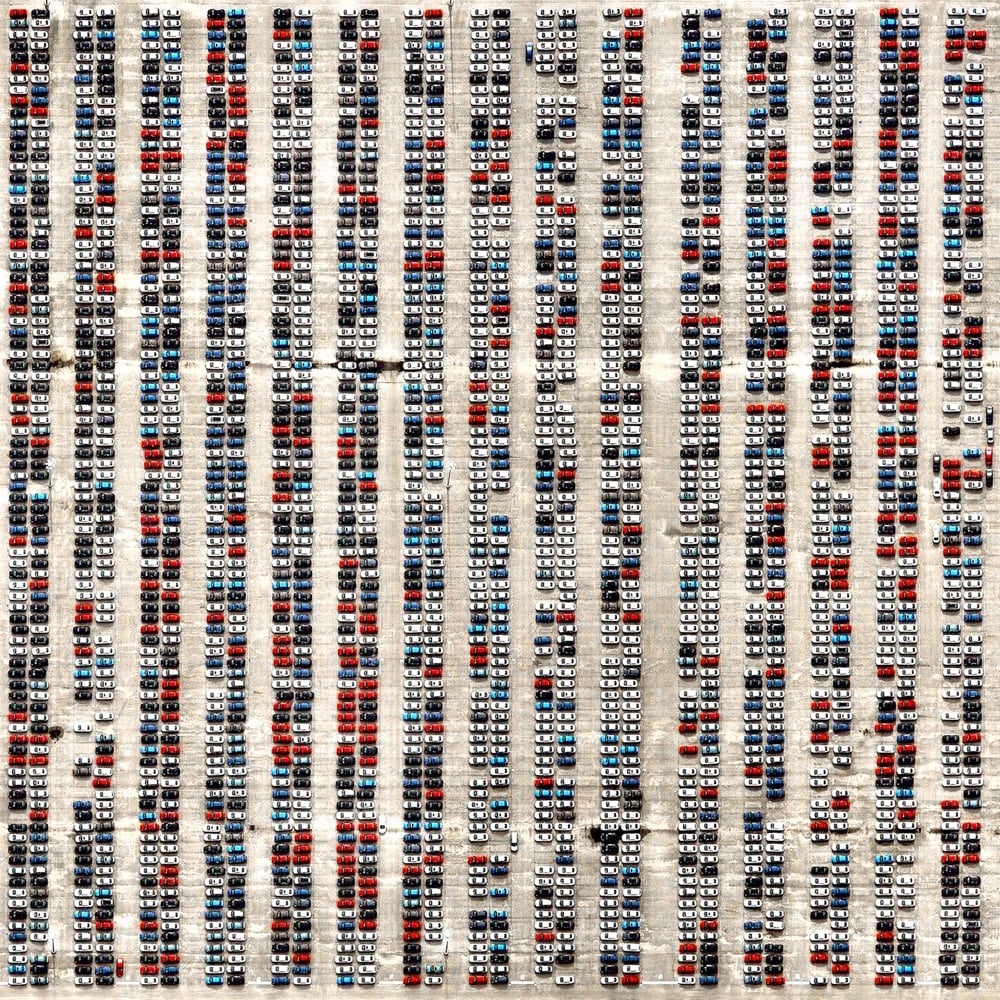
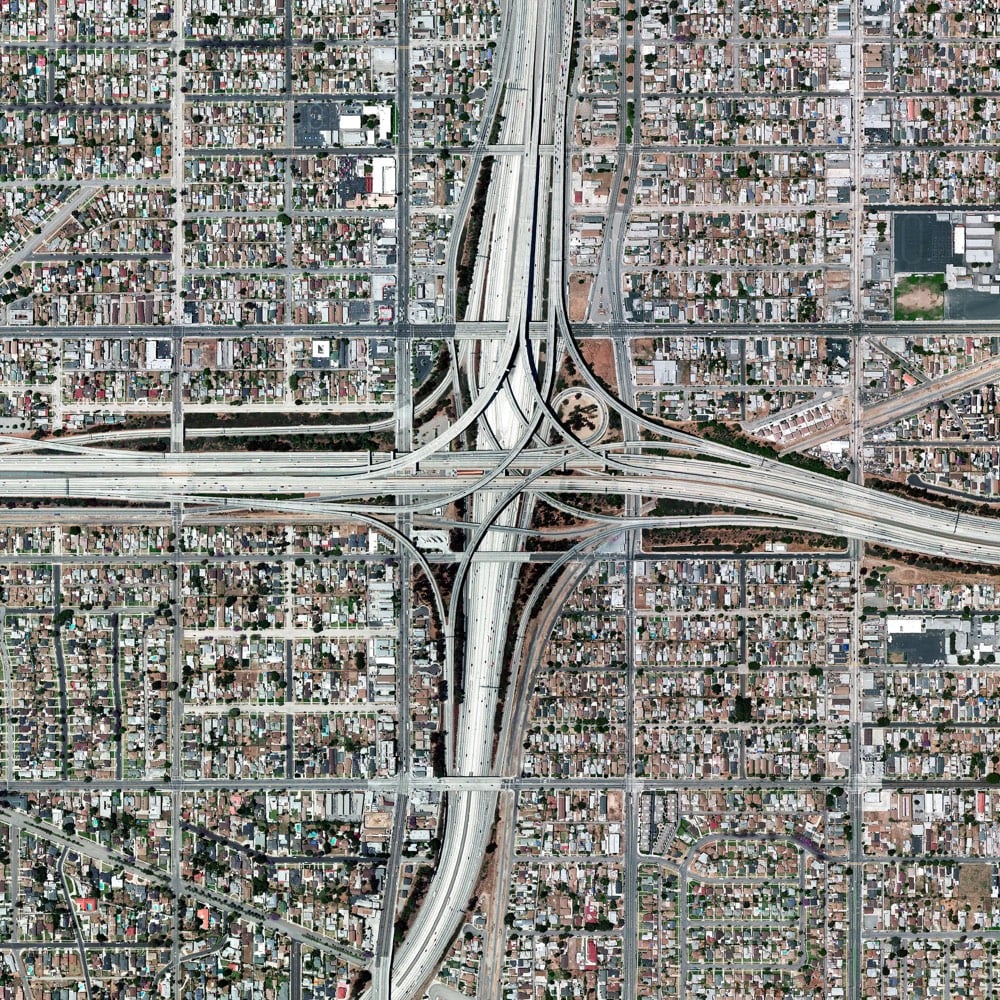
Overview celebrates the potential passing of “Peak Car” with a series of satellite imagery that shows just how much automobiles have altered our lives and landscapes.
Automobiles make up 70% of the emissions from all forms of transportation. There are an estimated 1 billion cars on the planet, with around 80 million new cars sold each year. Despite continually strong sales, experts suggest we have reached ‘Peak Car’ — meaning the average distance traveled per person in cars has peaked, and will continue to fall over time. There are many different factors contributing to this trend, such as a global shift towards urban living, new forms of mobility, new government policies for reducing traffic, and a slowing expansion of road networks.
Why Do Poor People Make Bad Decisions?
From The Correspondent, this is an article by Dutch historian Rutger Bregman about why poor people make low-quality decisions. In a nutshell, it’s because living in poverty overwhelms your brain, decreasing cognitive ability by a significant amount. The piece cites a number of supporting studies, but this one is perhaps the most relevant to separating cause from effect:
Shafir found what he was looking for some 8,000 miles away in the districts of Vilupuram and Tiruvannamalai in rural India. The conditions were perfect. As it happened, the area’s sugarcane farmers collect 60% of their annual income all at once right after the harvest. This means they are flush one part of the year and poor the other.
So how did they do in the experiment?
At the time when they were comparatively poor, they scored substantially worse on the cognitive tests. Not because they had become less intelligent people somehow — they were still the same Indian sugarcane farmers, after all — but purely and simply because their mental bandwidth was compromised.
Another study, of Cherokee families whose income increased dramatically due to casino revenues, shows just how beneficial more money is to poor communities:
Soon after the casino opened, Costello was already noting huge improvements for her subjects. Behavioural problems among children who had been lifted out of poverty went down 40%, putting them in the same range as their peers who had never known hardship. Juvenile crime rates among the Cherokee also declined, along with drug and alcohol use, while their school scores improved markedly. At school, the Cherokee kids were now on a par with the study’s non-tribal participants.
On seeing the data, Costello’s first reaction was disbelief. “The expectation is that social interventions have relatively small effects,” she later said. “This one had quite large effects.”
Costello calculated that the extra $4,000 per annum resulted in an additional year of educational attainment by age 21 and reduced the chance of a criminal record at age 16 by 22%.
This article was adapted from Bregman’s book, Utopia for Realists: How We Can Build the Ideal World, in which he advocates for three main changes to make our global society more equitable: a universal basic income, a 15-hour work-week, and open borders. The UBI issue is what he’s most known for — check out his 2013 article, Why we should give free money to everyone, and his two TED Talks on the topic. BTW, did you know that Nixon almost implemented a UBI in the US in the late 60s?
Photos of an Abandoned & Decaying Ohio Mall, Once the World’s Largest


When it opened in 1977, Randall Park Mall in Ohio was (briefly) the largest shopping mall in the world. But the place was never a huge success and was finally closed in 2009 in the wake of the financial crisis. For six years it lay abandoned and during that time, photographer Michael Christopher captured the decaying building inside and out for his book, Abandoned America.
Whichard Real Estate, who purchased the mall in 2006 for $6 million, was $200,000 behind on property taxes in 2008 and had multiple mortgages on the mall. The next February, Sears announced it was closing its Randall Park location, and with that the mall’s last anchor was gone. The few struggling stores inside the mall, many of which were owned by small business people doing their best to keep the mall afloat, were vacated a month later in March of 2009. The power was shut off in May, and save for the dusty sunbeams streaking through the skylights on sunny afternoons, the mall went dark.
The mall was finally torn down in 2014 and the site is fittingly now home to an Amazon fulfillment center.
Linguistic Constellations
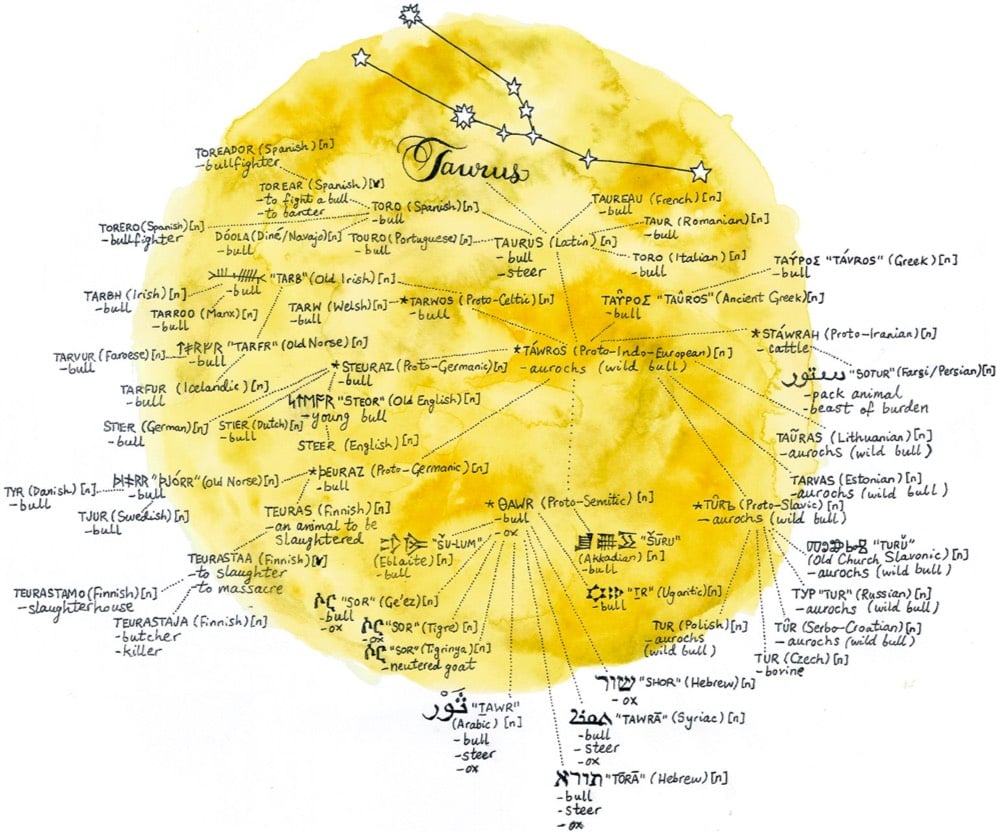
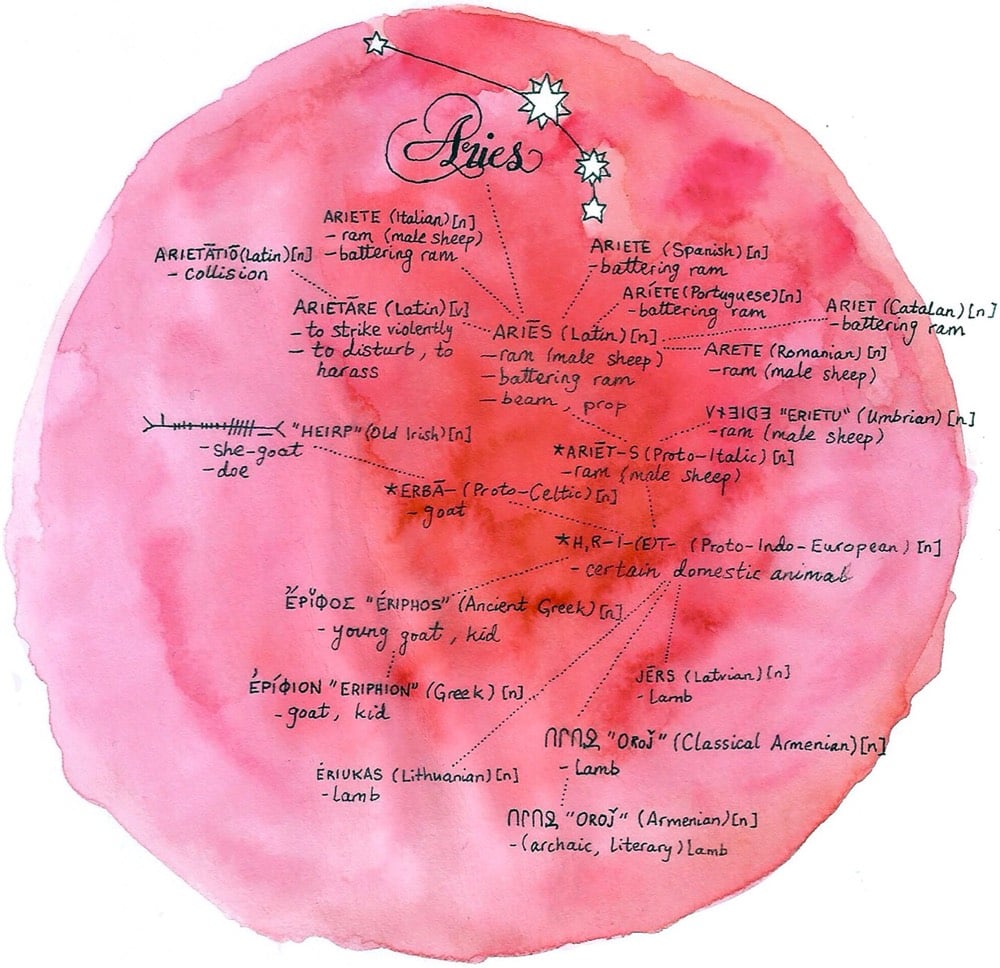
Illustrator Jerry M. Wilson has drawn a series of constellations that explore the etymology of the constellations’ names and related words in several languages. So for example, “Taurus” is Latin for “bull”, which is “toro” in Spanish & Italian and “tyr” in Danish. And then you also have associated words like “toreador” (“bullfighter” in Spanish) and “teurastamo” (Finnish for “slaughterhouse”)…a constellation of words related to “Taurus”.
Stand Among the Giant Redwoods


Using an infrared camera, Nathan Wirth took some great black & white photos of redwoods from the Lady Bird Johnson Grove in California’s Redwood National Park. I visited several redwood groves last summer and took hundreds of photos, so I can appreciate the difficulty of capturing the size & majesty of these amazing trees on film. Lovely work. (via moss & fog, both of which are abundant in redwood forests)
Should Political Journalists Vote?
I was reading this NY Times piece on their policies for reporters and editors around impartiality and politics — “newsroom staff members may not participate in political advocacy, like volunteering for candidates’ campaigns or making contributions” — and ran across this from the paper’s chief White House correspondent, Peter Baker:
As reporters, our job is to observe, not participate, and so to that end, I don’t belong to any political party, I don’t belong to any non-journalism organization, I don’t support any candidate, I don’t give money to interest groups and I don’t vote.
I try hard not to take strong positions on public issues even in private, much to the frustration of friends and family. For me, it’s easier to stay out of the fray if I never make up my mind, even in the privacy of the kitchen or the voting booth, that one candidate is better than another, that one side is right and the other wrong.
And similar perspectives from a 2008 Politico piece. Maybe it’s just me, but this seems like a deeply weird approach — and ultimately an intellectually dishonest one. Not voting is taking a political position — a passive one perhaps, but a political position nonetheless.1 There’s no direct analogy to not voting or not taking private positions on political issues for other areas of reporting, but just imagine being a technology reporter who doesn’t own a mobile phone or computer because they don’t want to show favoritism towards Apple or Samsung, a food reporter who is unable to dine at restaurants outside of work, or a style reporter who can’t wear any clothes they didn’t make themselves. Absurd, right? We do live in an age of too much opinion dressed up as news, but pretending not to have opinions ultimately does harm to a public in need of useful contextual information.
My history professor in college was fond of saying: “Everyone has a world view. Even if you don’t have a world view, that’s a world view, isn’t it?” His name was Dr. Janus, which seems super appropriate vis a vis that quote.↩
A Military Historian’s Look at the Siege of Gondor in Peter Jackson’s Return of the King
In a six-part series on his blog, Roman military historian Bret Devereaux took a close look at the Siege of Gondor in Peter Jackson’s Return of the King, the final movie in the Lord of the Rings trilogy.
Looking at the logistics of moving the Army of Mordor to Minas Tirith is actually a great way to introduce some of these problems in more depth. They say ‘amateurs talk tactics, but professionals study logistics.’ Well, pull up a chair at the Grown-Ups Table, and let’s study some logistics.
The army Sauron sends against Minas Tirith is absolutely vast — an army so vast that it cannot fit its entire force in the available frontage, so the army ends up stacking up in front of the city.
The books are vague on the total size of the orcish host (but we’ll come back to this), but interview material for the movies suggests that Peter Jackson’s CGI team assumed around 200,000 orcs. This army has to exit Minas Morgul — apparently as a single group — and then follow the road to the crossing at Osgiliath. Is this operational plan reasonable, from a transit perspective?
In a word: no. It’s not hard to run the math as to why. Looking at the image at the head of the previous section, we can see that the road the orcs are on allows them to march five abreast, meaning there are 40,000 such rows (plus additional space for trolls, etc). Giving each orc four feet of space on the march (a fairly conservative figure), that would mean the army alone stretches 30 miles down a single road. At that length, the tail end of the army would not even be able to leave camp before the front of the army had finished marching for the day. For comparison, an army doing a ‘forced march’ (marching at rapid speed under limited load — and often taking heat or fatigue casualties to do it) might manage 20 to 30 miles per day. Infantry on foot is more likely to average around 10 miles per day on decent roads.
I admit I did not have time to read this whole thing this morning, but posts like these are some of my favorite things online. See also Rome, Sweet Rome, A People’s History of Tattooine, and some of my logistical questions about Mad Max: Fury Road. (via studio d radiodurans)
Classic children’s books, from Roald Dahl to Little House on the Prairie, are sometimes sexist and racist. Acknowledging that to your kids while reading them can be a learning experience.
Sit-Skier Trevor Kennison Drops Into Corbet’s Couloir
With a mandatory steep drop into a narrow chute with rock walls on two sides, Corbet’s Couloir at Jackson Hole in Wyoming is one of America’s most challenging ski runs. During the annual Kings & Queens of Corbet’s event, skiers from all over converge to huck themselves over the cornice, doing backflips, spins, and grabs of all kinds.
I’d heard that sit-skier Trevor Kennison, who has been paralyzed from the waist down since a snowboarding accident in 2014, had dropped into Corbet’s during the 2019 Kings & Queens event but I’d never sat down to watch the video. Do yourself a favor and check this out:
From an REI blog post about Kennison:
Trevor Kennison imagined skiing Corbet’s Couloir — Jackson Hole, Wyoming’s iconic and nearly vertical chute with a dicey, dramatic entrance — six times in his head while waiting at the top. He closed his eyes, took three fast breaths, then visualized it: Ride the ramp at just the right speed, hit the takeoff, hug the rocks on skier’s left, then stick the landing into the chute. If he could picture it going perfectly in his head, he knew he could pull it off.
He’d wanted to ski this line for years and finally, the day had come. Kennison, who’s paralyzed from the waist down, says he wasn’t scared. “I knew what I had to do. I was ready,” Kennison, 26, said. “Everything I do is calculated risk. I think, where is it going to go wrong? I learn so much from the people around me.”
So great. I finally went down this rabbit hole because Kennison skied at our local ski area yesterday here in VT and dropped a couple of cliffs. I didn’t get over there to hang out, but I did see a friend of my son’s skiing with him in his Insta Stories.
Recycling Used Hotel Soaps
Clean the World is a non-profit organization that works with hotels to recycle used soap & other toiletry products left behind by their customers into new, sanitized soap that is then distributed to people without easy access to soap to prevent disease. Here’s how it works:
Since 2009, Clean the World has distributed 53 million bars of soap and saved 20 million pounds of waste from being discarded. Their hotel partners include Hilton, Hyatt, Best Western, Marriott, and other prominent hotel groups.
How Iceland Has Dramatically Lowered Rates of Teen Substance Abuse Over the Past 20 Years
There are certain links I’ve posted here that I think about more often than others. One that I think a lot about — weekly at least — is Emma Young’s story for Mosaic about Iceland’s very successful program that’s steered the nation’s teens away from drug and alcohol abuse. At the center of the Icelandic strategy is an insight by psychologist Harvey Milkman about a strategy of replacing substance and other unhealthy addictions with healthier natural highs:
At Metropolitan State College of Denver, Milkman was instrumental in developing the idea that people were getting addicted to changes in brain chemistry. Kids who were “active confronters” were after a rush — they’d get it by stealing hubcaps and radios and later cars, or through stimulant drugs. Alcohol also alters brain chemistry, of course. It’s a sedative but it sedates the brain’s control first, which can remove inhibitions and, in limited doses, reduce anxiety.
“People can get addicted to drink, cars, money, sex, calories, cocaine — whatever,” says Milkman. “The idea of behavioural addiction became our trademark.”
This idea spawned another: “Why not orchestrate a social movement around natural highs: around people getting high on their own brain chemistry — because it seems obvious to me that people want to change their consciousness — without the deleterious effects of drugs?”
BTW, this is a somewhat controversial view but it has always made sense to me for those with mild addictions or depression. Speaking strictly for myself, I’ve found that when healthier alternatives are available to me (spending time with family & friends, exercise, exploring, reading a good book), I spend a lot less time mindlessly doing things that give me the same sort of brain buzz but which I don’t consider positive or worthwhile (drinking alcohol, watching TV, eating poorly, and especially reloading Instagram over and over again like a lab rat slapping that lever to get more cocaine).
But back to Iceland. By giving teens access to more healthy activities, getting parents more involved in their children’s lives, implementing curfews, and administering annual surveys, the country has made great strides over the past two decades:
Today, Iceland tops the European table for the cleanest-living teens. The percentage of 15- and 16-year-olds who had been drunk in the previous month plummeted from 42 per cent in 1998 to 5 per cent in 2016. The percentage who have ever used cannabis is down from 17 per cent to 7 per cent. Those smoking cigarettes every day fell from 23 per cent to just 3 per cent.
The way the country has achieved this turnaround has been both radical and evidence-based, but it has relied a lot on what might be termed enforced common sense. “This is the most remarkably intense and profound study of stress in the lives of teenagers that I have ever seen,” says Milkman. “I’m just so impressed by how well it is working.”
Young did a follow-up last year about the expansion of the program into other areas of the world.
Why Don’t Blue Whales Get Cancer?
Even though larger animals like elephants and blue whales have up to 100 billion more cells than humans in their bodies — and therefore many more chances for harmful mutations to develop — they are much more immune to cancer. This is called Peto’s paradox the subject of Kurzgesagt’s latest video. Scientists aren’t sure why this happens, but one hypothesis is that in order to have grown so large, the evolutionary process that resulted in these animals provided built-in defenses against cancer that other animals didn’t need. Further reading on the topic is available here.
Sliced mayonnaise? Sliced mayonnaise!
Cycling Through All the Streets of London
Over a period of four years, Davis Vilums cycled every street in central London. A map and a time lapse of his journeys:
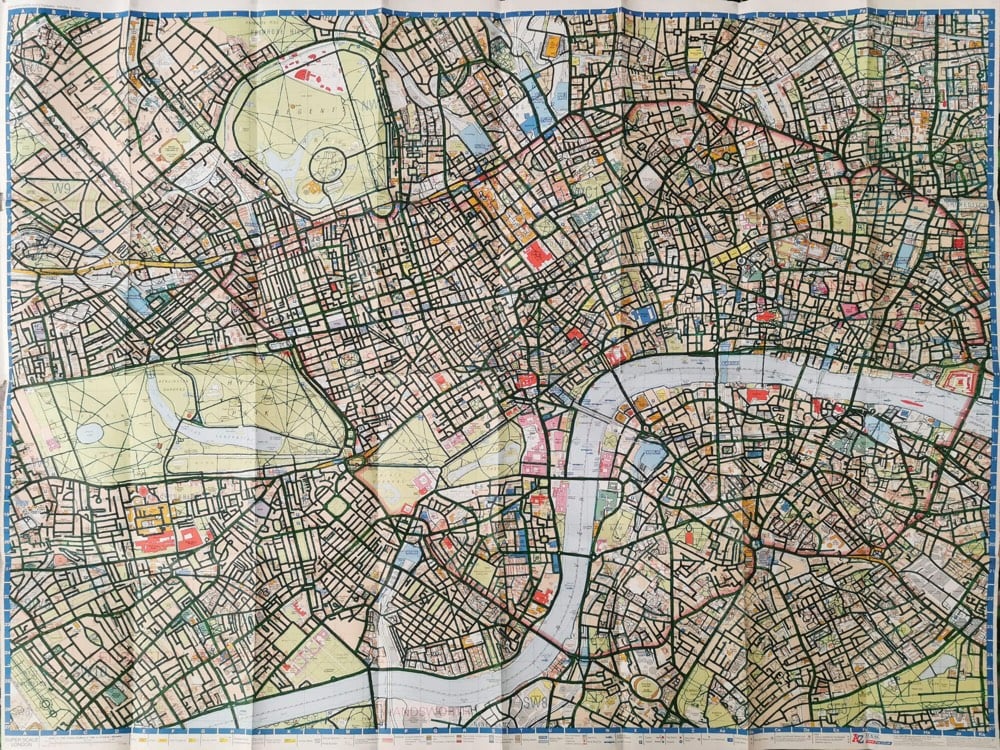
Including some irregular times off, overall it took me four years to visit every single road on the map. When I started this hobby, it took me 30 to 40 minutes to do the route. Later it expanded to 2 hours to get to the office when I tried to reach the furthest places on my map. One of the main goals was never to be late for work. From the beginning, I planned to visit not only the main roads but every single accessible mews, yard, park trail, and a path that was possible to go through. I used Endomondo app to have a proper record of my journeys and proof that I have been there. After every trip, I prepared my next route in Google maps where it was easy to adjust streets to the next ones and mark points to revisit if I missed something.

Socials & More